To help us provide you with free impartial advice, we may earn a commission if you buy through links on our site. Learn more











- More comfortable than the XM6
- Sound superb
- Great features
- ANC isn’t up to XM6 levels
- Battery life has taken a hit
After a decade of delivering some of the best over-ear headphones around, Sony is upping its game (and its price ceiling) with the Sony 1000X The Collexion.
It’s a bold move from the brand, whose WH-1000XM6 currently rule the roost in this category. And, the 1000X are likely to give those wanting Sony headphones a bit of a headache.
Not because of their audio quality – they’re sensational in that department and a clear step-up on the WH-1000XM6 – but because that superior sound comes at a big premium.
What you need to know
The Sony 1000X The Collexion were created to commemorate the 10th anniversary of the brand’s 1000X series of headphones, and Sony has gone all out to make a product that screams luxury. The Collexion represent the pinnacle of the manufacturer’s design expertise, both in terms of comfort and aesthetics.
Sony is also touting the 1000X as the best-sounding over-ear headphones it’s ever produced. It constructed a bespoke 30mm drive unit especially for the 1000X, and the headphones are the first to use Sony’s Integrated Processor V3. This brings with it two new virtualised spatial sound 360 Upmix modes – Music and Games – and the most advanced iteration of Sony’s AI upscaling technology, Digital Sound Enhancement Engine (DSEE).
Superior to the WH-1000XM6 in every way?
However, Sony is not claiming that the 1000X The Collexion are better than the XM6 in every way. Despite both using the HD NC Processor QN3 and sharing the same number of microphones (eight external and four external for 12 total), the brand has been surprisingly up front about the 1000X having inferior noise cancellation.
The 1000X also have shorter battery life than the XM6, at 24 hours with noise cancellation, down from 30 hours. Some Sony fans might be disappointed by this, but it’s a sacrifice the company says it feels its target market can live with.
Price and competition
The 1000X The Collexion are Sony’s most expensive over-ear headphones to date, and cost £550. That’s £150 more than their stablemates, the Sony WH-1000XM6, which Jonathan Bray named a Best Buy at £399.
It’s a price that positions them above popular premium options like the Bose QuietComfort Ultra Headphones (2nd Gen), Sonos Ace and Apple AirPods Max 2, but below our favourite over-ear headphones for sound quality, the Bowers & Wilkins Px8 S2. All offer effective noise cancellation and enjoyable sound quality wrapped up in smart designs; at this kind of money, there isn’t much to separate the various models.
Ecosystem-specific features and added extras can play a big role in deciding which brand you go with, and that’s historically been a strength of Sony headphones. However, with such a price jump over the XM6, the brand has its work cut out convincing consumers to splash out on the 1000X The Collexion.
Design and features
Top-level craftsmanship and supreme comfort
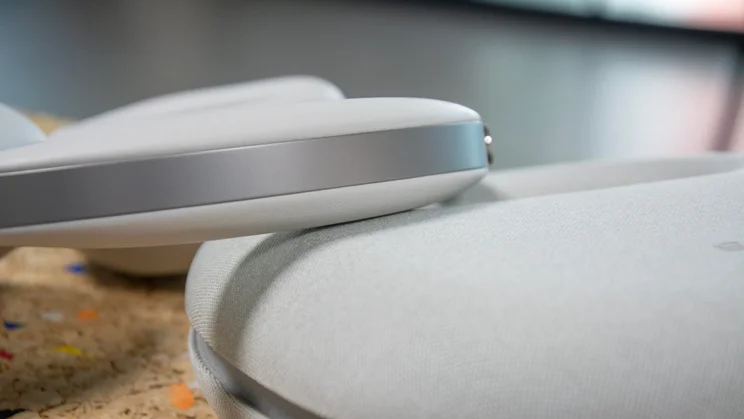
Sony takes a confident first step along this road with the design of the 1000X. The 1000X are luxurious and beautifully crafted, constructed mostly from metal and faux leather. Even the exterior of the earcups is faux leather, resulting in a smooth, tactile surface for executing Sony’s trademark touch commands.
There are two finishes available: the Platinum that I received for review, which is really an off-white with silver accents, and Black. I prefer the Platinum, but both look fantastic. Sony says each pair of 1000X was “handcrafted”; whatever its process, the result is exceptional. Except for no longer being able to fold the earcups inwards – an issue with the XM5 that was rectified on the XM6 – it’s hard to find fault with the design.
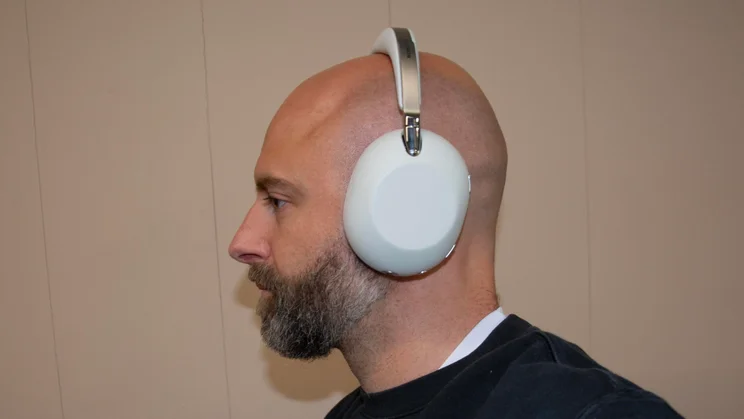
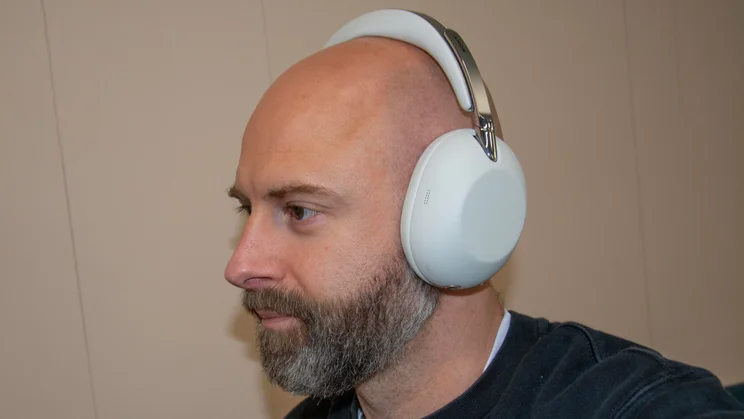
The hinge that joins the headband to the earcups is sturdy, the headband slides effortlessly along its rail, and the earcups are significantly slimmer, yet roomier than the XM6’s. This, combined with soft, supple memory foam earpads and headband and a reduced clamping force, makes the 1000X supremely comfortable to wear. They’re not the lightest over-ear headphones around at 320g, but their weight is distributed evenly, and the headband lining flattens more than most, spreading the load remarkably well across the dome of your head.
A joy to wear, a joy to transport
I’m not exaggerating when I say that I found the 1000X a joy to wear. They fitted me perfectly, forming an effective passive noise-cancelling seal around my ears while still affording them enough room to breathe. But it’s worth noting that those with smaller heads may find them loose-fitting. My girlfriend had issues with them slipping when tilting her head forward, as did our esteemed Head of Reviews, Jon Bray.
The carrying case of the 1000X is also worth a mention. It may look like a bit of a kettlebell, but it’s also very practical. Size-wise, it’s easy to sling in a bag, but the in-built handle means you can carry it around with minimal effort. The hard, fabric-covered shell provides plenty of protection for its precious cargo, too.
Simple, effective controls
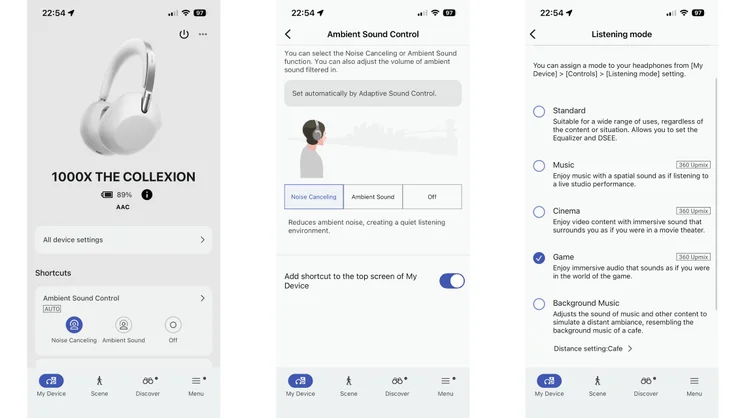
Once on your head, you can use a combination of touch gestures and physical buttons to execute key controls. On the left ear cup, you’ve got the power/pairing button, a button for switching between noise cancellation and ambient sound modes, and a third button for cycling through the various Listening modes: Standard, Background Music and the three 360 Upmix presets (Music, Cinema and Game). You can also assign double and triple taps of the noise-cancellation button to quickly access services such as Amazon Music, Apple Music, Spotify and YouTube Music.
There aren’t any buttons on the right earcup, but as with the WH-1000XM6, there’s a touch sensor that lets you control audio playback, adjust volume and accept or reject calls. These all worked flawlessly during testing and made controlling the 1000X a highly intuitive experience.
Sony’s Quick Attention feature is brilliant: hold your hand over the right earcup immediately reduces the volume and pipes in external sound if you need to hear what’s going on around you. Another feature I’m a fan of is Speak-to-Chat, which automatically pauses music and engages ambient mode when you start speaking. This is particularly useful if you’re in an office and need to engage with colleagues without having to remove your headphones all the time.
If you’d rather use your voice to control the 1000X, Sony has you covered here, too. You can either opt for Sony’s proprietary commands via “Hey headphones” or select the default voice assistant on your smartphone. Sony’s in-house options worked just fine for me.
Wear detection is present and correct, pausing audio when you remove the headphones and resuming it as soon as they’re back on your head. The sensors are extremely responsive, taking less than a second to pause and a similar amount of time to resume.
Solid connectivity
The Sony 1000X The Collexion operate over Bluetooth 6.0, which is one of the more recent versions, and support the SBC, AAC, LC3 and LDAC codecs. This means Android users can enjoy high-resolution streaming, assuming they have a subscription to a service that supports it. There’s support for multipoint pairing with two devices, too.
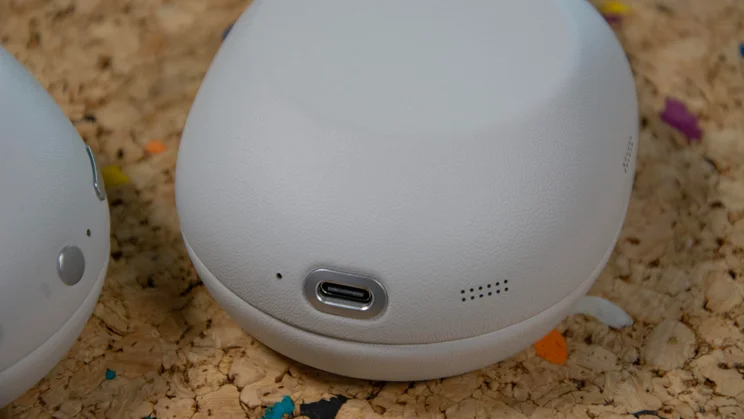
Wired listening is supported via the stereo mini jack on the left earcup, and Sony supplies the required cable in the box. I’d have liked the cable to be the same colour as the headphones, but that’s me being pernickety. The USB-C port on the right earcup can’t be used for wired listening; it’s solely for charging the headphones, which is a bit of an oversight. Sony has also decided against including a USB-C cable for charging.
Noise cancellation
A sophisticated noise-cancelling operation
The Sony 1000X use the noise-cancelling system I’ve come to know and love over several generations of the WH-1000 series. It provides three modes of operation: Noise Cancelling, Ambient Sound and Off, with 20 different levels of ambient sound available to cater for all manner of environments.
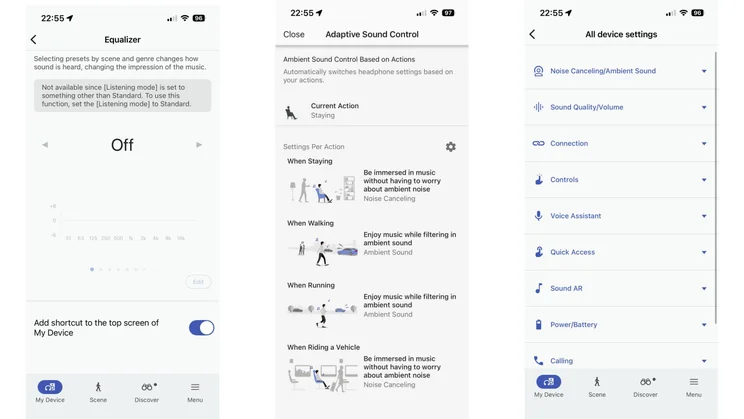
There’s also Adaptive Sound Control, which automatically engages noise cancellation or ambient sound mode based on what you’re doing. It’s been one of my favourite things about Sony headphones for years now, and it works as well as ever here.
When walking through Richmond Park, the 1000X would engage ambient mode so that I could hear what was going on around me. Once I’d been sitting at a bench for a few seconds, it switched to noise cancellation.
You’re free to assign settings for each action – “When Staying”, “When Walking”, “When Running” and “When Riding a Vehicle” are your choices – and, if you add locations from the map or have the headphones learn locations you visit regularly, they’ll switch settings based on where you are, too. Adaptive Sound Control remains one of the main reasons to select Sony’s premium headphones over their countless rivals.
An unfortunate and obvious discrepancy
Although the 1000X use what is probably the most sophisticated noise-cancelling system on the market, they’re not as good at attenuating external sound as the WH-1000XM6.
In side-by-side comparisons in various scenarios, the XM6 triumphed across the board. In a secluded area of the office – Sony insisted I couldn’t wear the headphones in public before the launch date – I was more aware of the buzz and hum of those around me, while in the toilet on a flight to China (yes, I tested ANC on the WC), the cabin noise and announcements were distinctly more apparent on the 1000X.
That’s not to say the noise cancellation is bad. But it’s disappointing that there’s such an obvious difference in ANC performance. When you’re paying this kind of money, you want the best of the best.
The ambient mode works as intended, but I did find it a little lopsided at times. On certain occasions, it felt like more sound was being piped in through the mics on the left earcup than the right, which led to an unnatural, unbalanced feeling. On the whole, however, I felt tuned into my surroundings whenever I engaged the mode.
Sound quality
Refined performance across the board
Sony has taken with one hand on the ANC front, but given back with the other where sound quality is concerned. The 1000X provide a more spacious, detailed and precise performance than the XM6.
I tested the 1000X alongside their stablemates and also did comparative listening with the Bose QC Ultra Headphones 2nd Gen and Apple AirPods Max 2; in almost every case, the 1000X came out on top. Their soundstage was the widest of the lot by some margin, and although they lose a bit of the low-end punch present on the XM6, they gain greater balance across the frequency spectrum.
I found this led to a more natural tone and a more engaging experience when listening to vocal-heavy tracks like Seal’s Kiss from a Rose. The artist’s timbre was more evocative and nuanced, and every instrumental component felt positioned accurately. Treble frequencies were particularly clean; on the acoustic version of Ed Sheeran’s Bad Habits, the singer’s highest notes were wonderfully well-defined and never unduly harsh.
As a bass lover of the EDM persuasion, I did occasionally miss the strong low-end reproduction exhibited by the XM6. The hypnotic bassline on Tuffi by Kaufmann didn’t hit quite as satisfyingly, but this is a conscious decision on Sony’s part that results in the 1000X sounding more mature in general. Overall, I think it’s a smart move: the sensibilities of the £500+ crowd are rather different to those shopping for something cheaper.
Successful spatial upmixing
While audio purists remain wary about spatial audio, I was generally impressed by the 360 Upmix modes on the 1000X. You’ve got three to choose from – Music, Cinema and Games – and the Music one was a firm favourite. It expanded the soundstage on James Blunt’s You’re Beautiful without shedding too much detail or detracting from the vibe of the track. The sensation of the recording being played around me rather than directly into my ears was a convincing one, and tracks mastered in multi-channel formats like Dolby Atmos really came alive.
I enjoyed the Cinema mode less, with dialogue losing clarity as bombastic effects took prominence within the mix. There’s no denying the explosive action sequences in One Piece on Netflix were intense and gripping, but I had to concentrate harder than I’d have liked to ensure I didn’t miss snippets of conversations.
I don’t do a huge amount of gaming on my mobile, but the 360 Upmix Game mode did add a smidge more immersion to the rogue-like deck-builder Vampire Crawlers. There was more emphasis on specific sound effects, highlighting them effectively above the soundtrack.
The 1000X are also the first headphones to feature Sony’s latest version of its Digital Sound Engine Extreme. I listened to a couple of low-quality drum and bass sets I had on MP3 on the 1000X, and they sounded significantly crisper and more detailed than on the XM6. How much of this is down to DSEE Ultimate being an improvement on DSEE Extreme, and how much of it is down to the different driver and tuning is hard to say; it’s likely a bit of both.
Sony 1000X The Collexion: Verdict
There’s no doubt in my mind that the 1000X The Collexion are the best-looking and best-sounding over-ear headphones that Sony has ever produced. When headphones look and feel this good, it’s forgivable that their earcups don’t fold. I have slight reservations about how the faux leather will hold up over time – the 1000X feel more liable to get dirty and damaged than the XM6 – but if treated right, this shouldn’t be a major issue.
More of an issue is that you’re paying a far higher price than the WH-1000XM6 for inferior noise cancellation. While the difference isn’t seismic, it’s evident enough that those who prize ANC above all else may feel shortchanged.
What this all boils down to is that, all things considered, I can only recommend the 1000X to those with cash to burn. Yes, they’re the best Sony headphones have ever sounded. Yes, they’re gorgeous and about as close to feeling like you’re not wearing over-ear headphones as you can get. But the WH-1000XM6 are not far behind in the sound and comfort stakes, block out noise far more effectively and, at two-thirds the price, are a much better buy overall.