To help us provide you with free impartial advice, we may earn a commission if you buy through links on our site. Learn more
- Competitively priced
- Waterproof and dustproof
- Wide connectivity options
- Sound lacks punch and width
- No companion app
- Slightly fiddly buttons
Majority’s latest lineup of Bluetooth speakers – the Move range – has the big players of Bose, Ultimate Ears, and Sony squarely in its sights. But, if there’s one brand the Cambridge-based audio firm is directly challenging, it’s JBL.
The palm-sized Move M1 reminds me of JBL’s compact little Go and Clip belters, while the Move M2 has similar dimensions to the excellent Flip 7.
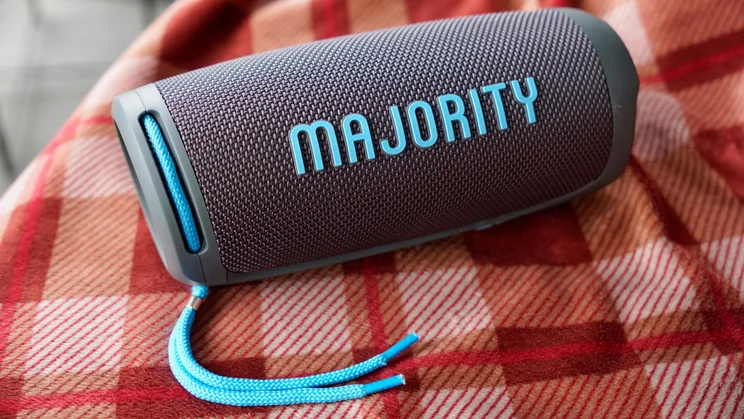
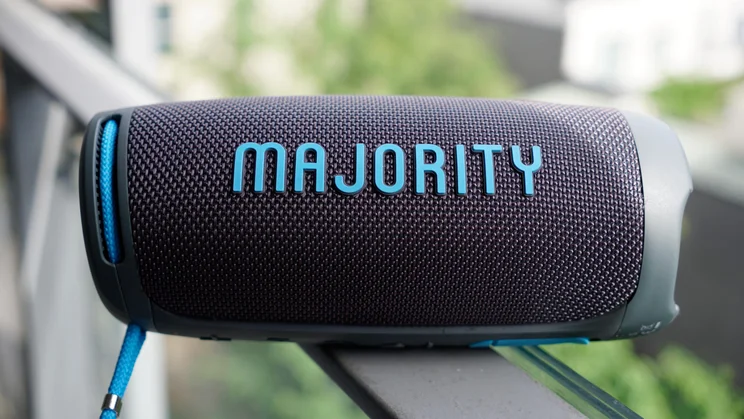
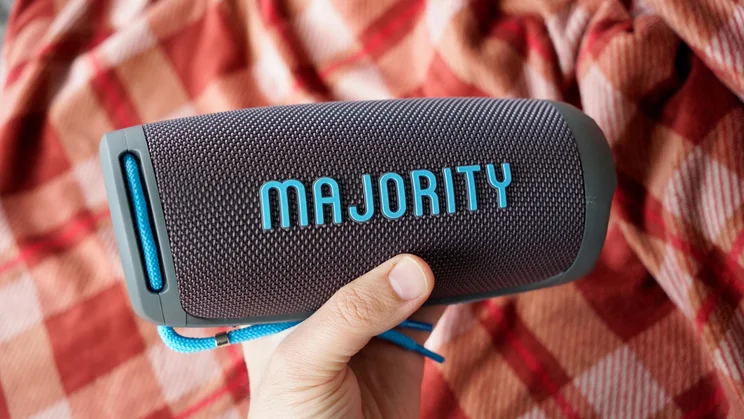
The Move M3 I’m reviewing here has comparable dimensions, weight and output to one of JBL’s most popular models: the five-star JBL Charge 5. The big difference? The Charge 5 will set you back £120 (the newer Charge 6 is pricier still, at £170), yet you can grab the Move M3 for £80.

What do you get for the money?
For £80, you’re getting a great value competitor. The Move M3 packs in a 5,000mAh battery, Bluetooth 6.0, IP67 water and dust resistance, and 40W of powerful audio output, matching JBL’s Charge series.
If you want to, you can pair two M3 units for true wireless stereo sound, too. And this speaker has also got more connectivity options than I’m used to seeing at any price, and I’ve tested a lot of portable Bluetooth speakers!
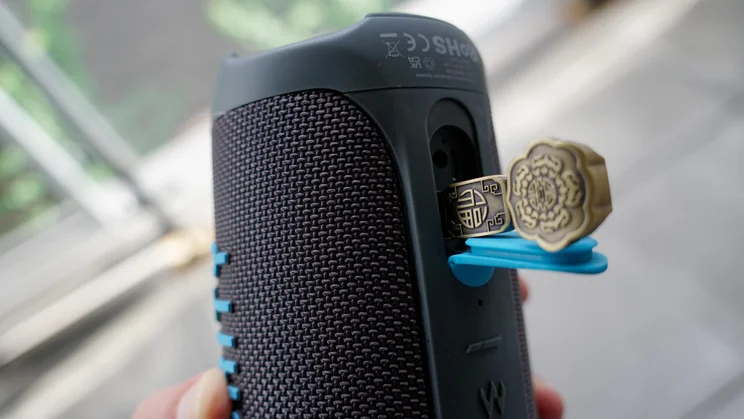
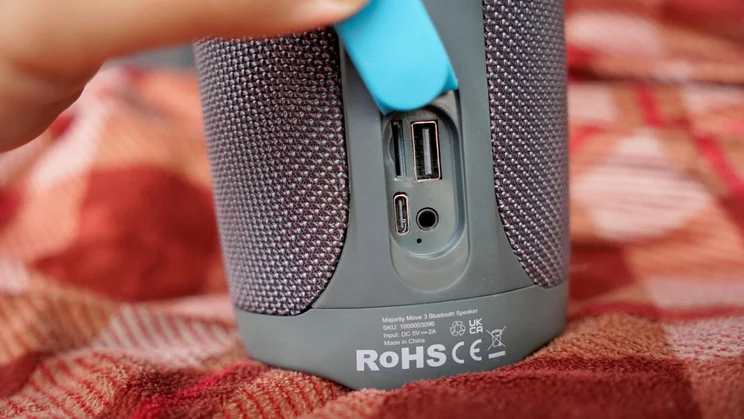
There’s an AUX port, a USB-A connection, a microSD card slot, and a USB-C port for charging. That’s a lot of options, but you won’t necessarily get all of them to work as expected without limitations, which I’ll get to shortly.
Like the rest of the Majority’s new range, the M3 only supports the standard SBC audio codec. On speakers, this won’t always make the biggest difference to your audio quality, but on rival brands including JBL, Beats, Bose and Soundcore, we’re now seeing support for AAC, aptX, LDAC and LC3.
The M3 also comes with a braided fabric USB-A-to-USB-C cable, though the USB-C port on this unit is only for charging the speaker itself; it doesn’t support USB-C playback and won’t double as a power bank to recharge your ailing phone. It does, however, have a built-in microphone so it can be used for hands-free calls, with passable performance.
What does it do well?
There are a few things that keep the Move M3 from being great. However, if your priorities in a Bluetooth speaker are that it sounds good enough, gets loud and is lightweight, it ticks all three boxes.
It’s just 800g, so I happily tossed it in a backpack to bring with me while catsitting for a friend. I’ve found you can dial up the volume pretty high without hearing significant distortion, and the audio performance is tuned for fun. This is a speaker that’ll soundtrack a garden party with no issue; you’re getting reliable detail and good thump to basslines.
At a moderate volume, it sounds reasonable. I played the Top 40 rundown on the radio via Deezer, before moving on to bouncy summer songs like Vampire Weekend’s Oxford Comma and Zara Larsson’s Lush Life. At volume under 50%, it delivers sound that should satisfy a small gathering, whether indoors or outdoors. It’s definitely far from perfect, though.
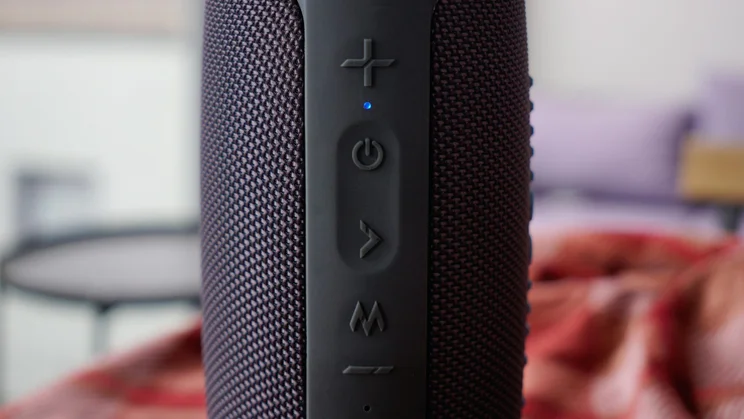
This speaker has a stated battery life of 30 hours, and it still had some juice left in it after several weeks of occasional testing. It took about three hours of use to reduce the battery by 10%, so Majority’s claims seem pretty on the money. It’s an intuitive model to use, too, pairing quickly over Bluetooth and offering reasonably straightforward (if oddly positioned) controls.
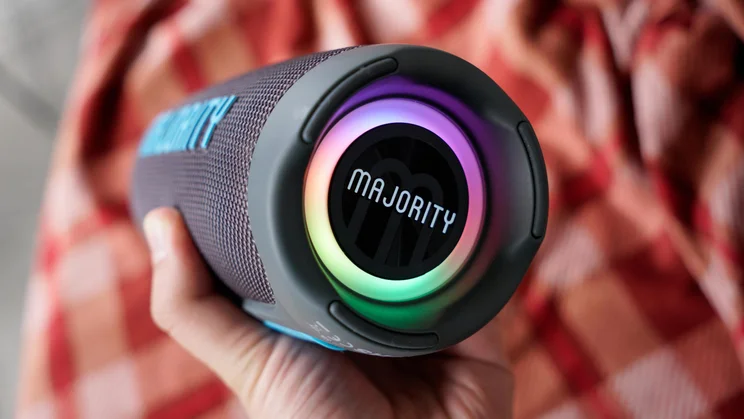
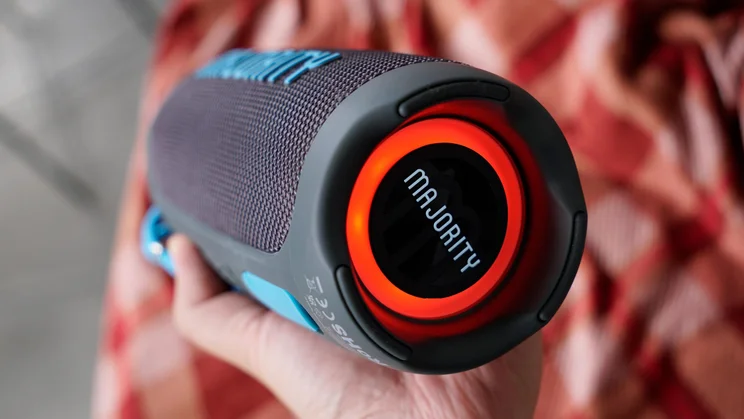
It also has multicoloured LED lighting on either side, which is a fun addition for a party speaker. I didn’t end up wanting to leave these on; it’s easy to change them or turn them off by pressing the power button a couple of times.
The additional connectivity sets this speaker apart from the competition, too. I hooked up an MP3 player over an AUX cable, and it worked perfectly. However, you do need to be aware of the limitations of the microSD and USB slots; the USB stick must be formatted to FAT32 and under 128GB (the same storage limit applies to SD cards). It’s also worth noting that you can only play MP3 files. These restrictions aren’t dealbreakers, however, and I appreciate that the speaker recognises when you’ve inserted an SD card or USB pen and automatically switches to playback from the storage device.
What could be improved?
You’ll have already guessed this, but one of the big downsides to the Move M3 is the sound. I volume-matched it to my go-to Bose SoundLink Flex (2nd Gen), and while I’d be the first to admit that’s a bit of a bass beast, the side-by-side comparison showed just how much bass the Majority lacks.
The soundstage is narrower, and vocals feel a little lost due to a relatively thin low-end. I’m used to voices taking centre stage, and that’s not the case here. I noticed this particularly when playing On Melancholy Hill by Gorillaz and Olivia Rodrigo’s good 4 u. It’s still good for clarity, and some may even find this sound preferable, but I feel it can be beaten for mid-range detail and bass punch. In George Ezra’s Budapest, for example, I found myself straining to hear the rich layers of instrumentation that I’m used to recognising.
While companion apps aren’t a requirement on Bluetooth speakers, it’s a shame that this one doesn’t have one at all. That means you can’t control the equaliser, and there’s no way to update the firmware. I also find it a little disappointing that you can’t get high-resolution audio over USB-C, something that’s available on many speakers nowadays, and that it has no phone charging capability.
Another big downside for me was the lack of Bluetooth multipoint, which means you need to disconnect from one device before connecting to a second. I also experienced an odd Bluetooth dropout when leaving the speaker inside and taking my phone to the balcony. But this only happened once, and I couldn’t replicate it a second time, so it was probably a bug.
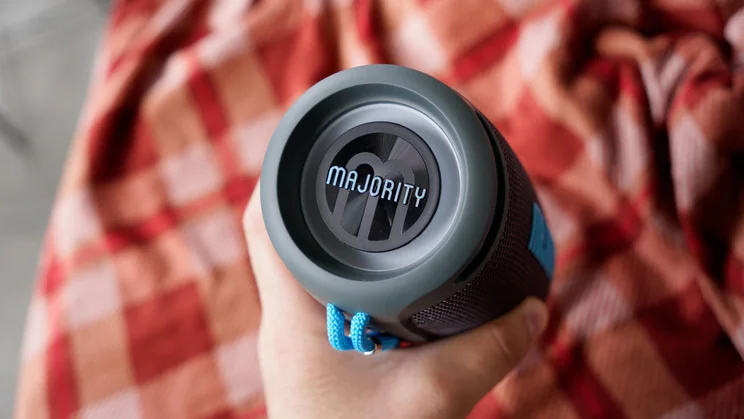
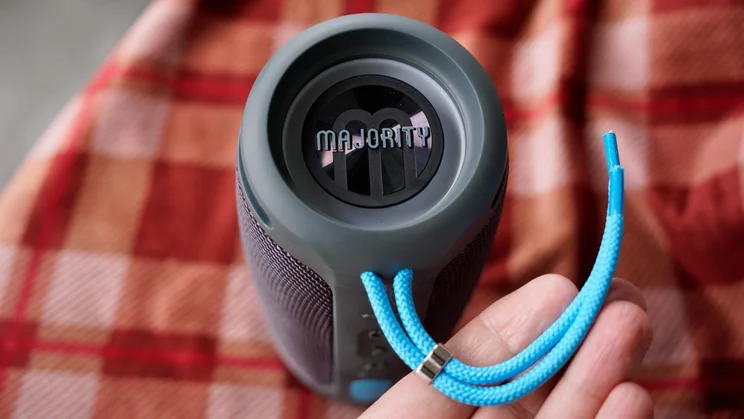
The onboard buttons are also a little fiddly and unintuitive, sitting at the bottom of the speaker when you’re playing music, so you need to pick it up to use them. It also doesn’t have a carry strap; what’s there is effectively a couple of shoelaces attached. And you’ll need to give the instructions a good read if you want to understand how to play tracks from external storage or to change and turn off the LED lighting.
Should you buy the Majority Move M3 portable speaker?
Even the best portable Bluetooth speakers aren’t made for analytical listening. But they should be fun and engaging, and that’s an area where I found the Move M3 slightly lacking. Its bass is a bit anaemic, and it doesn’t have the kind of clarity I’d expected in the mids.
If you want great battery life and durability in a portable package, and can get it at less than full price (I’ve seen it on offer a couple of times), it starts to look more appealing. However, I recommend checking out our favourite budget Bluetooth speaker, the Soundcore Motion 300, which is currently available for £60 instead. It’s more versatile, sounds fuller and has proper app and equaliser support with better controls.