To help us provide you with free impartial advice, we may earn a commission if you buy through links on our site. Learn more
- Supreme battery life
- Strong sound quality
- Effective ANC
- Could be more comfortable
- So-so spatial audio modes
- Flimsy carrying pouch
When I reviewed Nothing’s first pair of over-ear headphones, the Nothing Headphone (1), I was taken by their striking design, effective active noise cancellation and clever physical controls. However, I didn’t find them particularly comfortable, and their sound quality fell short of what I’d expect from headphones costing the best part of £300.
The Nothing Headphone (a) are the brand’s step-down over-ear option and cost half as much, but rarely, if ever, feel like it. Their ANC remains a strength, they boast some of the best battery life around, and to my ears, they sound better than the Headphone (1), despite not being tuned by KEF.
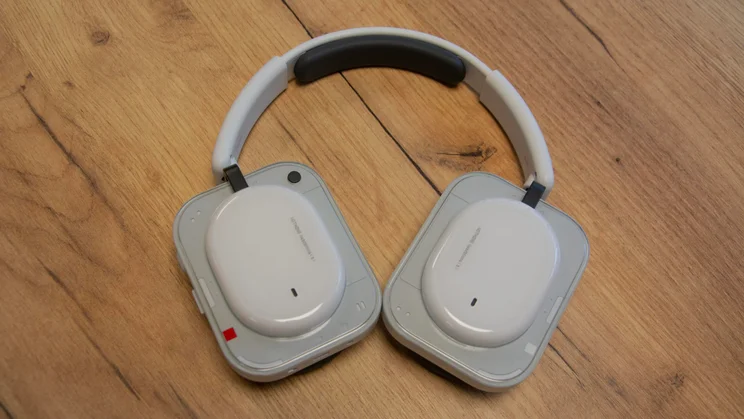
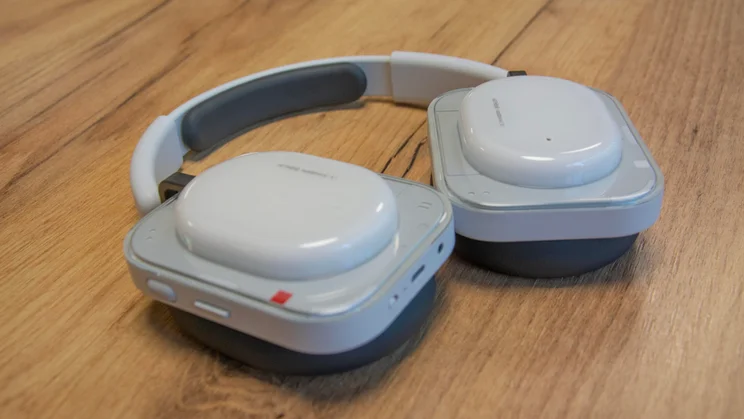
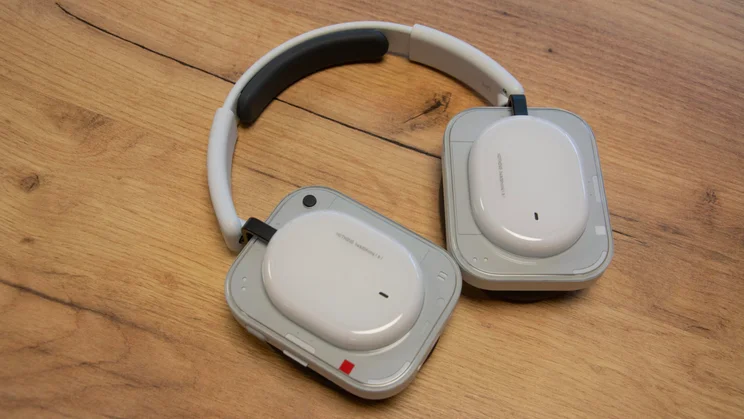
They still sport a look that stands out from the competition, but don’t give off quite the same level of “look at me” vibes as their pricier stablemate, which should work in their favour. As an all-round mid-range package, they’re capable and compelling, but still not quite as comfortable as I’d like.
What do you get for the money?
The Headphone (a) are priced at £149, which is half what the Headphone (1) cost at launch. You can currently pick up Nothing’s flagship cans for £249, though, in truth, there aren’t many reasons for choosing the more expensive model.
Both pairs of headphones support the same range of Bluetooth codecs: SBC, AAC, and the high-resolution LDAC. In fact, the Headphone (a) have the edge on connectivity as they operate over Bluetooth 5.4 rather than 5.3. Both also use 40mm drivers to deliver sound and have a stated frequency range of 20Hz to 40KHz, but where the (1) are tuned by British hi-fi brand KEF, Nothing has brought the tuning in-house for the (a).
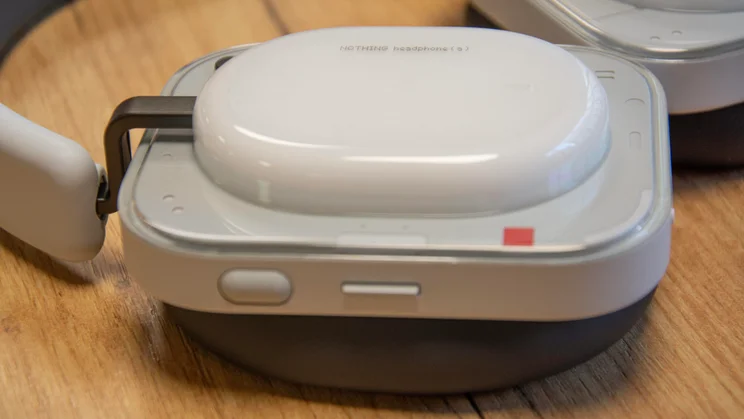
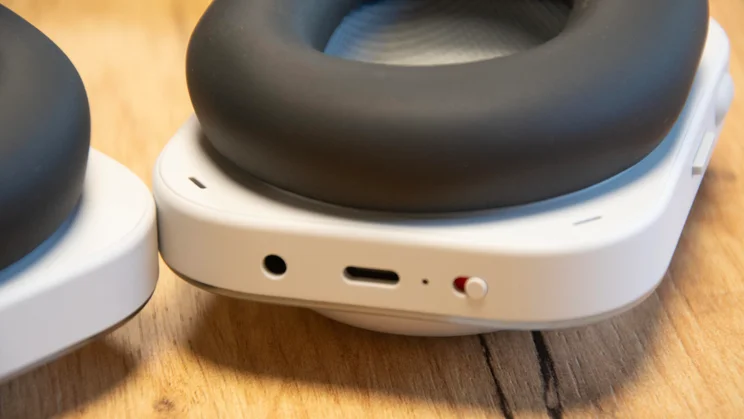
The Nothing (a) don’t look quite as avant-garde as the Headphone (1), but the changes are material as well as visual, with the (a) weighing 19g less than their predecessors. Despite that, they possess the same IP52 rating and connection ports, and use the same physical control configuration. On the right earcup, you’ve got a USB-C input for charging and high-res listening, a 3.5mm jack, a customisable depressible button, a multi-function “Roller”, and a “Paddle” that handles track skipping and scrubbing. Sneakily hidden inside the cup is a Bluetooth pairing button.
With a slightly larger 1,060mAh battery to draw on (versus 1,040mAh), the Headphone (a) have more stamina than the model above them. Using the AAC codec, you can expect up to 135 hours of audio playback with ANC off, dwarfing the 80 hours offered by the (1). Even with ANC engaged, you’re getting a whopping 75 hours of use, more than double that of Nothing’s first over-ear attempt. Switching to LDAC reduces these figures to 90 hours and 60 hours, respectively, but these are still huge improvements.
Areas in which the (a) lose ground on the (1), on paper at least, are active noise cancellation and call quality. They’ve got a more basic microphone setup, with two mics built into each earcup, and ANC handled by just one side. In contrast, the Headphone (1) have three mics in each earcup, and the two earcups share noise-cancelling duties. More pertinently, the (a) reduce external noise by up to 40dB, a couple of decibels less than the (1). Still, in real-world testing, the difference was marginal at best.
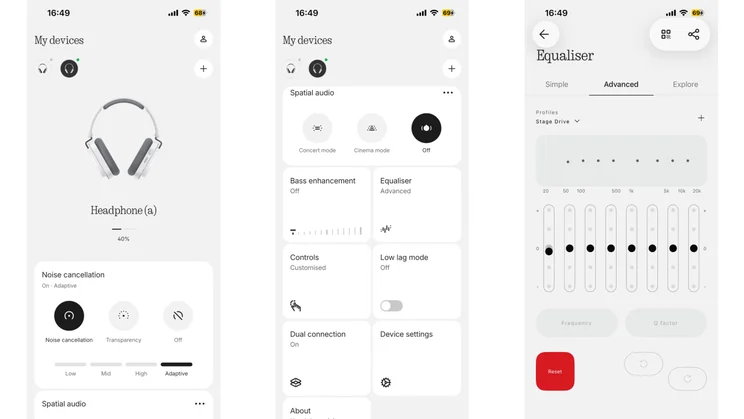
The differences are relatively minor on the feature front, too. Google Fast Pair and Microsoft Swift Pair are present and correct, as are the dual-device pairing, low-lag mode and EQ customisation options available in the Nothing X companion app. You’ve even got support for a couple of spatial audio modes – Concert and Cinema – to play around with.
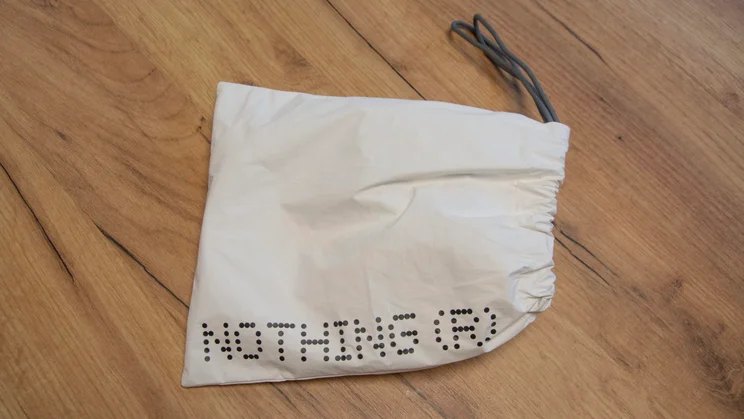
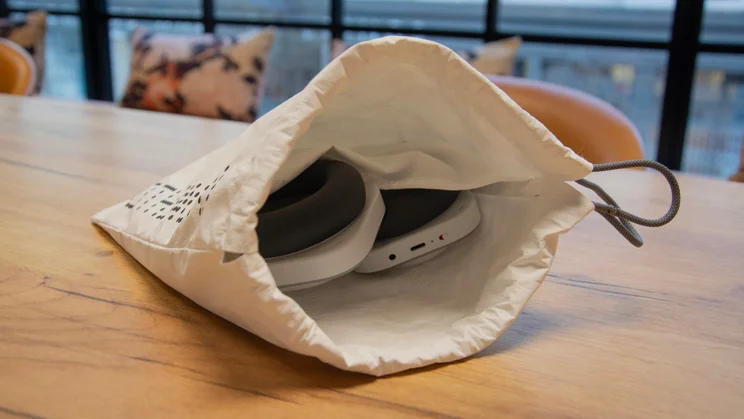
The (1) do have wear detection going for them, though, and also come with a far more robust hard-shell carrying case. Here, you only get a drawstring fabric pouch that offers very basic protection.
What do they do well?
The Nothing (a) handle almost all of the main cornerstones of over-ear headphones performance very capably. Sound quality, noise cancellation and controls are all areas of strength, and there are a few welcome extras that elevate the (a) well above your average £150 headphones.
Unusually, I’m going to start with their unconventional but extremely effective controls. These were a standout feature on the Headphone (1) and the (a) use the same setup. On the right earcup, you’ll find the “Paddle” and “Roller”. The former is a neat solution that lets you easily skip tracks and find specific spots in songs and podcasts. The latter is used for volume controls – roll your finger over the button to the right to increase it, and left to decrease it – play/pause, and toggling between the ANC and transparency modes.
The third button, located on the outside of the flat right earcup, can be used for a variety of functions, including hailing your voice assistant or cycling through EQ presets. You’re free to assign actions to this button in the Nothing X app, but the commands activated by the Roller and Paddle are fixed. Overall, the Headphone (a) are controlled in a wonderfully intuitive way, and there’s a pleasing tactility to the interactions.
The noise cancellation is also more than its money’s worth. I wore the Headphone (a) on recent flights to and from Europe, and they blocked out enough cabin noise to allow me to listen to music and podcasts at 50% volume, and let me drift off happily when I decided I’d done enough listening and just wanted some quiet.
You’ve got three levels to choose from – Low, Mid and High – and there’s a tangible change in the amount of external noise attenuated across all three. There’s also an Adaptive setting that adjusts ANC automatically based on the level of environmental sound; it works quickly and effectively, and it was this mode and the High setting I found best-suited to my needs during testing.
The transparency mode is well-implemented, too, ensuring I felt accessible to my colleagues while testing the headphones in the office, and aware of my surroundings and announcements being made while waiting to board at Heathrow.
Equally impressive for the money is the sound quality. With LDAC on board, you’ve got access to high-resolution Bluetooth streaming, but regardless of your source, the Nothing Headphone (a) are an enjoyable listen. And they only become more enjoyable when you start using some of the customisation tools at your disposal.
The pulsating bassline on Rem Siman’s The Matrix was satisfactorily robust by default, but throbbed with exhilarating intensity once I moved the Bass Enhancement feature up to 1. Level 2 proved a little overpowering for me, but I imagine plenty of Nothing fans will revel in being able to really crank up the low end. You’ve also got a More Bass EQ profile if you want to take things even further.
The Nothing (a) handle instrument and vocal-focused tracks assuredly, too. The balance between the piano, drums and electric guitars on Dein Ist mein ganzes Herz by Heinz Rudolf Kunze was well-judged, and each element felt cohesively pulled together within the soundstage.
For those who like to really tinker, the Advanced in-app equaliser lets you make frequency and Q factor tweaks across eight bands. It’s one of the most thorough – and at times fiddly – manual audio personalisation tools I’ve come across, but it works well once you’ve got the hang of it.
I was a big fan of the design of the Headphone (1), but had some reservations about how overtly attention-grabbing they were. An undoubted statement piece, they certainly weren’t to the taste of several of my colleagues. The (a) still use Nothing’s trademark transparent aesthetic but are less elaborate and ostentatious. Nothing has done itself a favour by dialling things back a bit here; the office verdict was overwhelmingly positive.
Finally, I have to mention battery life. I’ve been using the Headphone (a) for a good few weeks now, alternating between LDAC and AAC and using ANC a decent amount of the time, and they’ve still got 40% charge remaining.
What could be improved?
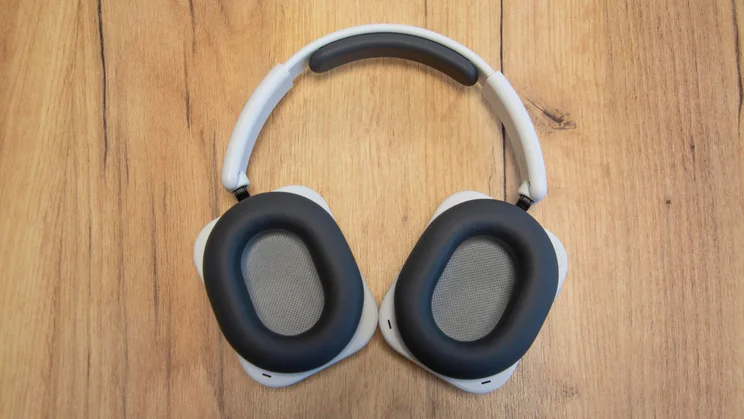
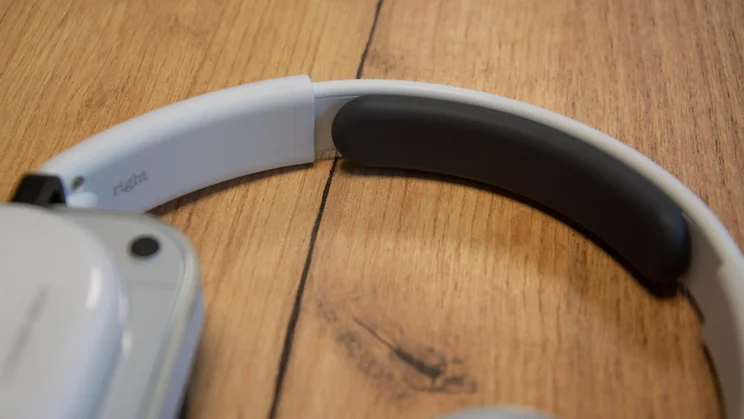
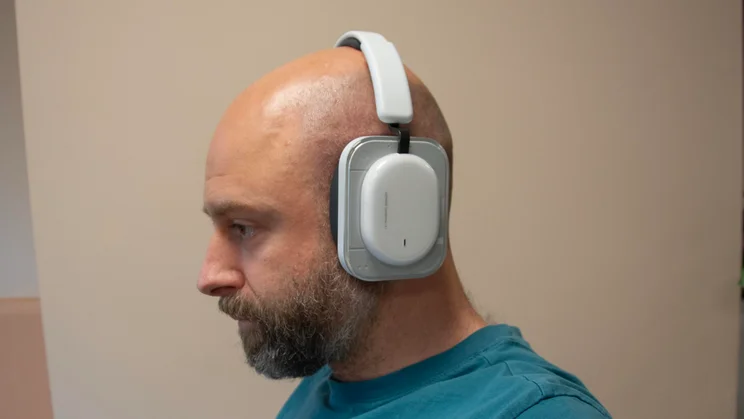
The Headphone (a) are marginally lighter than their predecessors at 310g. However, the additional bulk afforded to the rectangular outer shells of their earcups does mean they still tip the scales at roughly 50g (20%) more than most of their rivals. The extra weight is noticeable; I popped on the Bose QuietComfort Ultra Headphones (2nd Gen), Marshall Monitor III ANC and Philips H8000E for comparison, and the Nothing were the least comfortable of the lot.
This isn’t just down to their mass. The clamping force they exerted around my ears kept them perfectly in place, but it became a bit too much after a while. My ears had enough breathing room inside the cups, but I couldn’t shake being aware of the pressure they exerted on my skull during extended listening sessions. All-day comfort – or at least long-haul flight comfort – is up near the top of my list of must-have qualities for headphones, and it’s the only obvious area in which the Nothing (a) truly disappoint.
Less of a disappointment, partly because my expectations weren’t all that high, are the spatial modes. I found that voices took on a distracting echoey quality without adding much immersive effect when watching season two of One Piece on Netflix in Cinema mode. The Concert mode made me feel more like I was at The Cranberries’ rendition of Zombie live at The Hammersmith Apollo in 2012, but I felt the performance sounded richer and more engaging with spatial audio switched off.
I mentioned a couple of the things dropped from the Headphone (1) earlier, and it feels a little stingy to be overcritical about their absence, given they’re pragmatic cost-cutting measures. However, I did miss wear detection, which automatically pauses audio when you take the headphones off and resumes it when you put them back on. It’s not a hardship to have to hit pause before dropping the cans around your neck, but it’s hardly in the spirit of letting technology do everything for us, which I had thought was the direction in which the world is headed. Joking aside, I’d like to have seen it included.
The omission of the carrying case, I can understand. Premium headphones require a level of protection that mid-range efforts like these don’t, so the fabric pouch will probably be good enough for most people. That said, there are plenty of cheaper over-ear headphones sold with a case that will do a better job of preventing damage when slung in a bag. In Nothing’s defence, those headphones don’t tend to be nearly as neatly constructed or sturdy as the Headphone (a).
Should you buy the Nothing Headphone (a)?
Where my lukewarm recommendation of the Nothing Headphone (1) was limited to those wanting a pair of premium over-ears that would help them stand out from the crowd, the Headphone (a) are an option I’d advise a much broader group to consider.
They sound great, reduce external distractions effectively, look cool without trying too hard, have a fantastic control scheme, and are backed by an excellent app. They’re also very well-priced for what they offer.
The comfort issues I had with them mean their report card reads A- rather than A+, but if you’re not as sensitive to clamping force as I am and are in the market for new mid-range over-ears, you may well have just found them.