To help us provide you with free impartial advice, we may earn a commission if you buy through links on our site. Learn more
Schools and universities around the country may be gearing up for a new academic year, right now, but the launch of the Dell 14S seems a bit on the late side to capitalise on the back to school laptop market.
Nonetheless, Dell has chosen IFA 2026 in Berlin to launch its latest offering, and if you haven’t yet made the choice as to which laptop to accompany your studies with, it looks well worth putting on your shortlist.
Dell 14S Specifications
| Display | 1,920 x 1,080 60Hz 300nit / 2,880 x 1,800, 120Hz |
| CPU | Intel Core 5 or Core 3 series 3 (Wildcat Lake) |
| RAM | 8GB or 16GB |
| Storage | 265GB, 512GB or 1TB |
| Dimensions and weight | 13.5mm and 1.15kg |
| Battery life | 21 hours of video playback |
| Price | TBC (but “more affordable” than the XPS 13) |
| Availability | TBC |
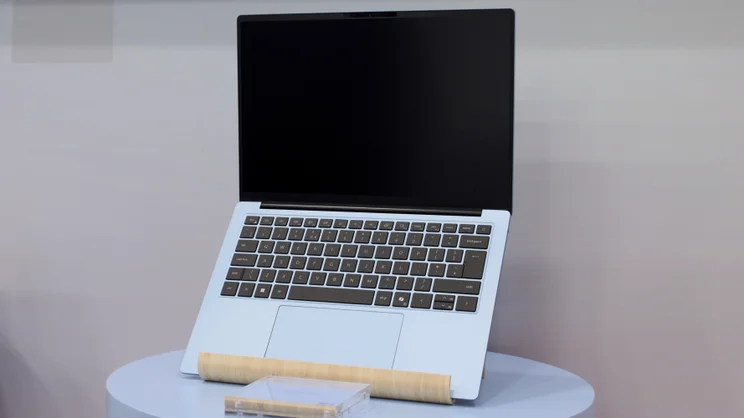
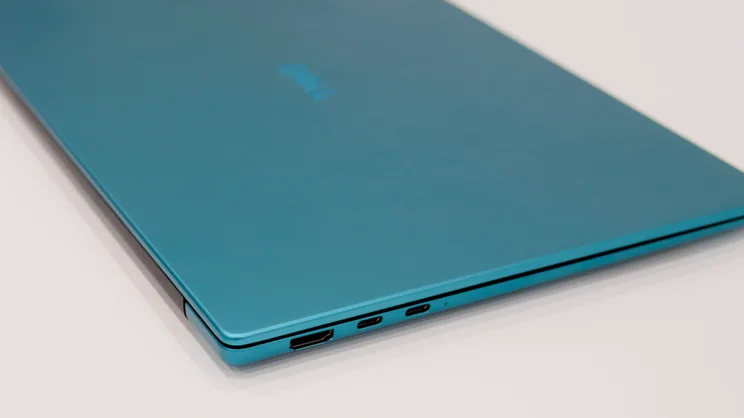
Like the MacBook Neo, which is our current choice as best choice right now in this category, the Dell 14s clad entirely in matte-finish aluminium, and it’s also available in a selection of attractive colours: Linen, Dusty Rose, Washed Denim and Velvet Green.
Aside from the daft names, these colours are actually quite easy on the eye. For reference (and translated to plain English), these are beige, light pink, light blue and bottle green, the latter being my favourite.
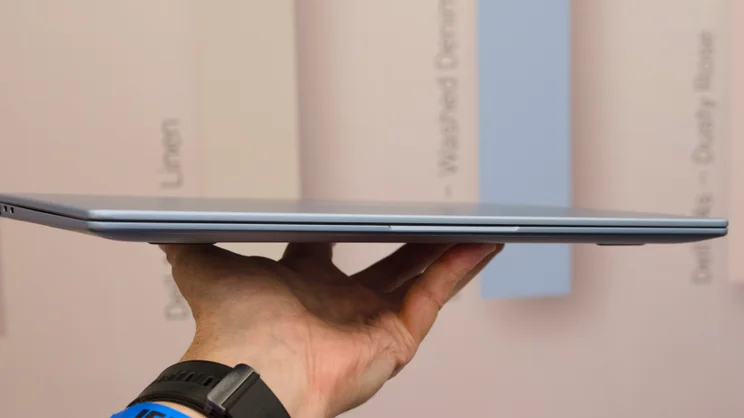
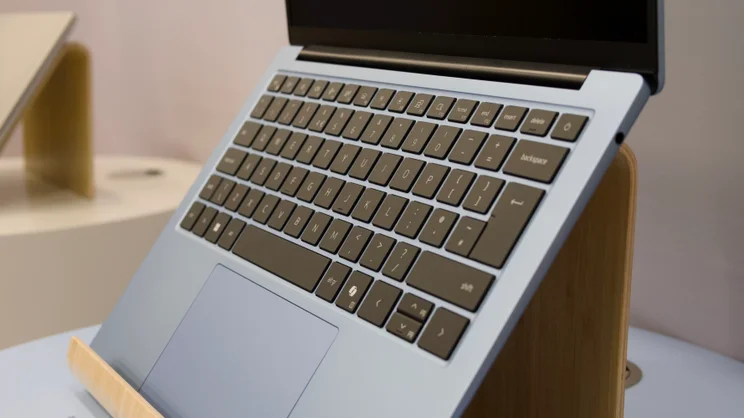
As you’d expect, from a laptop designed to compete directly with the MacBook Neo, it’s slim, slight and sturdy, measuring a mere 13.5mm thin and weighing 1.15kg. And although Dell didn’t have any working samples to show me, the keyboard felt reasonably comfortable after a quick “virtual” typing session. More importantly, it’s not one of the company’s flat, zero-lattice designs. Each key is surrounded by a narrow moat of aluminium, which should keep the traditionalists happy, and typos to a minimum.
Elsewhere, the hinges and lid feel sturdy and smooth and there’s a reasonable selection ports and sockets around the edges: an HDMI output on the left is accompanied by a pair of USB-Cs, with a 3.5mm audio jack on its own on the right.
As it’s a student machine, the 14S’ core specification isn’t the most exotic. You get a choice of Intel Core 5 and Core 3 series 3 (Wildcat Lake) processors, either 8GB or 16GB of RAM and either a 256GB, 512GB or 1TB SSD; still, this is better than the MacBook Neo, which is limited to 8GB of RAM and 512GB storage. And you get a choice between a basic 300-nit 1,920 x 1,200 60Hz display, or a sharper 2,800 x 1,800 screen that refreshes at a smoother 120Hz.
The highlight, however, and another area where it beats its Apple rival, is battery life, which stretches to a claimed 21 hours of streaming with the display set to 150 nits. Obviously, I’ll reserve judgement on this until I’ve had it in for testing. Apart from anything else, we test with the screen set brighter than this. But even if it misses the mark by a couple of hours, it’ll still be a chunk of time better than the Neo, and that’s important for a machine that’s destined to be carried around from lecture to lecture and class to class all day.
The Dell 14S will be available first in the US with UK availability and prices to be confirmed. I’d expect it to be available relatively soon, though, otherwise it will completely miss the boat on the academic year. As for the price, as it’s positioned slightly below the Dell XPS 13 in the range, which is £699 right now in its lowest spec, I’d expect it to be cheaper, which would make it a seriously tempting offering.