

To help us provide you with free impartial advice, we may earn a commission if you buy through links on our site. Learn more

Unless you’ve been hiding under a rock for the last couple of months, you’ll have noticed that all the major CPU manufacturers have launched new chipsets that promise to redefine what we can expect from our laptops.
Arguably, the most important are the latest offerings from Intel®, which will soon appear in the majority of new laptops and which promise truly game-changing advances in performance and efficiency.
The new Intel® Core™ Ultra Series 3 range consists of 14 processors with either 6, 8, 12 or 16 cores. You can find a list of all of them here if you want to know their exact specifications and which ones come paired with which integrated GPUs.
These new Intel® processors promise class-leading performance and efficiency, support for the very latest communications protocols for both wired and wireless connectivity, and are future-proofed for the increasing adoption of localised AI workloads.
1. Biblical battery life
Not so long ago, Apple’s MacBooks were the lords of the battery-life jungle, but no more. The Intel® Core™ Ultra Series 3 is so efficient that it’s quite easy to go for two full workdays without needing to look for a power socket.
Here at Expert Reviews, our battery life test involves looping a video using the VLC video player with the screen set to a brightness of 170cd/m², which is around 30% of the maximum on most laptops.
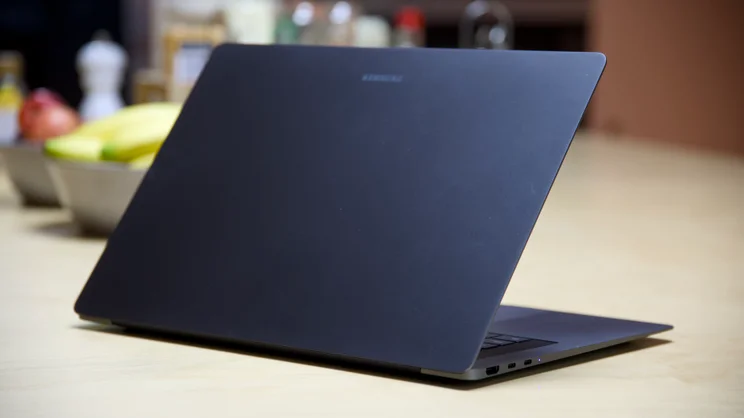
At the time of writing, we’ve tested two 16in Intel® Core™ Ultra Series 3 laptops, both with 120Hz 2.8K OLED screens, one from Acer and one from Samsung.
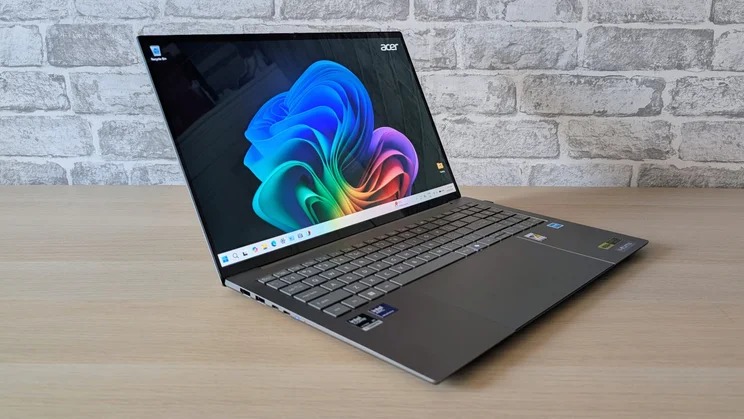
The Acer Swift 16 AI ran for 15 hours and 23 minutes, while the Samsung Galaxy Book6 Pro ran for 18 hours and 52 minutes. For laptops with rather power-hungry displays, those are impressive run times.
The Asus Zenbook Duo, with just one of its two 14in 2.8K 144Hz OLED screens powered up, ran for the mighty 21 hours and 31 minutes. Even with both displays running, the battery lasted for 11 hours. Again, that’s an impressive showing.
In more typical office usage, we were easily able to get through two full days on a single charge of the Samsung Galaxy Book6 Pro and still have 20% left to keep us amused on the train journey home.
The reason for this impressive level of efficiency is that the Intel® Core™ Ultra Series 3 processors utilise a 1.8nm manufacturing process. That means the transistors are smaller than those used in the Intel® Core™ Ultra Series 2 CPUs.
Smaller transistors mean increased efficiency and thus better battery life, and that’s absolutely what they deliver here.
2. Graphics good enough for gaming
It’s long been a truism that for really serious gaming, you needed a discrete GPU in your laptop. The new Intel® Core™ Ultra Series 3 processors have put paid to that. Even the most basic members of the lineup have an integrated GPU with four Xe cores, which is capable of running less demanding titles.
The more potent chips like the Intel® Core™ X9 388H, Intel® Core™ Ultra X7 368H and Intel® Core™ Ultra X7 358 come with the new Intel® Arc™ B390 integrated GPU, and that opens up a whole new arena of gaming possibilities.
Machines with the B390 can run games like Cyberpunk 2077 and DOOM: The Dark Ages at Full HD resolution and with basic ray tracing lighting effects at around 50fps with the help of Intel’s XeSS 3 (Xe Super Sampling) frame rate boosting tech.
If you are prepared to forgo ray tracing, you can get frame rates of over 50fps. This is a truly exceptional level of performance from laptops not designed for gaming and without a discrete GPU.
Indeed, one of the key features of the Intel® Arc™ B390 and B370 integrated GPUs is their support for the new XeSS upscaling technology. Like Nvidia’s DLSS, this uses multi-frame generation to interpolate AI-generated frames into the graphics pipeline to give the impression of faster performance. In games that support it, the performance improvement is dramatic.
Laptops running on Intel® Core™ Ultra Series 3 chipsets with the basic 4 Xe-core iGPU can’t match the gaming chops of those with the Arc 390 and 370 iGPUs: Cyberpunk 2077 is just about playable at Full HD with the lowest detail and lighting settings, but it’s marginal.
But they can happily run less demanding 3D games like the 2016 Doom reboot at over 40fps at Full HD in the Medium detail setting, even when all hell is quite literally breaking loose around you.
3. AI for today and tomorrow
Like it or not, AI is here to stay and is becoming an ever more important part of Microsoft’s Windows operating system. To keep you ahead of the AI game, the new Intel® Core™ UltraSeries 3 processors have an NPU or neural processor capable of running at 50 TOPS (Trillion Operations Per Second).

The powerful NPU lets you run local AI tasks, including Windows 11 CoPilot features like Recall, Live Captions, Cocreator generative fill in Paint, Click to Do and Studio effects in the webcam app, along with other sustained AI workloads without taking performance away from the CPU or GPU while minimising battery drain.
It’s not just Windows CoPilot that benefits from a pokey NPU. Creative tasks get a boost, too. Adobe’s Creative Cloud Acceleration speeds up features in Photoshop and Lightroom, such as subject selection, neural filters and AI-powered noise reduction, while video editing apps like DaVinci Resolve and Premiere Pro can use the NPU for tasks like smart re-framing and rotoscoping.
4. Power to the people
To get a firm handle on the overall performance of the laptops we test here at Expert Reviews, we use a Handbrake-based 4K multi-media benchmark of our own devising. This gives us a single number that can be used to quickly compare laptops regardless of their operating system or chipset type and architecture.
For a general-purpose laptop, a score over 250 is more than adequate for everyday use, while closer to 350 can be classed as very good indeed. Anything over 450 is excellent and means the laptop has the sort of performance that would have been unimaginable in this class even a few years ago.
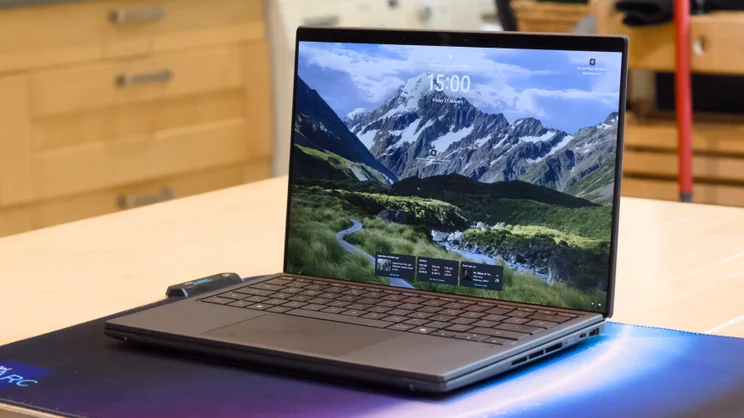
In our 4K benchmark tests, the Acer Aspire 16 AI scored 486. The Samsung Galaxy Book6 Pro scored 445 while the Asus ZenBook Duo notched up 455. To put that into context, a 2023-vintage 14-core Intel® Core™ i9-13900H-based laptop would have scored around 340, so we are looking at 35% uptick in performance with less power drain.
Of course, those scores come from the range-topping 16-core Intel® Core™ Ultra X7 and X9 processors, but even the 8-core Intel® Core™ Ultra 7 processor 355 scored 248, which is a very solid result for a mid-range CPU.
Those scores mean that the new Intel® Core™ Ultra Series 3 are more than capable of chewing through even the most demanding tasks at speed and without breaking into a sweat, and have redefined what you as the consumer can expect from a laptop not specifically designed for hardcore gaming or creative work with all that entails in terms of size, weight and minimal battery life expectancy.
5. Get yourself connected
Picking a laptop with an Intel® Core™ Ultra Series 3 processor also means you get support for the latest Intel® high-speed connectivity, including Thunderbolt 5, which can deliver 120Gbps of transmit bandwidth, and Wi-Fi 7 R2 (Release 2), the next-generation wireless connectivity platform, which offers improved reliability, lower latency, and data speeds up to 5.8Gbits/sec.
Other features of the Intel® Core™ Ultra Series 3 range include support for Bluetooth 6.0 and up to 20 PCIe 5.0 lanes and up to 96GB of LPDDR5X RAM. In other words, no matter the latest word of wired or wireless data transmission, Intel® Core™ Ultra Series 3 has you covered.
Which Intel® Core™ Ultra Series 3 is right for me?
Samsung’s new Galaxy Book6 Pro 16 features a display that our Head of Reviews described as the “best I’ve encountered on any laptop”. It’s a handsome and solid machine, thanks to its aluminium casing, and there’s space inside for a second 2280 M.2 SSD. Special mention must be made of the sublime, massive, haptic touchpad that’s a joy to use. Performance from the 16-core Intel® Core™ Ultra X7 358H CPU is impressive.
Acer’s Aspire 16 AI is a great value laptop and a stronger performer by any definition. The OLED screen can’t match the accuracy of the best on the market, but it is touch-enabled and looks great to the naked eye. Despite using the same CPU as the Samsung Galaxy Book6 Pro 16, the Acer proved to be a better performer, though the battery life wasn’t as good as the Samsung laptop. This is one of Acer’s most convincing and desirable laptops for some time.
The Asus Zenbook Duo isn’t what you call cheap at £2,799, but its dual 2.8K OLED touchscreens are quite superb in terms of quality and colour-accuracy. The twin-display form factor is now fully matured making this the perfect solution for anyone who finds that one display just ain’t enough to get the job done. Built around the more powerful of the new Intel® Core™ Ultra Series 3 CPUs, the X9 388H, the Zenbook Duo is blisteringly fast.


