To help us provide you with free impartial advice, we may earn a commission if you buy through links on our site. Learn more


- Incredibly cheap for what it offers
- Genuine surround sound experience
- Compact main soundbar design
- Front-to-rear bass discrepancy
- Voices can sound unnatural
- It’s not great for music
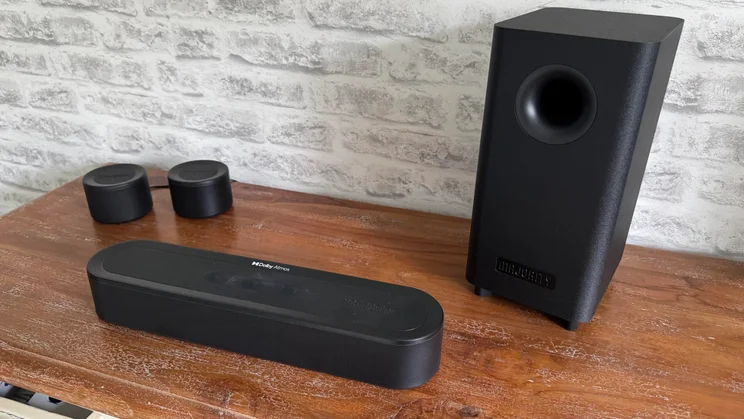
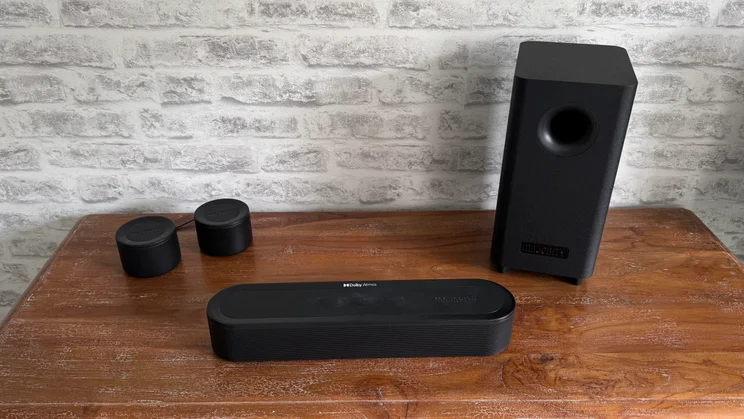
The Majority Bowfell Halo Atmos’s pitch to customers in an ever more crowded soundbar marketplace is gloriously straightforward. It’s a genuine multi-channel sound system with four separate components costing just £169. Crikey.
Is this really all you need to know before you rush off to buy one? Or does getting so much home cinema-friendly speakerage for so little cash actually come with major strings attached?
How much does it cost?
I’ve said this already, but it’s worth repeating: the Majority Bowfell Halo Atmos soundbar package costs just £169. And yes, this includes the rear speakers and subwoofer as well as the main soundbar.
Competition is scarce at this sort of price level. The impressive Creative Stage Pro is even cheaper, but is a soundbar-plus-subwoofer solution, without any physical rear speakers. The Sonos Ray gives you a surprisingly compelling slice of Sonos quality for just £199. But that’s just a single-bar option that only gives you the ‘front half’ of an Atmos experience.
Is it designed well?
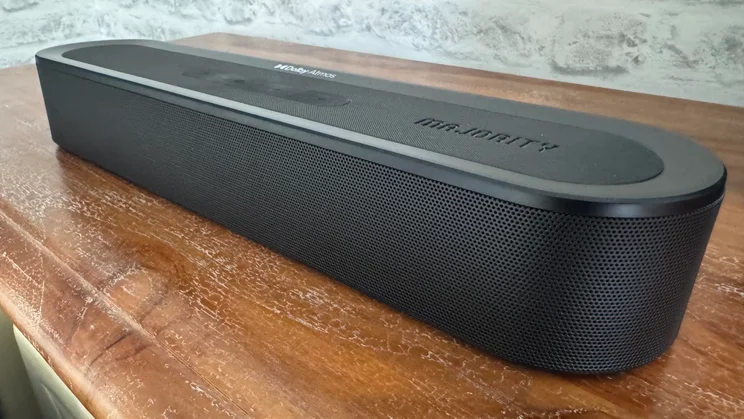
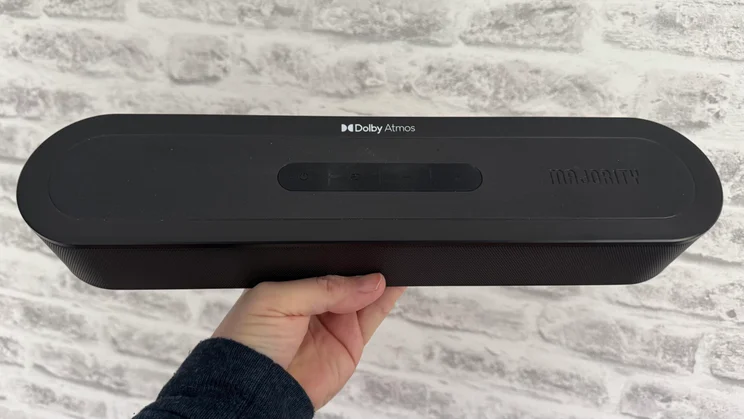
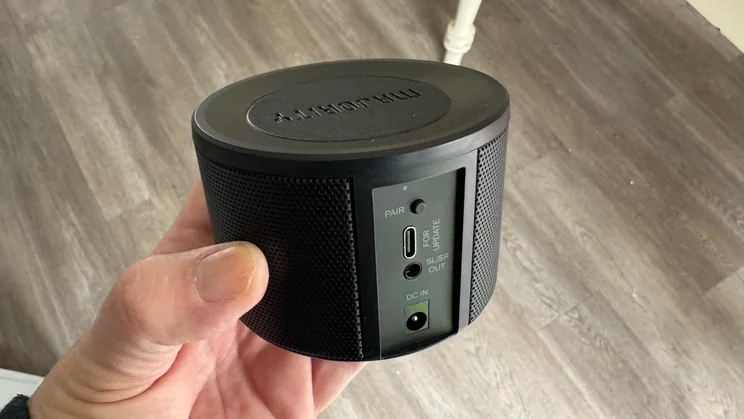
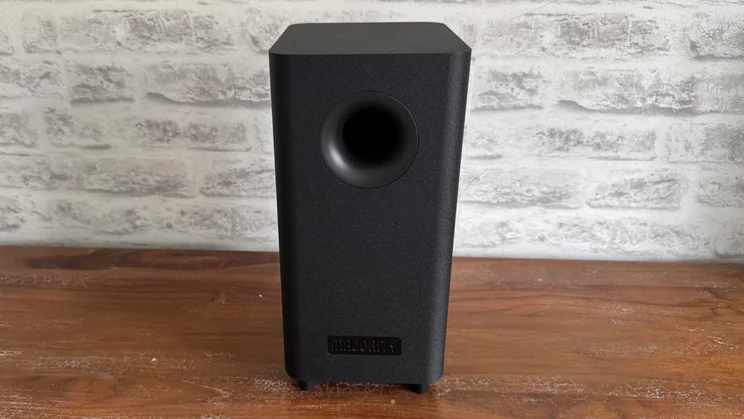
As a four-piece system, the Halo Atmos package is more of an imposition on your room than a simple single bar or bar-plus-subwoofer setup. However, each component is eye-catchingly compact: the main bar measures 410 x 90 x 62mm (WDH), the subwoofer measures 150 x 190 x 320mm, and the circular rears are just 88mm across.
On paper, the soundbar’s size suggests the Halo Atmos system is best suited to 50in or 55in TVs. Actually, though, its sound is big enough to stretch to screens a fair bit bigger than that.
Build quality is mostly cheap and cheerful, as you might expect of such an affordable system. The main bar and rears are lightweight, plasticky and easy to hold in one hand. The subwoofer is a bit more meaty, but still feels flimsy compared to your average soundbar system subwoofer.
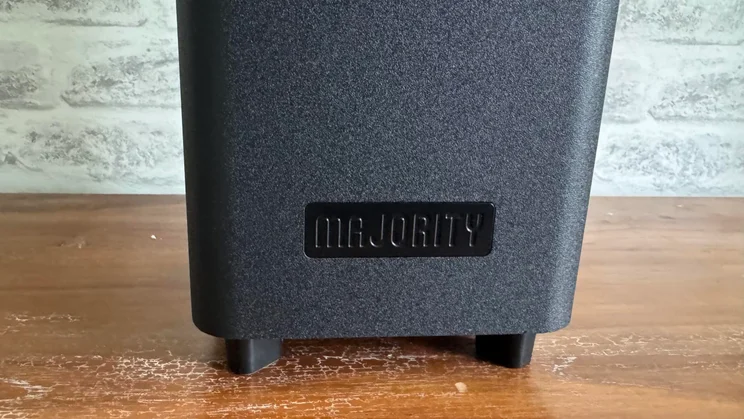
The finish across all four components is fairly crisp and clean, though. The circular ‘puck’ rears and archly rounded ends of the soundbar make those three components, at least, feel like they’re part of the same family. The unusually large etched-in Majority branding on all four components leaves no doubt they come from the Cambridge-based brand’s labs.
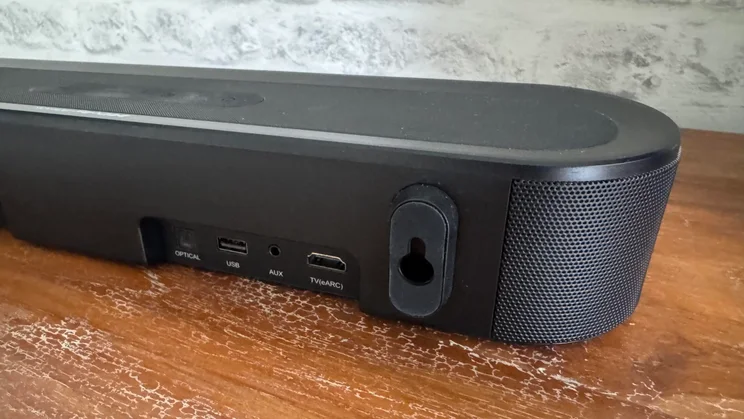
The main bar has simple integrated slot points at each end for sliding down onto screws if you want to wall-hang it. The wall-mounting kit is included.
All in all, while the lightweight construction raises questions about the Halo Atmos’ performance capabilities, it looks quite cute. So not really a major imposition on your room.
What connection options does it have?
The Bowfell Halo Atmos has an optical audio input, a USB port, a 3.5mm Auxiliary input, and an HDMI (eARC) port. One rear speaker has a USB port for service updates and a connection point for connecting to the other rear speaker. While the two rears must be tethered to each other, they don’t need to be physically connected to the main or subwoofer.
The Halo Atmos supports Bluetooth 5.3, but not Wi-FI connectivity, which isn’t surprising at this price.
How do you control it?
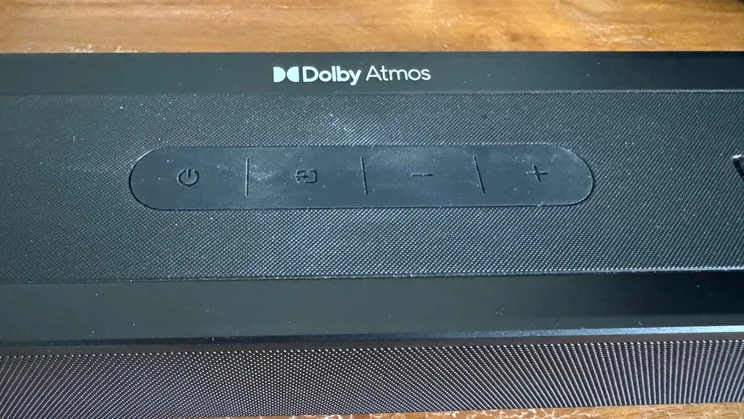
The two most obvious control options for the Halo Atmos are straightforward power, source and volume buttons built into the top edge of the main soundbar, plus a plasticky, cutely shaped remote control. There’s no voice control or companion app.
One welcome surprise is the LED display on the main bar, which shows your selected input, volume level, audio format and audio preset.
What driver arrangement and audio technologies does it use?
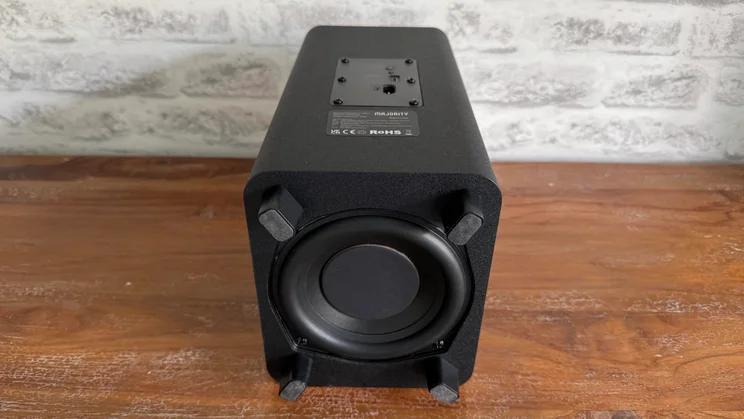
The main bar in the Halo Atmos system houses three front-facing drivers, while the rear speakers use a single front-facing driver. The subwoofer, which sits on short feet, sports a substantial down-firing driver.
This adds up to a straightforward 5.1-channel setup capable of delivering real (not virtual) surround sound effects, which is pretty much unheard of for a sub-£200 soundbar. The claimed 300W of power available across these channels is impressive, too.
However, the Halo Atmos has no physical up-firing speakers, so it resorts to virtual speaker processing to create Dolby Atmos’s height/overhead channel effects. The Halo Atmos supports Dolby Atmos, but not any DTS formats.
Atmos support aside, Majority’s system isn’t exactly stuffed with features. The only things not already mentioned are Music, Movie, News and Sport EQ modes. Confusingly, these appear as numbers rather than by name on the bar’s LED display.
What is the sound quality like?
The Bowfell Halo Atmos’ sound is startlingly, if not quite shockingly, good for its price. Hearing real sounds from behind me on Dolby Surround or Atmos mixes instantly puts a smile on my home-cinema-loving face.
Most budget and even mid-range soundbars that ship without dedicated rear speakers either give no sense of rear sound at all or, if you’re lucky, serve up a mushy ambient virtual rear effect. Despite their size, the Halo Atmos system’s rear speakers deliver clean, well-placed detail and successfully handle transitions across the rear soundstage.
An effective subwoofer
The next unexpected thing about the Halo Atmos is how effective the subwoofer is at contributing low frequencies. Bass reaches much lower than you’d expect from the sub’s compact size and single down-firing driver. It’s also sensitive and confident enough to inject itself into the action whenever even a little bass can give a soundtrack a better sense of impact, scale or weight. There’s none of the reticence and muted quality you sometimes get from budget soundbar subwoofers.
The subs’ low frequencies emerge from the down-firing driver quite smoothly. They do so without distorting or dropping out except during very rare moments of the most extreme pressure Hollywood’s audio teams have come up with.
At the other end of the frequency range, while trebles aren’t exactly crystal clear, they don’t tend to sound harsh or excessively, distractingly bright. Also, while the speakers aren’t sensitive enough to delineate every tiny detail in the most sophisticated mixes, soundstages are consistently busy enough to feel immersive and believable.
The main bar’s mid-range is open and expansive enough to tie in cleanly with the subwoofer’s low frequencies too, with no gapping or overpowering overlap. The main bar’s three speakers and the rears push sound out with decent impact and power, and the whole system can go gratifyingly loud before anything starts to sound too coarse or forced.
Sonic limitations
Of course, the Halo Atmos system has limitations. Its biggest flaw is that male vocals can sound a bit muffled and dominate the mix. The thick tone of male voices means they sound a bit locked into the soundbar, rather than directly connecting with the images on your TV.
While the rear speakers deliver a wider mid-range than you’d expect from their size, they do sound a little lightweight compared with the main bar, and while the subwoofer is mostly impressive, its bass doesn’t stretch all the way across a mid-sized or large room to underpin the rears as well as the main bar. These issues can leave the front and rear soundstages feeling a little unbalanced. But not nearly as unbalanced as systems without physical rear channel support.
While the Bowfell Halo Atmos system tries to create a virtual sense of Dolby Atmos’s height effects, it isn’t particularly successful. The sense of sound rising from the main bar or the rears is pretty limited and generalised. However, the sound is impressively wide, making the system usable with TVs as big as 75in.
Wrapping up the Halo Atmos system’s limitations, the eagerness of its subwoofer can make what should be ambient, background sounds too heavy in the mix, and the system is not very musical; the tuning that works so hard to make film and TV soundtracks sound good can’t adapt itself to a natural, balanced music presentation.
All in all, though, for a system to deliver surround-sound movie soundtracks as well as the Halo Atmos does for just £169 feels borderline miraculous at times.
Should you buy the Majority Bowfell Halo Atmos?
While it’s not as uncommon as you might think to find respectable-sounding soundbars for under £200, genuine surround-sound models with rear speakers for anything like £169 are as rare as hen’s teeth.
In both design and sound quality terms, the Majority Bowfell Halo Atmos does what it sets out to do very well. It isn’t perfect, of course, especially if you want a sound system that’s as good for music as it is for movies. Overall, though, it delivers a more powerful, detailed, flexible and immersive surround-sound experience than you could reasonably expect for so little money.