
To help us provide you with free impartial advice, we may earn a commission if you buy through links on our site. Learn more
- Spectacular contrast and brightness
- Excellent gaming support
- Premium design
- Sound quality could be better
- Slight green tint with off-axis viewing
- No HDR10+ support
LG OLED TVs have become the stuff of home cinema legend over the past decade, as their self-emissive pixels deliver local contrast levels rival TV technologies can only dream of.
Recent generations of LG’s G series OLEDs have pushed LG’s OLED story forward, too, to fend off determined assaults from both a new generation of premium Mini LED TVs and a new twist on the OLED formula in the shape of Samsung’s QD-OLEDs.
Can the LG G6 OLED keep the breakneck speed going? Or has the relentless pressure finally caught up?
LG G6 OLED: Key specifications
| Screen sizes available | 48in (OLED48G66LS), (55in (OLED55G66LS), 65in (OLED65G66LS), 77in (OLED75G66LS), 83in (OLED85G66LS) and 97in (OLED97G66LS) |
| Panel type | Primary RGB Tandem WOLED (except for the Evo-panel 97in) |
| Resolution | 4K/UHD (3,840 x 2,160) |
| Refresh rates | Up to 165Hz |
| HDR formats | HDR10, HLG, Dolby Vision |
| Audio enhancement | 4.2-channel speaker system, with virtual 11.1.2 AI sound upmixing |
| HDMI inputs | 4 x HDMI 2.1 |
| Freeview Play compatibility | Yes |
| Tuners | Terrestrial Freeview HD |
| Gaming features | VRR, AMD FreeSync Premium and NVIDIA G-Sync, 4K/165Hz, ALLM |
| Wireless connectivity | Bluetooth (5.3), Wi-Fi, Apple AirPlay 2 |
| Smart assistants | LG ThinQ AI, support for Amazon Alexa and Google Assistant |
| Smart platform | webOS 26 |
What you need to know
The G6 isn’t quite LG’s flagship OLED series for 2026. That honour belongs to the new super-thin W6 Wallpaper. However, it sports the same core premium Primary RGB Tandem WOLED panel technology as the W6 models on all screen sizes bar the 97in model.
In 2025, the G5 OLED was the only TV in the LG range to get the extra talents associated with Primary RGB Tandem panels. This year, though, the same core panels are also found in the 77in and 83in models of LG’s step-down C6 OLED series. This puts more pressure on the larger G6 screen sizes to justify their extra cost, but the 55in and 65in G6 models only have step-down ‘Evo’-grade panels to compete with on their equivalent C6 models. The 65in model was the primary source of my G6 tests.
The G6 series also carries the third generation of LG’s premium Alpha 11 Processor Gen 3 AI-backed processor (offering a claimed 50% faster CPU and 70% faster GPU over the previous generation), a claimed 20% more brightness than last year’s G5 series, and an improved anti-reflection coating versus any previous LG OLED.
Price and competition
The OLED G6 costs £1,599 for the 48in model, £2,199 for the 55in, £2,999 for the 65in, £3,899 for the 77in, £5,499 for the 83in, and £15,999 for the 97in. These prices are down from the launch prices of 2025’s G5 series – particularly so in the 97in model’s case; the 97in G5 cost a whopping £24,999.
The G6 is broadly in line with the sort of prices being asked this year for rival premium OLED and top-spec mini-LED TVs, though. The closest rival is Samsung’s S99H range of QD-OLEDs, while on the Mini LED side of the market you’ve got Sony’s Bravia 9 II series and the Hisense UR9S.
Design, connections and control
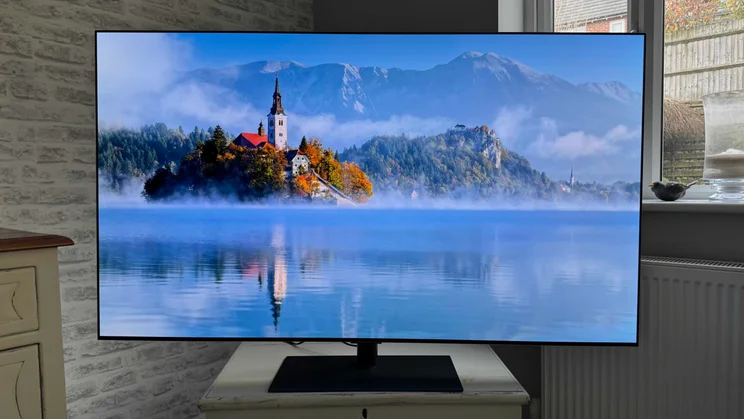
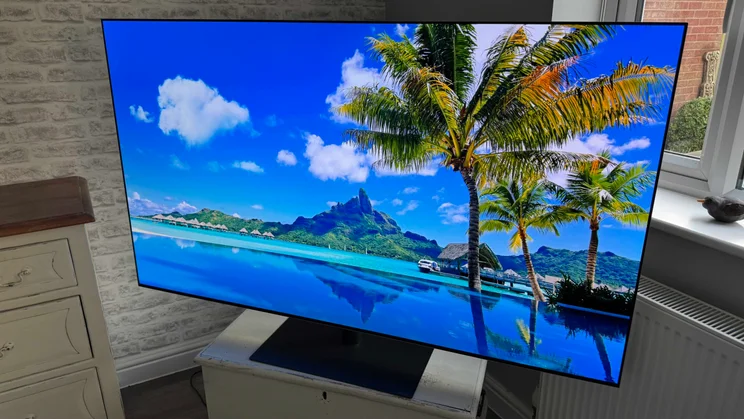
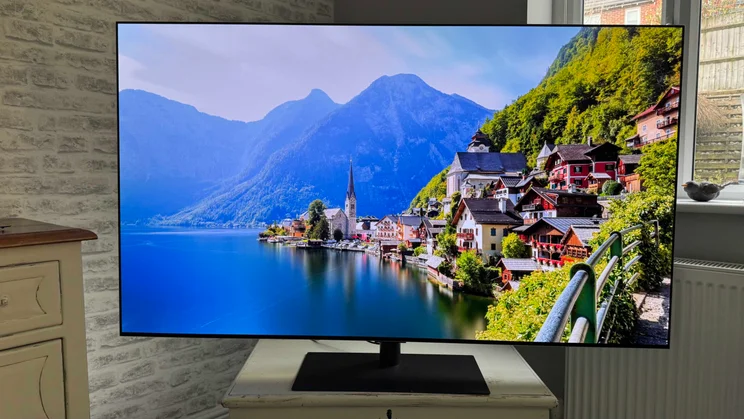
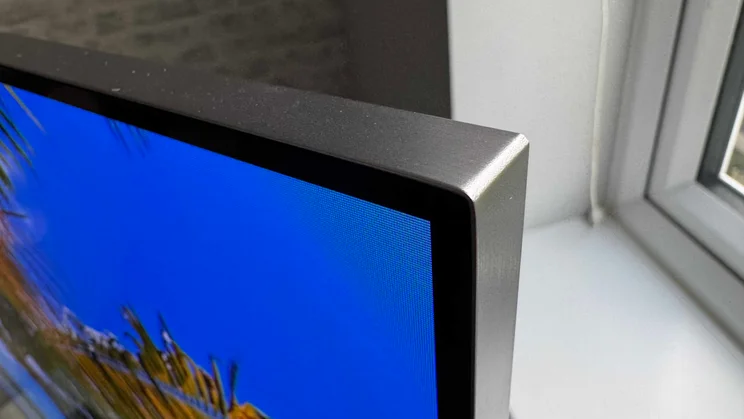
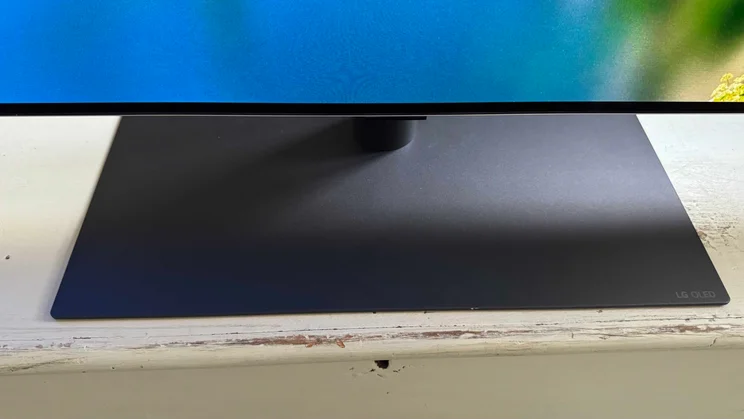
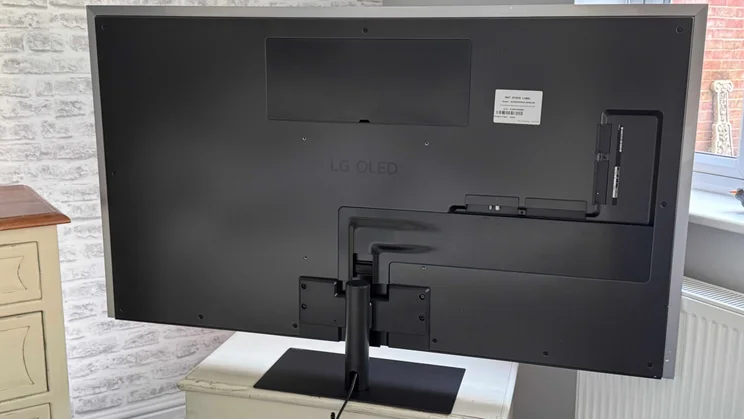
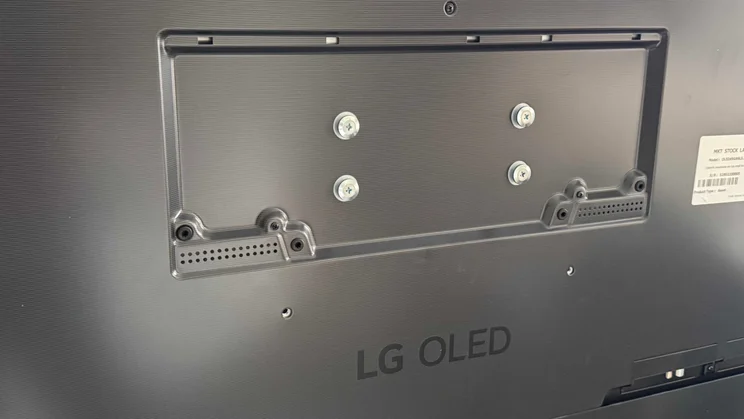
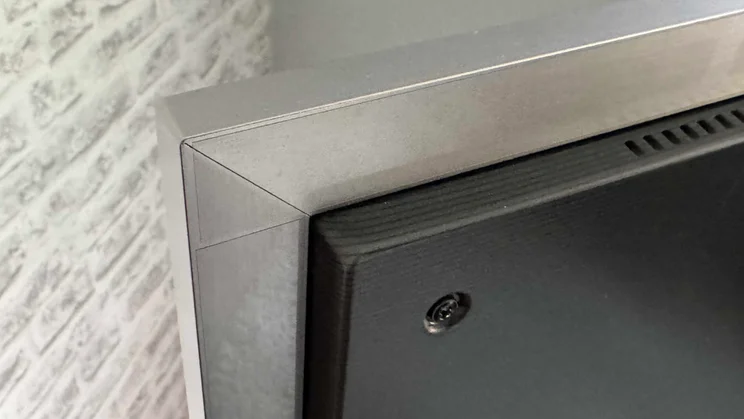
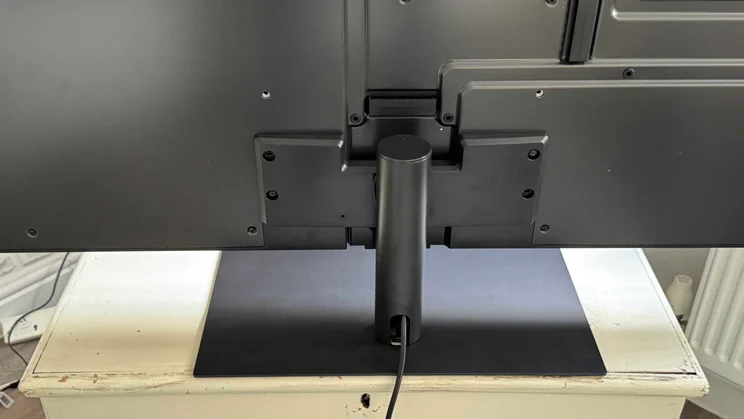
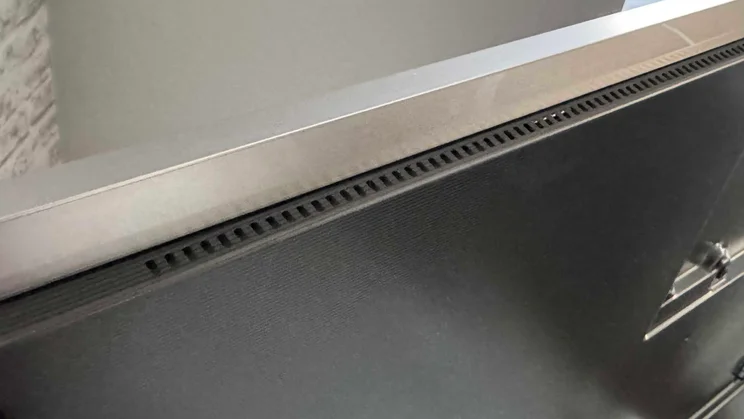
The G6 is a good-looking, robustly built TV that looks and feels suitably premium. The screen is edged in a crisp, opulent silver metal finish and can either slot onto a sleek silver square plate-style desktop base or hang on the wall using a bracket that slots into a recess on the TV’s rear.
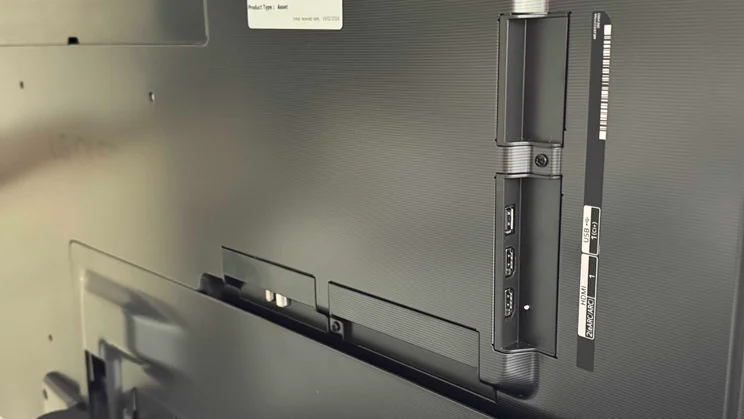
The G6 carries an impressive suite of connections, headed up by four full-bore HDMI 2.1 jacks, all capable of taking in 4K gaming graphics at refresh rates up to 165Hz. I’ll cover the G6’s full range of gaming capabilities later.
One HDMI port supports eARC for passing sound to compatible soundbars or AVRs, and the HDMI ports are joined by two USB ports, a network port, a digital optical audio output, plus Bluetooth (5.3) and Wi-Fi support. Wireless connectivity extends to Apple Home and AirPlay, as well as Google Cast.
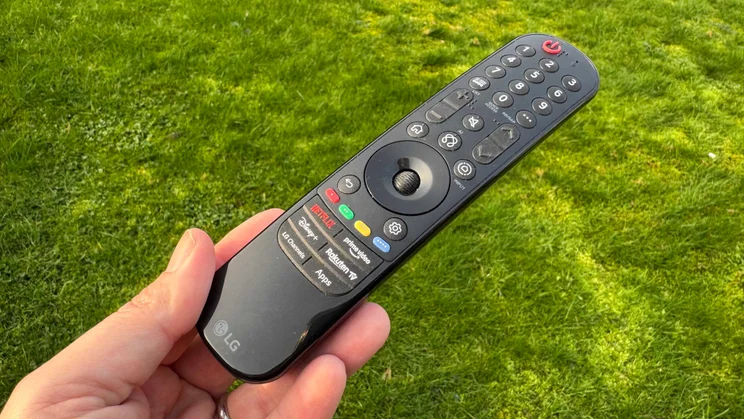
The G6 ships with one of LG’s distinctive ‘magic’ remotes, so-called because you select onscreen options by pointing the remote at them. While this is intuitive in principle, I find it a bit finicky in practice, so it’s handy that the remote also carries a joystick you can use to quickly scroll up and down menus, as well as a traditional left/right/up/down button navigation system.
You can also control the TV by talking to it – a helpful feature enhanced this year by an AI Concierge system that helps you get to the content or features you want more quickly. There’s also a dedicated AI button that takes you straight to the ‘Concierge’.
Smart TV platform
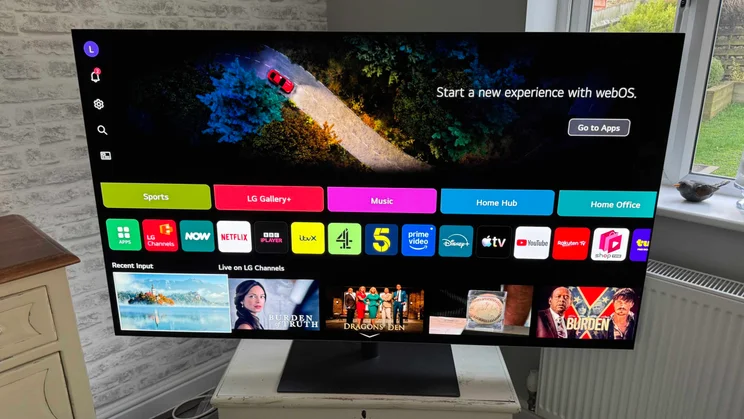
The G6 carries the latest iteration of LG’s webOS smart platform, which is impressively rich in content. It supports all the main global streaming services as well as all the key UK-specific catch-up TV services. The latter are under the Freeview Play app, with its attractive interface and helpful content curation systems. You don’t get Freely for streaming many of the live channels found on the Freeview HD broadcast platform, though.
While exploring the webOS platform, you’ll notice the G6 supports HDR10, HLG and Dolby Vision but not HDR10+. So it can’t join the latest TVs from Hisense, Panasonic, Philips, and TCL in always offering the best version of any content. LG has also ruled out support for the new Dolby Vision 2 system for its current TV generation.
While webOS’ intelligence and personalisation features are very sophisticated, it’s less straightforward than in its early days. However, the arrival of the AI Concierge suggests LG may be planning to simplify the webOS experience moving forward.
Image quality
While the G6 can handle much more than the limited colour and light ranges associated with standard dynamic range content, it still works hard to get the maximum quality and impact out of it.
LG OLED TVs have long excelled with SDR content. For a long time, they did a peerless job bringing out the subtlest nuances of colour and shadow detail, and matching impeccably the mastering standards used during content creation. Some other brands have now caught up with LG OLEDs concerning ‘director’s intent’. Still, the G6 delivers beautifully deep blacks, wonderfully subtle greyscale and shadow detailing and impeccably nuanced colour toning.
In fact, far from the G6’s greater picture extremes causing issues with SDR, it seems to deliver palpable improvements in its most accurate Filmmaker Mode. Near-black picture detailing is purer and less noisy, and dark colours look more natural and refined.
Thanks to its latest picture-processing engine, it’s also outstanding at ‘expanding’ SDR into something more enjoyable to watch in a bright room. The Standard and Dolby Vision Bright presets both inject substantially more brightness into the picture, but also expand the colour palette to prevent it from fading as the brightness dials up. No standard preset colour looks overblown or unbalanced, and the picture engine preserves all details and tonal subtleties even as the colour volume expands.
Subjectively and objectively excellent
The latest processor also does a remarkably good job of upscaling HD and even SD sources to the screen’s native 4K resolution, adding extra clarity, detail and density with no sign of common upscaling side effects like motion blur, grittiness, or object edging.
As I’ve long come to expect with LG OLED TVs, the G6 backs up its subjectively excellent SDR Filmmaker Mode with an immaculate set of test measurements courtesy of Portrait Displays’ Calman Ultimate software, G1 signal generator and C6 HDR5000 light meter.
Despite settling at a higher brightness level than I’d expect from Filmmaker Mode, the G6 tracked the Rec709 SDR EOTF curve basically perfectly and hit Delta E 2000 average error scores below the key 3 threshold across every key colour and grayscale Calman Ultimate test. In Calman’s Gamut, Luminance Sweep and Saturation Sweep tests, it scored an outstanding 1.8, 1.4 and 1.4, respectively, some of the lowest error levels I’ve ever recorded.
Calman Ultimate measurements show that the punchier Standard preset only slightly increases the core white level point from Filmmaker Mode, but also confirm that the brightness is given freer rein to push colour volumes and saturations further. As a sign of how considered LG is with all its picture presets bar the OTT Vivid one, the Delta E 2000 measurements for Calman Ultimate’s Gamut, ColorChecker, Saturation Sweep and Luminance sweeps are unusually consistent and quite low by Standard preset standards at 10.4, 10.8, 10.2 and 8.5 respectively.
HDR performance
The G6’s HDR performance achieves two instantly obvious improvements over its G5 predecessor: more brightness and cleaner colour blending.
On the brightness front, the brightest highlights of HDR pictures look noticeably more intense; an impression confirmed by Calman Ultimate measurements that find the G6 hitting impressive brightness peaks of just over 3,400cd/m2 on a 2% test window, a significant leap over the 3,050cd/m2 peak achieved on a 5% window by the G5.
The G6’s highest peaks drop to around the same level on a 5% window as the G5, but this actually confirms my subjective impression that LG’s improvements have mostly focussed on unlocking more of the most extreme (up to 4,000 nits) small brightness peaks HDR content contains, rather than just turning everything HDR up to 11. That said, the G6 maintains 500cd/m2 on a full-field white pattern, a notable step up from the 400cd/m2 the G5 achieved in the same test.
Intriguingly, the G6 delivers its brightest peak measurements in Filmmaker Mode this year, whereas on the G5 this mode’s peaks were more than 1,000 nits down on those of the Vivid preset. This continues the apparent G6 theme of LG feeling confident pushing Filmmaker Mode a bit harder without affecting measurable accuracy.
Consistently clean, natural and nuanced
I’ll come back to this accuracy point shortly, but first I should cover the G6’s reduced colour banding. On the G5, subtle HDR colour blends often appeared beset by distracting striping noise, but this barely happens at all on the G6. The result is a consistently cleaner, more natural and nuanced image that gets back to the ultra-immersive image quality that’s long been LG’s trademark.
LG’s latest processor handles colour well enough to ensure that the G6’s extra brightness actually unlocks more colour volume and more vibrant saturations, rather than causing subtle tonal shifts to go AWOL or bright colours to start looking faded. In this respect, the G6 does an outstanding job of fighting the notion that OLED TVs based on WOLED principles can’t handle the sort of extreme colour volumes found at the outer edges of today’s HDR content world.
Most of the time, the G6 paints its newfound brightness and colour talents against the same impeccable black-level foundation home cinema fans expect from the brand’s OLEDs. Occasionally, an extremely dark scene with subtle shadow details slightly elevates black levels, but the default Standard picture preset rarely displays this issue, and Filmmaker Mode practically eliminates it.
It’s easy to appreciate the G6’s mostly outstanding contrast and black levels, too, thanks to its improved anti-reflection filter. This doesn’t go as far as some rival TVs, but the G6 retains the glossy look many AV fans prefer over the matt finish associated with the most extreme reflection-rejection screens.
Sharper and more detailed than its predecessor
Sharpness and detailing with 4K HDR feeds is outstanding on the G6 – even better than it was on the G5, thanks to its improved colour resolution and contrast. And this exceptional clarity holds up superbly with action-packed 24p film content, because of LG’s excellent Cinematic Movement motion compensation option. This reduces the impact of ‘hardware’ judder caused by the OLED panel without causing the soap opera effect or generating distracting processing side effects.
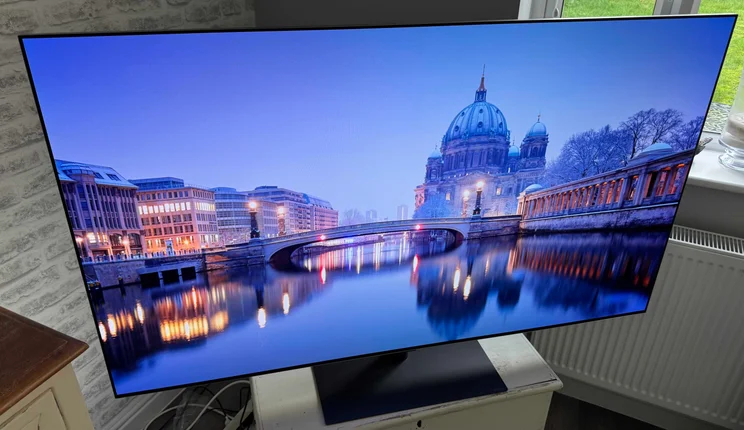
The G6 doesn’t lose any significant colour or contrast when viewed from a steep angle. Wide-angle viewing does reveal the G6’s only major picture weakness, though: a slight green overtone to pictures that vanishes entirely during head-on viewing. Another small issue is that some colour tones, especially skin tones, can look desaturated during dark scenes. The G6 delivers a subjectively exceptional viewing experience.
Calman Ultimate tests back up these personal viewing impressions. The screen can cover more than 99% of the DCI-P3 colour spectrum used for most HDR mastering, and an impressive 82.4% of the extreme (but seldom used) BT.2020 gamut. HDR Colormatch, Colorchecker plus BT.2020 and P3 Saturation Sweep measurements in Filmmaker Mode recorded results of 2.1, 1.4, 1.7 and 1.2 respectively – another spectacular set of scores all well under the 3 threshold beneath which the human eye can’t spot any visible errors.
I tested the LG G6 OLED using Portrait Displays’ Calman Ultimate software
Gaming
While many buyers of LG TVs over the years have come for the home cinema, they’ve stayed for the gaming. The OLED G6 continues LG’s long run of gaming form with an irresistible combination of gaming features and performance.
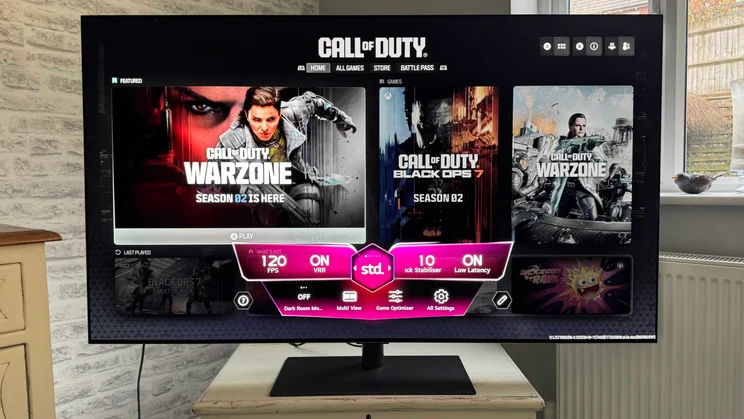
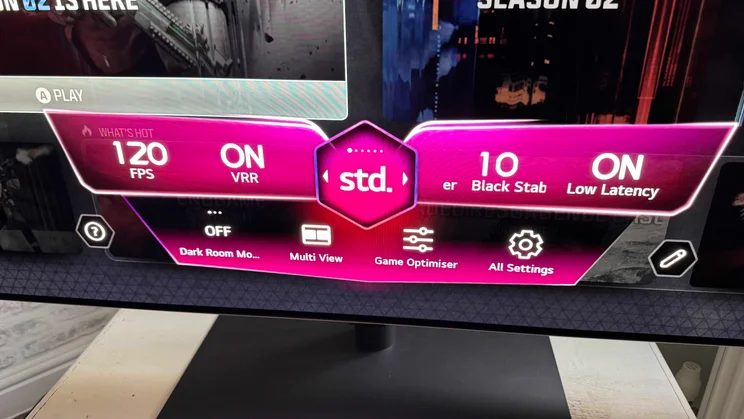
Features include support for 4K at frame rates up to 165Hz, basic HDMI VRR, AMD FreeSync Premium and Nvidia G-Sync. Auto Low Latency Mode engages the TV’s fast-response Game mode when it detects a game source, and the fastest version of this mode (with no optional motion processing added) delivers an amazingly low input lag measurement of 9.1ms.
Fast-response HDR10 and Dolby Vision game modes are available, too. Meanwhile, a dedicated Game menu adds features like a crosshair superimposed over the centre of the screen and the option to raise the brightness of just the dark areas in a game without impacting the rest.
In action, the OLED G6 is never less than a joy to game on, delivering a gorgeous combination of responsiveness, smoothness, clarity and detail, backed up by levels of contrast and colour punch even LG has never managed before.
Sound quality
I need to kick this section off with an instruction: ignore the default sound settings, especially the default Dolby Atmos setting, and turn on the G6’s AI Sound Pro mode.
As I’ve noticed before with LG OLED TVs, the default Dolby Atmos mode is almost bizarrely subdued and uninvolving – the exact opposite of what it should be. But thankfully, in making an 11.1.2-channel mix out of even the most basic audio sources, the G6’s cleverly designed AI Sound Pro mode brings much more dynamic range, scale, impact, volume and sheer presence to the party, especially the Dolby Atmos party.
Effects and sound transitions are placed and tracked quite accurately within the G6 AI Sound Pro mode’s reasonably three-dimensional sound stage. The extra bass it delivers adds some much-needed heft to the otherwise thin presentation.
The AI Sound Pro mode’s efforts aren’t flawless. It sometimes pushes its escalatory effects a touch too hard, to the point where they tip over into sounding a bit forced and brittle. And while its ramped-up bass is mostly welcome, the speakers sometimes can’t cope and succumb to distracting crackling distortion and a generally rather coarse tone.
The G6’s sound is solid enough to tide you over until you can afford a soundbar or external sound system, but there’s no hiding from the fact that a decent number of its premium TV rivals this year sound better.
Verdict
The LG G6 series boldly builds on the promise shown by 2025’s debut Primary RGB Tandem OLED panels, adding even more brightness and richer colours while fixing the colour-banding flaw that took some of the shine off the G5 series.
Just throwing extra brightness and colour at the screen can go horribly, gaudily wrong, of course. But LG’s latest processor delivers a powerful AI-inspired masterclass in how to marshal so much extra firepower into delivering pictures that still look believable, balanced and immersively consistent even if you feel like deviating from the stunning authenticity of the set’s most accurate presets.
Add in LG’s impressive new reflection-reducing screen, and you’ve got a TV that can look fantastic with any source in any room conditions. However, the green tint that’s visible when viewing the TV off-axis, and the lacklustre audio performance, mean the LG G6 OLED comes a close second to Samsung’s S99H in my book.


