
To help us provide you with free impartial advice, we may earn a commission if you buy through links on our site. Learn more


- Bright, colourful and colour accurate
- Fantastic gaming spec
- Impressive built-in audio system
- Standard and Dynamic modes can look OTT
- VIDAA OS is behind other rivals
The TV manufacturing industry is officially in its RGB Mini LED era. Most major TV brands incorporate the latest backlight technology somewhere in their lineups, and some, including Hisense, have ditched OLED entirely.
Hisense has been spearheading the revolution and was the first brand to bring an RGB Mini LED TV to the consumer market with the Hisense 116UX last year. That enormous and expensive TV is still available, but Hisense’s 2026 range includes two far more accessible RGB Mini LED options.
The Hisense UR8S I’m reviewing here is the cheaper of the pair, and I spent four weeks using it as my primary television for films, games and TV shows, while also running the full gamut of Calman Ultimate tests to see how it measures up objectively.
Hisense UR8S review: Key specifications
| Screen sizes available | 55in (55UR8STUK), 65in (65UR8STUK), 75in (75UR8STUK), 85in (85UR8STUK) and 100in (100UR8STUK) |
| Panel type | RGB Mini LED |
| Resolution | 4K/UHD (3,840 x 2,160) |
| Refresh rates | 180Hz |
| HDR formats | HLG, HDR10, HDR10+ Adaptive, Dolby Vision IQ, Dolby Vision 2 |
| Audio enhancement | 2.1.2-channel Devialet-tuned system (50W), Dolby Atmos, Hi-Concerto |
| HDMI inputs | 4 x full-spec HDMI 2.1 (one with eARC) |
| Freeview Play compatibility | No (Freely) |
| Tuners | Terrestrial, Digital, Satellite |
| Gaming features | ALLM, VRR, 4K/180Hz, Game Mode, Turbo Mode (300Hz) |
| Wireless connectivity | Wi-Fi, Bluetooth, Apple AirPlay 2 |
| Smart assistants | VIDAA Voice |
| Smart platform | VIDAA Smart OS |
What you need to know
The Hisense UR8S is the cheaper of the two new RGB Mini LED options in the Chinese brand’s lineup. It uses the same RGB Mini LED backlight technology and many of the same Hisense processing tools as its stablemate, while supporting every HDR format, including Dolby Vision 2 (when it arrives). There’s also support for Dolby Atmos audio via a 2.1.2-channel 50W audio system, and VRR up to 180Hz in 4K or up to 300Hz at 1080p.
However, the UR8S has a lower stated peak brightness – 3,500 nits versus 4,000 nits and fewer dimming zones than the UR9S – and its Devialet sound system has fewer channels. Those are important contributors to performance, but the price difference between the two models means that stepping down to the UR8S may enable you to step up a size. That alone makes this lower-spec model look quite a bit more appealing.
Price and competition
It’s now commonplace for brands and retailers to slash the prices of new TVs within weeks of their release. I’ve spoken at length with fellow TV reviewers about this, and we all agree that this sucks. It punishes the earliest adopters, and sudden price drops create a bit of a minefield for those of us trying to judge performance relative to price, which is the primary objective of the value-based reviews we write.
Here’s a case in point: on the day of posting this review, the price of the 65in Hisense UR8S I tested dropped from its RRP of £2,299 to £1,999. The other three sensible screen sizes have received similar price cuts: the 55in is available for £1,499 (down from £1,699), the 75in model costs £2,799 (down from £2,999), and the 85in option costs £3,499 (down from £3,999). The 100in monster, meanwhile, costs £7,999. These are not insignificant cuts and paint the UR8S in a more favourable light than it would have been just a day before.
A similar thing happened with Hisense’s higher-tier RGB Mini LED model, the UR9S, which we’re yet to test. At the time of writing, the 65in costs £2,299, the 75in is available for £2,999 while the 85in is £3,999. A couple of days before publishing this, those prices were £2,499, £3,499 and £4,499; when I started testing the UR8S a month or so ago, they were even higher. Even so, after all this pricing hokey cokey, you’re still saving yourself a few hundred quid by settling for the less advanced UR8S.
Post-launch price cuts
The other knock-on effect of the price reductions is that the UR8S looks more competitive than it would have been in an extremely cutthroat section of the TV market. Key RGB Mini LED rivals include the Sony Bravia 7 II, which starts at £1,899 for the 50in model. The 55in, 65in, 75in, 85in and 98in options cost £1,999, £2,299, £2,999, £3,999 and £6,999, respectively. So, Hisense has the upper hand here.

Hisense’s fellow Chinese brand, TCL, has two RGB Mini LED options: the premium RM9L, available only in screen sizes of 85in and up, costing from £5,500; and the cheaper RM7L, prices for which are £1,299 for the 65in, £1,699 for 75in and £2,299 for 85in – cutthroat prices when viewed alongside the UR8S. LG’s Mini RGB evo products are cheaper, too, with both the 65in MRGB86 and 65in MRGB88 costing £1,600 at the time of writing.
![LG OLED evo AI C6 65-inch 4K Smart TV - OLED65C65LA (α11 AI Processor 4K Gen3, 120Hz (VRR 165Hz), Dolby Vision, Dolby Atmos, FILMMAKER MODE™ [Model year 2026]](https://m.media-amazon.com/images/I/41mZhOWvWeL._SL160_.jpg)
OLED options in the UR8S’s price bracket include the LG C6 OLED. It’s currently available for £2,300 in 65in, while the 55in model is £1,600, and received a glowing review from me earlier in the year.
Design, connections and control
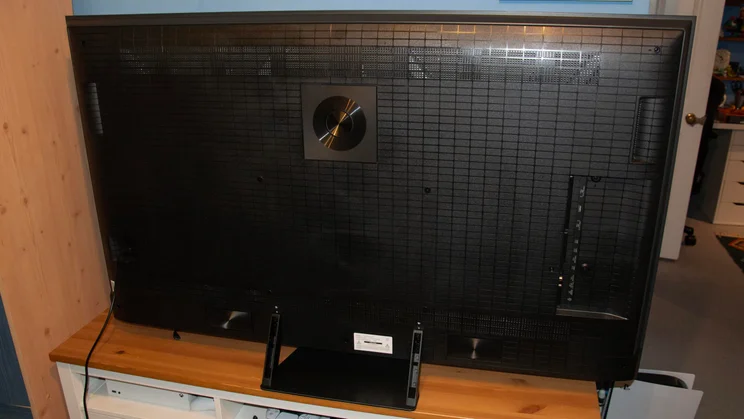
The 65in UR8S I tested is a hefty thing. It weighs roughly 25kg with its stand attached, and its 52mm thick RGB Mini LED panel is considerably thicker than its OLED counterparts. But the relatively slim bezel surrounding the screen creates a sleek appearance, and the TV’s sturdiness is reassuring.
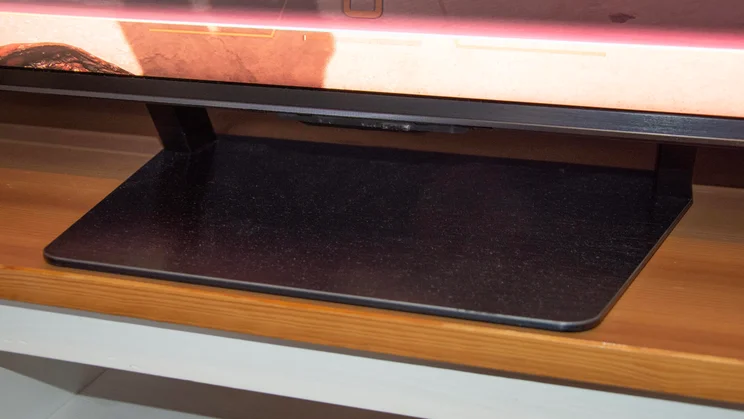
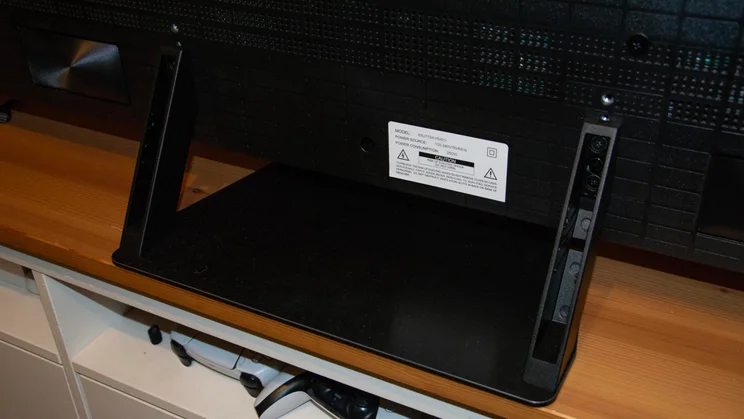
The central pedestal stand feels unnecessarily heavy and proved tricky to attach, but I really like that you can set it to two different heights. I opted for the higher of the two as it provides ample clearance for a soundbar underneath.
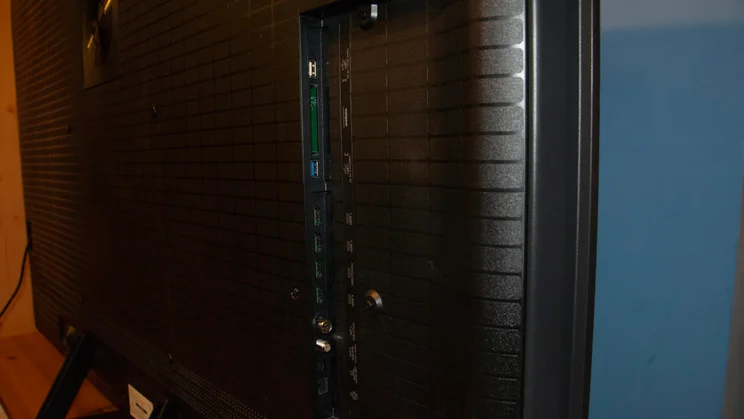
Hisense has also equipped the UR8S with an excellent selection of ports, all of which face sideways from the left of the screen as you’re looking at it.
You’ve got four full-bandwidth HDMI 2.1 ports that support Auto Low-Latency Mode (ALLM) and Variable Refresh Rate (VRR) up to 180Hz, a pair of USB-A ports, an S/PDIF output, two RF tuners, and an Ethernet port. You can’t really ask for more in terms of physical connectivity. Dual-band Wi-Fi 5 and Bluetooth handle wireless connectivity.
The solar remote is a win
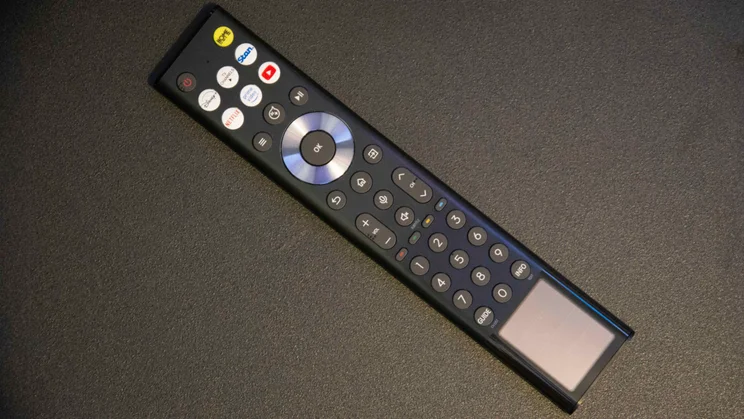
The bundled remote will likely be your primary method of controlling the UR8S. An integrated solar panel constantly keeps the battery topped up using ambient light, though it bulks up the controller as a result.
I don’t have a massive issue with this; it means you’re less likely to lose it down the side of the sofa, and it’s not unwieldy to use. You can see the button layout below. It’s all pretty standard, self-explanatory stuff that lets you get where you want with minimal fuss.
If you’d rather use your voice for control, there’s support for Amazon Alexa and VIDAA VOICE via a far-field mic built into the TV and a near-field mic in the remote. Those who can’t unglue themselves from their smartphone can access a digital remote via the VIDAA app instead.
Smart TV platform
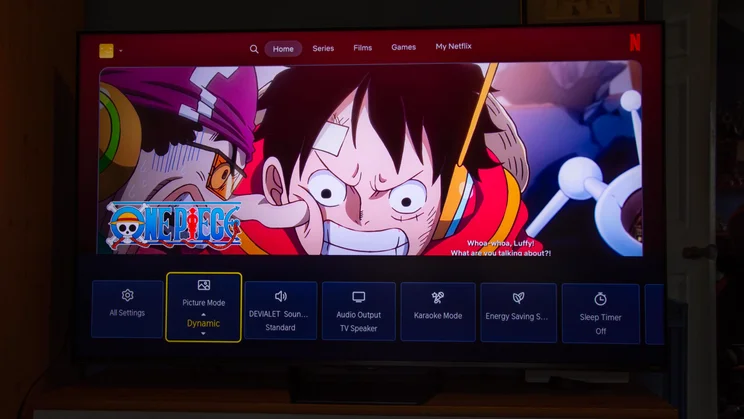
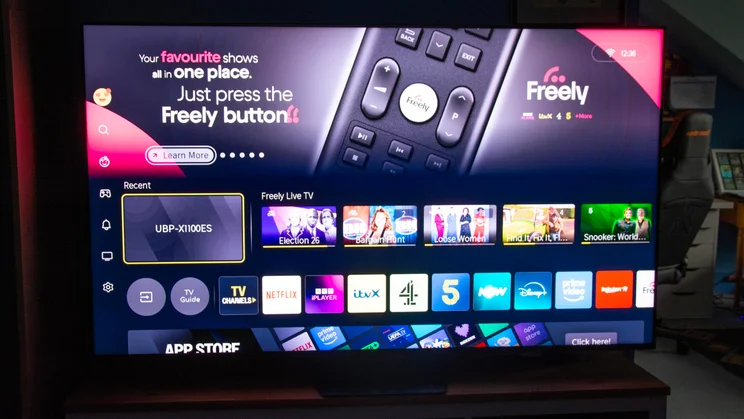
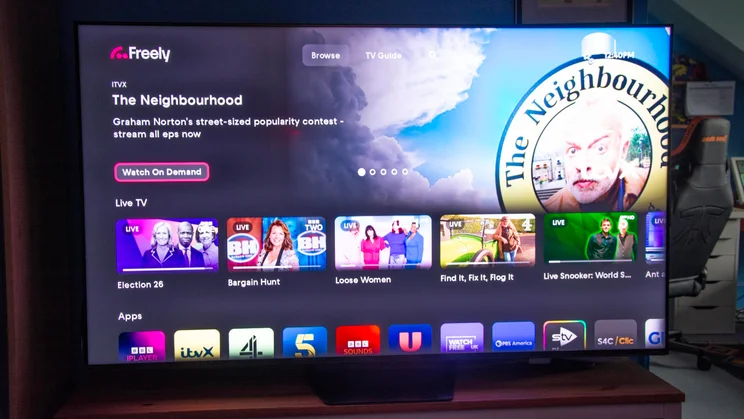
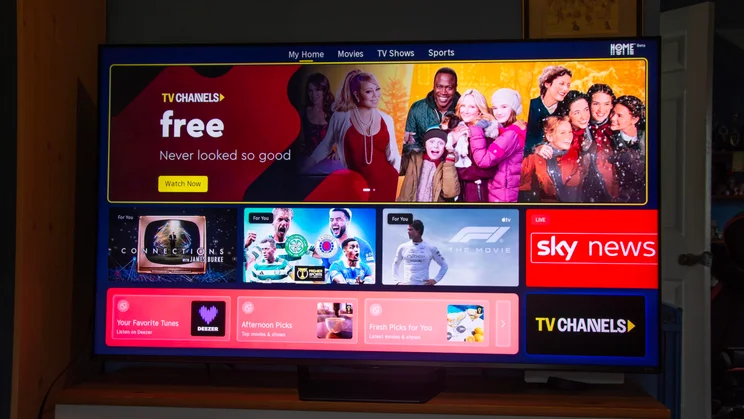
In the UK, the Hisense UR8S runs VIDAA OS. It’s not the best TV operating system for app choice, customisation or smart recommendations, but it does what it needs to relatively effectively. Navigating between installed apps is simple – they’re all compiled in a neat row near the top of your homepage – and there’s a strong focus on live TV via Freely, which is one of the biggest draws here.
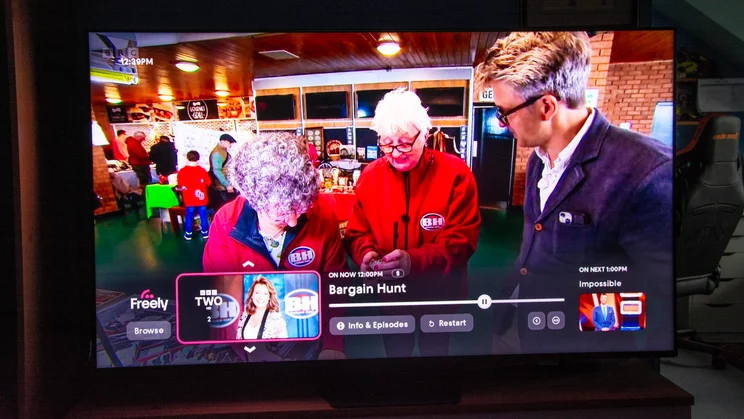
Hisense was the first major brand to partner with the free IP streaming platform, and being able to easily access live UK TV channels and their catch-up services using just your internet connection is a godsend for those without an aerial. The integration of Freely’s EPG is seamless, and you can use it to browse channels, get programme information and find catch-up content intuitively. If you want to keep paid-for subscriptions to a minimum and British broadcasting is your bread and butter, having a TV with Freely just makes sense.
You’ve also got V-Home, a smart hub that’s currently in Beta and is accessed via a shortcut on the remote control. This was announced as part of the new Home OS rebrand at CES in January, and serves as an open, global platform that provides access to free ad-supported TV channels and uses AI to tie Hisense TVs into the brand’s wider smart home appliance ecosystem.
I didn’t find much there of interest, however. None of the content felt essential to my experience with the UR8S; I was able to go about my business with the TV happily without ever needing to access it.
Image quality
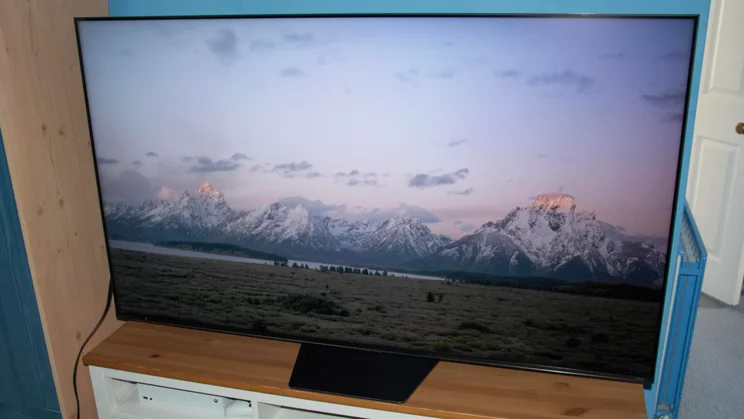
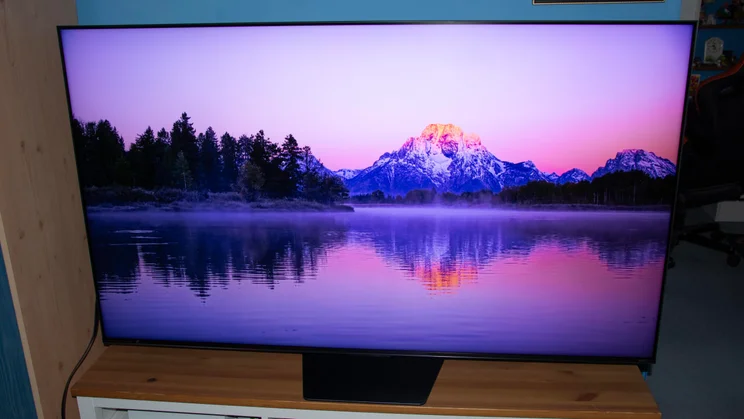
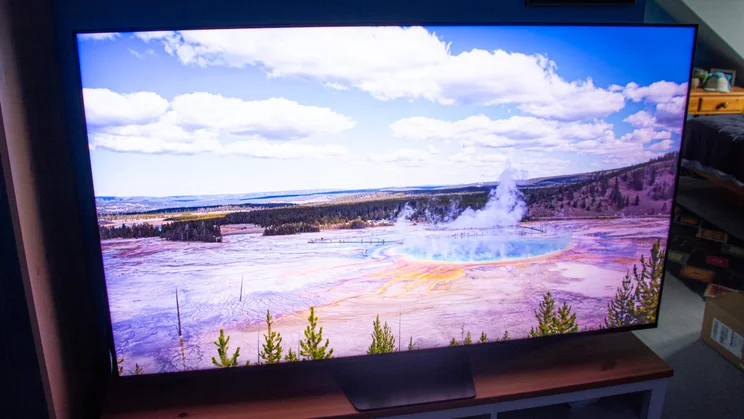
The most noticeable quality of the Hisense UR8S is its brightness. In its brightest modes – Standard and Dynamic – it hit full-field SDR brightness of over 800cd/m2, which is an exceptional result that’s bright enough to enjoy SDR content in rooms with lots of ambient light.
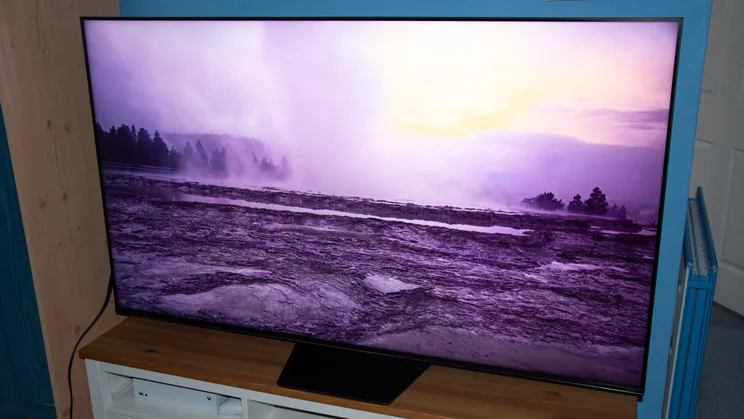
Those two modes don’t reproduce greyscale and colours particularly accurately, however. In Standard mode, I measured average Delta E errors of 13.5 and 9.3 in Calman Ultimate’s Greyscale Multi and ColorChecker tests, while in Dynamic mode, those figures rose to 15.1 and 10.9, respectively.
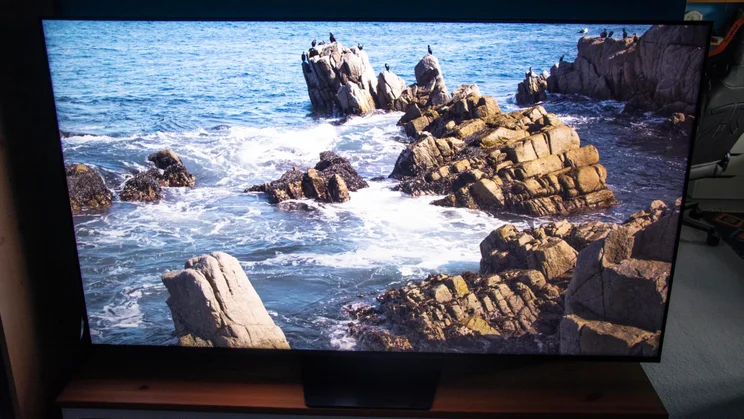
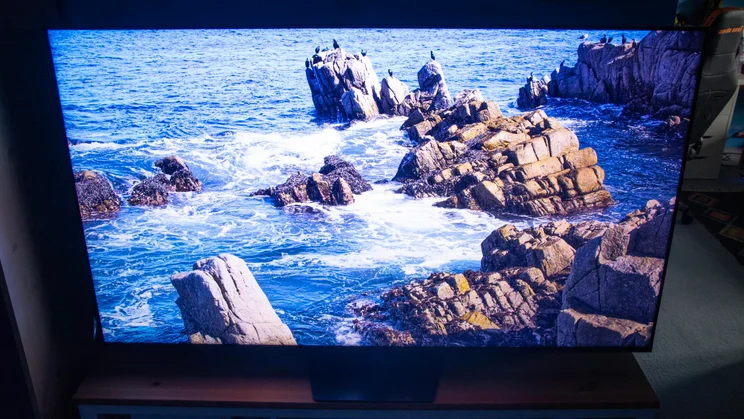
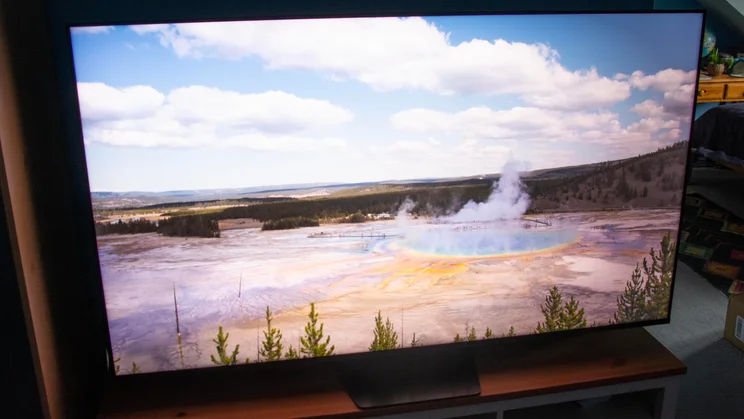
An excess of blue in the greyscale was obvious to the naked eye while watching SDR demo material in these modes, giving natural scenes featuring sea and skies an inescapably artificial look.
The level of saturation was so amped up that I couldn’t help but view the landscapes as over-the-top pastiches of real life. Almost like someone had slipped something in my tea, I’d fallen down a rabbit hole and woken up in a variegated reality.
Alluring or ungainly?
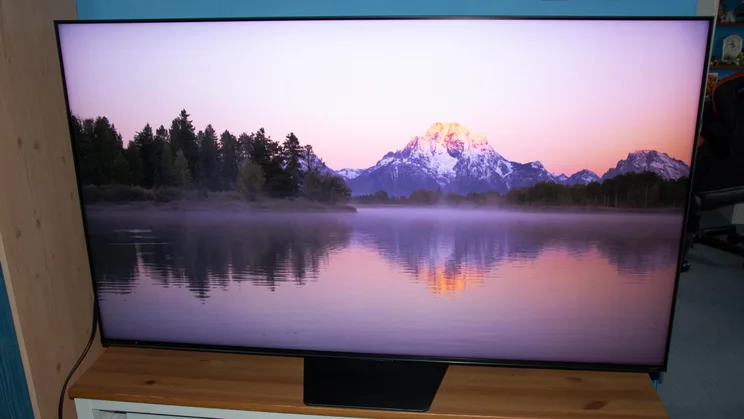
This wasn’t always an entirely unpleasant experience, however. The startlingly vibrant colours (golds, purples and oranges were particularly eye-catching) have an intense impact that’s fantastic for animated content that cares little for established colour standards. And those whose idea of a great TV spectacle involves punch and vividness are likely to lap it up.
I did find it a bit jarring at times, though, and the bumper brightness has other drawbacks. While there was plenty of detail and sharpness on show, black areas took on a purple-grey hue in nighttime scenes, and images dominated by bright whites looked slightly washed out.
Accurate when it wants to be
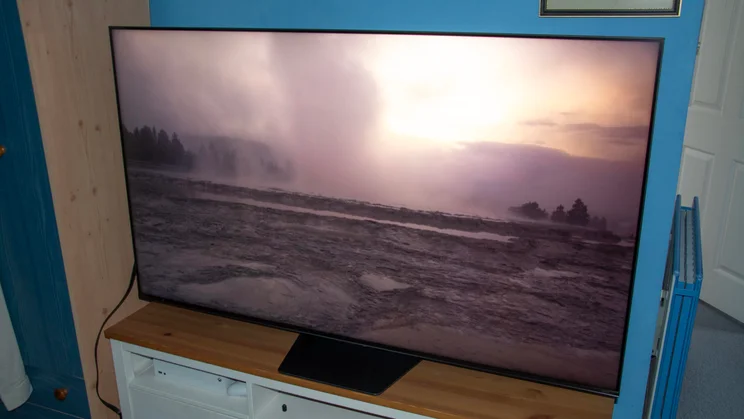
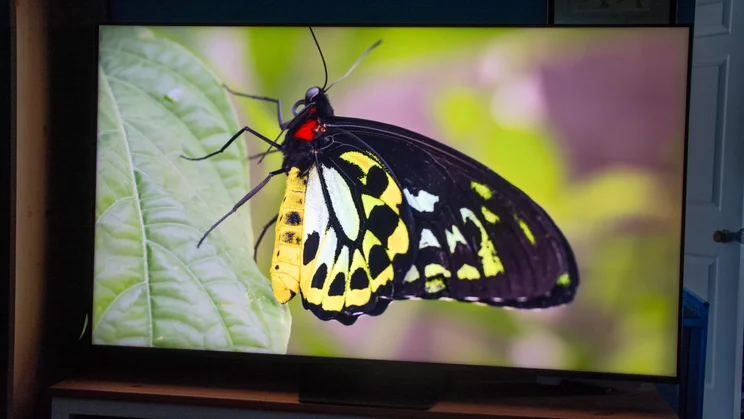
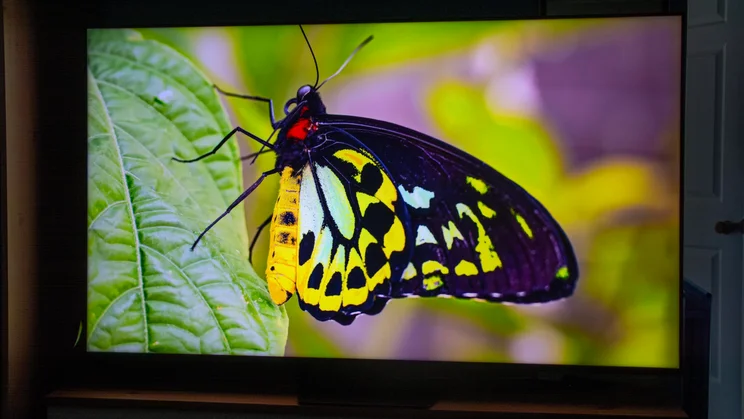
Filmmaker Mode offers a much nicer balance but at the cost of some brightness. Here, I recorded brightness of 462cd/m2 on a full-field pattern, and greyscale and ColorChecker average Delta E errors of 2.9 and 6.8; much closer to the visible threshold of 3. Blues are reined in considerably but remain striking, and the luscious greens of rolling fields take on a more natural appearance.
I didn’t pick up on any obvious colour bleeding in scenes balancing multiple shades, and the UR8S draws out minute details like those on a butterfly’s wing or the inside of a flower petal marvellously. There was delicacy in the articulation of lighter tones, although I was left wanting greater shadow detail in contrast-heavy scenes.
Image quality held up okay when viewing the Hisense UR8S off-axis. The intense saturation apparent when head-on was clearly muted, and blooming was more obvious, but shuffling a few feet along my sofa to watch the UR8S at an angle wasn’t an absolute disaster.
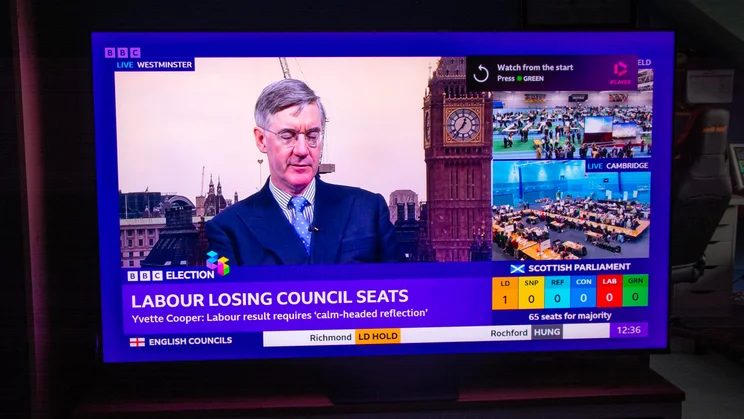
And Hisense’s motion settings worked well, too. Judder and blur can be effectively reduced by using the custom sliders, but the “Smooth” preset was my go-to for most content. It did a particularly good job when I was watching the World Cup through Freely channels and wanted to avoid the distractingly overblown colour palette of the Sports picture preset.
HDR performance
Hisense says that the UR8S can reach a peak brightness of 3,500 nits, a figure I wasn’t able to replicate in my testing. The TV did hit some pretty impressive numbers when I ran it through my usual HDR performance tests, though. I ran the Peak Luminance vs Window Size test across each of its picture modes, and it achieved 2,615cd/m2 on a 10% window in Dynamic mode, 2,409cd/m2 in Standard mode and 2,073cd/m2 in Filmmaker Mode.
Hisense also claims the UR8S “delivers up to 100% BT.2020 colour coverage”. When targeting the BT.2020 colour space, my Calman Ultimate measurements came in at a shade over 93%. This is not to be sniffed at. In fact, it’s the highest figure we’ve ever recorded in this test, beating Quantum Dot OLEDs like the Samsung S99H.
Artistic intent rendered faithfully in Filmmaker Mode
Colour reproduction within the BT.2020 space is accurate, too. In its most accurate preset, Filmmaker Mode, the UR8S returned, on average, a multi-point greyscale Delta E error of 4.6, a saturation sweeps Delta E error of 4.5, and a ColorChecker error of just 2. Anything below 3 is effectively imperceptible to the human eye, so Hisense has done well here.
This accuracy was evident when watching The Revenant in HDR10 on Blu-ray. Faces were brimming with detail, skin tones were well-balanced and looked natural, and I was impressed by how scenes at both ends of the dark-light spectrum were handled. The warm light from burning torches seeped convincingly into the shadowy forest, and daytime setpieces in open environments were bathed in bright, natural light that successfully conveyed the harshness of the wilderness.
Every LED in the UR8S’s backlight has three individual red, green and blue diodes, so I wasn’t surprised to find that the UR8S articulates primary colours capably. I was taken aback by how gorgeous blues looked while watching Young Sherlock in HDR10+ on Amazon Prime Video, and the panel excelled at bringing the multi-coloured costumes of the eponymous mutants to the fore in the new series of X-Men ‘97 on Disney+.
The Hisense UR8S’ panel has an “anti-reflection and glare-free” treatment, and this proved fairly effective. It did a better job dulling the glare from the sun streaming through my window when watching Fist of the North Star on Amazon Prime Video than the LG C6 OLED, although my viewing experience wasn’t totally free of distractions.
To test the Hisense UR8S, I used Portrait Displays Calman colour calibration software.
Gaming
The Hisense UR8S is a very well-specified TV for gaming, and a particularly strong choice for those with a gaming PC. Its 180Hz refresh rate panel trumps the LG C6 OLED and Samsung S99H, both of which can only handle 165Hz, and its Turbo Mode enables PC gamers to push refresh rates all the way to 300Hz by dropping resolution to 1080p. That’s on par with gaming monitors designed for competitive play, and there’s support for AMD FreeSync Premium Pro, too.
I don’t own a gaming PC so couldn’t test the UR8S’s chops above 120Hz, but greatly appreciated that it has four fully featured HDMI 2.1 ports that support Auto Low-Latency Mode (ALLM) and Variable Refresh Rate (VRR). Being able to get the best out of my PlayStation 5, Xbox Series S and Nintendo Switch 2 without moving cables around made my gaming life significantly easier while juggling titles across all three platforms.
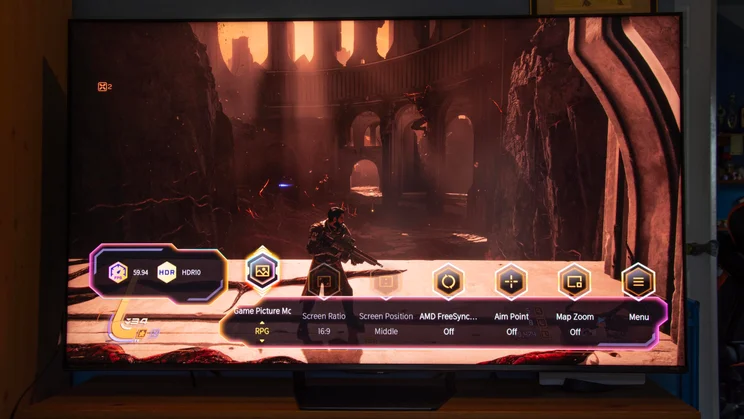
And that gaming life was a thoroughly enjoyable one with the Hisense UR8S in situ. As well as reducing input lag to a very healthy 10.9ms, its Game mode provides access to five picture modes – Standard, RPG, RTS, Sports and FPS – and options such as an Aim Point on-screen crosshair and Map Zoom.
It’s worth experimenting with the picture modes to find the one that you gel with most, though. I found the RPG mode best suited to my tastes, striking a nice balance between brightness (2,390cd/m2) and colour saturation, while not being egregiously out on greyscale (average Delta E 10.8) and saturation sweeps (average Delta E 15.3).
Standard mode for the gaming win?
I imagine most people will stick with the Standard preset as it’s the brightest and handles a range of genres very capably. The stark contrasts between the Umbral and Axiom worlds in Lords of the Fallen (2023) were delivered impressively, with loads of detail apparent in the darker corners of the shadowy realm, while brightness peaks dazzle in the better-lit outdoor sections of the game.
The pixelated art style of Marvel Cosmic Invasion looked fantastic on the Series S, with the comic-book colours popping out of the screen as I battled to thwart Annihilus.
In Saros, which has a more restrained colour palette, golds, reds and oranges burned and sparked satisfyingly, and the machinery in the subterranean Ancient Depths was intricately rendered. In biome four, the Blighted Marsh, the UR8S’s confident handling of earthen hues really enhanced the oppressive gloom. And throughout my playthrough, the red, yellow and blue projectiles that define the bullet-hell roguelite shooter danced on-screen in unapologetically vibrant fashion.
Crucially, the game, which requires precision and fast reactions, played beautifully smoothly, feeling ultra-responsive at all times.
Sound quality
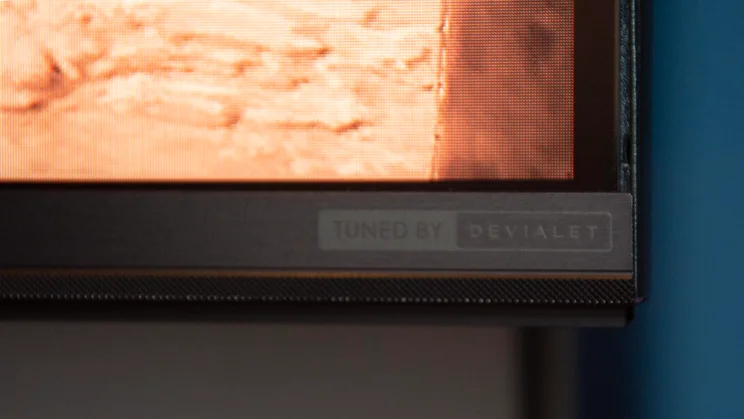
The Hisense UR8S’s Devialet-tuned sound system may not have received the same fanfare as its RGB Mini LED panel, but it deserves to. It’s a 2.1.2-channel arrangement that delivered one of the most engaging and immersive experiences I’ve had from built-in TV speakers.
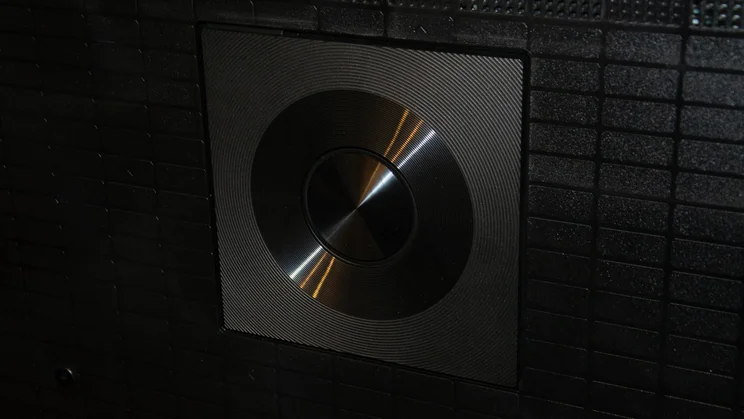
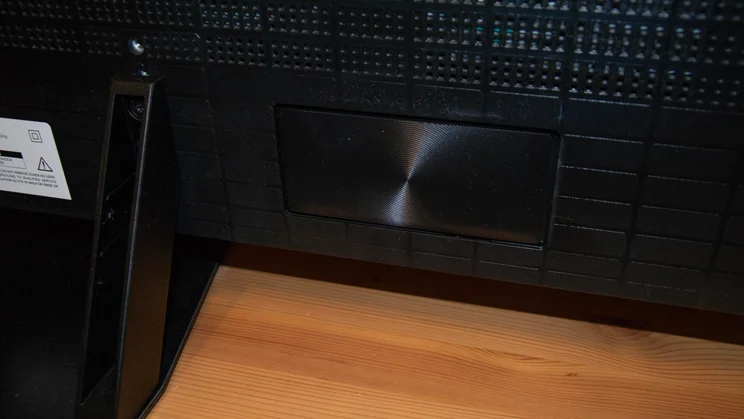
Theatre mode was my go-to, as it proved most successful at articulating the surround-sound effects of Dolby Atmos soundtracks. The two up-firing 5W speakers created a solid sense of height, while the two 10W tweeters produced a broad and detailed horizontal soundstage. The 20W subwoofer demonstrated a welcome yet well-controlled low-end presence, too, with its rumbles reaching decent depths and levels of clarity without sounding bloated or overzealous. The gnarly soundtrack of Saros sounded great, and the audio cues as hostiles attacked, sirens went off, and explosions ripped enemies apart were all thoroughly gratifying.
My only critique of Theatre mode was that the broad, sweeping presentation occasionally swallowed up dialogue. I found some conversations tricky to keep up with during The Revenant when things got frantic and other audio cues entered the soundscape. Standard mode handled this a lot better, though it’s narrower and less warm.
I particularly enjoyed the Music mode. Instrument separation on the Philharmonia Baroque Orchestra’s recordings of Haydn’s Symphonies 57, 67, 68 was excellent, with bright, crisp trebles shining and changes in tempo delivered consistently well. I also got good use out of the Night mode. This sensibly reduces volume spikes and enhances quieter elements like dialogue to let you watch content at lower volume after dark, which is when I do a lot of my TV watching and gaming.
Hisense UR8S review: Verdict
The Hisense UR8S may not have reached the 3,500-nit brightness or 100% BT.2020 gamut I’d hoped for in testing, but that doesn’t make this a bad TV.
On the contrary, it still has plenty enough luminance to perform well in bright rooms, and its BT.2020 coverage is the best we’ve ever seen from a TV of this size – especially at this price. It’s also handily accurate in Filmmaker Mode, which proves a refreshingly restrained tonic compared to the Standard and Dynamic settings, which fluctuate between irresistibly engrossing and egregiously extravagant.
The superb on-board sound system and top-notch gaming support are standout strengths, as is the exceptional integration of Freely. However, VIDAA doesn’t feel quite as smart or polished as other first-party operating systems.
So does this RGB Mini LED TV do enough to turn people away from much-loved, price-comparable OLED alternatives like the LG C6? For me personally, not quite. But if high brightness for viewing in well-lit rooms and PC gaming are your primary concerns, you shouldn’t rule it out, especially if it sees a further price cut.


