
To help us provide you with free impartial advice, we may earn a commission if you buy through links on our site. Learn more
- Superb SDR images
- Top-tier gaming features
- Comprehensive smart platform
- Larger sizes get a better panel
- Reflection-prone
I’ve had the pleasure of seeing most of LG’s premium TVs in action over the past few years, but the LG C6 OLED is the first self-emissive model from the brand that I’ve had the opportunity to test thoroughly.
LG sent me a sample of the TV to replace the LG C5 OLED I had in situ to test the LG Sound Suite. So, along with putting the C6 through its paces using my usual set of objective and subjective tests, I was able to make direct comparisons to its predecessor.
Compared to last year’s model, it measured up very favourably. It has received a welcome boost in brightness, helping it deliver improved SDR and HDR picture quality. And a handful of other upgrades enhance the overall experience, whether you’re watching films, streaming or gaming.
It’s worth noting, however, that the 65in model I tested doesn’t represent the pinnacle of what the C series can achieve. LG has reserved its new Hyper Radiant Colour technology and Tandem OLED panel for the 77in screen size and above, and therefore, we’re reviewing that model separately.
LG C6 OLED review: Key specifications
| Screen sizes available | 42in (42C64LA), 48in (48C64LA), 55in (55C64LA), 65in (65C64LA), 77in (77C64LA), 83in (83C64LA) |
| Panel type | OLED EX (42in to 65in), Primary RGB Tandem OLED (77in and 83in) |
| Resolution | 4K/UHD (3,840 x 2,160) |
| Refresh rates | 120Hz native, up to 165Hz VRR |
| HDR formats | HDR10, HLG, Dolby Vision |
| Audio enhancement | 2.2-channel system (40W), WOW Orchestra, Dolby Atmos, Virtual 11.1.2 Up-mix, Clear Voice Pro |
| HDMI inputs | 4 x full-spec HDMI 2.1 (one with eARC) |
| Freeview Play compatibility | No |
| Tuners | Terrestrial, Digital, Satellite |
| Gaming features | ALLM, VRR, 4K/120Hz, Game Optimiser, Game Dashboard, Nvidia G-Sync, AMD FreeSync, HGiG, Dolby Vision for Gaming |
| Wireless connectivity | Wi-Fi 6E, Bluetooth 5.3, Apple AirPlay 2, Google Cast |
| Smart assistants | LG ThinQ AI |
| Smart platform | webOS 26 |
What you need to know
The C6 OLED is the latest iteration of LG’s best-selling OLED series. It’s a premium model that commands a premium price, but sits below a couple of more advanced, more expensive options: the LG G6 and the super-thin LG Wallpaper TV (or W6) that I saw at CES.
It uses a new processor, the Alpha 11 AI Processor 4K Gen3 with Dual AI Engine, which replaces the eighth-generation Alpha 9 chip found in the LG C5. This is a significant upgrade, with the new dual-engine AI chip able to analyse images both independently and together to improve noise reduction and detail preservation, and upscale low-resolution content more effectively.
Faster gaming than ever
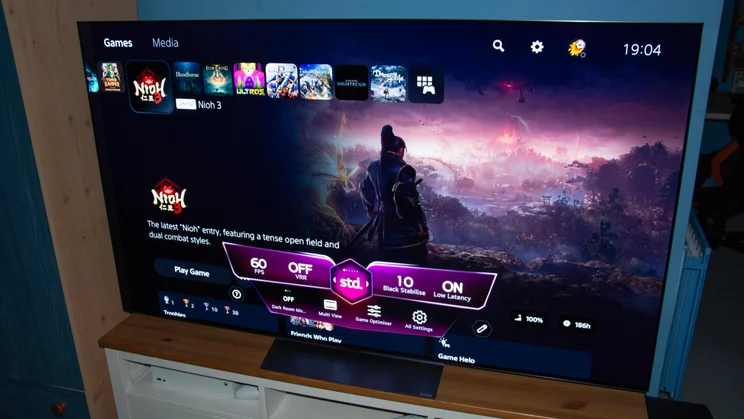
Elsewhere, the LG C6 has had its maximum refresh rate bumped up from 144Hz to 165Hz when using VRR, which is great news for PC gamers. It also has a few new AI tools and runs the newest version of LG’s webOS smart platform. webOS 26 goes pretty hard on AI, but it also heralds a more streamlined UI and some new browsing functionality.
It’s important to note a crucial difference between some of the screen sizes in the LG C6 series. All five use the same processor, but the 77in and 83in models have LG’s new “Hyper Radiant Colour” technology. This bombastic marketing term actually reflects a couple of noteworthy things: first, the TV uses a Primary RGB Tandem OLED panel, which is much brighter than the WOLED panel found on the smaller models; and second, the TV possesses Perfect Black and Perfect Colour certification from Intertek, which means it can deliver a black level under 0.24 nit and colour consistency of over 99% in bright rooms.
The long and short of it is that the 65in C6 I’m reviewing here is an inferior TV to its larger stablemates. However, as we’ll discover below, it’s still a great performer and arguably a far better value proposition.
Price and competition
I’ve detailed the list prices for the five sizes of the LG C6 OLED below.
- 42in: £1,300
- 48in: £1,400
- 55in: £1,800
- 65in: £2,600
- 77in: £3,600
- 83in: £4,800
The two smallest sizes were out of stock at the time of writing, and there was no sign of the 83in, but the 55in, 65in and 77in options were available for £1,400, £2,080 and £2,880, respectively. If you have your heart set on one of the other models, John Lewis has all three available, priced as follows: 42in (£1,299), 48in (£1,399) and 83in (£4,799).
OLED options galore
LG is certainly not short of OLED competition. Our favourite OLED is the Samsung S99H, but it is significantly more expensive. The S99H’s “FloatLayer” makes it a great choice for wall mounting, but if you don’t plan to do that, the S95H uses the same panel and ditches the metal frame to hit a lower price point. Even closer to the LG C6 in price is the Samsung S90H, which impressed me when I saw it in London in late April.
Panasonic said that last year’s flagship, the Panasonic Z95B, would still be available throughout 2026, but the TV is currently hard to find for sale online. Other standout OLEDs from last year include the Philips OLED810, which is only available in 77in and costs £2,199, and the Sony Bravia 8 II, another QD-OLED option that’s priced at £1,799 for the 55in and £2,299 for the 65in.
And plenty of Mini LED rivals, too
There’s increasing competition from TVs using Mini LED technology, too. Samsung’s R95H is the first Micro RGB set we’ve tested, and it knocked it out of the park performance-wise. However, if you’re looking to spend a similar amount to the LG C6, the less advanced R85H is the option to go with, with prices starting from £1,599 for the 55in model. The Hisense UR8S RGB Mini LED TV isn’t available to buy until July, but the 55in, 65in, 75in and 85in versions are set to cost £1,699, £2,299, £2,999 and £3,999, respectively.
Design, connections and controls
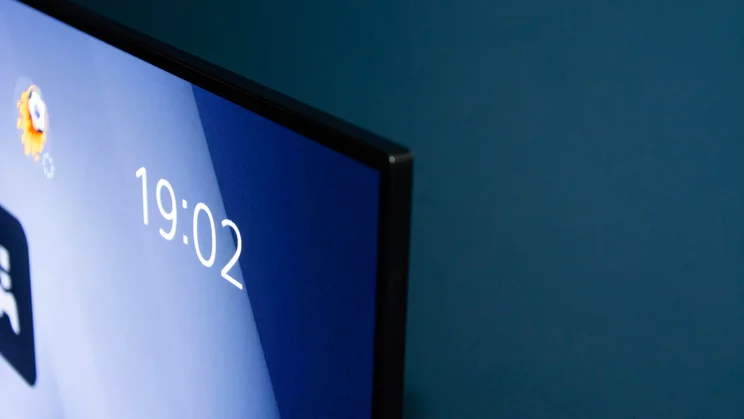
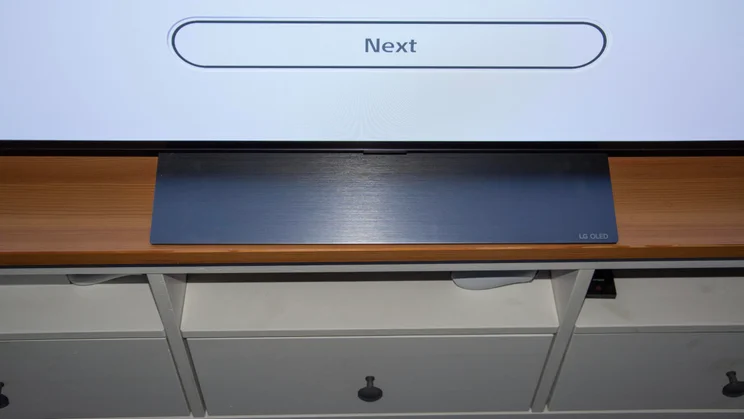
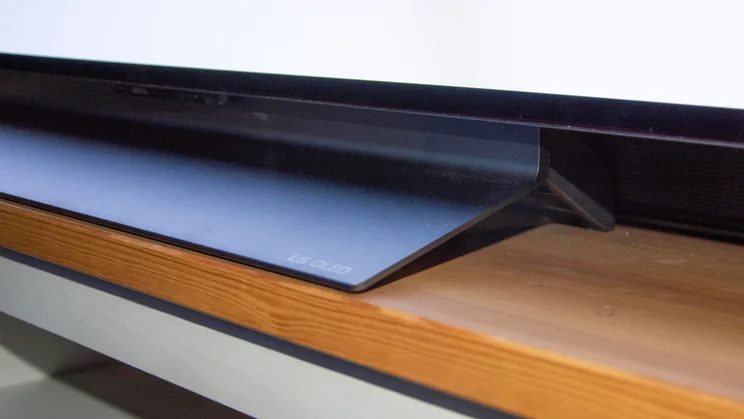
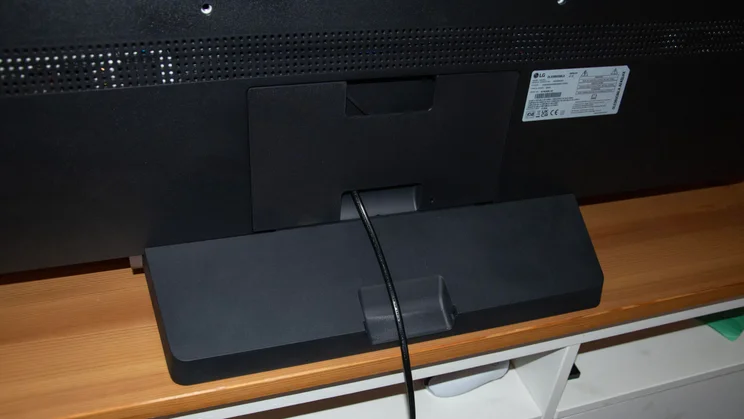
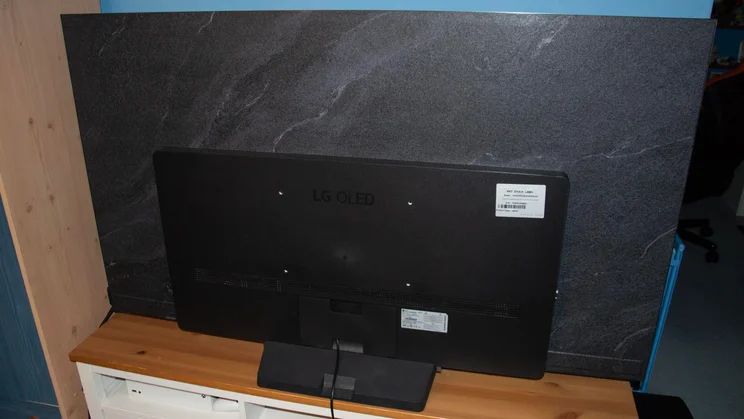
The LG C6 is a great-looking television with a narrow bezel surrounding the slender panel, which sits on a sturdy, attractive central pedestal stand. It both looks and feels like a premium TV, with the marbled stone effect on the rear of the panel a pleasing touch, though not one you’ll appreciate much after you’ve got the C6 out of the box.
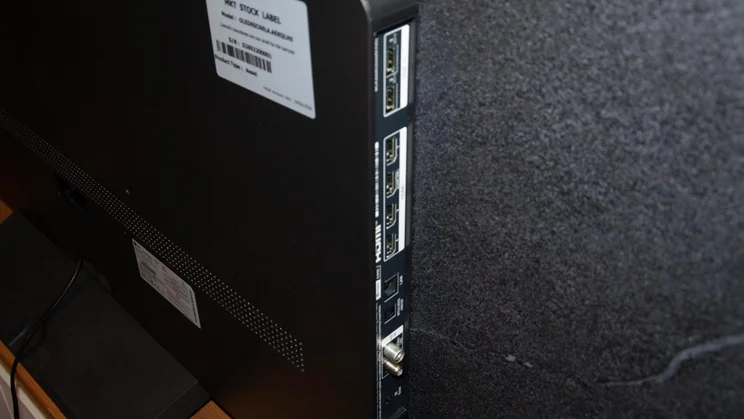
You will certainly appreciate the connectivity on offer, however. All four HDMI ports, housed in a relatively chunky rectangular plastic slab attached to the back of the panel, are on the left side of the TV as you look at it and support every 2.1 HDMI feature, including VRR up to 165Hz.
In addition to the HDMI inputs, you’ve got three USB-A ports, an Ethernet port, a digital optical out, antenna and cable inputs, and a CI slot. The LG C6 is equally well-equipped with wireless connections, with Wi-Fi 6E and Bluetooth 5.3, Auracast, Apple AirPlay 2 and Google Cast all present and correct.
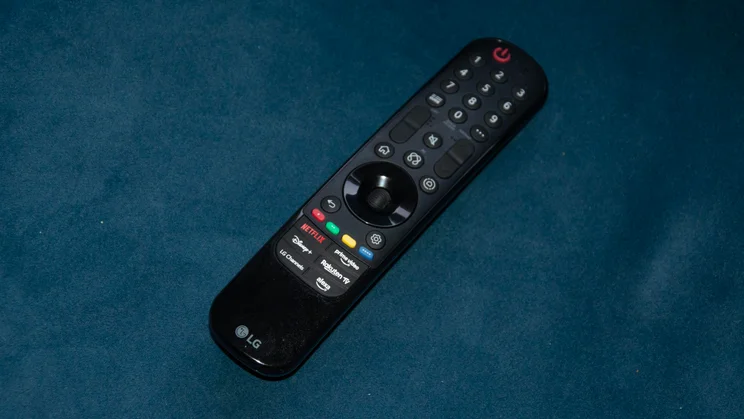
The control options are pretty varied. The bundled remote control is familiar LG fare and was my go-to, but you’ve also got the ThinQ app available if you’d rather use your smartphone as a remote. Voice support is present and correct, too, with a far-field microphone built into the TV and a mic in the remote that responds to “Hi LG” voice prompts.
Smart platform
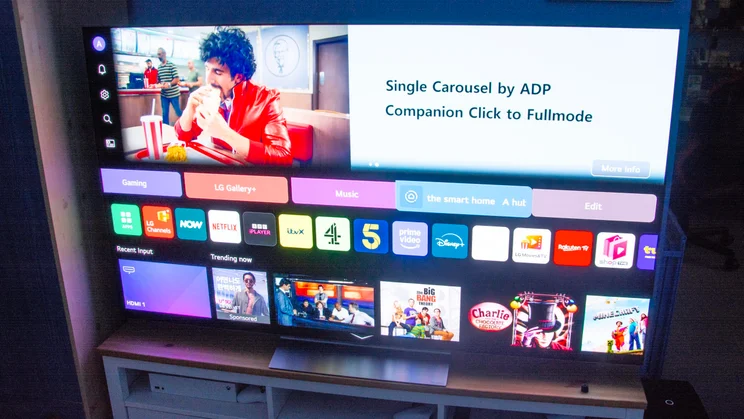
WebOS has had a makeover this year, and I found it well-organised and easy to navigate. As in previous iterations, the system has a selection of customisable Quick Cards under the main banner on the homepage to let you swiftly access hubs for gaming, music, the LG Gallery+, etc. Those you’re not using can be easily hidden and rearranged, as can the shelf displaying the full list of your downloaded apps, which sits below the Quick Cards.
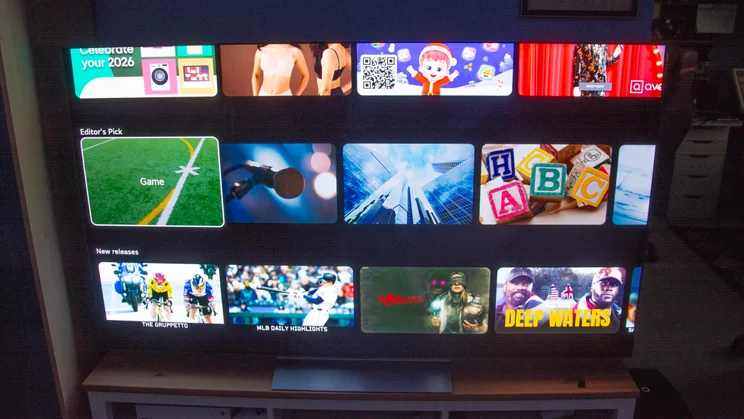
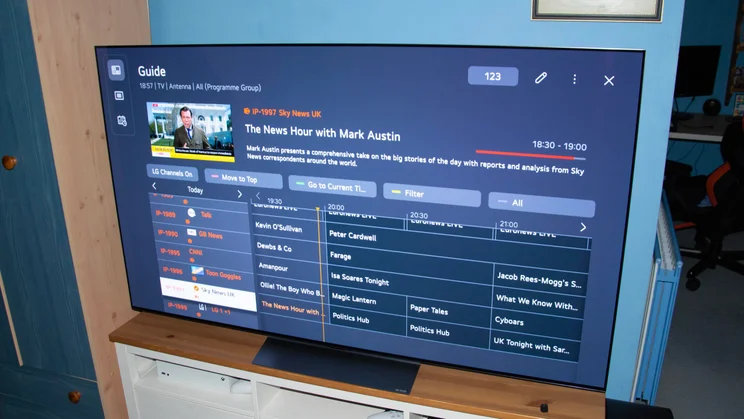
As you move down the page, content from various sources is displayed in rows. Among these are the LG Channels (the brand’s free ad-supported streaming television channels), Live TV, and specific streaming services such as Amazon Prime Video. Finding “Continue Watching” required a bit too much scrolling for my liking, but otherwise, I had no major complaints about the platform.
The app provision is as comprehensive as ever, the content recommendations were sensible, and the system felt smooth and speedy in operation. The UI is less cluttered than in past years, and the five shortcuts at the top-left-hand side of the screen let you access your user profile, notifications and more very simply.
New additions to a successful formula
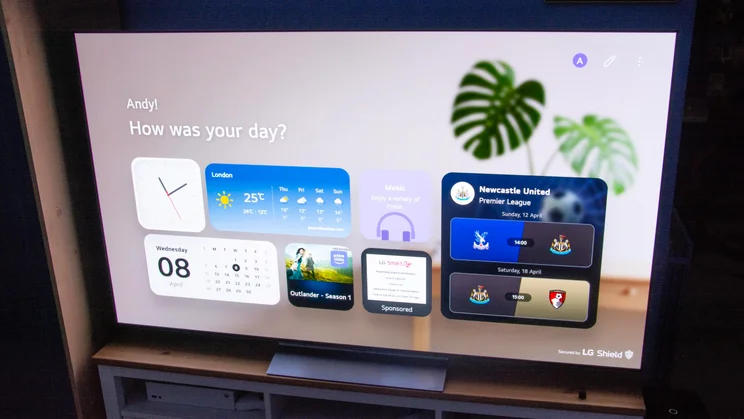
A customisable profile screen called “My Page” is new this year and is visited by pressing left on the remote when you’re in the shortcut menu. The clock wasn’t working for me – likely due to this being a pre-production model – but I liked the screen overall. You can add widgets, your football team of choice to display previous results and upcoming fixtures, view your calendar and notifications, and edit your wallpaper. Each user (up to ten) can have their own bespoke page, which is good news for larger households.
Unsurprisingly, AI plays a significant role in webOS 26. LG has incorporated a dual-model AI search that uses both Google Gemini and Microsoft Copilot, and you’ve also got the company’s AI Concierge to provide information on the content you’re watching via “In This Scene”. The AI features are well-integrated and work well, though I found that the AI Voice search didn’t always pick up my commands completely accurately.
Image quality
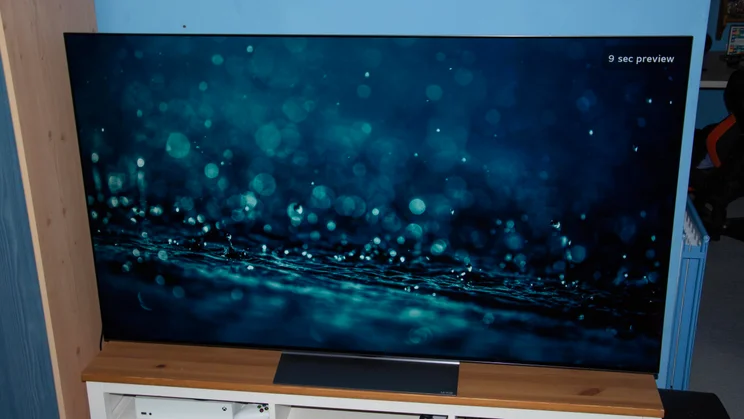
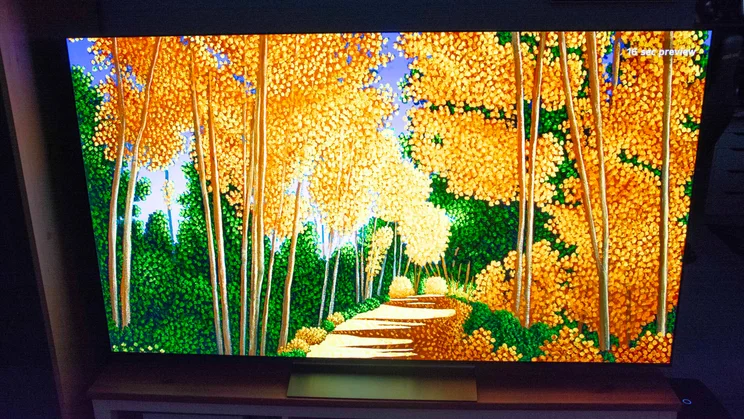
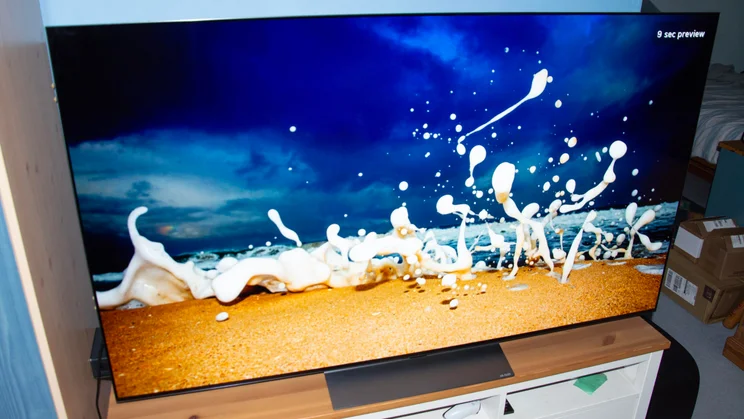
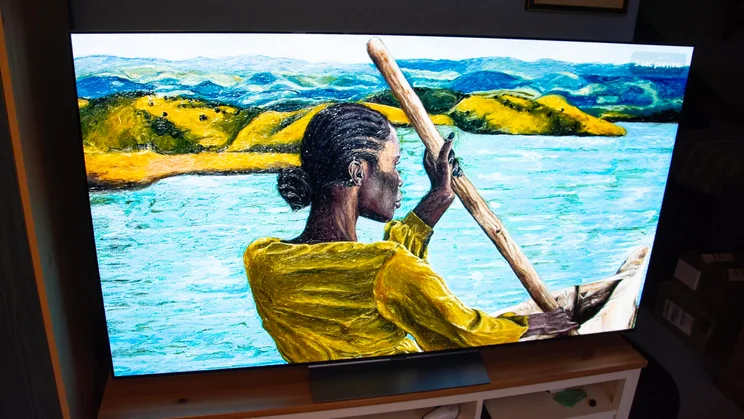
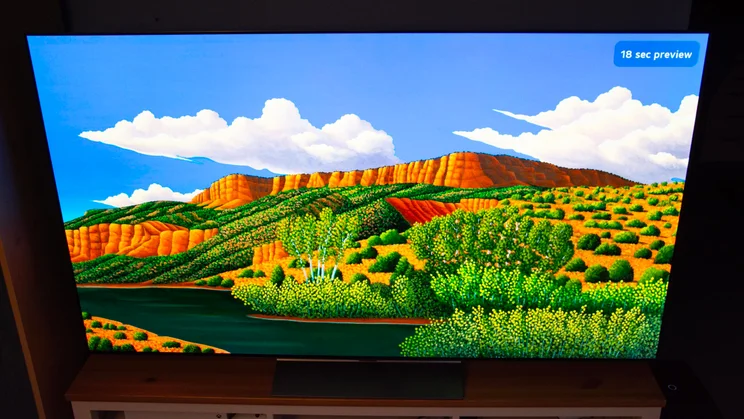
The LG C6 immediately impressed me with gorgeous, accurately rendered images while watching episodes from the first season of Outlander on Prime Video/MGM+. In Filmmaker Mode, the definition and clarity of the snow-topped mountains and cloudy skies were superb, and the organic greens of the Scottish Highlands looked stunning. Things looked equally good when the C6 was portraying the more muted colours and cobbled streets of post-World War II Inverness.
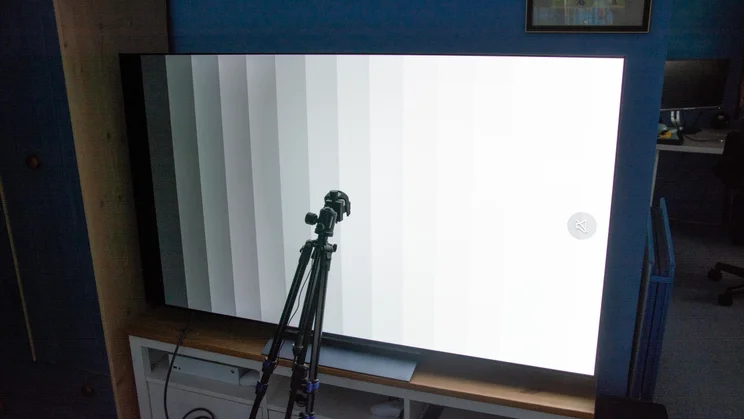
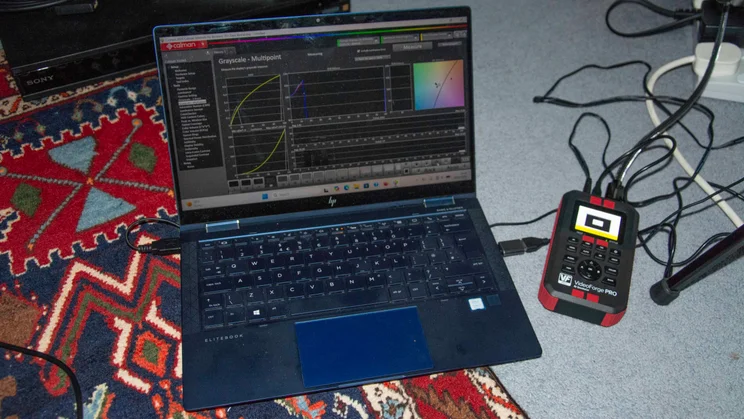
My subjective impression of excellent greyscale and colour accuracy was backed up by the objective results recorded using a colorimeter, pattern generator and Portrait Displays’ Calman Ultimate software. In Filmmaker mode, the C6 produced errors of just 0.9 in the multi-point greyscale test, and returned a Delta E of 1.2 in the colour Saturation Sweep measurement. Those figures are about as good as it gets, and SDR films are a joy to watch.
You’ll need to be watching in a dark room, however, as brightness is in relatively short supply in Filmmaker Mode. I recorded peak luminance at 412cd/m2 on a 1% window, and just a fraction less than on a 10% window. On a full-screen pattern, the LG C6 reached 234cd/m2.
The eternal struggle balancing brightness and accuracy
The Vivid mode trades accuracy for brightness. Here, I measured peak brightness on a 10% window at 657cd/m2, which made watching content during the day more practical. Greyscale and colour accuracy suffer – the Delta E figures I measured were 14.8 and 10.1, respectively – but I felt this was a sacrifice worth making a lot of the time. Despite not being totally on the money by industry standards, the colours were rich and vibrant. Granted, they were a touch too vibrant at times: the Caribbean setting of Death in Paradise on BBC iPlayer looked just a little too artificially inviting, and skin tones missed the mark. But I was able to see what was going on in all but the darkest scenes with the curtains wide open on a sunny day, which is a decent result.
Handy AI-driven enhancements
I was impressed by the LG C6’s upscaling capabilities, too. The difference between 4K video content on a Premium Netflix plan and 1080p content using a Standard plan was noticeable but by no means embarrassing. Faces on Love on the Spectrum didn’t possess the same level of detail, but colours still looked great, and the image was nice and sharp. When watching 1080p videos on YouTube, including a Monster Hunter: World Any % speedrun, the image looked very clean, too. Game footage was well-defined, the in-game menus were very clear, and the streamer in the top-right was portrayed naturally.
When watching non-HDR content, you can manually engage a feature called Precision HDR Master Pro to boost the contrast, sharpness and colour of every frame. The effect of this was pretty subtle, especially on content below 720p. I watched the music video for Blue Öyster Cult’s Burnin’ for You several times, with the feature turned on and then off, and the difference was negligible at best. A blazing fire perhaps looked a touch more vivid with the remastering, and the reds, oranges and yellows slightly more differentiated, so I left the mode on. It’s definitely something I could have lived without, though.
HDR performance
The LG C6 OLED was very watchable in all of its HDR presets. Covering 99% of the DCI-P3 colour gamut used for most HDR content, and 72.9% of the wider BT.2020 gamut, gives it a great base to operate from, and although it doesn’t support HDR10+, I was consistently engrossed when watching HDR10 and Dolby Vision content. As is typical of premium TVs, the picture preset you choose makes a dramatic difference to your viewing experience.
Impressively accurate Filmmaker Mode measurements
Filmmaker Mode will be your go-to for images that most closely resemble artistic intent. When I originally tested the LG C6, I got some surprising Calman results that didn’t tally with my impression that the TV was extremely accurate in this mode. I’ve since had the opportunity to run the HDR tests again, and the results confirmed what my eyes suggested.
The 65in LG C6 returned a Delta E figure of just 1.1 in Calman Ultimate’s Multipoint Greyscale test when measuring the DCI-P3 and BT.2020 colour spaces, and tracked the EOTF curve almost perfectly. This indicates that content is being displayed precisely as the creator intended.
It rose above the visible error of 3 in the Saturation Sweep test for DCI-P3, but only marginally – 4.4 is still an impressive score – and in the ColorChecker test, it returned a fantastic result of just 2.1. These results are top-tier and illustrate superb colour accuracy in Filmmaker Mode.
This was evident when watching the latest season of One Piece on Netflix in Dolby Vision. The varied skin tones of characters looked natural; shadows were rich in detail and handled with subtlety, and highlights like the sun in a cloudy sky were bright without being distractingly or unnaturally so. Primary colours looked particularly good, with Luffy’s red shirt popping as he sailed across the ocean, itself a beautiful blend of blues.
A big brightness improvement on the LG C5
Filmmaker mode benefits from some eye-catching brightness numbers, too; the peaks I recorded surpassed the figures John Archer recorded for last year’s C5. That TV topped out at around 1,300cd/m2 in its brightest modes, while I measured peaks just short of 1,500cd/m2 in Filmmaker Mode. Switching over to Vivid mode, the LG C6 achieved a formidable figure of 1,850cd/m2 on a 2% window. On a full-field pattern, performance was similar, with both achieving around 263cd/m2.
The brighter Vivid mode is a lot less accurate, though. Greyscale Delta E errors rose to 22, and the Saturation Sweep and ColorCheck results were even higher. This was noticeable in real-world viewing, but not to an unenjoyable degree. You may not be getting exactly what the director intended, but you’re getting a bright, colourful visual spectacle that’s very watchable.
A truly cinematic experience (in the right conditions)
I always switched to Filmmaker Mode when watching movies and TV shows after dark, though. Here, I was happy to shed a few candela for the more convincing, nuanced colour palette. However, watching the same scenes in much brighter conditions had me reaching for the remote to switch to the Vivid or Standard mode.
The lower brightness of Filmmaker Mode, combined with reflections from the sun coming through the double windows behind me, made it tricky to enjoy the action on screen. With the brightness cranked up in Vivid mode, this became less of an issue, though there was clearly an excess of blue in whites, which upset the overall balance.
The LG C6’s handling of reflections underwhelmed me regardless of which picture preset I used, however. The TV’s glossy panel has an anti-glare coating rather than the “Reflection-free Premium” treatment found on the LG G6 and LG W6, which really impressed me when I saw them in action. Unseasonably sunny spring days revealed the C6’s limitations in this department.
It has no such limitations with viewing angles. I didn’t see any drop-off in colour whatsoever when sitting at either end of my Swyft Model 01 sofa.
Largely positive AI assistance
I also want to discuss a couple of the AI-powered picture options and how they affect image quality. AI Picture Pro successfully removed visual noise to enhance finer details, and merits turning on in my book. AI Brightness, meanwhile, adjusts luminance to optimise it for the ambient light in your room. It worked to a point, but brightness wasn’t dialled up high enough to tackle strong ambient light.
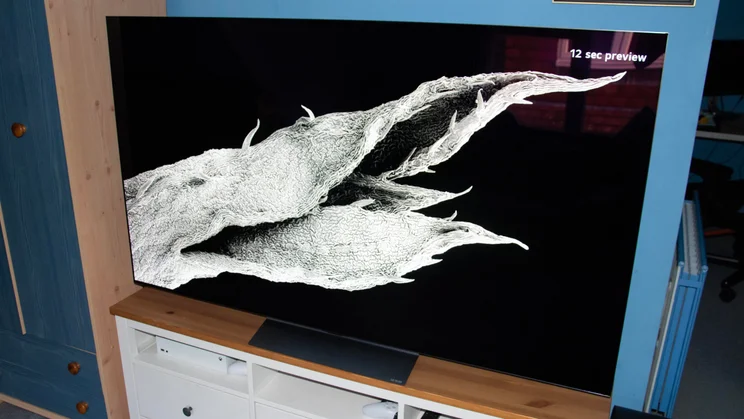
Overall, the LG C6 OLED measured very handily and didn’t disappoint any time I fired up real-world material. It also managed to deliver a sizeable step-up in performance compared to the C5 I’d been using for a couple of weeks before the sixth-gen model arrived. Colours looked more natural with smoother transitions, and peak brightness was consistently higher.
To test the LG C6 OLED, I used Portrait Displays’ Calman Ultimate software.
Gaming
The LG C6 only strengthens the series’ already excellent gaming credentials. Its top-spec quartet of HDMI ports support all the latest gaming features, including ALLM, VRR, Nvidia G-Sync, AMD FreeSync, HGiG and Dolby Vision for Gaming. The C6 refreshes faster than last year’s model, supporting VRR at up to 165Hz, which won’t make a difference if you’re on PS5 or Xbox Series X, but is a boost for PC players.
Input lag is some of the lowest around, too. I measured it at 12.9ms in Game Optimiser mode, and just 9.2ms with Boost mode engaged using the Leo Bodnar 4K HDMI Video Signal Lag Tester. And in the Game Optimiser mode, images don’t lose any of the visual flair exhibited when watching films and TV shows. It’s pretty bright by OLED standards – over 1,400cd/m2 at its peak in HDR – and although grayscale and ColorChecker errors of 15.3 and 19.8 reflect clearly visible deviations from target greys, whites and colours, in-game images looked gorgeous.
The dark and bright extremes of Lords of the Fallen (2023) really pushed the C6’s capabilities hard, but it coped beautifully. It demonstrated great skill in colour reproduction while switching from Axiom – the colourful living world – to the darker, more menacing Umbral world, and the depiction of both realms was pin-sharp. Combat was fluid, explosions from the explosive bolts of my crossbow blazed intensely, and I was regularly taken aback by how good the intricately connected semi-open world looked.
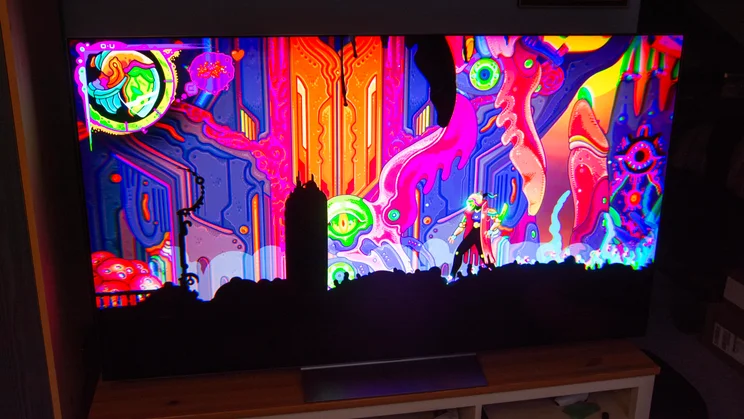
To put the TV to the ultimate test, I fired up Ultros, one of the most out-there games I’ve ever played in terms of its colour palette. The C6 delivered a hyper-saturated psychedelic eyegasm so intense it took a while for me to readjust to the mundanity of my testing environment once I’d finished playing.
Sound quality
If you’re spending this much on a TV, I recommend buying an immersive surround-sound soundbar to partner with it. But if you’re maxing out your credit card to get the LG C6, its 40W, 2.2-channel speaker setup will do the trick well enough while your bank balance recovers.
The low-end frequencies created by the pair of subwoofers aren’t too heavy-handed, chiming in when required without ever being overly forceful, and the two other speakers conveyed dialogue, vocals and trebles cleanly at reasonable volumes.
The C6 is missing a couple of sound modes found on the LG C5, including Cinema and Sports, but this didn’t bother me, as I found the AI Sound Pro setting the best choice for almost every type of content. Whereas the Standard setting felt constrained and narrow, AI Sound Pro struck a nice balance, ensuring conversations were intelligible and sounds moved precisely around the soundstage when watching One Piece.
The Precision Sound Master Pro setting created the impression of an even wider soundstage and steered sounds just as skillfully. However, there was something unnatural and slightly jarring about the presentation, so I avoided it after an initial listen.
Given that LG wants you to buy the C6 with its Sound Suite soundbar or at least a couple of Sound Suite speakers, it’s surprising the TV sounds as good as it does. Without any dedicated up-firing drivers, it won’t floor you with immersive Dolby Atmos (though it does support the format), but it’s far from a hissing, shrieking sonic mess.
LG C6 OLED review: Verdict
The LG C6 OLED is a top-notch TV and, without question, my new favourite television for gaming. It creates a brighter, more nuanced picture than its predecessor and continues the C Series’ tradition of offering a second-to-none gaming experience. Audio quality has improved from last year, and the updates to webOS, even the AI-related ones, make it more satisfying and intuitive to use.
However, there’s no getting away from the fact that there’s a more advanced LG C6 out there than the 65in option I tested. We’ll have to wait for John Archer’s verdict on the 77in model with its superior Tandem OLED panel, but my feeling is that if you’ve got the budget and space, the additional brightness and picture quality leap will put it in another league. That, and its slightly disappointing reflection handling, see it very narrowly miss out on our Best Buy badge.


