
To help us provide you with free impartial advice, we may earn a commission if you buy through links on our site. Learn more
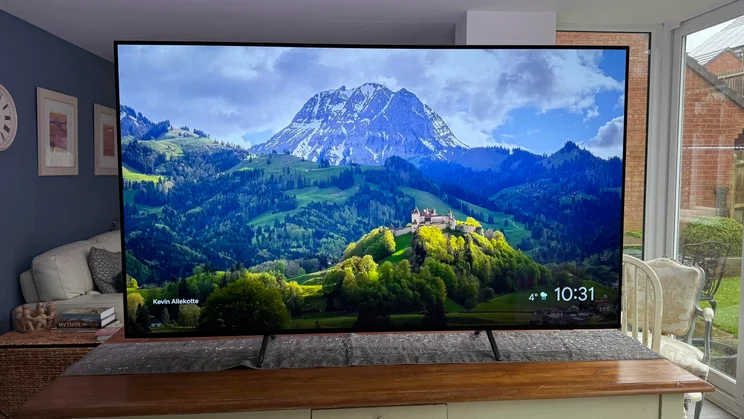
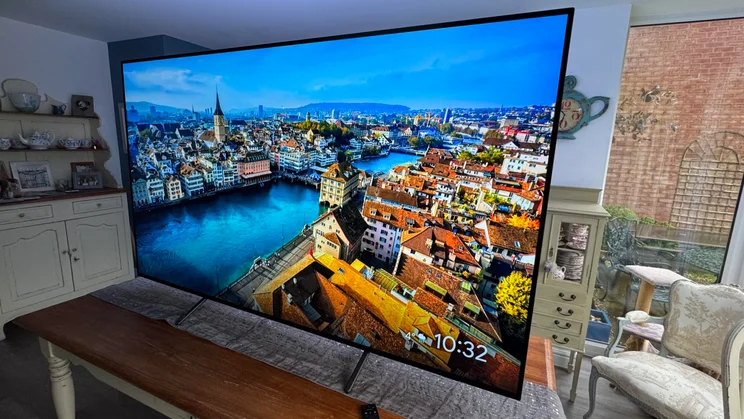
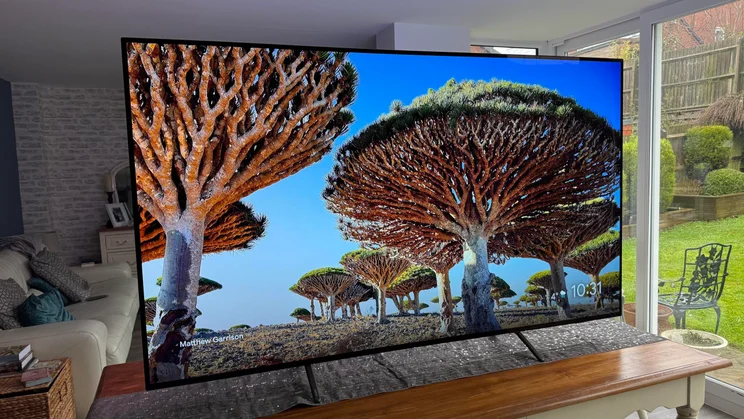

- Immersive and consistent picture quality
- Clean, distortion-free sound
- Very good value
- You need to be careful how you set it up
- Only two full gaming-friendly HDMIs
- Slight short-term image highlight retention
Having already scored a hit with its entry-level OLED760, can Philips deliver another bang-for-your-buck success with its mid-range OLED810? Or will this mid-ranger struggle to offer enough extra quality to make its extra cost worth the trouble?

Philips OLED810: Key specifications
| Screen sizes available | 77in (77OLED810) |
| Panel type | WRGB OLED EX |
| Resolution | 4K/UHD (3,840 x 2,160) |
| Refresh rates | Native 120Hz (up to 144Hz for gaming) |
| HDR formats | HDR10, HLG, Dolby Vision (including IQ), HDR10+ Adaptive |
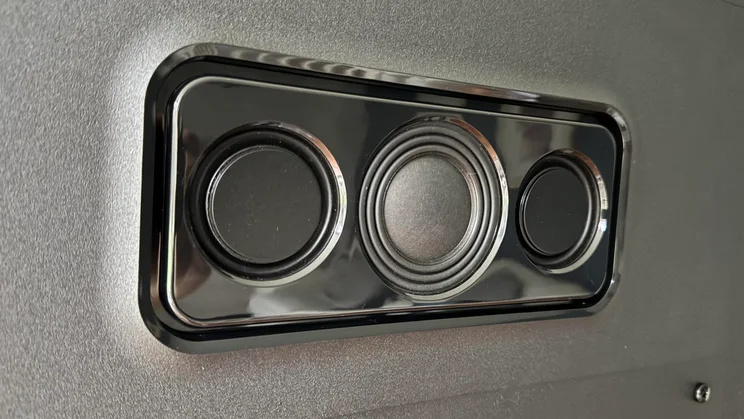
| Audio enhancement | 2.1-channel 70W sound system, Dolby Atmos and DTS:X |
| HDMI inputs | 2 x HDMI 2.1 (1 x eARC), 2 X HDMI 2.0 |
| Freeview Play compatibility | No |
| Tuners | Terrestrial Freeview HD |
| Gaming features | 4K@144Hz, ALLM, VRR (AMD FreeSync Premium) Game Bar, Dolby Vision Game Mode |
| Wireless connectivity | Wi-Fi 5, Bluetooth 5.2, Chromecast built-in, Apple AirPlay |
| Smart assistants | Google Assistant |
| Smart platform | Google TV |
What you need to know
The OLED810 sits in the middle of Philips Europe’s current OLED TV range. As such, it utilises step-up OLED panels from the entry-level OLED760 range, which means that we should see increased brightness and colour volume, alongside potentially more advanced and powerful video, audio and smart system processing.
The OLED810 still features a three-sided version of Philips’ Ambilight technology, but it goes for the Google TV smart system rather than the Titan OS platform used by the OLED760.
Only the 77in OLED810 is available in the UK; in other European territories, there are 48in, 55in and 65in OLED810 models – it’s a shame we don’t get those here.
Price and competition
As mentioned above, the 77in OLED810 that I tested for this review is the only model available from the range in the UK, and costs £2,199 at the time of writing. The 77in LG C5 OLED, by comparison, costs £2,549. And that LG model doesn’t have Ambilight.
Given the LG C5’s significantly higher price, a more direct rival for the OLED810 is arguably THE 77in Samsung S90F OLED. However, unlike the 65in model in the S90F range, which uses Samsung’s new pure RGB Quantum Dot OLED technology, the 77in S90F utilises regular WRGB OLED tech. That screen size has a list price of £2,599, and although some may prefer Google TV to Samsung’s Tizen operating system, the S90F, like the LG C5, supports advanced gaming features over all four of its HDMI ports rather than just two, as the 77OLED810 does.
Design, connections and control
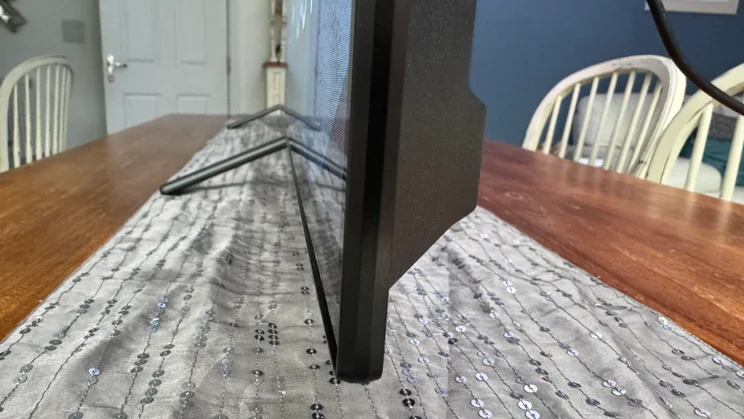
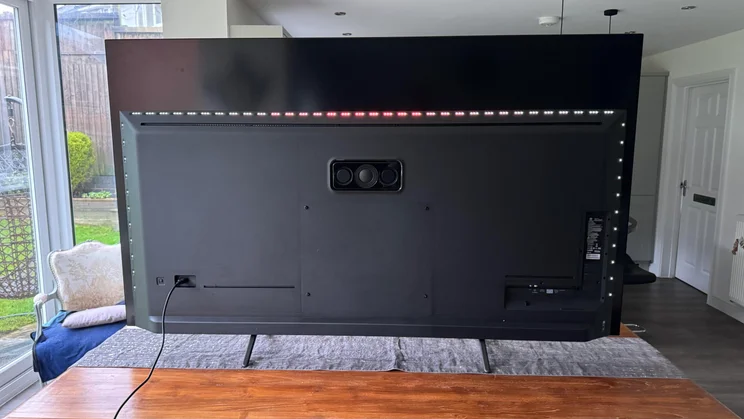
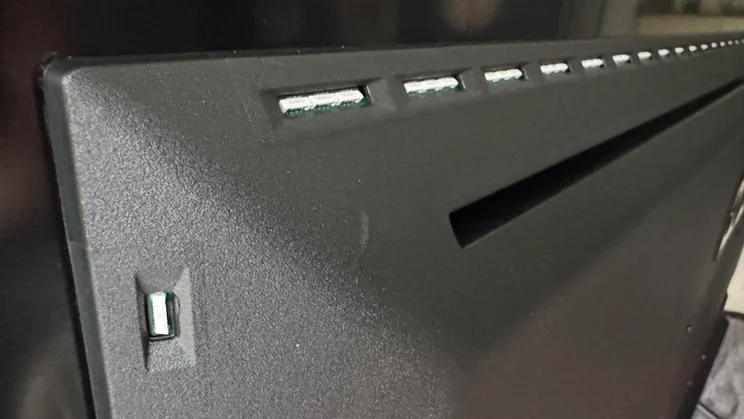
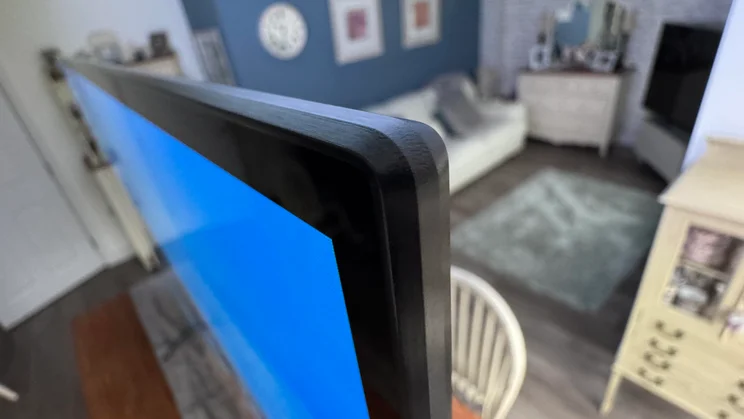
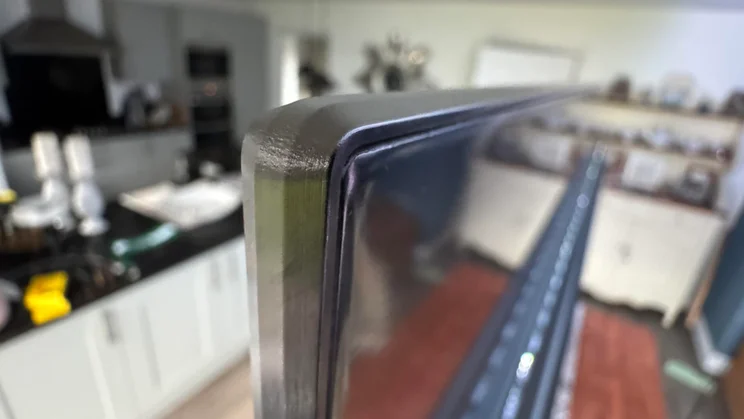
The OLED810 features an attractive design that includes extremely slim, metallic black outer edges, a premium single-layer finish for the screen, a tidy brushed metallic finish for the back panel behind the screen’s slimmest bits, and Philips’ Ambilight technology behind the left, right and top edges. A mid-section of the rear does stick out quite a bit by OLED TV standards, though.
The OLED810’s Ambilight system can be set to emit either a single colour around the screen or continually track the location and tone of colours within the pictures you’re watching. This latter option adds both style and immersion to the viewing experience. Provided, anyway, that you set Ambilight to a relatively mild brightness setting and a relatively gentle rate of response to image changes.
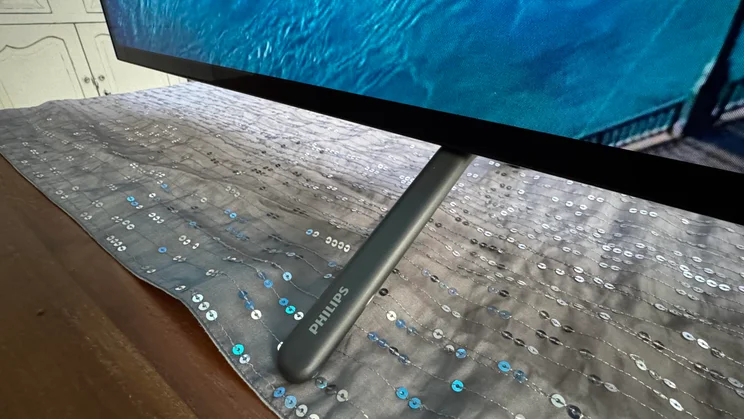
The 77OLED810 carries VESA mounting points, but ships with a pair of dark grey metallic feet. The smaller screen sizes not available in the UK replace the feet with a centrally mounted circular desktop mount.
There are four HDMI ports on the rear of the panel, but only two are built to the full 48Gbps HDMI 2.1 specification capable of supporting today’s more extreme gaming capabilities. One HDMI supports the eARC feature for passing lossless digital audio to compatible soundbars, while there are also two USB-A ports, an optical digital audio output, an antenna RF, a headphone port, and an Ethernet port. Plus, of course, there are Wi-Fi and Bluetooth wireless options.
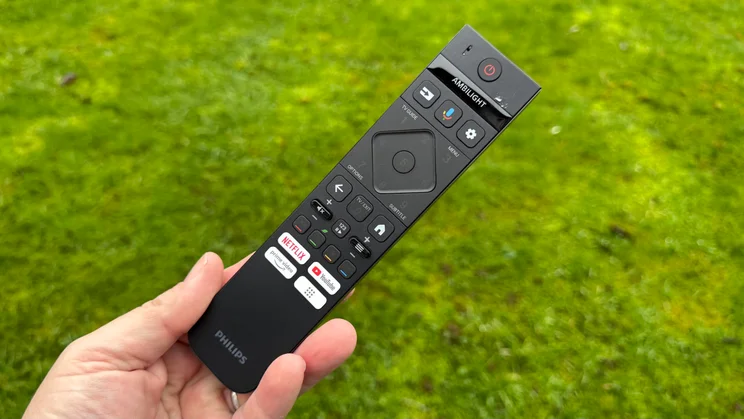
The OLED810 ships with an attractive proprietary remote control, complete with a large Ambilight button running along the top. The handset is rechargeable over USB, too, saving you from a lifetime of new batteries. The diamond-shaped cursor navigation trackpad around the circular select button at the remote’s heart isn’t comfortable to use, though, and the volume rocker switch is a bit small.
If you don’t get on with the remote, Google Assistant voice control enables you to control the TV and issue content search instructions just by talking to it.
Smart TV platform
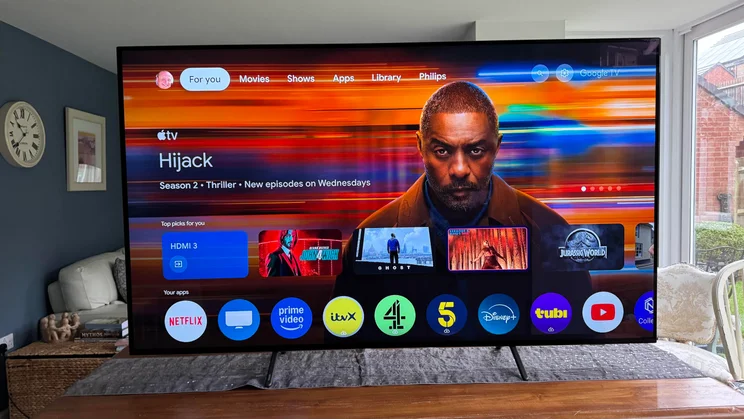
The OLED810 doesn’t join Philips’ entry-level OLED TVs in using the Titan OS smart system, turning instead to Google TV. Unlike some Google TV implementations, the one here runs slickly and didn’t suffer any major crashes during my time testing it. Google TV now makes it straightforward to customise the layout of at least parts of its home screen, and supports multiple user profiles so different members of your household can establish their own home screens.
Most of the key video streaming apps are present and correct for UK users, with ITVX, Channel 4 and My5 now all up and running alongside the global likes of Netflix, YouTube, Prime Video, Disney+, Paramount+ and Apple TV. There’s no support, though, for the BBC iPlayer, Freeview Play or Freely.
Image quality
Despite sporting more potential image enhancement tools than the OLED760 series, the OLED810 shows admirable restraint with the sort of standard dynamic range and HD fare that still takes up much of most households’ viewing time. This is especially true if you use the Filmmaker Mode preset Philips has now (after years of being renowned for always pushing the technological extremes of its TV hardware) bought into with apparent enthusiasm.
Objective testing using Portrait Displays’ Calman Ultimate analysis and calibration software, C6 HDR5000 colorimeter and G1 signal generator revealed Delta E average errors of just 2.3 and 1.9. These are well below a score of three at which deviations become visible. The pattern continues with Calman Ultimate’s various colour tests, with Gamut, Colorchecker, Saturation Sweep and Luminance Sweep tests generating Delta E average errors of just 2, 1.4, 1.2 and 1.4. SDR playback on a modern TV just doesn’t get more accurate than that.
The Filmmaker Mode doesn’t just measure well, either. It’s also a joy to watch. All the nuance I’d hope for is there, from almost infinitely subtle colour toning and blending to adept light management that never leaves you feeling like you’re losing details from an image’s darkest corners. Underpinning everything, too, are essentially immaculate black levels that don’t exhibit even a hint of greyness. There’s no instability to the OLED810’s black colours, either, and subtle shadow details are rendered without any noise or coarseness.
Colours always look perfectly balanced, too, with no tone feeling out of whack with any others. Best of all, the OLED810’s Filmmaker Mode doesn’t feel flat, lifeless or neutered.
The OLED810 adopts a slightly higher baseline brightness level for its Filmmaker Mode SDR playback than Rec.709 specifications might suggest: around 324cd/m2 rather than between 100 and 200cd/m2. This doesn’t result in any errors with the Filmmaker Mode’s colour balance or performance, though, as other tests prove.
Great though Filmmaker Mode looks, as you’d expect with any TV, but especially a Philips one, the OLED810 can also present SDR images with much more vibrancy, brightness and dynamism. The Crystal Clear represents Philips’ own view of how it wants SDR to look, and almost doubles the baseline brightness to just under 600cd/m2. This is accompanied by an expansion of the colour gamut and the weight bright elements have in the mix. Crucially, this happens without any spectacle-boosting activity causing major distractions. Colours still look balanced and subtly rendered, even if they’re not as measurably accurate, and while brightness peaks look more intense, they don’t tend to look over-aggressive.
The Crystal Clear mode also delivers Philips’ trademark extreme upscaling sharpness, but the latest AI tools and refinements of Philips’ P5 AI Perfect Picture Engine ensure that this sharpness now feels mostly natural rather than forced and gritty.
There are more expensive TVs that can ‘stretch’ standard dynamic range further than the OLED810, and you need to tweak one or two elements of the SDR pictures to keep them looking engagingly natural in Crystal Clear mode. In particular, motion processing should be set to Pure Cinema or Movie to stop moving images from looking too smooth and affected by obvious haloing around moving objects. Or, if you can be bothered, choose the Personal motion setting with judder reduction set to level three and blur reduction set to level five or six.
The Crystal Clear SDR preset strays pretty far from Rec.709 standards. You’re looking at grayscale Delta E average deviations of around 15, and colour test deviations of between 10.7 and 13.5. Apart from a luminance sweep, oddly, which records a Crystal Clear mode error of just 1.5. Calman tests reveal, too, that the OLED810 can reproduce 130% of the Rec.709 colour gamut.
As we’ve seen, though, the Filmmaker Mode is there for people who want accuracy. The main thing about the Crystal Clear mode is that it still looks balanced and immersive despite its extra punch. Plus, Philips provides a couple of well-considered presets that offer steps between the gregarious Crystal Clear and accurate Filmmaker Mode options.
HDR picture quality
The OLED810 does exactly as I’d hoped with high dynamic range sources, delivering significantly more of an HDR effect than Philips’ cheaper OLED760 models without taking on any major excessive or distracting image traits. Provided you take the time to tweak one or two things.
For instance, the motion setting advice suggested in the SDR section goes double for HDR playback. You could also consider turning the OLED810’s motion processing completely off, although this can make judder distracting around bright highlights.
I’d also recommend turning off the OLED810’s noise reduction features completely for native 4K sources, and avoiding the Vibrant setting of Philips’ Colour Content Adaptation feature, as it tends to inject too much green into the picture. I’d suggest, too, avoiding the Prioritise Brightness option in the TV’s HDR tone mapping controls, as this can cause bright highlights to lose subtle details. Stick with the Balanced or Prioritise Detail options instead.
The OLED810 defaults to HDR Eco mode with HDR10 footage to reduce energy consumption, so I’d suggest switching to a different, brighter preset immediately.
Finally, I’d recommend tinkering with the various features included in an AI picture settings section of the menus. Previously, I’d likely have suggested turning all AI picture adjustments off, but the intelligence of Philips’ AI image analysis and manipulation has improved to the point where aspects of it can actually subtly enhance images without making them look unnatural or processed.
The only AI setting I struggled with was the option that adapts image brightness to ambient light conditions, as it tends towards making the image darker than I wanted it to look. With the OLED810’s images tweaked as suggested, you’re left with HDR images that combine impressive dynamism and punch with a level of consistency, balance and refinement that underlines the attention to detail Philips now embraces like an old friend.
Essentially, nothing looks out of place. Bright highlights look bold (more intense than on the OLED760) but also realistic and like natural parts of the image rather than holes ripped out of it. Colours are vibrant, with more volume than on the OLED760, but don’t lose the tonal subtleties and balances required to deliver smooth gradations and a convincing sense of depth and object three-dimensionality. No tones achieve distracting dominance over any others, either, even in Crystal Clear mode.
Black levels remain beautifully deep and intense despite the extra HDR brightness and colour richness, and shadow details remain beautifully controlled, again without any significant near-black noise or instability. My Calman Ultimate tests reveal the OLED810 can cover 99.2% of the DCI-P3 colour spectrum, and 77.8% of the BT.2020 spectrum.
Some high-end OLED and LCD TVs can hit significantly brighter peaks and more full-screen brightness than the mid-range OLED810 can. However, the combination of appealing intensity, care for the finer things in TV life, overall balance and consistency makes it a fantastically immersive TV for the money. Especially with Ambilight thrown into the equation.
The only issues I have with the OLED810’s pictures were some slight colour banding in Crystal Clear mode (that largely disappears in Fillmmaker Mode) with almost monotone HDR shots or image areas, and momentary image retention from bright highlights. Here, just occasionally, a very bright highlight can briefly leave a shadow behind if there’s a cut from it to a black screen. Such retained image shadows, though, are faint and short-lived. I saw no evidence that they might lead to long-term image retention issues.
Putting some numbers on the OLED810 pictures, it hits brightness peaks on 1% and 2% test windows of around 1,250cd/m2 in Filmmaker Mode and 1400cd/m2 in Crystal Clear mode. These numbers drop to around 1,200cd/m2 on a 10% window in Crystal Clear mode, 1,030cd/m2 in Filmmaker Mode, and 200cd/m2 on a 100% window in both presets. The small window numbers are up a couple of hundred nits on last year’s OLED809 series, and are impressive for such an affordable big-screen OLED TV.
The OLED810 generally delivers excellent accuracy in Filmmaker Mode. ColorChecker, BT.2020 colour sweeps and DCI P3 colour sweeps score Delta E average errors of just 1.1, 2.3 and 1.6. Calman’s ColourMatch test signal scores a bit higher at 6.4, but most of this error is down to a touch of over-exuberance with brightness. With luminance removed from the equation, the error on this test drops to just 0.6. And personally, I’m happy to trade a still marginal ColorMatch luminance error to score a bit more of the punch that’s so satisfying to see on a huge OLED screen.
The DeltaE average error levels rise to between 10 and 16 in the Crystal Clear preset across the greyscale and colour board, but this isn’t shockingly bad by bright-room TV preset standards. Plus, you don’t really feel it because the colours and subtle light details are so consistent and balanced.
Gaming
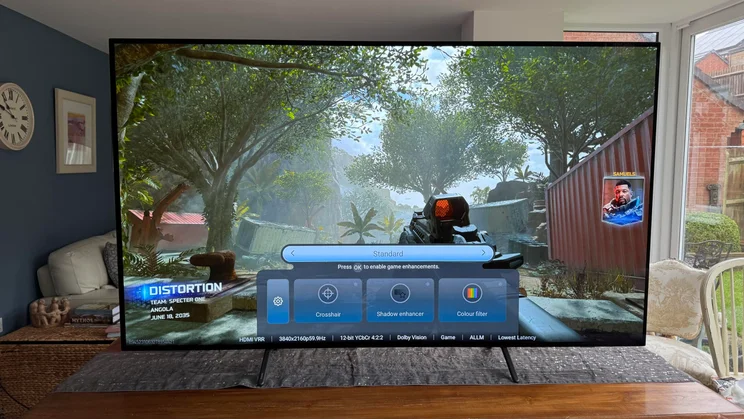
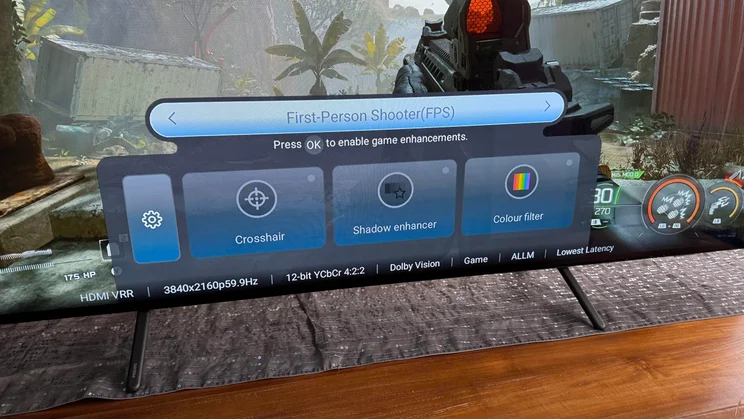
The OLED810 is a terrific gaming display for its money. While only two of its HDMI ports support full 48Gbps bandwidths, they can deliver 4K/144Hz feeds, variable refresh rates, including the AMD Freesync Premium system, a low-latency Dolby Vision Game Mode, and automatic low-latency mode (ALLM) switching when game sources are detected.
In its Game mode, the OLED810 can take just 12.5ms to render incoming graphics, and game images look bright, vibrant, crisp, detailed and smooth. Gaming feels responsive, too, and the TV carries Philips’ latest Game Bar dedicated gaming onscreen menu. This isn’t as packed with gaming aids as the similar game home screens of some rival brands, but it does let you optimise the TV’s picture presentation to different game genres, and provides an impressive amount of information on the incoming graphics.
Sound quality
The OLED810’s sound mostly continues the good news. I was struck by how clean and detailed its speakers are, by how pristine rather than harsh the highest trebles sound, and to some extent by how well those details are placed in the TV’s soundstage.
The detail positioning doesn’t stretch to making specific voices or object sounds come from precisely the correct part of the screen, as some TVs from Samsung and Sony do. However, there’s certainly a good sense of a movie, TV show or gaming mix extending beyond the TV’s frame, as well as a real understanding of how to build a compelling soundstage. Bass extends reasonably rather than spectacularly deep, but it does so without succumbing to such common bass speaker problems as crackling, phutting or serious coarseness.
The OLED810’s well-controlled sound can sometimes feel a bit too polite, though. It doesn’t get especially loud, even if cranked up to its maximum 60 level, and there isn’t much forward momentum to the sound, meaning it doesn’t really fill your room. Vocals can become a touch overwhelmed during dense action scene moments, too, and finally, while bass works quite well with prolonged rumbles, it can struggle to maintain its presence with more rhythmical bass sounds.
Verdict
While you need to put in a little legwork to get the best out of the Philips OLED810, the resulting pictures are well worth your effort. Whether you prefer your pictures accurate or punchy, a well-set-up OLED810 can cater for both tastes. And it does so with a degree of precision, accuracy (in Filmmaker Mode), general balance and image understanding that throws up practically none of the distracting inconsistencies or glitches you might expect such a well-priced 77in TV to portray.
Ambilight is on hand, meanwhile, to illuminate an already good-looking design as well as enhance the immersiveness of its pictures, while its sound is good enough to make adding a soundbar an option rather than a necessity.
Happily for us Brits, where the 77OLED810 is the only available option, the 77in OLED810 is particularly hard to resist thanks to its especially strong value proposition and the way its big screen highlights the range’s picture strengths so spectacularly.


