To help us provide you with free impartial advice, we may earn a commission if you buy through links on our site. Learn more
- Excellent all-round picture quality
- Strong value for Bravia quality
- Unusually trim design
- One or two gaming limitations
- Limited viewing angles
- Minor colour issues in some dark scenes
Looking back over the ghosts of Sony TVs past, there’s usually been quality galore in the upper echelons of the brand’s range. However, it tends to struggle to maintain the quality at more mainstream price points.
With its Mini-LED lighting, Backlight Master Drive panel, and powerful Bravia processing, though, the lower mid-range Sony Bravia 5 looks, on paper at least, as if it might have what it takes to make Sony a proper mainstream TV baller at last.

Sony Bravia 5 review: Key specifications
| Screen sizes available | 55in (K55XR55BP), 65in (K65XR55BP), 75in (K75XR55BP), 85in (K85XR55BP) and 98in (K98XR55BP) |
| Panel type | VA Mini LED with local dimming |
| Resolution | 4K/UHD (3,840 x 2,160) |
| Refresh rates | Up to 120Hz |
| HDR formats | HDR10, HLG, Dolby Vision |
| Audio enhancement | 40W sound system, Acoustic Multi-Audio technology, Dolby Atmos and DTS:X |
| HDMI inputs | 4 (one with eARC, two with VRR and 4K/120Hz support) |
| Freeview Play compatibility | No |
| Tuners | Terrestrial Freeview HD |
| Gaming features | 4K@120Hz, ALLM, VRR, Game Menu screen, Dolby Vision gaming mode |
| Wireless connectivity | Bluetooth 5.3, Chromecast built in, Apple Airplay, Apple Homekit compatible, Wi-Fi 6GHz |
| Smart assistants | Google Assistant |
| Smart platform | Google TV |
What you need to know
While I approve of Sony’s bid to simplify the naming of its current TV range, it has led to one or two rather confusing anomalies (yes, we’re looking at you Bravia 8 II).
The Bravia 5, though, is well described by its name. It’s positioned to sit below the Sony Bravia 9, Bravia 8, and Sony Bravia 7 models, which have consistently done the business on the Expert Reviews test benches. The six-skipping gap between Bravia 5 and 7 seems to imply that Bravia 5 marks the point at which Sony is more focused on price than performance.
Except that by still holding on to not just Mini-LED lighting but also local dimming and a seemingly still potent version of Sony’s Bravia XR processing, the Bravia 5 actually ends up feeling anything but a price-pummelled poor relation to Sony’s more premium TV offerings.
Price and competition
The 65in Bravia 5 I tested costs £1,399, an approachable sum for a TV that combines decent core specifications with Sony’s Bravia TV DNA. The 55, 75, 85 and 98in models in the Bravia 5 range go for £1,149, £1,599, £1,999 and £4,999, respectively.
Affordable though the Bravia 5 looks for a Sony-branded TV, there’s some pretty brutal competition out there from TCL’s C7K range, the 65in model of which costs just £849 at the time of writing. There’s even a respectable 65in OLED out there at the moment, the Philips OLED760, that costs less than the 65in Bravia 5 (£1,149), despite it sporting Philips’ unique Ambilight design technology. In other words, the Bravia 5 is going to need to deliver the goods if it’s going to see off such competition.
Design, connections and control
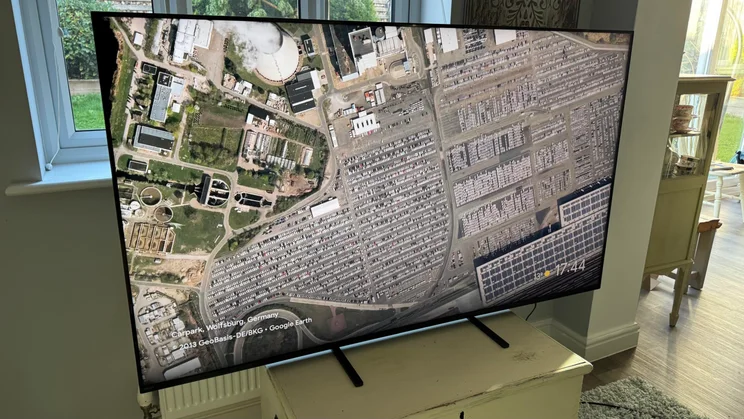
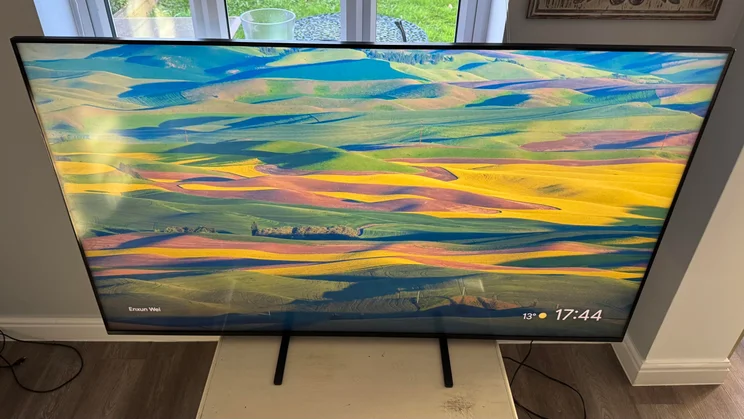
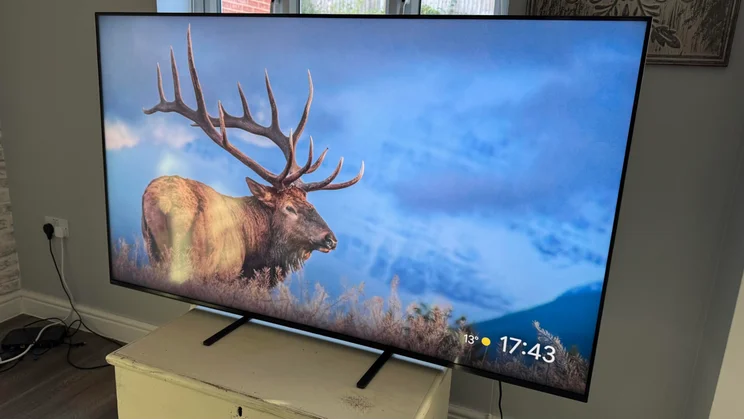
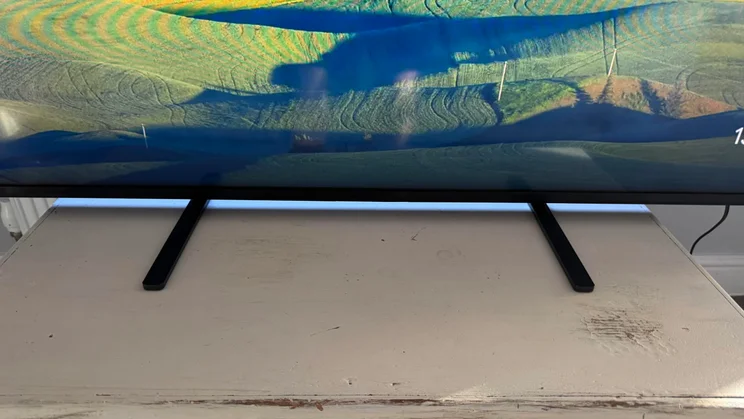
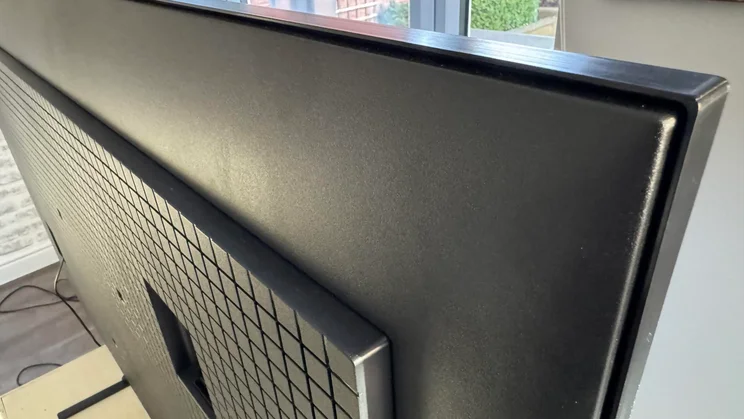
The Bravia 5 is a striking-looking TV despite favouring understated elegance over eye-catching dazzle. It surrounds its screen with an exceptionally thin bezel that almost disappears when viewed head-on. This frame doesn’t sit on quite the same level as the screen, like we often see with more premium sets, but its finish is sturdy enough not to feel cheap or flimsy.
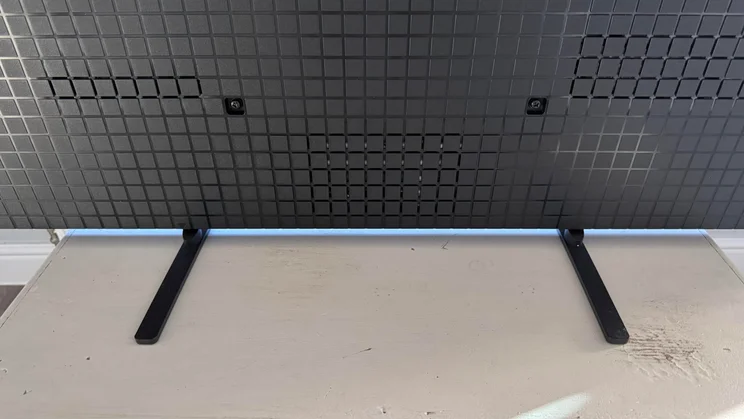
The set sits on a pair of feet that can be placed in two positions: fairly close together or out near the screen’s corners. The screen sits high enough on the feet to allow a soundbar to sit beneath it, too, and some of Sony’s soundbars ship with small screw-on feet that sit over the current TV feet.
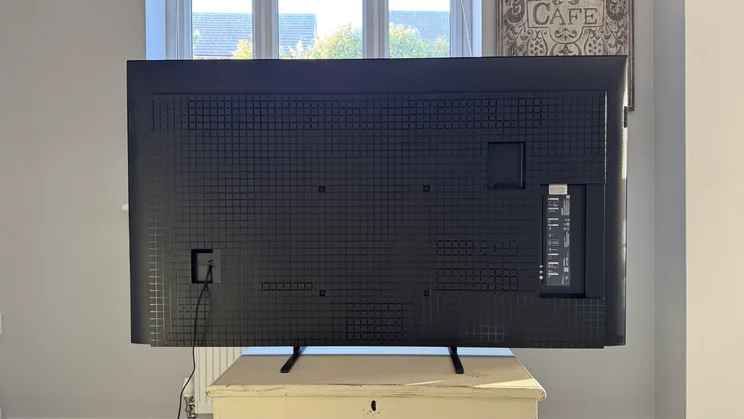
The Bravia 5 is reasonably thin for the money, a design feature emphasised by the way the rear angles steeply back from the screen’s extremities. Most of the rear then flattens out and adopts a fun cross-hatch finish broken only by VESA mounting points for anyone wanting to hang the set on their wall.
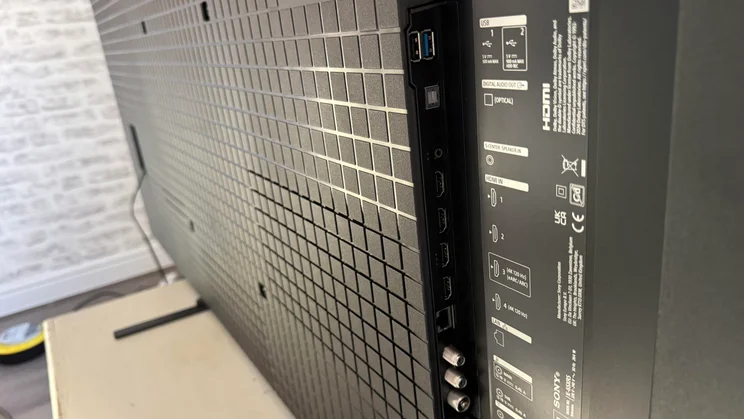
Connections are solid rather than brilliant. The presence of four HDMIs is very welcome, but as usual with Sony TVs, only two of the four support variable and 120Hz refresh rates. Elsewhere, there’s an optical digital audio output, a headphone jack, the inevitable RF input, and an Ethernet port. The TV also has built-in Wi-Fi and Bluetooth, and supports Chromecast and Apple AirPlay.
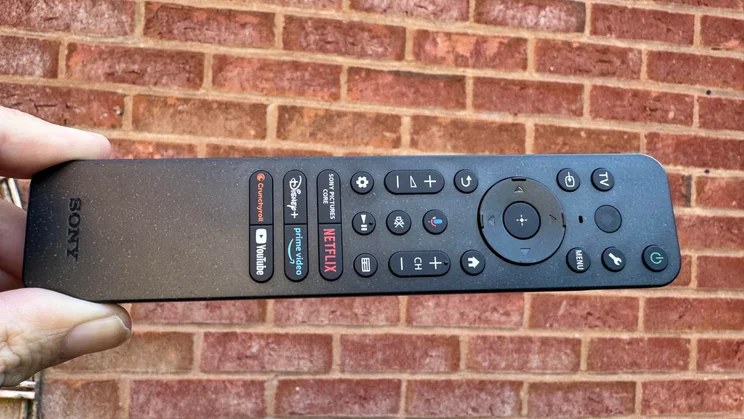
The Bravia 5’s main remote control is a compact but mostly ergonomic affair that thankfully sports proper ‘proud’ buttons rather than the tricky-to-find flush ones that Sony remotes used to favour. Green specks in its mostly black finish, meanwhile, remind you that it’s made from mostly recycled materials.
Smart TV platform
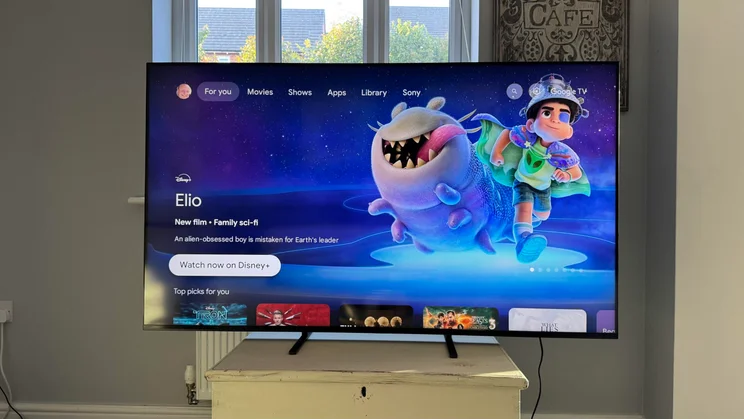
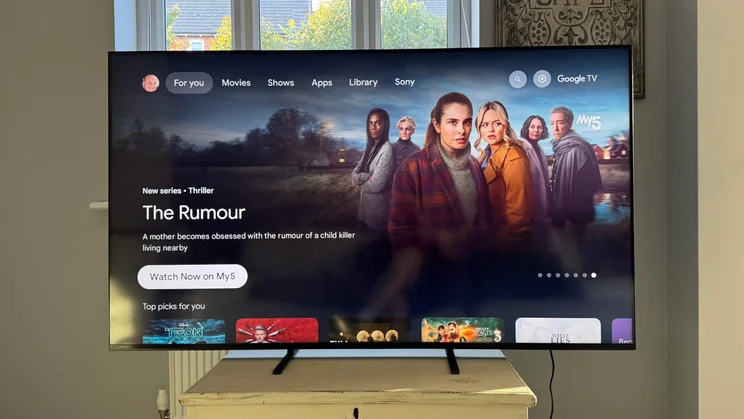
Sony’s long love affair with the Google TV smart system continues for the Bravia 5. This didn’t feel like such a great thing back in the old Android TV days, but Google TV has now slowly morphed into providing a pretty handy interface to go with its massive content reach.
You can customise this interface much more than you used to, and the system is much less sluggish and prone to crashes. Plus, Sony has addressed Google TV’s issues with some UK catch-up TV services by integrating the YouView platform into the Bravia 5’s menus.
As this is a Sony TV, you also get the Sony Pictures Core service, with its unique support for high-bandwidth streaming. Buying the 65in Bravia 5 entitles you to 10 premium movie titles for free, and the service also offers one of the biggest repositories of IMAX Enhanced content, with its screen-filling aspect ratios and special noise-reducing video mastering.
Image quality
The Bravia 5 is a consistent joy to watch with standard dynamic range images, regardless of whether they’re in 4K or HD, and regardless of whether the TV is upgrading SDR images to HDR or not… For yes, unlike any other TV brand, Sony TVs, including the Bravia 5, automatically apply an HDR upgrade to most of their picture presets that you can’t turn off.
This may sound like blasphemy to some home cinema fans. However, the HDR conversion is so intelligent and mild (with all presets bar the OTT Vivid mode) that it never seems to lose touch with the feeling of the original SDR source, and never throws up the sort of colour imbalances or processed, exaggerated feel that other HDR conversion systems tend to. Plus, if you really can’t handle the idea of HDR remastering, the Bravia 5’s Professional and Cinema presets both stay in SDR mode.
I felt very comfortable with the Standard preset, HDR upgrade and all; the extra brightness, colour range and contrast it adds to proceedings don’t make images look forced or artificial. This mode is particularly effective in daytime living-room conditions.
Crucially, though, both the Bravia 5’s Cinema and Professional modes also provide excellent out of the box true SDR results that deliver outstanding subtleties of light and colour, surprisingly good black levels and the sort of contrast and levels of backlight control that we’d normally only expect to see on much higher-end LCD TVs.
Sony has consistently coaxed great results out of even fairly limited dimming zone systems for years now, and the Bravia 5 continues this theme by delivering convincing black colours, accurate shadow detail and punchy whites and colours.
Taking measurements using our resident Portrait Displays test suite of Calman Ultimate software, G1 signal generator and C6 HDR5000 spectrometer, the Bravia 5’s Professional mode, which doesn’t apply an HDR upgrade to SDR video, does all the ultra-accurate things AV enthusiasts would want it to. White level is set to just under 90 nits (marginally conservative for SDR brightness). Meanwhile, every greyscale and colour test I ran measured comfortably below the Delta E 2000 average error level of 3, where errors become visible. The Bravia 5 also covers more than 96% of the Rec 709 colour spectrum.
In Standard mode, with Sony’s excellent HDR upgrade in play, the baseline white level leaps to 372, two-point and multipoint greyscale tests deliver Delta E 2000 average errors of 11.1 and 9.5, respectively, and ColorChecker, Saturation Sweep and Luminance Sweep tests turn in Delta E 2000 average errors 6 of 7.9 and 5.5. While these aren’t as accurate, they’re closer to their target values than many TV Standard presets are, showing just how gentle and sensitive the HDR upgrade is.
HDR image quality
Despite its relatively low position in Sony’s Bravia range, the Bravia 5 is still very much designed with HDR in mind, and it delivers on this focus brilliantly for such an affordable Sony TV.
Providing the foundation for the Bravia 5’s impressive HDR efforts is another seemingly physics-defying local dimming system. While Sony doesn’t officially reveal how many dimming zones its TVs carry, my own attempts to count them suggested there are 240.
While some way down on the many hundreds, even thousand-plus dimming zone numbers premium LCD TVs these days often deploy, it’s still able to combine punchy peak whites (Calman tests show peaks on a 10% HDR window of basically 1,000cd/m2 in Standard mode) and vibrant colours with compellingly deep, neutral black colours. And it does this without generating the sort of backlight clouding and blooming that such strong contrast might normally be expected to throw up with a 240-zone dimming system.
The strongest contrast performance comes, overall, in the Standard mode. While the Cinema and Professional presets don’t operate so much at the Bravia 5’s maximum light and dark extremes, they still look dynamic enough to feel engaging while giving home cinema purists the accuracy they crave. Calman Ultimate tests in HDR Professional mode record Delta E 2000 average errors of just 2.2 and 1.6 for the key ColorMatch and ColorChecker HDR tests, as well as just 1.9 and 1.6 for BT2020 and DCI-P3 colour gamut sweeps.
This level of control is achieved while the screen is still pumping out around 900cd/m2 of brightness in Professional mode, while hitting more than 96% of the DCI-P3 and around 76% of the BT.2020 colour spectrums.
I’ve seen plenty of TVs measure well in their most accurate picture modes, though, and still end up delivering rather flat and drab pictures. Happily, the Bravia 5 does not fall into this category. Its Professional mode images still enjoy compelling black tones, punchy local contrast, subtle light controls, bold colours and strong levels of detail and sharpness, creating a natural, three-dimensional image that draws you in while creating pretty much no distracting problems that might throw you back out again.
For viewers watching in a bright room or who want to enjoy a bit more of the TV’s extremes than the Professional mode can give you, the Bravia 5’s Standard preset increases brightness and colour volumes/saturations substantially, as well as delivering a mild sharpness upgrade at the cost of just slightly greyer dark scenes. You’ll want to turn off the set’s noise reduction features in Standard mode and make sure the motion processing is left on True Cinema to ensure motion still looks natural and cinematic. Provided you do that, your reward is a much punchier image than you get with the Professional mode, but also plenty of retained balance and refinement.
In short, the Bravia 5’s Standard mode retains more of that familiar Sony picture magic than I would have expected it to for its money. Especially based on the experience of previous Sony TVs in this relatively affordable area of the brand’s range.
The Standard mode naturally sacrifices measurable accuracy for its extra showmanship. Its delivery of a bit more brightness (topping out on a 25% window at a fraction under 1000cd/m2) contributes to a quite marked deviation from the EOTF curve, while Calman Ultimate’s ColorMatch HDR, ColorChecker, BT 2020 Sweep and P3 Seep tests show Delta E 2000 average errors of 10.8, 12.6, 17.9 and 16.9.
No Standard mode is ever going to be perfectly accurate, though; that’s almost its point. So what matters about the Bravia 5’s Standard preset is that its pictures enhance the spectacle without feeling unnatural, gaudy, noisy or coarse.
There are one or two niggles with the Bravia 5’s pictures. Dark red objects in mostly very dim scenes can sometimes take on a slight glowing effect. Very dark scenes can adopt a mild green hue rather than looking completely neutral. The brightest highlights of HDR pictures can look a bit ‘clipped’ of subtle details compared with the Bravia 7.
Finally, while the Bravia 5’s local dimming system works brilliantly when you’re looking at the TV more or less head-on, if you have to watch it from an angle of 25 degrees or more off-axis, you can start to see backlight haloing around bright objects. Be under no doubt, though, that the Bravia 5’s picture strengths far outweigh the niggles.
Gaming
The Bravia 5 isn’t the most game-friendly TV around. Only two of its HDMIs can handle the full range of gaming features it offers, and its maximum frame rate tops out at 120Hz rather than pushing to 144 or even 165Hz like some rival TVs do. There is support for variable frame rates, but only in the core HDMI format. There’s no AMD Freesync or Nvidia G-Sync support.
The Bravia 5 handles Dolby Vision gaming, though, and there is one unique Sony feature in the shape of the Perfect For PlayStation 5 system, whereby Sony’s game console can identify which Sony TV it is attached to and automatically adjust its HDR graphics output accordingly.
Perfect for PlayStation 5 can also detect when a game source is coming in from a PS5 and automatically switch the TV into its fast-responding Game mode – but this is pretty much the same as the Auto Low Latency Mode switching feature most TVs carry.
A dedicated Game menu comes up when the TV knows it’s playing a game source, providing both information on the incoming graphics feed and such gaming aids as genre-specific presets, multiple motion blur reduction levels (each of which attracts increasing amounts of input lag), a black equaliser that can raise the brightness of dark areas without impacting the rest of the picture, screen size adjustment, and options to call up a superimposed crosshair.
Lag when running in the Bravia 5’s fastest Game mode is 13.3ms at 60Hz refresh rates, and despite the Bravia 5 not carrying quite as many game-friendly features as I’d ideally like, it does deliver a very crisp, responsive and fluid experience, as well as retaining the same sort of dynamism, vibrancy and detail that’s so appealing with its video images.
Sound quality
The Bravia 5’s sound joins its pictures in punching substantially above its price-level weight. There’s an almost hi-fi sensibility to the fine detail it’s able to pick out from even the most complex film soundtracks, and this detail never sounds harsh or warbly. Sony’s audio processing is also better than most at correctly interpreting the relative balance of different effects in a sound mix, and creates a pleasantly large soundstage into which effects are accurately placed
Dialogue is clean and sounds as if it’s coming from the onscreen action rather than speakers below the screen, and the speakers have enough power and dynamic range to fill at least a mid-sized living room without succumbing to distortions or causing the chassis to rattle or buzz.
The Bravia 5 doesn’t have all that much low-frequency reach, which can leave heavy action scenes feeling a little lightweight. But they don’t actually sound thin or brittle, and I’d rather a TV work within its speakers’ bass limitations like the Bravia 5 does than have low frequencies cause distortions or dropouts.
Verdict
Delving as far down Sony’s TV range as the Bravia 5 would usually prove a step too far, revealing the point at which the brand’s picture and sound quality take quite a hit. Happily, though, the Bravia 5 reverses this trend in pretty spectacular fashion, retaining enough of the excellent picture and sound DNA found in Sony’s premium, Bravia 7, Bravia 8 II and Bravia 9 ranges to become arguably the best all-round value proposition in Sony’s current TV range.