
To help us provide you with free impartial advice, we may earn a commission if you buy through links on our site. Learn more
- Direct and organised sound
- Really nicely made and finished
- Ample dynamic headroom
- Doesn’t sound as big as you might hope
- Could really use a remote control
- Pricey for what it offers
You’re hardly short of choice when it comes to fairly expensive soundbars that aim to deliver spatial audio. With the new Bluesound Pulse Cinema Mini, the brand has addressed some of the perceived issues with several of the more high-profile models currently on sale.
It’s helpfully compact, so while it may not have what it takes to fill the largest rooms with sound, its real-world usefulness in spaces that aren’t enormous and/or when partnering TVs that aren’t enormous either, can’t be overstated. But despite its relatively tidy dimensions, it manages to look and feel (as well as sound) like a premium product.
It’s part of the BluOS ecosystem, too, meaning it can be controlled by one of the very best apps around, easily integrated into a multi-channel or multi-room audio system, and partnered with products from many manufacturers. And when it comes to spatial audio, the Pulse Cinema Mini delivers in many respects. It’s lacking in outright scale, but hits back strongly on soundstaging, dynamic potency, detail retrieval and tonal consistency.

What do you get for the money?
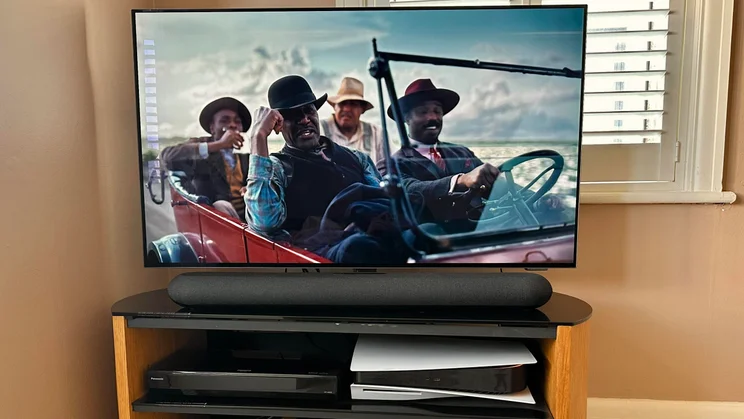
The Bluesound Pulse Cinema Mini is priced at £799, an outlay that gets you a compact, extremely well-made and carefully finished soundbar measuring 850 x 140 x 74mm (WDH).
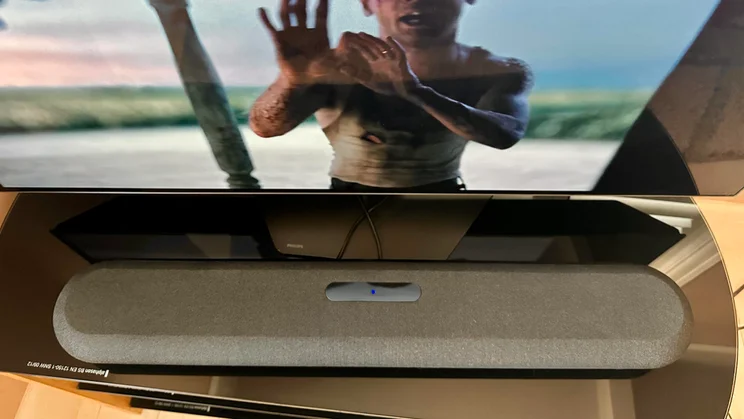
Quite often products of this type, costing this sort of money, demand a big TV to sit beneath if they’re not going to look a bit daft, but the Pulse Cinema Mini is tidy enough to accompany a 48in TV without creating a visual mismatch. Bluesound offers a choice of finishes: the black cloth with black aluminium of my review sample, or a slightly strange tan (for which read pinkish-brown) with white aluminium alternative.
While I’m talking about what this sort of money often buys if spent elsewhere, there are quite a few soundbars that want to create a sensation of spatial audio using purely physical means. This is not one of those soundbars. Instead, it has six drivers and two passive radiators, arranged in a 2.1-channel configuration and relies on some stunt digital sound processing to create the idea of sonic height that’s basically the whole point of spatial audio.
There is a 21mm tweeter and a 45mm midrange driver positioned towards each curved end of the soundbar; they’re angled out just a little in an effort to generate some sonic width. On top of the bar, there are two 102mm bass drivers and two identically sized passive radiators handling low frequencies. Each of the four smaller drivers gets 38W of Class D power, while the two bass drivers get 65W each.
The Pulse Cinema Mini can be wall-mounted, and Bluesound includes a wall bracket in the packaging. If you choose to go this route, the soundbar’s integrated accelerometers let it know if it’s been wall-mounted, and audio output is adjusted accordingly.
Input options are numerous, as is file format compatibility. The Pulse Cinema Mini can deal with every worthwhile audio file format, and can handle LPCM, Dolby Digital/Plus, Dolby TrueHD and Dolby Atmos multichannel content – although any DTS compatibility is conspicuous by its absence.
The information can come aboard via dual-band Wi-Fi, Bluetooth 5.2 (with aptX Adaptive codec compatibility), HDMI eARC, Toslink, Ethernet or stereo RCA analogue inputs; all the physical ports are in a recess at the rear of the chassis. In addition, there’s a pre-out for a subwoofer, and the soundbar can connect wirelessly to its Pulse Sub+ subwoofer sibling, too. All digital audio information is dealt with by a DAC chipset running at a native 24bit/192kHz and DSD256 resolution.
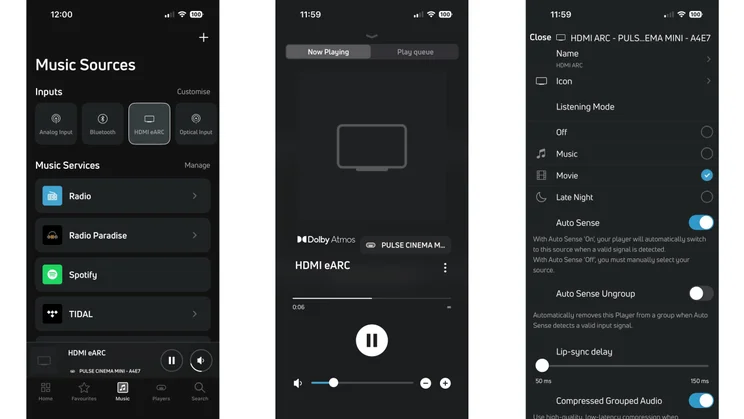
You get control options, of course, by far the best of which is the BluOS app that’s free for iOS and Android. As well as complete control of the soundbar’s functionality, it offers the opportunity to integrate preferred internet radio and music streaming services, to define a couple of presets as shortcuts, to create a multiroom audio system with other BluOS products (of which there are plenty) or to integrate the Pulse Cinema Mini into a true surround-sound system. It’s a logical, legible interface, utterly comprehensive and completely stable. Which means it’s an improvement on pretty much every alternative.
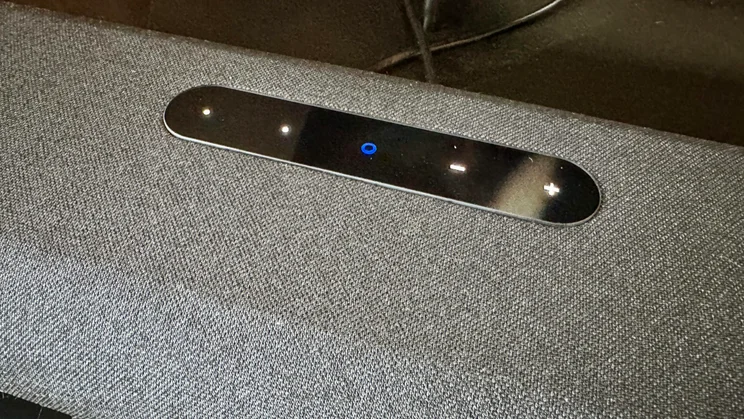
There are a few touch controls on the top of the soundbar that wake using a proximity sensor. These are just Play/Pause and Volume Up/Down, as well as access to your two app-defined presets. And if you integrate the Bluesound into Amazon Alexa Skills, you can, in a roundabout way, get some voice control happening too.
What did we like about it?
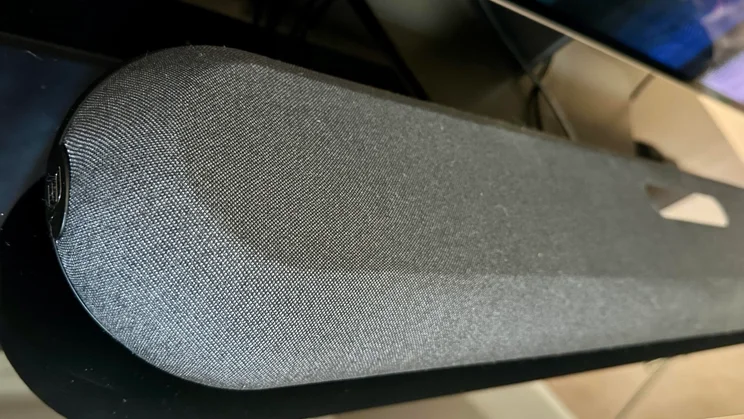
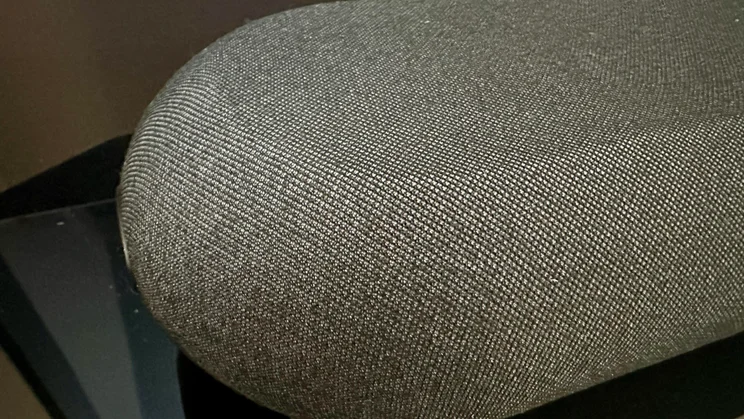
I’ve already touched on the impeccable standard of build and finish apparent here, but I want to reiterate that the Bluesound Pulse Cinema Mini is constructed to a very high standard. The acoustic cloth that covers the front and top of the chassis is flawlessly applied, and the overall impression is that of a premium product.
The BluOS control app, too, speaks volumes about the quality of the product you’ve bought into. The fact that lots of third-party manufacturers are happy to come on board lets you know it’s a well-realised interface, and it also makes your options when it comes to multi-room and multi-channel audio much wider than they are elsewhere.
It’s where sound quality is concerned, though, that this soundbar has the most going for it. It’s not perfect, nothing is, but it gets plenty more right than it gets wrong. It’s the unity and coherence of the presentation that’s probably the most immediately impressive thing about the sound of the Pulse Cinema Mini, and it’s a feature of enduring charm.
Other similarly priced soundbars are a little showier with the spatial audio effect, but there’s appreciable height and width to the presentation, and it’s delivered as a singular entity rather than as a disparate collection of individual elements. The movement of aircraft during Dune II is tracked faithfully, but effects like this are carefully integrated into the overall sound. You may not feel quite as “inside” a soundtrack as with some other soundbars, but the presentation here hangs together convincingly.
It helps that the Pulse Cinema Mini has a fair amount of reach at the bottom of the frequency range and maintains a nicely consistent tonality throughout. There’s proper substance and punch down at the bottom end, but it’s deftly controlled, and there’s sufficient variation in bass sounds to prevent the Bluesound just becoming a thumper.
The Dolby Atmos soundtrack to Sinners streamed from Apple TV nicely demonstrates the soundbar’s facility with midrange resolution: it’s distinct and projects well, which is particularly impressive when you remember there are no dedicated centre channel drivers. There’s a polite serving of bite and shine at the top end, too. In fact, there’s a neutral, natural quality to the tonality throughout, and when the going gets explosive, there’s sufficient dynamic headroom available to make you jump out of your seat.
What could be improved?
The lack of a remote control is a pain of the more minor kind, as is the round-the-houses way that voice control is achievable. But if we’re looking for truly worthwhile improvements, they have to concern the outright scale of the sound the Pulse Cinema Mini delivers.
Basically, it just doesn’t sound all that large. Sure, the soundstage it creates escapes the confines of the cabinet it’s coming from in every direction, but not by as much as you might be expecting. When you take Bluesound’s track record with products like this into account, factor in the price, and then get an earful of the sort of spatial audio effect a slightly more expensive soundbar from Marshall or Sonos can get you, the out-and-out breadth of sound this product delivers is underwhelming.
Context, though, remains important. Both the Marshall Heston 120 and the Sonos Arc Ultra are considerably larger in physical terms, as well as sounding larger – and so if you have a smaller TV (by which I mean less than 55in) or want a soundbar for use in a smaller room, this Bluesound is a definite option.
Should you buy the Bluesound Pulse Cinema Mini?
By now, it’s hopefully clear why you buy the Bluesound Pulse Cinema Mini. You buy it because you have a smaller TV you want to give a big upgrade in sound to, you buy it for the tight-knit coherence and unity of its spatial audio presentation, you buy it because you have plans for a multi-channel or multi-room audio system, or you buy it because you know an outstanding user interface when you see one.
If you’re after straight-ahead scale of sound, especially spatial audio sound (and why wouldn’t you be), it’s not quite as compelling an option as some alternatives, but for some customers, the Pulse Cinema Mini is getting on for ideal.


