
To help us provide you with free impartial advice, we may earn a commission if you buy through links on our site. Learn more
- Incredible colour range
- Excellent backlight control
- Extreme gaming support
- No Dolby Vision
- Occasional colour exaggerations
- It’s not cheap
Having already given us a slice of home-cinema heaven with its flagship OLED, the Samsung S99H, Samsung is out to set a similarly high bar for the LCD TV world with the Samsung R95H series.
These are Samsung’s first premium mass market TVs to use Micro RGB technology, which is the brand’s name for screens that illuminate pictures using separate red, green and blue LEDs rather than shining white or blue backlights through colour filters.
Hisense, Sony, LG and TCL have all confirmed they will release models using the same core RGB approach in their 2026 range, albeit under different marketing names, which is rather confusing for consumers. However, as the first brand out of the traps, Samsung has the chance to set a high bar for its RGB LED rivals – an opportunity it grabs with both hands.
Samsung R95H review: Key specifications
| Screen sizes available | 65in (65R95H), 75in (75R95H) and 85in (85R95H) |
| Panel type | Micro RGB (Mini LED) with local dimming |
| Resolution | 4K/UHD (3,840 x 2,160) |
| Refresh rates | Up to 165Hz |
| HDR formats | HDR10, HLG, HDR10+, HDR10+ Advanced |
| Audio enhancement | 4.2.2-channel 70W system, Object Tracking Sound Plus, Amplify mode, Voice Enhance feature |
| HDMI inputs | 4 x HDMI 2.1, plus 4 x HDMI 2.1 via Wireless One Connect box |
| Freeview Play compatibility | No – but all UK catch-up apps are provided individually |
| Tuners | Terrestrial Freeview HD |
| Gaming features | VRR (AMD Freesync Premium Pro), 4K/120Hz and 165Hz support, Game mode, Game menu |
| Wireless connectivity | Bluetooth, Wi-Fi, Apple AirPlay 2 |
| Smart assistants | Bixby and Amazon Alexa |
| Smart platform | Tizen OS |
What you need to know
The R95H isn’t actually Samsung’s first Micro RGB rodeo. It released the massive 115in R95F towards the end of 2025 with an equally enormous £24,999 price tag. The 65in and 75in R95H, though, are the first Samsung Micro RGB TVs us normies have at least a prayer of affording.
Having said that, Samsung is very much positioning the R95H as a premium series of TVs, pricing them only just below the stunning QD-OLED S99H.
The R95H sets about justifying its premium status with comprehensive gaming features, peerless connectivity, and AI goodies galore. But can picture quality – as represented here by the 75in model I tested – also get where it needs to be when Micro RGB technology is such a new kid on the block?
Price and competition
The 65in and 75in R95H cost £3,399 and £4,299, respectively, which is £100 and £300 cheaper than the 65in and 77in Samsung S99H OLEDs. This suggests that Samsung sees its premium OLED TVs as marginally superior, though at the same time, at least some of the S99H’s extra costs can be laid at the door of their more substantial designs. In the 77in S99H’s case, the fact that it gives you two inches more screen than the 75in R95H.
There isn’t, at the time of writing, any direct Micro RGB or Mini RGB competition for the R95H, though there will be from Hisense, TCL, LG and Sony in the coming months.
Design, connections and control
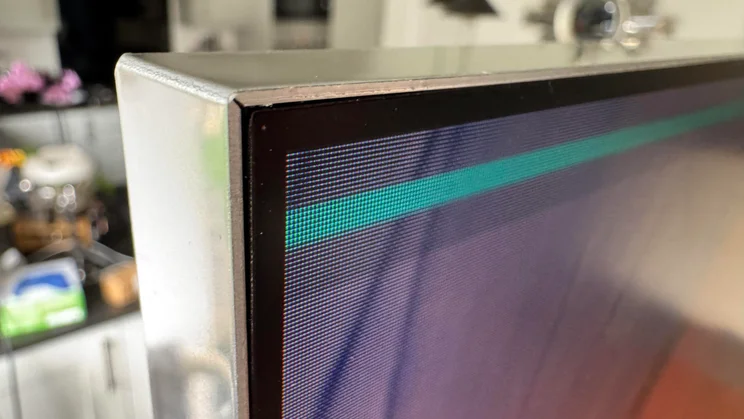
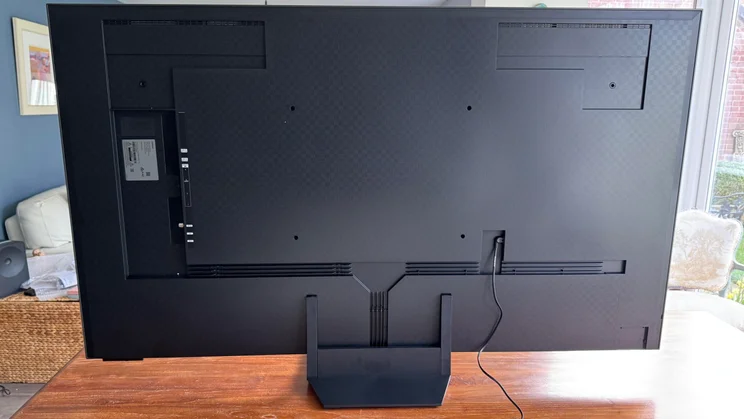
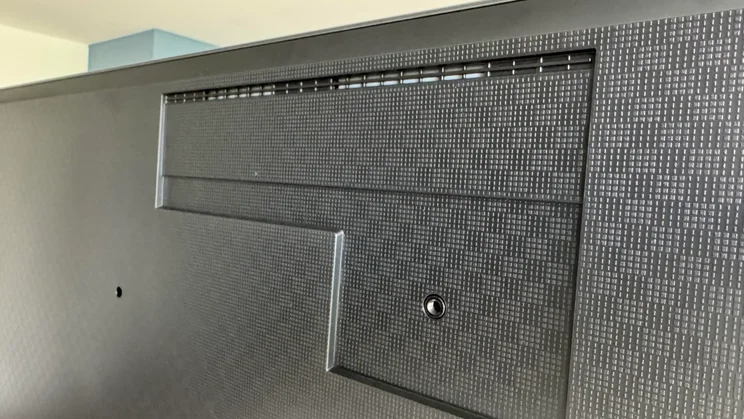
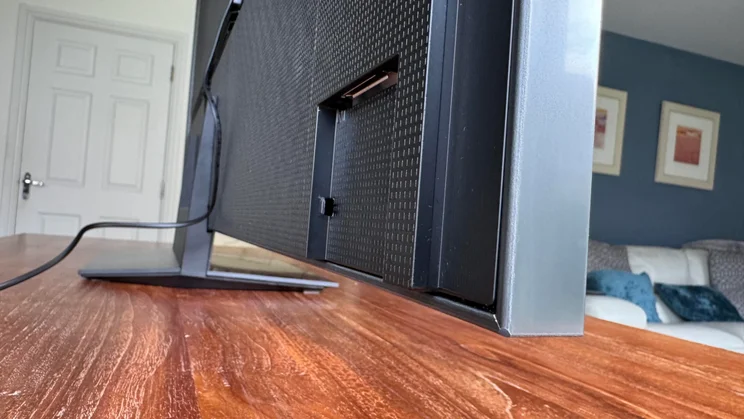
The R95H firmly turns its back on the eye-catching, wide-screen frame Samsung introduced for its S99H OLED. The R95H’s frame is so skinny it’s barely visible head-on, and the TV is strikingly shallow (less than 3cm), given it uses a Mini LED backlight.
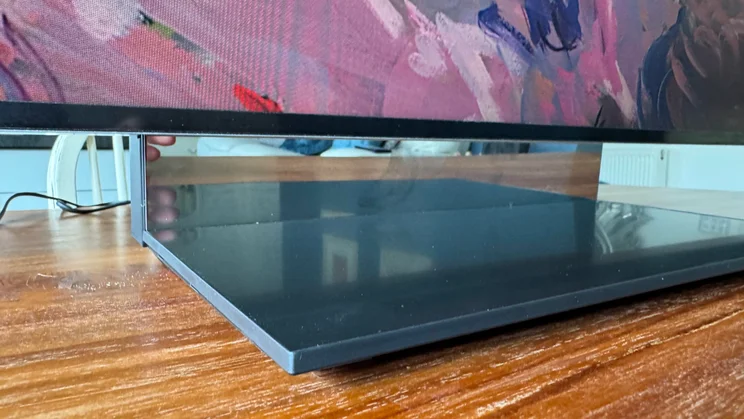
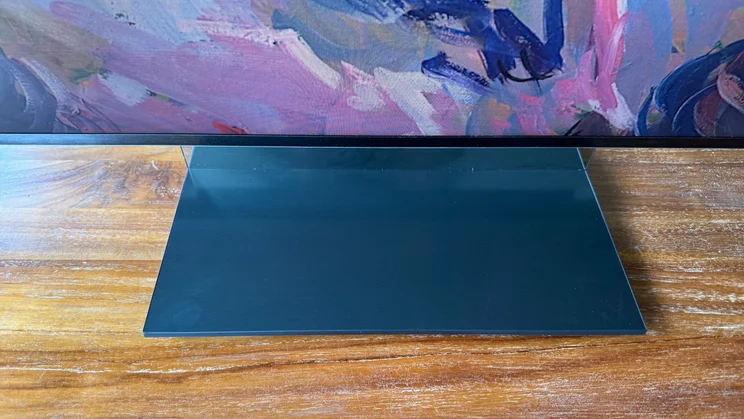
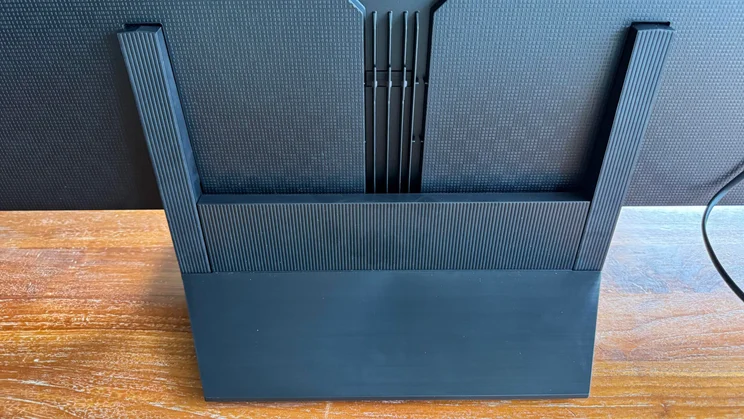
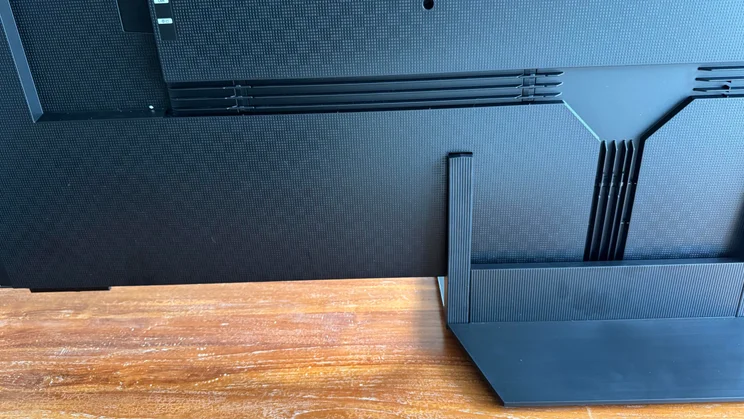
The R95H’s outer frame is clad in a fetching silvery metallic finish, while the screen sits on a centrally attached stand with a reflective neck that creates the effect of the screen just hovering in mid-air.
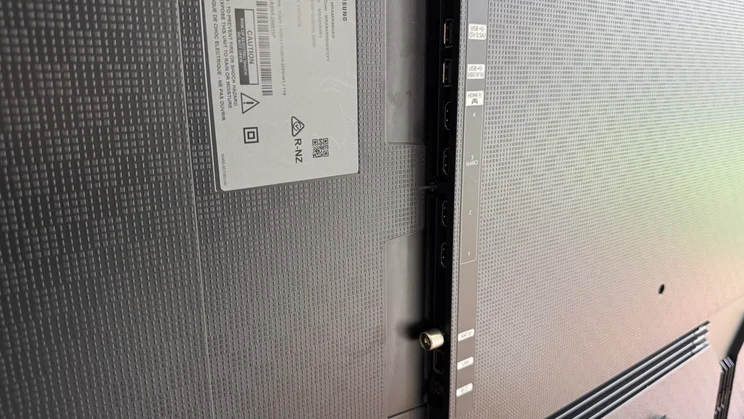
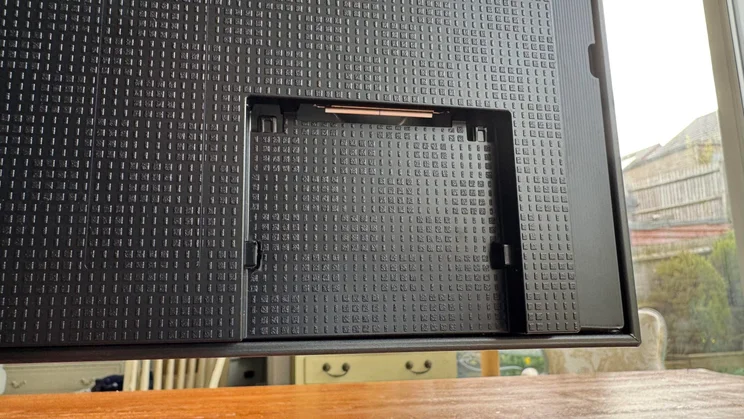
There’s an impressive amount of cable channelling on the R95H’s rear, too. Though if you want the ultimate clean, cable-free look, you can add an optional extra Wireless One Connect box to the R95H that brings another four HDMIs and two USBs to the table, and can send all their video and sound wirelessly to the TV.
The fact that you can attach eight HDMI sources to the R95H with the optional Wireless One Connect is pretty remarkable. Especially as all the HDMIs can handle the full HDMI 2.1 bandwidths so treasured by gamers these days.
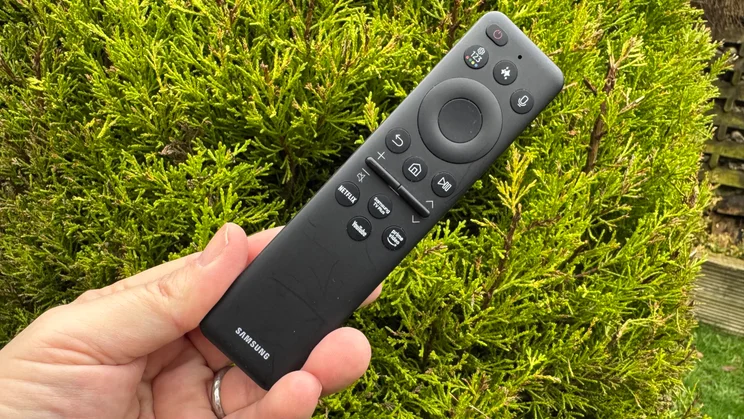
The R95H joins every other premium Samsung TV in recent years in shipping with two remote controls: a basic, plasticky affair with a full button count including numbers, and a much slimmer, more crisply finished handset with a streamlined button count and a solar panel on its back so that you never need to replace its batteries.
You can also add the TV to Samsung’s SmartThings app on your phone and access most features – including swipe menu navigation – from there. Or you can issue the R95H with verbal commands and search engine terms via Bixby or Alexa search engines, and finally, you can even enjoy some limited gesture control over the TV if you’re wearing a recent Samsung Galaxy Watch.
Smart TV platform
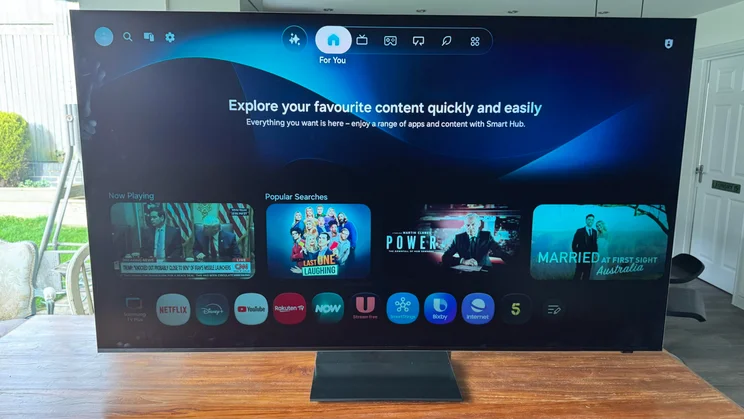
The R95H’s smart features and menus are delivered by Samsung’s own Tizen OS. Samsung has improved Tizen’s presentation this year by moving the row of icons for accessing different content hubs along the top of the screen, rather than separating them out into a sidebar as they did before.
Pretty much every streaming and catch-up app known to man is available on the latest Tizen OS, though UK owners should note that homegrown apps like the BBC iPlayer, ITV Player, All 4 and My5 only appear as individual apps, not within umbrella services such as Freely or Freeview Play. If you’re desperate for Freely on your Samsung TV, you’ll need something like the Manhattan Aero 4K TV Streamer.
Samsung’s heavy use of AI in the R95H includes the ability to offer intelligent content recommendations based on your viewing habits. In fact, it now supports multiple individual profiles for different members of your household.
AI also informs the R95H’s search results and voice recognition features, with the TV’s usefulness bolstered by the addition of the third-party Copilot and Perplexity AI platforms.
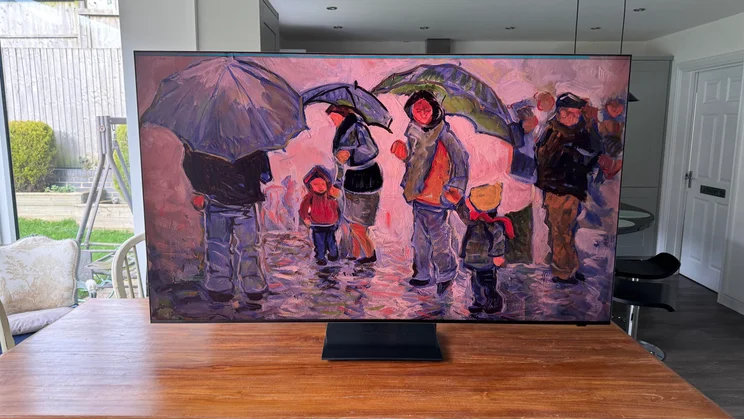
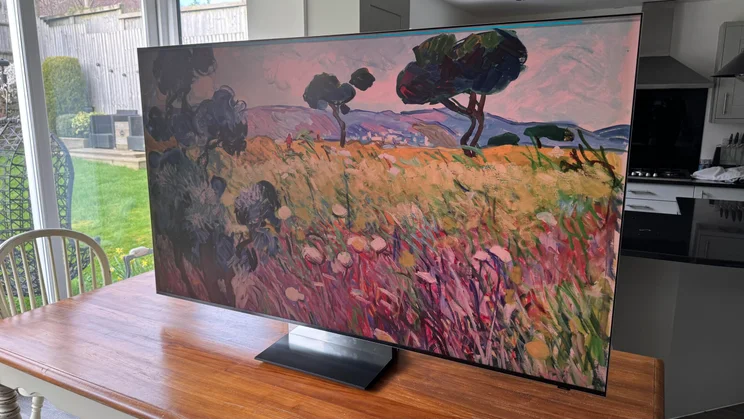
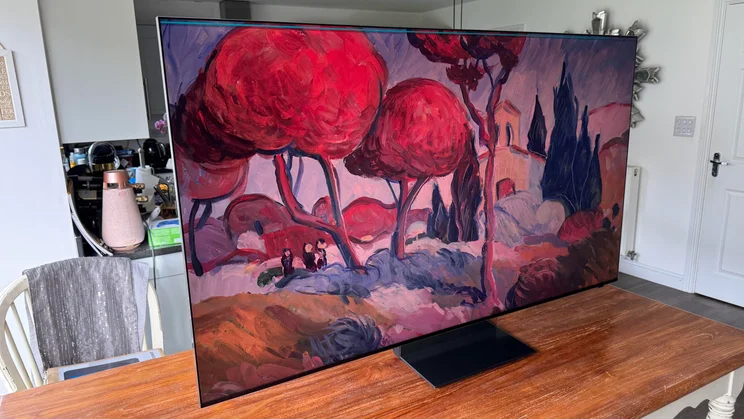
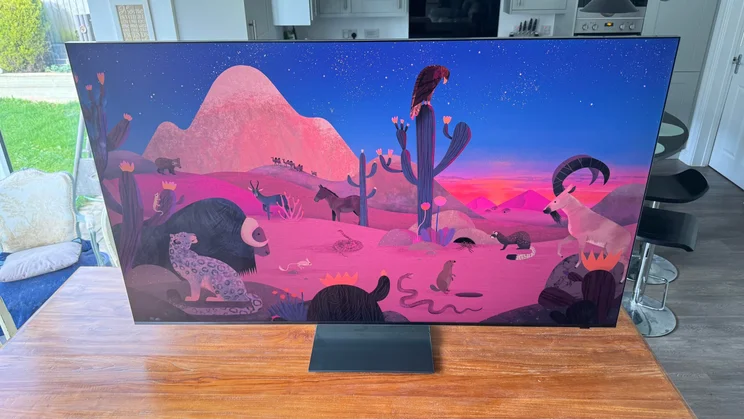
There’s even a Generative AI feature that lets you create your own digital masterpieces to use as screensavers, just by issuing the system a few keywords. The R95H’s use of a seriously potent anti-reflection filter means these digital artworks really look like paintings when they’re on screen, too.
Image quality
The big selling point of the R95H’s Micro RGB technology is that it can unlock new levels of colour gamut and volume, pushing even beyond what current HDR video typically uses. Thanks to the efforts of Samsung’s new Micro RGB AI processor, though, it’s actually still surprisingly excellent with SDR video.
The R95H carries a Filmmaker Mode that does a really bold job of restricting itself to the limited extent of the screen’s capabilities that SDR standards need, recording contrast and greyscale results that tally startlingly well with the AV industry’s SDR standards. Measurements of the Filmmaker Mode using Portrait Displays’ Calman Ultimate software, G1 signal generator and C6 HDR5000 come in below the target accuracy figure of 3 across the board. In fact, the highest Delta E 2000 average error is just 2.2.
While the Filmmaker Mode mode massively cramps the screen’s style on the brightness front, settling at a white level of 186 nits, its images still look lovely, as Samsung’s processing manages to unlock exceptional tonal subtleties and balance, while an outstanding backlight control system helps bring out tiny details and fine blends pretty much immaculately, while also delivering deep, believable black tones.
Detail levels are high with both native 4K and upscaled HD, too, thanks to the TV’s brilliant upscaling, though there is a little more motion blur than you typically get with non-Micro RGB Samsung LCD TVs.
Switching to my pick of the R95H’s other picture presets, the Standard mode, instantly leads to a massive uptick in brightness as the setting settles on a core white level of 618 nits. Samsung also ramps up the screen’s colour to keep the brightness company, ensuring that pictures do not look faded or clipped. Nor do particular colours stand out too much from the rest, or suffer with gaudy, unnatural-looking tones.
In fact, the Micro RGB AI processor does such a considered job of infusing SDR pictures with much more of what the R95H screen can do that it immediately started assuaging concerns that the R95H’s abilities might just be too much for today’s content world.
Even an option for converting SDR to HDR works surprisingly well, adding light range and colour gamut to the image without the image expansion feeling like it’s straying too far from the original SDR image values.
HDR performance
Unexpectedly fun though watching SDR on the R95H was, as expected, it bursts into much more explosive life with 4K HDR content.
I’m going to start with the R95H Standard preset performance, as this mode’s ability to exploit the extra colour range Micro RGB technology is designed to reach (I measured a remarkable 150% of the DCI-P3 colour range used in HDR mastering using the Portrait Displays testing system) is key to its success. After all, if this doesn’t bring anything extra to the party, you might as well stick with a more basic QLED TV.
The sort of extreme expansion of typical HDR colour content that the R95H is capable of has the potential to go badly wrong. In reality, though, Samsung’s machine learning-inspired processing results in Standard preset pictures that look more vibrant and richly coloured than anything I’ve seen on a TV before. Yet crucially, this ground-breaking colour doesn’t create nearly as many unwanted distractions as expected.
While ultra vibrant, for instance, colours still look balanced overall, with no tones sticking out too much against the rest, and enough blending and subtlety retained even in the most heavily saturated areas to leave pictures looking three-dimensional and surprisingly natural, rather than flat and forced.
Skin tones can sometimes look a bit ripe, especially during dark movie scenes, but for the most part, the Standard mode essentially shows that Micro RGB capabilities can be unleashed on today’s less colour-rich content without the results looking garish or artificial.
The extra exertions of the R95H Standard HDR mode also confirm that this TV’s Micro RGB-inspired colour charms are only one part of a wider set of cutting-edge attractions. Its backlight engine is as good as any I’ve seen on an LCD TV. It’s capable of delivering black colours that look as deep and rich as those you get with OLED TVs at times, but it suffers remarkably few backlight clouding or haloing problems.
The 75in R95H’s Micro RGB panel carries 1,792 local dimming zones; an impressively high number in itself. The use of separate red, green and blue LEDs, though, adds a whole new layer of further local light control, and the results of this are truly exceptional. Especially as what little blooming there is around bright objects is greatly disguised by the fact that Micro RGB technology means the blooming takes on the colour of the bright object that’s causing it – a much less distracting result than the distracting grey colour blooming usually wears.
Calman Ultimate measurements show peak brightness on a 10% HDR window of 2,200cd/m2. That’s an impressive number to be feeding into a new technology that’s already busy taking colours further than any screen before it. However, the light is controlled well enough by Samsung’s processing that it usually feels like an actually quite necessary adjunct to the wide colour gamut rather than something that’s driving pictures into OTT, flared-out territory.
The anti-glare filter Samsung has put on the R95H’s screen is remarkably effective at suppressing reflections, meanwhile, meaning that even very bright objects in your room don’t get between you and what you’re watching. This filter can cause high levels of ambient light to make dark scenes look a bit greyer than they do in dark rooms, but the impact of this, should you even notice it, is much less pronounced than it would be in a dark room setting.
While Standard mode is brilliant for daytime HDR viewing and mostly gloriously watchable on movie nights if creative intent isn’t a big deal for you, the Filmmaker Mode is what you’ll need for accurate DCI-P3 reproduction.
In Filmmaker Mode, the R95H again registered Delta E errors below the key figure of 3 across almost every Calman Ultimate test. The only exception is the ColorMatch HDR test – but this only sneaks up to 3.53, so it hardly counts as a decisive failure. These accurate test results are backed up by an HDR Filmmaker Mode viewing experience that’s beautifully balanced, layered, natural and immersive.
While HDR playback on the R95H sells its next-gen talents better than the already good-looking SDR pictures, its extra demands also reveal a flaw or three. As usual with Samsung LCD TVs, Micro RGB or otherwise, in the Standard mode, the baseline brightness can jump up and down quite distractingly when a scene abruptly cuts between dark and bright shots. Very occasionally, bright areas of the picture suddenly take on a momentary pink hue during camera pans, and you can sometimes see a thin red line around harshly contrasting object edges if you’re sitting closer to the screen than you probably should be.
Samsung’s default motion processing settings, in some presets at least, are over-aggressive, requiring manual intervention in the Picture Clarity menus to rein them in a bit. Motion still looks a little soft, no matter what you do, and finally, the Standard preset can slightly over-stress what should be minor colour tone differences over misty or relatively monotone backdrops.
The simple fact of the matter, though, is that these issues are fairly fixable via the TV’s menus in some cases, only crop up very rarely in other cases, and in all cases are overwhelmed by the jaw-dropping spectacle Samsung has managed to get from its Micro RGB groundbreaker.
To test the Samsung SR95H, I used Portrait Displays’ Calman colour calibration software.
Gaming
The R95H’s cutting-edge video abilities are joined by some similarly cutting-edge gaming talents. All eight of the HDMI ports it can support are full HDMI 2.1 affairs, capable of handling refresh rates up to 165Hz, variable refresh rates, including support for AMD FreeSync Premium Pro, and automatic low-latency gaming switching.
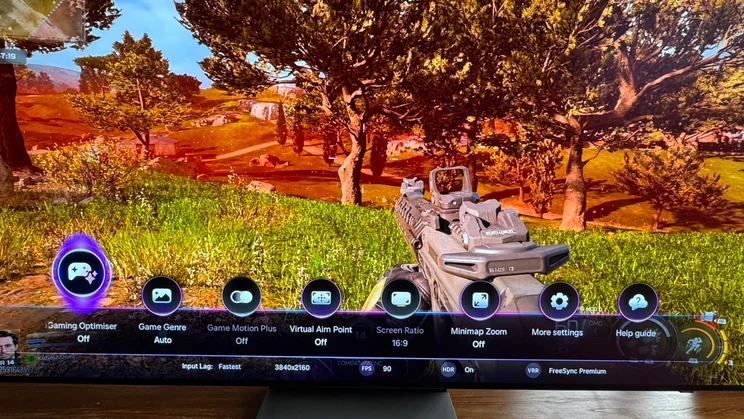
The R95H brings up a dedicated game menu when it knows you’re playing a game that carries a mix of information on the graphics feed and a handful of gaming aids. These include a superimposed target crosshair over the middle of the screen, the option to raise the brightness of only the dark areas in the image, three levels of motion smoothing processing (at the cost of higher input lag) for low-frame-rate games, and a mini-map zoom feature.
If you’re using the TV’s built-in HDMIs, in its fastest Game mode, the R95H renders 1080p/60Hz game graphics in 10.4ms – though you need to add 20ms or so to that figure if you attach your gaming device to a Wireless One Connect box.
The experience while using the R95H as a TV for gaming is spectacular. The screen’s radiant, far-reaching colours and high brightness immediately put a smile on your face with any of the HDR titles that now dominate the AAA game world, and while the 10.4ms lag time is fractionally higher than that of Samsung’s S99H, the difference is so small that you won’t notice it.
And 10.4ms is actually very swift by TV standards. Black levels are still good despite Samsung presumably having to compromise the R95H backlight controls to some extent to minimise input lag. The only time you feel more aware of blooming is if you have to watch the screen from a wide angle. The slight motion softness noted with video footage is also present when gaming, but not nearly potent enough to stop 4K games from looking 4K.
Sound quality
The R95H’s audio configuration is essentially the same as that of the S99H: 70W feeding into a 4.2.2-channel speaker configuration designed to deliver a premium (Plus) version of Samsung’s Object Tracking Sound (OTS) system.
This combines speakers positioned around the TV’s bodywork with nifty processing to make specific sound effects appear to come from the correct position on or even off the screen. It works remarkably well, tracking multiple noisy objects simultaneously if necessary, creating a busy, three-dimensional, immersive soundstage.
Dialogue is clear (and can be made clearer by an AI Voice Amplifier feature), details sound crisp and clean without becoming harsh, and the mid-range is quite expansive and powerful, with plenty of volume behind it.
The only audio issue is that the two bass drivers struggle with deep, sustained bass sounds, and the sudden whump of a big explosion or other sudden bass eruption. Such sounds can cause the speakers to crackle, and you become aware of the bass drivers physically struggling to move enough to convincingly and smoothly deliver the sort of bass depths and volumes Samsung wants them to.
Samsung R95H review: Verdict
While it’s a bold move by Samsung to sell the R95H TVs for not all that much less than its stellar S99H OLED models, the brand’s first “mainstream” Micro RGB TV is something of a triumph.
It does a much better job than expected of showcasing what the technology can do without making today’s content look messy and, when required, taming its natural exuberance to meet today’s most common video mastering standards.
So if you’re attracted to the R95H’s new colour potential and higher full-screen brightness, you’ve got a much more difficult choice to make between Samsung’s twin range toppers than I’d expected.


