To help us provide you with free impartial advice, we may earn a commission if you buy through links on our site. Learn more
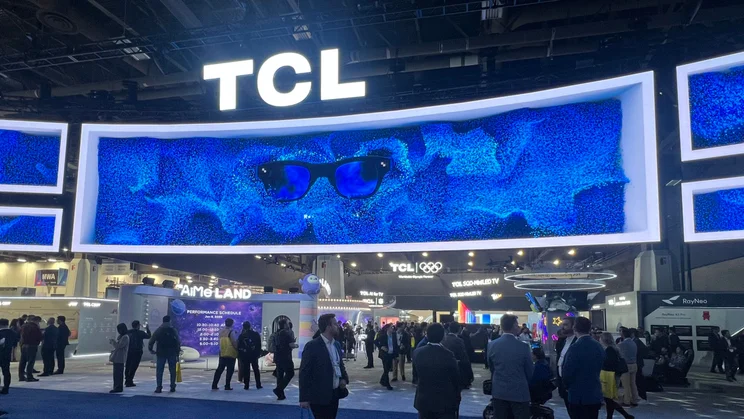
In recent years, there have been two safe bets when it comes to CES announcements: new TV panel technologies and screen size options that beggar belief. Thanks to TCL (among others), I was able to tick both off my CES bingo card within minutes of arriving at the Las Vegas Convention Centre.
The Chinese brand had a huge presence at this year’s trade show; its “booth” was more akin to a billionaire’s bungalow, and its logo featured heavily around the various event spaces and on attendees’ ID passes. And not an inch of the floor space commanded by TCL was wasted, with displays showcasing new products across an enormous range of categories.
Alongside smartphones, washing machines, projectors, routers, and smart glasses was a sight as disconcerting as some of those you’re liable to see wandering around the strip after dark: TCL AiMe.
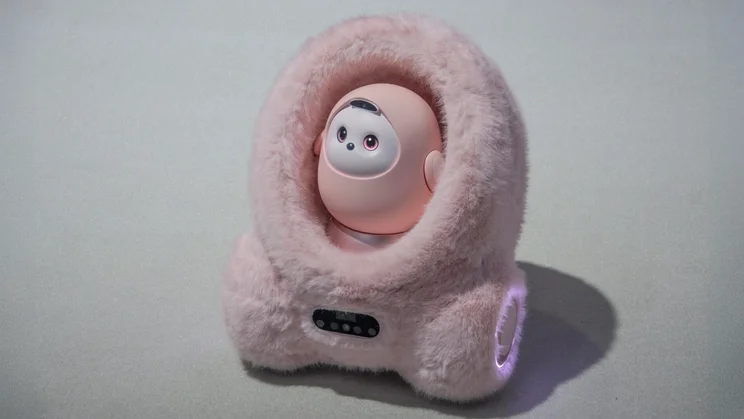
This AI companion, which is crammed full of webcams and sensors, has an “Empathetic mode”, which picks up on the mood of your child and will offer hugs and reassurance if it deems them necessary. I find that idea unsettling, a feeling compounded by the creepy looks on the faces of several AiMes as they trundled around in their mobile “Drive Cores”. TCL may be going for a Grogu with its hovering pram vibe, but to me, AiMe is serving something closer to a bald Furby trapped in a Tamagotchi. But perhaps that’s what kids find cute and comforting these days; it’s a messed-up world we’re living in.
Anyway, I digress. The main reason I stopped by TCL’s booth was to check out its new TVs and chew the fat with the brand’s European Head of Product, Olivier Semenoux. And, the hour we spent together was illuminating, in more ways than one.
TCL X11L: Super quantum dot, super bright
The first television we discussed was the new TCL X11L, the follow-up to last year’s X11K, which didn’t make it to market in the UK. Retailer demand will determine whether we’ll see the X11L here, but Semenoux is confident that it will be picked up, and I am certainly hoping that’s the case, as it debuts TCL’s new SQD (Super Quantum Dot) Mini LED backlight tech.
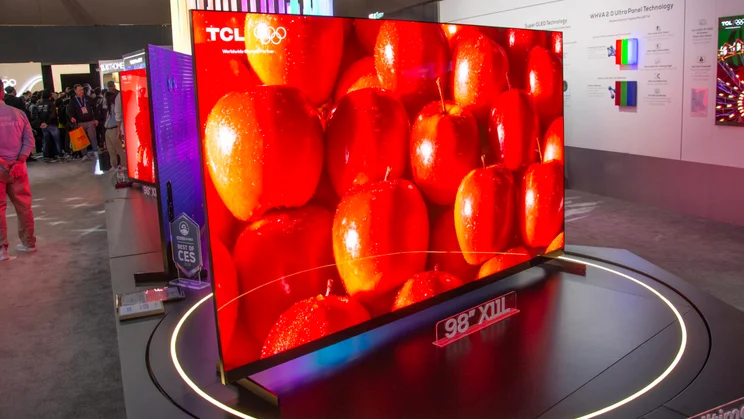
Semenoux outlined the big advantages of SQD, while also casually dropping some insane brightness and dimming zone numbers. The X11L is said to be able to hit 10,000 nits peak brightness, and the 85in model, which sits between 75in and 98in options, has 20,000 independently dimmable zones. I didn’t have my calibrator and Calman on hand to verify these claims, but I didn’t require measurement tools to know that this is a seriously bright TV.
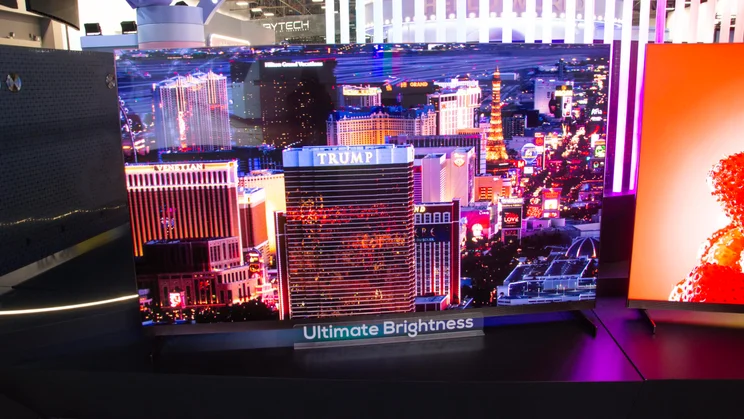
Peaks in an image of a neon sign in Las Vegas were borderline blinding, and I overheard a couple of journalists saying they found it difficult to remain focused on the screen for an extended period of time. They may have been hungover, though. I won’t name names.
Aside from the searing brightness, TCL’s new eighth-generation Mini LED backlight is said to offer better uniformity and stability than its previous generation of QD Mini LED tech. The blue LEDs used are more powerful than those found on non-SQD models and more energy efficient, while new super condensed micro lenses – in combination with an enhanced backlight control algorithm – help direct light more precisely.
TCL also claims the X11L can cover 100% of the BT.2020 colour gamut and do so more accurately than your average QD-Mini LED models, thanks to the use of smaller, denser crystals packed into a slimmer quantum dot filter. If the TCL X11L can improve on the highly impressive Delta E figure achieved by the TCL C8K (1.2), it will be right up there with the most colour-accurate tellies on the market.
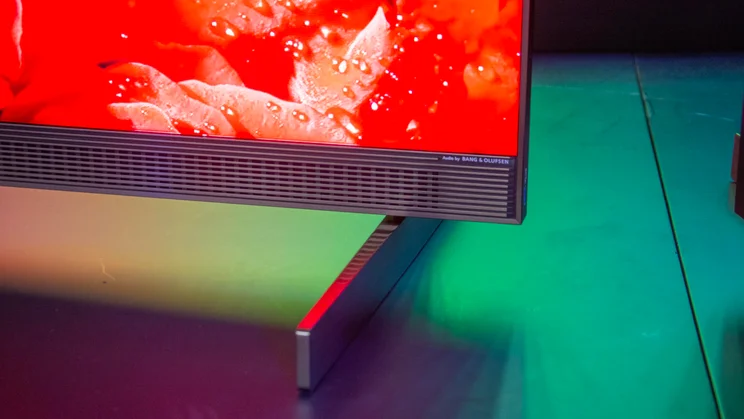
Other specs worth noting include the X11L’s 7,000:1 native contrast ratio, “ultra-low reflectivity” film, Bang & Olufsen-optimised audio, four HDMI 2.1 ports, and its ZeroBorder design, which pushes the picture all the way to the edge of the panel’s frame. Like last year’s flagship models, it will run the Google TV operating system. According to Semenoux, the chipsets for TCL’s 2026 flagships were chosen alongside Google to ensure they remain future-proofed against any software changes.
UK pricing for the X11L wasn’t revealed at CES, but we do know how much the three models will cost across the pond. The 75in will set you back $7,000, the 85in option $8,000, and the 98in monster will be priced at a cool $10,000. Those are pretty steep prices by TCL’s typically aggressive standards; only time will tell whether they’re worth it.
TCL RM9L: TCL’s first RGB Mini LED TV is coming soon
RGB Mini LED televisions have very quickly become some of the hottest properties in the industry. TCL’s Chinese rival, Hisense, brought one to market last year in the form of the Hisense 116UX last year, and announced a new iteration of its RGB Mini LED technology at its 2026 CES press conference.
So, TCL is a little behind the eight ball, but feels that the time is right and that the market is mature enough to bring its take on RGB Mini LED to consumers. The TCL RM9L is the result of eight years of R&D efforts and the fourth iteration of a panel that the company first started work on in 2018.
While the X11L detailed above gets flagship status, Semenoux told me TCL believes there’s more room for improvement with RGB Mini LED TVs, so it may not be long before we see one heading up the brand’s lineup.
Not that this particular set doesn’t have lots going for it. Due to release in 85in, 98in and 115in screen sizes later this year, the RM9L can cover 100% of the BT.2020 HDR colour spectrum and only gives away 1,000 nits of brightness to the X11L. Peaks of 9,000 nits and a dimming zone count of over 16,000 aren’t exactly rookie numbers.
You’re also getting the same WHVA 2.0 Ultra panel used by the X11L, a Bang & Olufsen sound system, support for 4K gaming at 144Hz, Google TV smarts, and compatibility with all the major HDR formats. The RM9L is thicker than the X11L, however. Not to an ungainly level, but the difference between the two sets here is noticeable.
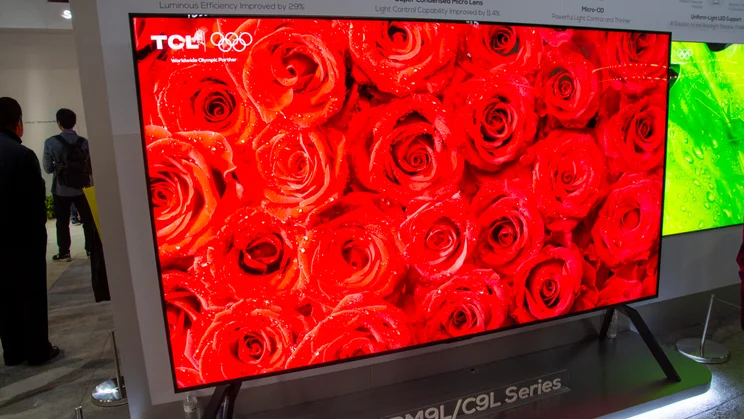
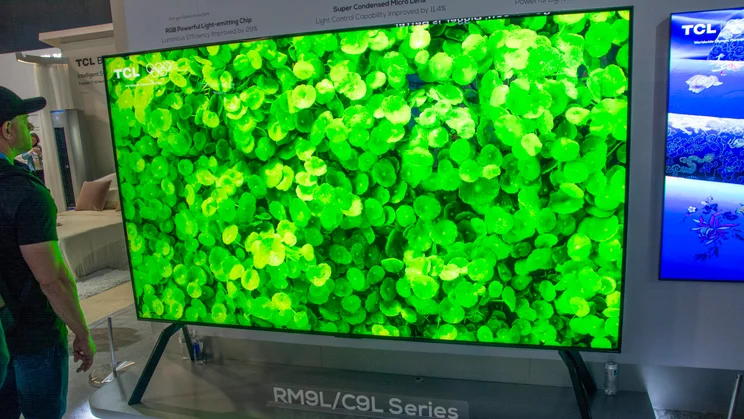
Unlike Hisense, which has added a fourth primary colour sub-pixel to its most advanced RGB Mini LED TVs, TCL has squeezed in two red, two green and two blue sub-pixels. This, combined with the Super Condensed Micro Lenses and improved backlight control algorithm capable of optimising both SDR and HDR content, resulted in some gorgeous on-screen images.
The vivid greens and reds of demo material documenting the natural world were rich, vibrant and well-textured, and any colour bleeding across different colours was virtually imperceptible. Based on my experience with the two TVs, the X11L has the advantage in image quality terms, but we’re talking relatively fine margins; the RM9L still looks fantastic.
The future is bright, the future is ink-jet printed OLED and Micro LED
The X11L and RM9L may be the stars of TCL’s TV range this year, but Olivier Semenoux told me that he sees two other technologies – ink-jet printed OLED and Micro LED – becoming the leading lights in the TV world in the next decade or so.
TCL had examples of both technologies at CES, in very different forms. Its gigantic Micro LED TV measures 163in across the diagonal and is assembled from separate modules, with an estimated cost of around $700 (€600) per inch. That prohibitive cost means the mainstream market won’t be seeing a single-panel Micro LED TV anytime soon: Semenoux told me that build costs will have to come down to around €100 per inch before it’s viable.
Still, Micro LED’s tiny, self-emissive diodes’ ability to serve as sub-pixels removes the need for a backlight in the same manner as OLEDs do, while enabling high brightness, incredible contrast and colour reproduction, and ultra-low response time. It’s definitely a display technology to keep your eyes on.
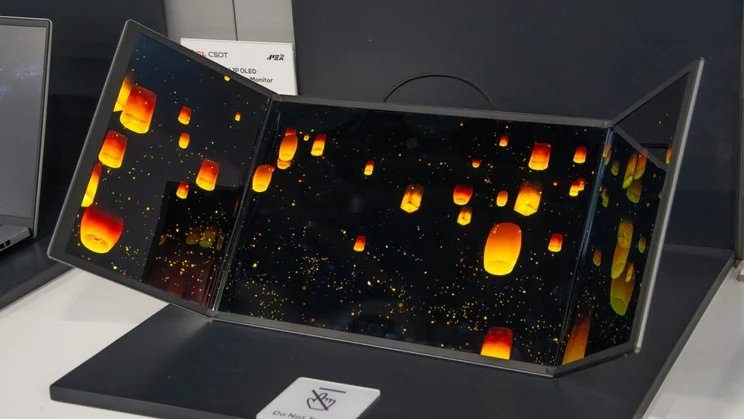
As is inkjet printed OLED, which TCL showed off in three forms. It’s a technology that the company has been working on for almost three decades, and I got to see it in action on a 28in foldable display, a 27in 4K monitor, and a stretchable display designed for automobiles. Seeing an inkjet OLED display extend and retract right in front of my eyes was a definite CES highlight.
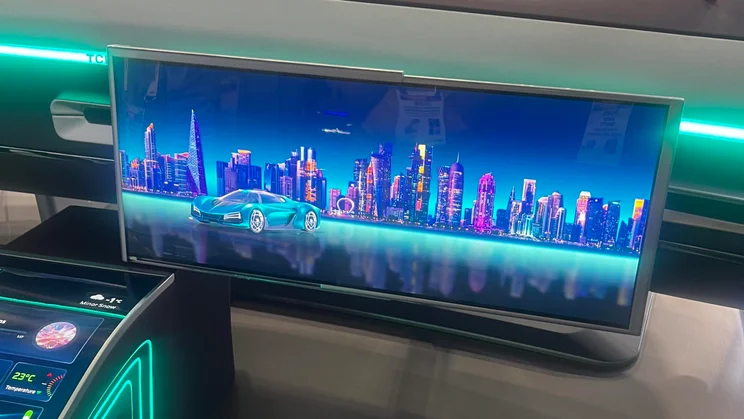
Semenoux explained that the reduced power consumption compared with traditional OLED makes it an appealing choice, along with improved performance over QD-OLED technology, and the ability to shape the super-thin panels so freely.
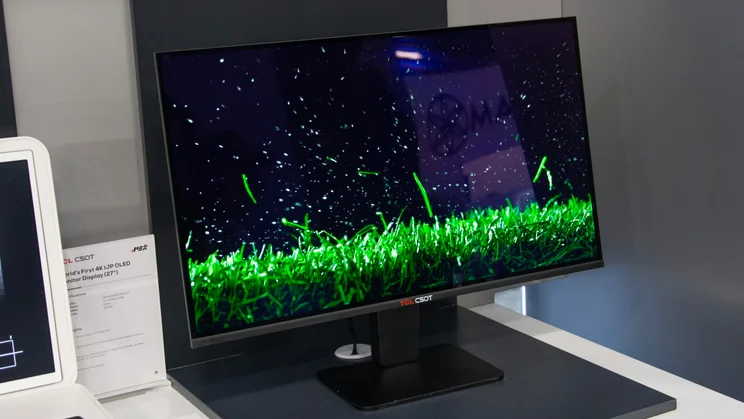
However, even though the 27in IJP OLED on the aforementioned monitor will start shipping in Q2 this year, the cost of printing RGB phosphors at a pixel level means large-screen TVs using inkjet printed panels remain a long way off.