To help us provide you with free impartial advice, we may earn a commission if you buy through links on our site. Learn more
- Dazzling brightness and colour
- Pictures can also be surprisingly accurate
- Excellent gaming performance and features
- Expensive by TCL standards
- A few audio niggles
- Reflective screen vs some rivals
The confidence in TCL’s TV division is such that it no longer just delivers mainstream TVs good enough and affordable enough to put the fear of god into its rivals. It also now likes to deliver a true ‘champion’ TV series every year, boasting ground-breaking specifications designed to showcase just how extreme TCL’s TV hardware can now get.
For 2026, the envelope-pushing TCL flag-waver is the X11L. As well as sporting TCL’s new Super Quantum Dot technology, this TV claims brightness levels as high as 10,000 nits, a jaw-dropping local dimming zone count of up to 20,736 (depending on screen size), and a colour range that’s claimed to cover 100% of the high dynamic range world’s widest Rec.2020 spectrum.
Can the TCL X11L combine zeal for spectacle with the sort of understanding of creative intent that many premium TV buyers will also be looking for? I’ve spent the past few weeks testing it to find out.
TCL X11L review: Key specifications
| Screen sizes available | 75in (75X11L), 85in (85X11L) and 98in (98X11L) |
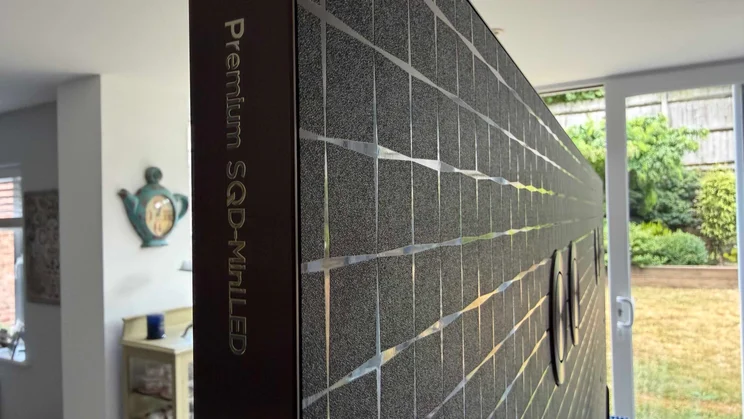
| Panel type | Super Quantum Dot Mini LED |
| Resolution | 4K/UHD (3,840 x 2,160) |
| Refresh rates | Up to 144Hz VRR |
| HDR formats | HDR10, HLG, HDR10+, HDR10+ Advanced, Dolby Vision |
| Audio enhancement | 360W Bang & Olufsen 3.1.2-channel system |
| HDMI inputs | 4 x full-spec HDMI 2.1 (one with eARC) |
| Freeview Play compatibility | No |
| Tuners | Terrestrial, Digital, Satellite |
| Gaming features | VRR, AMD Freesync Premium Pro, Nvidia G-Sync, 4K/144Hz, ALLM |
| Wireless connectivity | Bluetooth 5.4, Wi-Fi 6, Apple AirPlay 2 |
| Smart assistants | Google Assistant |
| Smart platform | Google TV |
What you need to know
The X11L is TCL’s flagship TV for 2026. While TCL has introduced new RGB LED TVs to its range this year, the X11L sticks with quantum dot colour systems, albeit a new ‘Super’ version designed to deliver more brightness, more colour range/volume, and more stability than any previous QD display.
The X11L is designed to push the new SQD panels to the outer limits of their capabilities courtesy of out-there hardware specifications such as peak brightness of 10,000 nits, more than 20,000 individually controlled local dimming zones, and full coverage of the Rec.2020 colour spectrum.
The most extreme X11L specifications, though, are reserved for the 98in model. The numbers drop for the 75in model I tested, with that particular screen size said to hit 9,000 nits of peak brightness and use 11,520 local dimming zones.
There’s also an 85in model available, and all three sizes benefit from TCL’s latest WHVA mini LED panel designs and sound systems tuned by premium AV brand Bang & Olufsen.
Price and competition
Starting at £3,999 for the 75in model, the X11L is about as close as TCL gets to being expensive. The 85in costs £5,499, while the enormous 98in model wasn’t available to buy at the time of writing, but will cost considerably more. To put these prices in perspective, the 75in option in TCL’s most premium mainstream range, the C8L series, costs just £2,299.
While this will certainly see more C8Ls sold, it doesn’t, for my money, mean the X11Ls is actually expensive. Not when you consider the sort of brightness, local dimming and colour specifications it boasts. Similar specs from other brands – if they could even achieve them – would almost certainly cost way more.
Sony’s flagship TV range for 2026, the Bravia 9 II series with its premium take on RGB LED technology, starts at £3,499, and that’s for the 65in version. The 75in version costs £4,299. Samsung’s most advanced LCD TV for 2026, the Samsung R95H, costs the same as the TCL in 75in.
Design, connections and control
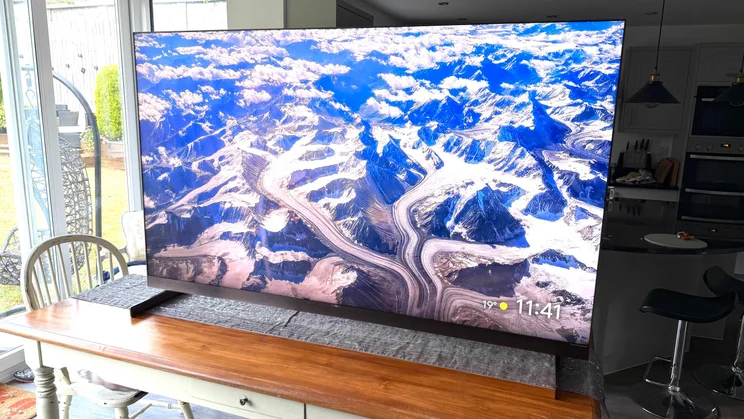
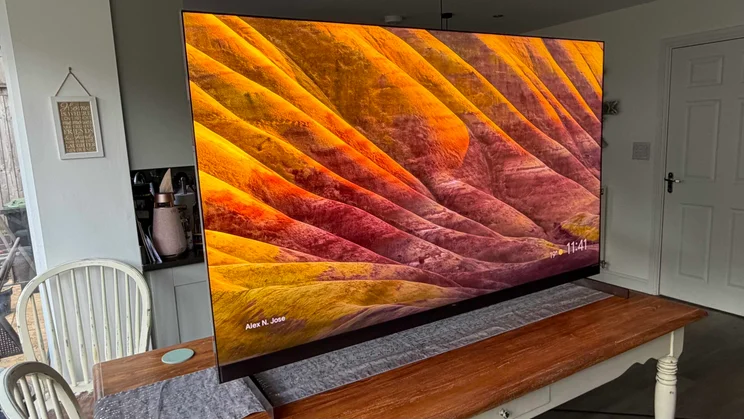
The TCL X11L makes most rivals feel featherweight by comparison. Promising though this is from a potential performance perspective, it means you’ll need help to set it up – as well as a sturdy wall if you’re intending to wall mount it.
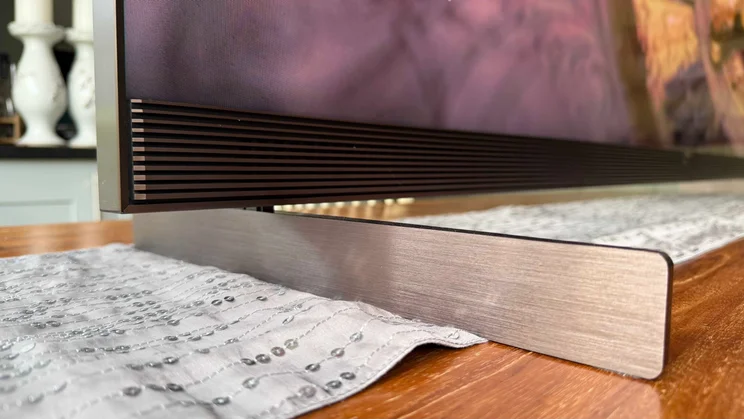
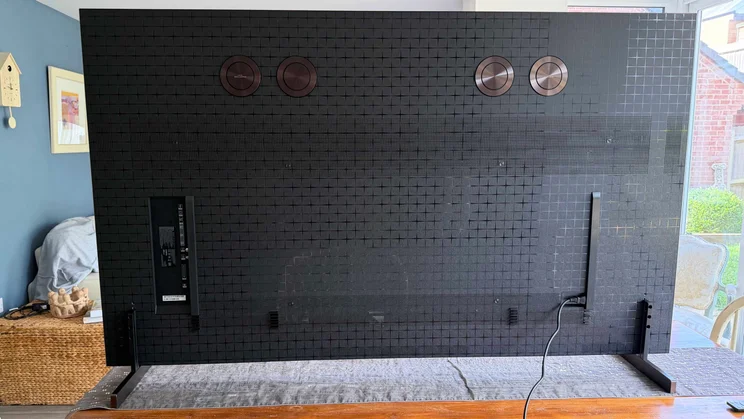
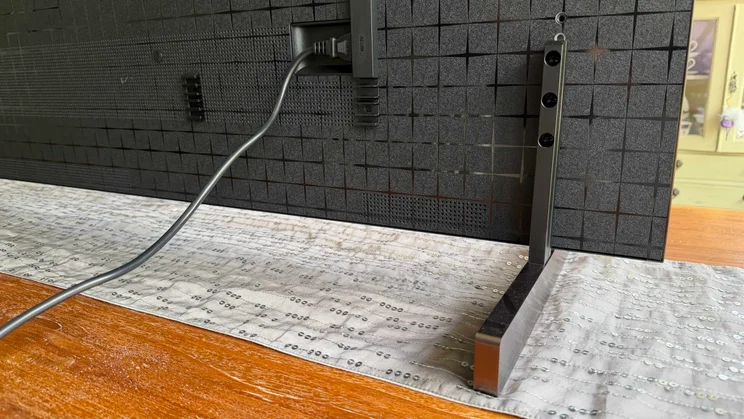
The set ships with well-made desktop feet designed with a blade style so that you barely notice them when viewing the screen head-on. They can only be fitted under the TV’s bottom corners, though, with no closer-together option. So you’re going to need a pretty big bit of furniture to place even the 75in model on.
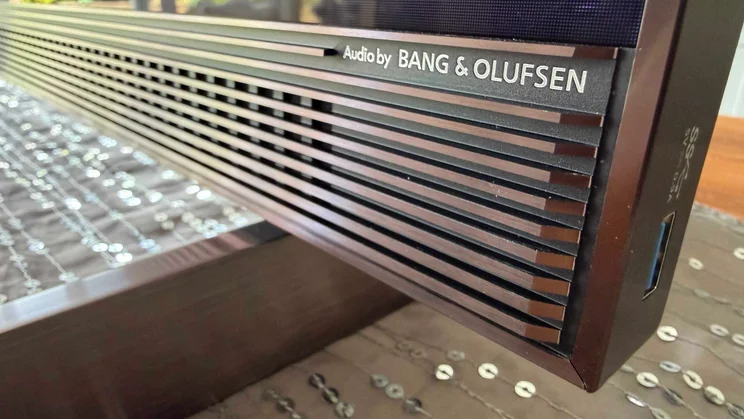
Running along the bottom edge of the screen is an integrated soundbar. This is finished with striking bronze-toned metallic horizontal stripes, reinforcing the TV’s high-end status. However, it may also be a touch in-your-face for people who prefer minimalistic televisions.
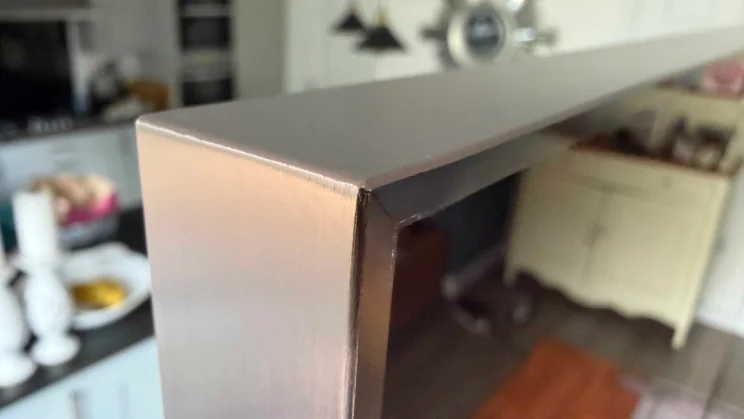
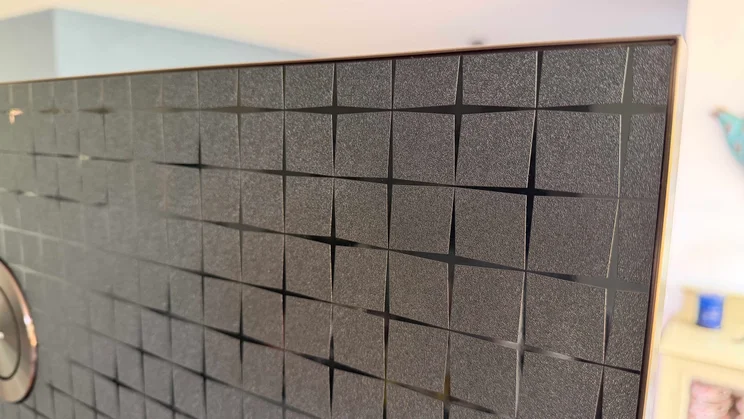
The X11L adopts a monolithic stance, with a rear panel as flat as its front, bolstering its potential as a wall-mountable option. Like the blade feet, the frame around the X11L’s screen is so slim that you barely register its presence when watching the TV.
Loads of inputs and a choice of remotes
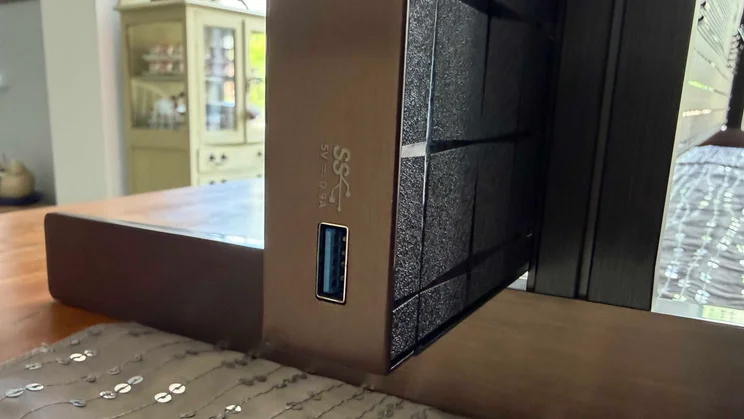
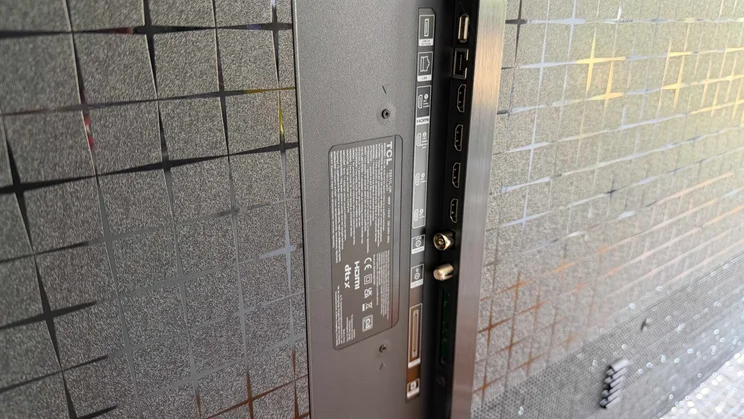
Connectivity on the X11L is excellent. There are four HDMIs, all of which can handle the full range of gaming features associated with an HDMI 2.1 connection. I’ll cover these in more detail in the dedicated gaming section of the review. There are also a couple of USB-A ports, one helpfully placed on the TV’s right edge for easier access, a digital optical audio output, and Bluetooth and Wi-Fi wireless options.
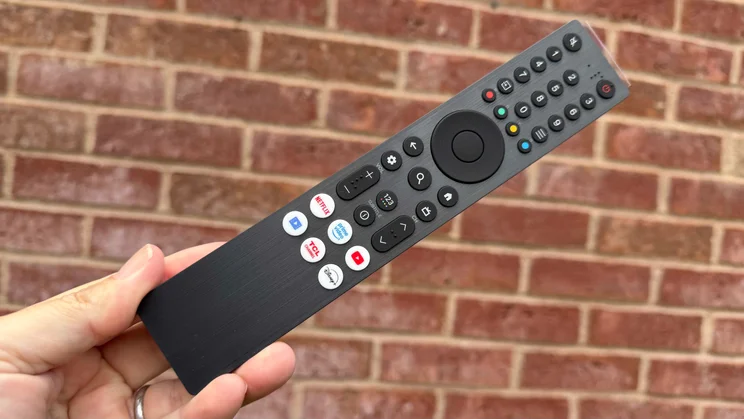
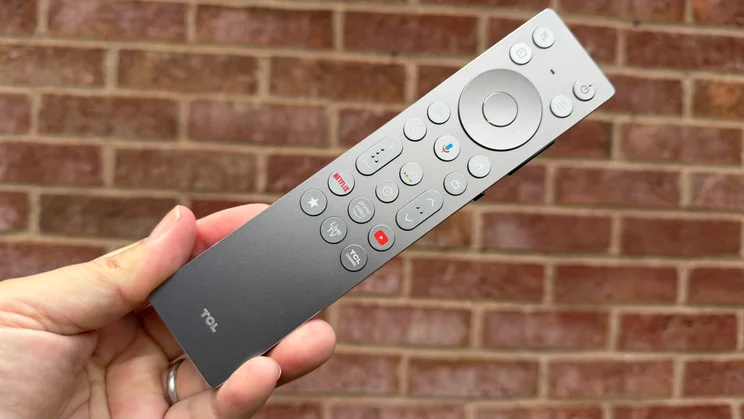
The X11L ships with two remote controls – one with a relatively stripped-back button count and rather fetching silver metal finish, and one longer, thinner one with a full numeric button count and a black, more plasticky finish. You can also control the TV by talking to it, courtesy of the Google Assistant voice recognition system.
Smart TV platform
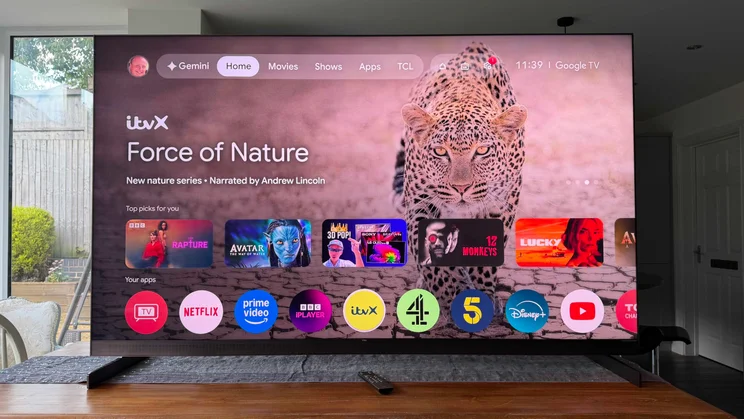
The X11L turns to Google TV for its integrated smart TV system. This is great for content, as Google TV carries pretty much every video streaming service known to man. Including, in this case, the BBC iPlayer app that Google TV doesn’t typically carry.
Overall, Google TV ran stably during testing. However, I encountered a bug that caused the TV to display a message saying it had disconnected from my Wi-Fi, before displaying a second message saying it had reconnected. I’ve seen this on every 2026 Google TV I’ve tested so far, though, and suspect it’s an issue specific to my BT broadband extender rather than something many buyers will experience.
TCL’s premium 2026 TVs now carry a TV-optimised version of Google’s Gemini AI platform. This really does expand the scope and usefulness of the Google TV platform.
Image quality
Before testing the X11L, I felt that feeding standard dynamic range into a screen with image properties as fearsome as those boasted here might not end well. Things didn’t go that way at all, though.
Starting with the Filmmaker Mode, tested objectively using Portrait Display’s Calman Ultimate software, a G1 signal generator plus Klein’s 10,000-capable K-10A colour meter, the X11L turned in outstanding results.
Objective image accuracy
Built around a core brightness level of around 240 nits, Delta E average errors measured 3.7 for my multipoint greyscale test, 2.3 on the saturation sweep test, 2.17 on a luminance sweep test, and a spectacular 1.6 for the key ColorChecker test. Any Delta E average error result of under 3 is considered imperceptible to the human eye. In other words, despite the groundbreaking light and colour the X11L is capable of, it’s able to adapt itself outstandingly well to the vastly narrower requirements of the SDR format.
The X11L’s Filmmaker Mode images are subjectively gorgeous to behold, too, despite this mode reining in or flat out deactivating some aspects of the TV’s processing. Black levels are particularly impressive, delivering a depth of black colour and a level of backlight consistency (free of clouding or backlight blooming around bright objects) that’s remarkable for an LCD TV.
Colours look beautifully natural, impeccably balanced (in the sense that no tones stand out too strongly against the rest) and best of all, full of subtlety. Skin tones always look authentic in tone and free of patchiness, and colour blends always look immaculately smooth and realistic. This contributes to native 4K SDR pictures that feel beautifully detailed and textured, giving the image a consistent and authentic three-dimensionality.
Motion looks convincing with 24p sources too, with the default Filmmaker Mode motion settings retaining a cinematic sense of judder without it becoming excessive or distracting, or any unwanted motion-processing artefacts creeping in.
A standout Standard mode
While the X11L can do authentic SDR movie and TV experiences in Filmmaker Mode, I love how effectively it expands every element of an SDR source in its Standard picture preset. Here, it delivers images that still feel believable and immersive despite their brightness, colour range and contrast being far more dramatic than intended. Being able to deliver so much vibrancy and punch without the results throwing up lots of distracting artefacts is a genuinely remarkable accomplishment.
The X11L’s Standard mode doesn’t measure remotely accurately, but when the results look this good, who cares? At least when you have a Filmmaker Mode on hand for times when accuracy actually does matter.
The only issues I noticed with SDR playback were the potential for more on-screen reflections than I’ve seen with some premium rivals this year, and that heavily compressed HD or SD images could look a little coarser than I might have liked.
HDR performance
The X11L is arguably the most “made for HDR” TV I’ve ever tested. Its extreme capabilities are put to fantastic use, giving a level of potency and dynamism from HDR sources that I haven’t seen before.
This is, of course, especially true in the Standard preset. This doesn’t actually unlock the furthest reaches of the screen’s capabilities; for instance, to experience the screen’s maximum brightness, which I measured at a phenomenal 8,760cd/m2, you need to use the set’s Vivid picture preset. However, the Standard mode’s 7,000cd/m2 peak is still beyond anything else I’ve measured on any other TV in such a well-balanced picture preset before. And, thanks to an outstanding dynamic tone mapping system for optimising HDR content to the screen’s capabilities, elements of the picture that look even marginally unnatural are vanishingly rare.
Clipping and colour-blending free
The X11L’s brightness helps the Standard mode avoid pretty much all clipping of shading and colour blending in the brightest parts of an HDR image, and unlocks enormous colour volumes. My tests found the X11L reproducing more than 90% of the Rec.2020 colour spectrum – not quite the 100% TCL claims for the TV, but close enough to still deliver the punchiest colours the QD TV world has to offer.
Even better, this massive colour gamut and volume is delivered without the results looking off-key or unbalanced to the naked eye. To really appreciate this, try switching to the Vivid mode. Colours in this mode become gaudy and OTT, unable to retain the balance and subtlety the Standard mode does.
While the X11L’s contrast and black colour performance was impressive in SDR, it becomes next-level good with HDR content. Despite the screen in Standard mode reaching brightness peaks of nearly 7,000cd/m2, blacks are surrounded by astonishingly small and faint blooming clouds.
Bright objects retain punch even when they appear against near-black backdrops, too, despite the dimming system obviously having to work overtime in such picture areas. The level of light control is also such that the X11L can bring out subtle shadow and colour details in even the darkest images. Colours don’t desaturate in very dark areas, either.
Basically, the HDR Standard preset lets you experience most of the panel’s capabilities while keeping distractions that break your immersion in whatever you’re watching to a minimum.
Fantastic Filmmaker Mode
While I personally found the X11L Standard mode’s combination of brilliance and balance hard to resist, TCL’s TV again delivers mastering-standard accuracy in Filmmaker Mode. Settling on a baseline brightness figure of just under 690cd/m2 but able to peak at 3,650cd/m2 on a 10% HDR test window, the Filmmaker Mode records Delta E average error scores of 2.3, 2.1, 2.8, 1.9 and 1.5 for multipoint greyscale, saturation sweep, luminance sweep, ColorChecker and HDR ContentColor tests, respectively. These numbers are all substantially under the key 3 error level, which represents a fantastic achievement for any HDR TV, never mind one with capabilities as extreme as the X11L.
The HDR Filmmaker Mode is subjectively as engaging, balanced and nuanced to watch as the SDR Filmmaker Mode. The peak brightness the TV is capable of is used effectively but sparingly, and the TV handles the native content mastering values (rather than using the HDR Dynamic Tone Mapping system) with serious precision. Seriously, if your AV tastes lean towards purism and you were worried that the X11L’s specs might make accuracy impossible, you can breathe easy. In fact, its brightness allows it to cover almost the full light range of HDR content mastered to 4,000 nits without tone mapping or clipping.
HDR viewing did bring out a couple more small issues beyond those noted during SDR viewing. Very occasionally, dark scenes in the HDR Standard and Dolby Vision Bright picture presets will suddenly look quite grey. These grey moments tend not to happen in the set’s HDR Filmmaker Mode and Dolby Vision Dark modes, though.
Viewing the X11L head-on keeps backlight blooming to a minimum, but off-angle viewing exposes noticeable blooming.
Avoid the brightest picture mode
Finally, I should reiterate that you can only experience the X11L’s absolute maximum brightness in its generally not-very-enjoyable Vivid preset. The Standard mode is still brighter than any other TV picture I’ve seen this year, though, so I really don’t see any major grounds for complaint.
To test the TCL X11L, I used Portrait Displays’ Calman Ultimate software.
Gaming
The X11L’s immense brightness, massive colour range and ability to retain intense saturations even in the brightest areas of a game landscape create an instant spectacle the likes of which I’ve rarely seen before. Sharpness, contrast (including, crucially, shadow detail reproduction) and colour response are all sensational.
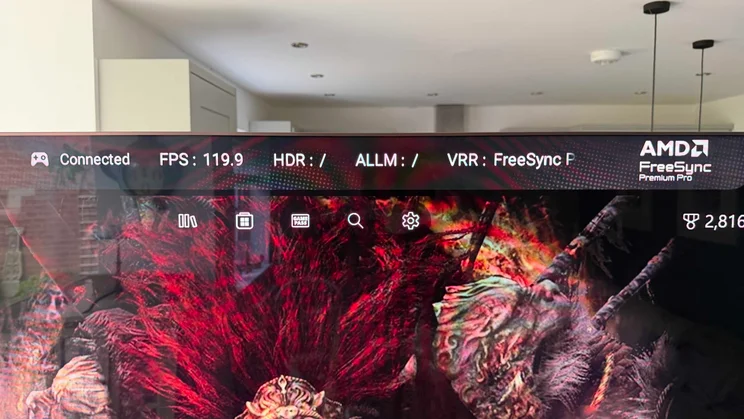
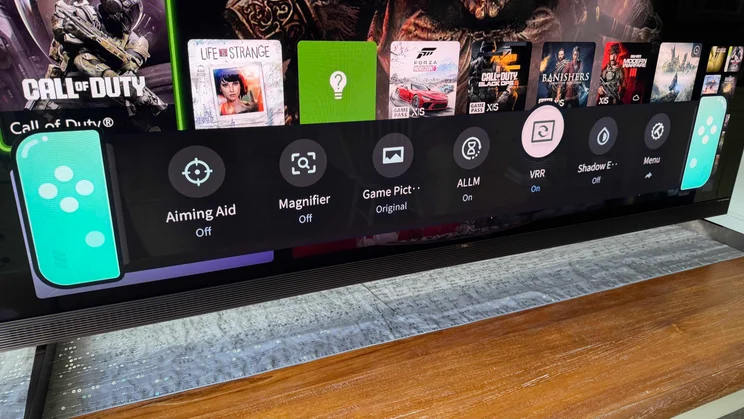
The Game mode lowers input lag to 11.8ms for 1080p/60Hz games, and the TV can handle frame rates up to 144Hz in 4K, or 288Hz in Full HD. It also supports VRR—including AMD FreeSync Premium Pro—and automatically switches to Game mode when it detects a game source
Compared with top-end OLEDs, motion can look just a touch blurry, and there are TVs out there that can shave a couple of milliseconds off the X11L’s input lag. Neither of these issues is remotely severe enough to stop the X11L delivering one of the most fun gaming experiences I’ve had on a TV, though.
Sound quality
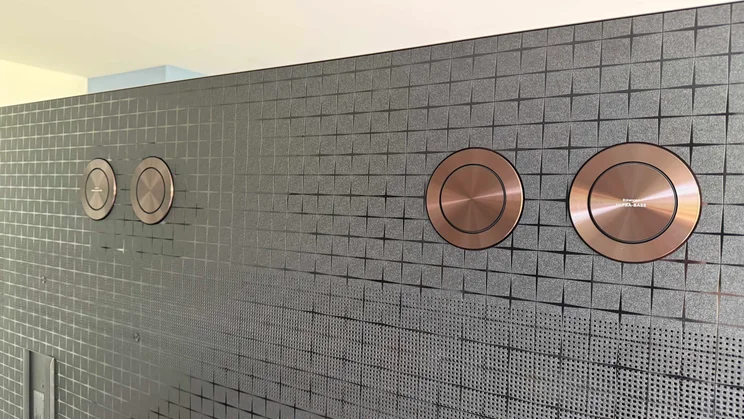
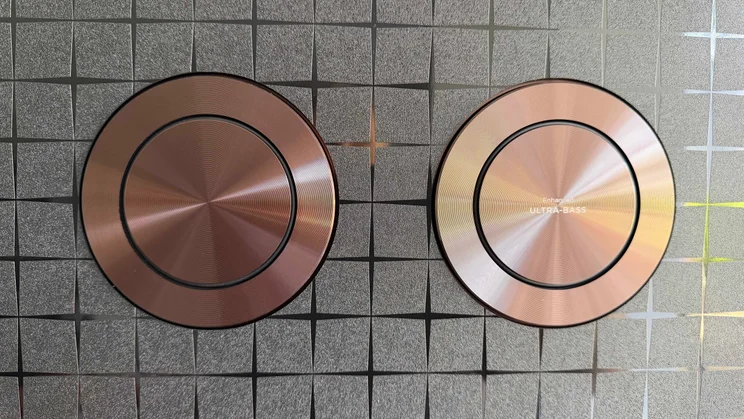
The audio partnership TCL instigated with luxury brand Bang & Olufsen last year continues with the X11L. The soundbar under the screen has left, centre and right speakers, while speakers in the TV’s top edge provide two channels of up-firing sound to support Dolby Atmos height/overhead channels. Two more speakers, positioned high up on the right and left edges of the screen, are designed to create Dolby Atmos surround sound effects. The .1 bass channel is provided by the four premium drivers on the rear of the TV. All the speakers have been designed, tuned and stress-tested with Bang & Olufsen, apparently over many months, with each unit being individually calibrated.
This all contributes to a mostly very strong audio performance. Sound can get loud enough to feel cinematic and be a good match for the spectacle being delivered by the screen.
The speakers are good enough, in fact, to produce high volumes without ever sounding strained, thuddy or harsh. On the contrary, they produce a clean, rounded tone that’s quite hi-fi and helps the set produce huge amounts of detail.
Big and loud but lacking bass depth
The X11L’s sound isn’t just loud, either. It’s also big. By which I mean it creates a substantial, immersive soundstage that extends far beyond the TV’s bodywork. The forward-facing left, centre and right speakers are particularly helpful in this regard, and the soundstage is significantly more coherent than those of TCL’s 2025 B&O collaborations.
There are still a few issues, though. Voices sometimes sound slightly dislocated from the pictures, and some hard impact sounds – punches, gunshots and the like – don’t land as they should. Unexpectedly given how much power the sound system has, very dense soundtrack moments can sometimes fall away and diminish rather than escalating as they should. Finally, bass lacked the impact and depth I’d hoped for.
The overall sound quality is good, but I still feel there’s room for further improvement if TCL continues working with B&O into 2027.
TCL X11L review: Verdict
The X11L is, as TCL absolutely wants it to be, a showcase TV. Its pictures deliver extremes of brightness, colour and contrast that I’ve never seen before – at least at anything like the price point the 75in model occupies. It’s a dazzling demonstration of what TCL’s new Super Quantum Dots can do when backed up by a massive local dimming zone count.
What really makes the X11L special for me, though, is the fact that while it’s capable of delivering irresistible spectacle, it also cares about creative intent and can turn its talents to delivering that fantastically well, too. Being able to deliver such extremes so brilliantly makes its seemingly steep price look great value, too.