
To help us provide you with free impartial advice, we may earn a commission if you buy through links on our site. Learn more
- Highly comfortable
- Petite and good-looking
- Fun visual presentation of data
- Questionable heart rate accuracy during exercise
- Weak run distance tracking
- AI feedback will irritate some
The Fitbit Air is the only major new Fitbit line introduced since this pioneer of step counting became a Google company in 2021 and it’s part of the latest trend in wearables, the screen-free tracker.
A Fitbit Air still lets you obsess over stats if you like, but is not going to disturb you throughout your day. It’s a tracker you can ignore or even forget you are wearing.
What do you get for the money?
The Air costs £85 and there’s no obligation to spend any more than that. Subscription-free, the Fitbit Air offers a fairly classic Fitbit experience, with automatic exercise logging, sleep tracking and heart rate data throughout the day.
If you want a lot more context and AI-extruded advice around your data, you can sign up for a Google Health Premium subscription. This costs £7.99 a month, and makes the Google Health companion app an order of magnitude more chatty, in the currently common LLM/chatbot style vein.

The hardware
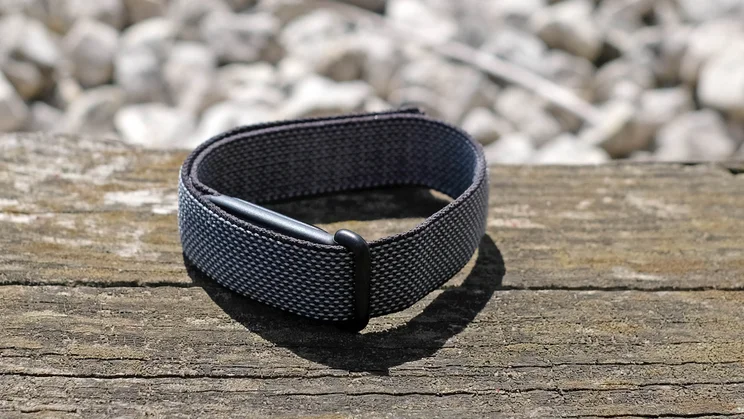
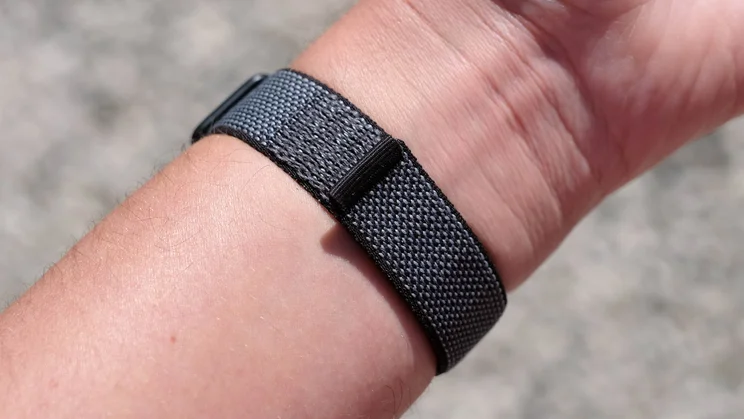
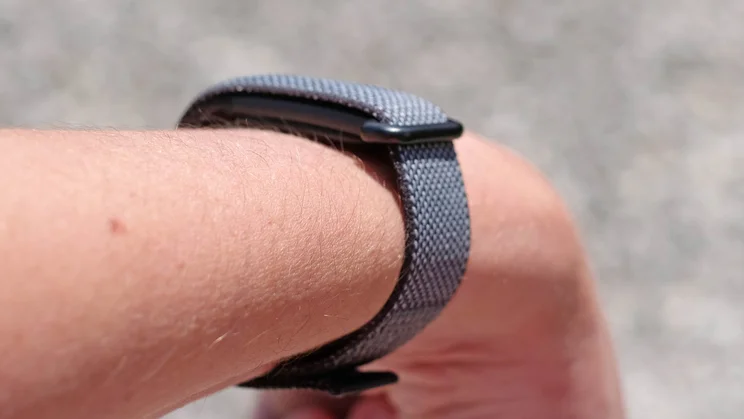
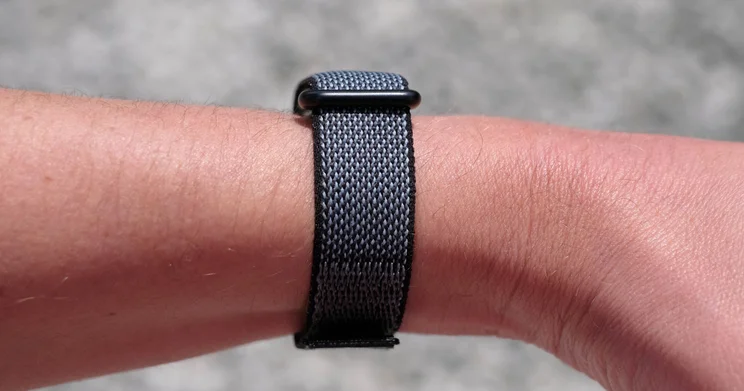
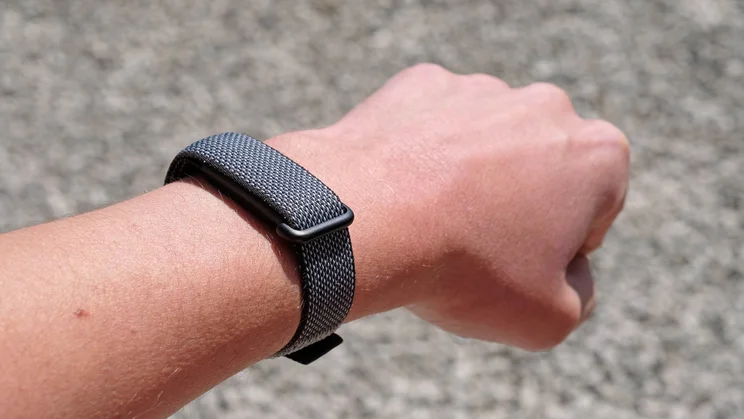
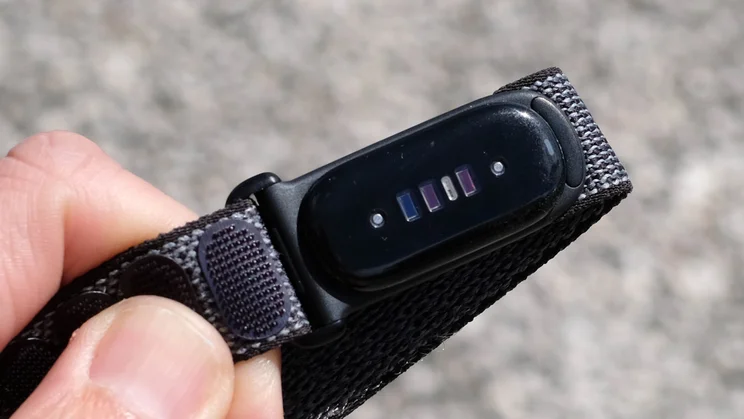
The Fitbit Air is subtle and light, even by the standards of screen-free trackers like the Whoop band. It weighs just 12g with the default strap, or 5.2g without it. An Apple Watch Ultra 3 weighs around seven times as much with Apple’s lightest fabric strap in tow. Its strap is also just 17mm wide, making it appear far more petite than the 25mm Whoop series bands or the 23mm Polar Loop, and there are three types of wristband available for it.
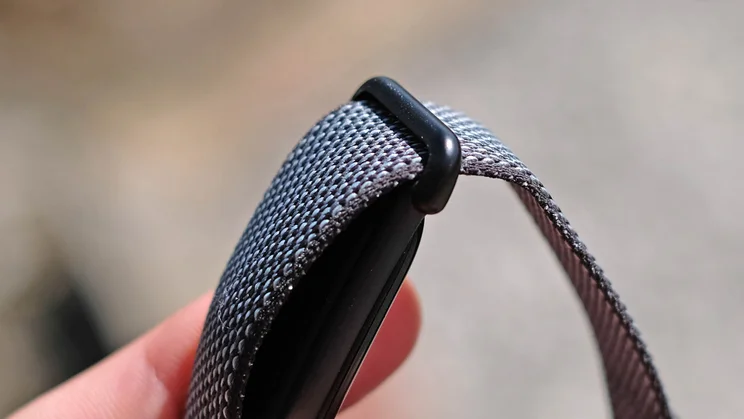
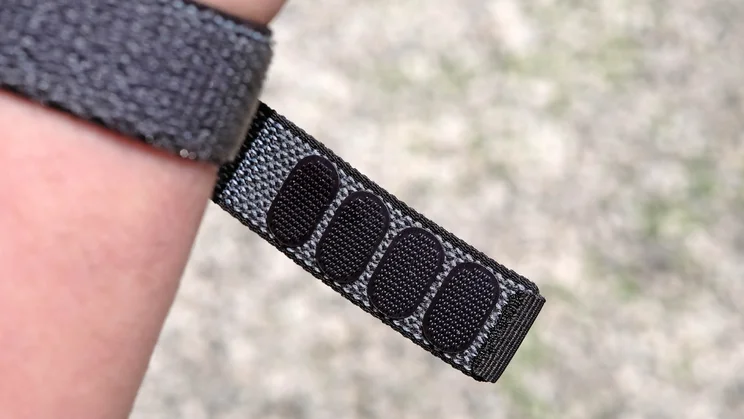
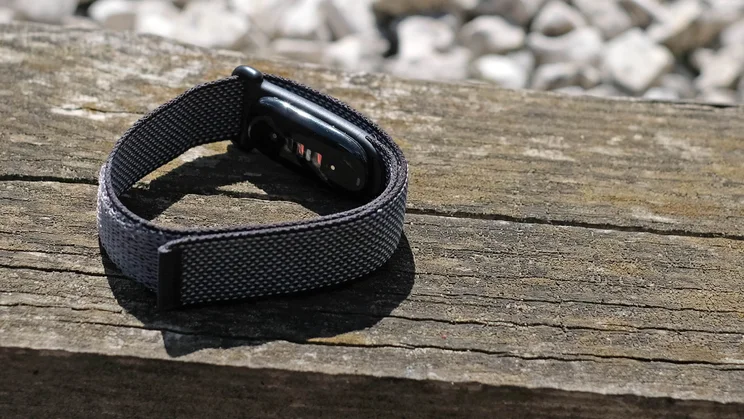
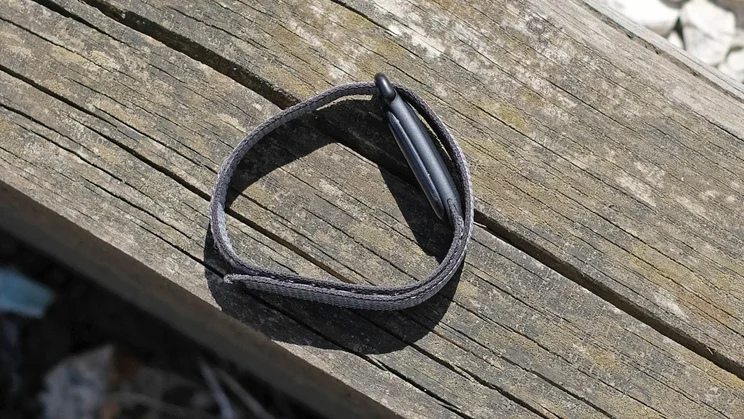
The standard strap is called the Performance Loop, and the fabric is a mix of recycled polyester and elastane, with a velcro-style fastener. There’s also a silicone-based strap called Active, and one made primarily of polyurethane that aims for a more fashionable appearance.
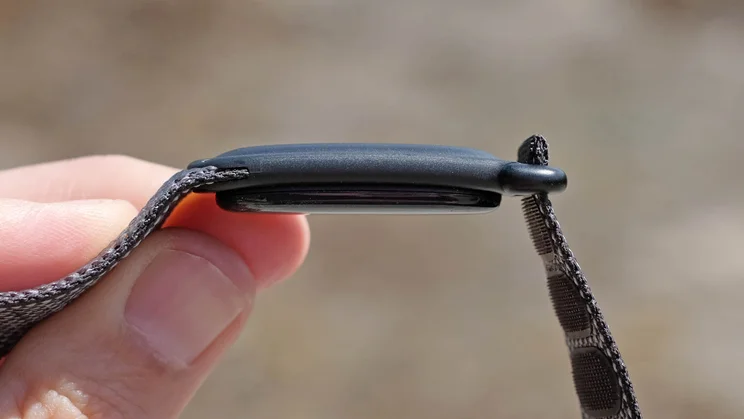
The core of the Fitbit Air pops out of a plastic frame within the strap, so there’s no need to stick to one strap design. It’s 5ATM water resistant, which means you can wear it in the shower or at the swimming pool, although it’s not suitable for diving.
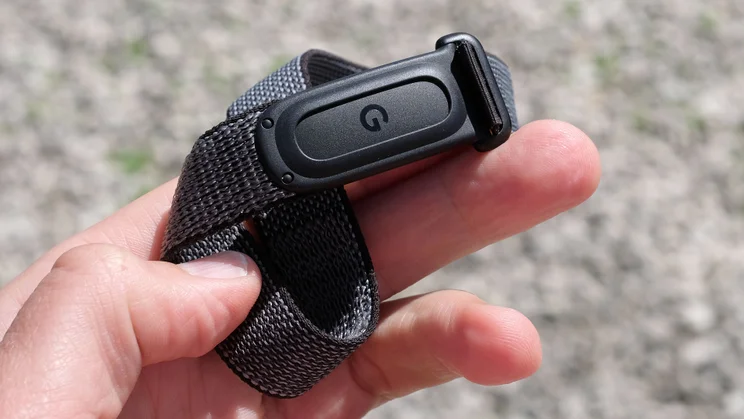
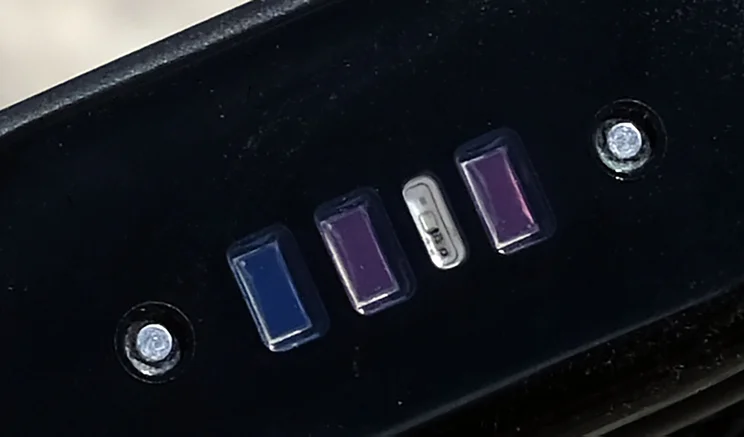
All of the stats a Fitbit Air records are woven out of a motion sensor, skin temp monitor and the heart rate reader array on the back, which uses a single LED block and three light sensors. This is a bit simpler than the hardware we see in high-end watches from Apple and Garmin, which will typically use more sensors and more LEDs in an attempt to boost reliability.
Health and fitness features
The Fitbit Air does not have anything more advanced than this. There’s no GPS, it can’t take ECG readings. There is a skin temperature sensor here but it is not currently used for ambitious forms of menstrual cycle tracking.
Stress is not a key metric here, either. Instead, a bit like Whoop, Fitbit has more of a focus on what it calls Readiness, which pits sleep quality and duration against exercise, among other factors. Let’s not stress about stress seems to be the message.
The Fitbit Air marks a fairly important “political” change for Fitbit, too, but most of this also applies to this still using older hardware as well. You hook up to the Google Health app rather than Fitbit. And the subscription once known as Fitbit Premium is now called Google Health Premium.
What makes the Fitbit Air different?
The Fitbit Air design achieves exactly what Google clearly intended. It’s so light and comfortable you can easily forget you are wearing it at times. And the real crucial part is there’s never any question as to whether you’re going to wear it to bed. Of course you are. The ridicule of a partner or a low battery alert are the main reasons not to wear the Air almost all the time.
Google has also brought back one of the main things that Fitbit fans used to love (and that it has spent years diluting): making the app a fun place to be. Google Health (the Fitbit app is long gone) offers a bubbly and colourful summary of core stats. These are weekly cardio, daily steps, readiness and last night’s sleep by default. But you can pick whatever you want. Scroll a bit further down and you’ll see recent tracked events and nerdier stats like resting heart rate and heart rate variability.
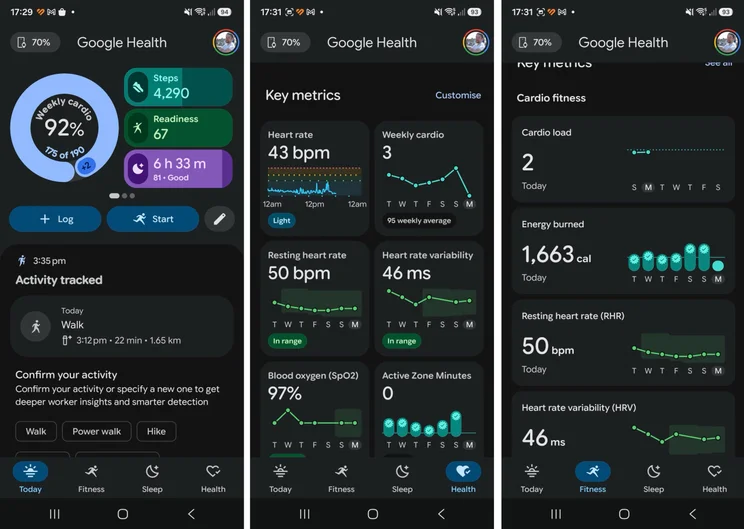
It’s not the ideal layout for the typical Garmin or Coros fan looking for a partner for marathon training. But that’s not what the Fitbit Air is about. The Google Health interface feels spot on for the casual crowd this device is aimed at.
I was also pleasantly surprised by how largely complete the Fitbit Air and its app feel when used completely subscription-free. I might even go as far as to say I prefer it in some ways.
That’s because, when you sign up for Google Health Premium, the app suddenly becomes a whole lot more chatty. Sleep records and exercise sessions will be populated with multi-paragraph summaries that reference specific stats and how certain elements reflect on your wider training and body condition.
You can also hook-up with a chatbot interface called Coach to set up goals and a loose workout plan. This stuff is handy if you don’t really know what all the numbers your fitness tracker spits out mean, or how to react to them.
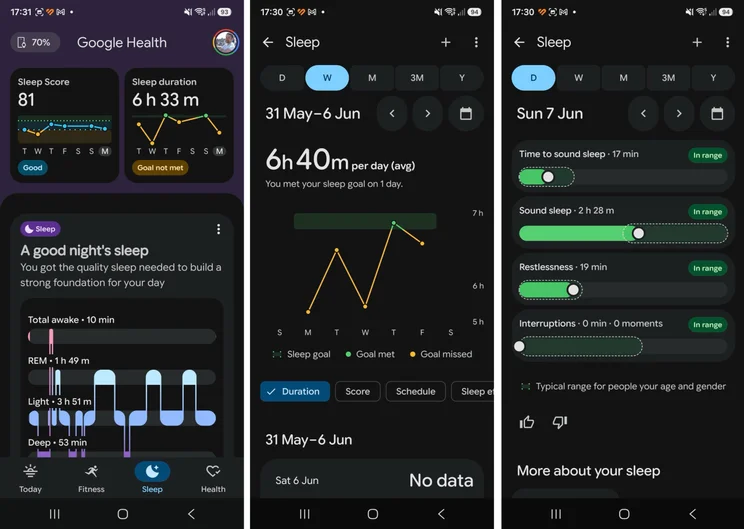
The more casual statistical side of the Fitbit Air is solid, too. Overnight heart rate and heart rate variability numbers are sound, as are the resting heart rate figures. It will also reliably log your runs and walks automatically, if not necessarily with the most accurate of data. But more on that later.
And I liked that the Fitbit Air provides a decent amount of warning when the battery is low. It would, typically, inform me there was around a day’s charge remaining after six days of use, consistent with the seven-day battery life claim. And it does so with the sort of persistence that means you can’t miss it.
The Air’s vibration motor buzzes when a battery level alert kicks in and you’ll get a notification on your phone, too. Two brisk taps on the top of the tracker also set off a subtle LED on the side of the body. If it blinks white: all good. Red means it’s low on charge. It’s all fairly well-handled, and when connected to the magnetised charge puck, your phone will fire off an alert when the Fitbit Air battery is full.
Think a vibrate motor for battery alerts alone is silly? It’s also used for alarms, which like some previous trackers will try to wake you up in the optimal part of a sleep cycle, time allowing, of course.
What can’t the Fitbit Air do?
The Fitbit Air is not a GPS wearable, nor does it support Connected GPS, where a tracker “borrows” the GPS signal from your phone. This means it has to rely entirely on motion sensors for distance estimations on your runs and walks. During my testing, this has not panned out so well.
When I started testing distance totals for runs were a good 1.3x higher on my Garmin Forerunner 970 than the Fitbit Air. To fix such problems, Google’s Health app recalibrates your stride length when you record a session with your phone’s GPS, presumably by dividing the distance recorded by the number of steps. Even after doing this, however, I continued to have problems with the under-reporting of distance.
After using the Air for six weeks, and manually GPS tracking a couple of times to try to get the stride length to recalibrate, the distance disparities got closer to 1.1x what the Fitbit recorded — versus a proper GPS watch. But it’s still a way off being fully acceptable. You can manually enter stride lengths for running and walking, but this isn’t the kind of stat the average person knows.
Should you use the Fitbit Air for marathon training?
The Fitbit Air also suffers from questionable heart-rate accuracy, on a few fronts. It commonly overestimates heart rate readings for the first handful of minutes during run sessions. I used to see this all the time in wearables a few years ago, apparently a result of the heart rate reading mixing up cadence signals with actual HR. It’s thankfully less common among higher-end hardware these days, but makes an appearance here.
Such issues do tend to solve themselves over time, but in other sessions the Fitbit Air reported at the wrong heart rate for much more extended periods. For example, during one roughly 1hr 20min workout, the Fitbit Air reported at roughly 20-30bpm too high for the second half of the workout following a gap in exertion. And this led to an average bpm score of 150bpm according to Fitbit, versus 128bpm from the Garmin Forerunner 970.
This of course then leads to Fitbit’s advice and summaries becoming inaccurate, which can be doubly grating given how they’re relayed when you’re subscribed to Google Health Premium. Each sleep session, each activity, is summarised with the chirpy enthusiasm of an LLM-based (a chatbot) personal trainer.
It’s all about positive affirmation, squeezing in little statistical insights to overtly provide context you likely wouldn’t get without a subscription. Some people – especially those who lean heavily on chatbots for everything from mental health advice to weather reports – will probably love it. But the tone frequently veers into what could be considered coddling and condescending, which becomes magnified when its insights into your runs (and other workouts) are largely incorrect.
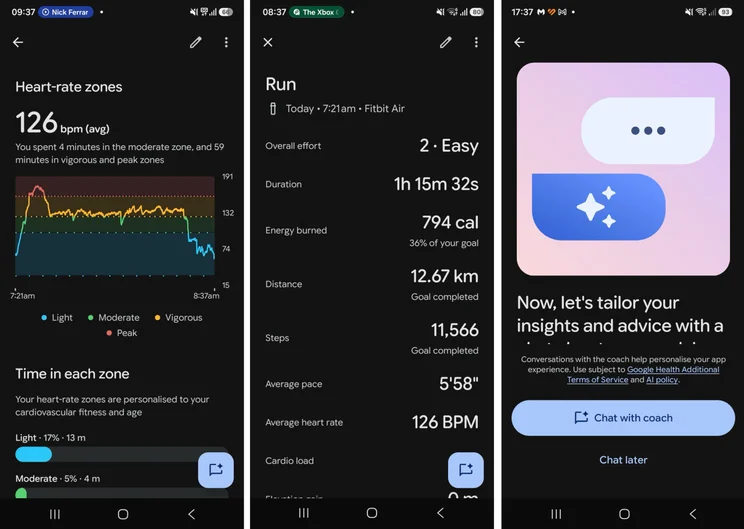
It would be good to see Google add some controls over the tone and presentation of Google Health Premium’s AI-generated text passages. I’ve come to largely gloss over them and long for the relative simplicity of the Fitbit app without the premium sub. But that’s also proof there’s a definite appeal to the “free” Fitbit experience.
Should you buy the Fitbit Air?
The Fitbit Air is great for daily activity tracking. It’s wonderfully comfortable, lasts around six days before asking for a recharge, and its sleep tracking is consistent and believable. Another big strength is in how the Fitbit app presents data visually.
It’s considerably less useful for any form of tracking where distance is a key metric. Not only are motion sensor estimates not a match for GPS tracking methods (not here at least), the Fitbit platform seems slow to recalibrate to your stride length when it has GPS data to work off, too. And I’m not keen on the chatty AI feedback, either.
The Fitbit Air is competent enough at tracking the casual stuff and very comfortable, to boot. But its unremarkable distance and heart-rate tracking means it’s not an automatic recommendation from me.


