
To help us provide you with free impartial advice, we may earn a commission if you buy through links on our site. Learn more
It was nearly a year ago that Samsung’s Won-Joon Choi took the stage and unveiled the Galaxy XR headset. It was an exciting announcement and looked every bit as slick as the Apple Vision Pro it was intended to rival: it was cheaper, lighter and more comfortable, and with Samsung at the helm, surely it was a matter of time before we all had one of these augmented reality visors strapped to our faces.
As time wore on, though, I began to lose hope of ever seeing this headset hit the UK. Apple seemed to be happy to let Vision Pro gather dust – despite adding the M5 processor last October. But just as I had been prepared to have my dreams dashed of a future played out in the neon-lit futurescape predicted in the pages of Ready Player One, Samsung has finally decided it’s time to bring its headset to a wider audience.
And with the Samsung Galaxy XR headset set to arrive in the UK in the coming weeks – you can pre-order it now, in fact, and it launches officially on 8 July – I’ve had the chance to go hands-on with it to find out how it stacks up against Apple’s Vision Pro.
How much is the Samsung Galaxy XR headset?
Before I get on to the specifications, comfort levels and what it’s like to use, though, let’s first get the price out of the way. Like the Apple Vision Pro, the Galaxy XR is expensive, primarily because it is stuffed with high-end tech, and because it is not a mainstream product. Samsung will probably never make back the R&D spend on this thing, so the price you are seeing is a reflection of both those factors.
The UK price is £1,699 with the optional controllers costing a further £249 and the hard case another £249. Still, it’s considerably less expensive than the Apple Vision Pro was at its UK launch (£3,499). And despite the fact that Apple has reduced the price by a further £300, you could buy a Samsung Galaxy XR and a Samsung Galaxy Book6 Pro for the price of the Apple headset.
Cheap the Samsung Galaxy XR is not, but it is certainly less of a bank balance eviscerator than Apple’s equivalent.
What is it like to wear?
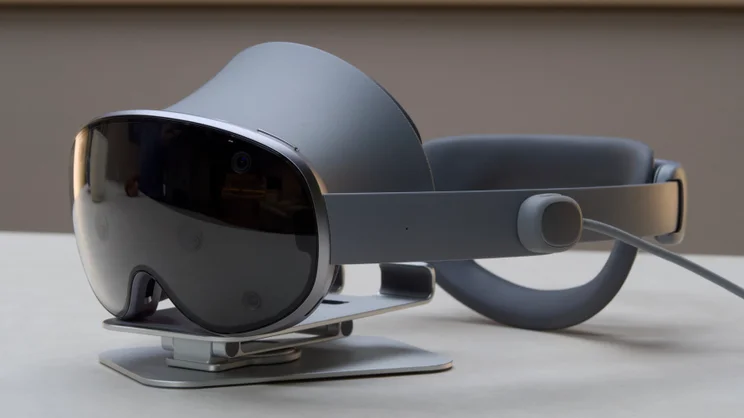
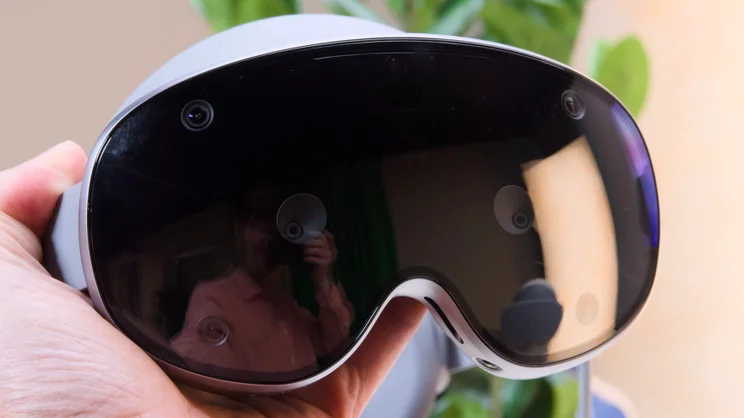
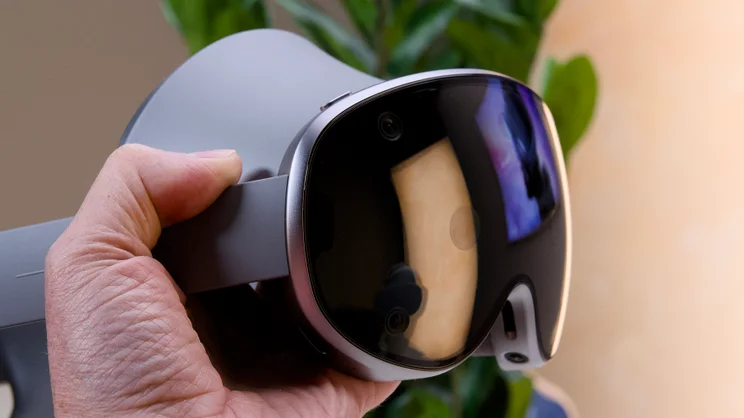
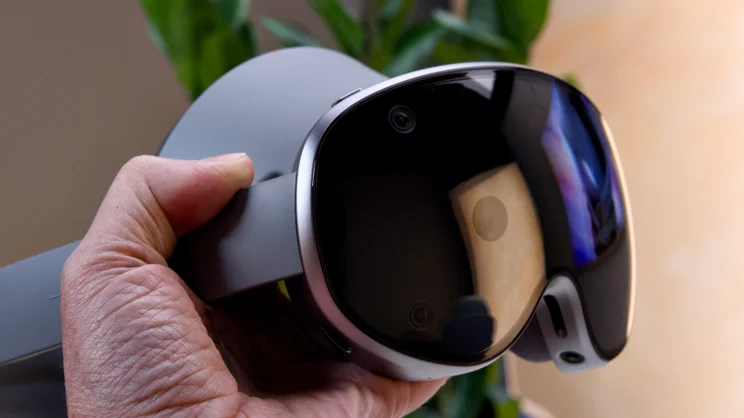
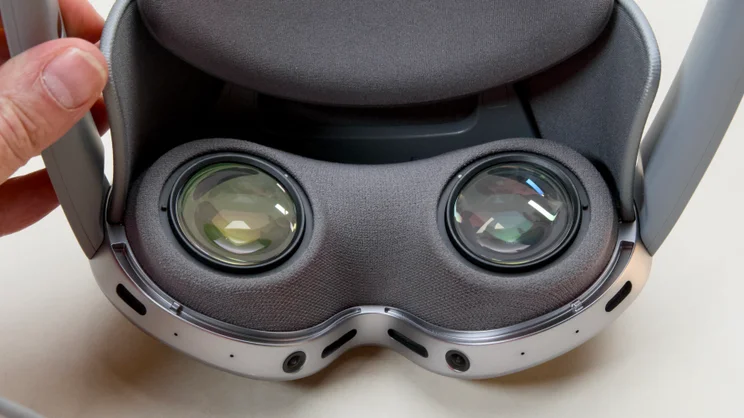
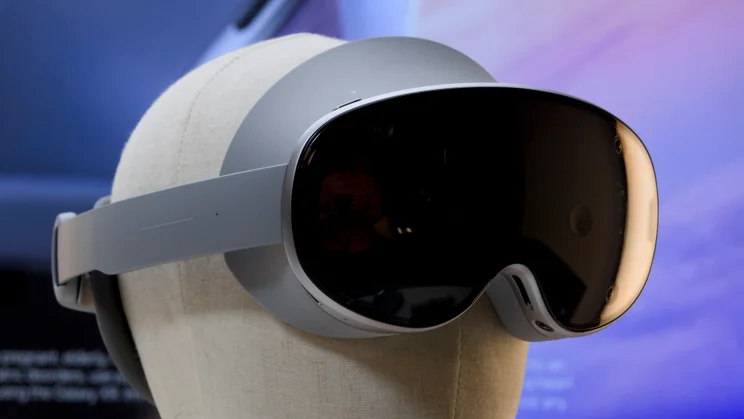
The Samsung Galaxy XR is, in many ways, very similar to the Vision Pro. Externally, it takes on the appearance of a pair of futuristic silver goggles, studded with eight outward-facing cameras – there are two “world-facing cameras” so you can see what’s around you, and six hand-tracking cameras so the headset can track your gestures – and four eye-tracking cameras inside the visor.
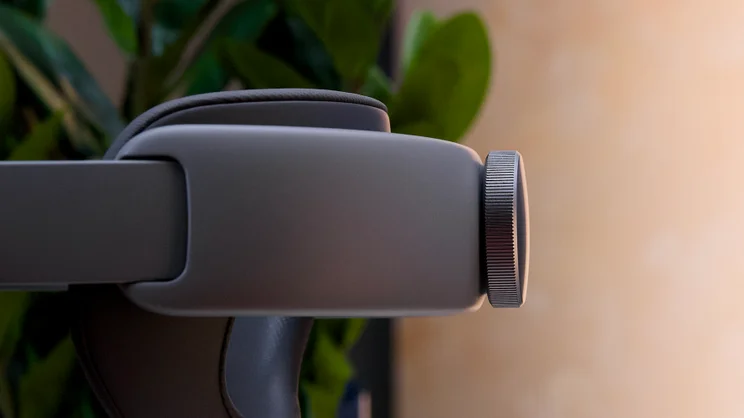
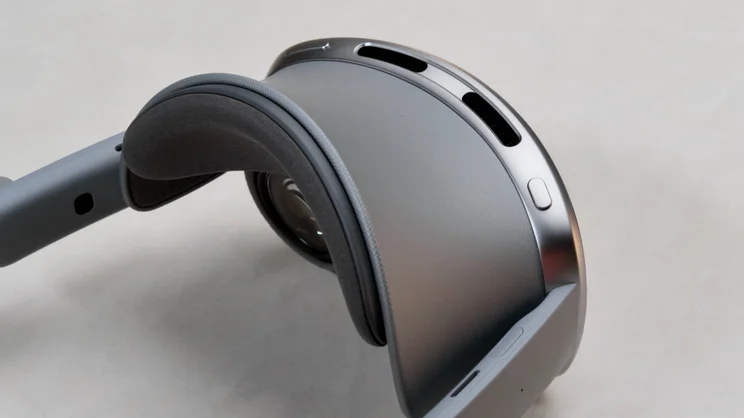
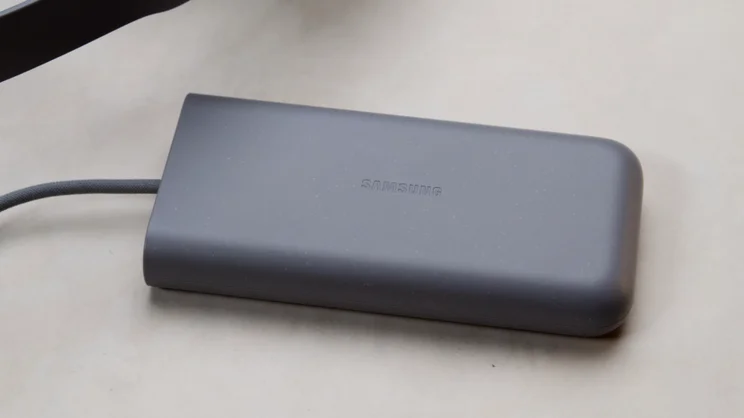
There’s a volume rocker on the top left, and another button on the top right corner, which performs various actions, depending on the context. There’s a soft foam pad sitting on your forehead to take most of the weight, while a rigid plastic strap wraps around the rear of your head and clamps it in place. Much like the Vision Pro, that strap houses a pair of speakers and a touch surface on the right side, and the battery that powers the headset is attached by a long cord to the left-hand side.
I popped it on and, immediately, it felt lighter and more comfortable than the Apple Vision Pro. That could, of course, be down to recency bias – I haven’t donned an Apple Vision Pro since my loaner went back to Apple a year and a half ago, but the Samsung headset is lighter by around 76g, is a little smaller on the face and doesn’t apply any pressure to the cheekbones, all of which contribute to that more comfy feel.
What is image quality like?
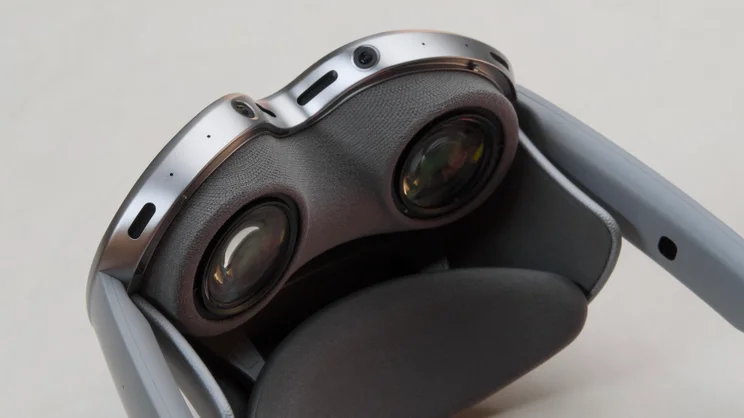
On the inside of the visor are a pair of lenses, which give way to a pair of 4K Micro-OLED displays that run at refresh rates of up to 90Hz. The displays are sharp, clear and colourful, and marginally beat the Vision Pro for pixel density.
I had a little trouble with reflections on the lenses (the headset comes with clip-on eye shields to mitigate this, but these weren’t fitted for my demo), but otherwise the image was nice and crisp. I didn’t have to adjust anything, despite the fact that I normally wear glasses for reading, and was pretty much instantly running through the introductory demo.
What is the Samsung Galaxy XR like to use?
What’s immediately impressive about the Galaxy XR is how accessible it feels. From the moment I put it on, it just worked, and the basic gestures only took a matter of minutes to learn. Just hold your palm facing you, pinch your thumb and forefinger together to bring up a floating grid of preinstalled apps and you’re pretty much good to go.
To select an app to open it, simply look at it and pinch your thumb and forefinger together. In fact, once you’ve mastered this simple gesture, you’ll quickly learn that it’s exactly like clicking and dragging with your mouse or touchpad. It can be used to drag and resize windows around in virtual space, scroll, pan and zoom in Google maps and more.
And it all feels pretty responsive. Soon I was jumping into YouTube to watch the highlights of Saudi Arabia vs Uruguay on a giant floating cinema-style display, putting my feet up and fully immersing myself in the action. This, for me, is the principal appeal of headsets like this. In a relatively compact unit, you can fill your vision with a screen as large as your eyes can cope with – it would make a great companion on a long-haul flight.
But of course, it would be a stretch for these companies to charge so much for what amounts to a personal cinema display. It has to be able to do a bit more than that.
And, of course, it does, but so far I’ve not been convinced by many of those other features, either on this headset or the Apple Vision Pro. I was, for instance, able to browse through a selection of Google photos and turn them into spatialised images. I’m not sure why anyone would want to do that, but it’s there if you want it.
More impressive was the ability to drop myself into a 3D view of any city on the planet via Google Maps – an interesting way to get a feel for a place before you visit. And Android’s insanely clever Circle to Search feature makes its way to XR glasses here as well.
Perhaps more useful is the ability to stream the desktop of your laptop and do actual work by connecting a Bluetooth mouse and keyboard. I was shown this via the paid-for Remote Desktop app, and it felt quite responsive and usable in the short time I used it.
Of course, the other major part of the appeal of this headset is that, while there is a library of 200 or so XR-specific apps from the Play Store you can install pretty much any other Android app you want on it, and simply use it in a floating window. So you don’t have to stream the desktop of your laptop – you can use Google Docs and Gmail directly instead.
Samsung Galaxy XR vs Apple Vision Pro specifications
| Feature | Samsung Galaxy XR | Apple Vision Pro | |
|---|---|---|---|
| Starting Price | £1,699 | £3,199 | |
| Operating System | Android XR | visionOS | |
| Main Processor | Qualcomm Snapdragon XR2+ Gen 2 | Apple M-Series (M5) | |
| Display Type | Dual Micro-OLED | Dual Micro-OLED | |
| Resolution (Per Eye) | 3,552 × 3,840 | 3,660 × 3,200 | |
| Refresh Rate | 65Hz / 72Hz / 90Hz | Up to 120Hz | |
| Base Memory & Storage | 16GB RAM / 256GB | 16GB RAM / from 256GB | |
| Battery life | Up to 2.5 hours | Up to 3 hours | |
| Primary Input | Eye tracking & Hand gestures | Eye tracking & Hand gestures | |
| Physical Controllers | Optional (£249) | No official controllers | |
| Biometric Security | Iris Unlock | Optic ID (Iris scanning) | |
| External Display | No | Yes (EyeSight display) | |
| Headset Weight | 545 grams | 750 grams | |
| AI Integration | Google Gemini | Apple Intelligence |
Samsung Galaxy XR – early verdict
It’s great to see that the Samsung Galaxy XR has finally landed in the UK, and that the Apple Vision Pro has some competition on its hands. But like its big rival, the Android version of the all-singing, all-dancing productivity headset does feel a bit like a solution that’s looking for a problem, particularly at this premium end of the market.
And although it is more reasonably priced than the Vision Pro, bear in mind that you can purchase a Meta Quest 3 and get that personal cinema experience for a lot less: around £550 at the time of writing.
All that being said, the Galaxy XR is a seriously impressive piece of hardware. The image quality is great, and the hand and eye tracking are impressively reliable. Perhaps I’ll change my mind when I’ve had the chance to use one for a bit longer. Watch this space for the full review.


