
To help us provide you with free impartial advice, we may earn a commission if you buy through links on our site. Learn more
- Huge new battery
- Excellent display
- Slimmer and more comfortable
- Expensive
- No rotating crown/bezel
- Charging puck feels unstable
The Samsung Galaxy Watch Ultra 2 is slightly more deserving of fanfare than the brand’s concurrently released smartwatch, the Galaxy Watch 9. This is because, unlike the majority of Samsung’s lineup, the Watch Ultra series doesn’t get updated every year.
Launching two years after the debut Watch Ultra, this second-generation model takes a premium and refined formula and further advances it with greater durability, extended battery capacity, a display so bright that it would make the sun blush and a handful of new health monitoring features.
The result is an extremely appealing smartwatch with oodles of functionality and versatility as a sports and activity companion. You’ll need to be the most outdoorsy of people to justify that high price, however – most of us simply don’t need all that the Galaxy Watch Ultra 2 offers, and will get on just fine with a far cheaper model.
What do you get for the money?
The Galaxy Watch Ultra 2 only comes in one size – a chunky 47mm – and costs £649 at launch. That’s a minor price increase of £50 from the first generation, which isn’t bad considering it’s been two years since the Galaxy Watch Ultra first launched. It also undercuts Apple’s latest Watch Ultra 3, which costs £749.
It’s worth noting, however, that the Galaxy Watch 9 is launching concurrently and starts at just £319 for the 40mm model or £349 for the 44mm. This model offers many of the same features as the Ultra but lacks the massive battery, ultra-bright display and more advanced fitness trackers like diving and triathlons. Still, if your needs are more rudimentary, it’s worth considering saving a few hundred pounds and getting the Watch 9.
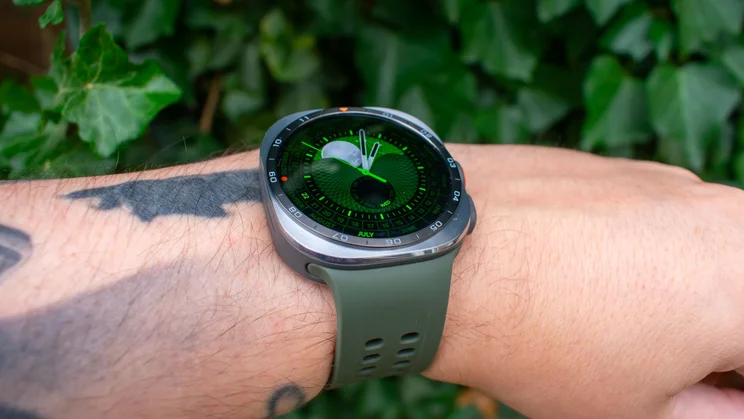
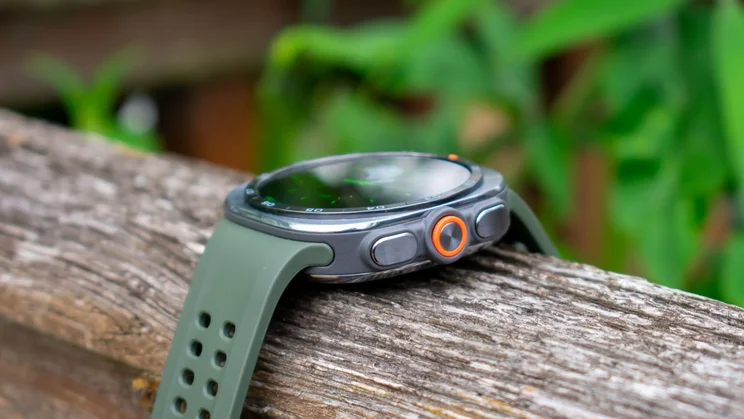
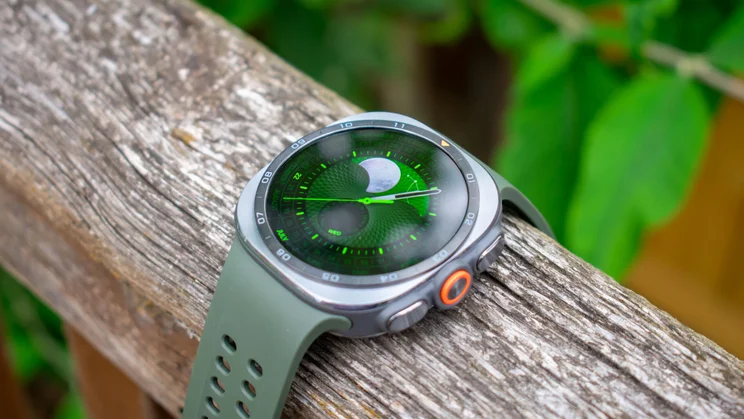
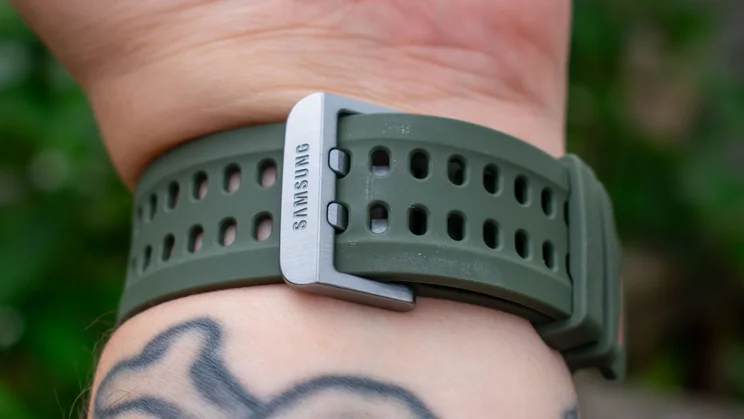
The Galaxy Watch Ultra 2 comes in either the titanium grey style pictured here or a slightly less dull titanium silver. Neither is particularly eye-catching but you can add some personality with the strap: the silicone Marine Strap in our photographs comes in five colours, as do the PU PeakForm band and the fabric Trail Band.
How is the design?
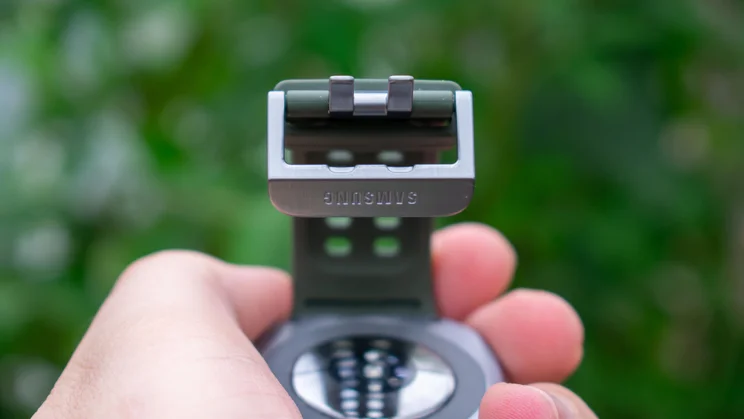
I’d certainly have preferred the fabric band – the Marine Strap does not breathe well in the hot weather – but wrist sweat aside, it’s a solid and comfortable fit. It is apparently 25% lighter than the first generation’s band and is slimmer, too, at 1.9mm thick.
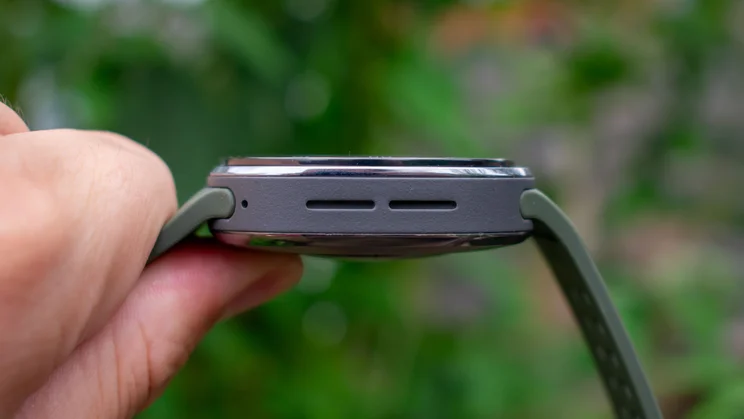
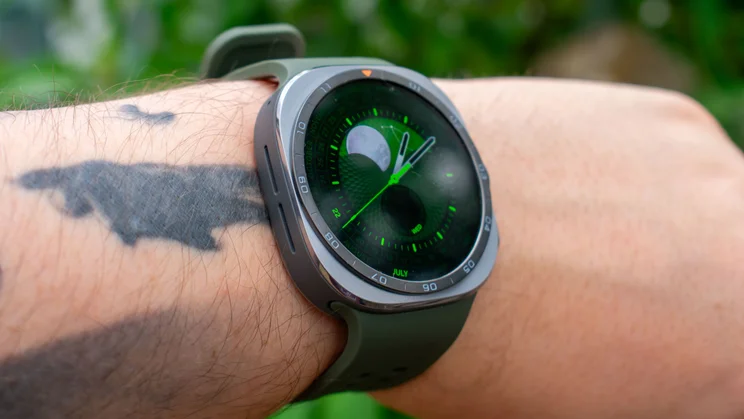
The titanium body of the watch has dropped a dress size, too, now measuring just 10.7mm thick – roughly 12% down on the original Watch Ultra – and the effect that this has on comfort is palpable. As someone who has historically found watches to be annoying to wear, I was pleasantly surprised by how easily I forgot the Galaxy Watch Ultra 2 was shackled around my wrist, and how little it bothered me when trying to sleep.
Despite the slimmer build, it’s still wonderfully robust; the titanium chassis is scratch and shock-resistant, the IP rating has been improved to IP69K, adding protection against high-pressure, high-temperature jets of water, and it’s once again resistant up to 10ATM (ten atmospheres, or 100metres), for the dive-minded among you.
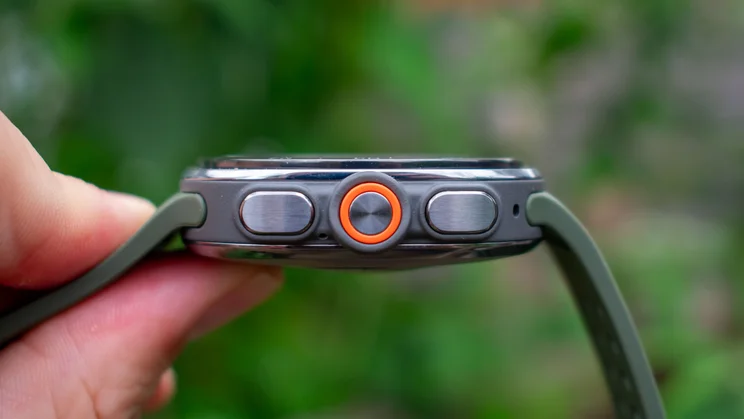
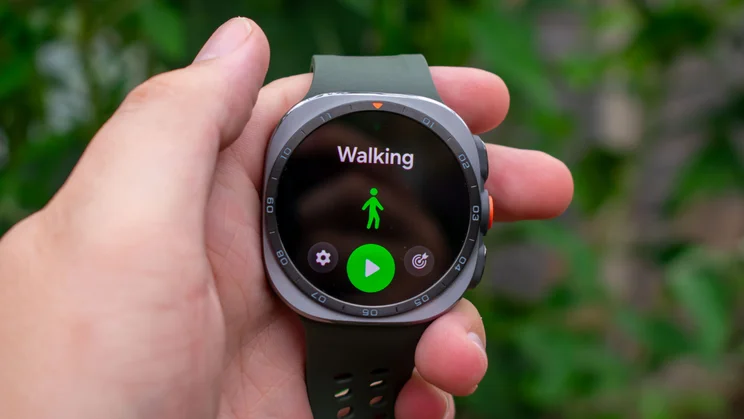
Minor dimension changes aside, the design is business as usual: the body is once again a squircle shape with the same three buttons on the right edge: home button at the top, navigational back button at the bottom and, sat between them, the orange-haloed Quick Button. The latter is customisable and can be set to open a workout, tool or app of your choosing with either a short hold or double tap. A long hold over five seconds will sound the siren, an 86dB klaxon that can apparently be heard up to 180m away – useful for alerting others to your position if you get into hot water out in the wilderness.
My only issue with the design is that, just like the first generation, the Galaxy Watch Ultra 2 lacks a rotating crown, or even a rotating bezel around the display, like the Galaxy Watch 8 Classic. You can activate the Touch Bezel feature in the settings (who knows why it is turned off by default), which allows you to quickly scroll by running your finger around the very edge of the display, sort of stroking the bezel, but this is nowhere near as tactile or satisfying as using a rotating crown, despite the vibrational haptics that accompany it, and nor is it as easy to use in heavy rain.
What is the display like?
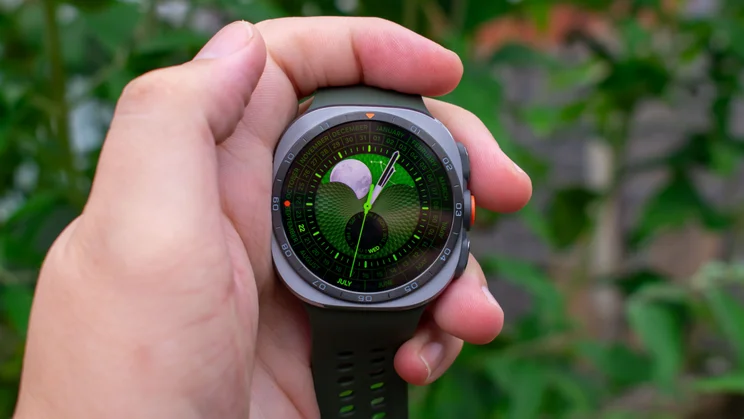
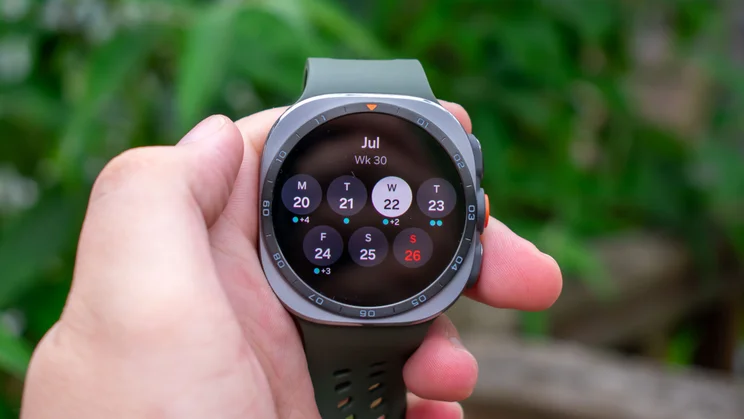
The display is identical to that on the 44mm Galaxy Watch 9: a 1.53in AMOLED screen with a 480 x 480 resolution and Sapphire Crystal glass for scratch protection. The Ultra’s version does at least get brighter, with Samsung claiming a peak luminance of 5,000 nits.
And I have no reason to dispute this claim. Even in direct sunlight, the display is beautifully clear and easy to read, with the adaptive brightness countering the sun’s glare efficiently. If anything, the display might veer too bright – there were a couple of instances where I moved my arm a little too much while settling down for sleep and woke the watch up, and it swiftly returned the favour with dazzling light.
The black bezel around the screen is slimmer than the first generation and it’s now etched with the hour numbers (except 12, that remains an arrow) instead of simple lines. These are quite subtle, so not the easiest thing to see at a glance, but it’s a classy touch nonetheless.
How well does it perform?
Sitting inside the Watch Ultra 2 is the new Snapdragon Wear Elite chipset, which, according to Samsung, offers CPU performance up to 32% faster than the previous generation and GPU speed gains of around 19%. It’s once again backed up by 2GB of RAM and 32GB of onboard storage space.
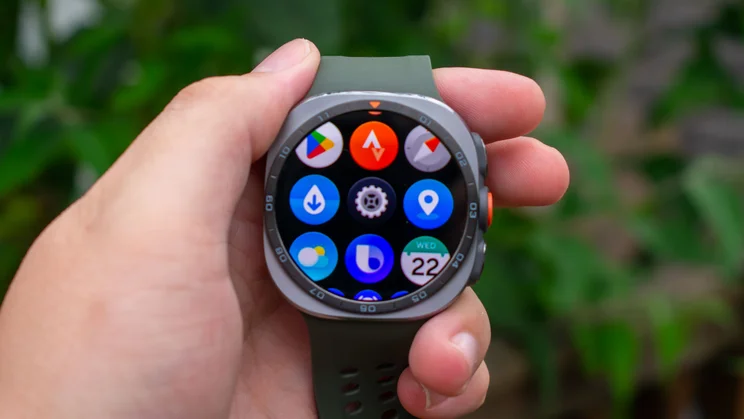
This combination proves plenty efficient, with the Galaxy Watch Ultra 2 scrolling and swiping smoothly and opening apps in the blink of an eye. The app drawer (accessed by swiping up from the bottom of the screen) is a rudimentary list in no particular order, though you can set it to show frequently used apps at the top, which is handy. I still prefer the matrix style web that you get on other WearOS devices, as it allows you to zoom all the way out and quickly eyeball the icon you’re looking for, rather than trawling through a list.
Also tucked inside the body is a hefty 800mAh battery, which is a capacity increase of 35% over the previous generation and the largest capacity battery on any Galaxy Watch to date. This is a big improvement over the first generation and, technically speaking, you can get the battery to stretch to a week with minimal usage and background monitoring disabled.
That’s a bit pointless, however, as 24/7 health assessment is the main part of the appeal, here. With heart-rate and sleep monitoring enabled, and the always-on display sucking up its fair share of battery life, I saw the Watch Ultra 2 last two to three days between charges and that’s still on the short side.
Charging is roughly the same as the previous generation, filling the battery from empty in around two hours. It’s not the slowest in the world but it would have been nice to see slightly faster charging speeds to go along with the larger battery.
One minor complaint on the charging front is that the magnets that hold the charging puck onto the watch are rather weak. Even sitting on a table, I had to balance the watch just so to make sure that its heft didn’t send it tilting on its side and detaching from the puck. It’s a minor annoyance but other smartwatch chargers that I’ve used proved much more stable.
What new features are there?
In addition to the usual suspects like sleep monitoring, heart-rate checking and workout tracking – all of which performed well in my testing and delivered results that stayed in step with the OnePlus Watch 3 on my other wrist – the Watch Ultra 2 has been expanded with a selection of new features, as well as new functionality for preestablished apps.
The diving app, for instance, can now automatically launch when you hit the water, giving you readouts for depth level, water temperature and time spent underwater. You also have the option to have it wait until you’re 1m down before launching, so it doesn’t erroneously launch when you go swimming.
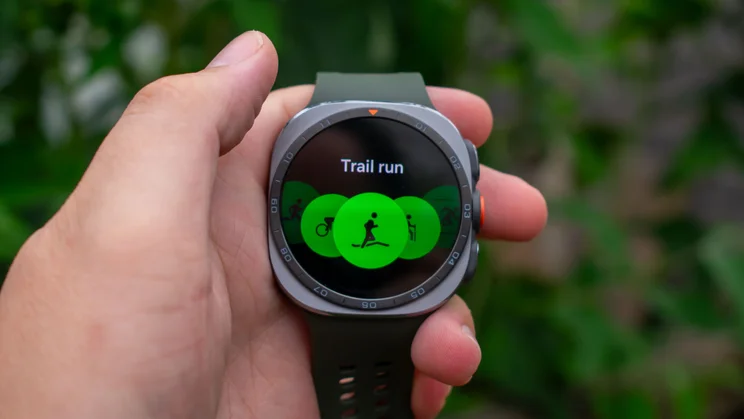
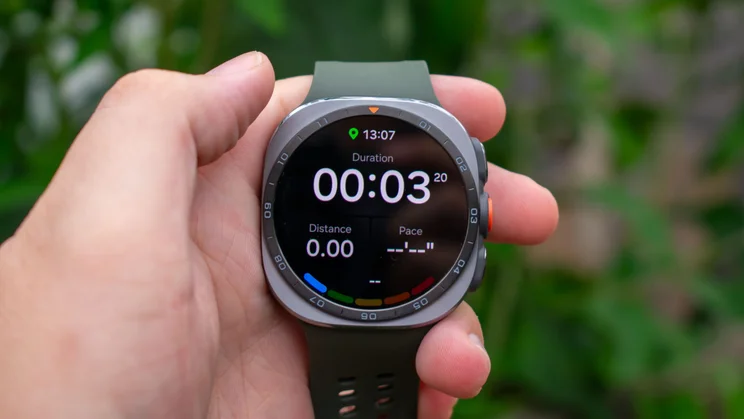
Trail Running has a couple of new elements, too, with the dual-frequency GPS offering turn-by-turn navigation and elevation guidance, and the hydration guide predicting your perspiration levels and alerting you to drink water at appropriate intervals. As this involves some level of guesswork, you’re still better off keeping track of your hydration yourself, but it doesn’t hurt to have a second reminder.
On-device Gemini AI gets a new feature, too, with Raise to Speak cutting out the need for a wake-up phrase: no more “Hey, Google”, just raise the watch to your mouth and speak – that’s right Dick Tracy fans, the future of just speaking into your watch is now.
Samsung claims that the watch can tell the difference between you lifting the watch to talk to the AI and you just lifting your wrist to glance at the time, but I found that the tell-tale light at the bottom of the display that indicates Gemini is listening showed up even when I was just checking the time or a message. So perhaps not the most economical of features, and unlikely to do the battery life any favours, but it’s a fun inclusion.
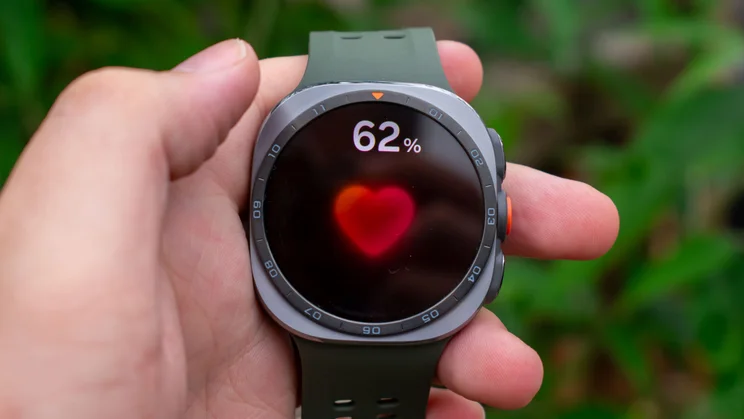
Samsung has just updated its current line of Galaxy Watches with the new “Vitals” feature, and that’s available from launch with the Galaxy Watch Ultra 2. This monitors several key body signals – heart rate, heart rate variability, blood oxygen, skin temperature and respiratory rate – over seven nights and establishes a baseline. Then it keeps an eye on the metrics and alerts you if any of the above register as dramatically out of bounds.
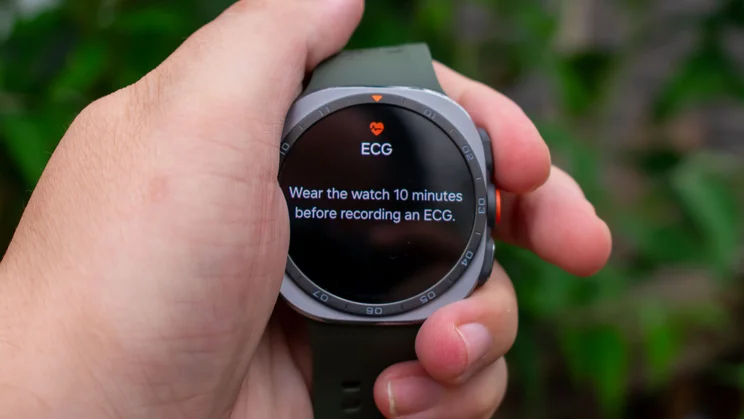
It’s a solid idea, bringing key points of health concern into one holistic assessment, but as with the EKG blood pressure and sleep apnea features, while I appreciate the convenience of being able to get a vague approximation of results for these things from a wristwatch, I would never want to rely on them for medical results.
Should you buy the Samsung Galaxy Watch Ultra 2?
As you would expect, the Galaxy Watch Ultra 2 is easily the most complete and feature-rich smartwatch in Samsung’s arsenal: it is extremely robust and hardy, has one of the best displays of any smartwatch to date and benefits from a big new battery.
On top of the excellent hardware, it is bursting at the seams with a diverse selection of training and workout trackers that cover just about every activity you could think of, as well as a deep bench of health and fitness monitoring features.
So the Galaxy Watch Ultra 2 is an outstanding wearable, no question. It is also very expensive, however, and a good chunk of its best features are also offered by the far cheaper Galaxy Watch 9. If you need every single bell and whistle with your smartwatch, the Galaxy Watch Ultra 2 is an excellent choice. If not, maybe wait for our Galaxy Watch 9 review to see if that would be a better fit.


