To help us provide you with free impartial advice, we may earn a commission if you buy through links on our site. Learn more
- Easy to use
- Brews decent coffee
- Relatively affordable, especially when discounted
- Hot plate will eventually burn your coffee
- Paper filter requirement is limiting
- Plasticky build
It’s said that, sometime during the early 20th century, a woman from Dresden named Amalie Auguste Melitta Bentz invented the coffee filter as we understand it today. After using a scrap of blotting paper and a perforated brass pot to brew coffee, she founded the Melitta brand in 1908.
While filter brewing methods have evolved since the humble Original Melitta No. 1, the brand still relies on a paper-and-cone filter system, and the Optima Timer is no different. The machine isn’t anything to write home about: it’s not as exciting as the Melitta EPOS, nor as capable as the Sage Luxe Brewer. I also have a bit of an issue with its headline feature, which I’ll get into later. But the Optima Timer is easy to use and does what it’s supposed to without costing too much.
Melitta Optima Timer: What do you get for the money?
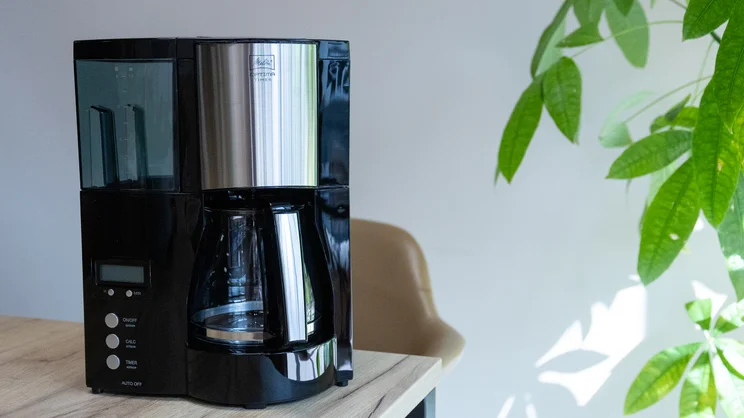
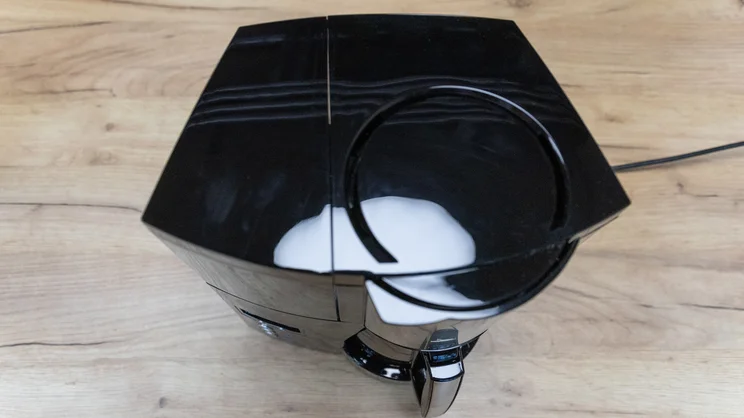
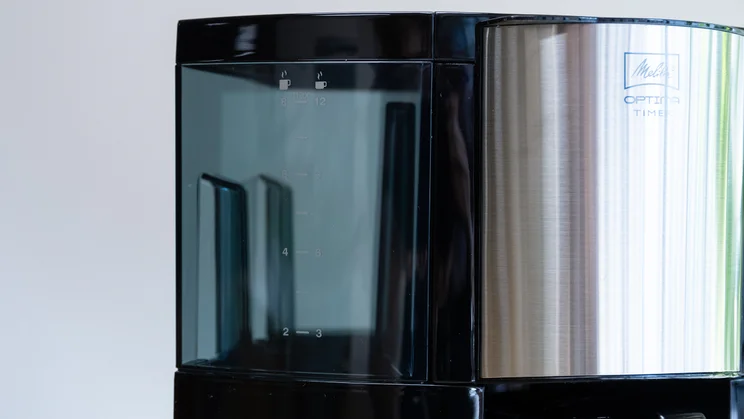
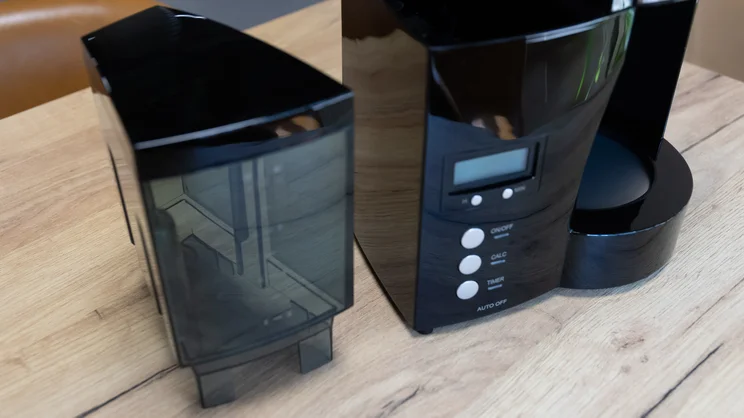
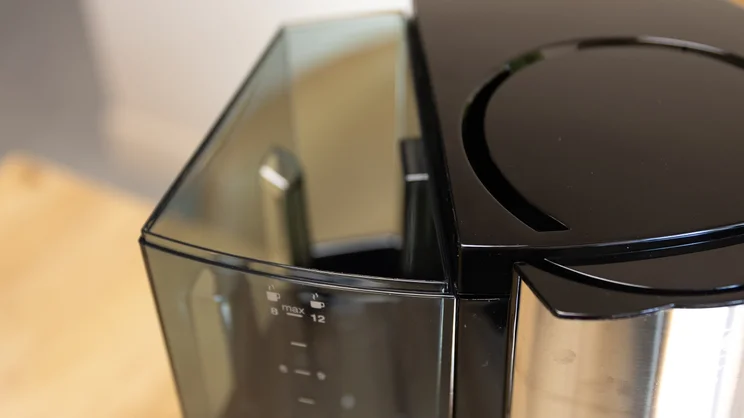
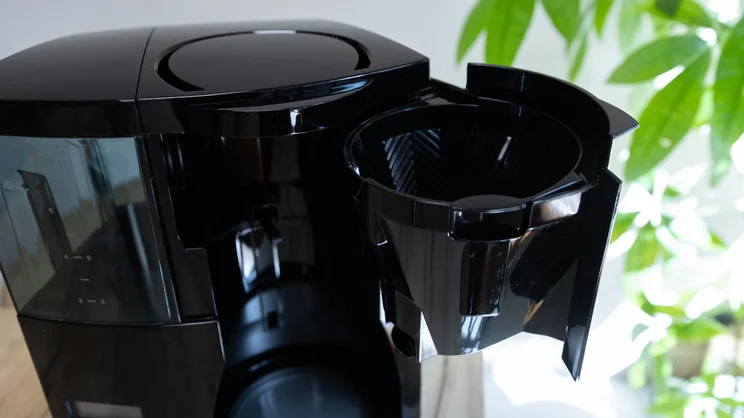
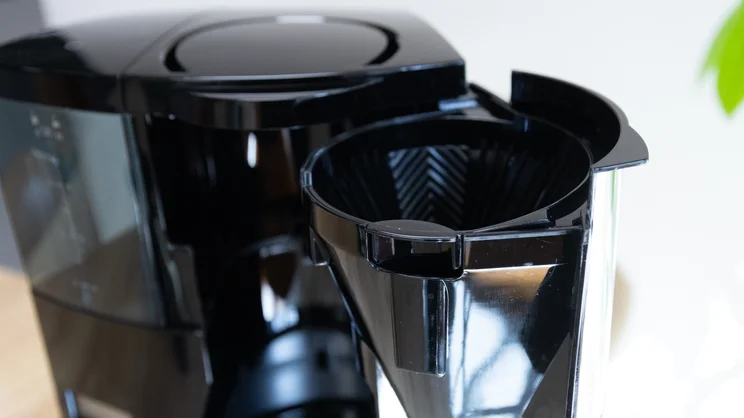
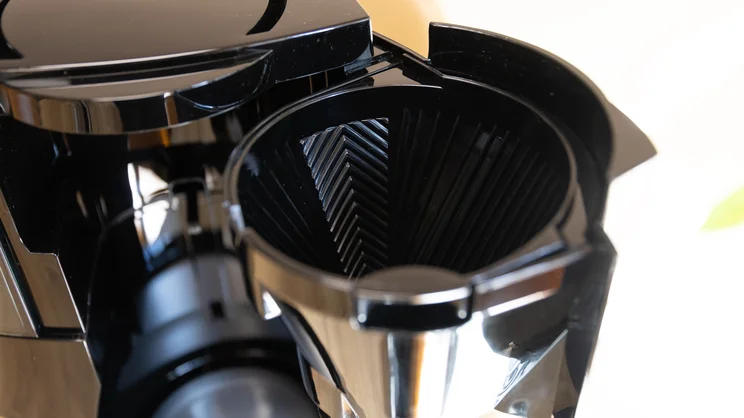
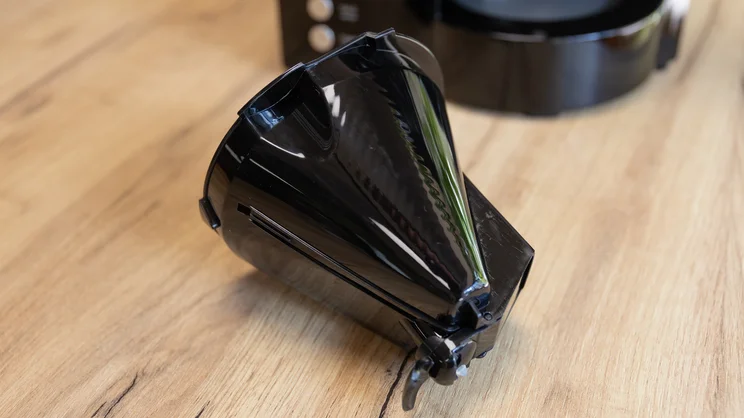
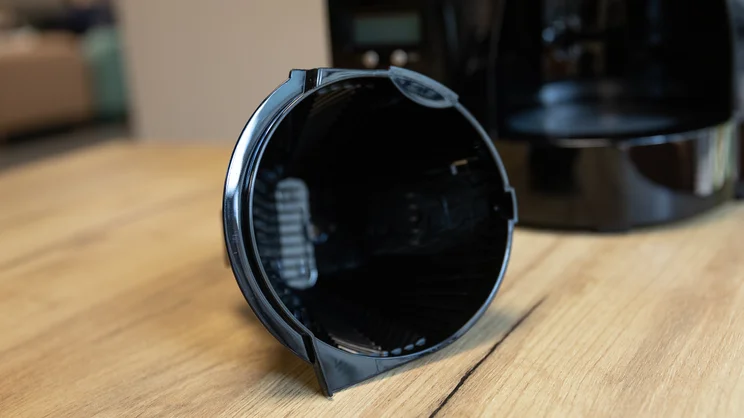
The Optima Timer is a basic, compact filter coffee machine. At its relatively affordable RRP of £85, this shouldn’t be too surprising. The whole thing measures 25.5 x 20 x 33.5cm (WDH) and its removable water tank has a 12-cup capacity, which I measured at around 1.1l. The filter compartment, which opens from a hinge on the right-hand side of the machine, houses a removable plastic filter cone designed for Melitta’s size 102 filter papers.
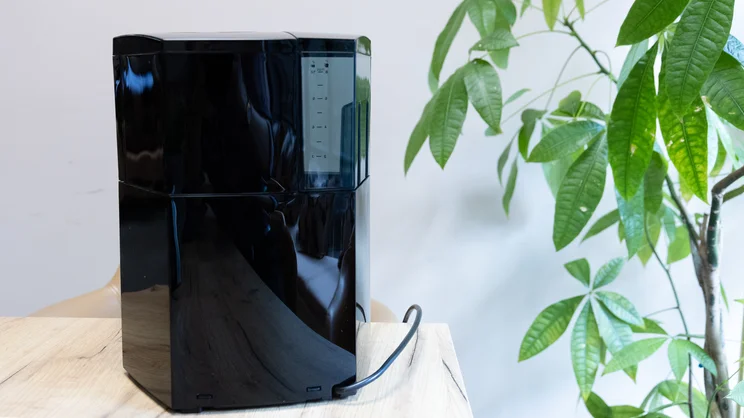
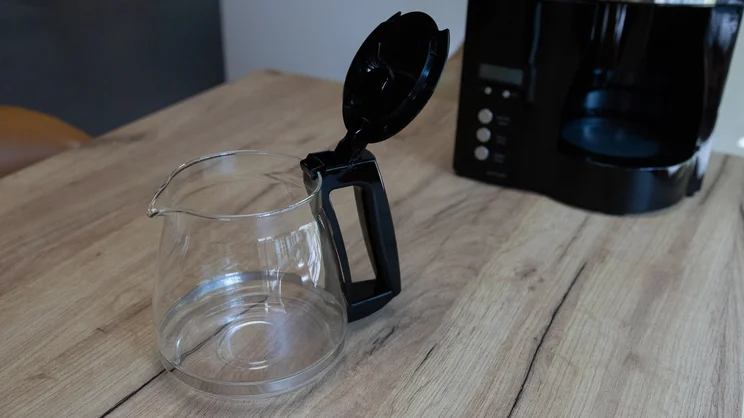
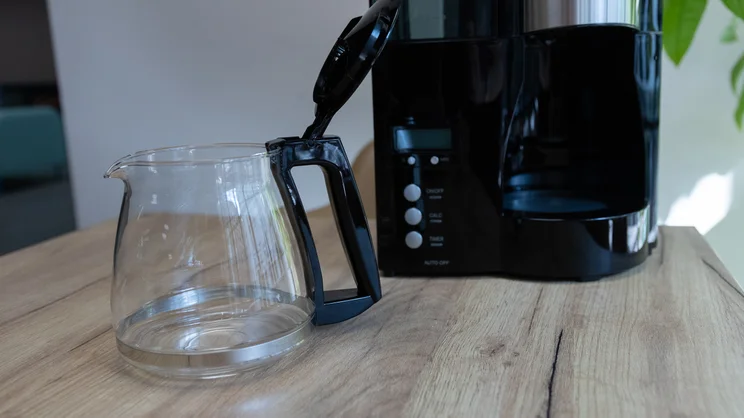
The machine is made primarily from plastic, with some chrome accents over the filter compartment and on the handle of the glass jug. This jug sits neatly underneath the machine’s drip stop, on top of a hot plate.
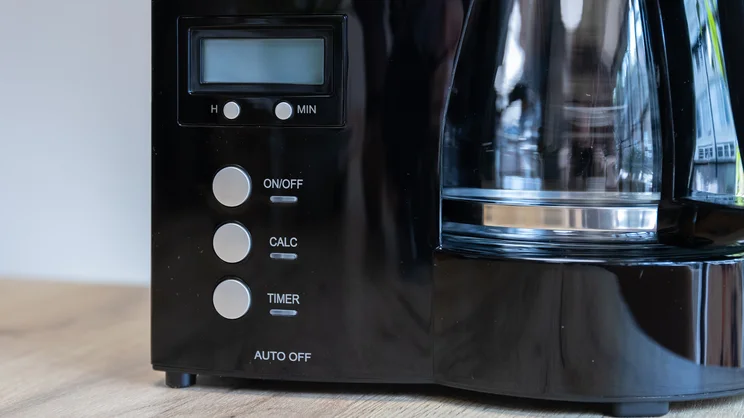
The clock and control panel sit just underneath the water tank. Three buttons turn it on/off, adjust the water hardness setting and toggle the timer, while two smaller buttons below its digital display adjust the clock and timer settings.
As the product name suggests, this latter setting is the Optima Timer’s standout feature. You can set the machine to turn on at any time of day – though the obvious use case for this is programming it to come on in the morning.
How did I test the Melitta Optima Timer?
I used the Melitta Optima Timer as my regular coffee machine over a few weeks, during which it got the most intensive use on days when I was working from home.
I tested the machine with pre-ground Melitta coffee and freshly roasted single-origin beans from a local cafe (shout out to Batch & Co. on Streatham Hill). I noted how the coffee tasted, whether the machine extracted all the nuanced flavours, and how much I needed to tweak the parameters (dosage, grind size, etc.) to get a cup of coffee I was happy with.
I also considered the machine’s build quality and how easy it was to operate, making sure I also got good use out of its timer function too.
What’s it like to use?
The Melitta Optima Timer is very straightforward to use, with intuitive settings. In fact, if you’ve ever used a filter coffee machine before, you should be able to work it out without recourse to the instruction manual.
When powering it up for the first time, you’re prompted to set the clock, using the two smaller buttons beneath the digital display to adjust the hour and minutes. After this, you can set the machine’s water hardness setting via the ‘Calc’ button. By default, the machine is set for hard water areas; I live in south London so I left this unchanged, but Melitta includes a water hardness testing strip with the machine should you want to dial this in more accurately.
Now you’re ready to brew. This is simply a matter of inserting a filter paper into the plastic cone, adding your desired amount of coffee and filling the water tank to the appropriate level (I used a ratio of 6g:100ml). Once you’ve done this, one press of the ‘on/off’ button starts brewing.
The Optima Timer’s hot plate keeps the glass carafe warm for 30 minutes (or up to four hours in 30-minute increments) while the drip stop prevents coffee from spilling when you remove the carafe.
The machine’s timer feature is easy to use too. You can toggle this on or off by pressing the ‘Timer’ button, and can set the desired time by holding it down while adjusting the clock display.
On some days when I was working from home, I brewed a pot of coffee at 7.30am; the time I normally have breakfast. This was useful as it reduced effort in my morning routine. Of course, it meant I needed to set it up for brewing the previous evening, but I was considerably less bleary-eyed at this time.
That said, I have a gripe with the machine’s timer setting, which has nothing to do with how well it functions. My issue is that, for all the convenience this feature offers, it’s simply unsuited to brewing freshly ground coffee. Once it’s ground, coffee starts to go stale quite quickly. Strictly speaking, it can last a couple of weeks if stored properly, but it will begin to lose its nuanced flavours within minutes.
When I’ve used pre-ground Melitta coffee to test the Optima Timer, it hasn’t suffered much by sitting in a filter machine overnight. However, when brewing with more expensive freshly roasted coffee beans, I’d much prefer to brew immediately after grinding. In this respect, I think the Optima Timer’s key feature has limited utility.
What’s the coffee like?
I got some pretty nice filter brews from the Melitta Optima Timer. The brand sent me some of its pre-ground coffee to test in the machine, which tasted fine, if uncomplex and lacking in nuance. I also had to adjust ratios and dial down the amount of coffee to avoid an overpoweringly muddy brew.
I drink a lot of black filter coffee at home – pour over and Aeropress are my favourite methods of production – so I was keen to see how the Optima Timer fared with a decent filter roast. For this, I used a Peruvian single origin light roast from a local coffee shop. Unsurprisingly, its flavour profile was significantly better than the Melitta pre-ground coffee.
I compared it with a cup brewed with my V60, using the same beans. The V60 brew definitely tasted more flavourful, but results were comparable. And you need to consider that pour-over brewing requires a decent gooseneck kettle and a fair bit more effort and patience.
Was there anything I didn’t like?
As I mentioned above, I don’t think the machine’s timer is ideal for use with top-quality, freshly ground coffee. I certainly wouldn’t want to leave any of my Peruvian single-origin coffee sitting in the machine any longer than it needs to.
For some, the convenience of the timer feature may well outweigh this. But those like me who want to extract the best from their filter roasts will probably not find much use for it.
By the same token, filter machines with hot plates aren’t ideal either: this will keep heating the brewed coffee until all the flavour has been burnt out of it. Melitta itself admits to this in its instruction manual for the Optima Timer: “Long-term warm-keeping of the coffee on the warming plate leads to loss of taste. Therefore, we recommend a warm-keeping time of no longer than 30 minutes.” I’d argue that even 30 minutes is too long, depending on how much coffee you’ve got sitting in the carafe. I don’t know why the brand allows you to leave the hot plate running for up to four hours. It’d be more useful if you could adjust the hot plate’s temperature; using an infrared thermometer gun, I measured the hot plate surface at around 130°C shortly after brewing. Even better would be a machine with a thermal carafe, such as Melitta’s AromaFresh Therm Pro or the Sage Luxe Brewer.
As with many such filter coffee machines, you’re reliant on the availability of specific filter papers with the Melitta Optima Timer. At the time of writing, Melitta’s 102 papers aren’t available directly from Melitta. You can buy 80 for around £7 on Amazon, which isn’t the cheapest solution, and third-party option availability is hit-and-miss. Edesia Express’ Size 3 papers are listed as compatible with Melitta’s 102 filter machines, and are available on Amazon in quantities ranging from 100 (£8.45) to 2,000 papers (£43).
All that said, you can get away with using “incorrect” papers. I was sent a box of Melitta 1×4 papers, and was advised to fold them down to size to fit the machine. This worked perfectly fine and, if you didn’t know any better, you could easily assume they were the appropriate papers for the machine. They’re also much cheaper to buy, at £2.85 for 80.
My last minor grumble relates to the build quality. By no means flimsy, it still feels quite plasticky. And while I have to admit that £85 is good value in the coffee machine space, it’s not an insignificant amount of money to pay – particularly when you factor in the regular cost of filter papers.
Should I buy the Melitta Optima Timer?
The Melitta Optima Timer is not the perfect filter coffee machine. But for that, I’d argue you’d need to pay almost three times as much to get something like the Sage Luxe Brewer.
For the price, the Optima Timer does its job well. It’s easy to use, and its timer function works without a hitch – even if it’s not something that I’d personally want to use often.
If you’re after a basic, compact, sub-£100 filter coffee machine, it’s a perfectly capable option, and even more so if you can get it discounted in one of Melitta’s sales. However, to get the best flavour out of good-quality coffee, I recommend splashing out a bit more.