To help us provide you with free impartial advice, we may earn a commission if you buy through links on our site. Learn more
- Well balanced and easy to use
- Excellent for everyday cleaning and pet hair
- Affordable for a Dyson
- Could be better on hard floors
- No battery life indicator
The Dyson V8 Cyclone has been around for a good few years now, but instead of quietly retiring it and moving onto something different, the company has chosen to give it a refresh. That makes sense, as there’s plenty of brand recognition there – and, let’s be honest, the form factor has remained very similar over the years.
So, ten years after the first V8 was launched, we finally have an upgraded model. This one comes with improved suction power, longer battery life and a one-press on/off switch for ease of use instead of the spring-loaded trigger of old. It’s also cheaper, but things have changed since the V8 first appeared, so how does this version compete with the best cordless vacuum cleaners on the market?
Dyson V8 Cyclone review: What do you get for the money?
At a penny under £350, the V8 Cyclone is, for Dyson, pretty reasonable. At this price, it falls into the same bracket as devices such as the VAX HomePro Detect Pet-Design at £370, and the Henry Quick at £330. The older Dyson V8 Advanced is still available for £330 (currently reduced to £230 at Dyson), but I think the new features on the V8 Cyclone are more than worth the slightly increased cost.
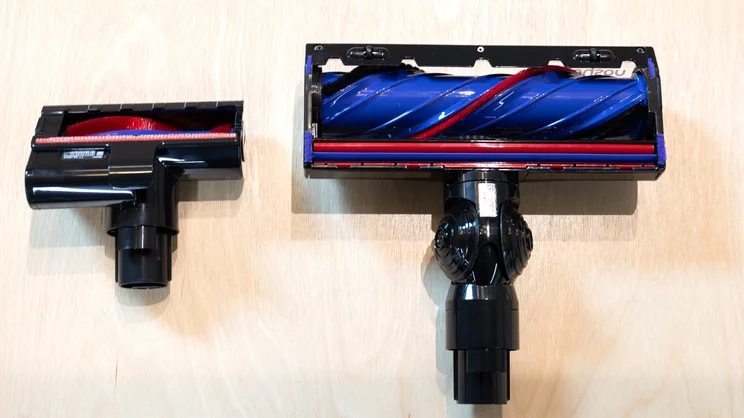
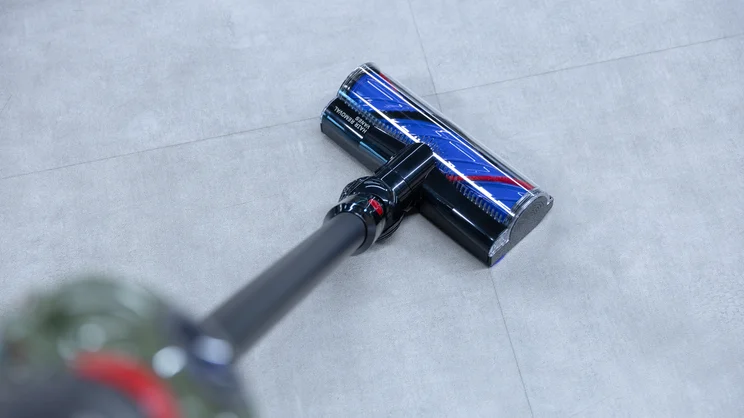
Those upgrades include a swappable battery with up to 60 minutes of run time in eco mode, and a new motor with a claimed 30% more suction and 50% more dirt removal on one charge. Meanwhile, Dyson has swapped out the trigger for the same on/off switch as the V16 – a major usability boost. The main motorised cleaner head now comes with anti-hair wrap technology.
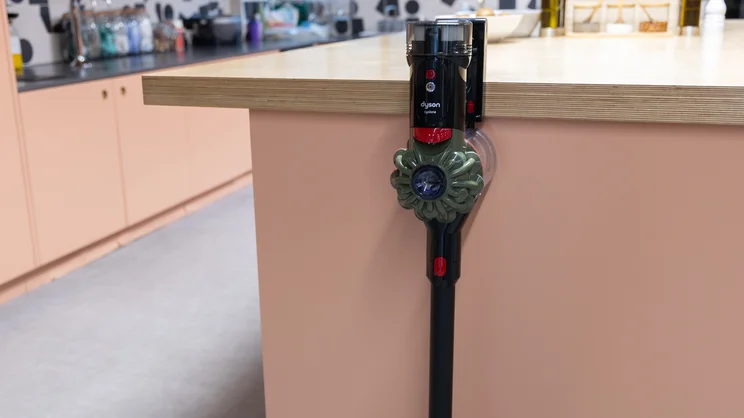
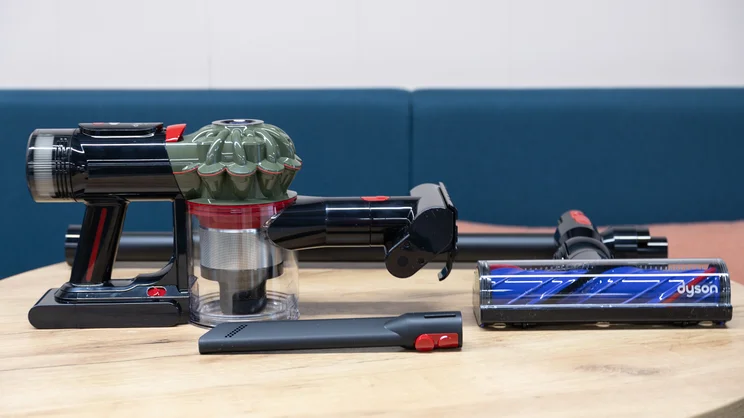
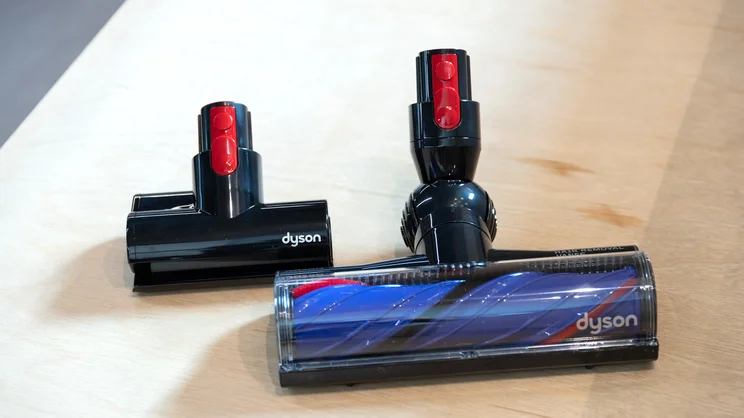
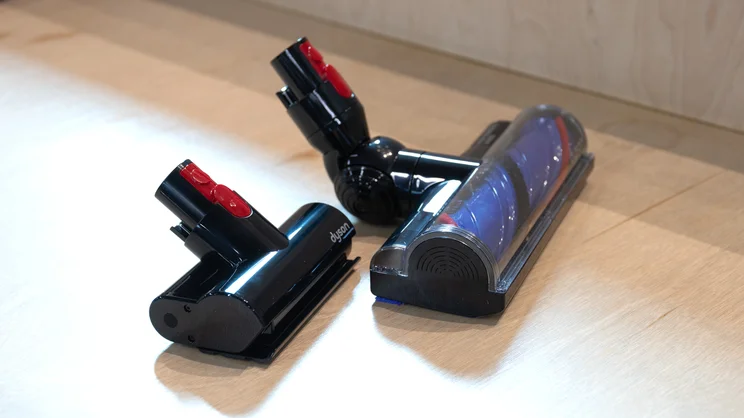
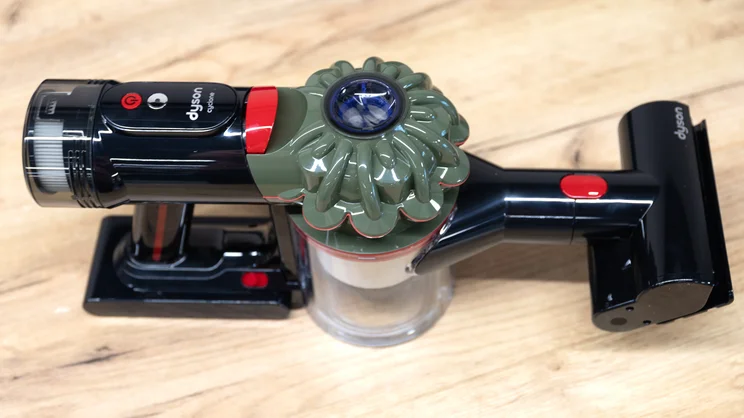
And this is accompanied in the box by a mini motorised head and crevice tool, along with a wall mount and charger. It’s not a lot of accessories but the V8 Cyclone is compatible with existing V8 accessories so if you’re upgrading an existing vacuum, all your old bits and bobs will still work.
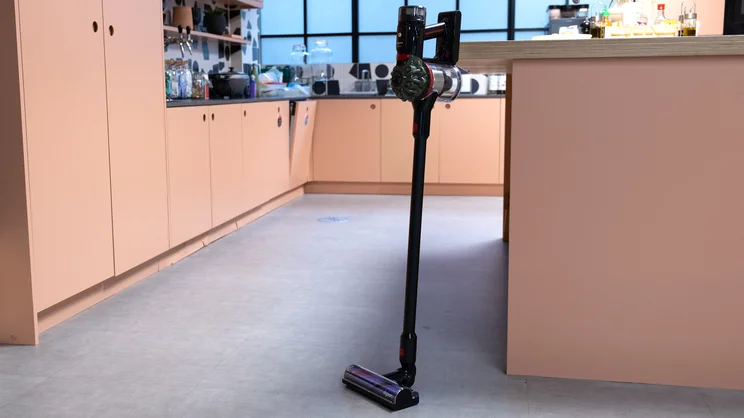
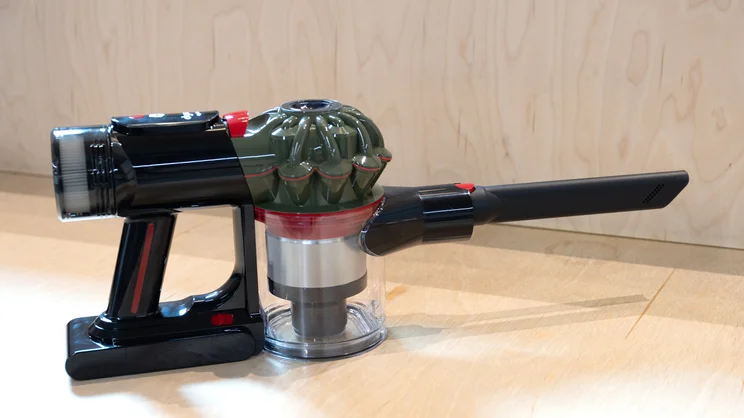
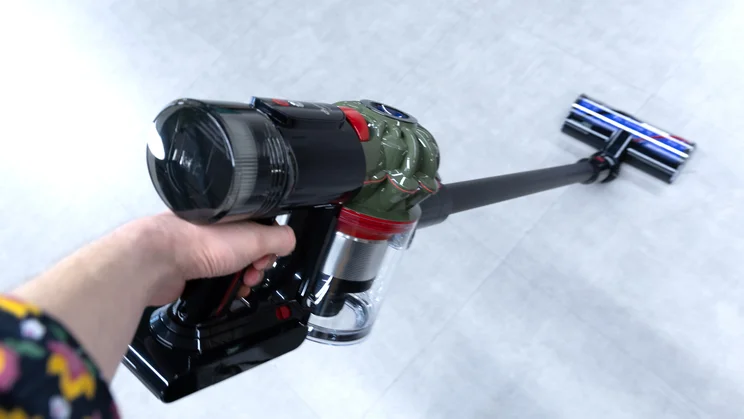
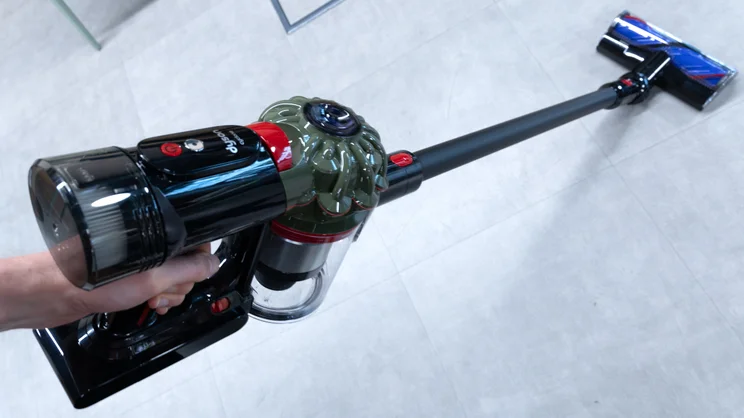
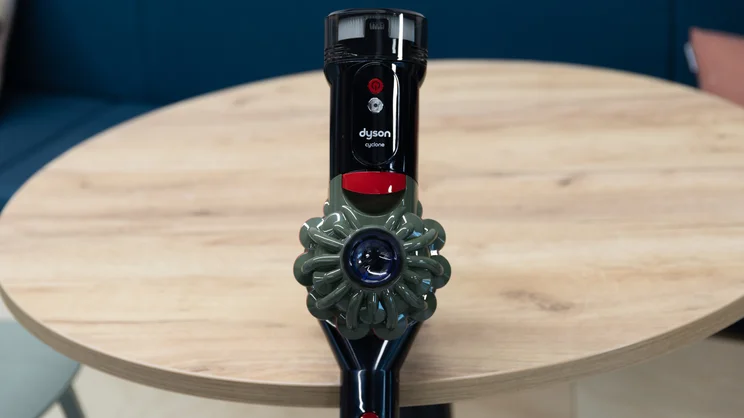
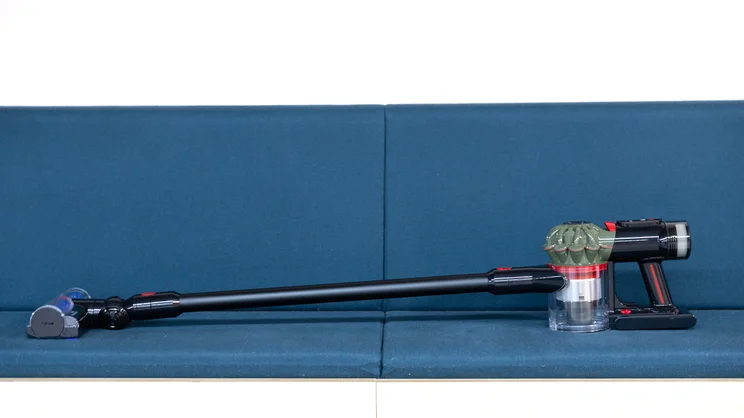
The general design of the Dyson V8 Cyclone remains largely the same as before with the cyclones, motor and dust collection bin positioned at right angles to the wand instead of inline, as they have been on every Dyon cordless since the V10.
It’s not as neat a design, but I think it keeps the unit nicely balanced. However, I am not a fan of the colour choices. The motorised head maintains the same purple and red design seen in the V16 but, for some inexplicable reason, Dyson has ditched the pretty teal touches on the cyclones and instead gone for a rather sludgy olive green. The rest of the motor and body is clad in black and red, which looks fine, but I found the green somewhat jarring. I’m aware, of course, that this is personal taste.
What’s it like to use?
At 2.7kg in weight with the motorised head attached, the Dyson isn’t the lightest vacuum I’ve tested but it does feel really well balanced in the hand and much more so than the top of the range V16.
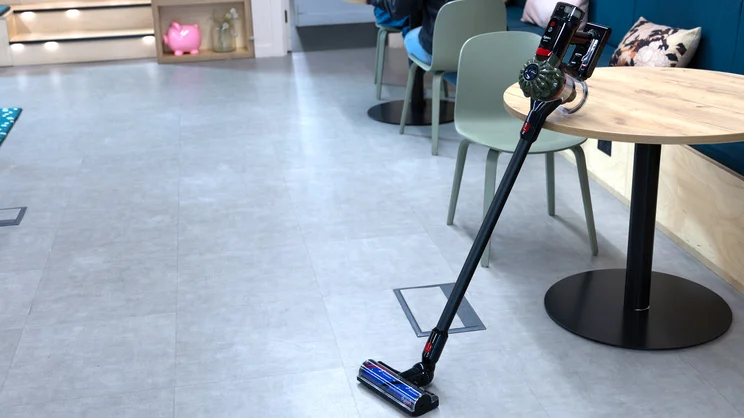
Again, as is common with cordless models, it does feel heavy when you use it as a handheld vacuum, but this is to be expected when you have a large battery attached. Used as a standard vacuum, however, with the wand and motor head attached and resting on the floor, the Dyson felt smooth and easy to manoeuvre around.
The handle could do with a little shaping or padding though and the design of Dysons does mean that there’s not the biggest gap between the handle and the bin. It’s perfectly adequate but, if you have large hands, you might find it a slightly tighter fit.
The V8 Cyclone is clearly well-made, as you’d expect for the price, and all the components slotted together with ease. The main head is just as good on hard floors as it is on hard floors, and the mini motorised head is a godsend for getting pet hair off stairs, carpets and rugs. Both heads have been optimised to prevent hair tangling up in them, but you won’t get any fancier add-ons such as laser lighting to show you dust and debris. The Dyson crevice tool is also well designed for nooks and crannies, and you can use all three with – or without – the extension wand.
I love the addition of a swappable battery with the V8 Cyclone, but one thing that did niggle was the lack of any LCD screen to show remaining battery life. The LED in the mode button will start to blink when the battery is running low, but apart from that I had no idea if my battery was full, half full, or low while cleaning. By the way, the battery takes four hours to charge from empty, but you do now have the option to buy a second battery if needed.
There’s also no Auto mode, where the vacuum will adjust suction and brush roll speed based on floor type and how much dirt needs cleaning. Obviously, Dyson removes some features from cheaper models to justify the higher costs of others, but this was something I missed.
Bin emptying is simple, once you get used to it. Just pull the large red handle towards you, which lifts the top section upwards and opens the bottom flap of the bin. To close it, you click down the top section and then close the flap. It’s a very neat method that ejected everything into the bin without mess.
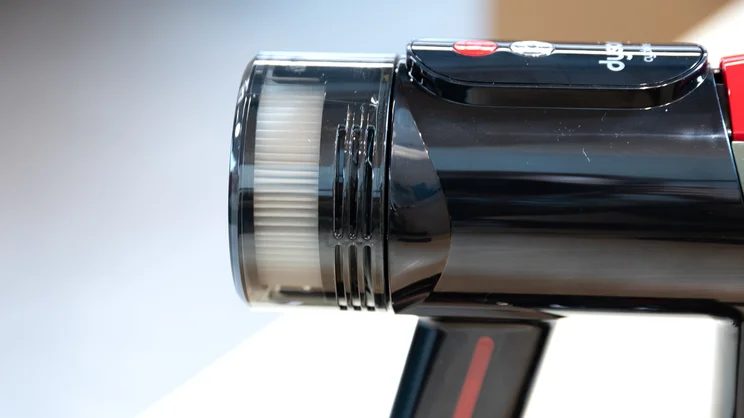
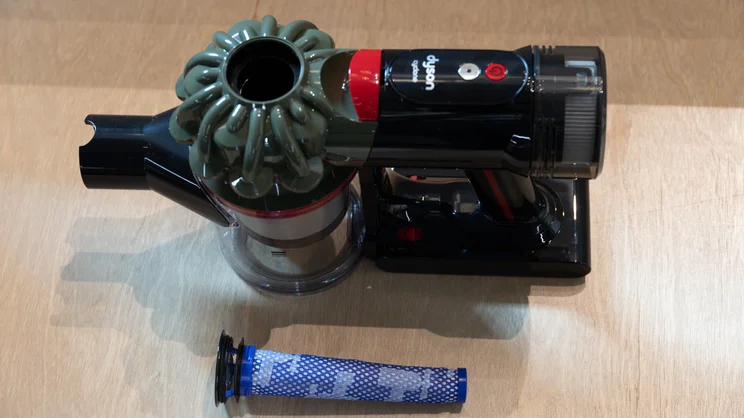
The one other thing to note is that the V8 Cyclone has two filters – a conical filter and the post-motor filter, both of which need cleaning at least once a month by washing under cold water. You do need to make sure that you leave them for 24 hours to fully dry before reinserting, though.
How well does it clean?
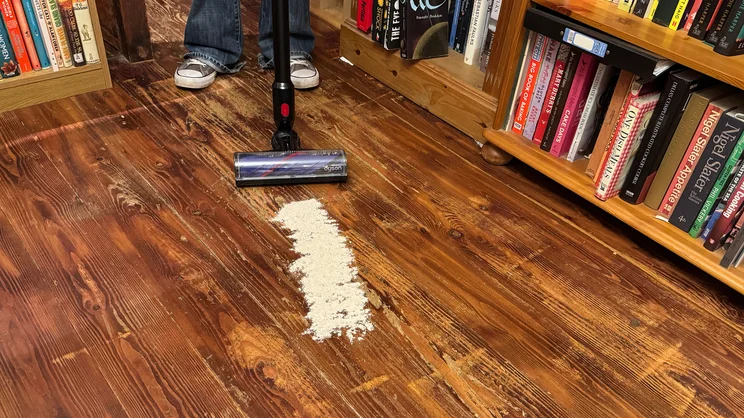
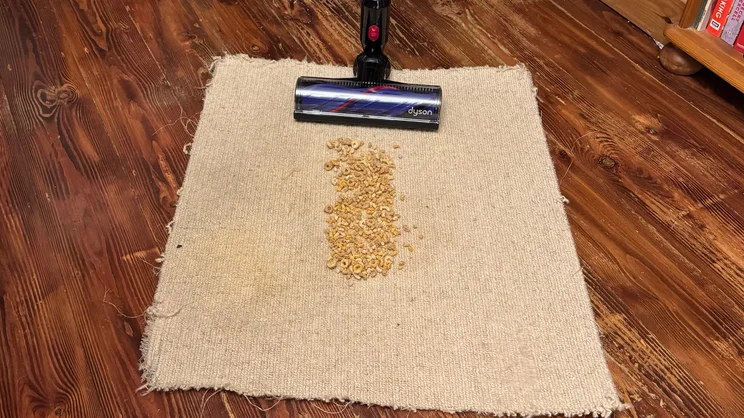
We conduct the same tests for all our vacuum cleaners, running a range of tests to see how well the machine copes with various substances. We test with flour, pet hair and Cheerios on both carpet and hardwood flooring, measuring how much the bin collects from a single pass at maximum power.
These tests are carried out before we use the vacuum around the house to ensure consistency throughout our vacuum cleaner testing.
Dyson vacuums cut out when their airways are blocked, which makes testing suction a little more problematic. However, I was impressed with the V8 Cyclone’s capabilities before this happened. On Max setting, it recorded a reading of 25kPa, dropping to 10kPa in Medium mode and 7kPa in Low mode. Battery life has increased as well, with our timers recording runtimes of 60 minutes and 10 seconds in Low, 39 minutes and 10 seconds in Medium, and 6 minutes 40 seconds in Max modes. These are better results than many of the best Dyson vacuum cleaners on the market, such as the Dyson V12 Detect Slim Absolute, although the top of the range options such as the V16 and V15 Detect Absolute will run for longer.
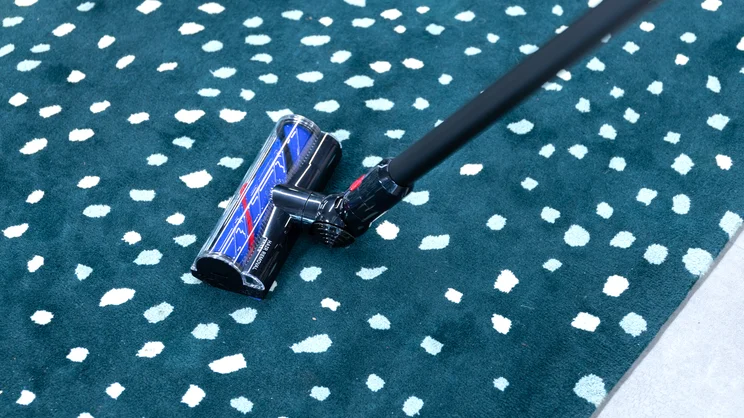
This suction power meant great results when it came to our cleaning tests on carpet. Cheerios are notoriously tricky for motorised heads to pick up efficiently but the V8 Cyclone did a good job, picking up 20g – the same result that I got from my tests with the V16. When it came to the flour test, it far surpassed the V16, picking up 49g out of 50g compared to 40g. And although it wasn’t thrilled, the V8 Cyclone didn’t have the same hissy fit as the V16 did when confronted by flour. Pet hair, on the other hand, was a perfect pick-up, with the full 5g neatly sucked up without any wrapping round the head.
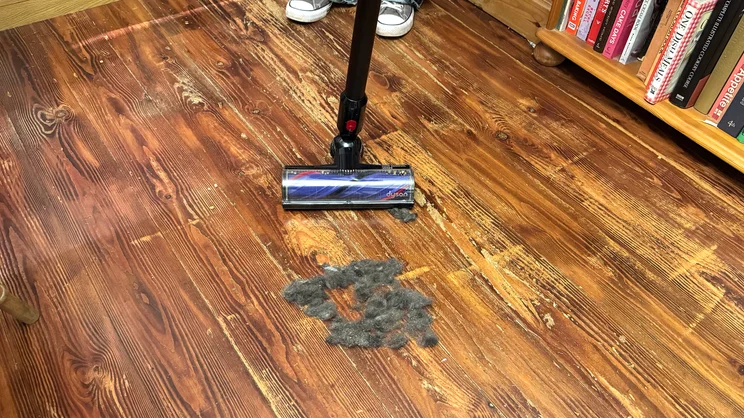
Hard floors presented a bit more of a challenge for the V8, with only flour being sucked up efficiently (47g). The Dyson struggled with both Cheerios and pet hair, picking up 10g and 1g respectively and pushing the debris in front of the head to start with. Admittedly, I was using the vacuum cleaner on its Low mode, but it’s fair to say that the lack of adjustable suction means the motorbar head struggles on hard floors. If you have a lot of hard floors in your home, I’d recommend investing in the Fluffy floorhead that can be bought separately. I should also add that my groomer gave me quite curly dog hair for these tests, and I noted that if I lifted the Dyson slightly above the hair, it was able to suck it up through sheer strength.
In real world testing though, I found that the V8 Cyclone did a pretty good job, even on the aforementioned hard floors, as there were only smaller particles of debris to deal with. Where it excelled, as with all Dysons with anti-hair wrap, was in removing hair (both pet and my own) from deep within carpets – pulling it loose and shooting it straight into the bin without any tangling in the head. I also found it was just a nicer vacuum cleaner to use when compared to its big sibling as it feels more balanced in the hand and less cumbersome to move around, with results that were suitably impressive.
Should you buy the Dyson V8 Cyclone vacuum cleaner?
Having used the V8 Cyclone extensively, I have to say that (whisper it) I’d probably buy this over the V16. It’s not perfect and the lack of any battery indicator is downright irritating. But it’s lovely to use and, as you’d expect from a Dyson, has excellent cleaning capabilities.
It’s a great all-rounder and particularly good at sucking up hair from carpets. And while Dyson is never going to be a budget option, it’s competitively priced for the brand.