
To help us provide you with free impartial advice, we may earn a commission if you buy through links on our site. Learn more
- Large, crisp display
- Strong sound quality
- Attractive design
- Still no Alexa+ in the UK
- UI could do with some work
- Inconsistent touchscreen performance
It would be very easy to write an innuendo-laden intro about the Amazon Echo Show 11, but I’m going to resist the urge. Instead, let me simply say that it’s the latest addition to the retail giant’s extensive selection of smart screens, which range from the petite Echo Show 5 all the way to the wall-mountable Echo Show 21.
Nestled in between those is the Echo Show 8, the fourth-generation of which was revealed alongside the Echo Show 11 in November last year. Like two inseparable siblings, the two share pretty much everything. Both have screens mounted on a speaker pod that supports spatial audio, and each offers the full Amazon Alexa experience. They even share the same processor.
So, spoiler warning, this review isn’t likely to reveal a huge amount if you’re already well versed in the ways of the latest iteration of the Echo Show 8. However, there are a couple of differences between the two aside from the obvious increase in size and price, and I’ve spent the past month with the Echo Show 11 to see if it’s worth the extra outlay.

What do you get for the money?
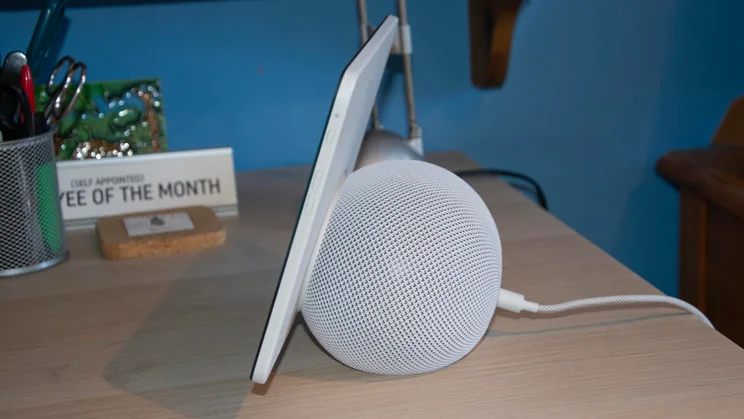
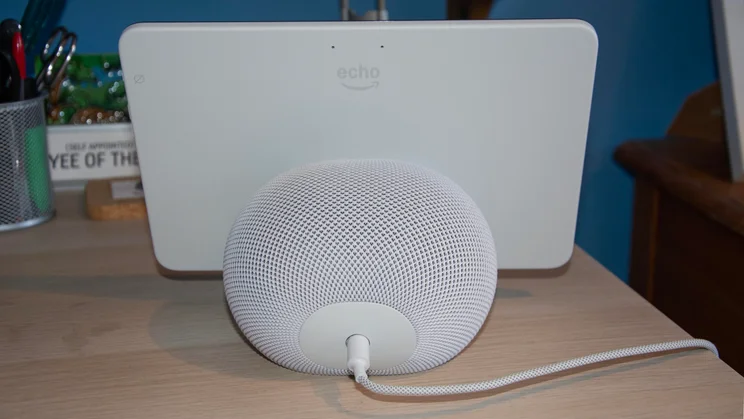
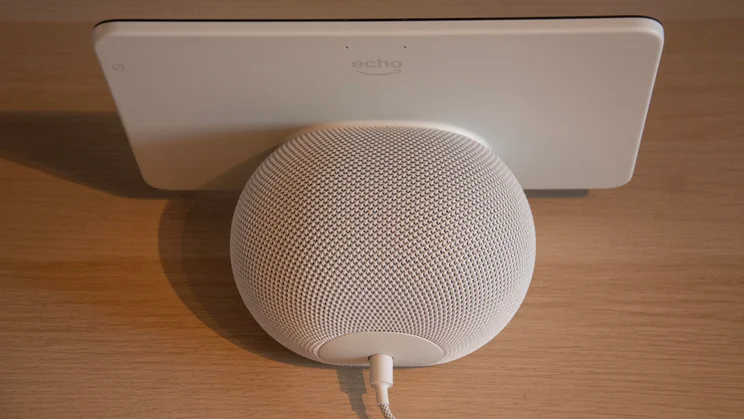
The Echo Show 11 costs £220, compared with the £180 Amazon wants for its smaller sibling. For the extra £40, you’re getting a larger device, though it is only the screen that’s bigger here, with the display measuring 11in across the diagonal, versus the Echo Show 8’s 8.7in panel. The speaker units that the panels are attached to are identical; the cabinet is the same size, and both house dual full-range drivers and a 2.8in woofer, and support spatial audio.
The additional couple of inches of screen real estate aren’t the Echo Show 11’s only advantage: it gets a bump in resolution from HD (1,340 x 800) to FHD (1,920 x 1,200). Although the two products are designed for a very similar purpose, this does skew the Echo Show 11’s target audience to a more entertainment-focused one.
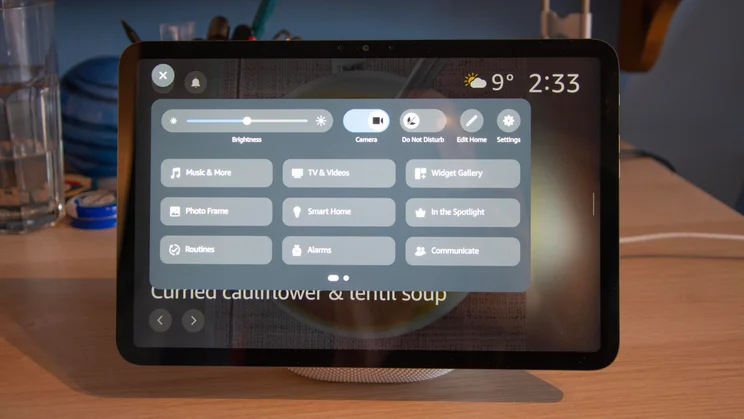
Like other Echo Show products, the Show 11 connects to your Wi-Fi and uses a widget-based interface to provide access to a range of services and platforms. Some of these are baked in, such as Amazon Prime Video and Netflix, while others, like TikTok, Facebook, YouTube and Disney+ need to be accessed via Amazon’s Silk browser. And, of course, you’ve got all of the features one would expect from a fully fleshed-out Alexa device.
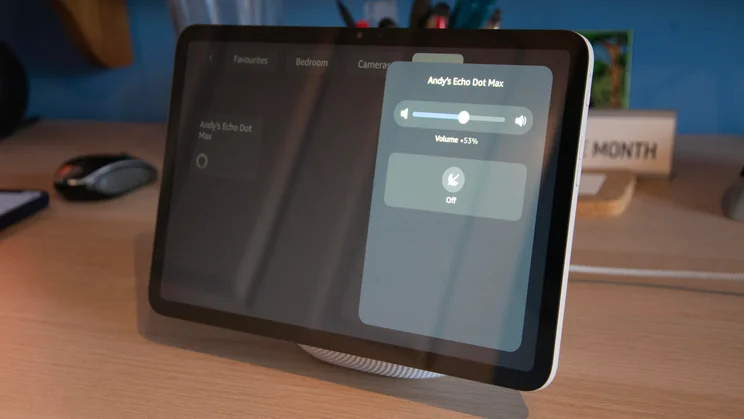
There’s support for voice controls, Bluetooth streaming, a temperature sensor, Photo Frame functionality, and the ability to set alarms and personalised routines, although you’ll need to jump into the Alexa app on your smartphone to do the latter. Additionally, and crucially for many, there’s a smart home hub that allows you to manage Matter and Zigbee-compatible devices. The Echo Show 11 can even be used as a Thread Border Router when required.
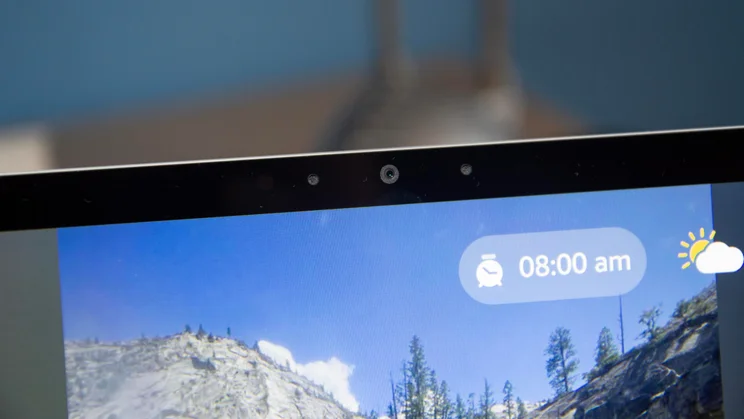
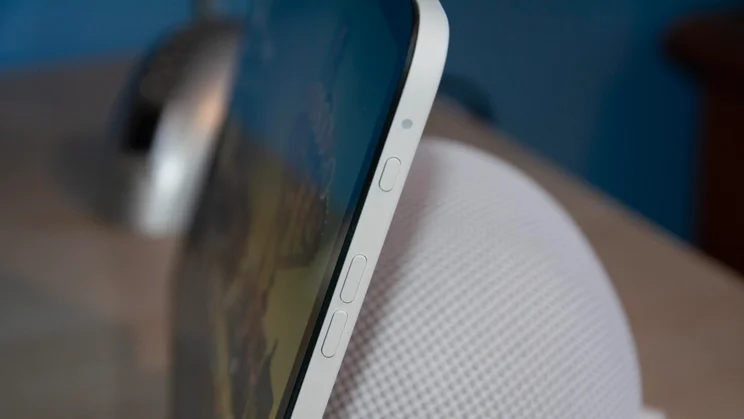
You’ve also got a 13-megapixel camera for video calls, which is capable of auto-framing its subject, but this no longer has a physical privacy shutter. Instead, you manually deactivate the camera and microphone using one of three buttons located on the right edge of the screen.
The obvious elephant in the room is the absence of Amazon Alexa+. Despite the Echo Show 11’s AZ3 Pro chip possessing an AI accelerator to boost the capabilities of Amazon’s next-generation AI assistant, Alexa+ is still not available in the UK. Given that it was introduced in the US in March 2025 and arrived in Canada late last year, surely we Brits won’t have to wait too much longer for it.
What did we like about it?
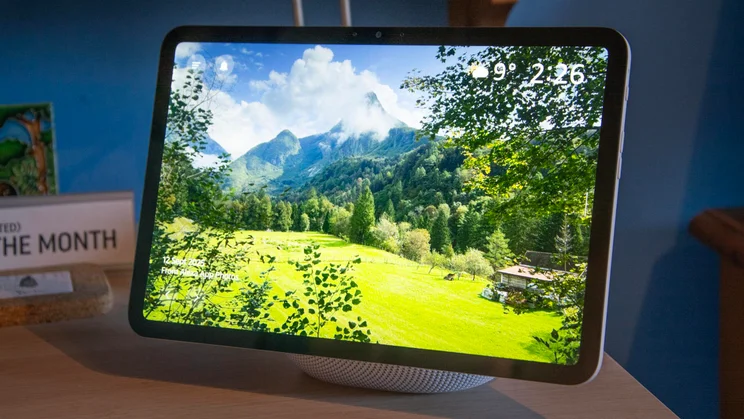
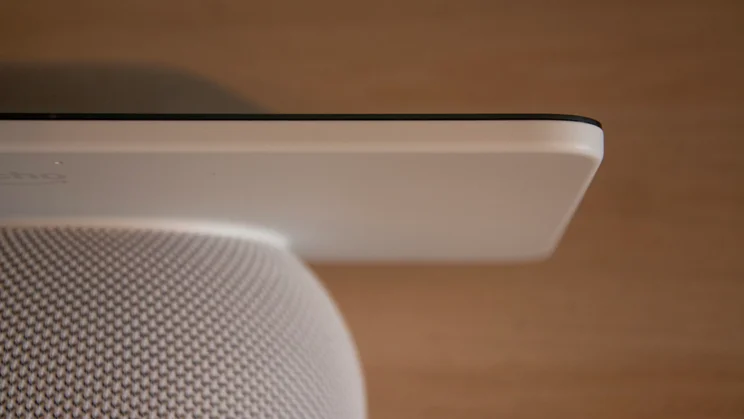
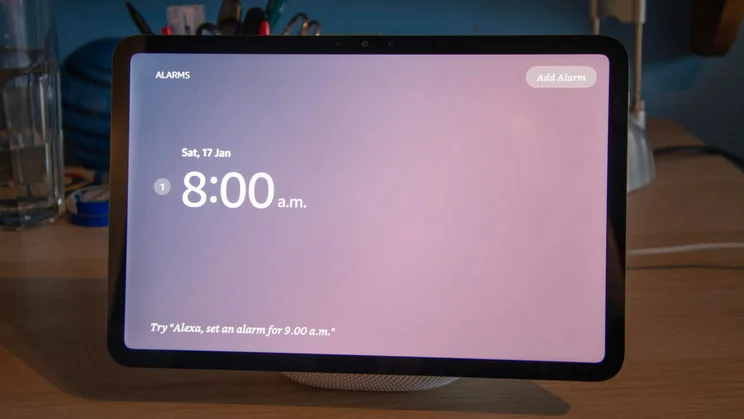
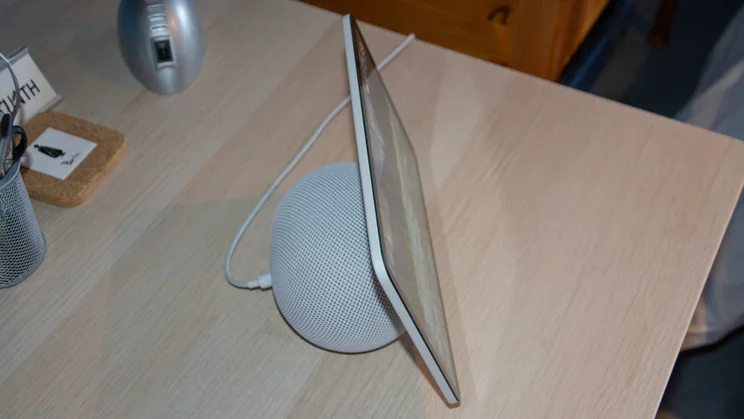
The Echo Show 11 speaks the same design language as the fourth-generation Echo Show 8, and that’s a very good thing. It looks great in both Graphite and the Glacier White I tested, and the display is elevated roughly an inch from the surface the device is placed on, which makes it that little bit easier to engage with than old-gen Echo Shows.
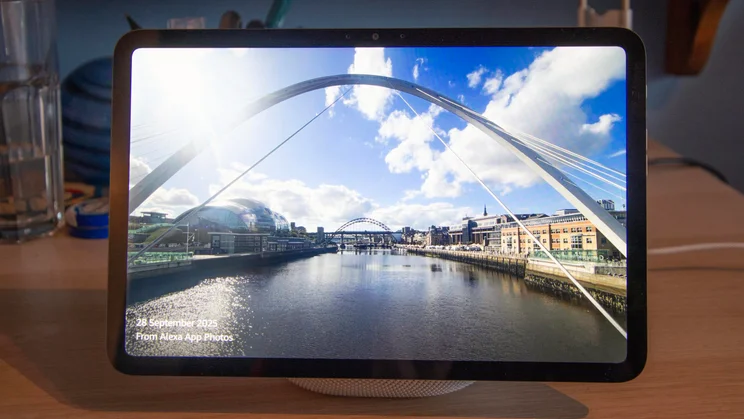
The panel is also extremely thin at under 8mm, and while noticeable, the bezel framing the display is relatively unintrusive. That lends the Show 11 a premium look, which isn’t always the case with Amazon products. Images on it are very crisp, and there’s enough brightness available to ensure TV shows and films are very watchable, even in a well-lit room.
I found the Echo Show 11’s pictures very easy on the eye while watching The Mighty Nein on Prime Video. A bright orange firefly was brilliantly vibrant as it zoomed towards the screen, and despite darker scenes lacking some shadow detail, the extravagant colour palette of the animated adventure was vividly rendered and eye-catching.
Bright whites, like those in the opening scene of Guillermo del Toro’s Frankenstein, didn’t pop as they would on a more capable, HDR display, but there was a decent differentiation between the ice underfoot and clouds above. That level of clarity is probably the most compelling reason to plump for the Echo Show 11 over its smaller stablemate. I had no problems whatsoever with reclining back on my gaming chair and watching films in their entirety, as one would with a tablet or laptop.
There are a couple of settings to customise how things look, although my experience with them was mixed. Adaptive Brightness does what it says on the tin, increasing or decreasing screen brightness based on the ambient light in your room to successfully deliver appropriate luminance at all times. However, engaging Adaptive Colour, which adjusts colours in an attempt to blend into your surroundings, resulted in some weird tonal shifts, so I turned it off.
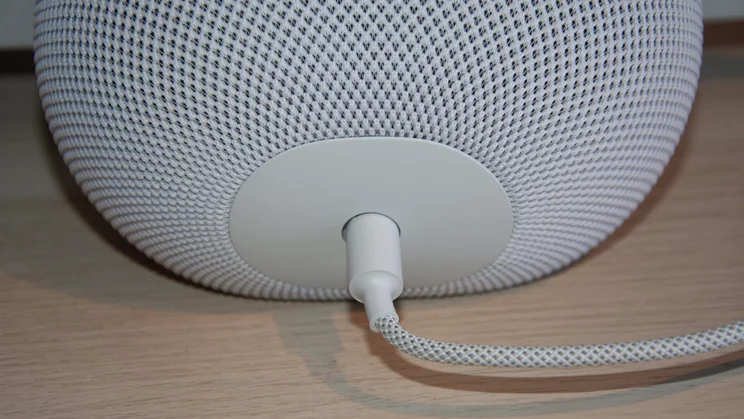
The redesigned speaker setup is a success, too, both in terms of aesthetic appeal and sonic output. It’s a much neater-looking solution than the speaker found on the rear of the third-gen Echo Show 8, and I was impressed with it.
Dialogue was always intelligible while watching Adolescence on Netflix, and the Echo Show 11 demonstrated it can deliver scale and visceral impact during films with spatial audio soundtracks like the historical drama, The King. During a large-scale battle towards the end of the film, the low-end response proved deep enough to give weight to hard-hitting blows, horses’ stampeding hooves, and ominous rumbles, and the Show 11 comfortably filled my bedroom space with the volume set to around 75%.
I don’t see the Show 11 as a device that families are going to crowd around to watch a full-length film, but there’s no doubt that it’s an option if you should so wish. It’s also serviceable as a Bluetooth speaker. Streaming Rem Siman’s groovy dancefloor numbers, Power and Whiplash, from Spotify on my phone revealed the speaker’s punchy bass response and aptitude at balancing frequencies across the spectrum.
On the comms front, I found that the dual-microphone array in the Echo Show 11 did a good job picking up my voice when on calls and had no problem registering commands, even with music blaring out at full blast.
The built-in camera was equally effective. On video calls, the auto-framing meant I remained well-centred, and it didn’t cause the camera to lose focus or sharpness. People I shared calls with weren’t distracted by any undue visual noise, and I was happy enough with the level of detail when viewing the goings on in my empty room via the Live View option in the Alexa app on my iPhone.
What could be improved?
I’m not overly fond of the Echo Show 11’s interface, nor the way navigating it feels if you’re not using Alexa voice commands. I imagine those will be most people’s bread and butter, but there will be times when you’ll want to interact with the touchscreen, and I found these frustrating.
There were several occasions when I’d enter a particular menu like TV & Videos and find myself with no way to navigate back to the main menu without swiping down on the screen to close the menu I was on and selecting the main menu manually.
It’s definitely not the most intuitive touchscreen experience, and it’s not helped by the fact that the screen doesn’t always feel especially responsive. While single taps worked fine, some of my swipes and scrolls went unregistered, meaning I tried to avoid using my fingertips to get around the device where possible.
As Chris Hall mentioned in his review of the new Echo Show 8, the UI could also do with a bit of work. You can customise which content categories are shown on your home screen, but even once you’ve done so, the Show 11 undoubtedly feels designed for voice controls first and foremost.
Which highlights one of the glaringly obvious (current) drawbacks of the Echo Show: the absence of Alexa+. I imagine the Show experience will be rather different when Amazon’s AI-enhanced smart assistant finally appears in the UK, but quite how much it helps or hinders things remains to be seen.
While the Echo Show 11 does support the native running of some popular apps, others need to be accessed via Amazon’s Silk browser. This led to a sub-optimal, rather messy-looking experience on YouTube, which is a disappointment. It was a similar experience on Facebook, leading me to use my phone instead when checking out friend updates. Silk isn’t unworkable, but it can feel a little sluggish and doesn’t deliver as smooth an experience as I’d like.
Finally, while I enjoyed the Echo Show 11’s sound overall, it gets a bit ropey at high volume. It was too sharp for my taste, and I got a sense that the relatively compact housing was overextending itself, resulting in some distortion creeping in. However, there’s plenty of volume to spare, so there shouldn’t be many situations in which you’ll need to push it to its limits. And, at lower volumes, it’s a very solid performer.
Should you buy the Amazon Echo Show 11?
Amazon deserves a lot of credit for nailing the hardware fundamentals of the Echo Show 11. Its design is a big step up from previous generations of the Show series, the FHD 11in display is large, sharp and bright enough to do blockbuster films justice, and audio is smartly tuned and engaging.
The Show 11 doesn’t feel as well-rounded on the software side, however. If you’re not relying on Alexa, it will get you where you want to eventually, but the journey can feel like a struggle. And, in some cases, where you end up isn’t quite as pleasant an experience as you’d hoped for. Only time and testing will tell whether Alexa+ proves to be the tool that pulls everything together into a more cohesive, and potentially award-winning package.


