
To help us provide you with free impartial advice, we may earn a commission if you buy through links on our site. Learn more

- Excellent audio quality
- Comfortable fit and premium design
- Great battery life
- Noise reduction isn’t game-changing
- Private mode has its limitations
- Disappointing mic quality
Shokz has been the market leader for open-ear headphones since I started testing audio products for Expert Reviews in 2019, fighting off increasing competition from Bose, JBL, Huawei, JLab, Honor and more.
Its OpenRun Pro series dominates in the bone-conduction headphones department, the OpenDots One are my favourite clip-on earbuds, and we crowned the OpenFit 2 and OpenFit 2 Plus the best in their air-conduction class last summer. The number of brands now operating in the space reflects the rising popularity of open-ear designs. However, they remain more niche than wireless earbuds with silicone tips, as most have no way to reduce the impact of external noise.
Apple changed that narrative with the AirPods 4 ANC, and Shokz is now attempting to strike a balance between awareness and focus with the Shokz OpenFit Pro. Its new flagship headphones have a “Noise Reduction” mode – a first for the brand – and make other welcome improvements to the five-star OpenFit 2 formula. The Pro represent a watershed moment for Shokz, but I’m not ready to ditch my traditional wireless earbuds just yet.
What do you get for the money?
The OpenFit Pro will set you back £219, making them Shokz’s priciest release to date. The entry-level OpenFit 2 are available for £114, down from £169, while the more advanced OpenFit 2 Plus, which add wireless charging and Dolby Audio support to the mix, have an RRP of £179, but currently cost £144.
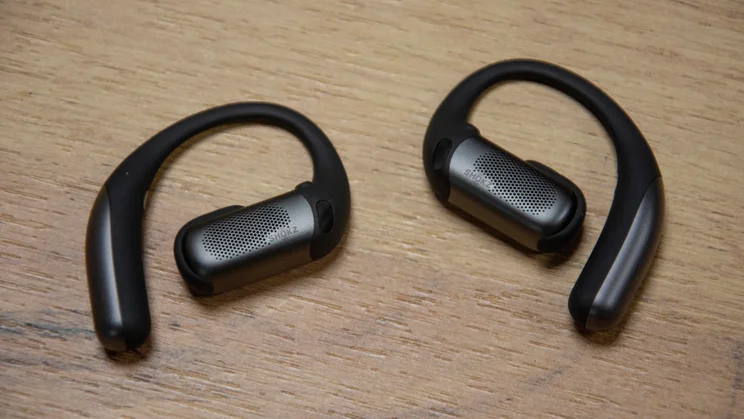
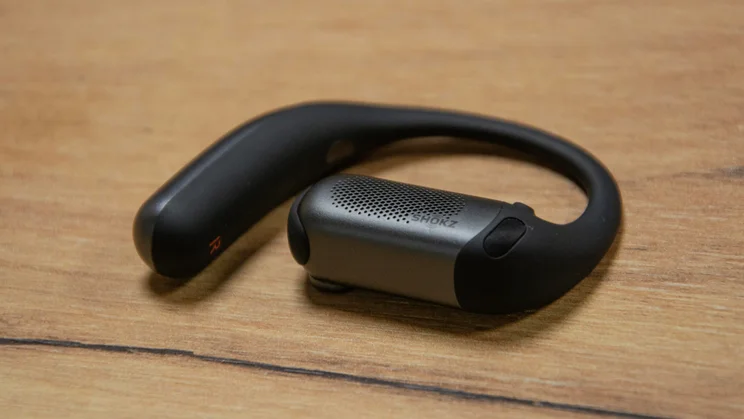
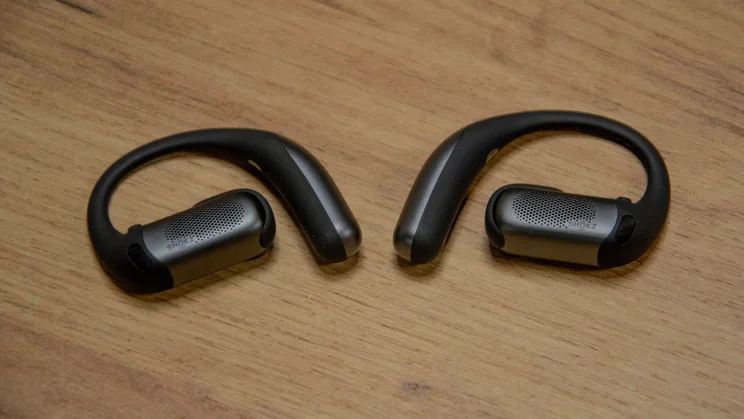
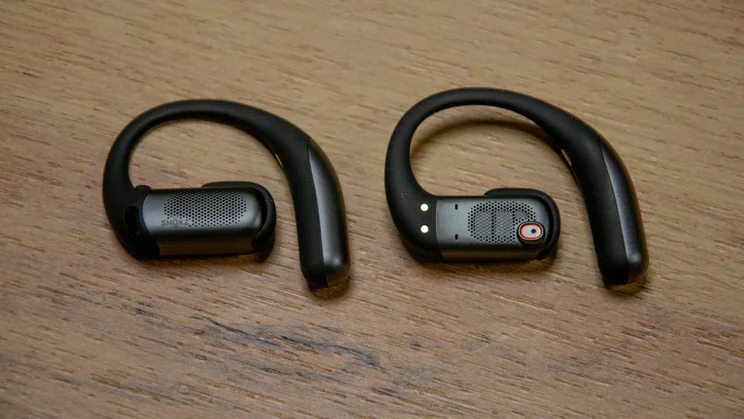
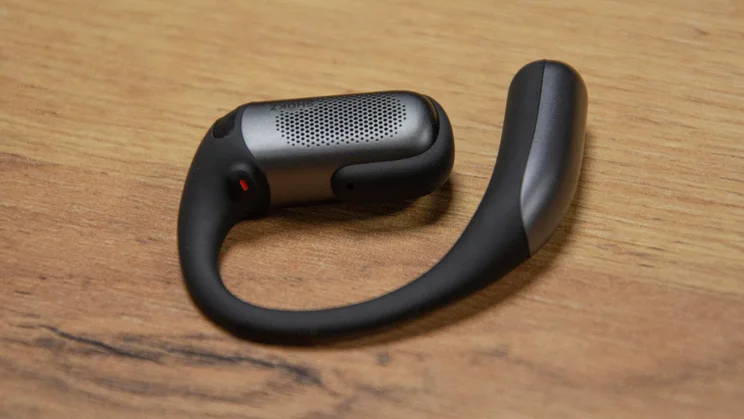
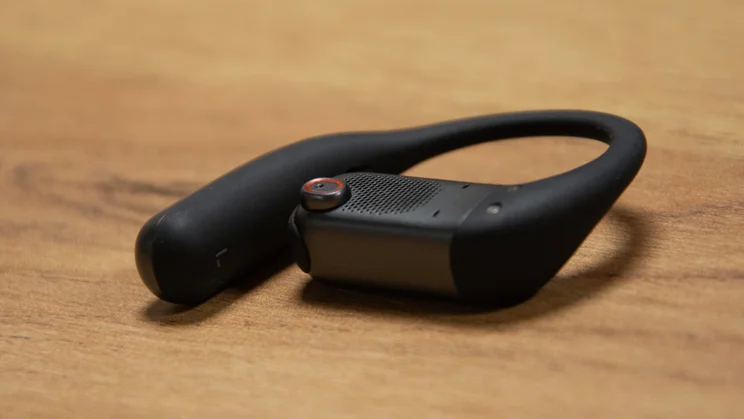
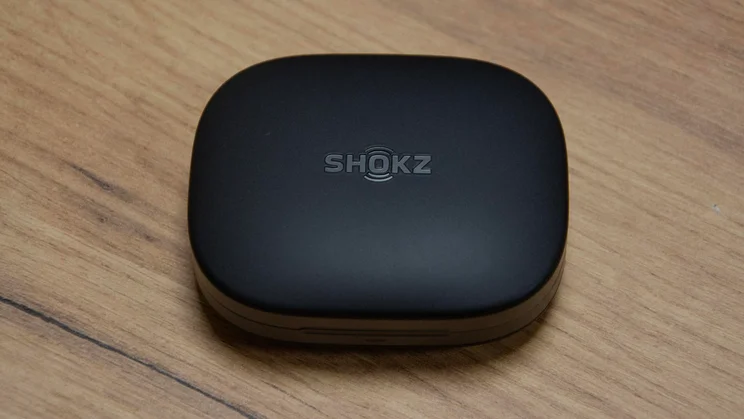
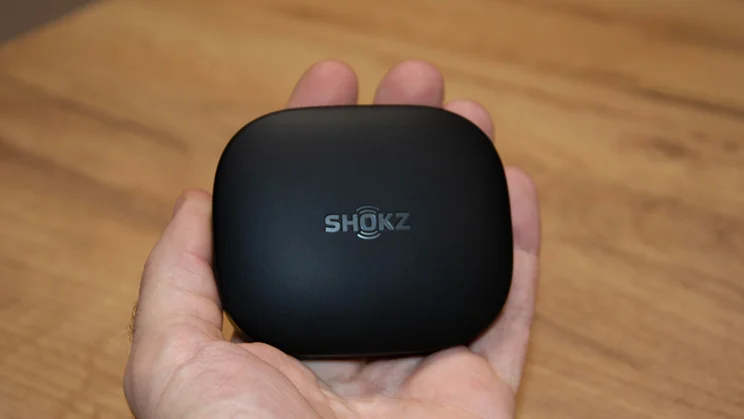
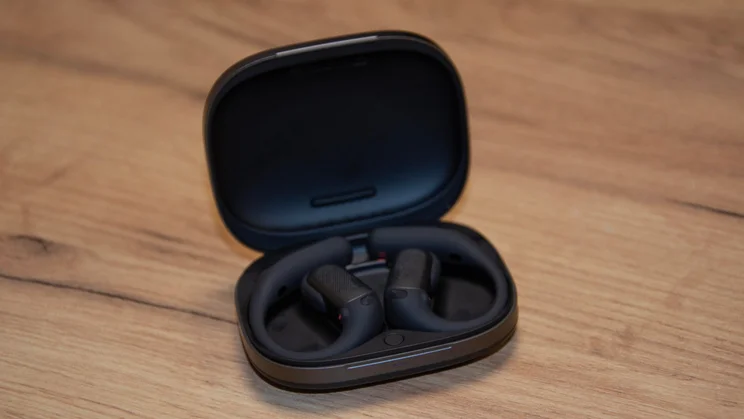
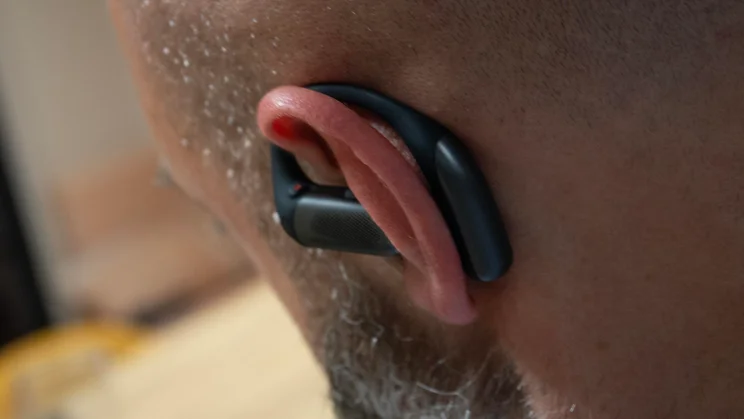
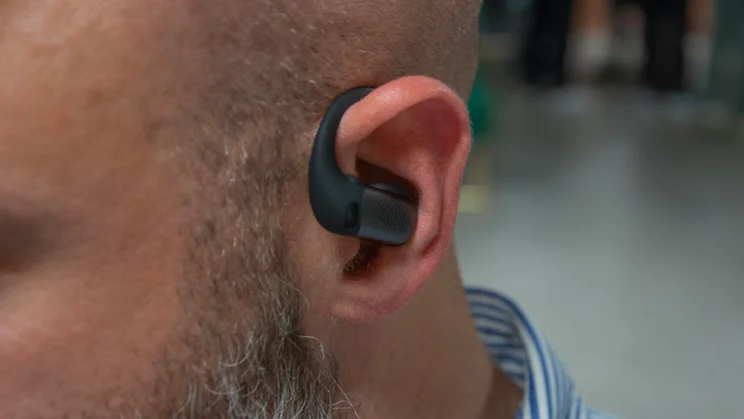
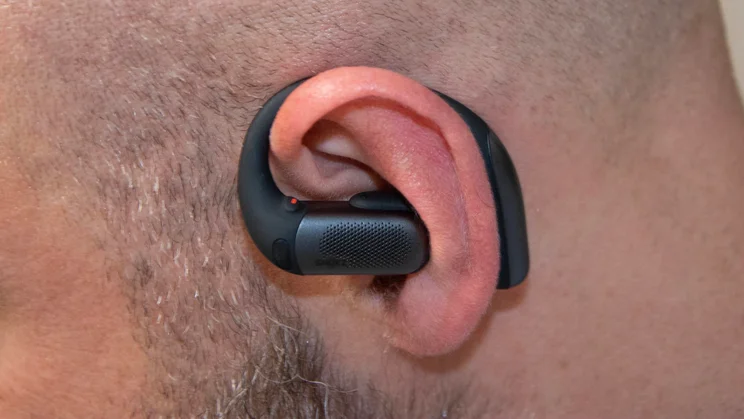
The extra outlay for the Pro model gets you several upgrades. For starters, it gets you a more premium design that retains the IP55 rating for dust and water resistance of its predecessors. The contrast between the gunmetal grey sections of the headphones and the black soft silicone-finished, nickel-titanium earhooks gives them a classier air, though they are about 30% heavier as a result, at 12.3g per earbud.
It also gets you two extra microphones – there are three AI-powered noise-cancelling mics in each of the earbuds – support for Bluetooth 6.1, and battery life of up to 12 hours per charge and 50 hours including the case if you’re not using Noise Reduction. That’s only an extra hour per charge compared with the OpenFit 2 Plus, but not to be sniffed at.
Further improvements see the quick-charging capabilities enhanced to provide four hours of use from ten minutes with the case plugged into the mains (up from two hours), and wear detection added via sensors in the earhooks. The absence of automatic pausing via wear detection was one of my colleague Ben Johnston’s few complaints about the OpenFit 2 Plus, so it’s great to see it here.
The headline changes, however, come with the addition of the aforementioned Noise Reduction feature, new “SuperBoost” sound, which supports Dolby Atmos playback and head tracking, and upgraded Shokz “DirectPitch” technology, which, along with Private Mode, seeks to reduce sound leakage.
All three can be controlled via the Shokz companion app. There, you’ll also find the battery level displayed for the earbuds and the charging case, a range of EQ presets, including a personalisable ten-band graphic equaliser, toggles for multipoint pairing, smart wear detection and latency optimisation, a Find My Earbuds pinger, and control customisation.
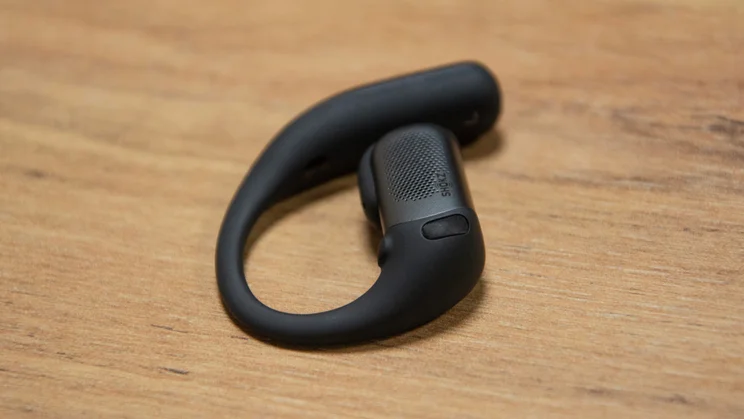
Those controls are handled via depressible physical buttons on the upper section of the buds, just below where they loop over your ear. They work well enough, but aren’t without their frustrations.
What did we like about them?
The quality of the audio that the OpenFit Pro produce is top-notch. Their synchronised dual-diaphragm driver design balances high and low frequencies extremely well, and they delivered a surprisingly satisfying level of bass on Artificial Intelligence’s DnB roller Desperado. They proved similarly capable when reproducing the punchy bassline on Ugo Banchi’s deep house track, Deep Control.
When handling tracks with a greater focus on mid-range and treble frequencies, such as Florence + The Machine’s Ship To Wreck, the Pro revealed an admirable level of detail and sparkle in vocals and instruments, while remaining easily audible at around 30% volume.
The OpenFit Pro are optimised for Dolby Atmos, which is an upgrade on the Dolby Audio support available on the OpenFit 2 Plus. Head Tracking comes as part of the Atmos experience, and I was impressed by how the combination worked when watching Blade Runner 2049 on Netflix. I got a convincing sense of the lateral and vertical movements of aircraft, explosions had scale and impact, and the soundstage was as three-dimensional as you could reasonably expect.
I typically prefer spatial audio that remains fixed in position regardless of your movements, but the Pro’s head tracking worked flawlessly, and engaging it was worthwhile when I was watching something on my phone but also using my laptop. Sound tracked smoothly and accurately as I shifted my focus, so if you are of the head tracking persuasion, you’ll enjoy what the OpenFit Pro offer in this department.
The above observations were made while using the Pro in a quiet bedroom; their sonic characteristics don’t change if you’re outdoors or in a noisy environment, but you’ll need to push the volume up higher to hear them at their best.
Fortunately, the Pro have enough power at their disposal to be clearly audible in most environments, and there will be times when you need to push them to their limits, despite the new and well-implemented noise-reduction technology. Noise reduction operates on the same principle as active noise cancellation, but Shokz is avoiding using that term, as the effect is less potent due to the open-ear design.
The three mics in each earbud pick up noise within and external to the ear, and Shokz’s “ear-adaptive” algorithm creates an anti-signal that dampens the impact of the outside world. It works surprisingly well, given your ear canals are free of any passive seal. However, the attenuation can’t match noise-cancelling earbuds with silicone tips, even far cheaper models such as the Cambridge Audio A100.
That said, the Shokz OpenFit Pro do more naturally convey what’s going on in the world around you thanks to their open-ear design. With music playing at between 30% and 40% volume, I could hear every word of a conversation happening a few metres away from me and was able to join and engage in that discussion while simultaneously listening to my music. I tend to avoid such situations as I find them sensorily overwhelming, but if you’re someone who likes to listen and chat simultaneously, you can do so without issue while using the OpenFit Pro.
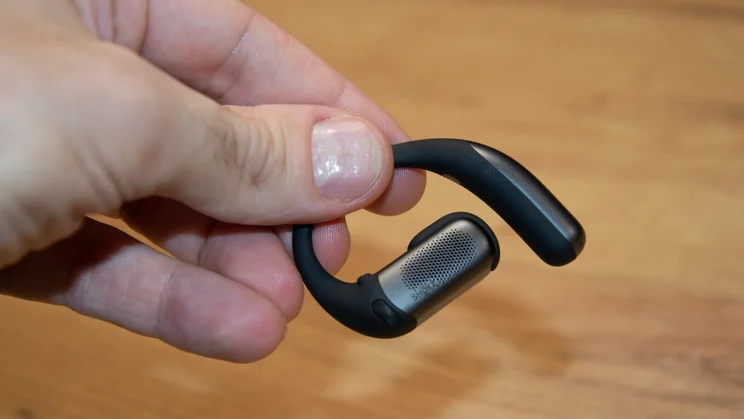
Comfort, customisation and battery life are the other main strengths of the OpenFit Pro. They may be heavier than their predecessors, but the weighting of the earpieces and earhooks is well judged in balance and stability terms, and the Pro are unobtrusive as a result. I didn’t find myself forgetting I had them on, as I’ve done with clip-on earbuds like the Huawei FreeClip and Shokz OpenDots One, but I was able to happily wear them for hours on end.
The stated battery life of up to 12 hours is longer than rivals such as the JBL Soundgear Sense and Huawei FreeArc (both 7 hours) and the JLab Epic Open Sport (6 hours), and the total battery life of 50 hours, including the case, blows those options out of the water. Those figures are cut in half if you’ve got noise reduction engaged, but assuming you’re using it relatively sparingly, the OpenFit Pro will outlast most, if not all, of their rivals.
On the customisation front, five EQ presets cover the key bases, with Standard being the default and most neutrally balanced. Vocal pushes the mid-range to the fore, while Bass Boost and Treble Boost are self-explanatory. Most useful to me was the Private mode, which dials back high-frequency sounds to reduce how loudly these are leaked and it fast became my EQ of choice on public transport.
What could be improved?
Let’s start with Private mode. It’s great up to a point – and you’ll breach that as soon a you’re forced to push the volume right up to hear your music over an unruly level of external noise. Once the volume was above 75% in those circumstances, I could feel the glare of others on me as they shared in the delights of my Your Top Songs 2025 playlist on Spotify.
And in a home office environment, I didn’t need to raise the volume much above 40% before what I was listening to became audible to the person I was in the room with. Moreover, after increasing the volume to 60%, it fast became a pretty major distraction. So the TL;DR for Private mode is to temper your expectations: things will only remain private if you’re listening quietly.
Expectations also need to be tempered where the new noise reduction mode is concerned. Despite having a notable impact on dampening external sound, it can’t completely compensate for the fact that an open-ear design lets in so much ambient noise.
As such, I still found myself disrupted to a frustrating degree when Christmas shopping in town and while on a crowded train carriage full of very merry passengers. Unless I maxed out the volume, which brings with it the very real dangers of hearing damage and verbal abuse from those who don’t want to hear my nostalgic mix of pop, hip hop, EDM and indie blaring out.
The above compromises are ones you’d expect to make with open-ear headphones, and certainly not dealbreakers. But my biggest frustration was the disappointing quality of the OpenFit Pro’s microphones. On several occasions, my voice note recordings were unintelligible, and phone calls in busy environments proved fruitless. Voice pick-up was erratic and patchy, while the earbuds failed to reduce background noise to a level where it didn’t interfere with the clarity of what I was saying.
Should you buy the Shokz OpenFit Pro?
If you want the best-sounding, most fully-featured, longest-lasting open-ear headphones, and extras like noise reduction and Dolby Atmos with Head Tracking matter to you, then the Shokz OpenFit Pro are the headphones to buy.
But the OpenFit 2 Plus are the better-value purchase for most people, especially when they’re discounted to under £150. Yes, they don’t sound as crisp or forceful, and you’re missing out on more premium design and noise reduction, but I’m not convinced any of these missing features are essential to the open-ear experience.


