To help us provide you with free impartial advice, we may earn a commission if you buy through links on our site. Learn more
















- Class-leading active noise cancellation
- Superb sound quality
- Stuffed with clever features
- A little bulbous in the ear
- Eartips aren’t the most comfortable
Sony’s pedigree as a manufacturer of premium noise-cancelling headphones is unquestioned, but the last iteration of its flagship wireless earbuds, the WF-1000XM5, didn’t blow us away as previous generations did. That’s something the Japanese audio giant is hoping to change with the latest edition: the Sony WF-1000XM6.
To be honest, Sony didn’t need to change all that much, because the WF-1000XM5 were great to start with. But with the WF-1000XM6 it has gone to town, leaving no headphone stone unturned in pursuit of excellence, upgrading the sound quality, the noise cancelling, the call quality and the battery life. Largely, it has succeeded in making the XM6 better, but not without making a couple of missteps along the way, too.
What you need to know
The Sony WF-1000XM6 sit at the top of the company’s true wireless range and are the successor to the WF-1000XM5. And as the in-ear counterpart to the phenomenal Sony WH-1000XM6, they have an awful lot to live up to.
Fortunately, a host of hardware improvements give them every chance to do so, and the big headline here is that the WF-1000XM6’s noise-cancelling capabilities have been given a major upgrade. The headphones not only have more microphones – 8 vs 6 in the XM5 – but they also have an upgraded AI chip inside. The QN2e has been replaced by the QN3e, which is better equipped to process the signals that these microphones generate.
Sony says the result is 25% better noise cancellation and improved call quality, too. The new hardware improves background noise reduction and wind noise reduction, and enables more natural ambient awareness pass-through.
As with the WH-1000XM6 over-ear headphones, Sony has enlisted the help of a team of renowned sound engineers to help tune and improve the sound quality. And it has introduced a new ventilation structure to help reduce microphonics – the phenomenon where your own breathing/chewing becomes amplified when wearing the headphones.
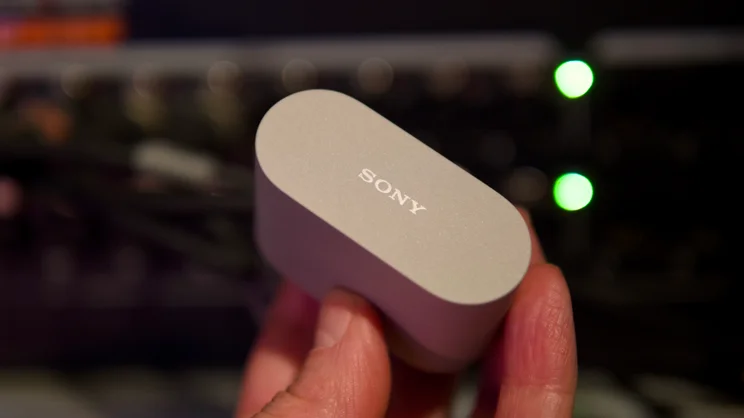
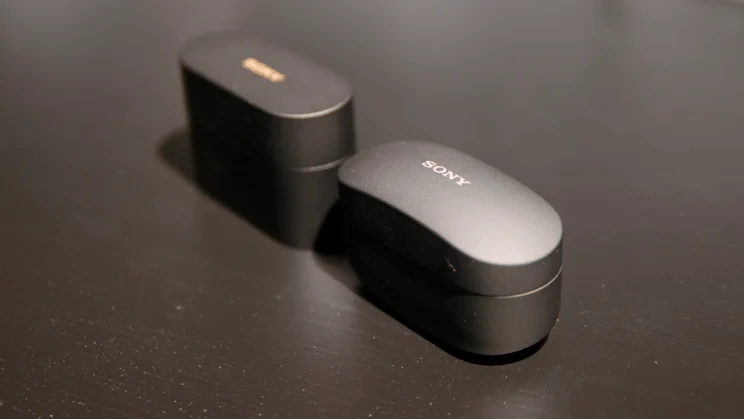
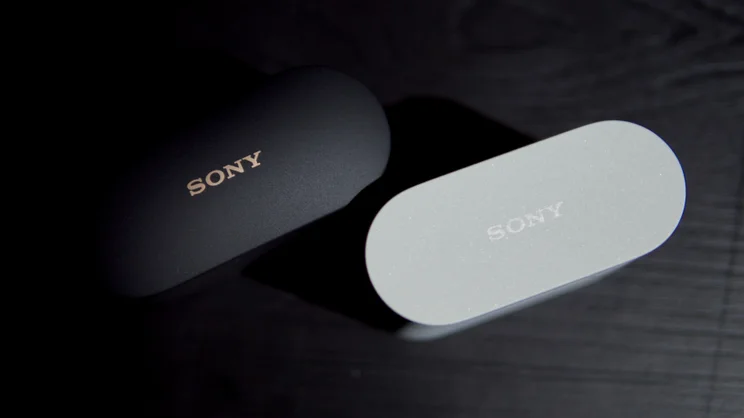
Finally, there’s a new angular look to the charging case, and the earphones themselves have a rounder, more bulbous shape than before. It’s a fairly major overhaul, then – at least in so much as you can overhaul a pair of true wireless earbuds. In fact, the only area that Sony hasn’t upgraded the headphones in is the selection of Bluetooth codecs the headphones support. Although the WF-1000XM6 are hi-res audio certified, they only support the AAC, SBC and LDAC codecs, with no support for any of the AptX derivatives.
Price and competition
Another thing that hasn’t changed dramatically is the price. Just like their predecessors, the WF-1000XM6 will cost £250 at launch, which is welcome news and exactly what we’d expect to be paying for a pair of headphones of this type.
At this price, Sony’s flagship buds are up against some stiff opposition, though. The standard bearers here are the Technics EAH-AZ100, Bose QuietComfort Ultra (2nd Gen) and the Apple AirPods Pro 3, each of which delivers across the board when it comes to sound quality, comfort and noise cancellation.
The Apple earbuds even come with heart rate monitors built into them so you can track your pulse accurately while working out, and are my personal favourites. I’m not a huge fan of the way the stems protrude from your ears, but at £219, they’re cheaper than both the new Sony headphones and the Bose and are a bit of a bargain.
Having said that, if you own an Android phone, you won’t be able to make the most of all their features, making the other two pairs of earbuds more appealing options. The Technics won Wireless Earbuds of the Year at our Product of the Year Awards thanks to their exceptional all-round offering, but Bose’s flagship buds deliver unmatched ANC.
Design and comfort
I’ll get this out of the way first: I am not a fan of the way Sony has redesigned the WF-1000XM6. The new rounded design might have a body that’s 11% narrower than the XM5, but they’re considerably more bulbous, and they stick out of my ears more.
There are a couple of positives. I do like the matte finish. It’s nice and grippy and means that the earphones are less likely to slip out of your grasp as you prise the XM6 from your ears. And that more rounded shape, coupled with a small ledge carved into the base of each earbud’s housing, means they’re easier to pull from the case without dropping them.
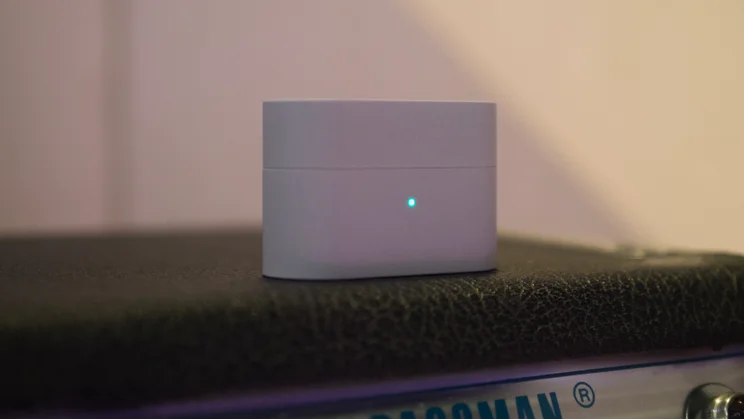
The charging case is a bit marmite, too. Again, that matte finish is more practical than the slippy satin plastic on the XM5’s charging case. But it’s bigger overall, and the sharper edges can dig into your leg if you have it jammed tight in your jeans pocket.
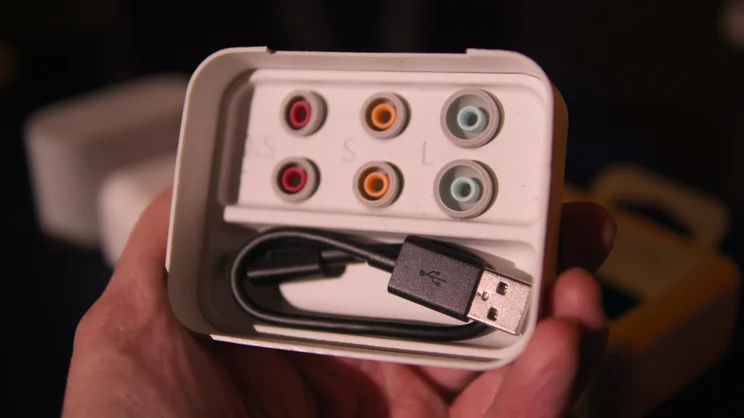
And I wasn’t too keen on the overall fit of the foam eartips provided. They’re quite squared off at the ends and feel quite stiff; they don’t compress with the same spring as you might expect of a Comply style tip. As a result, they don’t feel as comfortable in the ear as the AirPods Pro 3 or the Bose QuietComfort Ultra (2nd gen). Not to my ears at least.
Fortunately, the headphones are still IPX4 rated for water resistance, so you don’t need to worry about wearing them in the rain – an important consideration for us in the UK. And you do now get one extra pair of eartips in the box to ensure a snug fit.
Features and controls
Still, one thing you can rely on Sony to do is provide an absolute hatful of features to play around with. And, perhaps understanding that the firm ear tips can be tricky to get a firm seal with, the first upgrade here is an improved fit and seal check.
You’re encouraged to run through this process when you set up the WF-1000XM6 for the first time, and it involves trying each set of eartips in turn, the app then playing some short audio tones and testing leakage using the earphones’ internal microphones, and delivering a fit score.
I started with the medium tips, which felt a touch loose at first, but the app assured me that the fit was fine. Moving to the small size, I was able to get a thumbs up for the right ear, but not the left, while the large created a decent seal, but I didn’t need the app to tell me that they were too big for my ears.
This is going to be useful for those who don’t really understand why their music sounds awful or why the noise cancellation isn’t working too well. And I suppose if one ear canal is larger than the other, it might help determine this with a bit more accuracy than simple guesswork would allow for.
This isn’t the only useful feature. There are also all sorts of settings to tinker with, including a 10-band equaliser for those who don’t get on with Sony’s tuning or provided presets.
You get Bluetooth multipoint pairing so you can keep two devices connected at the same time, the headphones are IPX4 water resistant, they support Sony’s 360 Reality audio, and there’s wireless charging via the case, too.
And the touch controls work superbly well. By default, a single tap to the right earbud pauses and plays your audio, a double tap skips forward, a triple tap skips you back, and holding your finger down calls up your voice assistant.
On the other side, a single tap cycles you through the headphones’ various noise cancellation modes while a long press temporarily mutes audio. You can even adjust the volume by tapping four times, then continuing to tap either the left or right earbud to reduce or increase the volume, respectively. This works surprisingly well, although it’s not as elegant a method of control as swiping up and down the stems on the AirPods Pro 3.
Noise cancelling and ambient awareness
Effective noise cancellation is Sony’s calling card and the WF-1000XM6’s big strength. Those extra two microphones and the QN3e processor really make a massive difference, and it’s evident the moment you put them on in a noisy environment.
For me, the ultimate test is using them on the London Underground. The stretch of the Central Line between Mile End and Stratford is so noisy that the cacophony of trains on track, amplified by close tunnel walls, regularly rises above 90dB(A). That’s well into ear-damaging territory.
With the WF-1000XM6 in my ears, while I could still hear the screech of metal on metal, it was reduced to the level at which I don’t have to turn up the volume too high to listen to podcasts of my favourite classical tracks. And in back-to-back tests against the AirPods 3, the Sonys are the clear winner. They reduce sound across the spectrum noticeably more effectively.
I didn’t have a pair of Bose to compare back to back with the Sonys, but when I carried out similar tests comparing the Bose with the AirPods Pro 3, I found they were superior, but only just. That means the Sony WF-1000XM6 are at least as good as the Bose, if not better, for noise cancelling. Impressive stuff.
Better yet, neither the Bose nor the AirPods can rival Sony’s smart, auto-adaptive noise cancellation features. Switch these on, and the headphones will detect whether you’re sitting still, walking around, or travelling in a vehicle, and adapt the level of noise cancelling appropriately. While walking or running, the default is to let a little bit of the outside world in, so you have some awareness of your surroundings, but when the headphones detect that you’re travelling in a vehicle, or sitting down, they’ll pump up the noise cancellation to maximum.
You can also set the headphones to perform in a certain way based on your location – in the office, for instance, you can choose to have them shut out the world entirely, so you can cut out distractions and concentrate on your work. There’s also a new automatic mode that works by detecting how much external noise there is and increasing the noise cancellation just enough to make life comfortable. And that’s not all. You can also set the ambient sound mode to something called Voice passthrough, which you can use to cut out background noise while still being aware of what someone is saying to you. I tried testing this with a podcast playing on a speaker in my kitchen, but it didn’t work all that well.
That’s not a great problem because, in general, the other ambient awareness features work well, and the Sony WF-1000XM6 generally do a fine job of passing sound through to your ears from the outside world in a natural, unforced fashion.
My favourite ambient aware feature, though, has to be Quick Attention. Simply hold your finger to the left earbud, your audio mutes and the ambient awareness switches on. It works just like the same feature on the over-ear WH-1000XM6, and it saves having to pull out an earbud to listen to what someone is saying or an announcement.
Sound quality
The Sony WF-1000XM6 not only cancel out external noise more effectively than the competition, but they also sound brilliant. Part of that is due to the overhauled Integrated V2 Processor, which is upgraded to support 32-bit processing this time around. But it’s also in large part thanks to a redesigned 8.4mm driver, which has softer surrounds, allowing it to move more air around each of the buds’ main acoustic chambers.
If you want to get the best out of the headphones, you need to own an Android phone, as iPhones don’t support the hi-res LDAC codec. The WF-1000XM6 still sound great connected to an iPhone, helped by the inclusion of Sony’s DSEE Extreme upscaling technology. Indeed, I spent most of my time with them listening to them via an iPhone 17 Pro.
But if you do spend a lot of your time listening in quiet rooms, then connecting via LDAC does make a noticeable difference. It adds a touch more three-dimensionality to music and deeper, more defined bass, as clearly demonstrated when I listened to Justin Grey’s latest album, Immersed. Track four – Tapestry – demonstrates this particularly well. Its scattering, snap-crackle and pop percussion seems to detonate mini-explosions all around your ears, and this is underpinned by Grey’s wonderfully textured, muscular virtuoso electric guitar.
Between this and Sundar Viswanathan’s silken saxophone solo, which emerges later in the track, there’s not a part of the music that sounds out of place. It’s a wonderfully well-produced record, and the WF-1000XM6 present it in the best possible light.
Next up on my test tracks list was Mike Masse’s live cover of the eponymous Blackbird, a performance that, switching back and forth between the Sony and Apple AirPods Pro 3 reveal a gulf in sound quality, with more immediacy, power and presence delivered by the WF-1000XM6. Not that there’s anything wrong with the way the AirPods Pro 3 sound; they’re just less engaging, less exciting to listen to.
Switching to something altogether noisier and more frenetic – Eat Junk Become Junk by Six by Seven – and the WF-1000XM6 continue the theme, delivering the music with much more tangible texture and structure than the AirPods Pro 3.
To calm myself down a bit, I finished with the Eagles’ much-covered Desperado, this time sung by jazz songstress Diana Krall, which the XM6 delivered with a smooth confidence that really conveys Krall’s vocal mastery. I won’t say there’s a massive difference between these and the AirPods Pro 3 on this track, but the Sony headphones do sound cleaner, with a greater sense of space and emptiness in those brief pauses between phrases and notes, and as a result, the lyrics just cut through with a bit of extra precision.
Call quality
Call quality is almost as important as noise cancellation and sound quality for those who frequently find themselves needing to dial into meetings from noisier environments. And the Sonys perform pretty well on this front, too.
The microphones picked up my voice cleanly and cut out an impressive amount of background noise. I recorded a voice message to myself on WhatsApp to test this while playing aeroplane noise at medium volume through my kitchen speakers in the background. Playing it back, I could barely hear any of the environmental distractions come through on the WF-1000XM6.
In this respect, they performed noticeably better than the AirPods Pro 3, although the flip side is that the Apple headphones’ recording quality was cleaner and more professional-sounding in quieter environments.
Sony WF-1000XM6 review: Verdict
In general, despite a small misstep on the comfort and design front, both of which I think I could get used to, the Sony WF-1000XM6 are an absolute triumph. The noise cancellation is second to none, the sound quality is exceptional, the app is stuffed with useful features and call quality is excellent.
For iPhone users, I’d still recommend the AirPods Pro 3 over these because they’re a more comfortable wear, perform nearly as well as the WF-1000XM6, cost less and include the heart rate monitor. But for Android users, these are now the in-ear headphones to beat. They perform exceptionally well in every single area that counts.