
To help us provide you with free impartial advice, we may earn a commission if you buy through links on our site. Learn more
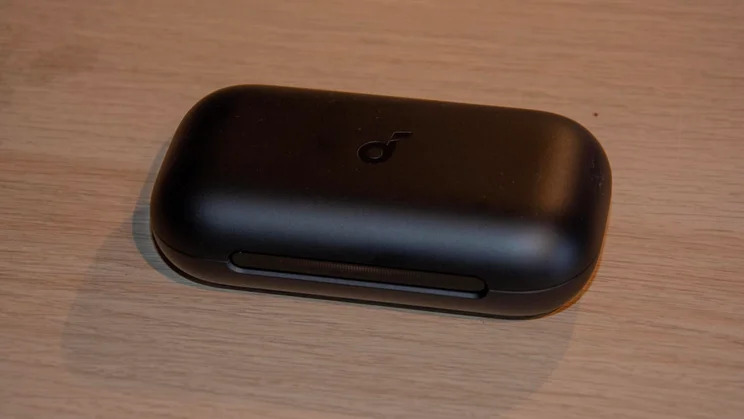
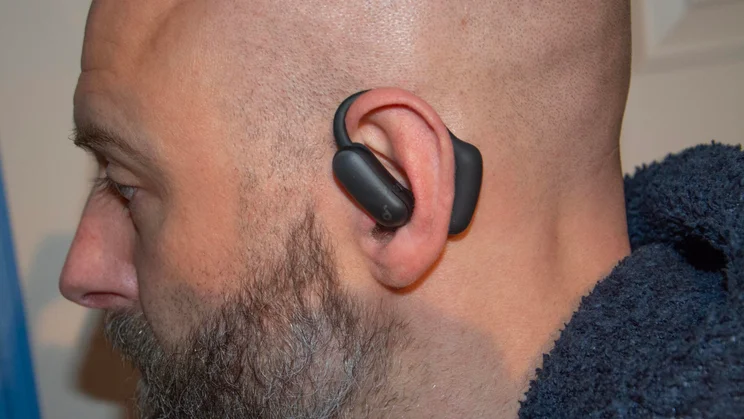
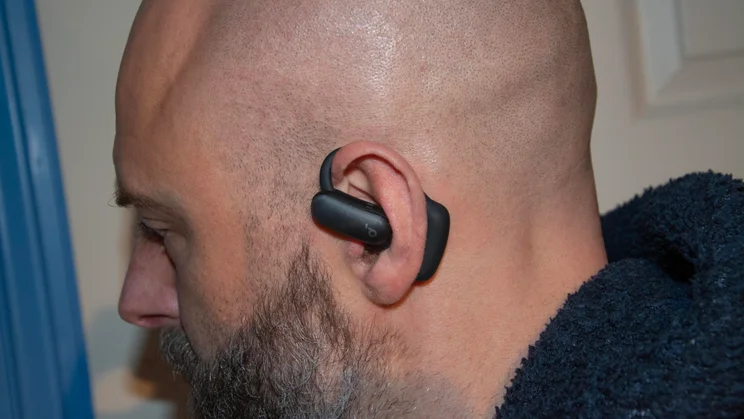
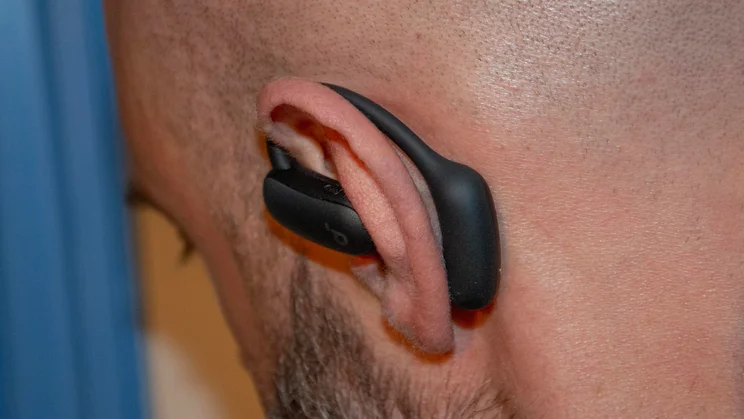

- Innovative design
- Comfortable and water-resistant
- Spatial audio support
- Limited noise-cancelling effect
- Fit lacks stability in ANC form
- Beaten by rivals for balance and treble reproduction
When I saw the Anker Soundcore AeroFit 2 Pro at CES, I was intrigued because they innovatively attempt to tackle a key shortcoming of open-ear headphones.
I recently reviewed open-ear headphones with a similar objective: the Shokz OpenFit Pro, which sit in front of your ear canals with the aid of earhooks and use mics and an advanced algorithm to supplement open-ear freedom with “Noise Reduction”. Apple’s AirPods 4 ANC are another example of the open-fit breed that can dampen external distractions, but look more like traditional wireless earbuds and nestle in your lug holes.
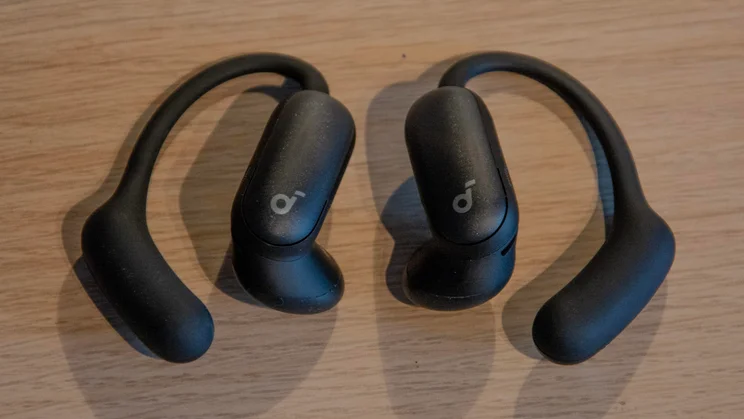
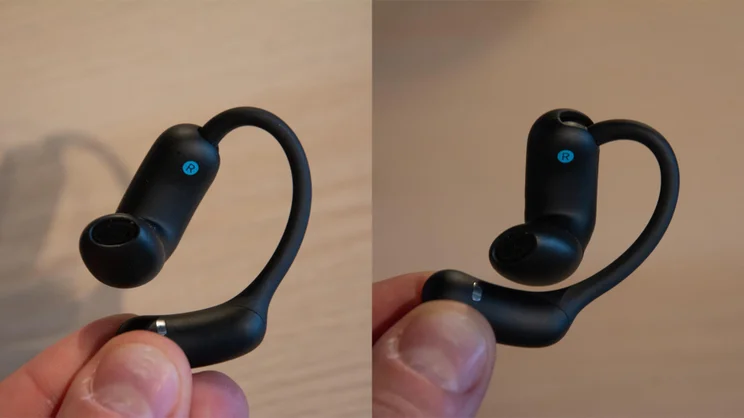
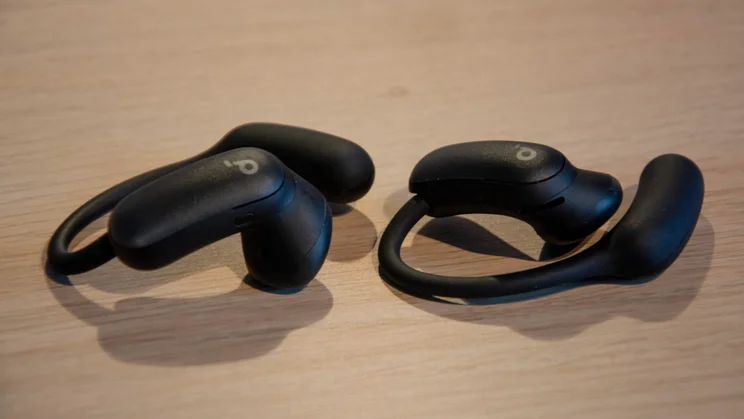
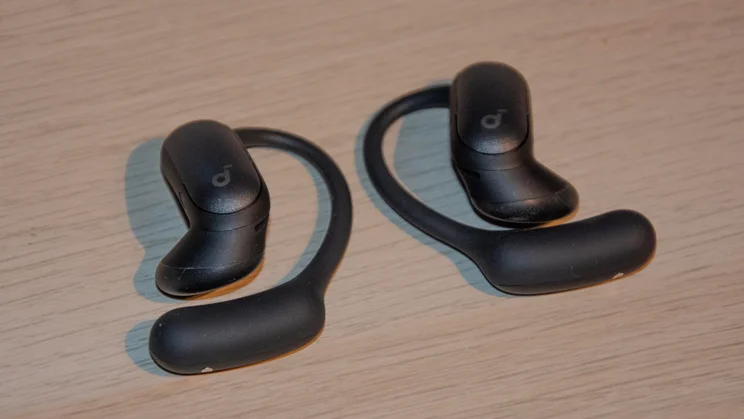
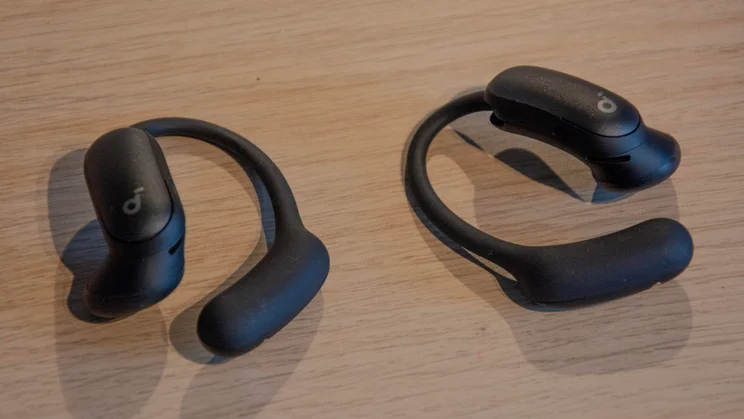
The AeroFit 2 Pro do things differently, combining aspects from both approaches into what Soundcore describes as the “world’s first dual-form” earbuds design. They use earhooks, but their buds rest inside your ears rather than outside of them, and, crucially, you can adjust their position to control how much external noise gets in. Or at least that’s the theory I’ve been putting to the test since returning from Las Vegas.
What do you get for the money?
Soundcore has slapped a £180 price tag on the AeroFit 2 Pro, which is pretty expensive by the brand’s standards. It’s not out of kilter with what other manufacturers charge for similar products, though. The Shokz OpenFit Pro cost £219, while the AirPods 4 ANC have a list price of £169, but cost £149 at the time of writing.
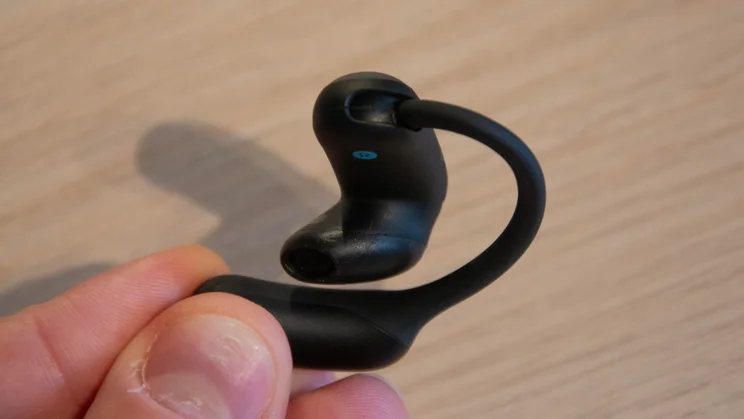
As detailed above, the AeroFit 2 Pro are wireless earbuds that hook around your ears. However, in a clever twist, the mechanisms connecting the earhooks to the buds can be physically adjusted to select one of five “Levels”. Increasing the level reduces the gap between the buds and your ear canals, decreasing the amount of ambient sound that reaches your ears.
Switching between levels also automatically changes the earbuds’ mode. Levels 1 and 2 leave a relatively large gap and activate “Open-Ear” mode. Levels 4 and 5 tuck the buds further into your ears and engage the AeroFit 2 Pro’s adaptive active noise cancellation. Level 3 serves as a halfway house, allowing you to choose the listening mode you want within the Soundcore app.
While this novel design is the AeroFit 2 Pro’s biggest talking point, they have a few other tricks up their sleeve. Bluetooth 6.1 and multipoint pairing are backed up by support for the LDAC high-resolution codec, and there’s support for Spatial Audio with Head Tracking, too.
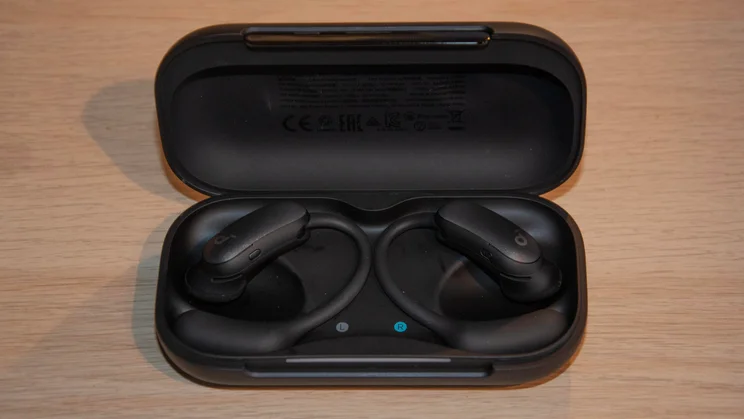
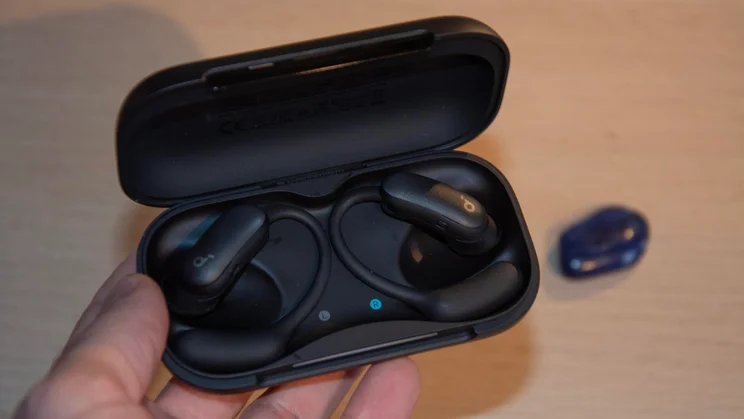
Four AI-empowered microphones handle phone calls, and the charging case can be topped up wirelessly or via USB-C. Battery life for the earbuds on their own is stated at five hours with ANC and seven hours without it, with total battery life, including charging case top-ups, claimed at between 24 and 34 hours, depending on your use of noise cancellation.
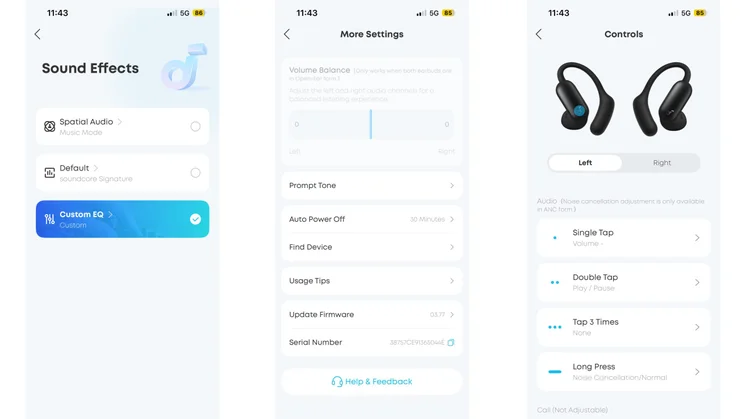
You also get a decent number of in-app features. There’s a low-latency Gaming Mode, “Find Device” functionality that plays a high-decibel beep to help you locate the buds around the house, and various EQ presets to choose from. On top of those presets, you can create separate custom EQs for both the ANC and open-ear modes on an eight-band equaliser.
What do they do well?
I love that Soundcore has thought outside the box to try to tackle the main weakness of open-fit headphones. The AeroFit 2 Pro’s design isn’t without issues, which I’ll discuss later, but I can absolutely see other brands taking inspiration from it and refining the formula.
Switching between the ANC and open-ear modes with the buds on my ears was easy enough with one hand once I’d got the hang of it, and the dual-form mechanism feels sturdy enough to withstand repeated movements over an extended period.
The earbuds are comfortable to wear, too. At 10.4g apiece, they felt reasonably lightweight when wrapped around my ears and were unobtrusive across all five earbud positions. Meanwhile, their IP55 rating ensured they survived park runs in a wet and miserable January without any issues.
I’m also a fan of their controls. The depressible surfaces on each bud proved a responsive and consistent way to execute commands, and, with single, double and triple taps alongside long presses, I was able to access every action I needed. And, in good news for fans of control customisation, Soundcore lets you freely remap what each button interaction does.
One advantage that the AeroFit 2 Pro have over their Shokz and Apple rivals is support for the LDAC Bluetooth codec. This is only a benefit to those with an Android smartphone, but it’s a pretty compelling one. The earbuds provided more granular detail when I was listening to the same eclectic playlist on the Nothing Phone 2 than they did with my iPhone 13 Pro. The rise and fall of Craig David’s vocals on Rain were a little bit crisper, while the various instruments on Jamie Webster’s Days Unknown felt better differentiated yet still impressively cohesive.
Although you’ll get the best audio experience with the AeroFit 2 Pro streaming via LDAC, things sounded solid over AAC, too, particularly tracks that play into the hands of the Soundcore Signature EQ. I’ve not always got on with this setting in the past: I found its “classic bass” exaggerated and overwhelming on the over-ear Soundcore Life Q30. But here, perhaps due to the open-fit format, the additional bass is very welcome.
Without a proper in-ear seal, a lot of open-ear headphones struggle in the low-end department. However, the AeroFit 2 Pro handled the bouncy bassline on Pryda’s Sunburst capably, delivering a surprising level of depth and visceral impact.
I enjoyed the AeroFit 2 Pro’s musical output more with Spatial Audio turned off. There was additional breadth to effects on the left and right of the soundstage on Ash & Ember by Lee Burridge and Lost Desert, but the track felt better-rounded with virtualisation disengaged. I rather liked the Spatial Audio Movie mode, though. The sense of scale and directionality of sound was more pronounced during the first episode of season four of The Witcher on Netflix, and sound moved around what appeared to be a much broader space.
What could be improved?
While I applaud Soundcore for its ingenuity in creating the AeroFit 2 Pro’s dual-form design, I never felt like I was getting the best of both in-ear and open-ear worlds. I don’t have any complaints about the open-ear form. I could hear what was going on around me clearly, and at the same time enjoy what I was listening to without having to pump the volume too loud.
My issues are with the noise-cancelling mode, which fell some way short of my expectations. Soundcore has budget headphones that deliver much more effective ANC than you could reasonably expect for the money, but that wasn’t the case here and it fell behind its rival, the Shokz OpenFit Pro, in this regard.
The design plays a part in this. Although the buds obstruct your ear canals to an extent, they can only do so much without silicone eartips. While on the train into work, I found myself hearing more than I wanted of what was going on around me; the AeroFit 2 Pro never let me slip into that delightful bubble of dissociation that provides such a welcome escape from the daily grind. The size and shape of your ears will likely affect your mileage here, but I can only comment on my own experience.
And that experience was also negatively impacted by a loose fit around my ears when the earbuds were set to Level 5 (the most effective ANC option). This wasn’t noticeable at my desk or on a train, but became apparent when running, exercising or doing anything that involved a lot of vigorous head movement. I was aware of the buds shifting slightly, which proved distracting and added a touch of inconsistency to the audio output. Again, though, this will differ from person to person.
As you’ll have read above, I was pretty pleased with the AeroFit 2 Pro’s sound quality, especially when using LDAC. But despite that, I prefer how Shokz’s OpenFit Pro sound overall. I’d give the AeroFit a slight edge on the bass front, but I preferred the treble presentation and tonal balance of the Shokz. I also preferred the way Shokz’s Dolby Atmos-optimised 3D audio sounded compared to the AeroFit 2 Pro’s Spatial Audio.
Should you buy the Anker Soundcore AeroFit 2 Pro?
The Anker Soundcore AeroFit 2 Pro may look like best-of-both-worlds headphones, but alas, they are not. Maybe I was expecting too much; maybe I fell too hard for Soundcore’s marketing videos proclaiming they would be the only pair of earbuds I’d ever need. Ultimately, though, they fell some way short.
It is possible, however, that the AeroFit 2 Pro will fly with those whose noise-cancelling standards aren’t tainted by the near-silence offered by the likes of the Bose QuietComfort Ultra Earbuds (2nd gen).
And, regardless, Soundcore deserves great credit for engineering a product that could prove instrumental in shaping the headphones landscape, and one that gets a lot right. I didn’t expect clip-on earbuds to take off in the way they have, so perhaps in a couple of years, the wireless earbuds market will be awash with true wireless transformers like the AeroFit 2 Pro.


