To help us provide you with free impartial advice, we may earn a commission if you buy through links on our site. Learn more
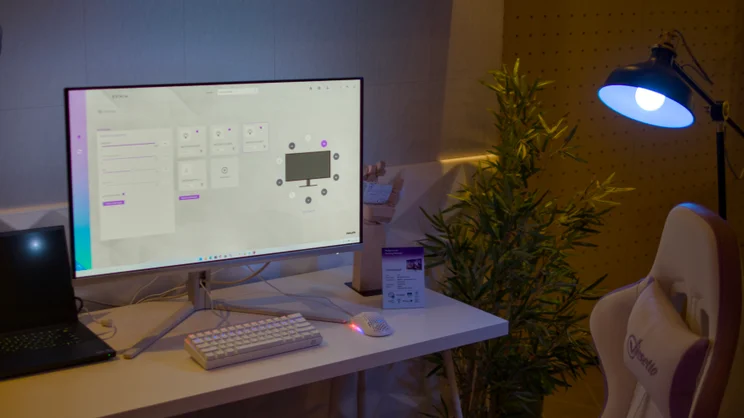
Philips has just unveiled a load of new monitors at its annual press event in Dubrovnik, Croatia, but it wasn’t the shiny new Gen 5 OLED that attracted the most attention: it was the introduction of Philips’ Ambiscape technology to its Evnia gaming monitor range.
Ambiscape is something we’ve seen before, very recently – our TV guru, Andy White, raved about it when he visited Berlin for TP Vision’s Unboxed event in March 2026 – but I think the version coming to monitors is even better. That’s not because – I must stress – it does anything particularly special beyond its TV counterpart.
Ambiscape for monitors: What does it do?
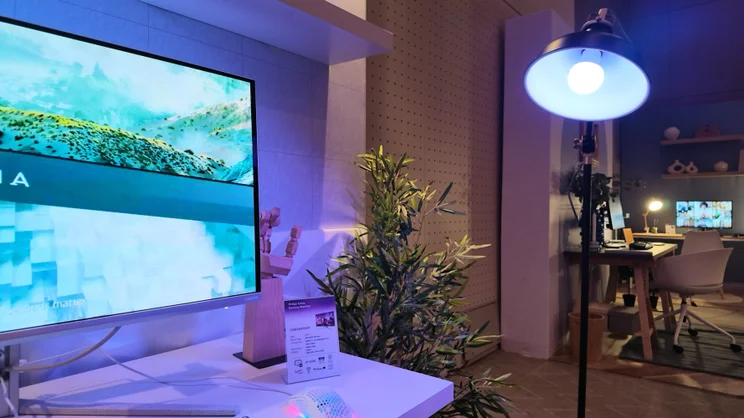
In fact, it does exactly the same thing. While Ambilight systems (Ambiglow in monitors) illuminate LEDs embedded into the rear of your TV, reflecting the general gist of the colours on screen, Ambiscape does the same thing for the smart lamps in your room. So, if you fancy really immersing yourself in the hellish environs of Doom: The Dark Ages, you can now extend that to your Ikea standard lamps, your reading light and even the main overhead bulb.
Imagine watching Blue Planet and the entire room lighting up deep blue in sympathy with the onscreen documentary, or having the neon city lights of Cyberpunk 2077 brought to life around you as you make your way around the futuristic city. That’s what Ambiscape promises.
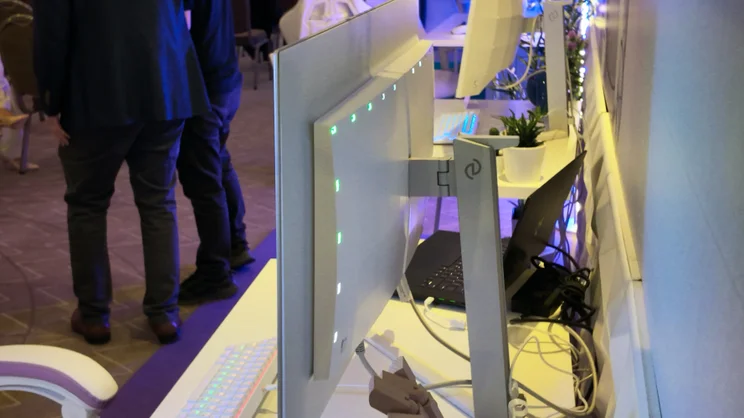
What makes the Philips Evnia system better than the TV equivalent, however, is how mature it seems at launch. From the get-go, the system will support up to ten lamps; the TV version supports up to four. And the system isn’t going to work on just the high-end models. Philips is rolling out the system to existing Ambiglow monitors.
Plus, it supports Matter bulbs from the off, too. True, Matter bulbs aren’t completely universal yet. Still, with the standard slowly beginning to take off, there are plenty of manufacturers with bulbs in their lineups, including Nanoleaf, Ikea, Tapo and Philips Hue. With the latter, you’ll need the Philips Hue Bridge hub to make them work over Matter, though.
How does Ambiscape for monitors work?
Unfortunately, the demo I was shown didn’t quite deliver on that promise. With the event being held in one big room, the smart lights were only powerful enough to illuminate the area immediately around the monitor in question.
However, the effect was clear, and I was able to play around with the control system to change how the lights all behaved as well. Interestingly, the system requires an app to run – it isn’t built into the monitor’s on-screen display – but it gives you plenty of control and was quite intuitive.
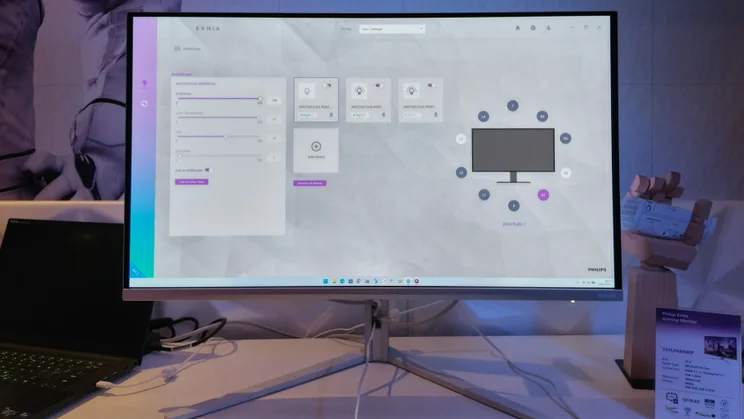
I was able to pair lamps, switch them on and off at will, adjust the colour and brightness levels, and control which areas of the screen influenced them by assigning them to ten circular icons, all positioned around a graphical representation of a monitor.
Does Ambiscape make Evnia monitors worth buying?
The world of gaming monitors is highly competitive, but having features such as Ambiglow and now Ambiscape is a fantastic marketing tool for Evnia monitors. If I were in the market for a gaming monitor right now, Ambiscape is a feature that could sway me to choose an Evnia model over a monitor from a rival manufacturer.
And if full immersion is the name of the game for you, then you should probably consider one, too. We’ll be reviewing some of the latest monitors from the 2026 Evnia range very soon, so watch this space for a full review.