To help us provide you with free impartial advice, we may earn a commission if you buy through links on our site. Learn more

- Makes great coffee
- Easy to use
- Grinds by weight
- Some fiddly annoyances occasionally get in the way
- Accessories downgraded from original Barista Express
For both espresso and filter brewing, Sage has produced some excellent coffee machines, many of which we’ve reviewed favourably here at Expert Reviews. Having crowned the Sage Luxe Brewer as Home Product of the Year in our 2026 Product of the Year Awards, I approached the Barista Express Neo – the brand’s latest upgrade to its popular semi-automatic machine – with high hopes.
For the most part, these hopes have been rewarded with dividends: the Sage Barista Express Neo is an excellent semi-automatic espresso machine that introduces several meaningful upgrades to the original Barista Express. Accounting for the trial and error inevitably involved in brewing espresso, I’ve been able to use it to make some lovely coffees.
Sage Barista Express Neo: What do you get for the money?
The Sage Barista Express Neo, which costs just five pence under £780, is a semi-automatic espresso machine. It’s designed to make the brewing process simple while still giving you a rewarding hands-on barista experience. It takes a similar guided approach to espresso brewing as the Ninja Luxe Cafe Pro I reviewed recently.
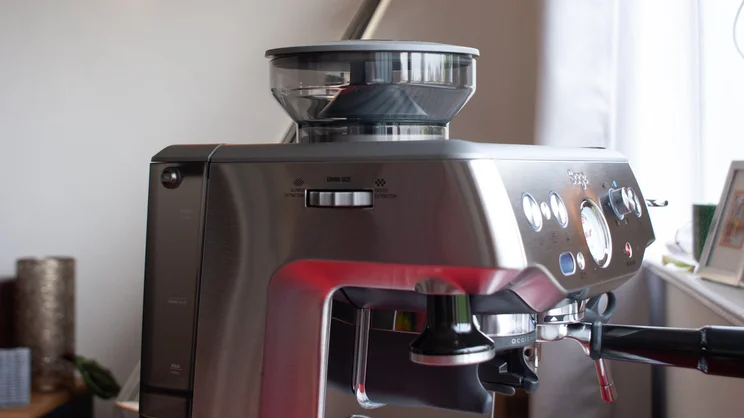
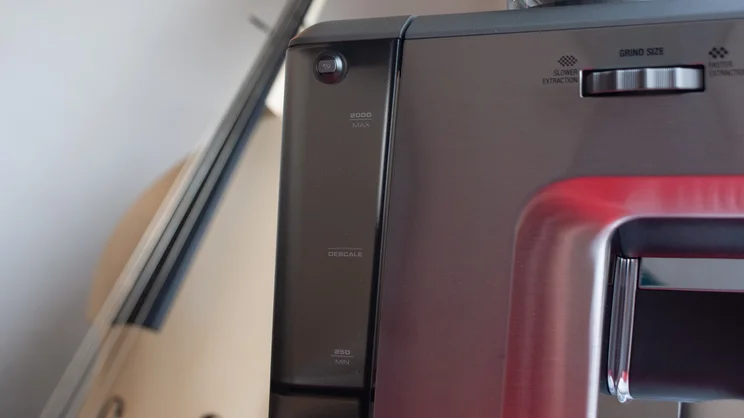
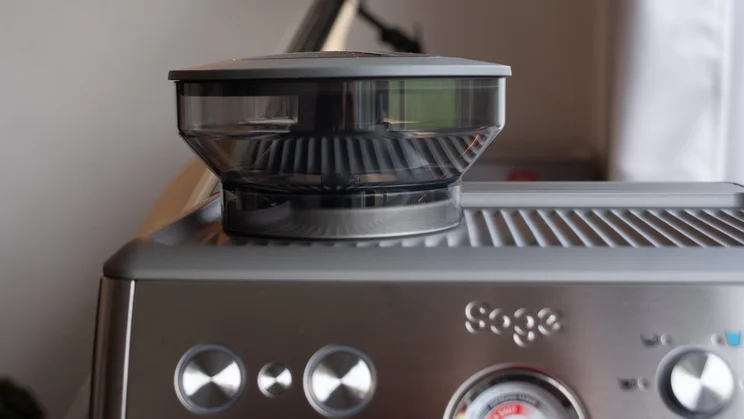
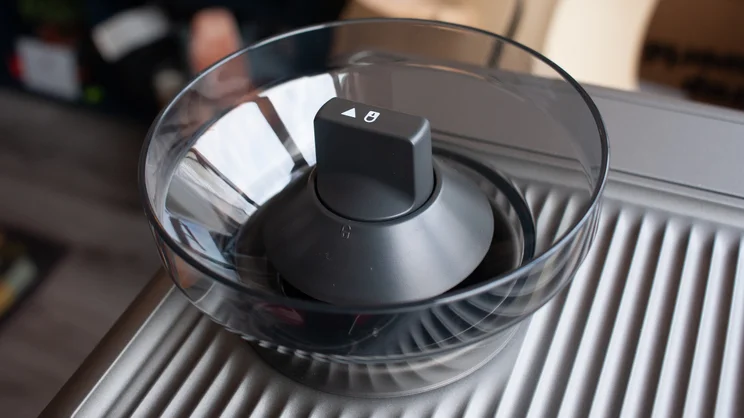
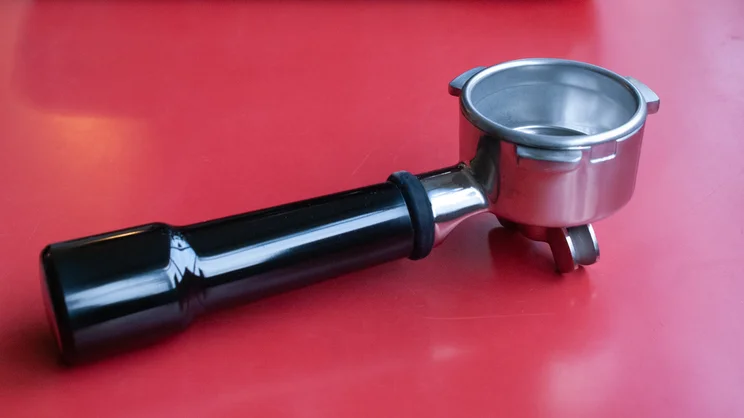
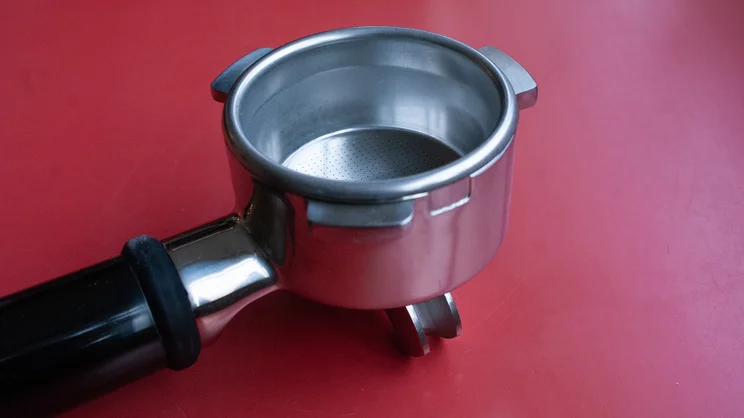
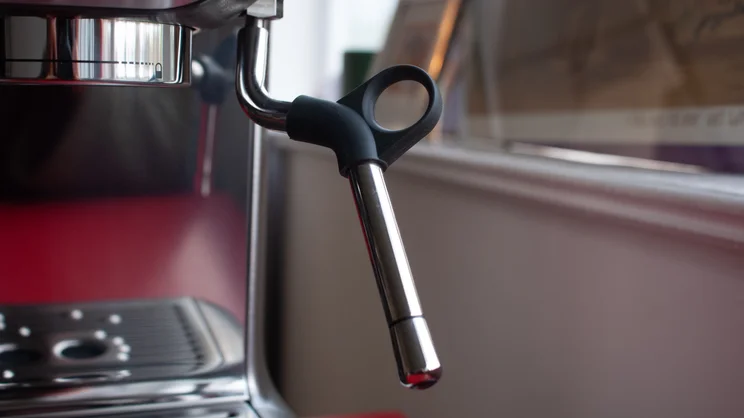
The Neo has a two-litre water tank and a 54mm stainless steel portafilter. Its in-built conical burr grinder has 30 grind size settings, adjustable via a wheel on the left-hand side of the machine. Over on the right-hand side, a lever is used to control the machine’s cool-touch steam wand as well as hot water, which is dispensed from a separate spout beside the grouphead.
Inside, as with previous Sage machines, the Barista Express Neo has a “Thermocoil” heating system rather than a traditional espresso machine boiler, which – by default – is designed to heat water to around 93°C and hold it there.
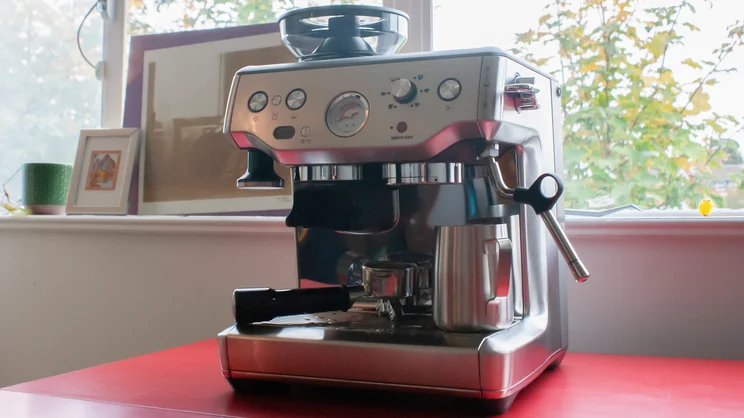
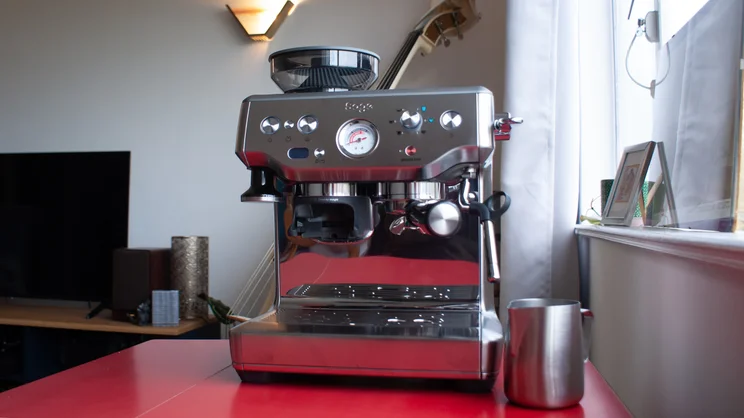
At a glance, the Neo closely resembles the original Sage Barista Express. However, there are a few significant changes you should know about. Some of these are immediately obvious, others less so.
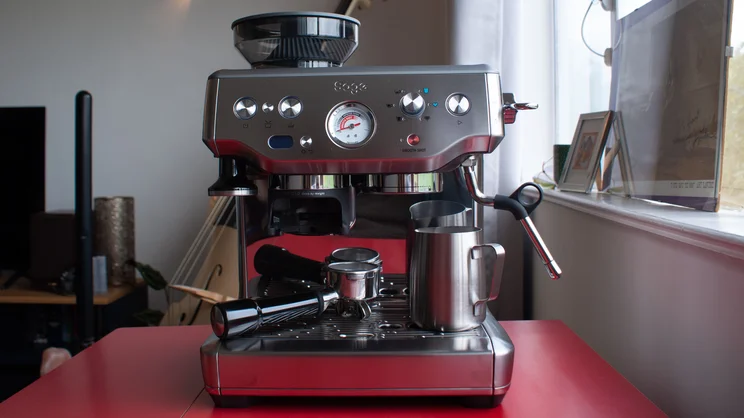
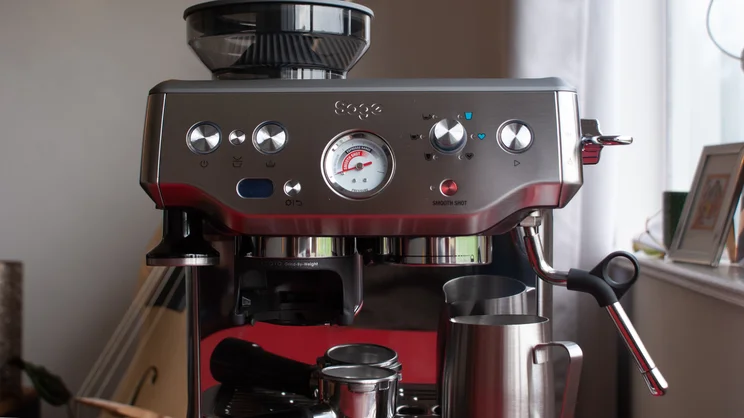
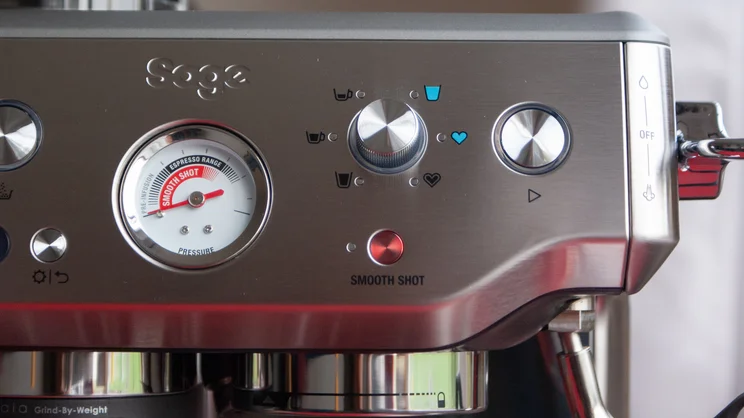
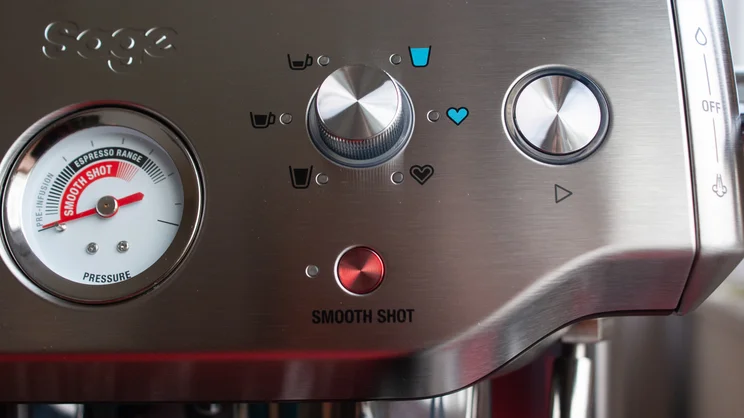
One of the first things you’ll probably notice is the layout of the controls. The Neo has scaled back on the number of buttons used to toggle drink sizes and settings, which results in a much less crowded control panel. Here, Sage has introduced a dial on the right-hand side of the machine to toggle between single, double and lungo drinks, as well as cold brew and custom espresso settings.
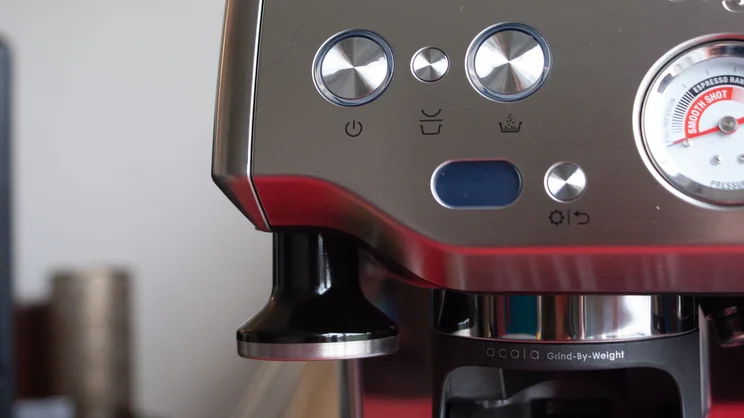
On the other side of the machine’s central pressure gauge, you have the power, grind and filter basket buttons, underneath which Sage has added a settings button alongside a new dinky monochrome OLED display. Using the espresso dial, you can now toggle through further adjustments, including water temperature (of which there are four options, for light, medium, dark and decaf roasts), grind dosage, volume, screen brightness, calibration and cleaning modes. When selecting custom espresso options, you can also use this screen to adjust pre-infusion time (up to 60 seconds) and shot length (between 30 and 150ml).
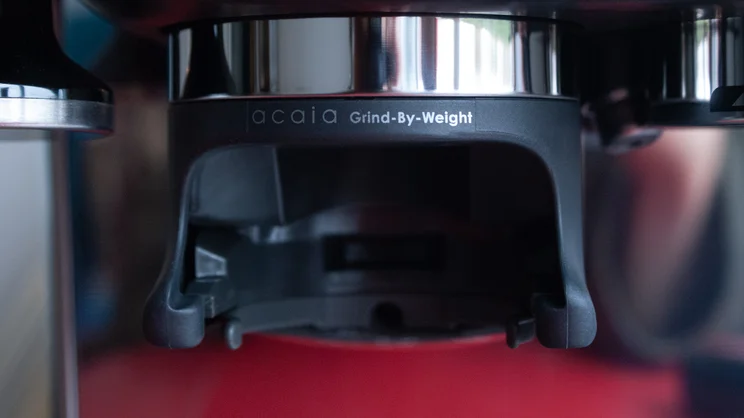
On the topic of dosage, one of the most exciting upgrades is the new “grind by weight” feature. This has been developed in collaboration with Acaia, a manufacturer of premium coffee scales, and is a much more precise system than coffee machines and grinders that work only on a timer. The default dosage is set at 18g for the double basket and 9g for the single basket. As I mentioned above, you can adjust dosage weight in the settings, between 16-22g and 8-12g respectively.
Sage has also introduced a new Smooth Shot feature, whereby the machine will adjust its flow rate automatically for a “smoother, more balanced espresso”. Essentially, this means the Neo is more forgiving if you don’t quite nail the right grind size, although it will still choke if you grind too fine. It will also give “Grind Size Guidance” after a shot if it thinks you’ve gone too fine or too coarse. This feature – also present in the Oracle Jet – is similar to Ninja’s Barista Assist in its semi-automatic Luxe Cafe machines.
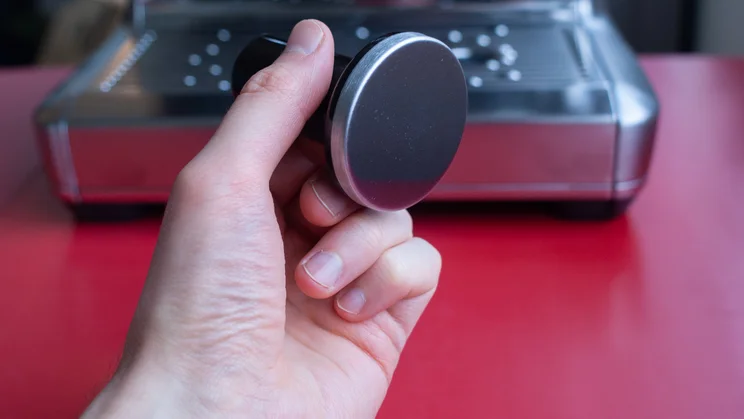
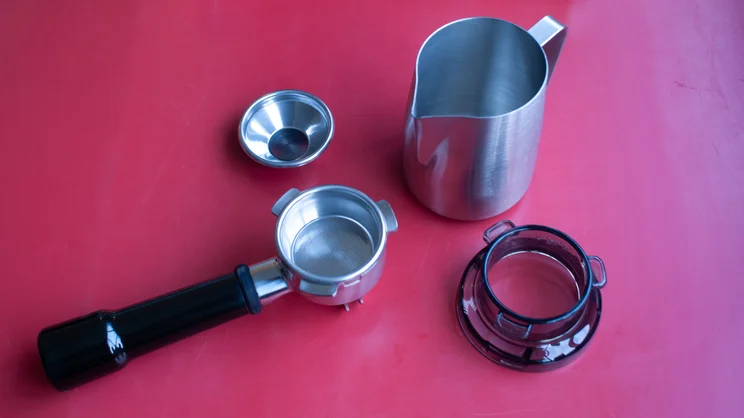
In exchange for these upgrades, Sage cuts back a touch on the accessories. There’s no longer a razor tool included (used for levelling the bed of coffee grounds in the portafilter), and the Temp Control milk jug that was included as standard with the Barista Express has been downgraded to a standard steel one. You also only get single wall filter baskets included with the Neo, while the Barista Express came with double wall options for both one-cup and two-cup baskets.
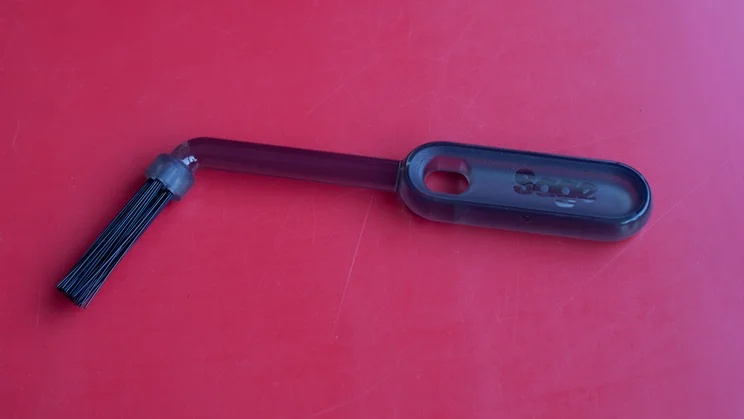
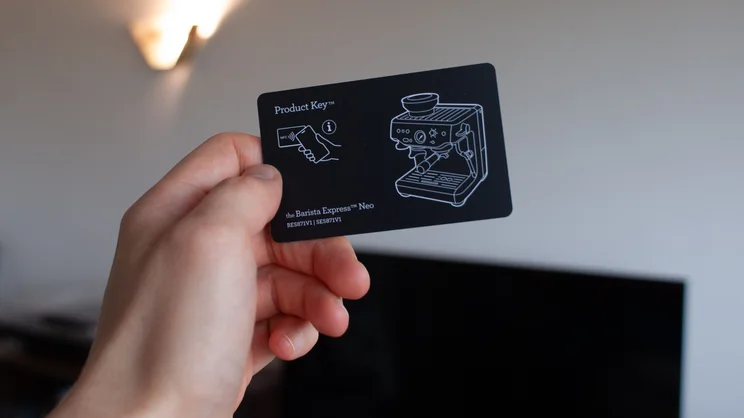
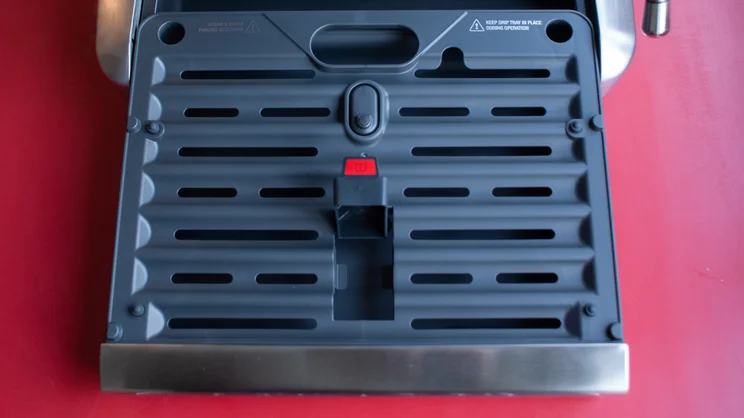
However, you do get the dosing funnel, a chunky tamper that stores neatly away in a magnetic slot, and a handful of cleaning supplies. A final extra worth mentioning is the NFC product key, via which you can access information, instructions and replacement parts on your phone. The Neo actually has two of these: one on the machine itself, underneath the drip tray, as well as a separate credit-card-sized tag.
How I tested the Sage Barista Express Neo
I spent several weeks with the Sage Barista Express Neo, using it to brew my daily coffee first thing in the morning (and then again at mid-morning, and then sometimes again in the afternoon). During this time, I assessed how easy it was to use, how streamlined the workflow is, and – crucially – whether or not it makes good espresso.
To get a better gauge on the consistency of its performance, I also carried out some standardised tests. For these, I brewed several espressos back-to-back, measuring temperatures, shot time and yield weights for each – as well as tasting them just enough that I could judge the balance of flavours without overdosing on caffeine. I repeated these tests several times, with the Neo’s Smooth Shot feature turned on and off.
I also made ample use of the machine’s steam wand, judging how easy it is to use and produce well-textured microfoam.
What’s it like to use?
The Sage Barista Express Neo is very easy to get up and running. There’s not much setup required beyond installing the water filter, filling the water tank and bean hopper, plugging it in and running an initial flush with water. Then you’re ready to go.
When brewing espresso, even on an assisted semi-automatic machine, there will always be a degree of trial and error. Even with the Neo’s Smooth Shot turned on, you’ll need to pull a few shots of espresso to dial in the machine.
Once you’ve done this, though, the Neo’s workflow is simple and satisfying. Sage/Acai’s grind-by-weight system works like a dream. I love the dosing funnel that clips onto the portafilter and slots neatly into the cradle and, from grinding to pulling your first shot, the Neo’s control panel is intuitive.
Smooth Shot works well, too, although I’ve found it tends to be more forgiving of a too-coarse grind than a too-fine one. Listen closely, and you can hear the machine reducing its flow rate to compensate for a shot that would otherwise under-extract.
As for the Neo’s Grind Size Guidance recommendations, these are helpful but can jump around a bit. After pulling a shot at grind setting 6, the Neo recommended I go much coarser at 20, after which it suggested scaling back down to 10. Ultimately, these grind size recommendations are best taken for what they are, as guidance, rather than gospel. You should use your own judgement too.
I also noticed that, on occasion, the grinder would adjust its settings by one stop (for instance, from setting 7 to setting 8) mid-grind, which is a frustrating quirk I also experienced with the Ninja Luxe Cafe Pro’s grinder. The only other issue I had with the grinder was that it occasionally got stuck, pausing and then grinding far too much into the basket once I’d started it up again. However, in the several weeks I’ve been testing the Neo, I’ve had this problem exactly twice, and both times have been when I’ve been pulling shot after shot after shot in order to judge espresso consistency.
Milk steaming is great too, with a wand that’s wonderfully manoeuvrable, easy to wipe down and cool to the touch. Steaming is a lot more manual than it is with the Oracle Jet or the Ninja Luxe Cafe Pro. However, with some practice, I’ve been able to achieve far better microfoam using the Neo’s steam wand than with Ninja’s range of foam presets.
I’ve even come as close as I ever have at executing proper latte art, pouring a love heart (or bulb of garlic, depending on how charitable your perspective is).
What’s the coffee like?
With Smooth Shot on and off, I’ve been able to pull consistent shots of espresso, well-balanced and with rich crema. Of course, they haven’t all been successes: I’ve poured plenty of sour shots with the Neo, and even choked the machine once or twice. But look, I’m no professional barista, and you’re never going to get away from trial-and-error when brewing espresso; there are simply too many variables involved.
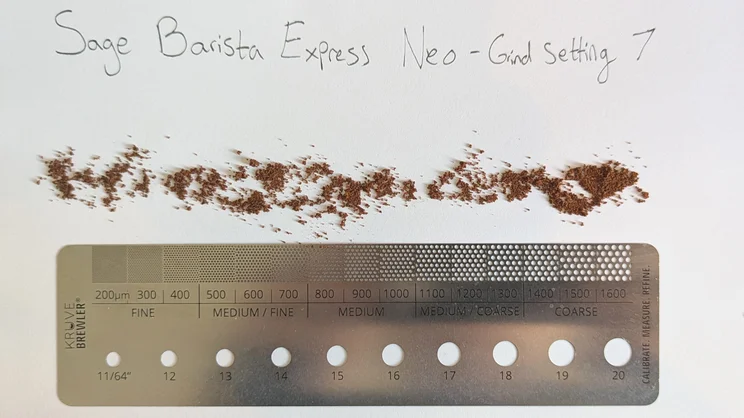
The good news is that Smooth Shot does work well in curbing some of that trial-and-error. It’s not a miracle worker, and it won’t fix a shot that’s doomed to over- or under-extract, but it helps you achieve a consistent yield with less tinkering. You can see this reflected in the results of my espresso tests below, carried out at grind size 7:
| Espresso shot | Puck temp at start (°C) | Puck temp at end (°C) | Shot time (secs) | Ground coffee in (g) | Coffee weight out (g) |
|---|---|---|---|---|---|
| 1 | 24 | 72.2 | 27 | 17.9 | 42.8 |
| 2 | 29.4 | 83.1 | 24 | 17.8 | 44.6 |
| 3 | 25.9 | 81.1 | 24 | 17.9 | 44.2 |
With Smooth Shot turned off, there’s a bit more variation (perhaps accounting for slight inconsistencies in tamping pressure between shots), but I’ve been largely happy with its consistency. The tests below were carried out at grind size 7/8 – the jumpy grinder settings accounting for this slight inconsistency:
| Espresso shot | Puck temp at start (°C) | Puck temp at end (°C) | Shot time (secs) | Ground coffee in (g) | Coffee weight out (g) |
|---|---|---|---|---|---|
| 1 | 25.5 | 86.4 | 20 | 17.8 | 41.8 |
| 2 | 30 | 90.9 | 17 | 17.8 | 43.1 |
| 3 | 28.2 | 85.5 | 19 | 18.4 | 39.9 |
What’s the grinder like?
I’ve already discussed some of the fiddly issues I had with the Barista Express Neo’s grinder. These haven’t been so persistent that they’ve spoiled my experience of the machine, so I won’t repeat myself again, here.
Regardless, the grinder appears to be a very good one. It has almost twice as many external adjustments as the original Barista Express’ 16, and the quality and consistency of the ground coffee is excellent.
Another nice touch is the wording of the grind adjustment dial. Instead of “fine” and “coarse”, this is labelled “slower extraction” and “faster extraction”. Espresso obsessives might turn their noses up at this, but I think it makes the process a lot more intuitive and easy to understand for those new to espresso brewing.
How does it fare in day-to-day use?
Speaking of budding home baristas, while I’m no espresso expert, I’ve been extremely pleased with the flat whites and cortados I’ve been able to produce with the Sage Barista Express Neo. Some of these have been the best coffees I’ve ever made and, dare I say, they almost begin to rival the third-wave coffee shop down the road.
I’ve not found myself needing to make full use of the range of settings on offer, but I am confident that those who get more joy out of tinkering than I do will appreciate the adjustable pre-infusion time, dosage weight and brew temperature settings.
It’s a little odd that the latter of these is adjustable according to roast level rather than °C, but again this is perhaps aimed at making things a bit more straightforward for the user, so I’m not complaining.
Should you buy the Sage Barista Express Neo?
The Sage Barista Express Neo and the Ninja Luxe Cafe Pro are both semi-automatic espresso machines designed to provide a hands-on experience without the frustratingly steep learning curve of fully manual brewing. Both succeed at this but, in my opinion, the Sage is more effective and is far more enjoyable to use.
The Neo also provides a meaningful upgrade on the original Sage Barista Express, without charging too much of a premium: if you’re considering spending £630 on the Barista Express, then what’s an extra £150? There’s little reason you shouldn’t consider spending £780 on the Neo if the Barista Express is already on your radar.
Sure, testing the Neo has not been without its small annoyances, but these have been few and far between. If you’re in the market for a semi-automatic espresso machine, this should be high on your list.