To help us provide you with free impartial advice, we may earn a commission if you buy through links on our site. Learn more
- Makes great coffee
- Affordable
- Supremely portable
- Not the easiest to clean
- Some plastic parts seem a little wasteful
- AeroPress has a wider choice of accessories
I’ve been vaguely aware of Wacaco for several years, primarily because of its Minipresso portable espresso maker: an intriguing device I confess I’ve yet to get my hands on.
The Wacaco Prestina, on the other hand, is a coffee maker I have had some experience with. Quite a bit different from the Minipresso, this is a compact filter brewer that, because of its immersion brewing and plunging action, is primed to take on the Aeropress in the battle of the hand brewers.
How does it fare in this challenge? Overall, I’ve been really impressed by the Wacaco Prestina. It makes great coffee and, while it might not have Aeropress beaten on all counts, there are a number of things that make it an attractive alternative.
Wacaco Prestina: What do you get for the money?
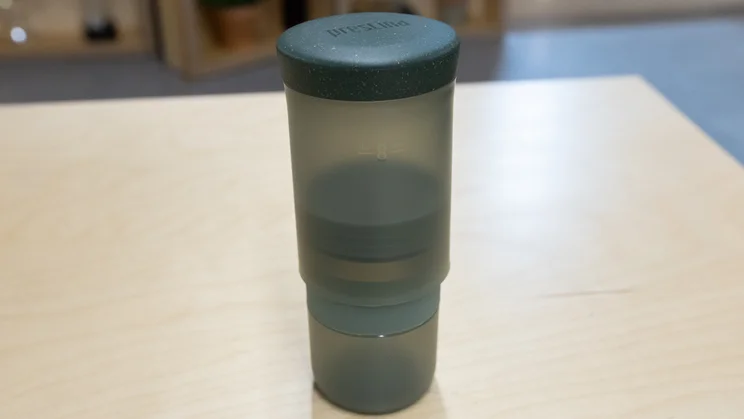
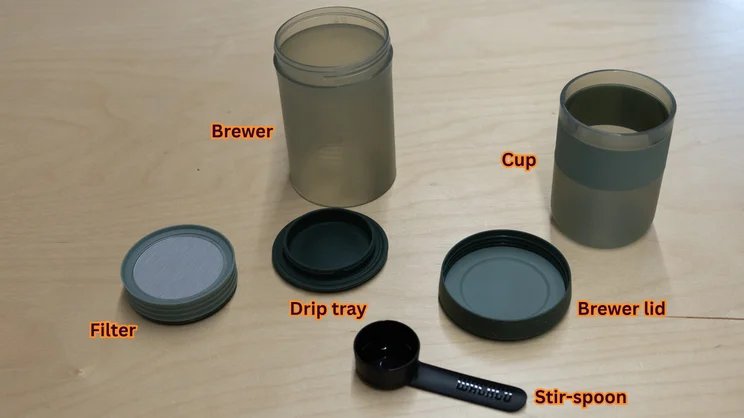
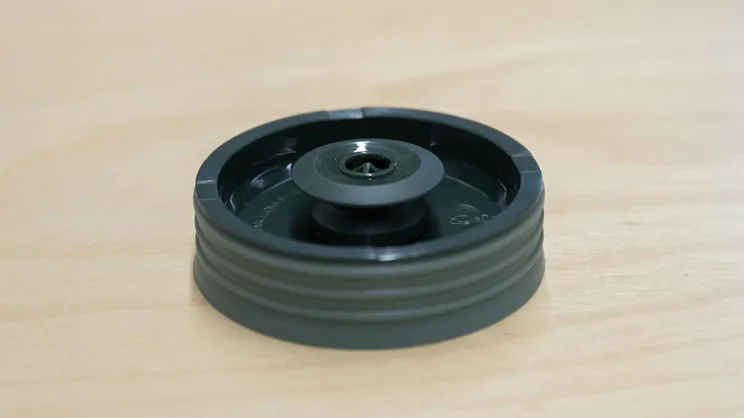
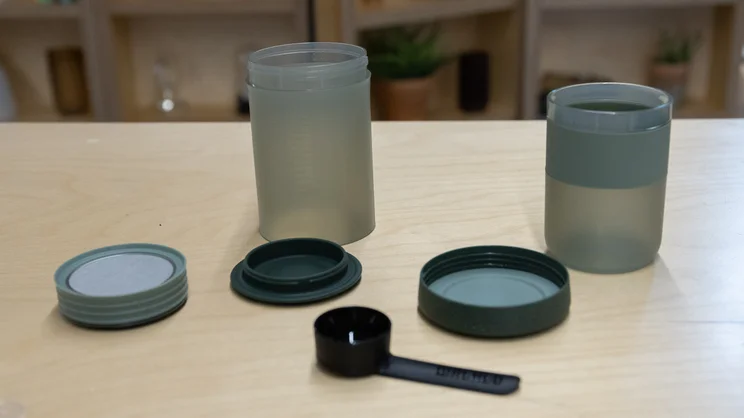
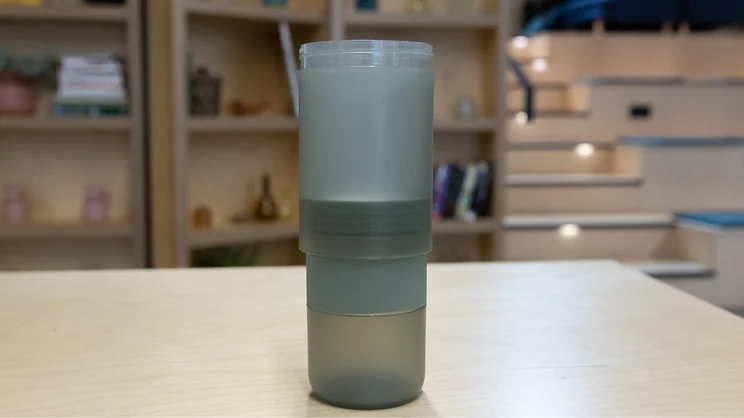
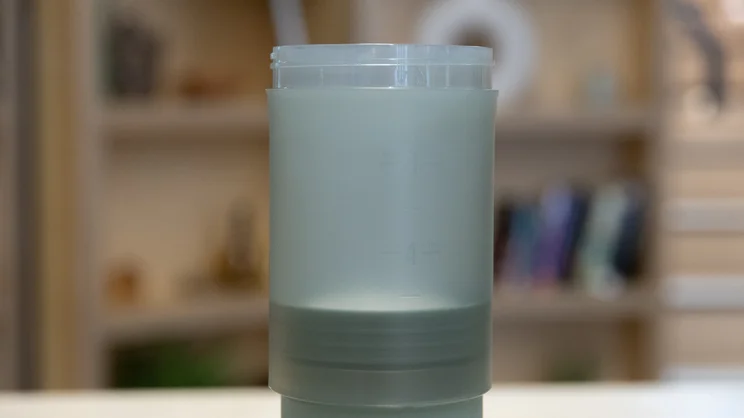
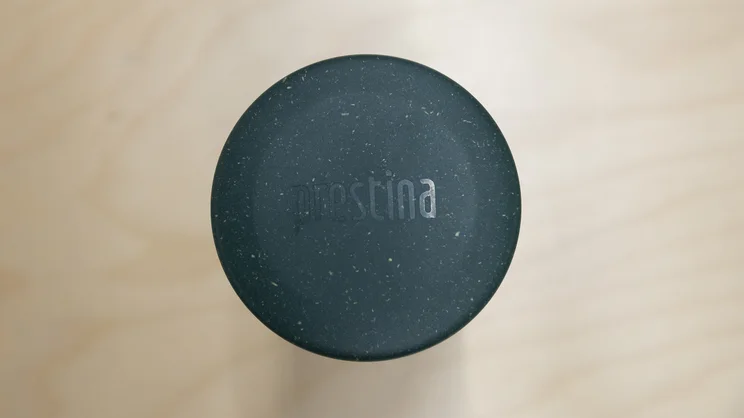
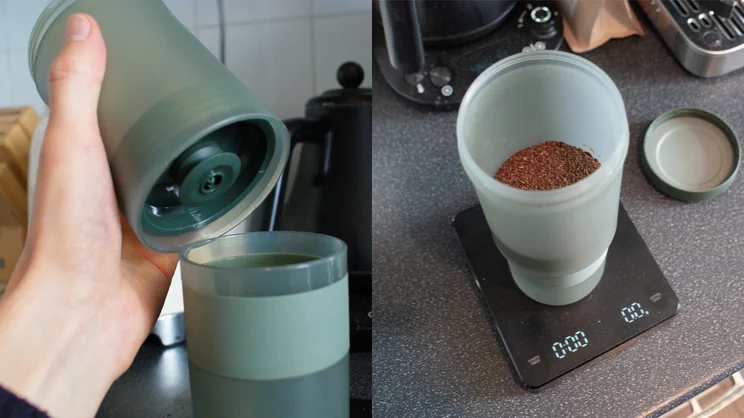
There are three main parts to the Prestina: the brewing chamber (or “brewer” as Wacaco calls it) with its screw-on lid, the cup and the filter. Most of these parts are made from a food-grade plastic, and there are bits of silicone dotted around here and there, too, in the shape of a grip around the cup, and the filter seal. The coffee filter itself is a fine steel mesh.
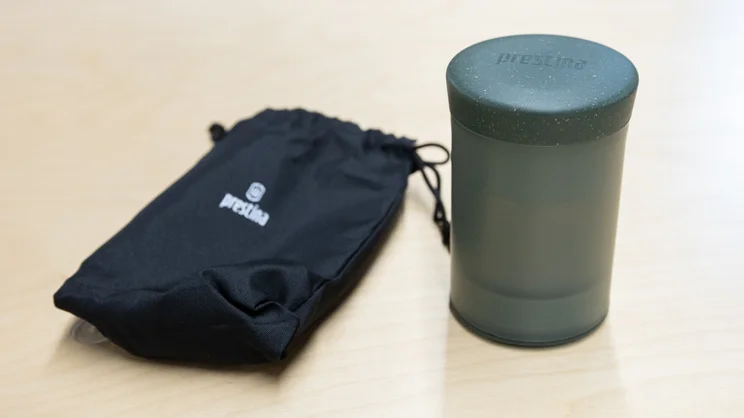
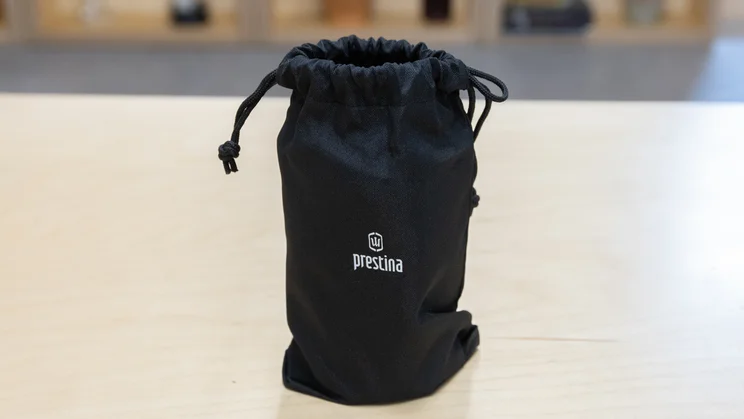
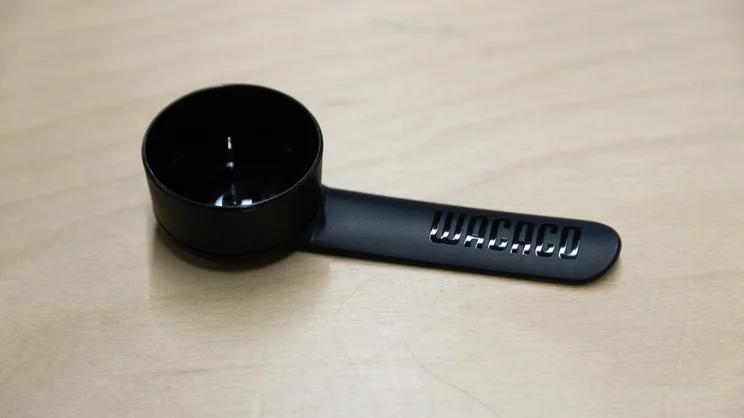
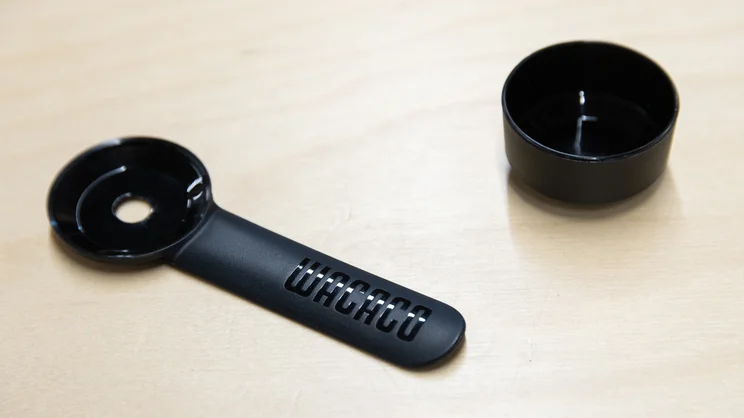
On top of this, you also get a drawstring bag to put it all in, a silicone drip tray, and a “Stir-spoon”: a neat little scoop that becomes a stirrer when you unclip the spoon attachment.
All of this will cost you £27, which is cheaper than all AeroPress models: the AeroPress Original costs £40, while the AeroPress Go – perhaps the Prestina’s closest direct rival – is £50.
I’m not comparing these prices for the sake of it; the Prestina is directly comparable to the AeroPress in terms of the way it works. Both rely on immersion brewing and have a plunging mechanism whereby brewed coffee is pushed through a filter.
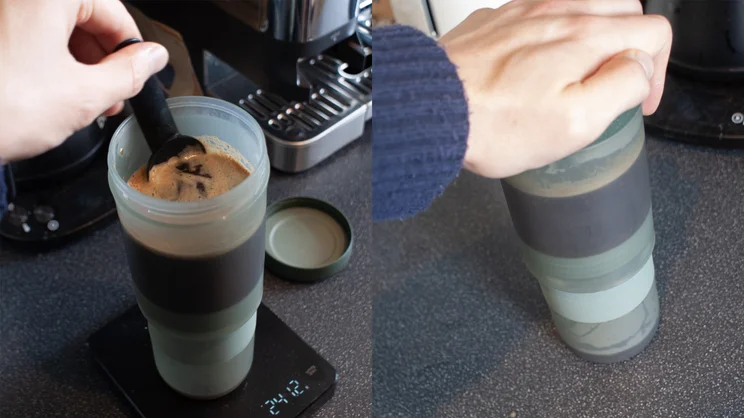
To use the Wacaco Prestina, you first set it up so that the brewing chamber is sitting on top of the cup, with the filter (steel mesh side facing upward) inside the brewer at the bottom. You then add your ground coffee followed by water (the ratio Wacaco recommends is 15g of coffee to 240ml of water, so 1:16), stir and wait one minute before screwing the lid on top of the brewer.
Now it’s ready to press. Push down on top of the brewer slowly and evenly, just like with the Aeropress, until all the brewed coffee has been extracted into the cup underneath. Then it’s a matter of taking it apart again, disposing of spent coffee grounds, and washing the parts.
As well as the cup provided, the Wacaco Prestina is compatible with the brand’s stainless steel Octaroma travel mugs, which is a nice touch for those who’d prefer not to drink out of a plastic beaker (myself included).
How I tested the Wacaco Prestina
I tested the Wacaco Prestina over a couple of weeks, using it to make my daily filter coffees whenever I was working from home. For the most part, I adhered to the recipe and method recommended by Wacaco (outlined above), assessing the brewer’s ease of use and the flavour of the coffee – as well as how easy it was to clean up afterwards.
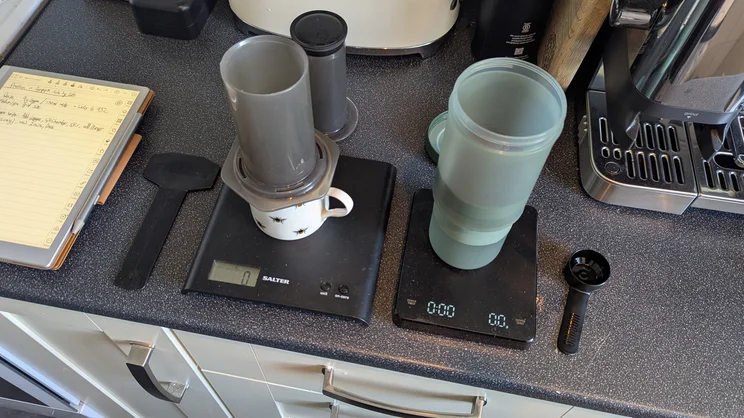
Given the similarities between the two brewers, I also used the Prestina side-by-side with my AeroPress, comparing usability and the quality of the resulting brews.
Across all these tests, I used fresh coffee beans from Redemption Roasters, grinding them by hand using the AeroPress Manual Coffee Grinder.
What’s it like to use?
The Wacaco Prestina is wonderfully compact. When you’re not using it, it packs up neatly into a beaker-like shape, which – paired with the handy draw string bag and dinky stir-spoon – makes it an ideal travelling companion. While I’m not much of an outdoorsman myself, my first impression was that it would be great for camping trips.
When it comes to brewing your first coffee with the Wacaco Prestina, you’ll need to spend a little bit of time with the instruction manual to familiarise yourself with all of its loose parts, of which there are six in total (including stir-spoon and drip tray). But once you’ve got a handle on how the brewer works and what everything does, it’s very easy to use.
Perhaps thanks to its wide and stout design, I found the Prestina’s brewing process marginally easier than that of the AeroPress. The larger diameter of the brewer means you’ve got more room to achieve an evenly saturated pour and the filter’s “duck valve” minimises the amount of coffee that drips through into the cup until you’re ready to push it through. That’s something you have to manually prevent with the AeroPress by creating a vacuum with the plunger (unless, of course, you’re using the “inverted” method).
The Prestina’s reusable mesh filter is also a big plus. This removes the need for paper filters, while AeroPress uses single-use filter papers as standard. A reusable AeroPress filter does exist, but this is only available as an additional purchase, adding £17 to the cost of the brewer. If you don’t opt for this, AeroPress paper filters are sold in packs of 350 that cost £9 – it’s a pretty small price to pay once a year (provided you use your Aeropress about once a day), but it’s an extra price to pay, nonetheless.
Cleaning the Wacaco Prestina is also very straightforward, as its individual parts can be rinsed very easily by hand. However, the Prestina disappoints when it comes to disposing of spent coffee grounds. While AeroPress brewing results in a compact puck of coffee that can be easily popped out into the bin or compost, scraping is required to loosen coffee grounds from the bottom of the Prestina’s filter: a consistent annoyance that left me yearning for AeroPress’ mess-free solution. It’s a relatively minor irritation when brewing at home, but something that may prove more problematic if you’ve chosen the Prestina as your travel coffee maker.
What’s the coffee like?
During the time I was testing it, the Prestina produced some very tasty coffees. Considering the relatively short immersion time recommended by Wacaco (little more than a minute between stirring and plunging), the resulting brews had a strong body and were flavourful. I certainly didn’t feel like the £12 I spent on freshly roasted coffee beans was wasted.
I didn’t love the experience of drinking out of a plastic beaker, though. It’s a great travel solution, but as I’m at home, I’d rather opt for a proper coffee cup or mug. And as I don’t plan to go camping any time soon, this – and the silicone drip tray, which I’ve not felt the need to use – feel like a bit of a waste. Unlike with the AeroPress, you don’t have a choice what cup you brew into. If you haven’t got one of the Wacaco Octaroma mugs I mentioned earlier, you have to press your brewed coffee into the plastic cup, and then – if you don’t want to drink out of this – transfer it to your preferred receptacle.
Wacaco Prestina vs AeroPress
The obvious test for the Prestina was to compare it side-by-side with the AeroPress. For this, I used my ol’ reliable AeroPress Original and followed as consistent a recipe as possible across both brewers: 9g of coffee (medium/fine grind size) in 150ml of water, heated to 93°C. I stirred after pouring and allowed a steeping time of three minutes – the only variation was that I inserted the AeroPress plunger after stirring to prevent dripping.
The resulting brews were comparable: both were perfectly good cups of filter coffee, though the AeroPress perhaps edged the competition with a slightly more rounded flavour and a sweetness on the palate.
Should I buy the Wacaco Prestina?
I’m aware that much of this review has been presented as a head-to-head contest between the Wacaco Prestina and the AeroPress. But in terms of immersion brewers with a plunging element, the AeroPress really is the benchmark. I can’t talk about the Prestina without comparing it to what is considered, by both amateurs and professionals alike, to be one of the best methods of hand brewing.
The Prestina has a couple of notable advantages over the AeroPress. It’s cheaper, offers a reusable mesh filter as standard, and is ever-so-slightly easier to use. It makes great coffee and its portability makes it worthy rival to the AeroPress Go.
It’s not quite a clean sweep, though. It may be that I’m a die-hard loyalist (after all, my AeroPress Original has stayed with me for almost 11 years), but the Wacaco Prestina doesn’t quite knock it off top spot for me.
The sheer convenience of being able to dispose of my used coffee as a compact puck means I’m more likely to turn to the AeroPress over the Prestina, particularly if I’m feeling lazy. And for those who like to buy into a brand’s IP, AeroPress offers more choice, both of different models (including the AeroPress Steel and the AeroPress Premium) and accessories (including organiser stand and carafe).
The Wacaco Prestina is a strong alternative choice, then, but it has some catching up to do if it wants to kill the king.