To help us provide you with free impartial advice, we may earn a commission if you buy through links on our site. Learn more
- No need to clean dirty filters
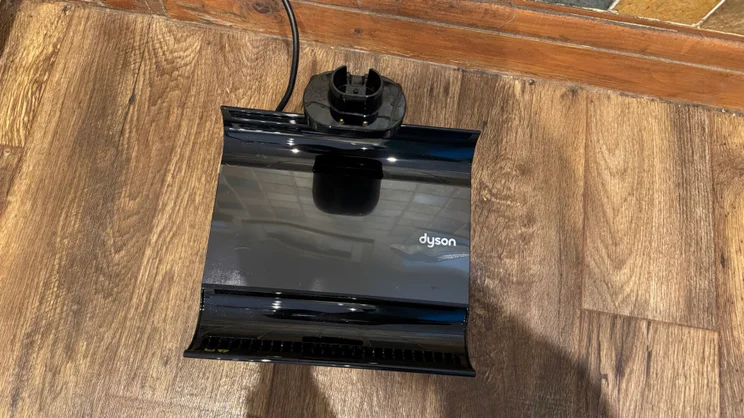
- Effective hot air drying dock
- Lies flat to go under furniture
- Dirty water tank prone to leaks while emptying
- Expensive
I’ve been a convert to powered floor-cleaning devices for a while now. Not only do they speed up the whole process of mopping the floor, they make it more hygienic, too. Whereas with a traditional mop and bucket, there’s a certain amount of dirty water recycling as you go, devices like the Dyson Clean+Wash Hygiene keep clean and dirty water separate, ensuring you don’t leave a film of grime behind every time you clean.
This Dyson takes things to a whole new level, however, with vacuum, self cleaning and drying capabilities, so you don’t even need to get the vacuum cleaner out first.
What do you get for the money?
Dyson isn’t known for its bargain basement prices and at a list price of £430, the Clean+Wash is no exception. However, at the time of writing (October 2026), the cleaner has been reduced to £300, making it a far more palatable proposition.
Even at this discounted price, though, it’s nearly £100 more expensive than the Kärcher FCV 3, and you are definitely paying a premium for the brand name, because in reality, the two do the same core job.
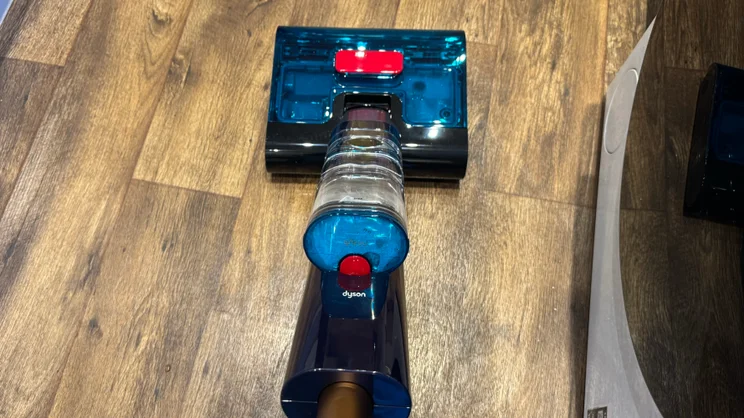
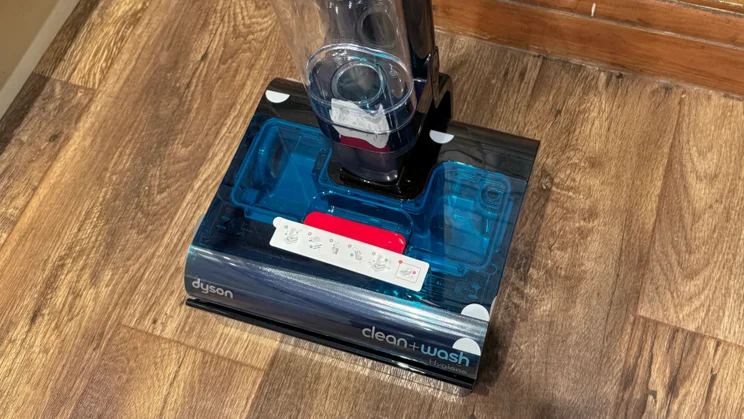
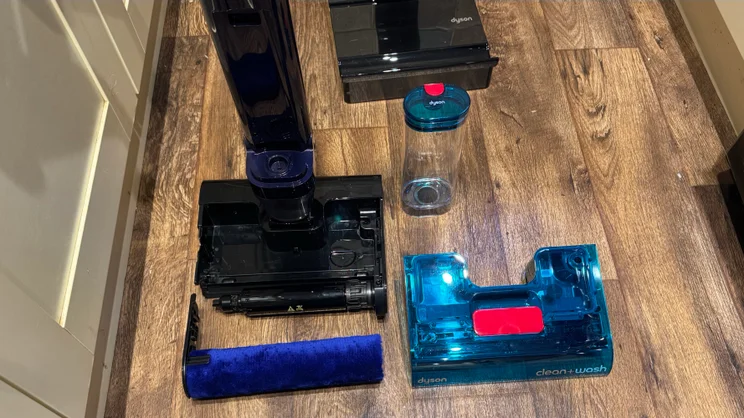
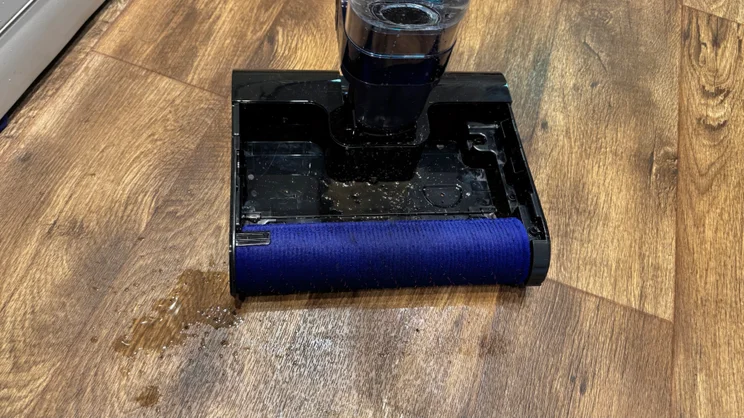
Both take water from a clean water tank, here situated at the front of the cleaner just above the base, and feed it onto a microfibre roller, which does the work of cleaning the floor. Dirty water and other debris is then sucked up into a dirty water tank, where it can be disposed of later.
Besides the usual Dyson design flourishes, however, and a fancy display at the top of the handle, there some key differences. The first is that the dirty water tank is located in the base, just behind the roller, so dirt doesn’t have so far to travel.
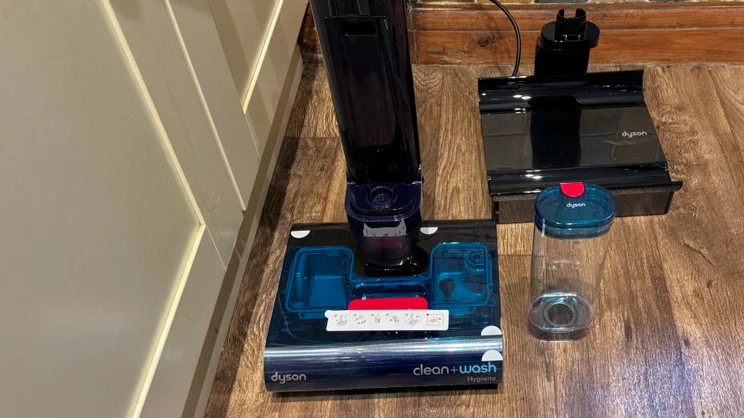
The second is that the charging base has a heater built in that actively dries the roller, making it less likely to pick up nasty niffs over time and less likely to spread dirt back on the floor the next time you use it.
How easy is it to use?
When you get it out of the box, there’s very little to put together. Once the handle is clicked into place, you simply remove the clean water tank and fill it up with warm water and, if you want, add some hard floor cleaner detergent.
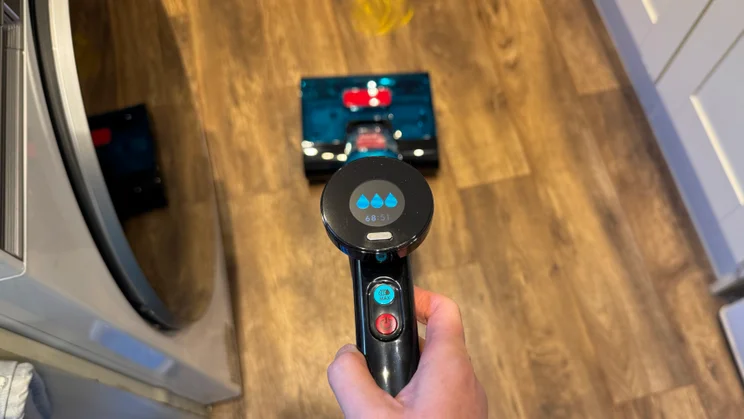
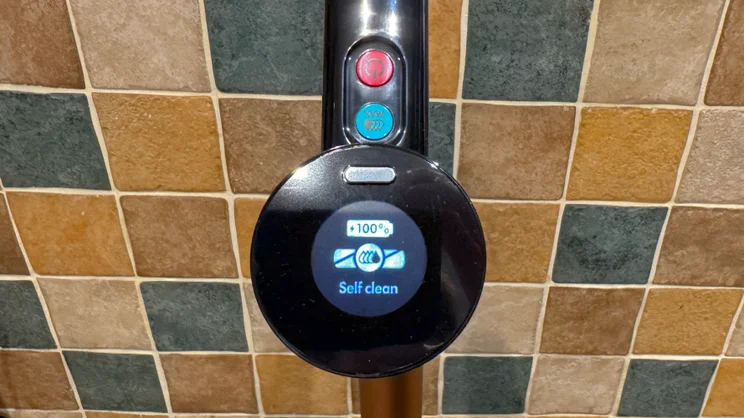
Dyson does make its own detergent, but you don’t get any with the Clean+Wash, so you’ll need to buy it separately. I chose to just use the cleaner with hot water. There’s one button to turn the cleaner on and a small silver button to alternate between the cleaner’s three power levels, plus a display on top of the handle that shows which battery and power status modes you’re currently using. There’s also a Max button you can hold down if you need extra water for a really stubborn stain.
When you turn the Clean+Wash on for the first time, a QR code will flash up on the screen to allow you to pair it with the MyDyson app. This doesn’t add anything particularly useful besides maintenance tips and troubleshooting, but it’s worth doing as it only takes a minute or two.
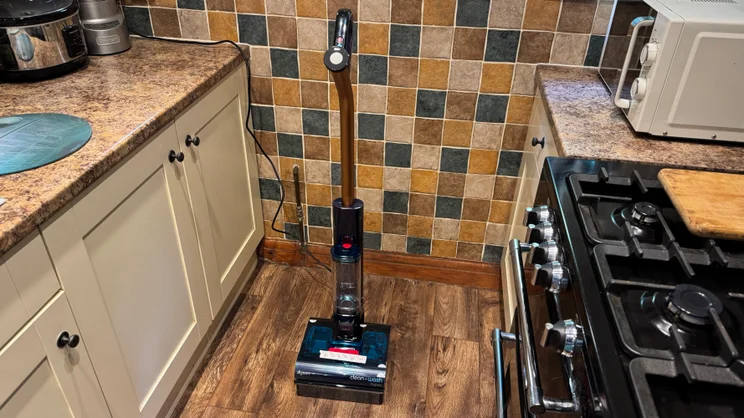
Otherwise, cleaning is simplicity itself. Put your foot on the base to tilt the handle and wand back, and you’re ready to clean. Despite its weight (around 4.6kg) , I found the Clean+Wash easy to manoeuvre thanks to its four wheels and smooth roller, and it was easy to click the handle back upright if I wanted to pause for a moment.
Unlike the FCV 3, the Clean+Wash doesn’t have a dry mode, so you can’t use it on rugs, but it will lift both dry and wet debris along with stains from hard floors.
How easy is it to clean and empty?
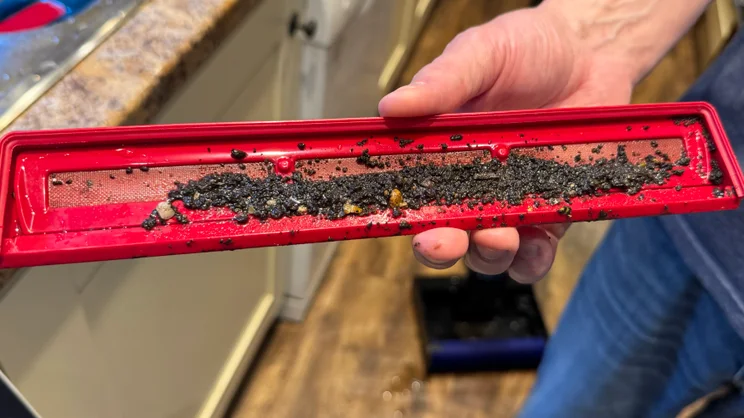
There’s a lot that’s good about the Clean+Wash’s emptying system, but this is also where the cleaner has its one big flaw. Emptying the tank is, on paper, a fairly straightforward job: just lift the red lever to remove and lift it out, slide out the debris tray and tap that out into the bin, then unscrew the red cap and pour out the dirty water.
The problem is that the water does have a tendency to leak out if you don’t hold the whole thing level as you take it out, and it’s frustrating dribbling leaks over the floor you’ve just spent time getting nice and clean. It was also slightly distressing seeing the colour of the water that came out, although I suppose this does show that the Clean+Wash is doing its job effectively.
What did impress me, however, was the self-cleaning cycle and hot-air drying dock, which restores everything to a clean and ready-to-go state without you having to get your hands dirty, although you do have to empty and refill the clean water tank with plain water and empty the dirty water tank first, or it will prompt you to do so midway through its cleaning cycle.
It’s also worth bearing in mind that the whole process takes half an hour and it’s quite noisy (you wouldn’t be able to watch the television in the same room with it going on for example). It is, however, hugely effective – I took the roller out to check once it was done and it was almost completely dry, with no dirt left on it at all.
How do we test hard floor cleaners?
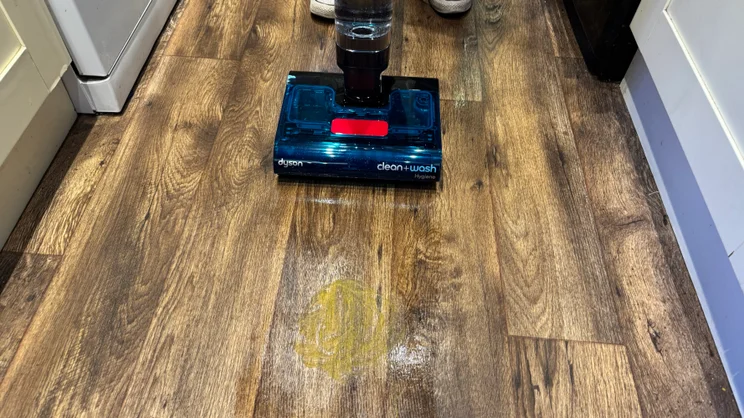
We test all the hard floor cleaners we review in Expert Reviews in the same way. We run a series of cleaning tests on hard flooring, with dried-on ketchup, mud and mustard. With each stain, we pass the cleaner over it forwards and backwards once and take before and after photos; then we keep cleaning, counting the number of forward/backward passes it takes to fully remove the stain from the floor.
We also test battery life, running the device on its max and minimum power modes to give you an idea of how long it takes before running out. We time how long it takes to fully charge the battery from empty. And we test noise levels, too, dBA.
How well does it clean?
Much like the Karcher FCV 3, the Clean+Wash did a great job in day-to-day cleaning, although for me it didn’t quite surpass my existing Philips OneUp 5000 Mop. This is a personal thing, but I just found it simpler to quickly vacuum the floor and then use the Philips mop afterwards. The Philips can’t vacuum up larger debris like the Dyson, but it is easier to clean and still keeps the clean and dirty water separate.
Obviously, the combined vacuuming and mopping action saves time overall, but the slightly long-winded emptying, cleaning and drying process had me missing my far simpler electric mop.
However, I really couldn’t fault the Dyson Clean+Wash Hygiend for dealing with everyday debris and mess on the floor. I especially liked its “lie flat” function, which means you can lay the wand almost flat on the floor and clean under tables and chairs without having to move them.
When it came to our pre-prepared stains, ketchup was the hardest for the Clean+Wash to cope with; it took 40 passes to remove it completely. That’s slightly better than the FCV 3 at 49, but it was with dried-on mustard that the Clean+Wash excelled, taking half as many passes as the FCV 3 at 30. It also cleaned up our test mud patch incredibly easily, with only five passes needed to remove it fully.
What’s the battery life like?
Battery life on the Clean+Wash is highly impressive. Oddly, there’s no discernible difference in battery life between each of the three modes, and even the highest setting lasts for an impressive amount of time.
I measured battery life in low mode at 66mins 27secs, medium mode at 67 minutes and max mode at 65mins and 48secs; all of which should be long enough for even the most demanding of cleaning jobs. It took four and a half hours to charge from empty, though, so it’s just as well it lasts so loing.
Should you buy the Dyson Clean+Wash Hygiene?
This is an elegantly designed and sleek machine that’s generally easy to use and does its job effectively. It looks great, the battery lasts ages and it deals with most stains and spills with relative ease. It’s effective, and does a great job drying itself to keep nasty smells and mould to a minimum.
However, there’s no dry mode option here, so the cleaner can’t be used to refresh carpet or rugs. And, unless you pick it up during an offer or sale, it’s very expensive, particularly when you consider the leaky dirty water tray.