
To help us provide you with free impartial advice, we may earn a commission if you buy through links on our site. Learn more
- Clear yet bass-heavy sound
- Great AI vocal remover for karaoke
- Loads of features
- Premium price
- Strobe lighting is a bit aggressive
- Only IPX4 rated
Made in collaboration with will.i.am, LG’s xboom Stage 501 is designed to be your all-in-one portable party music system. It joins the growing number of beefy party speakers from JBL, Sony, Marshall and more, and is the larger sibling of last year’s LG xboom Stage 301.
Top products in this party speaker category typically feature substantial, floor-standing designs, handles or wheels for easy transportation, bright RGB lighting, and loud, powerful sound. They’re a world away from smaller portable Bluetooth speakers you can toss in a backpack.
You can pick up and move the xboom Stage 501, but it’s unlikely to join you on a hike or your next picnic. This speaker is made for house parties and karaoke sessions, and is packed with clever features that make it fit for the job.
How much does it cost?
The LG xboom Stage 501 costs £450, a notable leap from last year’s Stage 301. However, the 501 is much larger. It weighs almost twice as much as the 301 and, at 220W, is much more powerful. It also has a bigger, swappable battery rated for 25 hours of playback, and dedicated AI Karaoke settings.
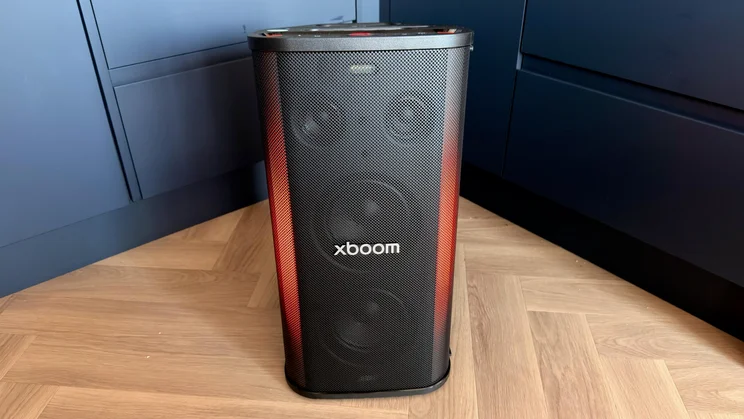
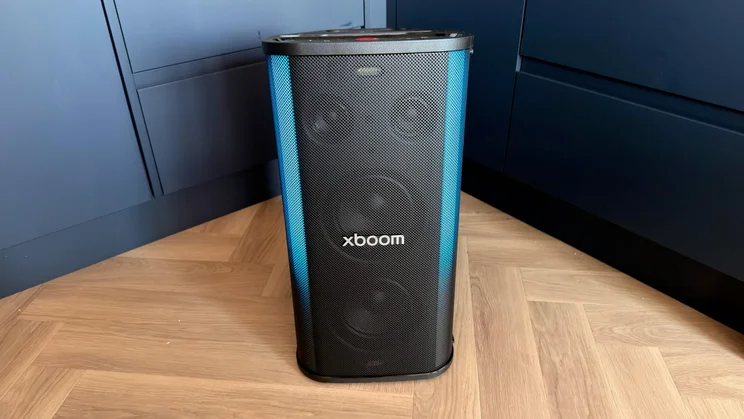
Like many party speakers, it comes in a simple black finish with customisable lighting. In this case, that’s RGB light bars and two bright lights that flash (top and bottom, or left and right, depending on how you orient it).
At this price, it sits between two new Sony party speakers, the ULT Tower 5 (£349) and ULT Tower 7 (£499). Other competitors include the JBL PartyBox 130 (£399) and the Marshall Bromley 450 (£549), which is even larger and heavier.
What features does it have?
This Stage 501 is as feature-packed as you’d expect for its high price. You can control many of them via buttons on the speaker’s body, but the full suite of extras is only available via the LG ThinQ companion app.
The feature set includes specific karaoke options, AI-powered sound modes and room calibration, USB and AUX audio, LE Audio and Auracast, a swappable battery, connections for microphones and guitars, and both RGB and strobe lighting (with “AI Lighting” effects too).
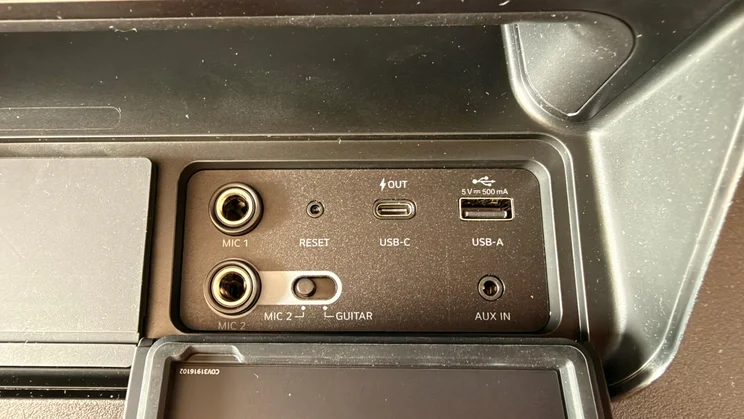
LG also includes a USB-C port for charging devices and a USB-A port for connecting USB storage drives. The brand’s Party Link unlocks multi-speaker connectivity, while Bluetooth multipoint lets you connect two sources to the speaker simultaneously. The Stage 501’s built-in microphone supports hands-free phone calls. TLDR: if you’re looking for a big portable speaker that does just about everything, the Stage 501 is a compelling option.
Get ready for karaoke and a colourful light show
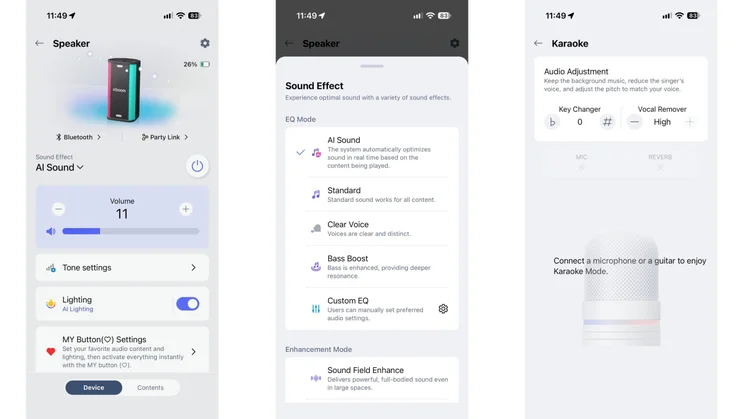
While I haven’t had a karaoke session during my test period, I have tested the AI-powered vocal remover that strips vocals from audio in real time. This means you can turn any song into a karaoke track without special software, and it worked perfectly on every track I tried, no matter the genre. It’s easy to see how the Stage 501 could be a fantastic karaoke machine with its dual 6.35mm jack inputs and onboard pitch-shifting and key-changing controls.
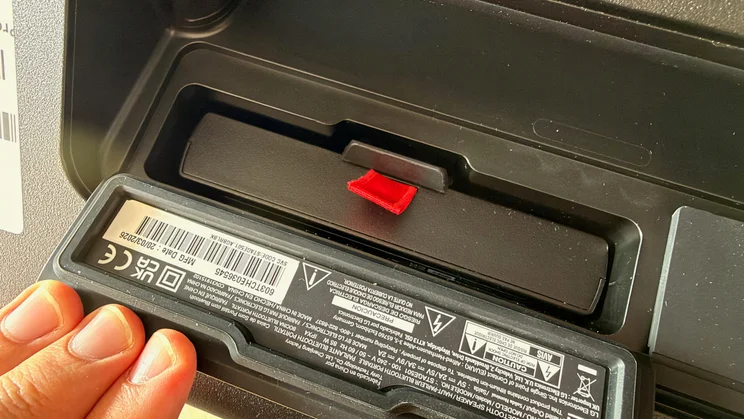
Battery-wise, LG promises 25 hours from the 99.1Wh removable battery. Based on my time with the speaker, this feels accurate, but I’ve rarely driven it to its limits. The batteries recharge in three hours, and you can buy additional battery packs (price TBC) to swap in when required.
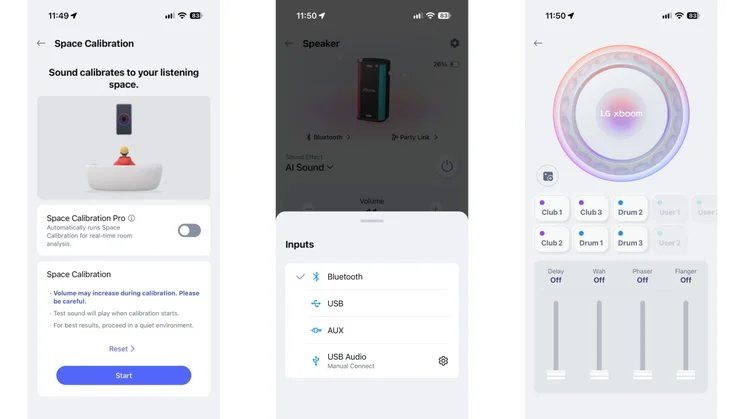
I initially found the Stage 501’s lighting effects a bit distracting, but you can control them to a decent degree. The app lets you pick the lights’ colours and how they flash, and there’s an AI Lighting mode that syncs light effects with your music. I found the bright strobes too much, though, so I was pleased to discover you can turn them off.
How I tested the LG xboom Stage 501
I used the LG xboom Stage 501 as my main home speaker for over a week. During that time, it soundtracked gatherings with friends and became my go-to for music while working from home. I used it all around the room and on my balcony to test its performance in open spaces and how it sounded when angled, upright, or against a wall.
Cycling through pop, hip-hop, rock, and ambient electronic tracks let me evaluate the sound quality across genres, and I tested the karaoke settings by running the AI vocal remover and key changer on a wide variety of songs to assess how well it separates vocals from background instruments.
I paired the Stage 501 with smartphones via Bluetooth and used it for several hours at a time to check its battery longevity. While I didn’t have other party speakers on hand for direct comparison, I’ve used multiple options from rivals like Sony and JBL, which help to contextualise the speaker’s performance within the category.
Why you can trust me
I have over a decade of experience writing about consumer electronics. During that time, I have tested numerous Bluetooth speakers and home audio products and written for titles such as Esquire and Digital Spy. Most recently, I was Technology Editor for Good Housekeeping UK.
How easy is it to control?
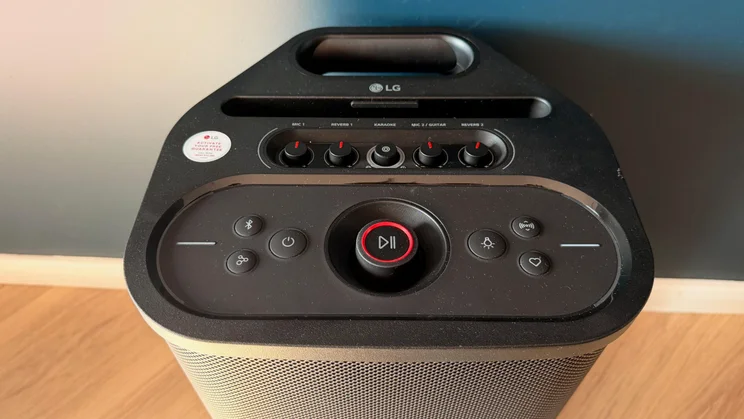
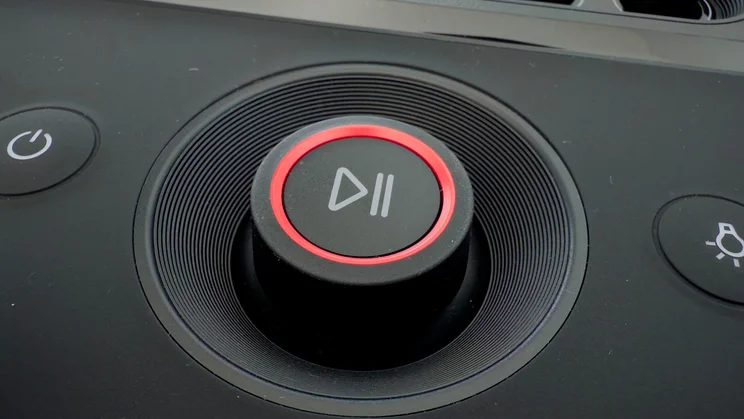
You won’t need to dig into LG’s app for most basic functions and everyday tweaks, as the top panel is loaded with buttons and dials. There’s a power button and a large main volume/playback dial right in the middle (push it once to pause, twice to skip, or three times to go back), alongside independent dials and knobs for adjusting mic and guitar levels.
You also get direct access to vocal isolation and pitch-control karaoke features, dedicated buttons to cycle through lighting presets and trigger Party Link (for daisy-chaining Auracast-compatible speakers in stereo or multi-room), and a button for switching inputs. There’s also a button for your favourite preset and a Sound Mode button that changes the speaker’s sound effect.
For everything else, you need the LG ThinQ app, which you can’t use without setting up an account and providing a few personal details. I don’t think Bluetooth speaker apps should require logins and passwords.
Using the app (after a bit of account setup rigmarole) is absolutely fine, at least. It’s an intuitive platform with loads to offer. You can tweak the sound with a six-band equaliser, dive into lighting customisation, play with DJ sound effects (like blaring horns, if you want) and manage firmware updates.
How portable is it?
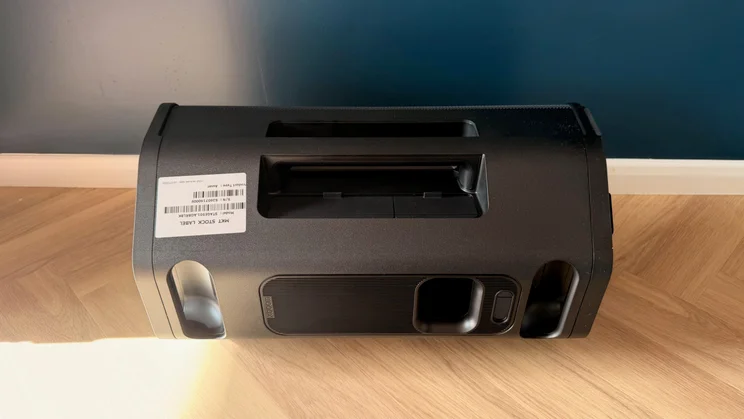
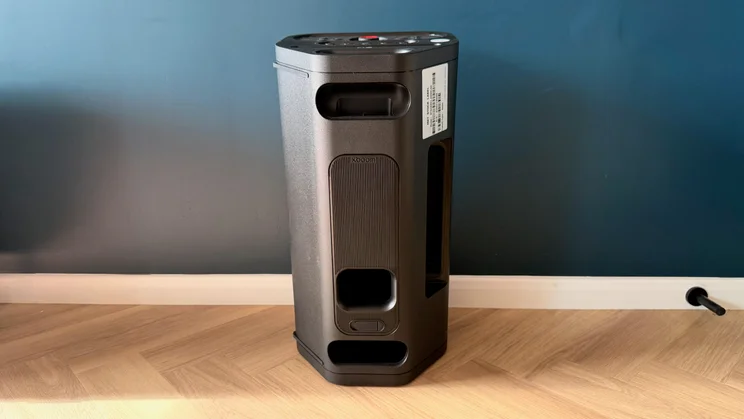
This is a chunky speaker, but sturdy, built-in handles made it relatively easy for me to move around. It weighs 11.7kg, almost double the 6.6kg Stage 301, but is still not quite at the upper end of the partybox category, where rivals can go well over 20kg and need wheels.
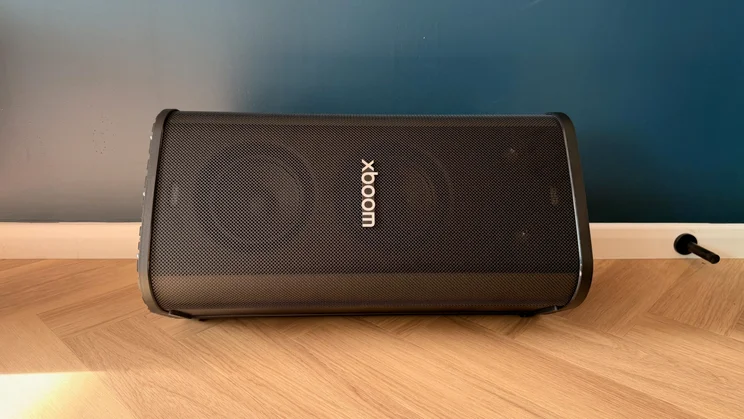
As long as you can comfortably lift that kind of weight, the Stage 501 is reasonably portable thanks to its integrated grab handles. I found it easy enough to lift two-handed and position in its default upright state, on its side, or angle the speaker drivers upward. It’s also mountable on a tripod via a hole on the speaker’s base.
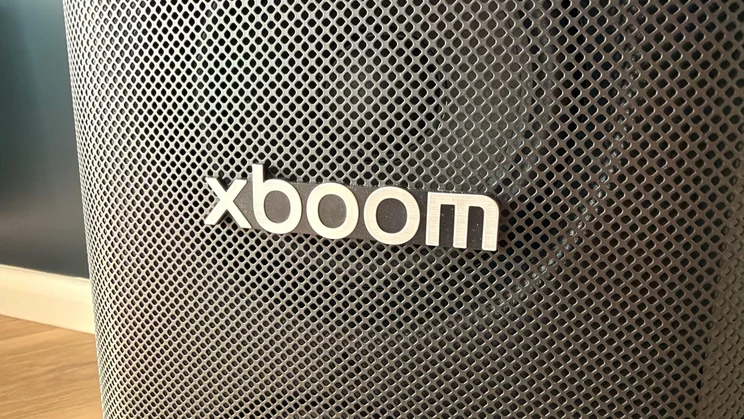
The Stage 501 is fairly discreet for a party speaker. It’s simply a large black box, with “xboom” branding on the front (which you can handily rotate to match the orientation of the speaker).
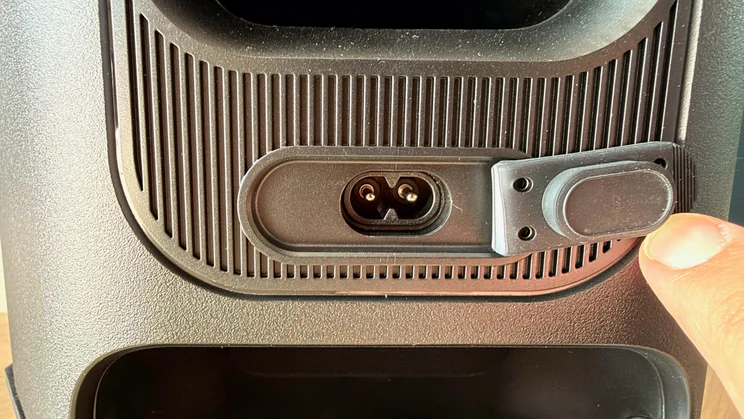
A little weather resistance is typical for the best party speakers, so it’s good to see LG matching JBL and Sony here by offering an IPX4 rating. That means the Stage 501 can handle poolside splashes and light rain, but can’t be submerged and isn’t protected against water jets. It’ll handle a rain shower fine, but you’ll need to be careful with heavy downpours. The most important ports have seal covers, too, which should help keep them dry and safe. It’s also neat that the speaker has a designated space for placing a tablet or phone.
What’s the sound quality like?
The LG xboom Stage 501 delivers 220W of continuous power when plugged into the mains, or 160W when running on its battery. Its acoustic design features two 2.5in midrange drivers above a pair of 5.5in woofers. Like many party speakers, this speaker is built for bass, and I can confirm that it sounds most impactful with its rear bass ports up against a wall.
Assuming my review sample arrived with the default settings untouched, you’ll find it’s in the Bass Boost sound mode right out of the box. But the most important thing I noticed is that its low end isn’t overly thumpy or boomy; vocals were clear on Eminem’s Phenomenal and high-energy tracks like Muse’s Hysteria and Song 2 by Blur.
At low to moderate volume, the speaker has a sweet spot you need to position it in for optimal output. However, when you push the volume up, the Stage 501 gets seriously loud and can fill a room without issue. Run the “Space Calibration Pro” tool, and the speaker optimises audio for your living space. I found it made it a bit too loud for my flat, though.
Prepared for partying
Overall, this is a great-sounding speaker for parties. The bass is full, deep and well-rounded, while vocals are clear and distinct, even on softer songs like Wait by M83. The smooth mid-range makes it suitable for casual listening; this isn’t just a speaker for going loud and providing your party soundtrack. While I stuck to a sensible 25-30% volume most of the time, I tested the speaker above 80% and can confirm it remained clear and distortion-free.
I tried other preset sound modes, but most enjoyed Bass Boost and AI Sound. The latter optimises for the current track playing, and seems to work fairly well. Both Standard and Clear Voice rob the speaker of some of its heft, which is its primary appeal. The remaining modes (Sound Field Enhance and Play Time Enhance) didn’t sound as engaging to my ears.
Should you buy the LG xboom Stage 501?
The LG xboom Stage 501 is worth it if you want a big, premium all-in-one speaker packed with features. It’s great for party hosts and karaoke lovers, and it performs best indoors when placed against a wall.
If you need a single speaker for everyday listening with mic and guitar connectivity, it fits the bill nicely. It also offers lots of smart AI-powered enhancements and useful features.
However, it’s pricey; similarly sized models from JBL and Sony cost a lot less. It’s also very bass-focused, and while I appreciated the 501’s mid-range and vocal clarity, it may not deliver the high-frequency detail some are after. There are also far more portable options. The Stage 501 can feel like a lot to move around, so you’ll need to be confident hauling it from place to place before splashing out.


