To help us provide you with free impartial advice, we may earn a commission if you buy through links on our site. Learn more
I’ve just come out of a demo of the newly announced Sonos Beam Ultra soundbar and Sonos Ace Headphones, which were officially announced earlier this week, and I’ve come away quite impressed.
I can’t comment on the sound quality yet because Sonos would rather I kept that for the full review (coming later this month), but that’s okay because there’s plenty of other stuff to talk about and new features driven by the products’ Fabric and AI compatibility. And plenty to like, too.
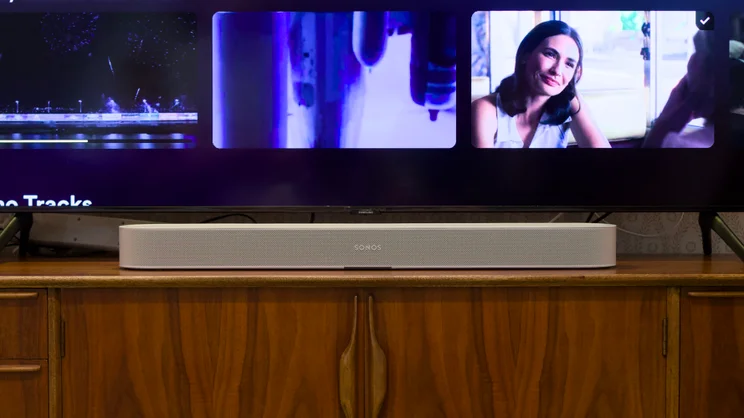
Before I go any further, though, let’s just recap what’s new and different about these two products. The Sonos Beam Ultra – the most interesting of the two, in my view – is the follow up and replacement for the Sonos Beam Gen 2 that I reviewed back in 2023.
It’s just as compact as the original, the overall shape is the same, too, and there’s still only one HDMI (eARC) input on the rear. This remains a compact soundbar designed for small apartments and living rooms.
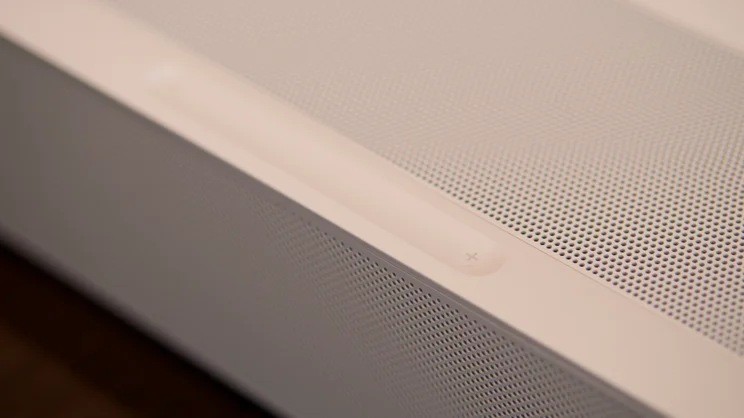
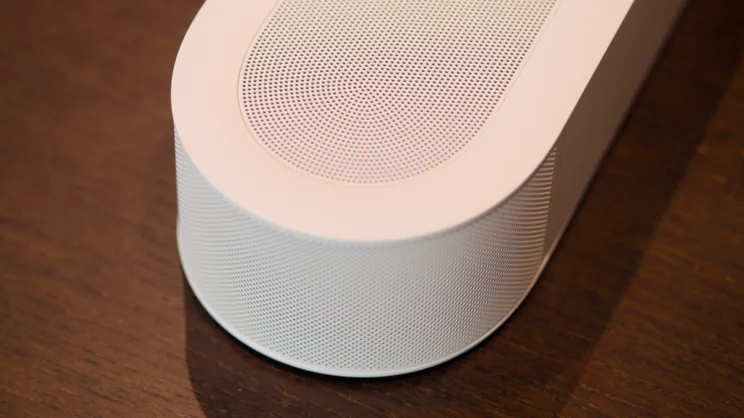
From the front and the side, you might wonder what on earth was different, until you look down on it from above, that is, where you can see a grille occupying most of the top of the bar, pushing the touch controls out to the front edge. Play/pause and skip controls reside in the centre, as before and there’s a new touch-sensitive indent for adjusting the volume on the front right.
Under that top grille are two new up-firing drivers for proper Dolby Atmos support, and there’s a further seven front- and side-facing drivers pumping out 7.1.2 audio. And among those drivers is a brand-new coaxial centre transducer designed for clearer speech output. This latter speaker is accompanied by more granular adjustment in the app, which provides four different levels of speech enhancement: low, medium, high and max.
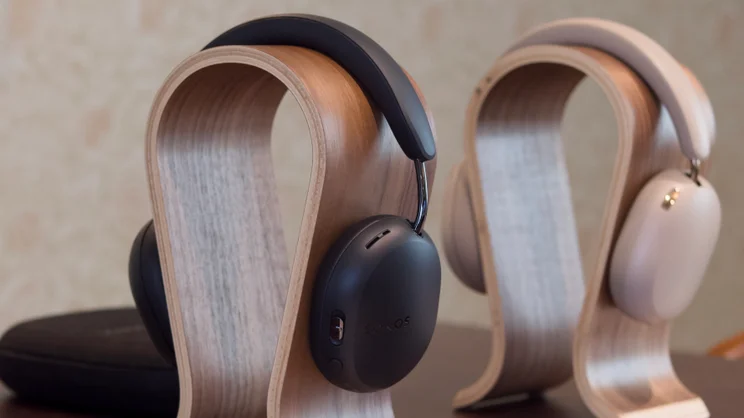
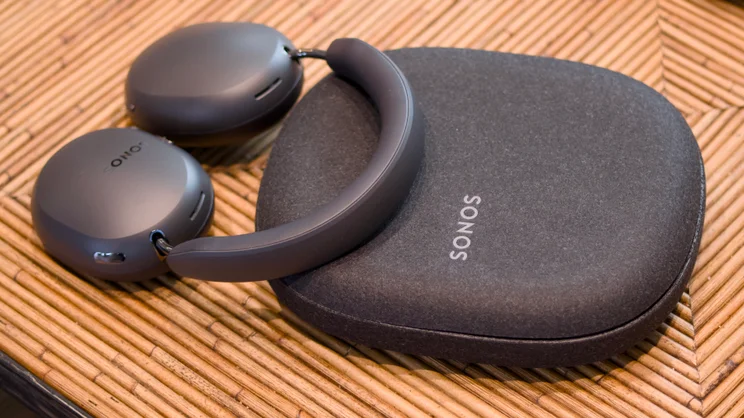
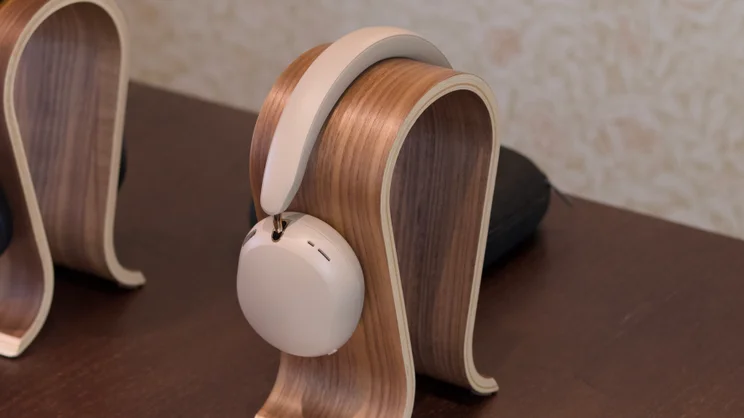
The Sonos Ace Ultra is again, not particularly exciting from a design point of view. From a distance, it looks largely the same as the standard Ace headphones. The ear cups still have that pleasing low-profile look to them, and the core controls are all in familiar places. The ear padding has been given an overhaul and looks a little different, but this isn’t a radical aesthetic difference, and there are a couple of new colours – Agave and Sand – to keep fashion-conscious listeners happy.
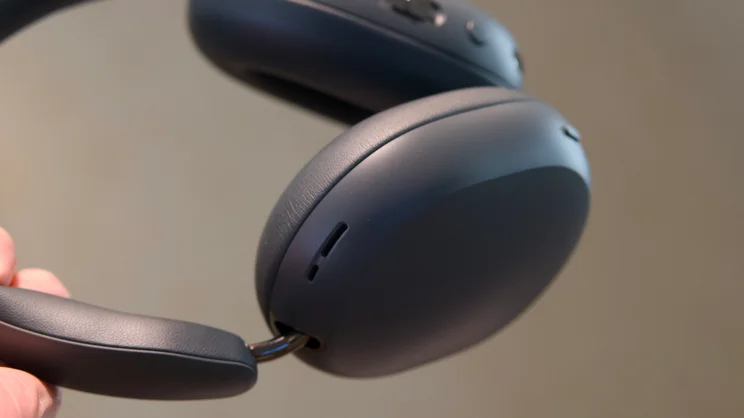
Otherwise, all the changes for the Sonos Ace Ultra are on the inside, with new custom-made 40mm drivers delivering better transient response. There’s improved ANC, too, and better passive sound cancellation, with a particular focus on adaptation to movement and sound leaks. Glasses wearers will be particularly pleased with these improvements, according to Sonos.
You also get user-replaceable batteries and – at the request of the Sonos community – a choice of three- or eight-band EQ adjustment.
However, the most interesting part of this new launch resides not only within the hardware itself, but in the software platform that ties everything together: the newly launched Sonos 27, which comes with new multi-device support and “headphone-linking” via a new system Sonos is calling Fabric.
Fabric, which is also supported by the Sonos Move 2 and Sonos Play speakers, and Sonos Arc Ultra soundbar, is essentially a location-aware software layer that is lets products find other nearby Sonos speakers and link with them quickly and easily. It’s the system behind the new headphone-linking capabilities of the Sonos Ace Ultra. This allows you to hand audio over to, or from any compatible nearby speaker to the new headphones, by simply holding in the volume button on the right-hand earcup.
It works well, too, if the demo I was shown is anything to go by. But that’s not the only thing you can do with Fabric. You can also use it to quickly add a pair of rear speakers to your Sonos Beam Ultra setup, just by bringing those speakers into the same room. Those speakers have to be a stereo pair, but it means you can purchase a pair of Sonos Play speakers – not an insignificant outlay at £299 per speaker – and use them primarily for stereo audio, then move them into the living room and use them for a Saturday night movie as rear speakers, on a temporary.
But Fabric isn’t the only area where Sonos is innovating with Sonos 27. There’s also a new Sonos Voice system, powered its own in-house LLM, specifically trained on all things music and audio. The promise of Sonos Voice is that you’ll be able to use natural language to search for and play music, perhaps by describing an album cover or loosely describing a piece of music.
We weren’t shown this in action, more’s the pity, but the next feature is even more exciting/terrifying, depending on your viewpoint because Sonos Voice will now be able to interact with external AI agents via MCP (Model Context Protocol), allowing it to deal with requests that are outside the remit of the strictly music-focused Sonos Voice LLM. The same system will allow the AI agent of your choice to interact with and control your Sonos voice system, too, meaning scratching around in the app, looking for obscure settings to set up schedules and complex groupings should be a thing of the past.
As usual, Sonos’ products look great and they’ll (probably) sound pretty good too. But the proof of this particular pudding will be in how well all the new features knit together. We’ll have review samples in our hands very soon and will report back later this month.