To help us provide you with free impartial advice, we may earn a commission if you buy through links on our site. Learn more
- Comfortable and durable design
- Active noise cancellation
- Punchy sound and pseudo-spatial capabilities
- Earpads can get quite warm
- Lacks the ANC button found on the Monitor III
- No wear detection
I’ve historically struggled with on-ear headphones. While I appreciate their light weight, I’ve typically found their earpads uncomfortable and the level of external sound they let in detrimental to my listening experience.
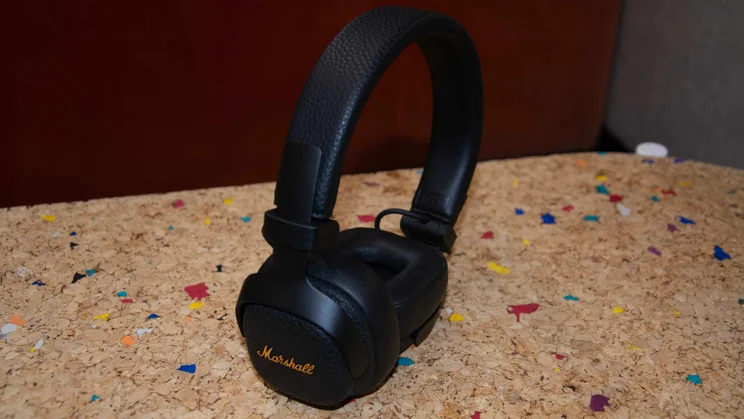
The Marshall Milton ANC are the closest any pair of on-ear headphones has come to changing my mind about the format. With wonderfully judged clamping force, forgiving earpads, adaptive active noise cancellation, and engaging sound, they’re headphones I’ve started to actively use in place of my favourite over-ear and true wireless options.
What do you get for the money?
The Marshall Milton ANC cost £170, which places them at the premium end of the on-ear headphones market. Their most notable rival is the Beats Solo 4, but those immensely popular headphones lack the Milton ANC’s killer app: active noise cancellation.
The headphones use six microphones to deliver adaptive ANC, which automatically adjusts to the volume of your surroundings. There’s also a transparency mode for when you want to dial into the world around you.

Elsewhere, the Milton ANC are a very solidly specified pair of headphones. They operate over Bluetooth 6.0, support Aurcast and multipoint pairing with two devices, and their codec compatibility covers LDAC and LC3 in addition to SBC and AAC. Each earcup houses a 32mm dynamic driver with a stated frequency response of 20Hz to 20KHz (or up to 40KHz if you’re streaming over LDAC).
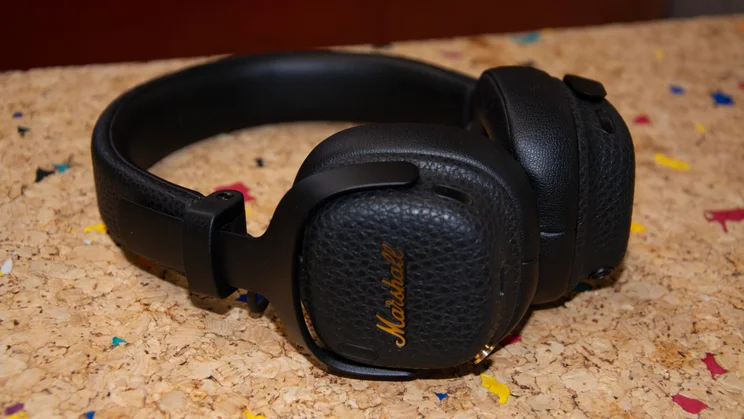
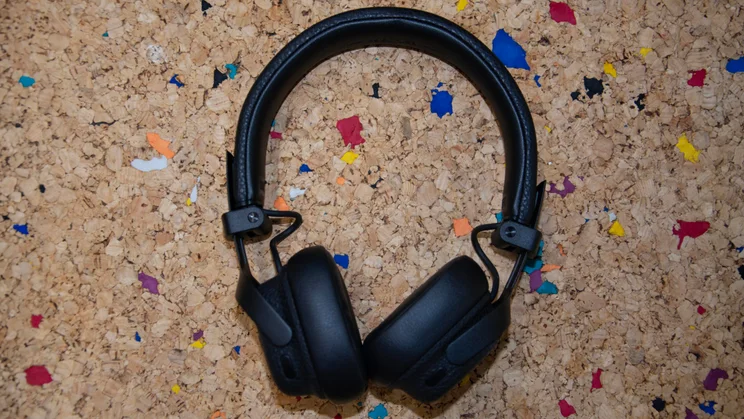
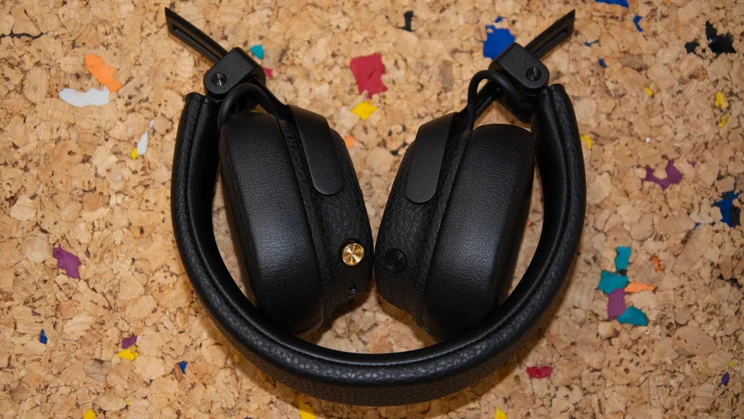
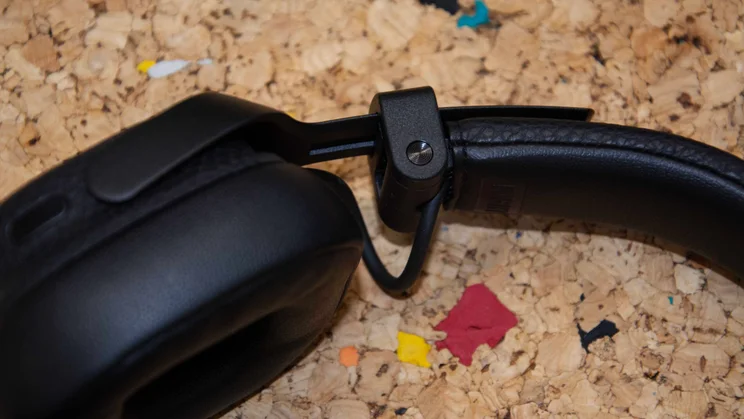
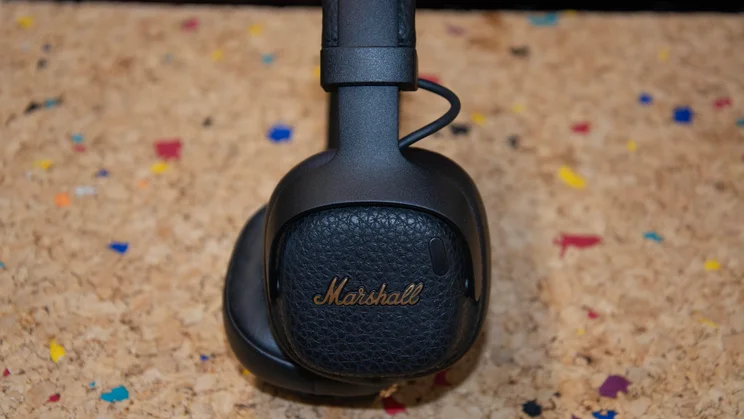
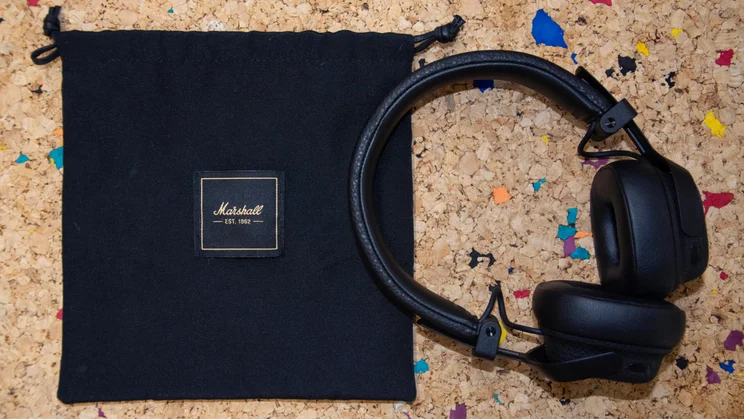
The headphones are as durable as they come, which is a hallmark of Marshall wearables. The headband is incredibly flexible, the outer shells of the earpads are practically indestructible, and the pads are foldable for easy storage. They weigh just 200g, and Marshall supplies a fabric carrying pouch for transporting them. It also includes a short USB-C-to-USB-C charging cable and a coiled USB-C-to-3.5mm cable for wired listening. The headphones don’t operate passively when wired, though; you have to switch them on.
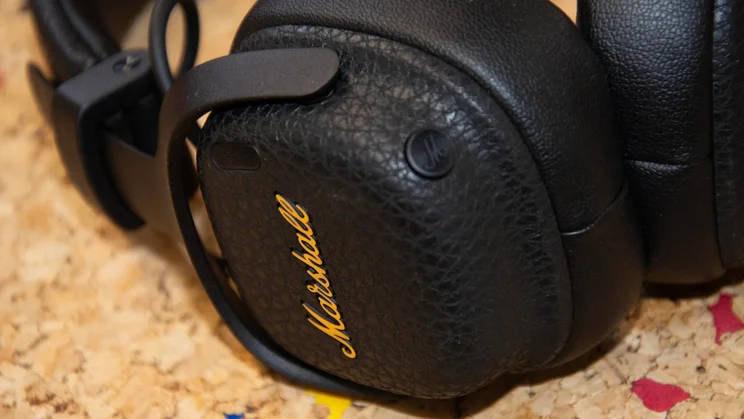
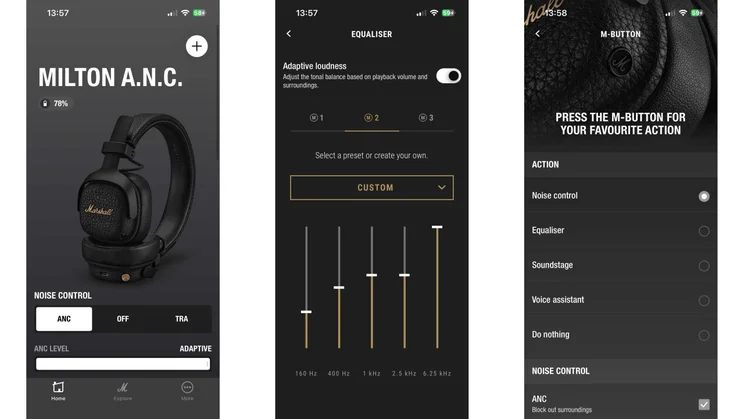
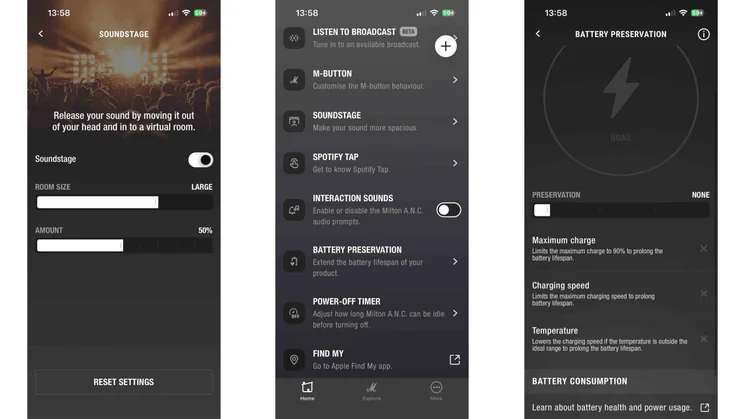
Stated battery life is 50 hours with ANC and up to 80 hours without it, though the Soundstage spatial audio mode lowers these numbers. This is one of a handful of features you can activate via the Marshall app or assign to the customisable “M-button” on the shell of the left earpad. I’ll talk more about the Milton ANC’s control setup shortly.
How I tested the Marshall Milton ANC
I used the Marshall Milton ANC in a range of real-world scenarios over three weeks, while also testing them extensively in the calmer confines of my bedroom. I wore them during my commute to and from work, which involves an overground train and two Tubes, while walking around town, in the office, and even at a Marshall launch event!
Each level of the noise cancellation was tested in these environments, both while listening to music of a wide variety of genres and with no audio playing. I spent time on work calls on Google Meet and social calls on my phone to assess microphone quality, and used all supplemental features available whenever relevant, to judge their utility and effectiveness.
How comfortable are they to wear?
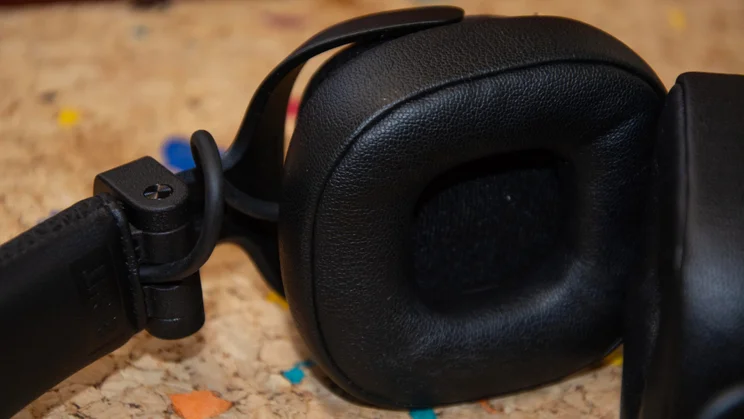
On-ear headphones rarely suited me in the past, but the cosy feel of the Milton ANC pleasantly surprised me. While I still prefer the total coverage of over-ear earcups or the freedom of earbuds, the Milton ANC only bothered me after more than two hours of continuous use—and during the recent trio of heatwaves, which made the earpads exceptionally warm
The thin lining on the underside of the headband, which moulded to my bald dome very nicely, provided the ideal amount of padding, while the Milton’s clamping force was just right to hold the earpads securely on my ears without squishing them. There’s a lovely amount of give to the padding, which allowed me to wear the Milton for a lot longer than I can normally manage with on-ear headphones.
How effective are the controls?
When I reviewed Marshall’s over-ear flagship, the Monitor III ANC, I described their control options as “among the best around”. The Milton use a similar setup, and it works well, but isn’t quite as comprehensive.
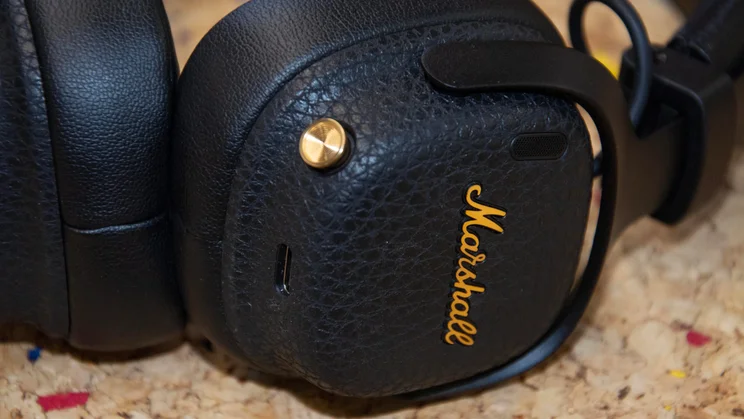
On the right earpad, you’ve got a multi-function control knob that powers the headphones on and off, plays and pauses audio, adjusts volume, and skips and scrubs through tracks. It’s a delightfully tactile way to interact with a pair of headphones, and the controls are executed flawlessly.
Unlike the Monitor III, there’s no ANC button built into the yolks that connect the earpads to the headband. This leaves the M-button on the left earpad as your only other physical control option. You’re free to assign one of four actions (noise control, equaliser, Soundstage or voice assistant) to it in the Marshall app, or leave it redundant if you’d prefer.
I assigned noise control to it to engage ANC as and when I wanted, but doing so meant I had to dip into the app to activate the spatial audio mode, switch EQ or hail my voice assistant. This is a relatively minor inconvenience, but as ANC is the headline feature of the Milton, it’s a shame Marshall hasn’t included a way to access it separately rather than forcing you to choose it over other handy features.
How effective is the noise cancellation?
There’s a reason not many on-ear headphones offer active noise cancellation: they don’t completely enclose your ears, so a certain amount of sound is inevitably going to make its way through. Taking that limitation into account, the noise cancellation offered by the Milton ANC is really rather good.
With it set to High, it dampened commuter noise to a level where I could comfortably listen to music at around 50% volume. At Medium settings, it served me very well in the office, allowing me to block out the most distracting noise but remain semi-aware of bits and pieces going on around me.
There’s also a Low setting, though the level of attenuation provided here didn’t feel worth using. You can also choose to have the Milton ANC gauge how much noise cancellation to apply at any given time using the Adaptive setting, and, more often than not, I just let it do its thing and had no complaints.
The transparency mode is pretty good, too. It doesn’t pipe in crystal-clear external sound – things did sound a little muffled – but I found it an effective way of quickly enabling me to hold conversations at my desk. There’s no support for wear detection, which makes transparency mode all the more important.
What’s microphone quality like?
I spent several hours using the Milton ANC on calls – both at home and further afield – and those I spoke to were generally impressed by their performance. Audio quality was described as “pretty good overall” as Will Georgiadis and I chewed the Expert Reviews fat, with the big boss stating that they “did a solid job, and isolated my voice very nicely”.
The microphones delivered consistent, dropout-free audio, though listeners noted a slightly grainy quality. Listening back to voice recordings, I did note a bit of a retro tinge to how I sounded, but overall, the Milton ANC proved capable of facilitating smooth communication.
How good is the sound quality?
I always feel I have to caveat my opinions of the sound quality of Marshall products by saying that I don’t really fall into the brand’s target demographic: Download veteran Ben Johnston is Expert Reviews’ resident rock and roller. But I know a good-sounding pair of headphones when I hear them, and the Milton ANC are definitely that.
In the past, I’ve found Marshall headphones a little light on bass. I can’t level that accusation at the Milton; the headphones delivered a satisfying low-end response in the well-balanced “Marshall” equaliser preset. The pulsating bassline on Durante and Nathan Nicholson’s Holding On bounced along with healthy depth and richness without stepping on the toes of the haunting vocals or subtler instrumental interjections. Meanwhile, the melodic synths on Paul Van Dyk’s Duality were razor-sharp and cohesively knitted together with the drum machine driving the track relentlessly forward.
The Milton handled poppy tracks like Ashlee Simpson’s Pieces of Me adeptly, too. The headphones tracked the singer’s shifting pitch and dynamics smoothly, bringing crisp detail to both the acoustic and electric guitars. Surprisingly, the Milton ANC weren’t always quite as authoritative with what I’d anticipated would be their staple fare: rock and metal.
The aggressive guitars on Icelandic rap rock band Quarashi’s Stick ‘Em Up packed plenty of punch, but the vocal component lacked visceral impact. That said, the Milton ANC’s upper midrange and treble performance was excellent on Nirvana’s Smells Like Teen Spirit. There was real bite and venom to the attack that had me nostalgically thrashing my head and reliving my teenage years.
A Soundstage success
The default soundstage is coherent, though not particularly broad, which is where Marshall’s “Soundstage” technology comes in. This proprietary processing tech aims to create a feeling akin to sitting in a room with music being played around you. It’s not a knockout success, but I rather enjoyed it every once in a while. Once you switch on the feature, you’re free to select your desired room size from Small, Medium, Large and Extra Large and the amount of virtualisation, ranging from 10% to 100%.
I didn’t feel much benefit below 50%, but above that, the effect was engaging. Billy Joel’s Piano Man was a more intimate experience with Soundstage set to a small room size and 70% than it was without the mode engaged. While closing my eyes and listening to Oasis’ Supersonic with room size set to Extra Large and amount set to 100%, I could almost visualise myself standing at the back of a venue tapping my feet, nodding my head, and trying to avoid getting covered in beer. I do have a very vivid imagination, though.
Your other audio customisation options are more prosaic: there are four preset EQs in addition to the default Marshall one (Bass Boost, Mid Boost, Treble Boost and Mid Reduction), and two slots for custom EQs created on a rudimentary five-band graphic equaliser. I bumped the 1KHz band up a notch or two, but otherwise found the default tuning worked well for general use.
Should you buy the Marshall Milton ANC?
If on-ear headphones are your thing, then absolutely. I’ve never been a big fan of the format, but I really warmed to it while testing the Marshall Milton ANC. Effective ANC makes them a viable alternative for commutes, and their well-organised sound is great for general listening.
I don’t advise wearing them for long periods during a heatwave – it’s true wireless all the way for me in those conditions – but as on-ear headphones go, the Milton ANC are the most comfortable I’ve come across. They get a strong recommendation from me; were it not for a couple of minor omissions and quibbles, they’d have bagged a Best Buy award.