To help us provide you with free impartial advice, we may earn a commission if you buy through links on our site. Learn more

- Organised, punchy and tall sound
- Intriguing looks, well-made and finished
- Works with other brands in a multiroom setup
- Lacks sonic width
- TrueSpatial is no Dolby Atmos
- Needs better Bluetooth codec support
Got around £300 to spend on a wireless speaker? A speaker that’s not too space-hungry but that can create a big and enjoyable sound? You don’t need me to tell you that you’re spoilt for choice. With the arrival of the Bose Lifestyle Ultra Speaker, that choice just got a little bit more difficult.
It has several things going for it in its quest to disrupt an already cutthroat section of the audio market, and although Bose’s proprietary TrueSpatial technology is no match for Dolby Atmos, it’s definitely worth adding to your wireless speaker shortlist.
How much does it cost?
The Lifestyle Ultra Speaker costs £299 in the Black or White Smoke finishes, while the Driftwood Sand option, which features a quantity of natural oak wood at the base, sells for £349. This means the Bose lines up more-or-less directly against some well-established and well-regarded alternatives, most notably the Sonos Play and the WiiM Sound.
Is it well-designed?
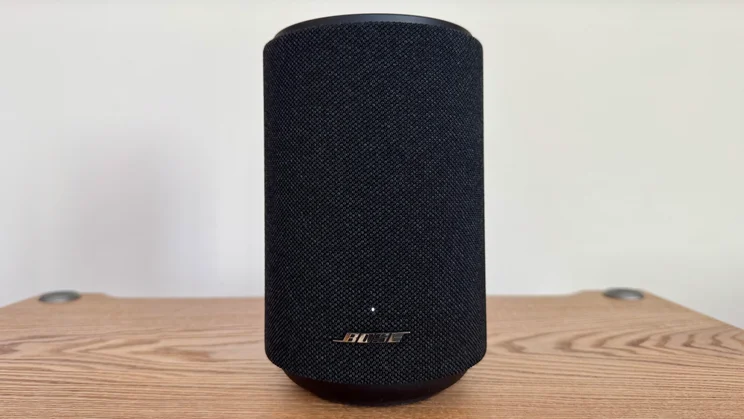
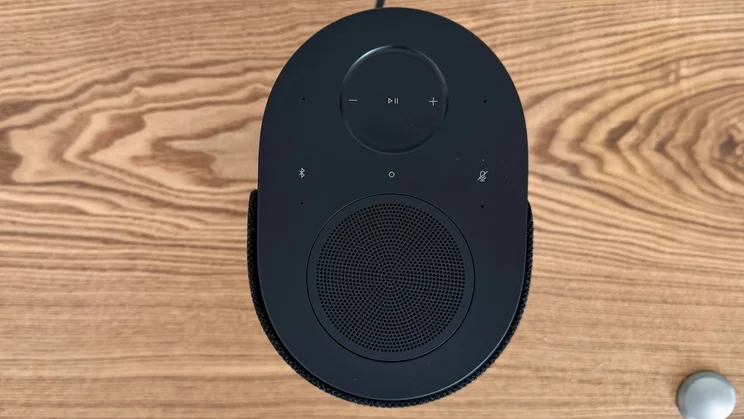
At 121 x 184 x 167mm (WHD), the Lifestyle Ultra Speaker is a little larger than its nominal competition, but it’s still compact enough to sit happily on a kitchen worktop or a shelf (as long as there’s nothing above it to prevent its up-firing driver operating properly). And once it’s in position, the chances are you’ll enjoy an aesthetic that’s just about different enough from the cylindrical norm to make an impression.
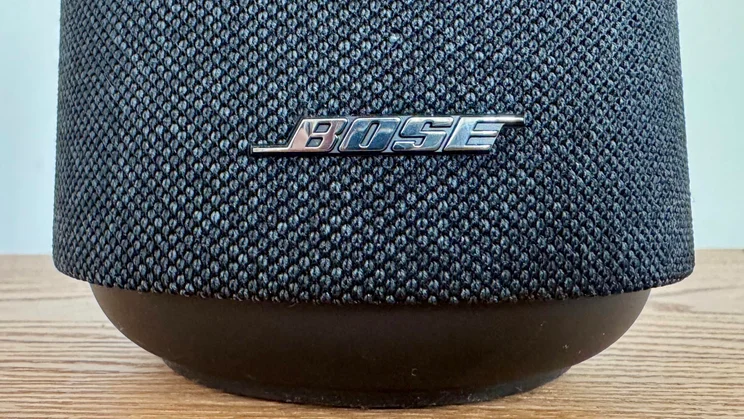
No matter if you’ve gone which finish you go with, you’ll own a speaker that’s mildly interesting to look at, built and finished to a predictably high standard, and that looks (and even feels) like the asking price.
Just be aware, though, that the curved grille that stands slightly ahead of the main cabinet body is not removable. It looks like it is, but don’t even try unless you want to invalidate your warranty.
What connection options does it have?
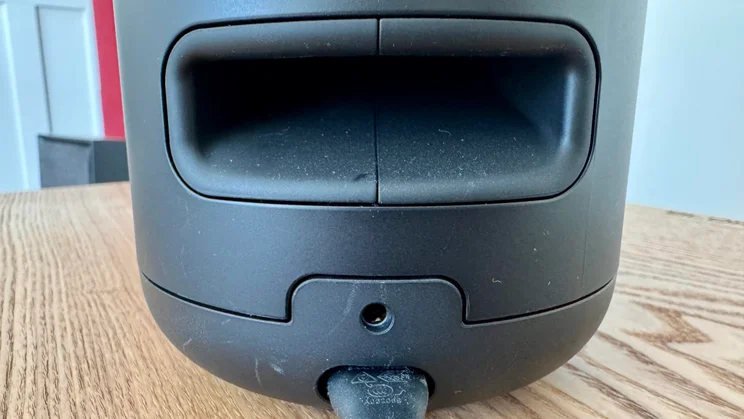
As far as physical connections go, there’s just a 3.5mm line-level analogue input on the rear of the cabinet, above the figure-of-eight socket for mains power.
Wireless connectivity comes courtesy of Bluetooth 5.3 (disappointingly, only compatible with SBC and AAC codecs) and dual-band Wi-Fi. Use the app to get the speaker onto your local network, and Apple AirPlay 2, Google Cast and Spotify Connect are all available – TIDAL Connect is, apparently, incoming.
How do you control it?
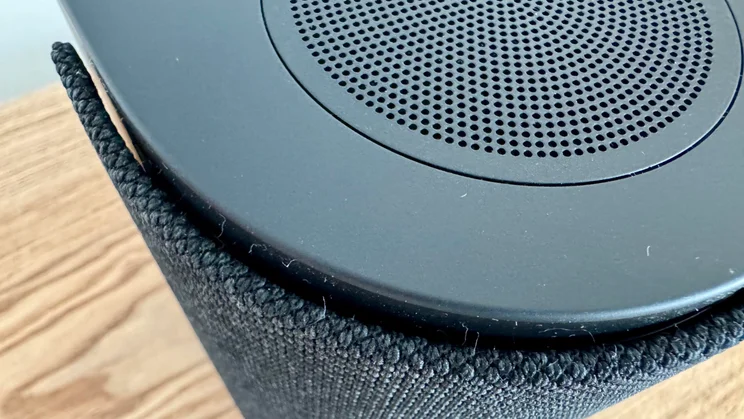
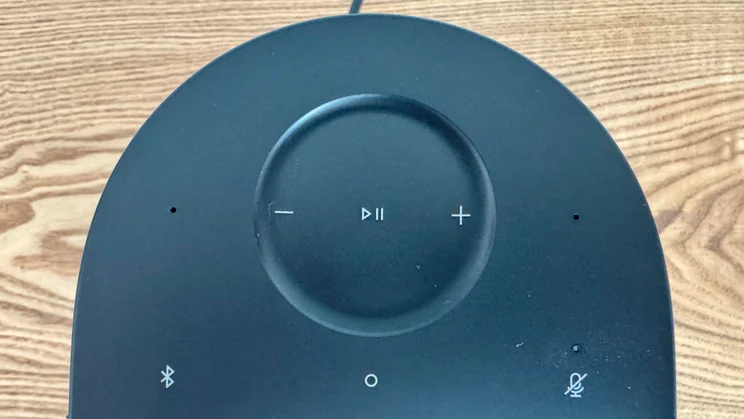
There are a few control options, and they are all well-implemented and reliable. There are a few physical controls in the form of capacitive touch surfaces on the top of the Lifestyle Ultra Speaker. They deal with play/pause, volume up/down, Bluetooth pairing, input selection, and “Wake voice assistant”. There’s also a control to mute the mic, in case you don’t want Alexa+ to listen out for you.
This is the first non-Amazon product to feature Alexa+ voice control, and while it lacks wider smart-home functionality, it’s a responsive and reliable assistant to interact with. Once logged into Amazon, it’s easy to issue instructions to the Lifestyle Ultra Speaker.
Ultimately, though, it’s the Bose control app that’s free for iOS and Android that’s the most comprehensive user interface of the lot. What it lacks in visual pizzazz, it more than makes up for in the logical nature of its layout and its stability in operation.
It features three bands of EQ adjustment, along with a 0 – 10 slider to affect the sonic height of the presentation – useful, as the Lifestyle Ultra Speaker goes without the room calibration software that features in the Lifestyle Ultra Soundbar.
It’s also where you can check for updates, create a stereo pair with a second Lifestyle Ultra Speaker, or include your speaker in a home theatre surround-sound system. Using the Google Home app, meanwhile, allows the Bose to become part of a multiroom system consisting of any and all compatible speakers.
What driver arrangement and audio technologies does it use?
There are usually some aspects of the specification of Bose speakers that you just have to speculate about, and the Lifestyle Ultra Speaker is no exception. What sort of amplification does it use? How much power is on board? What sort of overall frequency response is it capable of producing? Bose isn’t saying, which leaves me to make the following educated guesses: Class D; plenty; adequate by prevailing standards.
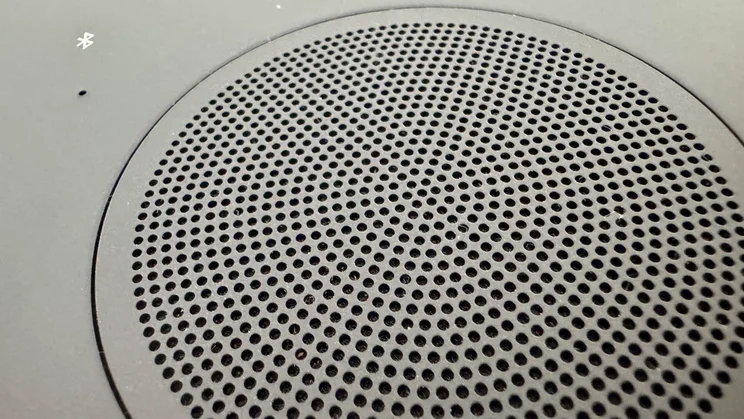
Some information is available, though. The Lifestyle Ultra Speaker uses a three-driver arrangement: a forward-facing 76mm mid/bass driver below a 25mm tweeter, with a 38mm mid/high driver angled up and out through the perforations at the top of the speaker. A rear-facing “QuietPort” bass reflex port at the back of the cabinet augments these drivers.
The Lifestyle Ultra Speaker doesn’t support Dolby Atmos, despite being perfectly configured to do so. This is particularly odd as its stablemate, the Lifestyle Ultra Soundbar, does. Instead, it uses Bose’s proprietary ‘TrueSpatial’ processing to serve up a suggestion of spatial audio. And, it will do so whether you want it to or not. Despite an option in the app that allows you to finesse the amount of presence of the height channel, there’s no way to turn TrueSpatial off.
What is the sound quality like?
When listening to the Lifestyle Ultra Speaker, it becomes apparent, sooner rather than later, that Bose’s TrueSpatial processing has lots to recommend it but is not as effective as Dolby Atmos when it comes to stretching out sound in all directions. The Bose manages to create a really convincing and quite impressive sensation of sonic height from any music you put into it, and the in-app adjustment means it can be a far taller listen than the cabinet dimensions may have primed you for. But although the overall presentation is quite spacious and, in most circumstances, well-defined, there’s not quite the width of soundstage created that the best Atmos-compatible speakers can provide.
With that out of the way, there’s plenty the Bose is good at to talk about. Stream a copy of Inferno by Boards of Canada, and it’s difficult not to be impressed and actually quite startled by the low-frequency presence and impact the speaker can summon. It’s no blunt instrument, either. Low frequencies are deep and nicely shaped, have decent variation and detail revealed, and are controlled to the point that the Bose has no problem expressing rhythms with genuine positivity.
Revealing and assertive, but treble is short on substance
There’s detail and directness in the midrange, too. The Lifestyle Ultra Speaker pushes voices forward just slightly, but the balance against the bottom end is confident, and the top of the frequency range is just as revealing and just as assertive. There’s a slight discrepancy where tonality is concerned here; elsewhere, the Lifestyle Ultra Speaker is fairly neutral and uncoloured, but treble sounds are slightly chilly and relatively short of substance. This is hardly a fatal condition, though, and the EQ settings can help calm things down a little.
Although the soundstage is relatively narrow, it offers well-defined, carefully controlled sound. However, this isn’t always the case; some recordings don’t respond well to being processed and pushed in all directions. Recordings that won’t cooperate can end up sounding slightly hazy when compared to the sharply focused way the Bose presents stuff that trusts the process. Reducing the height slider in the app to 0 mitigates this, but the fact is the Lifestyle Ultra Speaker wants to do TrueSpatial at all times, and that’s not automatically the best course of action.
Should you buy the Bose Lifestyle Ultra Speaker?
There are plenty of wireless speakers available for this sort of money, and you’ll know from reading this website that some of them are very good indeed. The Bose Lifestyle Ultra Speaker, while not perfect, is more than capable of competing with the brands (Apple, Denon, Sonos, WiiM, etc.) that tend to show up on shortlists.
It’s pretty much the complete package. There’s the standard of build and finish, the mildly individualistic aesthetic, and perhaps most importantly, the many positive aspects of its audio performance. And then when you factor in the agnostic nature of its multiroom capability, the straightforward excellence of Alexa+ as a voice assistant, and the overall ease of operation, it becomes apparent that while the Lifestyle Ultra Speaker is hardly your only choice, it’s a very strong contender.