
To help us provide you with free impartial advice, we may earn a commission if you buy through links on our site. Learn more


- Competitively priced
- Secure and very comfortable
- Solid open-ear audio quality and EQ options
- Only IP55 rated
- Mics struggle in noisy environments
- More restrictive controls than the OpenDots 2
The objective of the Shokz OpenDots Air clip-on wireless earbuds is simple: to offer a more affordable alternative to the class-leading OpenDots 2 without compromising too heavily on features and performance.
Having tested them alongside their stablemates over the past six weeks, I can confirm that they achieve their objective. They’re not as gratifying to listen to, but sound quality is good enough to enjoy in most environments, and the features they miss out on aren’t deal-breakers.
I’d still rather own the OpenDots 2, but the OpenDots Air are comfortable, capable and well worth your consideration if you’re buying open-ear clip-on earbuds for the first time.
How much do they cost?
The OpenDots Air are £129, which is £50 cheaper than the OpenDots 2 and £20 less than the original OpenDots One, which launched at £179 but currently cost £149.
Their design and features reflect the lower price, but, as I’ll outline below, Shokz hasn’t wielded the Nerf bat unreasonably; most of the tweaks make sense for an entry-level product.
How do the OpenDots Air differ from the OpenDots 2?
Design
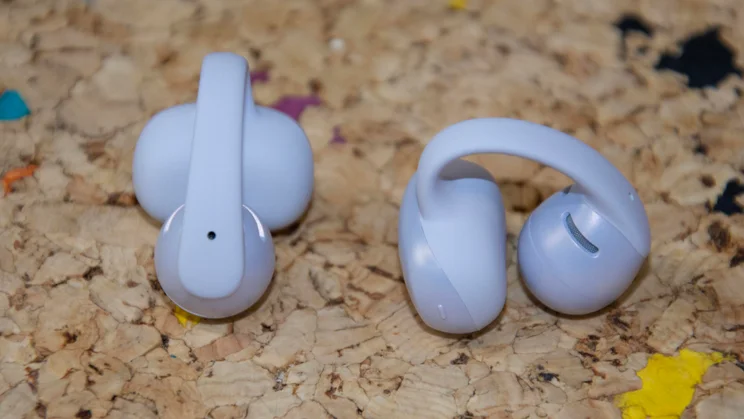
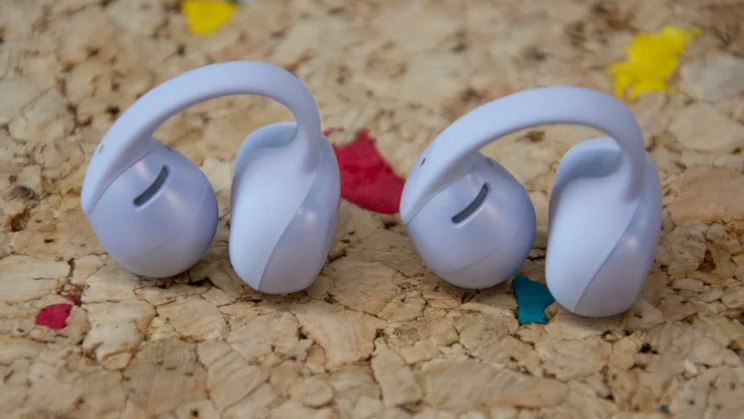
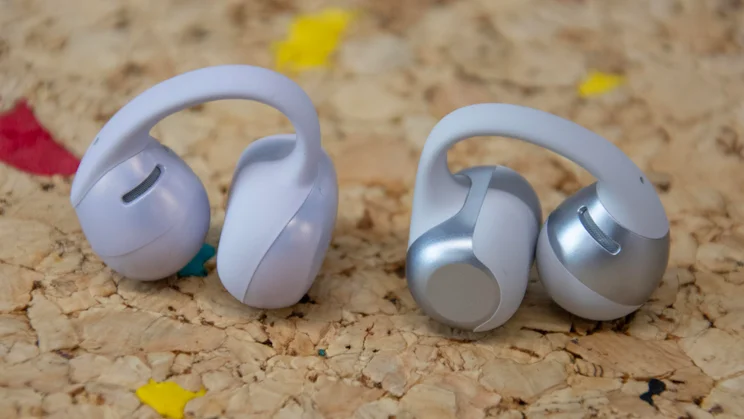
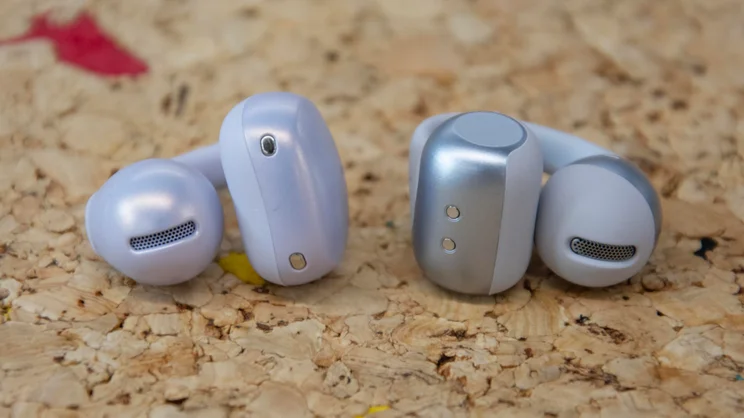
The first difference you’ll note is in the Air’s design. The sections of the buds that house the earbuds’ batteries are slightly taller, flatter and not drum-shaped as they are on the 2. The Air earbuds are a fraction lighter as a result, but you can’t tell the difference when wearing them.
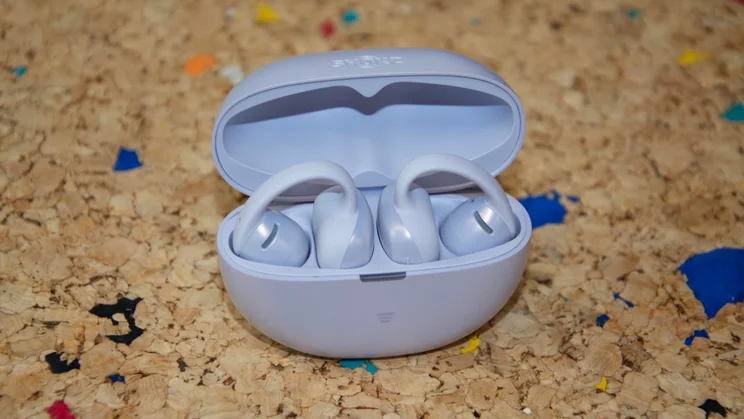
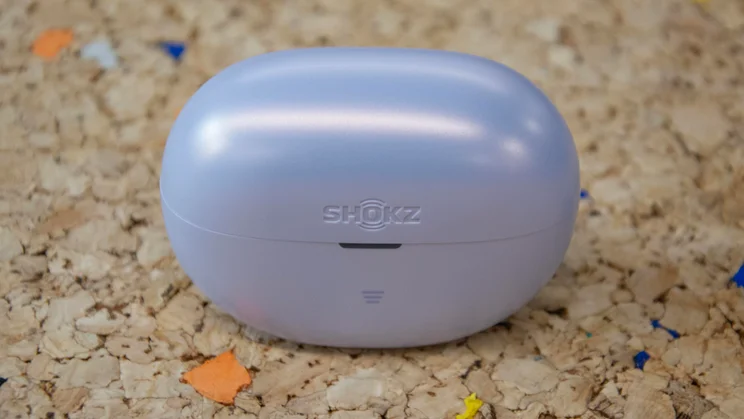
The Air are also available in just two colours: black and the rather eye-catching Daybreak Purple. The latter has a rather alluring pearlescent finish; I tested it and think it’s gorgeous. I wish Shokz had a similar finish available for the OpenDots 2.
Battery life and charging
The redesigned battery section sees a minor reduction in battery life. The Air last up to nine hours on a single charge; the OpenDots 2 last ten. The charging case still holds three full charges of the earbuds, though, taking total listening time to 36 hours versus 40 hours. A bit of extra stamina is always welcome, but the disparity here had no impact on my experience and is lowest on the list of reasons to buy the 2 over the Air.
It’s also worth noting that, unlike the OpenDots 2, the Air’s charging case doesn’t support wireless charging. This is a feature I, and I imagine many others, can take or leave, especially if it means shelling out more money for it.
An inferior lower IP rating
A far more important difference is how well the earbuds and their case face up to the elements. The OpenDots Air earbuds have an IP55 rating, protecting them against the ingress of particles and water jets from all directions. Their case has no IP rating whatsoever.
This makes them suitable for sweaty workouts and use in light rain, but you’ll need to think twice about wearing them in downpours and ensure the case is suitably stowed away to avoid it getting wet. I had to be very careful when cleaning the earbuds after exercise; you can’t whack them under a tap as you can the IP57-rated OpenDots 2.
Last-gen sound tech and no Dolby Audio
Another downgrade comes in the audio department. The Air use Shokz’s first-generation Bassphere technology, whereas the OpenDots 2 use version two. This results in a lower volume ceiling and more distortion, with the former being more noticeable than the latter during my testing.
The Air also do without the brand’s proprietary MirrorPitch technology, which is designed to improve how sound waves are directed from the speakers into your ear canals. Without MirrorPitch, the Air leaked more sound when in use. In a blind test, my colleague/guinea pig started to become aware of the Air’s audio at a lower volume than the OpenDots 2.
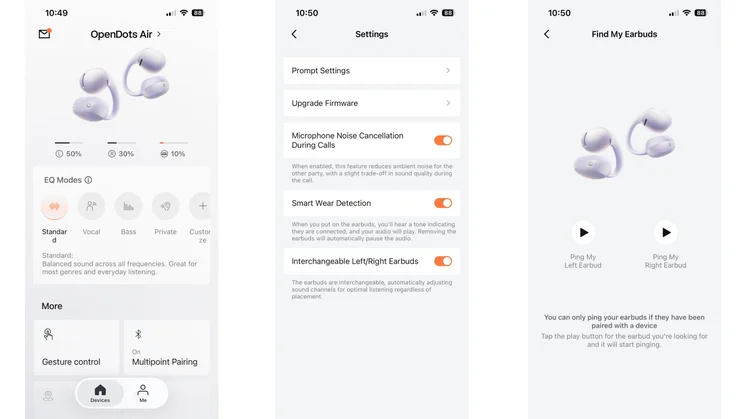
The final audio omission is Dolby Audio. The Air have the same four basic EQ profiles as the 2 (Standard, Vocal, Bass and Private) and let you create your own using a five-band equaliser, which I found worked very well. But there’s no option to engage Dolby Audio processing or create a Smart EQ based on your listening preferences.
A couple of less consequential differences and a frustrating omission
The Air don’t have the Drop Alert beta feature found on the OpenDots 2, nor do they have the option to choose whether to prioritise low latency or Bluetooth connection range and stability.
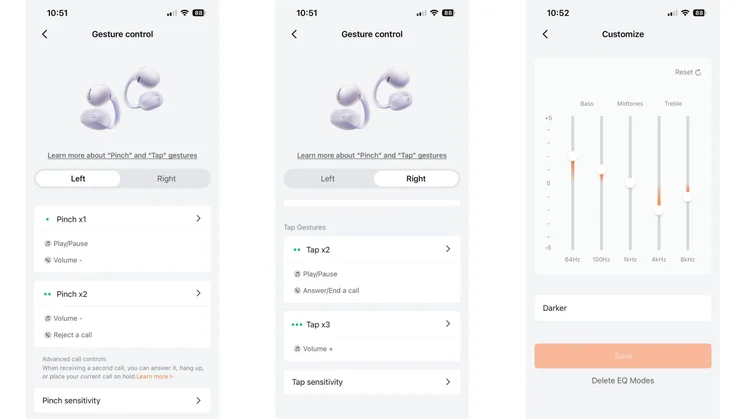
These were things I only used to test how well they worked; I certainly didn’t rue the fact that the Air didn’t have them available. I did miss the pinch-and-hold gesture used for adjusting volume, though. This was likely left out due to the differently shaped battery section, but the control experience is worse off for it.
Having summed up the key differences between the Air and their more expensive stablemates, I’m going to reveal how they performed in comparison. But first, let me give you an insight into how I tested them.
How I tested the Shokz OpenDots Air
I used the Shokz OpenDots 2 over the course of six weeks – longer than I’d typically spend with a pair of headphones, as I was also testing the OpenDots Air. The Air were exposed to a wide range of real-world listening environments, including the Expert Reviews office, the London Underground, Richmond Park and my home.
Every feature available on the OpenDots Air was tried and tested in those varied scenarios, as were each EQ preset across a broad range of musical genres. I also listened to podcasts and watched YouTube videos to get a strong sense of how the Air performed when consuming different types of media.
By timing my listening sessions, I was able to corroborate the manufacturer’s claims on battery life at moderate volume levels, and I assessed their touch controls by relying exclusively on them throughout my testing.
Why you should trust me
I’ve been reviewing headphones for Expert Reviews for over six-and-a-half years and am very familiar with open-ear options from Shokz. I’ve reviewed several of the products it’s released since 2019, including the bone-conducting AfterShokz Trainerz and OpenRun Pro, the earhook flagship OpenFit 2 Pro, and its clip-on earbuds, the OpenDots One and OpenDots 2.
How comfortable are they?
Incredibly comfortable. Once clipped on, the OpenDots Air were as easy on the ears as I could have wished for. The speaker sections rested happily just inside my lug holes for hours on end, and the buds remained firmly in position no matter what I was doing. Here, at least, the Air give nothing away to their pricier brethren.
How easy are they to control?
Pretty easy on the whole. Pinch gestures on the battery sections and taps on the JointArcs connecting the batteries to the speakers work consistently, and I appreciate that you’ve got the choice between two control methods, along with the option to adjust control sensitivity if necessary.
However, the Air don’t have the pinch-and-hold gesture for volume adjustment, which means you need to assign volume controls to either single or double pinches, which is more awkward. Despite being a small downgrade from the OpenDots 2, though, the Air controls are effective.
How good is the microphone quality?
When recording voice memos in quiet, controlled conditions, the OpenDots Air were rather good. They reproduced my voice coherently and in a natural manner. They struggle more than the OpenDots 2 in noisier environments, though.
This is largely due to the fact that they don’t have the two bone-conduction mics found on the pricier model. There is a “Microphone Noise Cancellation During Calls” toggle in the Shokz app to assist the four mics, but this didn’t suppress as much background noise as I hoped. The discrepancy between the mic setups on the two pairs of buds was most evident when running in windy conditions: here, the OpenDots 2 were clearly superior.
What’s the sound quality like?
This is where I noticed the most obvious gulf between the Shokz OpenDots 2 and OpenDots Air. The Air sound good for a pair of open-ear headphones, but they’re not as well-rounded. Their bass response is relatively tame compared with the OpenDots 2, leaving mids and treble sounding a bit exposed and the overall soundscape slightly too bright for my taste.
One of my grumbles with the OpenDots 2 was that vocals occasionally got a bit lost in Standard mode. That’s not the case here. Taylor Swift’s voice was front and centre of The Fate of Ophelia and articulated with clarity. However, vocal-dominated tracks become fatiguing to listen to more quickly on the Air than their counterparts.
At the same volume, the OpenDots 2 sound more immediate and immersive. I’m putting this down to the MirrorPitch technology that funnels sound waves more precisely into your ear canals. The Air sound a little distant and unfocused in comparison, and leak more sound into the world around you.
Solid open-ear presentation reinforced by effective EQ options
Having said all that, the OpenDots Air’s overall presentation is solid. They deliver impressively detailed audio, and while they don’t go as loud as Shokz’s flagship, they produce enough volume to get their message across in most environments.
I say most, as that goes out the window when ambient noise rises to distracting levels. With nothing preventing sound from coming in on a packed commuter train, the OpenDots Air were rendered pretty much unusable. But that’s the sacrifice you make for open-ear awareness, and it’s an issue that afflicts all headphones of this type.
As with the Shokz OpenDots 2, you’re free to customise how the Air sound using a five-band graphic equaliser in the Shokz app. It works just as well and is arguably even more important here, as there’s no support for Dolby Audio. As I wrote in my OpenDots 2 review, this setting “works excellently with certain genres”, specifically those that benefit from a bigger, bassier soundstage.
When listening to the techno track Good Liar by Tradecraft in Dolby Audio on the 2 and Standard on the Air, the latter sounded lightweight by comparison. So, while not a dealbreaker, if you like your audio with added punch, the flagship model is more compelling.
Should you buy the Shokz OpenDots Air?
The OpenDots Air are the value option in Shokz’s open-ear clip-on earbuds range, and it shows in a few areas, most notably their audio quality and inferior water resistance. For me, it’s worth spending the extra £50 on the OpenDots 2.
But despite there being a clear winner in a direct shootout between the two, the OpenDots Air aren’t without merit. They’re super comfortable, their sound is customisable and above average for open-fit earbuds, and they’re easy to control. Those qualities and the alluring Daybreak Purple colourway make the OpenDots Air a smart choice if you’re shopping for competitively priced clip-on earbuds.


