To help us provide you with free impartial advice, we may earn a commission if you buy through links on our site. Learn more
- Engaging spatial audio
- Elegant and tasteful design
- Excellent connectivity
- Atmos benefits are most evident with well-mixed content
- No Google Assistant or Alexa, and Siri requires a HomePod
Support for spatial audio formats is becoming increasingly common in consumer technology. Headphones like the ubiquitous Apple AirPods use Dolby Atmos, Bose and Sony have proprietary spatial audio tech, and soundbar manufacturers lean heavily on Atmos and DTS:X.
Incorporating spatial audio into single-unit speakers has been less successful, however. Amazon, JBL and Sonos have had a crack – to varying degrees of success – and now Denon is taking up the challenge with the Denon Home 400.
The Home 400 is the centrepiece of Denon’s revamped Home lineup and is designed to be intuitive to use, suit any interior environment and fill your room with captivating, customisable Atmos audio. It can form part of a wireless multi-room speaker system via the HEOS app and offers extensive wireless and wired connectivity. What it isn’t, though, is particularly smart. This is a speaker for music lovers rather than those needing to talk to voice assistants. I’ve spent two weeks testing it to see if it’s a spatial audio smash hit.

What do you get for the money?
Denon is positioning its new range as a great way to start building a home audio or multi-room sound system. But, despite being the mid-range option in the lineup, the Home 400 is not exactly cheap at £449.
Its most similar rival, which also offers “true” native Dolby Atmos performance from a single unit, is the Sonos Era 300, which launched at the same £449 price point. However, it’s getting on a bit now, and was available for £359 at the time of writing.
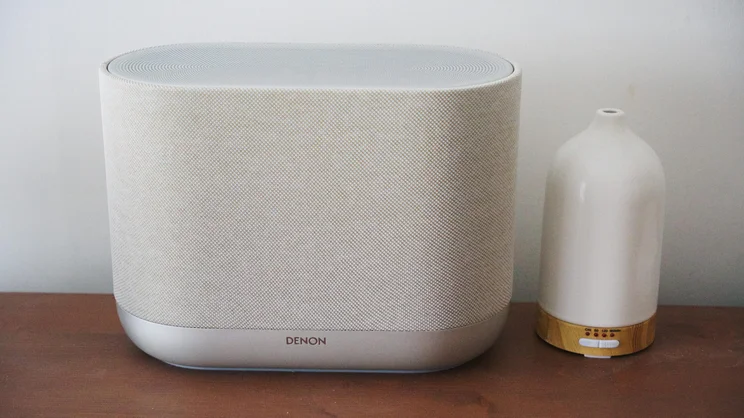
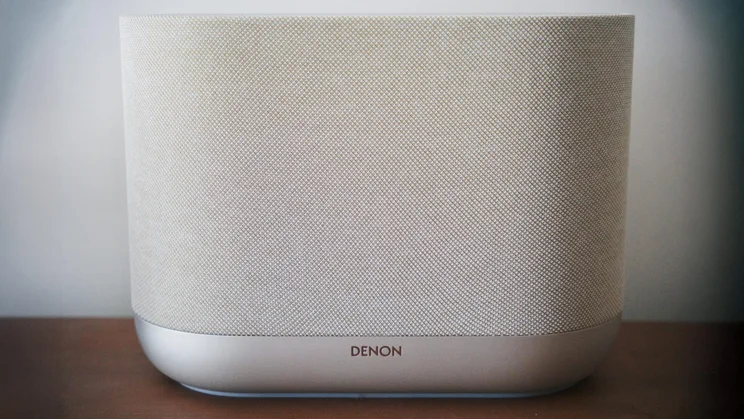
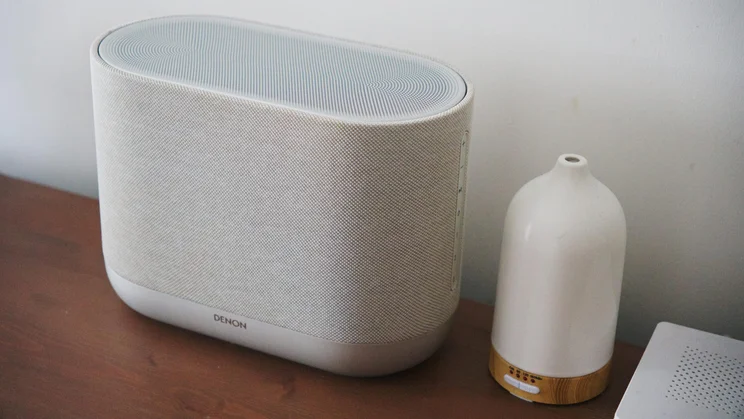
They’re very comparable when you pit them against one another. In the battle of Denon versus Sonos, both come with a decent app and proper spatial audio. Both speakers use six drivers to create surround sound, although in slightly different configurations. The Denon Home 400’s drive units include dedicated up-firing drivers, left and right channels and two 4.5in woofers. You’re getting a more refined design from the Home 400, with two smart colourways (Charcoal and Stone) to suit any interior, made with a titanium base plate and seamless fabric finish.
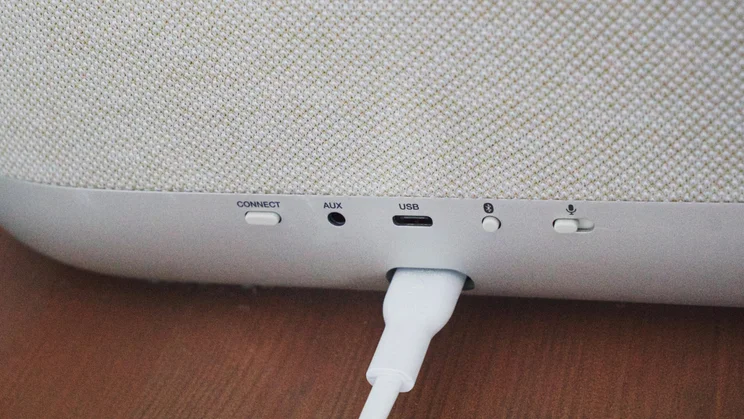
The big draws here are great Dolby Atmos performance, adjustable spatial sound, and wide-ranging connectivity that covers AirPlay 2, Spotify Connect, Qobuz Connect, Tidal Connect, Bluetooth (aptX), 3.5mm and USB-C inputs, wired Ethernet via an adapter, and a hard-wired microphone mute switch.
Of course, there are several other speakers worth considering if you want more smarts. Models like the aforementioned Sonos or its sibling, the well-rounded Era 100 (£199), the 2nd Gen Apple HomePod (£299) for Siri fans, or the JBL Authentics 500 (£439) if you want retro style with both Alexa and Google Assistant compatibility. Then you have Amazon’s Echo Studio (2025), which supports Dolby Atmos in a 3.1.1-channel configuration and utilises Alexa+.
What does it do well?
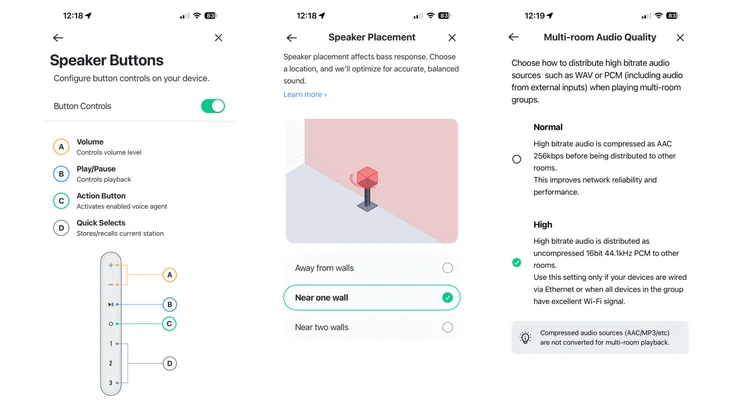
I found the Denon Home 400 extremely easy to set up; it only took me a couple of minutes to get it up and running using the fully featured HEOS app. All you need to do is connect the speaker to Wi-Fi, state where it’s positioned (close to walls or not), and link the app to your favourite internet radio stations and streaming services.
Immersive Atmos
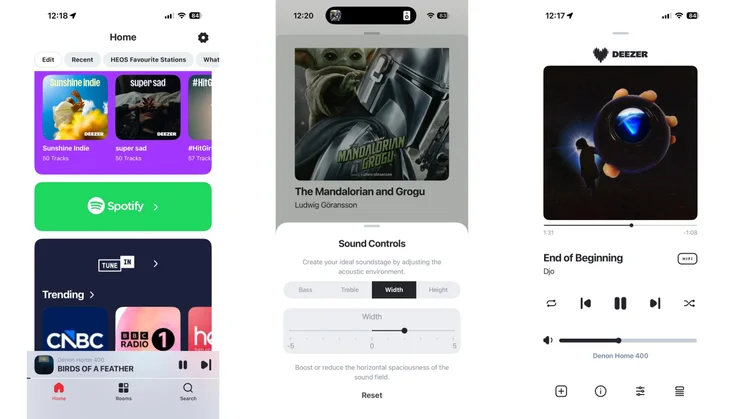
I was very impressed by the Home 400’s main selling point: spatial audio. The speaker offers two sound modes: Auto and Pure. Auto is the default, and this is the mode where you’ll be able to fully customise the bass and treble, plus the width and height extension of the soundstage. Without changing anything, the speaker is pretty bass-heavy, and unless you love a lot of thump, it’s worth dialling this down.
Then, with well-encoded Dolby Atmos music (accessible in services like Tidal and Apple Music), you should experiment with your preferred amount of width and height to the sound. You can make some very perceptible changes here, and you’ll get a sound that really fills the room and feels immersive, without you needing to push the volume to its limits.
I listened to Dua Lipa’s Live from Mexico album on Apple Music via AirPlay, perfectly recorded in Atmos, and the speaker conveys serious scale. Close your eyes, and you’d not know this was just coming from a single unit. Vocals are centred and clear, and I heard well-defined instrumentation along with the encompassing roar of the crowd. It’s quite impressive and makes the layers within tracks more audible, especially if you push those height and width sliders. In some cases, it can reveal background vocals that you won’t hear otherwise, such as in the Atmos mix of Riders on the Storm by The Doors.
Balanced stereo output
But the Home 400 isn’t just a standout Atmos performer. While music in the Auto mode is dynamic and engaging, it’s well worth using Pure mode, too. Tracks are reproduced with greater balance overall, which works better for content not mixed for spatial.
I found RAYE’s Click Clack Symphony much more direct and powerful in this mode, and it also worked well for other tunes played from an Activo P1 MP3 player (both wired and over Bluetooth) and other sources in the HEOS app, including radio stations, Deezer and Spotify. During my testing time, I listened to a wide variety of music and spoken content, including soundtracks, classical, podcasts, pop hits, and electronic tracks.
Exceptional app functionality and a delightful design
I also want to sing the praises of the HEOS app, which does an excellent job compared to most of its rivals. You get a lot of options, including being able to group speakers and create a multi-room system with up to 64 different HEOS products. You can create a stereo pair with another Denon Home 400, too. You’re even able to control the brightness of the glowing light at the bottom of the speaker (or you can turn it off altogether, as I did).
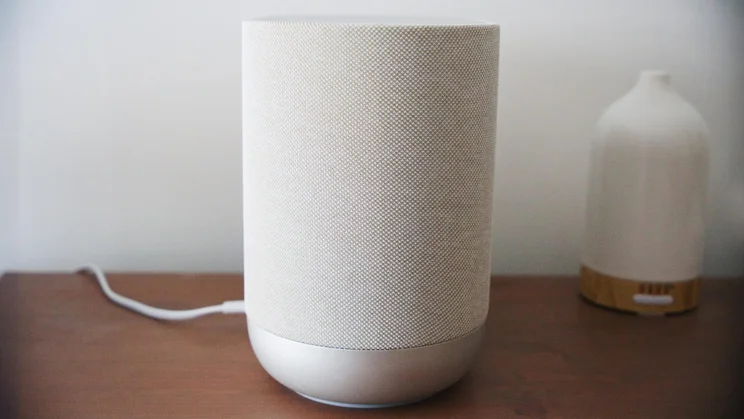
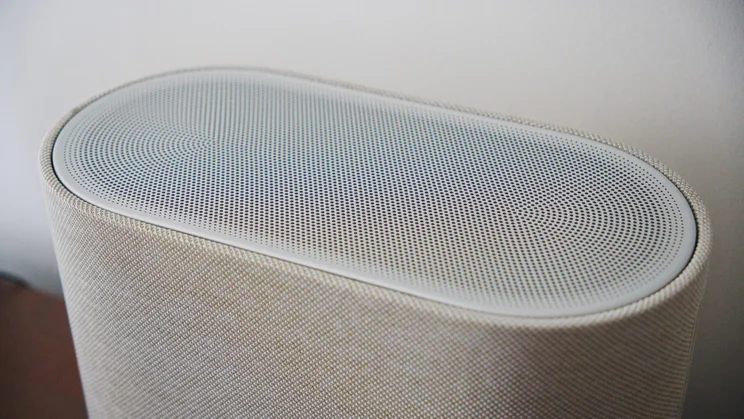
And it’s worth recognising just how well-designed this speaker is. It feels durable and premium, thanks to its sturdy titanium base and the exposed section of plastic on its crest being barely distinguishable from the fabric wrapped around the cabinet. It’ll look the part in any room; Denon has definitely succeeded in its aim of ensuring the Home 400 suits a wide variety of living spaces.
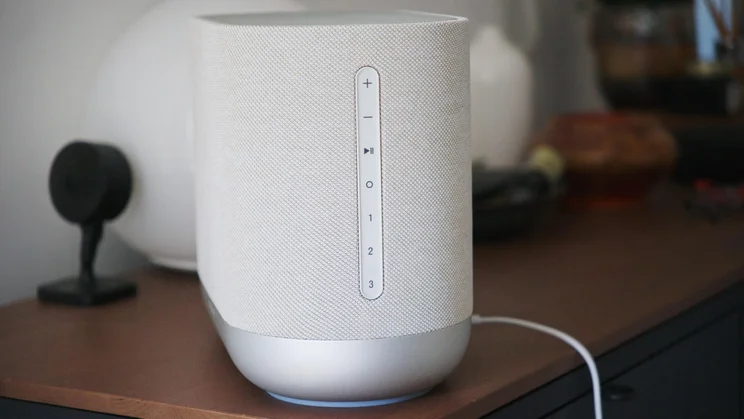
There are buttons for audio playback and quick select buttons (for playlists and radio stations) on the side, and these are all easy to use and not always present on rivals. Plus, you can fully turn off the microphone on the back, and it’s a hard-wired switch, not one that interacts with the network circuitry.
What could be improved?
Not the smartest kid in class
There isn’t a long list of major downsides to the Denon Home 400, but the first one I want to mention is that it’s not really a smart speaker. Don’t buy this speaker if you want voice assistant support; it’s primarily designed for music playback.
While you can talk to Siri, you’ll only be able to if you’ve already got a HomePod or HomePod Mini in your home and on the same network as the Home 400. That makes it a conduit for your Siri requests, rather than a smart speaker in its own right. And, at launch, there’s no support for alternatives like Amazon Alexa or Google Assistant.
Premium sound = premium price
As tempting as the Home 400’s audio performance and aesthetic make it, £449 is a lot of money for a single speaker. And your outlay gets a lot bigger if you plan to add other HEOS products to create a more wide-ranging home audio system. If you’re an Apple Household, you could get a HomePod and HomePod Mini for this amount, with cash to spare. The HEOS app is broadly compatible with a lot of other products, however, meaning you’ve got a lot of freedom when expanding your setup.
Also, if you’re mainly planning to listen to stereo tracks or don’t want spatial decoding, you won’t fully reap the rewards of the speaker’s main strengths. This is a product designed with the spatial mode in mind. The Pure mode is great, but playing around with the spatial customisation in the app delivers an optimal experience. This isn’t a big downside, just something to keep in mind. Simpler “plug-in and forget” experiences are available.
Should you buy the Denon Home 400?
The Denon Home 400 is the ideal speaker for those wanting a convincing spatial audio experience in their lounge or living room. I didn’t have a Sonos Era 300 on hand for comparison, but I’ve heard its main rival in action and think the Home 400 stands toe-to-toe with it on the sound quality front, while offering better connectivity, more control, and a more stylish design.
Its Dolby Atmos implementation is excellent, and you get a captivating sound if you tweak the height and width extension available in the HEOS app. While this works on non-Atmos content, you’re definitely going to hear the best possible sound from well-encoded Atmos mixes.
The only thing I’d reiterate is that £449 is a hefty outlay for a home speaker. Smarter, cheaper options like the WiiM Sound (£299), Sonos Era 100 (£199) or Sonos Move 2 (£359) mean you need to be fully committed to spatial audio to make buying the Denon Home 400 worthwhile.