To help us provide you with free impartial advice, we may earn a commission if you buy through links on our site. Learn more
- How much do the Shokz OpenDots 2 cost?
- What features do they have?
- What drivers and audio technologies do they use?
- How I tested the Shokz OpenDots 2
- How comfortable are they?
- Is there anything else I should know about the design?
- How easy are they to control?
- How good is the microphone quality?
- How do they sound?
- Should you buy the Shokz OpenDots 2?

Screenshot
Screenshot
Screenshot
- Incredibly comfortable
- Great battery life
- Engaging, customisable sound
- Not commute-friendly
- Require EQ tweaking for optimal sound
Unless you’ve been living under a rock, you’ll have noticed that open-ear, clip-on designs are the latest trend in the wireless earbuds market. Shokz has been banging the open-ear drum for years now and already had one of the best pairs of clip-on buds around in the Shokz OpenDots One.
Less than a year on, Shokz has replaced those buds with a new and improved flagship, the Shokz OpenDots 2, and added an entry-level model, the OpenDots Air, to its lineup. I’ve tested both extensively over the past month and am here to bring you my verdict on the Chinese brand’s latest range-toppers.
How much do the Shokz OpenDots 2 cost?
The Shokz OpenDots 2 launched at £179 in June – the same price their predecessors cost on release. Those buds are currently available for £149, while the OpenDots Air cost £129.
That £179 price tag positions the Shokz OpenDots 2 among the more expensive clip-on earbuds around. Bose’s Ultra Open Earbuds lead the pack at £299, while the Huawei FreeClip 2 share the same price as Shokz’s latest effort. Sony’s LinkBuds Clip will set you back £150, and there are plenty of cheaper challengers, too, including the Moto Buds Loop (£130), JBL Soundgear Clips (£120), Soundcore AeroClip (£100), Skullcandy Push 720 (£100), TCL CrystalClip (£70) and JLab Flex (£50).
What features do they have?
Clip-on earbuds aren’t as fully featured as their silicone-tipped counterparts; their open-ear design reduces the impact of headline inclusions like active noise cancellation and spatial audio. The OpenDots 2 omit both, but offer a few convenience features.
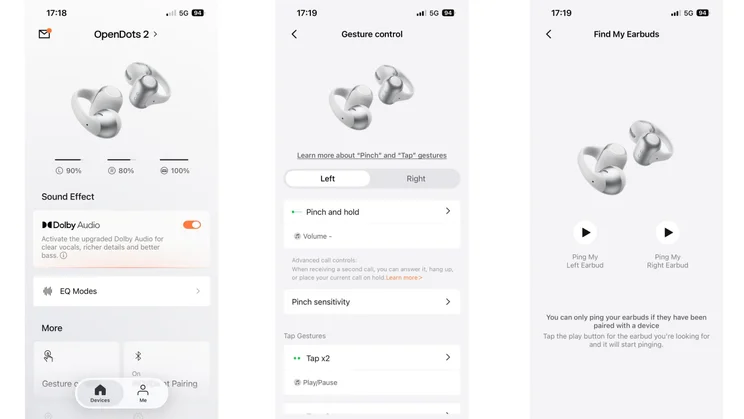
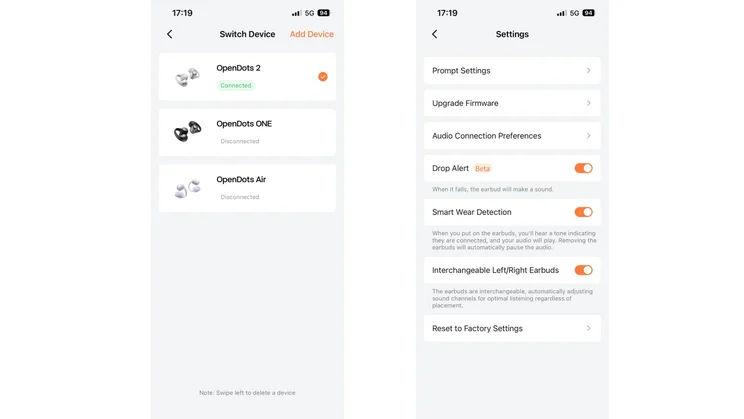
Wear detection works consistently, albeit a little sluggishly. There’s also a “Drop Alert” Beta feature designed to help you locate an earbud if it falls to the floor. Shortly after impact, the bud will begin to emit a sound, though it wasn’t loud enough to hear clearly while sitting next to the office’s noisy air conditioner. The sonic beacon doesn’t last long, either. However, the Find My Earbuds option in the Shokz app allows you to ping one or both of the buds if you misplace them nearby. The volume and pitch of the ping are much easier to hear.
Screenshot
Screenshot
Screenshot
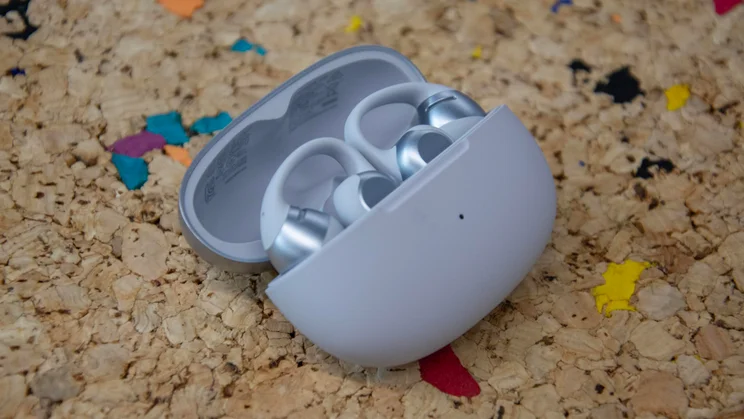
The charging case supports both USB-C and wireless charging and provides three full charges of the earbuds, which live up to their stated battery life of 10 hours. So, you’re looking at a total of 40 hours of playback (less if you turn on Dolby Audio), which matches the original OpenDots.
What drivers and audio technologies do they use?
Like their predecessors, the OpenDots 2 use Shokz’s patented “Bassphere” technology, which sees a pair of 11.8mm drivers installed face-to-face in each earbud. However, version 2.0 offers a higher maximum volume and reduces distortion by up to 70%, according to the brand.
Shokz has also replaced the “DirectPitch” technology used by the original OpenDots with “MirrorPitch”. Tiny reflectors inside the speaker bounce sound waves off each other to focus them more directly into your ear canals, which Shokz claims will deliver a fuller presentation with deeper, richer bass.
Screenshot
Screenshot
Screenshot
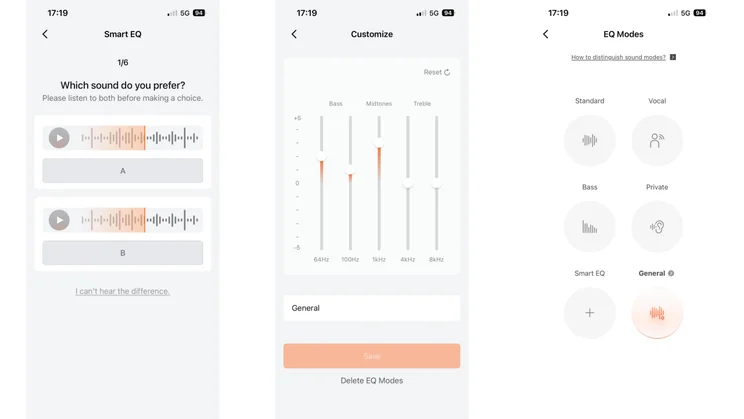
The Shokz OpenDots 2 operate over Bluetooth 6.0 and support multipoint pairing with two devices. Codec support only covers SBC and AAC, so there’s no high-resolution playback. However, you can enable Dolby Audio processing via the Shokz app. You also get access to four EQ presets (Standard, Vocal, Bass and Private), a Smart EQ option that tunes audio to your preferences, and a customisable five-band graphic equaliser.
How I tested the Shokz OpenDots 2
I used the Shokz OpenDots 2 over the course of five weeks – longer than I’d typically spend with a pair of headphones as I was juggling them with the OpenDots Air. During that time, I listened to music and podcasts in a wide variety of locations, including at home, in the office, while commuting, and when running in Richmond Park. I tested the various EQ options across different musical genres and used the buds’ additional features in both controlled and real-world scenarios.
I timed my listening sessions and monitored battery drain in the Shokz app to assess how the manufacturer’s battery life claims compared with typical use. Finally, I used every command covered by the touch controls extensively to judge their responsiveness and consistency.
Why you should trust me
I’ve been reviewing headphones for Expert Reviews for over six-and-a-half years and am very familiar with open-ear options from Shokz, having tested several of its products. Those products include the bone-conducting AfterShokz Trainerz and OpenRun Pro, the earhook flagship OpenFit 2 Pro, and its first clip-on earbuds, the OpenDots One.
How comfortable are they?
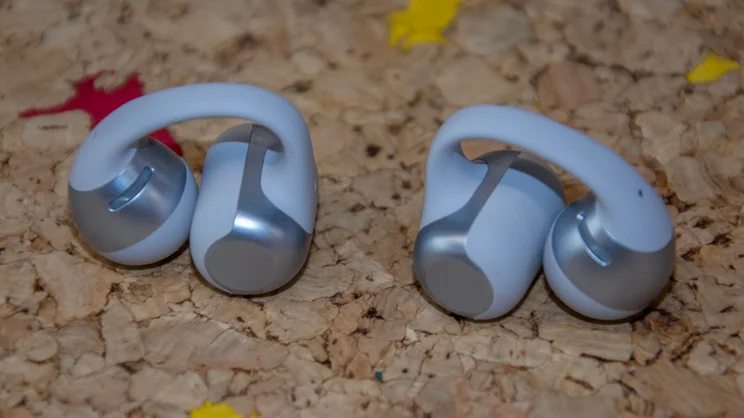
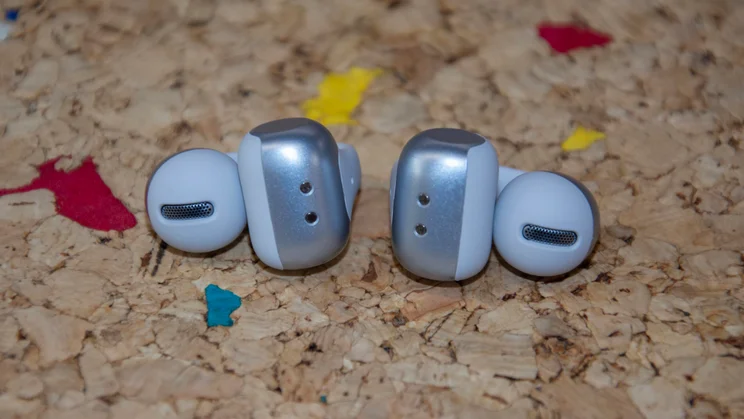
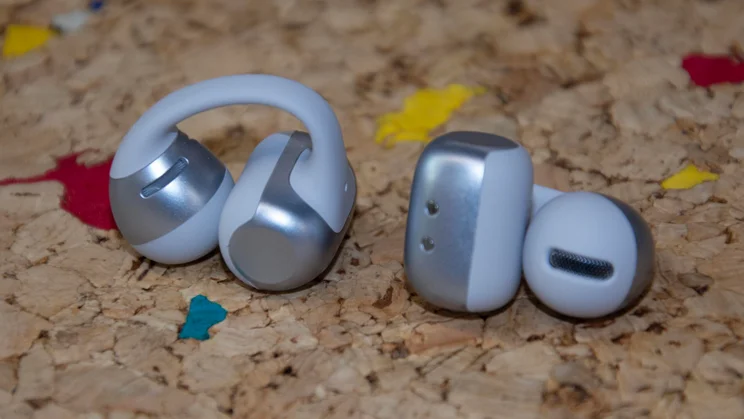
The Shokz OpenDots 2 use the same open-ear design as their predecessors, with the battery and speaker connected by silicone-coated “JointArcs”. The sections of the battery and speaker that come into contact with your ears are also coated in a soft, contoured silicone to prevent discomfort.
Screenshot
Screenshot
Screenshot
Each earbud weighs roughly 6.4g, though you’ll hardly notice that you’re wearing them most of the time. There were several occasions when I didn’t have audio playing and forgot I had them on. This speaks volumes about their comfort levels: at no point during testing did I have to remove them. They remained stable in my ears during exercise; the only times they shifted were when I accidentally knocked them.
Is there anything else I should know about the design?
The IP57 rating for dust and water resistance is a step up from the OpenDots One’s IP54 certification. The superior rating means you can run the buds under a tap to clean them and also increases your peace of mind in inclement weather. I managed to dodge the crazy storms that punctuated June’s heatwaves, but the OpenDots 2 wouldn’t have had a problem if I’d been caught in one. The charging case has also received an IP upgrade; it’s now splashproof.
Screenshot
Screenshot
Screenshot
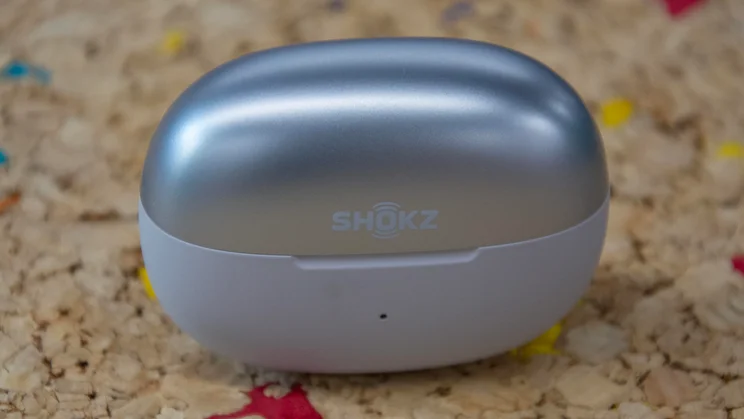
Finally, I should mention that the OpenDots 2 earbuds are interchangeable – they fit the same when clipped onto either ear – and come in three finishes: Pearl White, Black, and the Grey reviewed here. That’s a bit more choice than was available with the original OpenDots. However, I find the colours a bit dull compared to the pearlescent Daybright Purple you can pick up the OpenDots Air in.
How easy are they to control?
The control options were one of my least favourite things about the original OpenDots, and the OpenDots 2 take the same approach: you can use double and triple taps on the JointArcs or pinch gestures on the battery drums.
However, Shokz has made a few changes, which have resulted in a much less frustrating experience. Force sensors inside the buds make pinch gestures significantly easier to interact with, and there’s a new single-pinch gesture, which I appreciated.
Screenshot
Screenshot
Screenshot
You can now assign any command to any tap and pinch gesture, and voice assistant hailing has also been added, both of which are quality-of-life upgrades. There’s still no support for single-taps, but this does ensure you can’t accidentally activate commands.
When reviewing the One, I found the tap gestures more to my liking, but here I used a mixture of both. Pinches proved an easier way to interact with the buds when stationary, while the quick taps were more convenient for exercise. Overall, the controls work smoothly, and they’re far more consistent. My only real complaint is that adjusting volume by pinching and holding takes ages.
How good is the microphone quality?
The microphone setup on the Shokz OpenDots 2 is more advanced than it was on the One, with a bone-conduction mic joining the two normal mics built into each earbud. These made a noticeable difference to performance. My voice sounded considerably more natural and less robotic in the controlled conditions of my testing room. Words were reproduced with greater clarity, although I did notice some echoing at times.
The buds lost a bit of definition with a fan on full blast and ambient tube noise playing in the background, but I was still able to make out everything that was said easily. Compared with their predecessors, the OpenDots 2 proved more effective at isolating my voice in noisier environments.
Screenshot
Screenshot
Screenshot
However, on London’s streets, background noise still impacted voice notes, and wind had a similar effect during phone calls while running. I also had a few issues with voice note clarity on WhatsApp, though this was likely due to aggressive data compression rather than the mic.
Overall, the OpenDots 2 take a positive step forward in the mic quality department; they’re not earbuds I’d wear for important meetings, but for general use, they do the job well.
How do they sound?
There’s no escaping the fact that open-ear earbuds struggle to produce a soundstage that’s as full and rich as their silicone-tipped counterparts. There’s also no escaping the fact that, in certain circumstances, open-ear earbuds need to be pushed to their volume limits to be audible.
The Shokz OpenDots 2 don’t rewrite the open-ear narrative here – don’t buy them if you do the majority of your listening on trains or tubes. However, in the conditions that they’re designed for use in – parks, gyms, offices, etc. – they deliver an impressive audio performance.
A highly impressive performance in most environments
First up, they have a louder volume ceiling than the OpenDots One. This is a win on balance, but you’ll want to avoid cranking them up too often to protect your hearing.
Screenshot
Screenshot
Screenshot
The clearest upgrade to their audio comes at the lower end of the frequency spectrum, where open-fit earbuds often fall woefully short. Here, the OpenDots 2 managed to deliver the funky bassline on Comin’ Thru by Chali 2na commendably. It’s not a beefy low-end reproduction compared with buds using sealed tips, but in relatively quiet environments, I felt like I got a pretty complete picture of what was happening under 250Hz.
If you’re after more bass than the Standard mode delivers, there’s Dolby Audio available. This option immediately makes what you’re listening to sound larger and bassier, and it works excellently with certain genres. The expanded soundstage and extra punch elevated garage bubbler Tek Time by Kurupt FM considerably; for anything vaguely vibey, Dolby Audio was my go-to.
I would, however, recommend creating your own EQ for these earbuds for multi-genre playlists. The low-end potency Dolby Audio adds proved a bit too much for delicate arrangements, and I found vocals in Standard mode sounded recessed on tunes with competing vocal and instrumental components, like The Rolling Stones’ Jealous Lover.
Screenshot
Screenshot
Screenshot
This made it hard to appreciate the nuances of intonation and healthy levels of mid-range detail the buds are capable of expressing. Bumping the midtones up and adding a couple of decibels to the bass in the custom EQ allowed me to strike a sonic balance that worked consistently well with a broader range of songs.
The original OpenDots were up there with the best-sounding open-ear buds I’d tested at the time; the second-gen model sounds even better.
Should you buy the Shokz OpenDots 2?
For my money, the Shokz OpenDots 2 are the best pound-for-pound clip-on earbuds available right now. They improve on the original OpenDots in several meaningful ways: their bass response is more satisfying, microphone quality is vastly improved, controls are easier to execute, and they have superior water resistance.
But they’re not the best choice for everyone. I’ve been testing the side-by-side with the OpenDots Air, and that pair of earbuds is a better option if you’re on a budget and don’t mind sacrificing a few premium features. And if you’re a sucker for spatial audio, then you’ll need to look elsewhere, specifically at Bose or Huawei. Oh, and it probably goes without saying, but if you want peace and quiet on your daily commute, these aren’t the earbuds for you.