To help us provide you with free impartial advice, we may earn a commission if you buy through links on our site. Learn more
- How much do they cost?
- What features do they have?
- How I tested the Soundcore Liberty 5 Pro
- How easy are they to control?
- What does the charging case do?
- How comfortable are they?
- What’s the sound quality like?
- How effective is the noise cancellation?
- How good is the call quality?
- Should you buy the Soundcore Liberty 5 Pro?


- Excellent voice call quality
- Handy touchscreen case
- Loads of features
- ANC falls short of top-tier
- Bassy sound by default
- Charging case is a little chunky
As noted in our Soundcore Space 2 review, Anker has quickly become one of the most popular brands with commuters and frequent flyers. And that’s not just true for its over-ear models. If, like me, you go around inspecting people’s choice of headphones, you’ll notice plenty of Soundcore’s wireless earbuds, too, which have typically used the stem-style design popularised by the Apple AirPods.
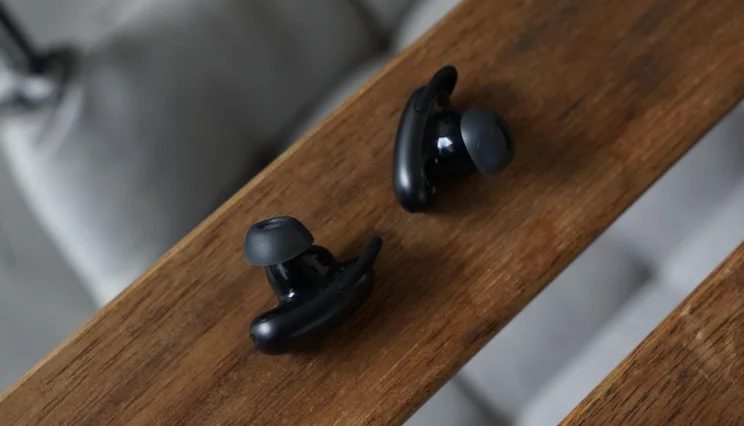
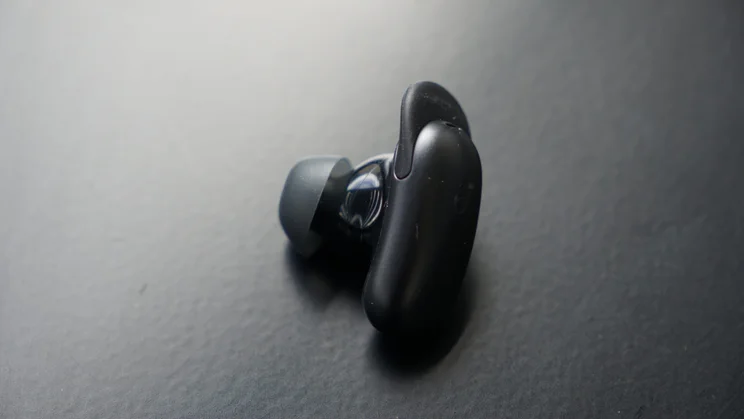
That look changes with the arrival of Soundcore’s Liberty 5 Pro and 5 Pro Max, which are a curved “bean” shape – a clear departure from designs of old. These are earbuds to challenge the biggest names in the game, with upgraded noise-cancelling and call quality, a touchscreen charging case, and an app stuffed with features.
They arrive around two years after the Soundcore Liberty 4 Pro and a year after the budget Liberty 5, but come with a significant number of upgrades that put them in competition with Sony, Bose and JBL. Are they now the better buy? I’ve spent four weeks testing them to find out.
How much do they cost?
The best thing about the Liberty 5 Pro is the price. They sell for £150 while the Liberty 5 Pro Max cost £200. The only differences between the models are in the charging case: the Pro Max has a larger OLED screen and AI meeting transcription abilities, plus more customisation and control from the case. The earbuds are otherwise the same.
That means you’re getting the same custom-designed Thus chip for better calls, ANC and voice control, and the same features through the app. Considering just how many extra benefits Anker has managed to stuff into the Liberty 5 Pro, I’d say these compete with the flagships from the likes of Bose, Sony, Apple and JBL while undercutting them all on price. They’re definitely worth considering if you’re focused on value.
What features do they have?
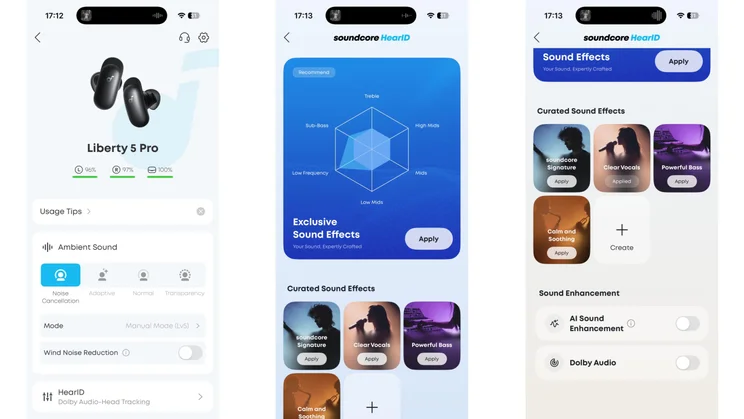
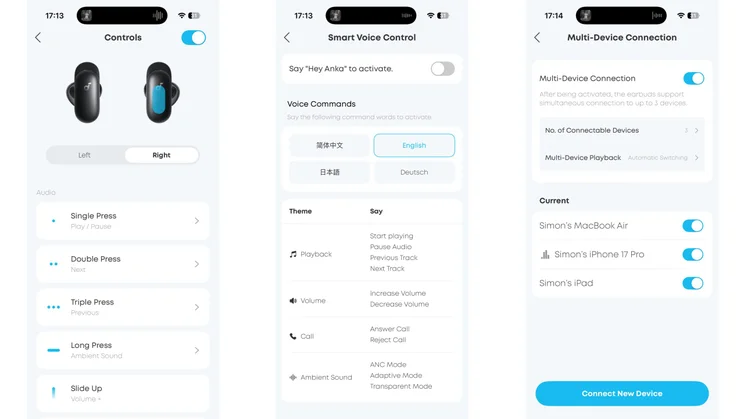
Many of the core features of the buds can be linked back to the proprietary Thus AI chip, which allows special capabilities (like voice control and much-improved voice calls) to be processed on-device and without a cloud connection. The Liberty 5 Pro offer Bluetooth 6.1 with SBC, AAC and LDAC codec support, plus triple-device multipoint connectivity, personalised HearID sound, customisable EQ, AI Sound Enhancement, and Dolby Atmos spatial audio with Head Tracking.
It’s worth noting that you can’t enable every feature at once. High-res LDAC won’t work with three-device multipoint, you can’t have Dolby Atmos and offline voice commands at the same time, and AI Sound Enhancement disables LDAC. You’ll want to work out which tradeoffs you’re comfortable with.
I love multipoint for staying connected to my phone, tablet and laptop at the same time, so I left that on and found it worked seamlessly. I should note that, despite having Bluetooth 6.1, these don’t support LE Audio or Auracast.
How I tested the Soundcore Liberty 5 Pro
I used the Soundcore Liberty 5 Pro as my primary earbuds in a wide range of real-world settings for four weeks. That included use at the gym, taking calls, on the London Underground, working from coffee shops and on the plane on a trip to Rome. I also charged them to full and played a Spotify playlist at 50% volume to monitor battery levels.
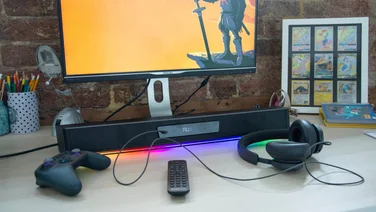
I’ve also used controlled scenarios to test calls and ANC. I played a range of ambient sounds from a soundbar at set decibel levels and noted the point at which I could no longer hear a podcast. I also made voice recordings with these background sounds playing to test environmental noise reduction, and I took real phone calls out on busy streets and at home, simulating loud windy conditions with two tower fans blasting nearby.
Why you can trust me
I have over a decade of experience writing about consumer electronics and have tested countless pairs of wireless earbuds at a wide range of price points. I’ve written for titles including TechRadar, Esquire, Trusted Reviews and Digital Spy, and was most recently Technology Editor at Good Housekeeping UK.
How easy are they to control?
These are a very easy pair of buds to control via both the touch-sensitive surfaces on the earbuds and the touchscreen on the charging case. This is different from their predecessors, the Liberty 4 Pro and Liberty 5, which used squeeze controls. I found the default setup a little confusing, but it’s easy to switch to a more intuitive selection of gestures through the app. Swipe controls for volume are a very welcome inclusion you won’t find on many rivals.
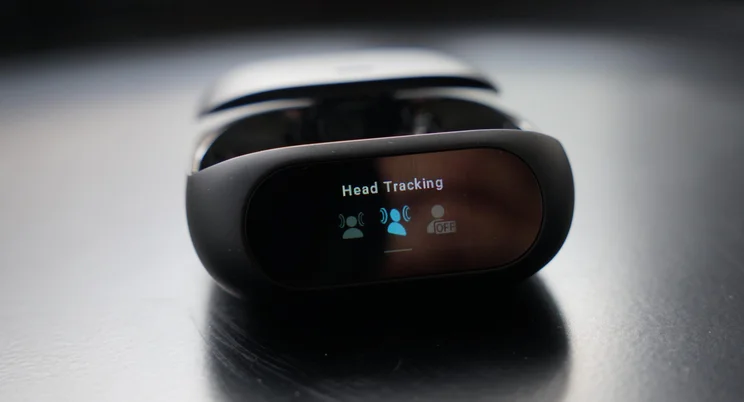
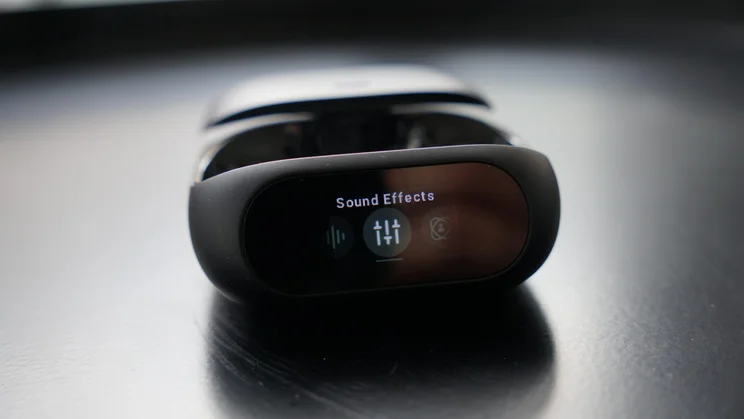
The case gives you control over ambient sound modes, EQ presets, Dolby Atmos, Easy Chat, a camera remote, earbud finding, and Bluetooth pairing – you access all these by swiping along its touch surface and tapping what you need.
What does the charging case do?
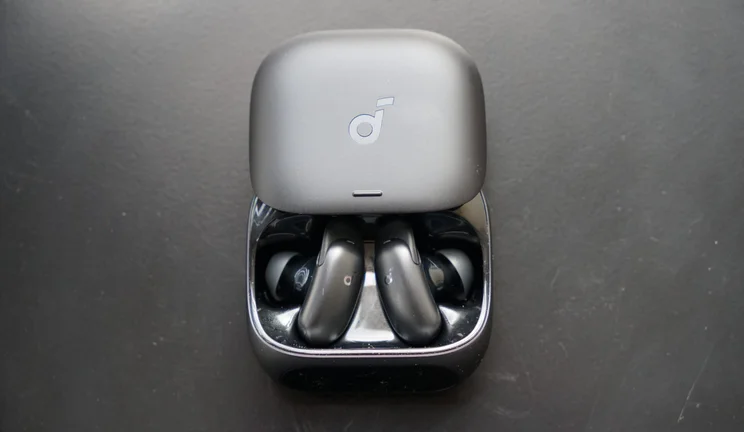
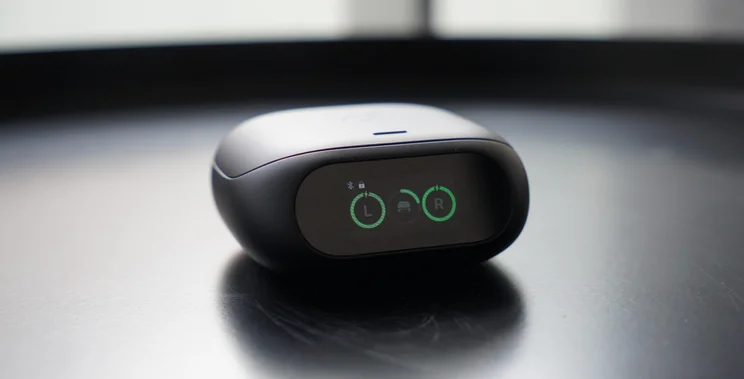
In addition to allowing you to recharge the buds on the go, the charging case features a small TFT touchscreen that serves as a control hub for your EQ, ANC modes, spatial audio and more. Usefully, it also displays how much battery is remaining in both the earbuds and the case.
The display does make the case slightly bulkier than some of the competition, but it’s not unwieldy. It also isn’t quite as full-featured or customisable as the Liberty 5 Pro Max, JBL Live Beam 3 or Tour Pro 3 cases, which support playback control and can display personalised wallpaper. Wireless charging is supported, though.
In general, battery life is fine, but it’s a slight step down from the previous models. You should get six-and-a-half hours with ANC per charge, but I found it was closer to five hours. Just note that all the features add a bit of extra battery drain, so turning off voice controls and LDAC will extend your playtime.
How comfortable are they?
The slightly revamped shape of the buds still fits comfortably, thanks to oval-shaped ear tips and earfins that help keep them stable for workouts. Just make sure you get the right tip size. I found I needed to pick a smaller size for the best comfort and passive seal.
They’re also lightweight at 5.5g per bud. That’s much less than the 7.7g of the Bose QuietComfort Ultra Earbuds (2nd Gen) or 6.5g of the Sony WF-1000XM6.
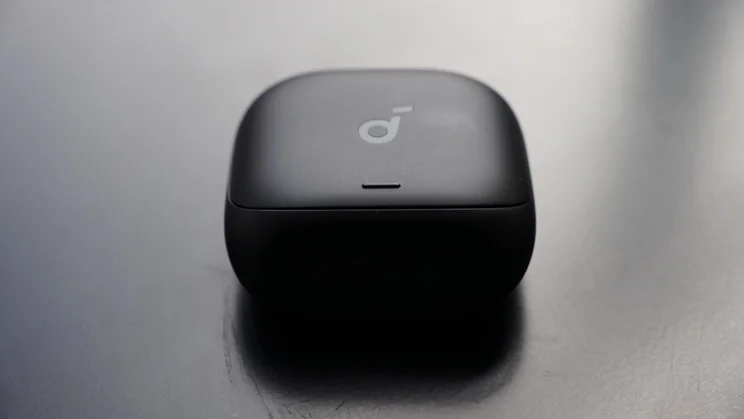
The case is a little chunky but still small enough to fit comfortably in most pockets, and the buds are durable thanks to an IP55 dust and water-resistance rating. That’s something you’re not always going to find at this price.
I’ve been testing the Black finish, but they’re also available in Rose Gold, Light Blue, and White.
What’s the sound quality like?
In two words: bass-heavy. If you pop these out of the box and straight into your ears, you’ll find the low-end in their default Soundcore Signature mode exaggerated and muddy. The overwhelming bass detracted from the vocals in Harry Styles’ Aperture quite considerably. As a result, I set about exploring the customisation options in the Soundcore app, eventually settling on the Clear Vocals EQ.
This kept the unruly bass in check and allowed the earbuds to deliver a great deal more sparkle and texture on Fleetwood Mac’s Everywhere. Clear Vocals became my go-to EQ and consistently provided a more enjoyable experience than the personalised HearID EQ created after I performed an in-app listening test. In side-by-side testing with the Soundcore Liberty 4 Pro, the two pairs were pretty close, both sitting in “solid-but-unspectacular” territory and failing to offer the spaciousness and level of detail you can get from the Sennheiser Momentum True Wireless 4 for similar money.
While I didn’t find AI Sound Enhancement, which seeks to upscale low-resolution tracks, useful, I appreciate decent Dolby Atmos spatial audio. It’s worthwhile for songs mixed in Atmos, but it works best for films and TV shows with multi-channel audio soundtracks. I tried it out by watching several cinematic demos and the climactic scenes of F1 on Apple TV, and I found them all more immersive with spatial audio on. Dolby Atmos on headphones is hit-and-miss, but is implemented very well here.
How effective is the noise cancellation?
I think ANC is the strongest aspect of the Liberty 5 Pro. Once you’ve got a good passive seal with the right eartips, they compete with the flagships from Bose, Sony and Apple.
During testing, they had no issue silencing the steady hum of engine noise on a flight, rumbles in the London Underground, general chatter at the coffee shop and the clanging of weights at the gym. In both the controlled tests and real-world use, these prove to be great performers.
The only downside is that unexpected sharp sounds can still cut through, like a crying baby, coffee machine steamer or especially loud typing on a keyboard. And they’re a bit less adaptable to certain spikes in noise because they don’t have as deep a passive seal, something I noticed on a coach journey in stop-start traffic.
How good is the call quality?
Soundcore’s claim of word-record call clarity isn’t just marketing. I tested the microphones in real-world scenarios, both by recording voice notes and using them on phone calls, and they impressed immensely.
The combination of the Thus chip and 10 sensors (eight mics and two bone conduction sensors) means these have enviable environmental noise cancellation on calls. I tried them in a coffee shop, on the other side of the street from construction work, and at the gym. The results were always clear. I also tried them on a call with two tower fans on full, and the caller on the other end had no idea!
Should you buy the Soundcore Liberty 5 Pro?
The Liberty 5 Pro are well-rounded, feature-packed earbuds available at a reasonable price; bigger brands are charging much more than £150 for similar specs and performance.
While they’re not without fault – the default tuning is overly bassy, their battery life is relatively meagre, and their case is on the large side – their customisable sound, great call quality, triple-device connectivity, handy smart display and strong ANC earn them my recommendation as a mid-range pick.
Just be aware that they don’t offer the most detailed and rich audio performance you can get, and some willingness to play around with in-app settings is required to get the best out of them.