To help us provide you with free impartial advice, we may earn a commission if you buy through links on our site. Learn more
Screenshot
- Wonderfully retro design
- Impressive sound quality
- Super lightweight
- Poor mic quality
- Leak sound
- Headband not great for bald heads
The moment I set eyes on Philips’ The Ringo Duo, I was transported back to simpler times. A time when little Andrew (I hadn’t embraced Andy yet) was bopping around with a pair of Sony MDR-007 plugged into his Walkman, listening to Now That’s What I Call Music! compilations on cassette.
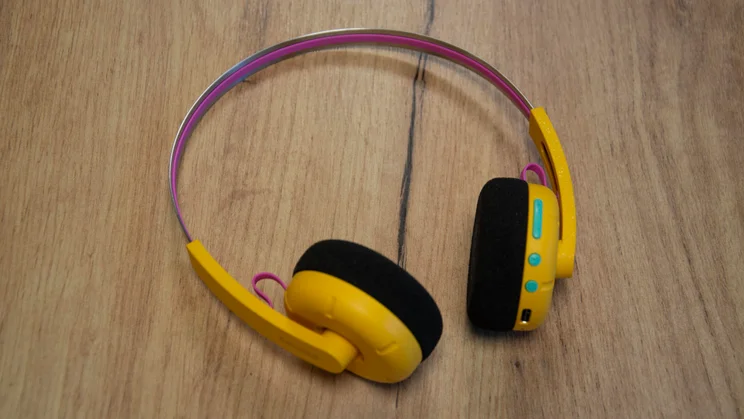
It was my first introduction to personal audio and fundamental in fostering a lifelong appreciation of music, and it’s why I love the design of these wonderfully retro headphones. They deliver a blast from the past, cleverly modernised for a 21st-century audience. They’re cheap, colourful and fun, and at a time when everything feels so unrelentingly serious, I’m totally here for that.

What do you get for the money?
The Ringo Duo are part of Philips’ new Moving Sound range, which resurrects several products from the brand’s 1980s lineup of the same name. The headphones are available in two colours – black and the iconic yellow reviewed here – and cost just £29.
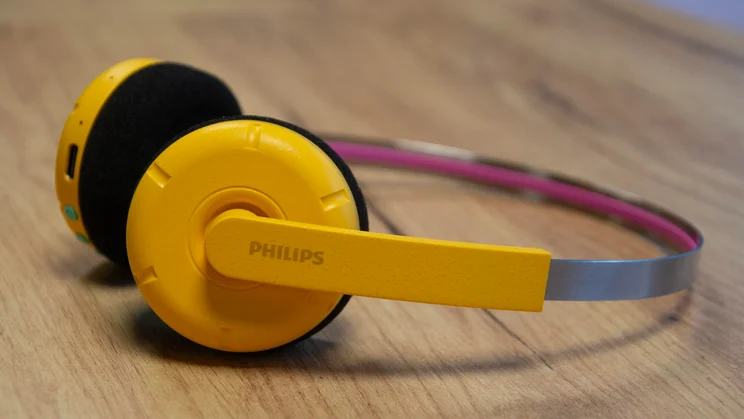
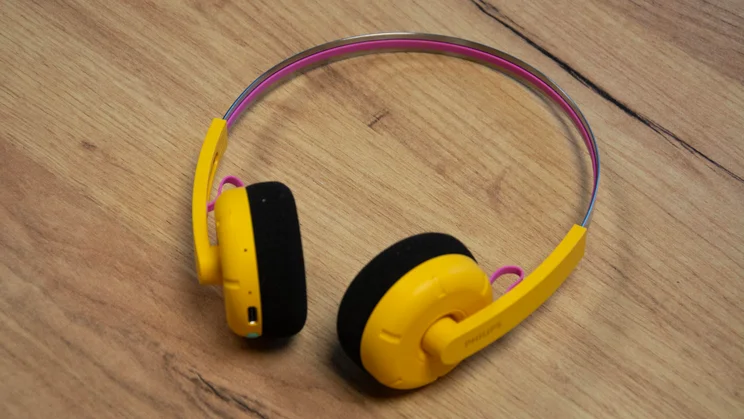
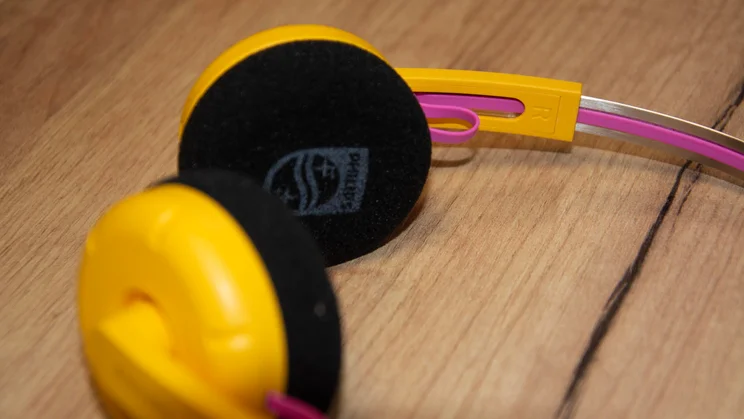
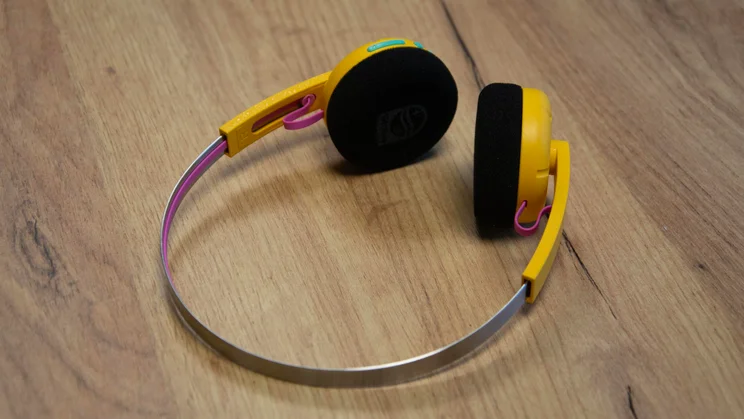
That’s chump change by modern standards, so temper your expectations regarding build quality and finish. But the Duo don’t have ideas above their station. They look and feel very plasticky, and own that fact. They’re supremely light at just 80g, and you get three pairs of foam ear cushions (in black, orange and yellow) to customise your look.
Screenshot
Housed underneath the cushions are 40mm dynamic drivers with a stated frequency range of 20Hz to 20kHz. The headphones stream audio wirelessly over Bluetooth 6.0 and support multipoint pairing for two devices. They only support the SBC codec; while AAC would have been a great addition, you expect bare-minimum features at this price point.
Keeping things simple on the control and connection front
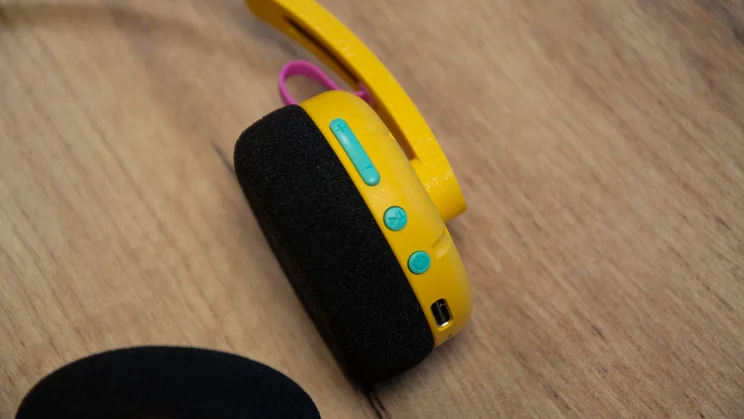
Rudimentary controls are located on the shell of the right earpad. There are small, circular power/pairing and play/pause buttons along with an elongated button for adjusting volume. The right earpad houses the USB-C port used for charging or old-school, wired listening. Philips claims a 26-hour battery life, which sounds accurate to me. After using them for an hour or so daily for three weeks, they still have 20% power left.
Screenshot
Philips also supplies a 1.2m USB-C charging cable with an in-line microphone and mute button in the box, although the headphones do have a built-in microphone, enabling you to make and take calls or speak to Siri or Google Assistant.
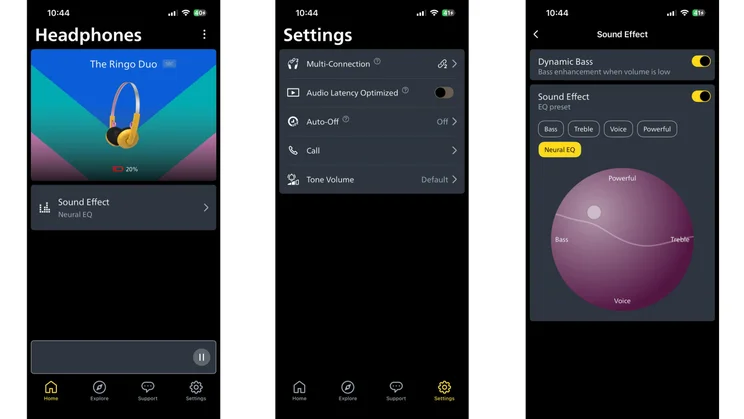
I was pleasantly surprised to discover that the Ringo Duo are compatible with Philips’ Headphones app. Granted, the options there are relatively limited, but I appreciate the fact that Philips has included a handful of preset EQs – Bass, Treble, Voice and Powerful – as well as a “Neural” EQ (pictured below) that lets you tweak the tuning manually. There’s also a “Dynamic Bass” option to boost low-end reproduction at low volume levels.
How I tested the Philips Ringo Duo
I used the Ringo Duo in a range of real-world scenarios over three weeks, wearing them during my commute, which involves an overground train and two Tubes, while walking around town, in the office, and at home.
I assessed comfort, usability and sound quality in each of these environments, while listening to and watching a wide variety of content across different platforms, including Spotify and YouTube. Each of the four preset EQs was used during testing, and I also used the Neural EQ and Dynamic Bass feature to see how manual adjustments impacted sound quality.
My judgements about microphone quality were based on the clarity of my voice during Google Meet and Slack calls, traditional phone calls, and voice recordings made on my iPhone 13 Pro.
How comfortable are they to wear?
Hot summers in London are my least favourite time to test headphones. But when the headphones being tested are as light as the Ringo Duo, the process is a lot more bearable than it would be with a sweat-inducing pair of over-ear cans.
Screenshot
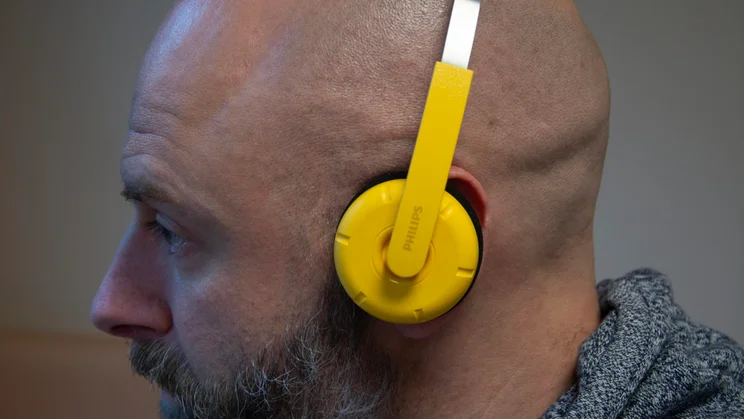
Tipping the scales at 80g, the Duo’s presence on my head never felt overly intrusive. They’re breathable, and the clamping force is well enough judged to avoid any major discomfort. I would have liked something on the underside of the metal headband to serve as a buffer between it and my bald dome, though, and the foam ear pads don’t provide much cushioning. This meant I had to lift them off my ears every once in a while to alleviate the pressure. Overall, however, I was pretty happy with the Ringo Duo’s comfort level.
I also want to shout out how the Ringo Duo look. Yellow is a bold choice, but one that both I and many others I spoke to during testing admired. Several of my colleagues commented on the striking aesthetic in positive terms; I’m clearly not alone in enjoying a 1980s throwback.
How easy are they to control?
The Ringo Duo’s control buttons are small – they need to be to fit on the compact outer shell of the headphones. However, their size, combined with the proximity of the circular play/pause and power buttons, made them a bit frustrating to use at times.
Screenshot
Perhaps it was a me problem, but I’d regularly have to double-check which of the two circular buttons I was about to press by running my finger along the outer surface. Executing volume adjustments and track skipping via the rectangular button with rounded corners wasn’t an issue, though.
How do they sound?
You’re not going to get audiophile-grade sound from a pair of £29 on-ear headphones, but I was perfectly satisfied with what the Ringo Duo delivered for the money. In fact, they exceeded my expectations. I’d anticipated a thin, tinny sound, but that didn’t prove to be the case, even in the default sound profile.
While trebles occasionally sounded a little sharp, a solid low-frequency response underpins the soundstage, successfully reproducing the “womp womp” bassline on Double 99’s garage classic RIP Groove.
Screenshot
The Ringo Duo are less impressive when it comes to detail retrieval and creating a broad, sweeping soundstage, but even in these two areas, they give it a good go. Listening to a live performance of Down Under by Ringo Starr and his All-Star Band at The Greek Theatre, Los Angeles, I could make out the individual instruments and layered vocals relatively easily, and even pick up claps and whoops from the crowd.
Basic but effective audio adjustments
The audio adjustment options are effective, too. The impact of the Dynamic Bass feature, which enhances low-end frequencies at low volumes, is relatively subtle but noticeable. Set to around 35% volume in a quiet corner of the office, the headphones added a welcome boost of extra low-end weight to the original mix of It’s Wavy by Pastiche.
Screenshot
The four EQ presets are useful, but I found the Ringo Duo most enjoyable when using the Neural EQ to set the tuning between the “Powerful” and “Bass” options. Here, they had a nice level of warmth and punch and a decent amount of polish in the upper registers, without completely compromising vocal coherence.
If you’re old enough to remember the Sony on-ear headphones I mentioned in my intro, then you’ll also likely remember that you could hear people using them at high volumes a mile off. That’s not quite the case here, but there’s definitely a bit of sound leakage to consider if you’re wearing the Ringo Duo in public. It’s not egregious; Jon Bray could hear what I had playing once I pushed the volume over 80%, but even at maximum volume, he said that what he could hear of SL2’s On a Ragga Tip was free of irritating, brash highs, and (thankfully) didn’t sound like a mouse on speed scratching out a tap dance.
How good is the microphone?
Mic quality on the Ringo Duo is poor and the Ringo Duo’s biggest weakness. There’s only one mic in the headphones, and it produces extremely muffled audio. During a Slack video call with Will Georgiadis, he described me as sounding like I had a pillow over my head (he’s got to stop fantasising about that; it’s getting weird now).
Jokes aside, voice recordings made on my iPhone sounded similarly muffled and lacked definition. I could make out each word (as could he), but doing so was a struggle; the Ringo Duo are just about okay for letting your partner know you’re not going to be in for dinner, but I’d avoid using them for anything else.
Screenshot
The Ringo Duo’s supplied charging cable includes a built-in microphone that might beat the headset mic, but I can’t comment on its quality—Philips didn’t include the cable with my review sample.
Should you buy the Philips Ringo Duo?
I didn’t expect to like the Philips Ringo Duo nearly as much as I did. In fact, when I was first presented with them at the TP Vision Unboxed showcase in Berlin earlier this year, I hadn’t planned on writing a standalone review.
But the recent hot weather made me give them a chance, and the more time I spent with them, the more I appreciated what they do. They take a nostalgic design and sprinkle a healthy dose of modernity onto it, with impressive results.
The microphone is poor, the metal headband could be more forgiving, and the relatively flimsy build means they won’t last forever. But few things in the tech world do, and with an eye-catchingly retro design and a sonic performance that belies their price tag, I’m happy to give the Ringo not just one Starr, but five.