
To help us provide you with free impartial advice, we may earn a commission if you buy through links on our site. Learn more
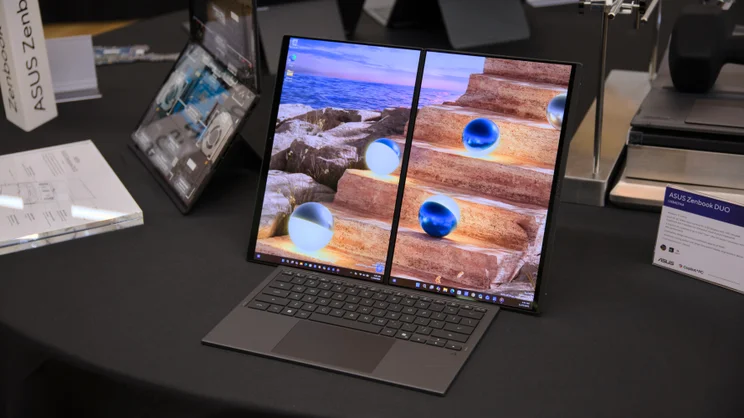

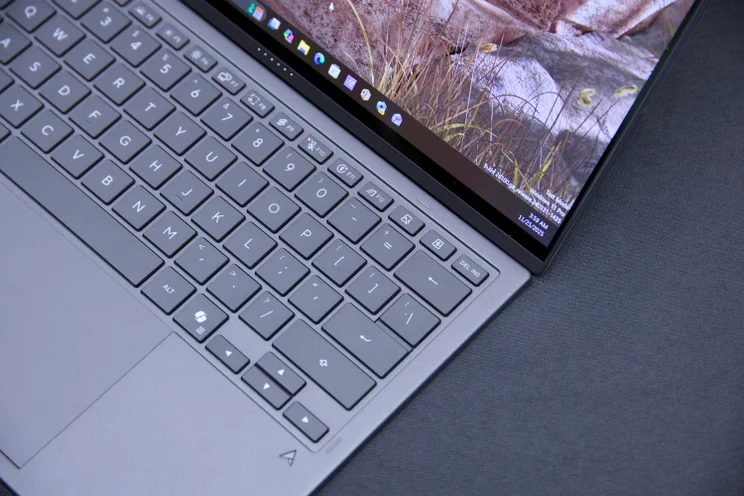
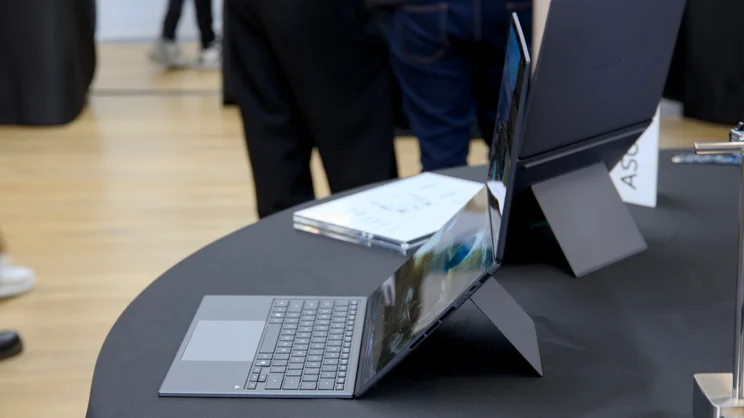
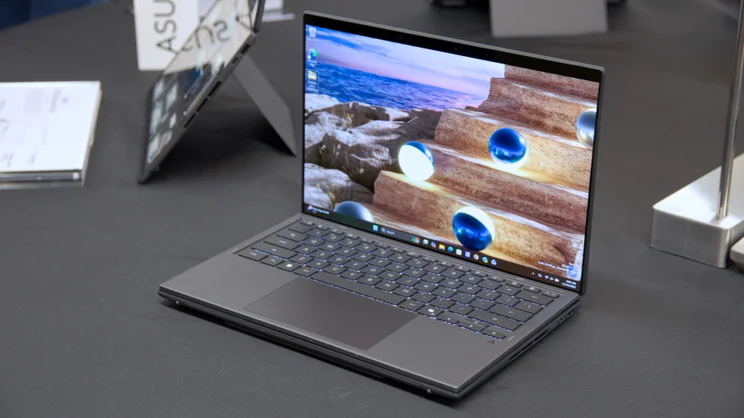
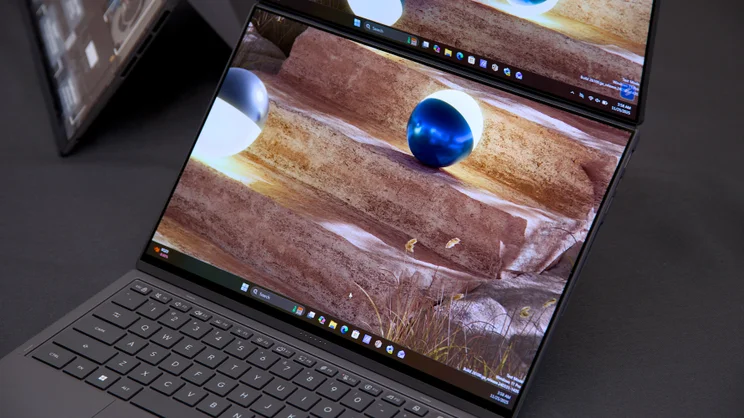
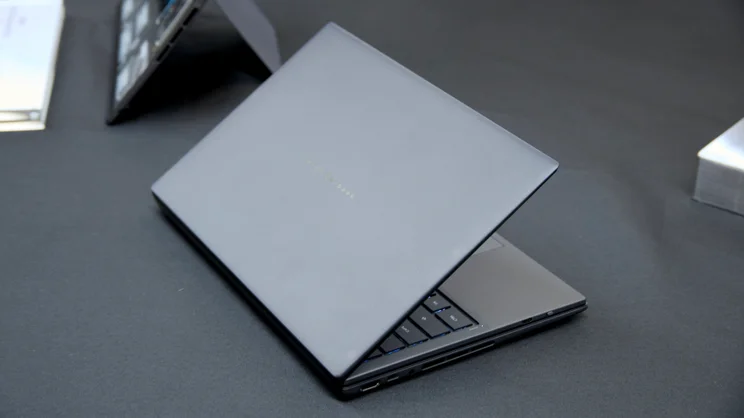
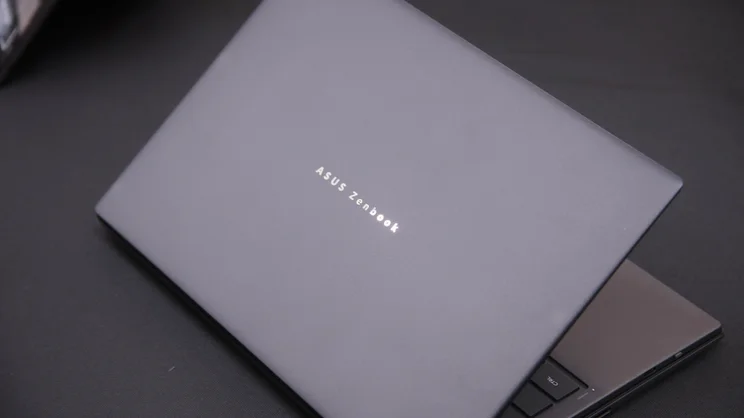
At CES 2026, Asus has unveiled a veritable avalanche of new laptops, so much so that it’s impossible to cover all of them in any kind of detail. That’s okay because most laptop launches tend to be kind of humdrum. But there are always one or two new models that catch the eye, and this year’s star turn is the company’s latest dual-screen machine: the Asus Zenbook Duo (2026).
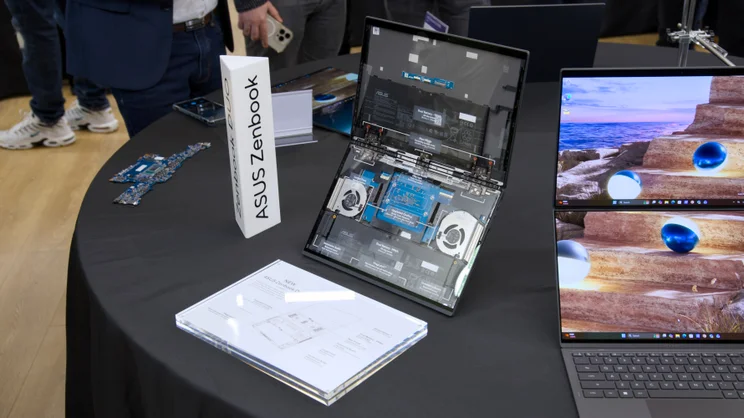
This laptop follows the same basic template as the previous two versions. It looks like a portable 14in dual-screen monitor from a distance, but hidden beneath the displays are all the components required of a full-blown Windows laptop. Take a closer look, however (as I had the chance to do at a pre-CES sneak peek in London a few weeks ago), and you’ll see that pretty much everything has changed.
The key difference, for me at least, is the hinge. It still sandwiches a removable keyboard between, so you can use the Duo as a regular laptop or, with the keyboard removed, as a dual-screen desktop.
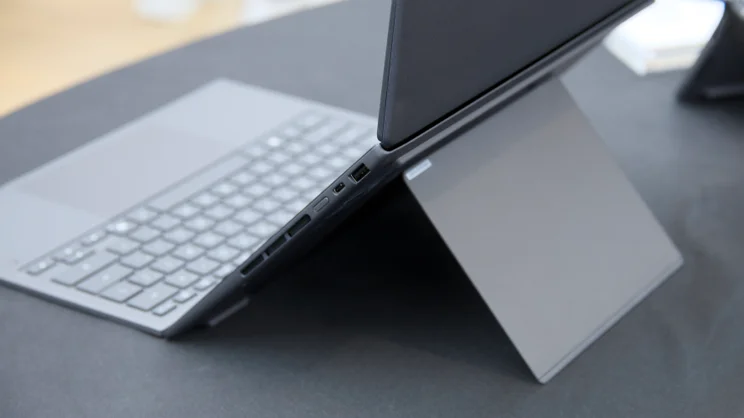
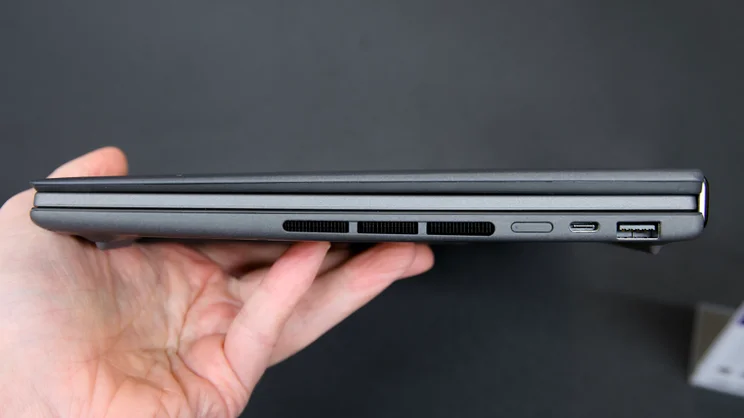
There’s still a sturdy kickstand that folds out at the rear so you can prop it up in landscape or portrait orientation. But when the screens are folded flat, the hinge no longer creates an offset step between the screens as it did on the previous models, and they sit closer together as well.
It’s important to note that this isn’t a giant folding screen like on the HP Spectre Fold 17, but it’s more practical, more reliable and cheaper to produce.
That isn’t the only improvement to the ZenBook Duo, however. Inside, it comes with the top-of-the-line 45W TDP Panther Lake 12Xe processor, complete with a whopping 16 CPU cores and 12 GPU cores.
There are two batteries with a total battery capacity of 99Wh, and yet the laptop itself is lighter than before. Its six-speaker audio system now goes louder and its Lumina Pro OLED touchscreen displays refresh at 144Hz instead of 120Hz.
And critically, all this is knitted together in a chassis that looks and feels robust and elegant and I, for one, can’t wait to get my hands on one to review later in the year.
Asus adds 16in model to A-series range – and upgrades to Snapdragon X2
My favourite laptop of last year’s selection from Asus has also received an upgrade in 2026. But as well as gaining a processor upgrade, the lightweight battery life king that was the 2025 Zenbook A14, now has a bigger brother.
The Asus Zenbook A16 has all the same traits that made the original A14 great, but with a larger 16in screen. It’s super rigid and incredibly light at 1.2kg. The OLED screen is a sharp 3K 120Hz unit and Asus is claiming 21-hour battery life. That’s shorter than the original claim for the A14 of 28 hours, but it should be good enough for all day computing away from the mains.
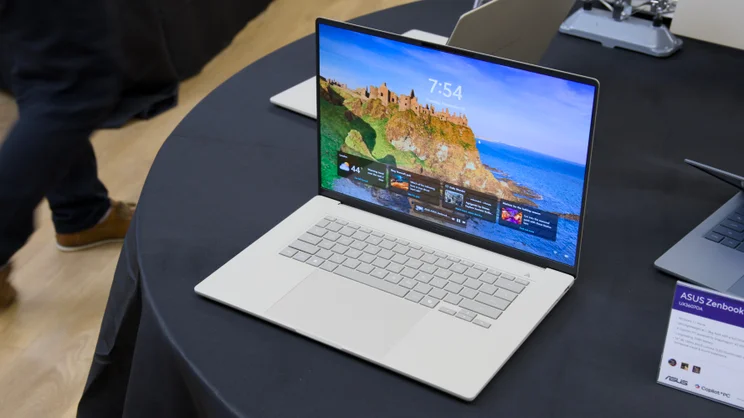
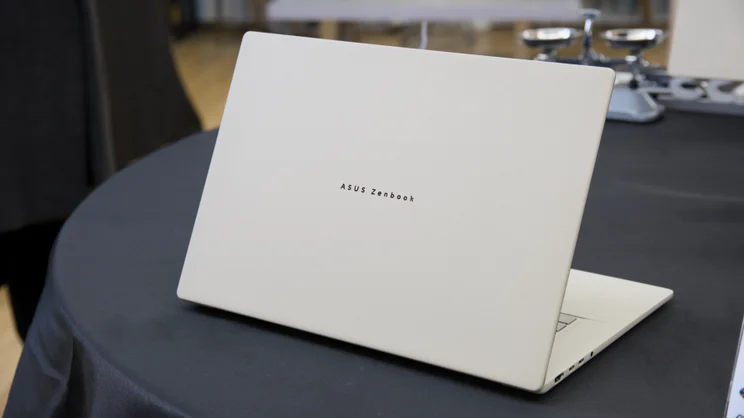
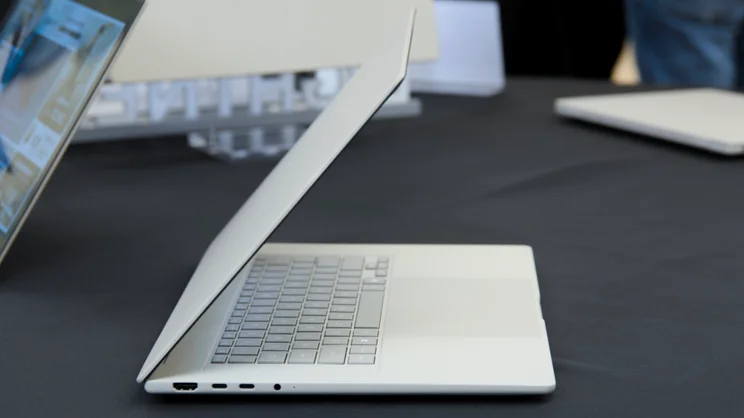

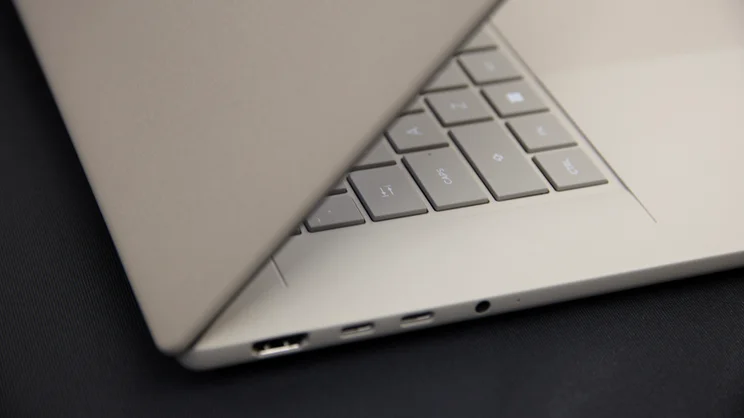
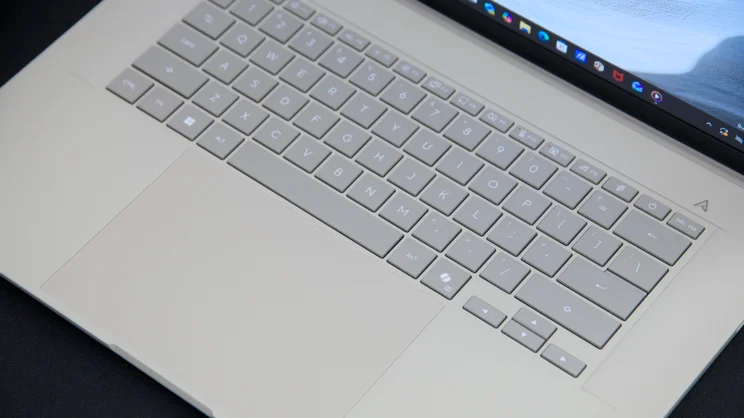
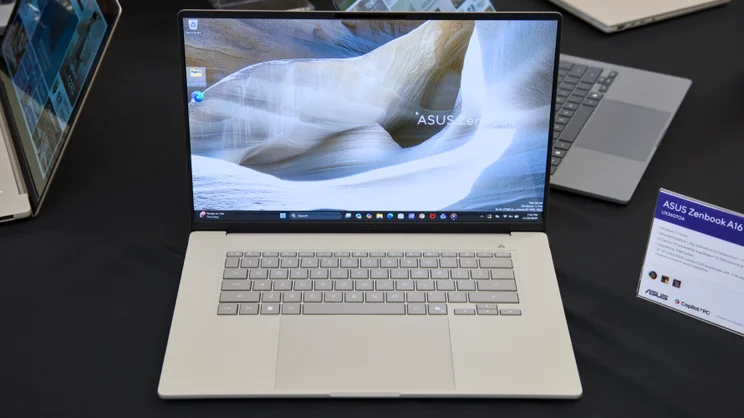
With the increased power of the 18-core, 65W Snapdragon X2 Elite Extreme chip on board, this could be a mobile powerhouse, the likes of which the Windows laptop scene has never seen before.
Other highlights include Asus’ lovely slightly rough “Ceraluminum” finish, a lid that opens with a single finger and a full-size SD card slot. That’s as clear a sign as any that Asus is positioning this as a mobile workhorse for creatives to rival the like of the MacBook Pro.
The new A14, meanwhile, looks and feels every bit as gorgeous as the original, except with similarly upgraded componentry, 28-hours of battery life and a 14in 120Hz OLED display with peak brightness of 1,100 nits. The smaller of the two, the A14 won’t be offered with the Extreme version of the Snapdragon X2 Elite chip, however, topping out at the Snapdragon X2 Elite.
What else is in store for Asus in 2026?
As is usual for Asus at CES, a whole lot more was unveiled. There were refreshes of the Asus Vivobook range with new S14, S15 and S16 models touching down, some featuring the new Snapdragon X2 chips, some with Intel Silicon and some with AMD chips inside.

There are some lovely new pro-level laptops, too, with the ExpertBook Ultra the pick of the bunch – a 0.99kg featherweight, 109mm-thin and hewn from magnesium alloy with claimed 24-hour battery life and Panther Lake power inside – to go with two new machines, the PZ14 and 2-in-1 detachable ProArt Px13.
And not forgetting, there’s also going to be a whole host of new gaming machines, from the twin-screened Zephyrus Duo monster to refreshes of Asus’ much-loved budget Tuf Gaming A14.

Prices are likely to be higher than last year
The key with these 2026 releases, exciting as they are, is going to be how expensive they wind-up being.
And with RAM and storage prices rising dramatically right now – driven by high-demand from AI companies – that may not be as happy a story as you might hope.
Indeed, Asus has already announced price rises on a number of products, as has Dell and the situation is likely to get worse over the coming months.


