To help us provide you with free impartial advice, we may earn a commission if you buy through links on our site. Learn more









- Helps cut down screen time
- Excellent battery life
- Simple and minimal Balance OS
- Plasticky build
- Mediocre night photography
- The blocking can feel overly aggressive
We all generally understand that a phone review is meant to be about what it’s like to actually use a new handset. But what if you’re testing out a model that’s designed to be used as little as possible?
Meet the Balance Phone: half-dumbphone, half-smartphone. It’s far more premium than your old Nokia 3310, but more locked-down than most other phones on the market.
The issue it solves is one of distraction. You still get to have useful phone apps (including music, podcasts, navigation, WhatsApp and the like), but it blocks all social media, YouTube, Reddit, adult content, browsers, and more. It’s ideal if you want a taste of the forthcoming under-16s social media ban, if you’re buying a phone for a child, or you want a distraction-free work phone.
Balance Phone: What you need to know
The first thing to note is that all of the Balance branding and features are completely software based; the hardware itself is actually older and entry-level Samsung phones. The £379 Balance Phone reviewed here is based on the Samsung Galaxy A37, but you can also choose the Balance Phone Kids (based on the Galaxy A17) for £279 or the Balance Phone Pro (a Galaxy S25) for £679.
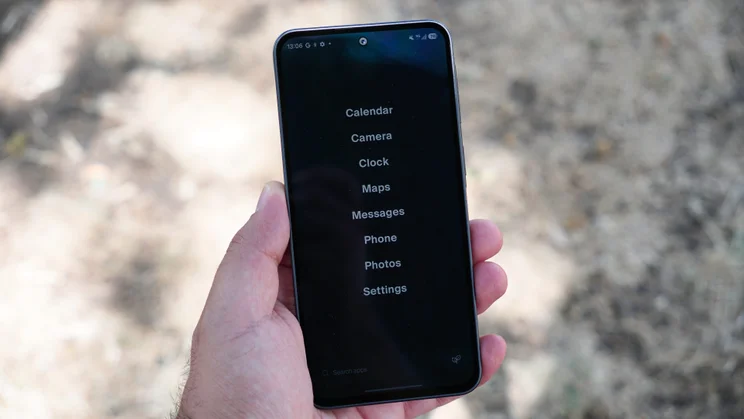
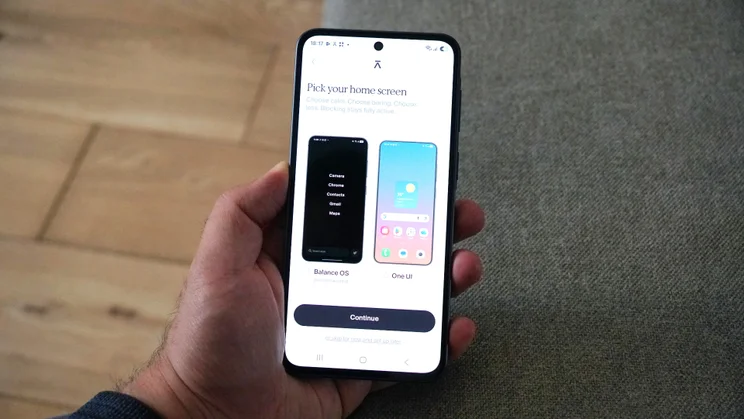
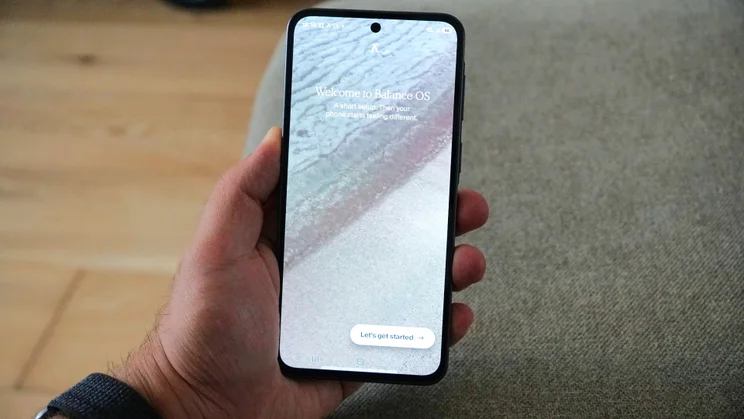
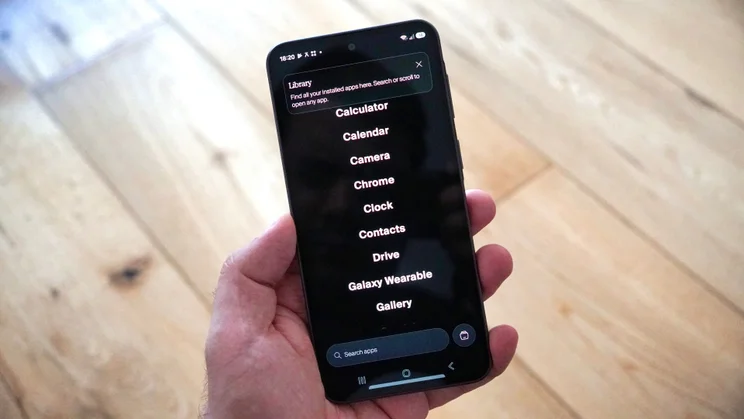
All of these run Balance OS, a non-removable launcher with a simplified and minimal home screen that displays the names of up to eight apps on a black background. You can navigate to other apps using Balance’s app list, just a couple of taps away.
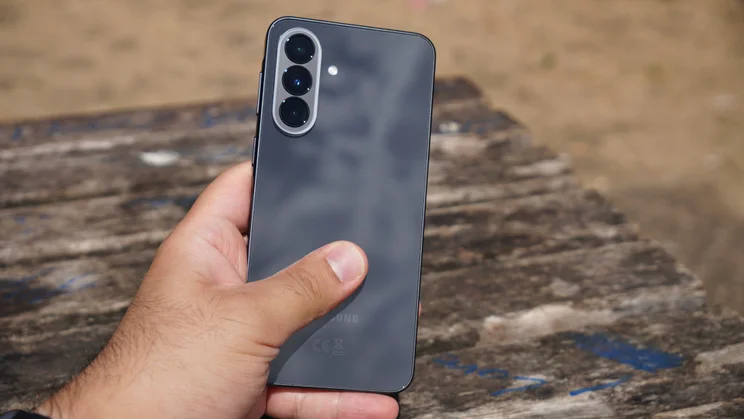
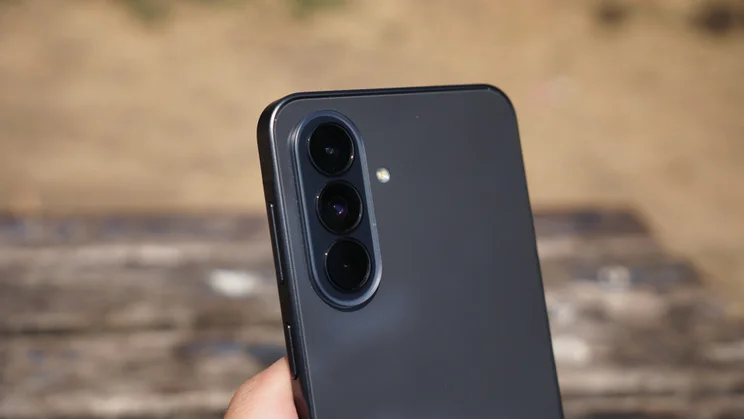
The display is a 6.7in Super AMOLED with a 2340×1080 resolution at 385ppi and a 120Hz peak refresh rate. There’s a 12-megapixel selfie camera at the top and over on the rear is a triple-camera array, with the 50-megapixel main lens joined by an 8-megapixel ultrawide and a 5-megapixel macro.
Inside is an Exynos 1480 chipset, backed up by 6GB of RAM and 128GB of storage, and a 5,000mAh battery that supports charging speeds up to 45W. Balance doesn’t make any software update promises, but the A37 should come with a strong promise of six years of OS and security updates.
Price and competition
The Balance Phone costs £379, directly from the Balance website. It makes sense to compare it to the Samsung Galaxy A37, as it’s the same phone inside the box (there’s actually just a Samsung box inside the larger Balance box when it arrives, in case you’re wondering).
At the time of writing, you can get the 128GB Galaxy A37 from Argos for £399 (although there’s a £50 off voucher), so the prices are pretty comparable. Samsung doesn’t appear to sell this lower storage variant of the A37 from its own site anymore.
Because it has a unique USP, it can be hard to work out what else to compare this to; it’s pricier than dumbphones but much more capable, and has a comparable cost to budget to mid-range smartphones. You could get our best budget phone, the Motorola Moto G56 5G, for far less (£160) and refurbished iPhones or Google Pixel phones also wouldn’t cost you as much.
One thing to note is that you can buy Balance OS itself at £69 per year, to turn an existing compatible Samsung smartphone into a Balance Phone through an annual subscription. Given that Balance OS is a system-level block, it’s a bit unclear to me what happens when the subscription ends or if you don’t need it anymore, but I think you can remove it with the help of Balance’s customer support team, should you need to.
Design and key features
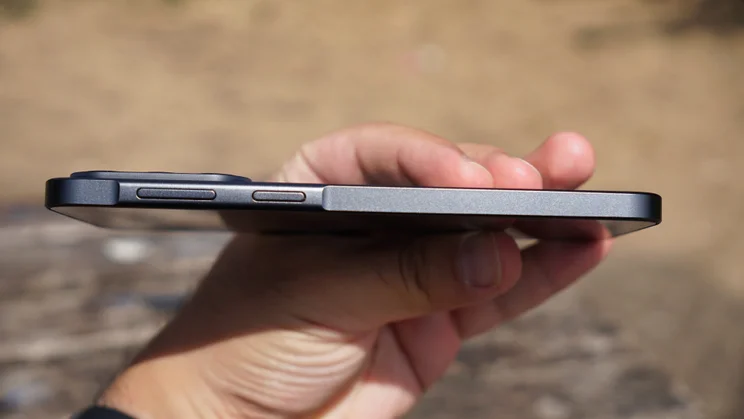
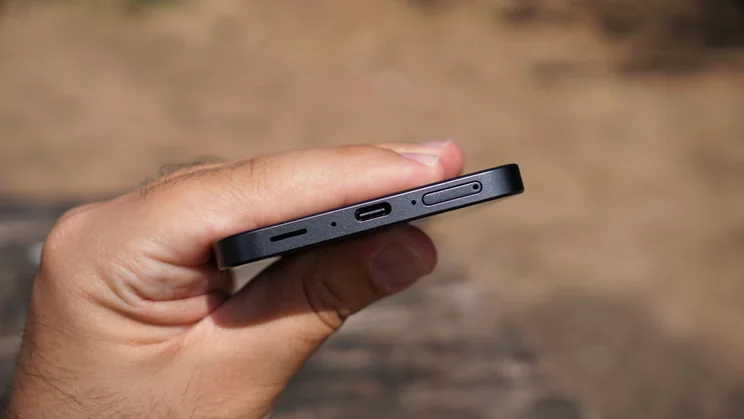
Balance hasn’t done anything special with the design; it’s just a Samsung Galaxy A37, available in the one “charcoal” colourway and only offering 128GB of storage. The build is all plastic and it weighs a reasonable 196g. There’s a bit of a bezel around the screen, albeit not as thick as what’s on the Galaxy A16.
It’s sturdy enough, too, with Gorilla Glass Victus+ on the front and back, along with handy IP68 dust and water resistance. It’s just 7.4mm thick so it’s slim to slip in a pocket, and it’ll obviously fit any case made for the Galaxy A37. It is going to feel notably more budget than a phone with an aluminium frame, but I don’t think that’s the biggest drawback on a phone that you’re not meant to use all that often.
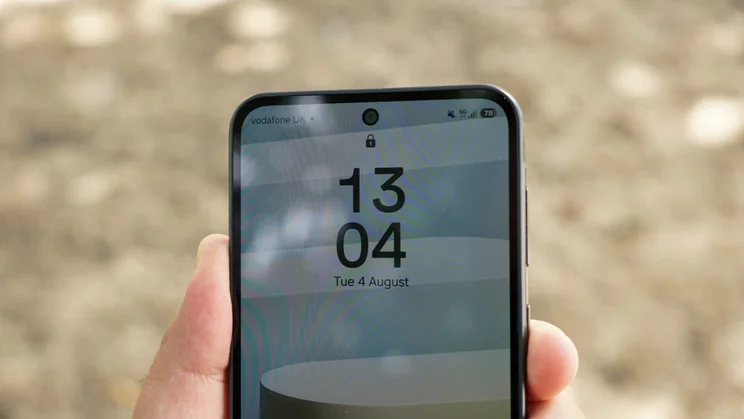
The big 6.7-inch screen likely won’t be used to view many videos (as there’s no YouTube, Netflix or Disney+) or play any games, but if you like the idea of a big display for reading messages, emails, articles and books, this’ll do the trick. There’s a reliable fingerprint sensor underneath the display, as well, and the selfie camera supports face unlocking.
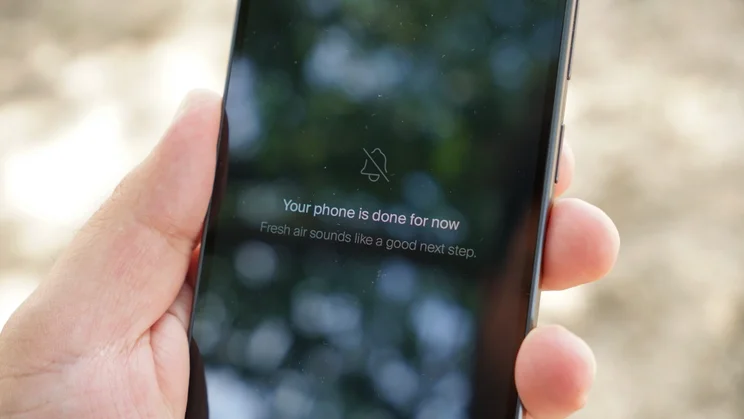
The basis of the software is still Samsung, so settings, controls, lock screen, and everything else are all as you would expect from any OneUI phone. Sitting over the top is Balance OS, which blocks all social media and video apps, browsers and more. It also forbids adult content, any image searches, and I noticed blocks on some news sites and blogs, too.
I like the tidiness of the minimal home screen, and it proved effective at reducing my screen time – during testing, I went from over five hours per day to under an hour most days. I ended up spending most of my time on the Instapaper or Kindle apps, or using it as a work phone with Outlook and Gmail. I appreciated that I could still use it for music and maps, even if I did miss Reddit and YouTube.
I have a feeling long-term use could help you change habits if you feel addicted to social media, but these blocks can feel a bit intense if you’re not detoxing.
Display
The 6.7in Super AMOLED display has a 1,080 x 2,340 resolution at 385ppi. It’s more than sharp enough for everyday use, with the 120Hz refresh rate keeping scrolling smooth and responsive.
Brightness was a little underwhelming on manual mode: it peaked at 414cd/m², which falls just short of what we’d consider comfortable for outdoor use in direct sunlight. Switching to adaptive brightness and shining a torch on the light sensor sorted that out, at least, pushing the ceiling up to 1,062cd/m². That’s far more suited to sunny conditions.
Samsung offers two colour profiles for the display, Vivid and Natural. Vivid delivers the punchy, saturated look to make images and videos pop. Natural mode is the better choice if you want accurate colours. In testing, I recorded an sRGB gamut coverage of 96.6% against a volume of 98.7% sRGB, which is decent, but the average Delta E colour variance score came back at 3.1. Our target is 1 or under, so this is quite far off but, given the mission statement of this phone, it’s an area of sacrifice that makes sense.
Performance and battery life
Like any Samsung Galaxy A37, the standard Balance Phone runs on the Exynos 1480 chipset, which is an older processor. It’s paired here with 128GB of storage and 6GB of RAM.
My previous experience on the old Balance Phone model (based on the Galaxy A16) was worryingly slow and laggy, so I hoped for much better from the newer hardware.
While still sometimes sluggish, I think the Balance Phone should be good enough for digital minimalists who won’t be taxing the phone. For general messaging, photography, reading and the like, it’s perfectly adequate.
As you can see below, it scored reasonably enough in the Geekbench 6 CPU tests, with a single-core score that broadly match the Honor Magic 8 Lite and TCL Nxtpaper 70 Pro, and multi-core results that just eke past all competitors except the Google Pixel 9a, which leads the Balance Phone by 30%.
There’s no real use talking about gaming, streaming or social media, as they’re all blocked on this phone, but if you want to use it for anything vaguely demanding, I’d recommend considering the Balance Phone Pro, as it’ll have much better performance. The pricier model is based on the Samsung Galaxy S25, a previous flagship, and will be the better option if you want to use the Balance Phone for productive work or 4K video recording.
For battery life, it’s a solid performer. Under typical use, it’ll get you through the day, and I found I’d end the day with around 20 to 30% still in the tank. And, in our standardised looping video battery test, the Balance Phone lasted for 29 hours and 17 minutes, making it one of the better budget phones out there.
Cameras
The camera setup is very similar to last year’s Galaxy A36 but it’s still a clear step up compared to the previous Balance Phone model, which was built on the Galaxy A16. In this comparison, you’d notice better stabilisation, the presence of 4K video recording, and more detail in the ultra-wide and macro lenses.
Photos from the 50-megapixel main lens can have a bit of a processed and washed-out look, but they’re fine for a budget phone, with a good amount of detail and dynamic range. They’re big on vivid colours and sharpness. You can generally trust Samsung to deliver pictures that “pop”, and this is no exception.
You can take photos with a 2x digital crop into the main sensor, and these still hold up, only losing a little sharpness. It’s very usable for a little bit of a zoom, but just don’t push it any further than that as the results will end up crunchy, pixelated and soft.
The 8-megapixel ultrawide and 5-megapixel macro cameras were both rather disappointing. Ultrawide images are soft, over-processed, and lacking in detail, while the macro works well enough for the occasional close-up in good lighting, but clarity remains weak. Most close-ups will look better from the 2x crop of the main sensor.
In general, the camera system here is reliable for most shots. You can get good pictures of people, a decent portrait mode, wide landscapes and reasonable close-ups. Selfies look good in most situations, too, but low-light conditions rob them of detail – an issue that is consistent across all the lenses.
4K video recording is available, too, and could be useful if you need it. You’ll get impressive and well-stabilised results from the main sensor, but don’t rely on the ultrawide’s 1080p shooting as that’s where you’ll notice a loss of detail. It is, overall, a competent camera system for a budget phone. If you need better than this, you’ll need to spend more.
Balance Phone: Verdict
Fancy yourself a bit of a digital minimalist? Need a distraction-free work phone? Or buying a first handset for a child and want it free from social media? All of these are good reasons to consider getting the Balance Phone. It’s a model based on reliable budget Samsung hardware, with good enough specs and cameras for the money.
I’ve found using Balance’s interface handy for cutting back my screen time and for its stripped-back launcher, but it sometimes doesn’t feel like the most nuanced or customisable approach to blocking and app limits. How much that’ll appeal will depend on what you’re after.
If you know you want something that’s a little like a dumbphone but still has email, messaging, maps and music, this is a good option. Those seeking faster performance, better cameras or a smaller display, however, would do well to consider the Balance Phone Pro instead.