To help us provide you with free impartial advice, we may earn a commission if you buy through links on our site. Learn more







- Excellent AMOLED display
- Slim and lightweight build
- Great battery life
- Middling performance
- Only IP64 rated
- Hit-and-miss cameras
The Motorola Moto G77 is a rare breed these days. Ongoing component supply issues have made it increasingly difficult to find a decent budget phone these past few months, and that shows no sign of changing any time soon.
So for now, phones under £200 are essentially a no-go, and the Moto G77 is about as good a budget phone as you can buy. It’s still on the more affordable side of things, has an excellent display, a solid main camera and rather good battery life. It isn’t as cheap as some of us would like it to be, but for those on a strict budget, this is the ideal budget phone.

What you need to know
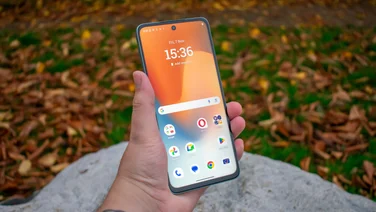
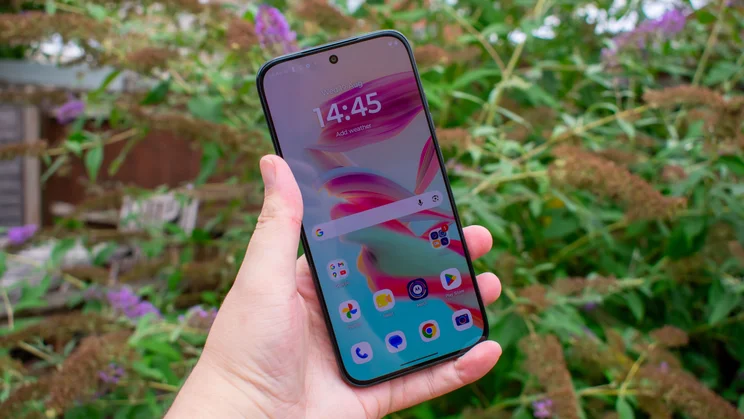
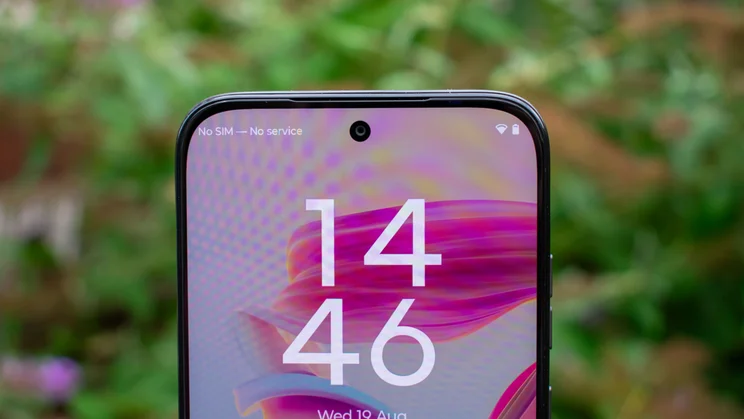
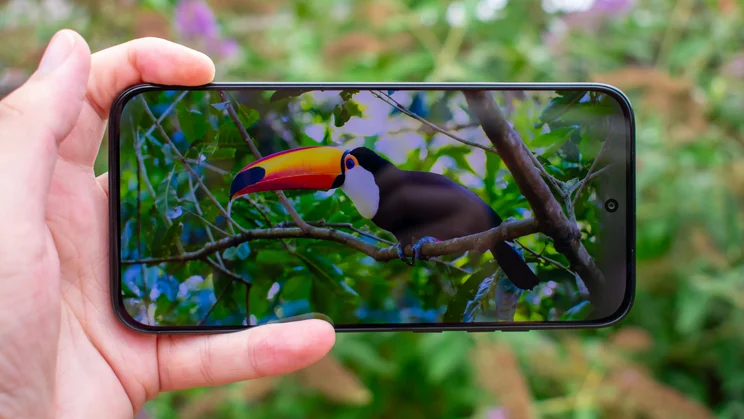
For a relatively inexpensive handset, the Moto G77 is quite well-featured compared to its predecessors. The 6.78in display, for instance, isn’t a cheap LCD, instead using an AMOLED panel with near perfect black and contrast levels, as well as a 2,772 x 1,272 resolution and a peak refresh rate of 120Hz.
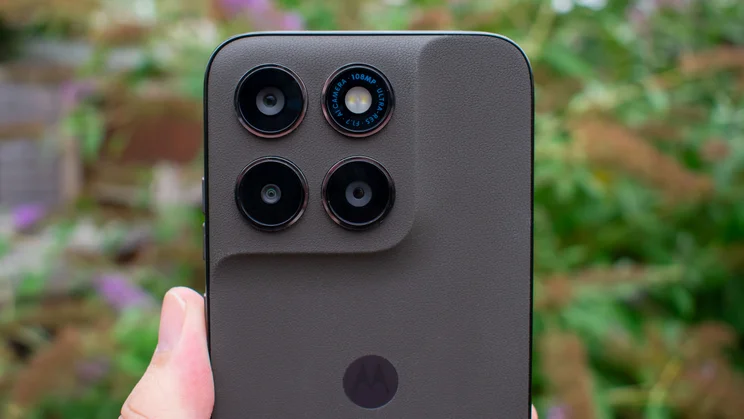
The main camera is higher quality than I expected, too, with a 108-megapixel sensor and a wide f/1.7 aperture. Joining it on the rear is a less impressive but still fine 8-megapixel ultrawide, and around the front is a 32-megapixel selfie camera.
The MediaTek Dimensity 6400 chipset is clocked up to 2.5GHz and backed by 8GB of RAM and 128GB of storage space. Rounding out the internal components is an above-average 5,200mAh battery that supports wired charging up to 30W.
Price and competition
The sole model of the Moto G77 costs £250, which unfortunately makes it one of the cheapest smartphones going right now. There technically are cheaper phones out there, but you only need to look at Motorola’s own Moto G17 to see what kind of sacrifices you have to make to hit that £150 price point.
There is nothing that rivals the Moto G77 at its affordable price but, if your budget can stretch a little further, there are some excellent options closer to the £300 mark.
The biggest threat is last year’s Google Pixel 9a, which starts at just £299 at the time of writing. In addition to its excellent performance and battery life, this model was pledged seven years of software support at launch, meaning that it will stay up to date all the way through to 2032.
Also at that £299 price point is the Honor Magic 8 Lite, which excels particularly well in stamina, with some of the best battery life I’ve ever recorded. And just a little cheaper is the TCL Nxtpaper 70 Pro, at £270. This is an e-reading focused phone with a paper-like matte display and eye-care features for extended reading sessions.
Design and key features
The Moto G series has landed on a fairly consistent design language. This can sometimes make the different models difficult to tell apart but it does at least mean that even the cheapest of the family still cut a striking profile.
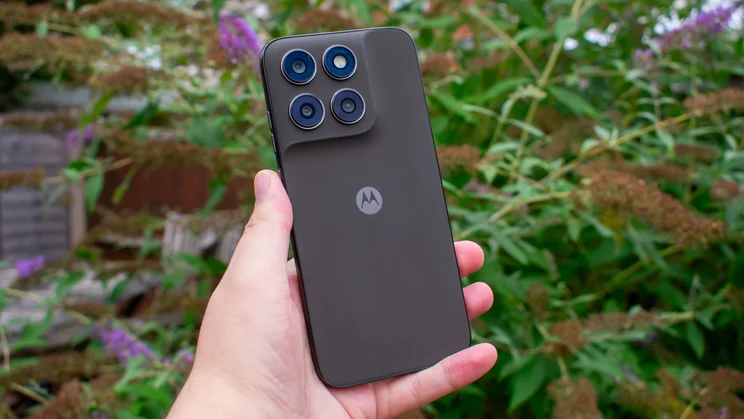
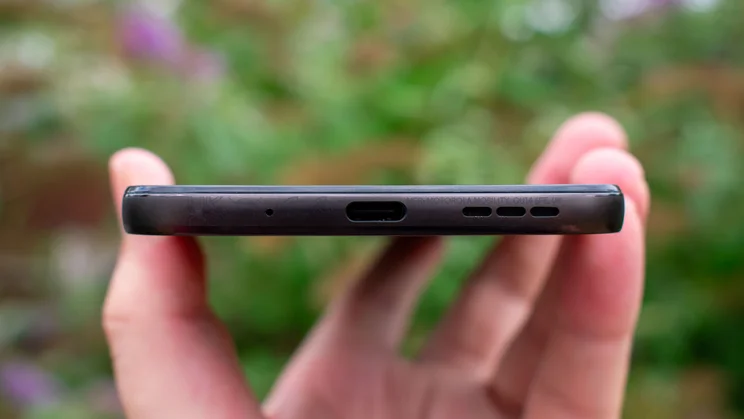
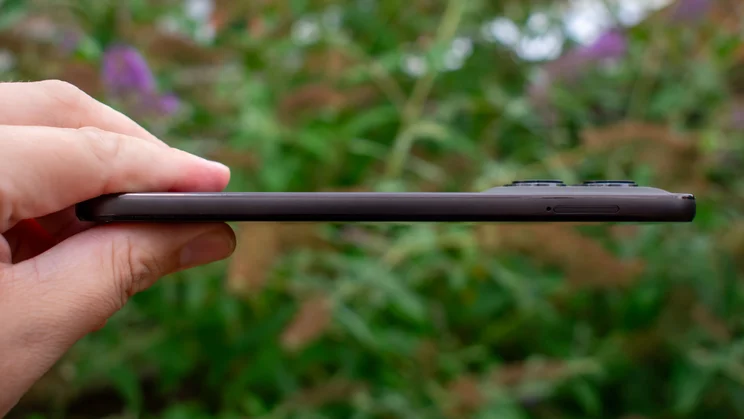
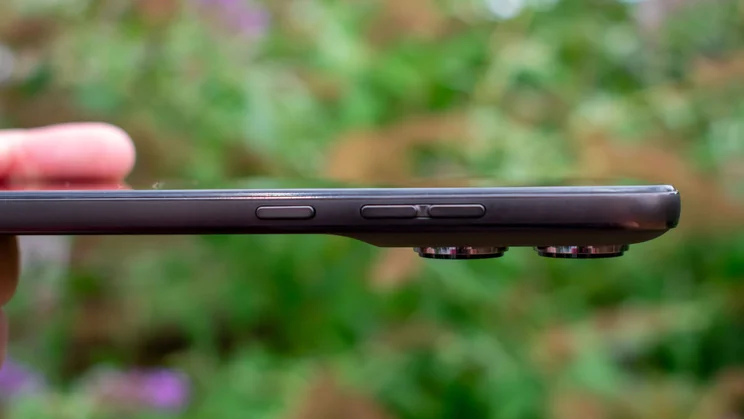
The Moto G77 is nicely slim and lightweight, measuring 77 x 7.3 x 164mm (WDH) and weighing 182g. It comes in two Pantone approved colours – the Black Olive style seen here and the bluey-green Shaded Spruce – and pairs a matte plastic frame with vegan leather on the rear.
There’s a layer of Gorilla Glass 7i sitting over the display for scratch protection, which is far from a given at this kind of price, and the phone is rated IP64 for dust and water resistance. That means it’s dust-proof and splash resistant but lacks the ability to withstand submersion like the IP68-rated Moto G56.
Features are decent, too, with a reliable optical fingerprint sensor in the display, face unlocking via the selfie camera and support for a microSD card, allowing you to expand the base storage by up to 2TB.
Software is built on Android 16 and Motorola has pledged three years of OS updates and four of security patches. This is a big improvement for Motorola, which infamously tried to push the awful Moto G17 with nary a single OS update.
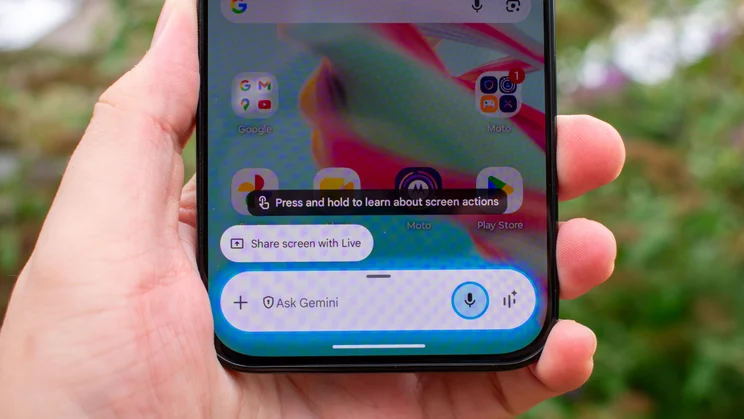
The OS itself is quite good, too, with simple, accessible layouts and only a handful of unwelcome bloatware apps installed upon boot. You also get Google’s Gemini AI assistant, which has previously been exclusive to more expensive phones. It’s a great choice for older users, teens or anyone who isn’t all that familiar with Android smartphones.
Display
OLED displays are still something of a rarity on phones this cheap, so the mere fact that the Moto G77 has an AMOLED screen is a win. It proved rather decent in my testing, too, with rich, inky black areas and reasonably good colour accuracy; on the natural colour profile, I recorded an average Delta E colour variance score of 1.13, which is impressively close to my target of 1 or under for such a cheap phone.
It got sufficiently bright in my testing, too, with manual brightness peaking at 478cd/m2 – more than enough for comfortable indoor viewing – and adaptive brightness reaching 775cd/m2 when I shone a torch on the light sensor. Finally, running HDR content saw the brightness top out at 1,359cd/m2, which again, is better than I tend to see from budget phones.
Performance and battery life
The 2.5GHz MediaTek Dimensity 6400 chipset is a good performer for this kind of money, scrolling through menus efficiently enough and opening and switching between apps reasonably quickly.
As you can see below, there is a big leap in speeds when you up your budget to £300, however, with the Honor Magic 8 Lite performing 45% better in the multi-core stakes and the Google Pixel 9a scoring more than double the result of the Moto.
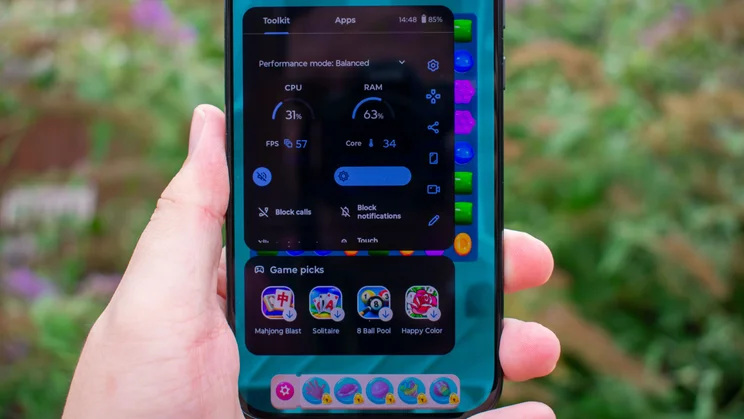
A phone this cheap is not designed for complex mobile games but you can play the likes of Candy Crush without issue. Once again, the Pixel 9a is the best bet here, so if you plan to use the phone for 3D gaming, it’s worth seeing if you can stretch the budget a little further to get that extra horsepower.
The 5,200mAh battery is slightly higher in capacity than most – the industry average has been 5,000mAh for quite a while now – and it achieved far better results in my battery test than I tend to see from phones this cheap.
The Moto G77 ran my looping video test for a total of 27hrs 38mins, which is more than five hours longer than the Moto G56 and a couple beyond the TCL Nxtpaper 70 Pro. The more expensive phones naturally perform better, with the Honor Magic 8 Lite leading the class at 40hrs 38mins. However, considering its affordability, this is a fantastic result for the Moto G77.
The 30W charging is rather good for this price, too, bringing the battery from empty to 50% in around 30mins, with a full charge taking around 1hr 15mins.
Cameras
As the Motorola Moto G77’s camera had better specifications than I’d expected, I decided to present it with a challenge during my photo testing – capturing the difficult lighting of the August 2026 partial solar eclipse.
The 108-megapixel (f/1.7) main lens took to the challenge well, staring down the sun’s scattered light and delivering decent dynamic range when facing the glare head-on, and plucking out impeccable detail and gorgeous sunset colours with the sun at my back.
Night photography is competent enough in a pinch, with natural colours and decent detail in the foreground. Things blur off towards the edges and further into the background, however, and you regularly end up with an obscene amount of visual noise in the sky.
Motorola claims that the Moto G77 offers a lossless 3x zoom, which of course it doesn’t. Look below and you’ll see that the 3x zoom is desaturated and has lower detail than the main lens. It’s fine but nothing more.
What is actually impressive here is that the maximum 10x zoom (below) is roughly the same quality as the 3x, which is better than I’ve seen from other budget phones that lack a telephoto lens. If you regularly engage in zoom photography, the Moto G77 has some of the best 10x shots of any budget phone I’ve tested.
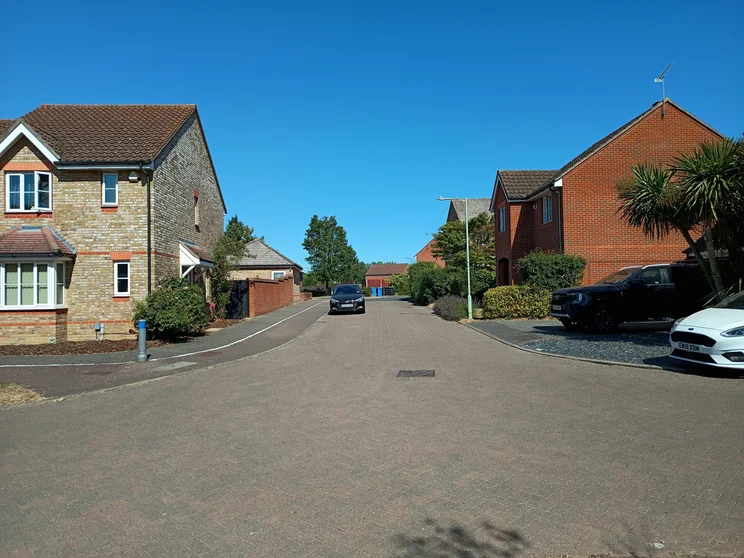
The 8-megapixel ultrawide camera is the same one found on the Moto G17, which is to say that it’s not very good. It widens the scene effectively enough and the colour tone is even quite close to that of the main camera, but the level of detail is awful, to the point where even a bright sunny day ends up with visual noise in the sky.
The 32-megapixel selfie camera fares better, snapping solid portrait shots with decent focus and a smooth background blur. Both it and the rear camera can shoot video in either 1080p or 1,440p – again, far from a given at this price. You’re locked to 30fps on the selfie camera but the rear can shoot 1080p at 60fps, too.
Verdict
So that’s solid performance from both the front and rear cameras, solid battery life, nippy charging, a crisp AMOLED display with good colour accuracy and brightness, expandable storage and a slim, lightweight design. For £250, that’s a very good amount of phone.
The middling performance and lack of IP68 protection are a shame, as is the inconsistent quality of the cameras, particularly when it comes to night and ultrawide shots. If you can afford to expand your budget, the Google Pixel 9a is a far better choice. For those looking to get a decent handset for as little as possible, however, the Motorola Moto G77 fits the bill nicely.