To help us provide you with free impartial advice, we may earn a commission if you buy through links on our site. Learn more











- Beautifully bright display
- Excellent stamina
- Comprehensive charging provision
- Much more expensive than before
- HyperOS gonna HyperOS
- Design more or less unchanged
The Poco label used to stand for performance at a low price. It still does, to a certain degree, but not with regard to the flagship F-series. Not any longer.
After the Poco F8 Pro made a case for being the most capable mid-range phone on the market (if not the best) last year, the Poco F9 Pro completely rips up the form book. Not by offering anything particularly new, but by placing itself in a completely different stratosphere.
Just like its Poco F9 Ultra big brother, the Poco F9 Pro has me questioning precisely where it’s supposed to fit in even as I praise its undoubted strengths. Who exactly is this for?

Poco F9 Pro review: What you need to know
The Poco F9 Pro keeps up the flagship-grade performance of its predecessor, this time with a Snapdragon 8 Gen 5 V Series chip. This is backed by 12GB of RAM and either 256 or 512GB of storage.
There’s a slightly larger 6,330mAh battery on board, as well as speedy 100W wired charging. This year’s model mixes things up by adding 50W wireless charging to the package.
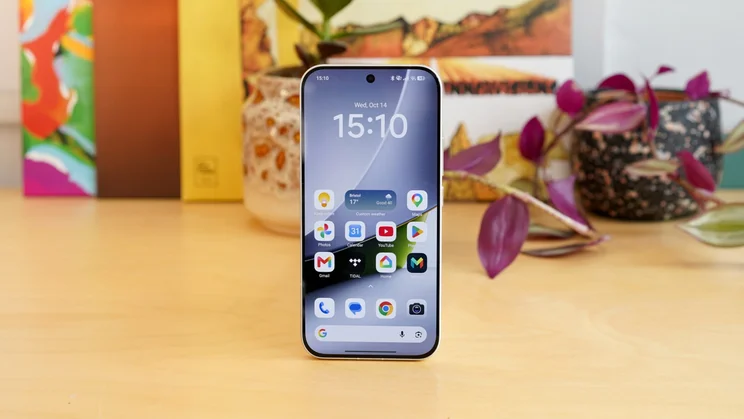
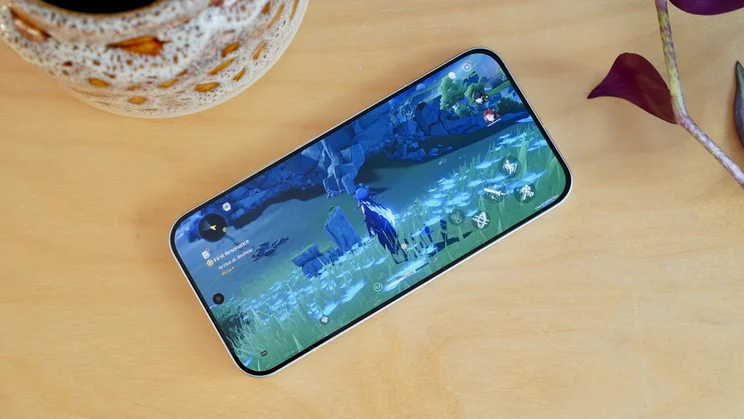
It’s fronted by a familiar 6.59-inch OLED with a sharp 2510 x 1156 resolution, a higher 185Hz maximum refresh rate, and a bolstered peak brightness of 4500 nits.
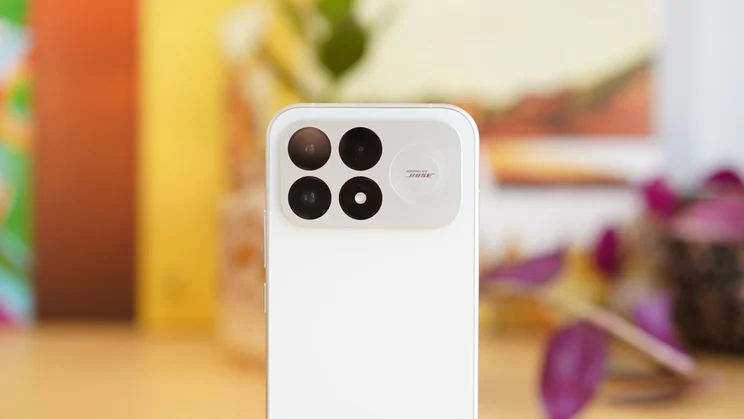
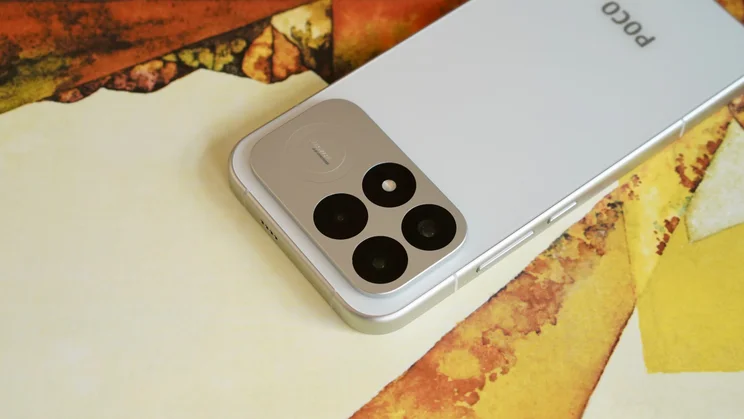
The main camera is now a 200-megapixel unit and the 2.5x telephoto has a larger sensor than last year. There’s also an 8-megapixel ultra-wide and an upgraded 32-megapixel selfie camera.
Poco F9 Pro review: Price and competition
The crucial context to everything we’re about to discuss is cost. With a starting price of £799, the Poco F9 Pro is now pitched within £100 of big hitters such as the Google Pixel 11, the Samsung Galaxy S26, and the iPhone 17.
Yes, a £100 saving on those phones is nothing to be sniffed at. But just 12 months ago, the Poco F8 Pro was competing with the Google Pixel 9a and other high-quality but decidedly mid-range phones. The Poco F9 Pro is a massive £250 more expensive than its predecessor.
The Poco F9 Pro has moved up in the world alright, but while some of its specification tweaks go some way to justifying a 46% bump – and acknowledging the component crisis that’s inflating all smartphone prices in 2026 – this brings with it an elevated level of expectation.
It’s no longer the plucky mid-range underdog, coasting along on its ability to punch well above its weight on performance. This is priced like a flagship phone (albeit one from a year or two ago), and deserves to be judged as such.
Poco F9 Pro review: Design and key features
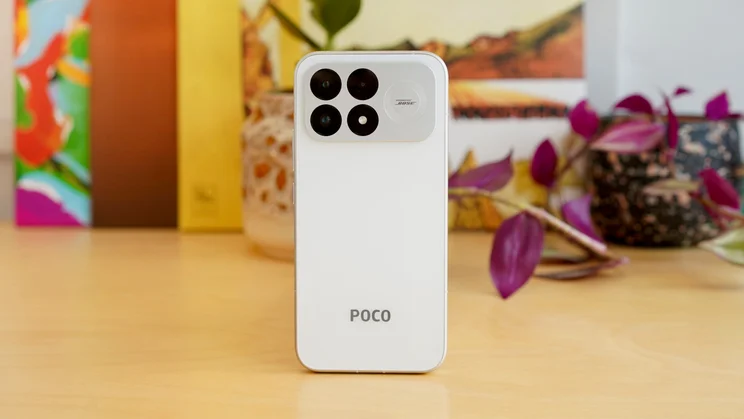
Anyone looking for evidence of where that extra £250 has been spent should move on to a different section, because the Poco F9 Pro looks and feels a lot like the Poco F8 Pro.
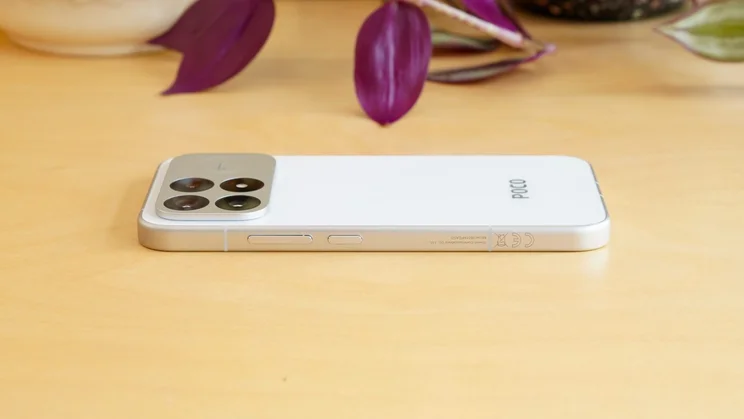
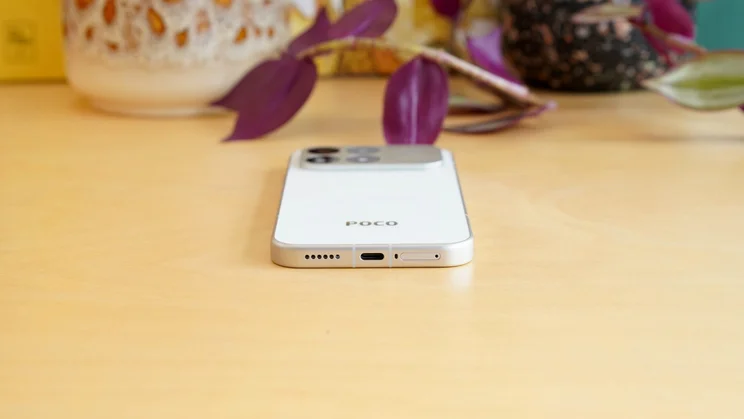
It’s got the same flat aluminium frame, curved corners, and Gorilla Glass 7i display cover as before. IP68 dust and water resistance also makes a return, as does a speedy ultrasonic fingerprint sensor.
The phone’s footprint is identical at 158 x 75mm, and it’s even thicker (by 0.8mm) at 8.8mm. It hits the scales at 206g, which means that it’s seven grams heavier, too.
Once again you get a solid pair of stereo speakers tuned by American audio specialist Bose, though sadly you don’t get the Poco F9 Ultra’s mini-subwoofer, so low-end thump doesn’t benefit from the same boost.
Such familiarity on the design front is mirrored when we look at the Poco’s software. Hyper OS 3.0 makes a return, sat atop Android 16. Google’s latest Android 17 OS is nowhere to be seen as yet. That’s probably because Xiaomi is one of those phone makers that fiddles around with the underlying Android OS to an excessive degree, slathering on a thick layer of custom UI.
It’s nice and responsive, but remains far short of my favourite phone interface, with a somewhat dated aesthetic and too many extraneous apps. Facebook, Netflix, AliExpress, Amazon Music, and Instagram sit alongside secondary web browser and app store apps.
Poco F9 Pro review: Display
Xiaomi has stuck with a similar 6.59-inch OLED display – not big, not small – and the same 2,510 x 1,156 resolution as the Poco F8 Pro.
Two key display specifications have been boosted here. The maximum refresh rate has been upped from 120Hz to 185Hz, though the latter is only activated in certain games.
More consequential is a boosted peak brightness of 4500 nits, up from 3500. Using a colorimeter, I measured a maximum brightness (with autobrightness deactivated) of 845cd/m2, which is up considerably on the 600cd/m2 of the Poco F8 Pro.
Colour accuracy remains excellent. Using the Standard screen colour mode, I recorded a strong sRGB gamut coverage of 99% with a volume of 102%, which is similar to its predecessor. An average Delta E colour variance score of 0.94 is even better, with 1 being the ideal.
Poco F9 Pro review: Performance and battery life
The Poco F9 Pro runs on the Snapdragon 8 Elite Gen 5 V Series chip, which is similar to that of its big brother, the Poco F9 Ultra, but with a cut down GPU component.
It offers a solid generational bump over Poco F8 Pro, though given the huge price hike, that’s the least we should be expecting. Benchmark tests confirm that the F9 Pro isn’t operating at quite the same level as its Ultra brother and other more expensive flagship phones – especially in the GPU department, where there’s a 24% drop. Needless to say, however, it takes the Google Pixel 11 to the cleaners.
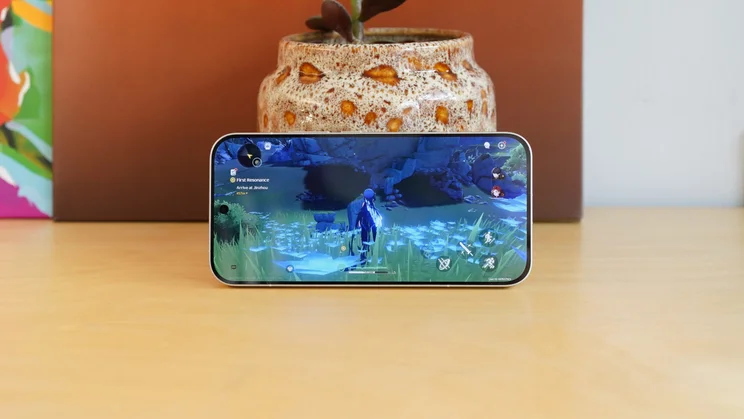
In the hand, it provides a flagship experience, with silky app switching and menu transitions, snappy camera performance, and smooth 3D gaming. Wuthering Waves runs pretty well at higher graphical settings and 60fps.
Battery capacity has crept up to 6,330mAh, which doesn’t get close to the Ultra’s 8,500mAh, but still gives a good account of itself. In our usual looping video test, the Poco F9 Pro lasted 32hrs 11mins, which is two hours longer than the Poco F8 Pro. That’s also 9 hours longer than the Google Pixel 11 managed, and falls just 40 minutes short of the Samsung Galaxy S26.
More generally, I found that I could routinely go through two full days of use before I needed to recharge. Talking of which, the Poco F9 Pro supports rapid 100W wired and 50W wireless charging. The latter is a welcome addition after the Poco F8 Pro omitted it, and goes some small way towards justifying that price increase.
Poco F9 Pro review: Cameras
One other way in which the Poco F9 Pro attempts to justify its hiked price is through its camera set-up. Most notably, it uses the same 1/1.56in, 200-megapixel main sensor as the Poco F9 Ultra, as well as the same 32-megapixel front camera.
Image quality from that pixel-packed main camera is good. This isn’t the largest sensor on the block, but it turns out vibrant, reasonably natural-looking shots with a good level of exposure. Night shots aren’t as clear and composed as on some of its flagship rivals, but they avoid the trap of overbrightening scenes.
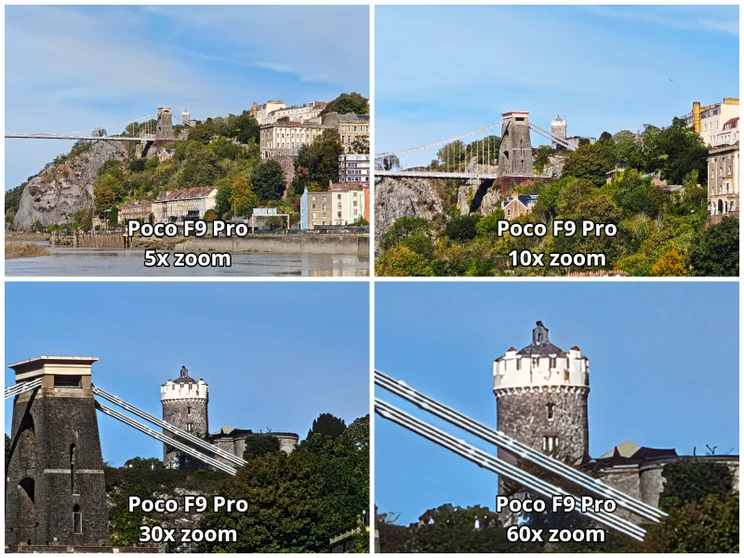
Thanks to those extra pixels, cropped 2x shots feature sufficient detail while retaining the light-capturing benefits of that larger sensor. Moving up to 2.5x switches you over to the the dedicated 50-megapixel telephoto camera, where I encountered a noticeable drop in detail and contrast. These zoomed shots still look decent through to 5x, however, while the digital noise starts to encroach from 10x through to full 60x blur-o-vision.
The telephoto camera also packs a slightly larger sensor than its predecessor, though the 8-megapixel ultra-wide appears unchanged. Indeed, the latter represents a big drop off in quality from those other two cameras, with landscape shots exhibiting a general softness and overexposed highlights.
Around front, an improved 32-megapixel front camera is capable of capturing decent selfies, with natural skin tones and a nice bokeh effect on portrait shots.
Video capture extends to 4K/60fps, which falls short of the Poco F9 Ultra’s 8K/30fps – a result of that lesser GPU, perhaps. 4K footage looks good, though I observed some wind noise on a not-particularly-gusty day.
Poco F9 Pro review: Verdict
Xiaomi has seemingly shifted its priorities with the Poco F9 Pro. It’s an even more premium product than before, closing the gap with its Ultra brother when it comes to performance, camera quality, and wireless charging.
You’ll have to pay a considerable price for this levelling up process, however. While we have to accept that phones are more expensive in 2026, a 46% increase feels a little tough to swallow – especially as this brings the Poco F9 Pro within range of a whole new breed of compact flagship phone.
It remains a hugely capable device with an impressive display, solid construction, and superb battery life. But I can’t help but feel a little sad that Poco’s Pro model has shed its plucky mid-ranger status.
The Poco F9 Pro continues to punch above its weight, but it’s no longer much of a stretch.