To help us provide you with free impartial advice, we may earn a commission if you buy through links on our site. Learn more
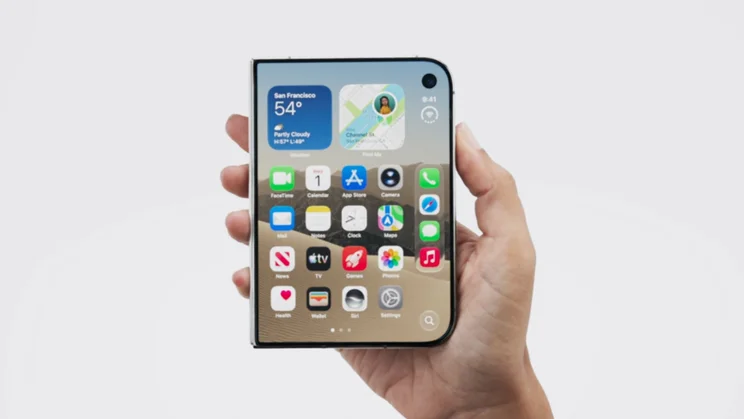
We’re in the tail-end of one of the most densely populated years of foldable smartphones to date, and what better way to cap things off than with the reveal of Apple’s long-rumoured entry?
The iPhone Duo is finally here, and in many ways it’s already keeping up with the competition. From a slick design to stylus support to being fully dustproof, this is a far more complete and competitive first attempt than many others have managed.
It’s also, however, extremely expensive. So while there’s a lot of quality on offer here, and Apple loyalists will naturally find it to be the best foldable option for them, anyone who is more agnostic with their phone brand will find little reason to ditch the best Android foldables for the iPhone Duo. Which is a shame, because price aside, it’s really shaping up quite nicely.
Price and release date
The iPhone Duo starts at £1,999, which gets you the entry-level 256GB model. By comparison, the 256GB Samsung Galaxy Z Fold 8 costs £1,699 and the 256GB Google Pixel 11 Pro Fold is £1,799. The Motorola Razr Fold and Honor Magic V6 both come with 512GB of storage as standard, and cost £1,799 and £1,399, respectively.
The iPhone Duo, meanwhile, costs £2,199 for the 512GB configuration and £2,599 for the 1TB model. As with the iPhone 18 Pros, you can also get a whopping 2TB of storage – though you’ll need to have £3,199 to spare.
If those prices don’t put you off, you’ll be able to pick up an iPhone Duo starting from 23 October, with preorders open 16 October.
Design
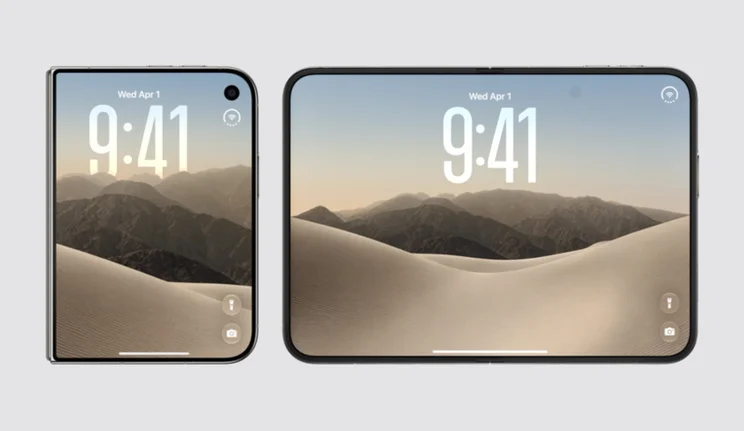
So it’s enormously expensive, but how else does the iPhone Duo compare to the competition? Just like the Samsung Galaxy Z Fold 8 and the recently revealed Xiaomi 18 Fold, the Duo forgoes the more established tall foldable design in favour of a squat passport shape.
I’m a big fan of this design. On the Galaxy Z Fold 8 I felt it was far more accessible when using one-handed and it unfolded to an extremely comfortable widescreen that proved excellent for mobile gaming, so this feels like the right move for Apple’s debut.
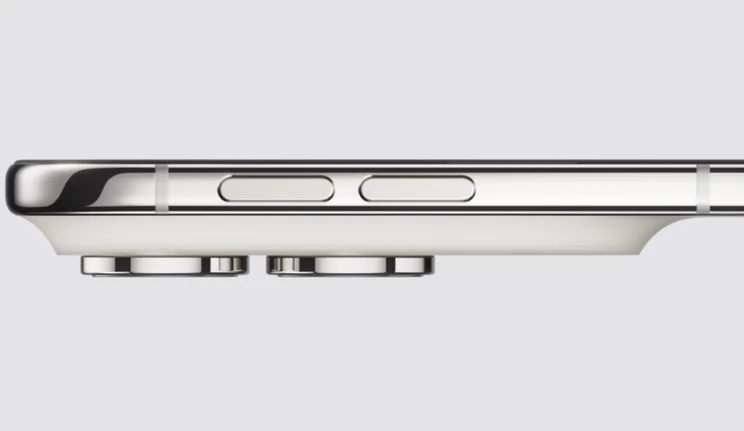
We didn’t get exact specifications but the frame is polished titanium and once unfolded, the phone is apparently the thinnest Apple has ever made, meaning that it’s at least less than the 5.6mm iPhone Air. More excitingly, the iPhone Duo is IP68 rated for dust and resistance, making it fully dustproof – something Samsung still hasn’t managed to achieve in its 8th generation device.
What I’m less sold on is the colour options. The iPhone 18 series has some vibrant styles to choose from, so it’s a shame to see the Duo relegated to the same simple “light or dark” duo (ohhhhh) that we saw with the iPhone Air last year. Specifically, you can nab one in Star White or the dark blue Night Sky.
The horizontal, pill-shaped camera bar on the rear also reveals something disappointing – just like the Galaxy Z Fold 8, the iPhone Duo does not include a telephoto camera. There are only two lenses on the rear, a 48-megapixel main lens and a 48-megapixel ultrawide.
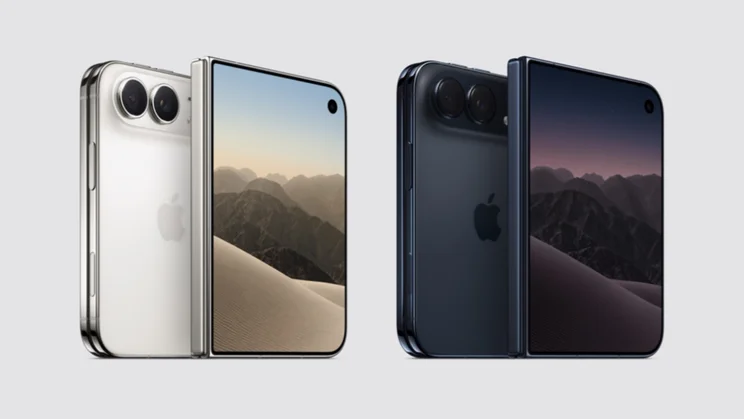
There’s a 12-megapixel Center Stage selfie camera on the cover screen, allowing you to take portrait or landscape shots without having to turn the phone, and the internal screen has an under-display FaceTime camera that’s cleverly hidden beneath the pixels when you don’t need it.
Unfortunately, these selfie cameras don’t support Apple’s high-security FaceID unlocking, but TouchID is supported via the power button on the right edge.
Displays and software
Now onto the titular Duo themselves: the screens. The cover display is a 5.4in panel while the internal screen measures 7.6in across the diagonal, and both use the same 1:1.4 aspect ratio. Apple highlighted how its software has been specifically tweaked to accommodate these new screens, with controls and key notifications moved to the side of the display, rather than taking up prime vertical space with a bar at the top.
It also showed how fluidly transitions from the outer screen to the inner (and vice versa) looks, as well as multi-tasking split-screen features like app pairing and opening multiple windows of the same app for comparisons. Apple’s iPad software has always been the pinnacle of tablets so it’s unsurprising that these skills transfer seamlessly to the foldable phone space.
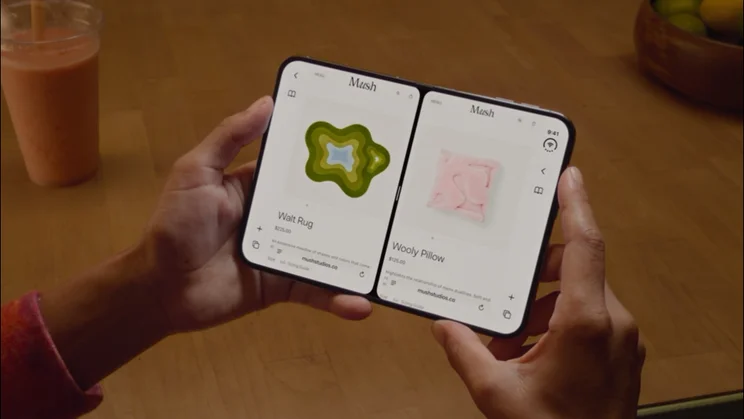
In that same vein, Apple confirmed that several third-party apps have already been optimised for use on the Duo, including Zoom, Slack and Netflix – the latter displays previews of shows in vertical format when on the cover screen, opening seamlessly to widescreen landscape previews when you open up the internal screen.
What’s really exciting about the internal display, and what could set the iPhone Duo apart from the Galaxy Z Fold 8, is that it supports the Apple Pencil, allowing you to doodle and scribble away on both the external screen and the expanded internal canvas. Other foldables include this feature – notably the Honor Magic V6 and the Motorola Razr Fold – and Samsung used to have stylus support, but dropped it with last year’s Galaxy Z Fold 7. If the Duo proves popular, Samsung may have to rethink that decision.
Performance and Siri AI
The Duo runs on the same Apple A20 Pro chipset as the iPhone 18 Pro and Pro Max, and between the chip design and the vapour chamber, Apple claims that it is able to deliver performance up to 35% higher than the iPhone 17 Pro. That was already a blisteringly powerful phone so that does sound very promising – although in a slim, foldable body, I do wonder how well that vapor chamber avoids overheating. Time will tell.
Also new inside the Duo is the C2 modem, which is apparently able to achieve 50% faster uploads while consuming 15% less energy, when compared to the C1X modem.
The iPhone Duo is eSIM only worldwide, so no physical SIMs for anyone, but this choice apparently allowed Apple to maximise battery space. There’s a battery in each half of the phone and, between them, Apple claims the Duo can run video on the internal display for up to 31 hours, or 44 hours when using the outer. Use both equally and you’re apparently looking at around 24 hours of usage per charge.
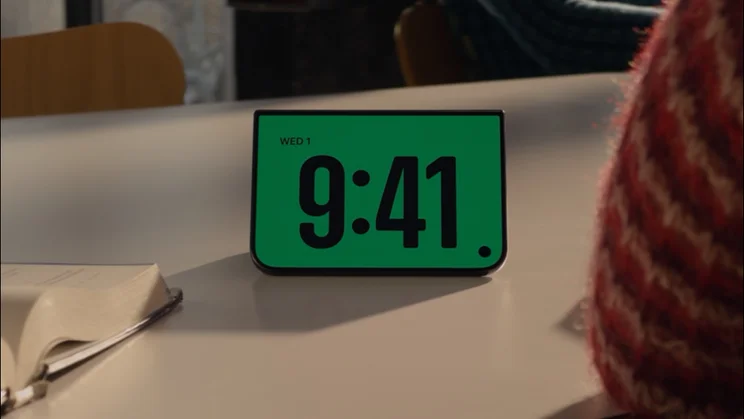
On the charging front, the Duo can apparently go from empty to 50% in around 20 minutes, while just five minutes on charge should provide enough juice for five hours of video playback. That’s all that was said on that, so it appears MagSafe compatibility is off the table, for this generation at least.
Finally, Siri intelligence has some new features that are coming to all new iPhones this year. The goal here is personalisation, with Siri drawing context from your messages and emails to provide suggestions and next steps for you. The examples given included retrieving a recipe from a text and automatically pulling up a flight confirmation number when calling the airline.
Early verdict
There are people who have been waiting years for Apple to join the foldable fray, and in that sense, the iPhone Duo already feels like a safer bet than last year’s iPhone Air. And to Apple’s credit, it isn’t treating the Duo like an open goal – there’s thoughtful design here, and the software approach in particular is sure to reward fans’ patience.
Put up against the Samsung Galaxy Z Fold 8, there’s a strong argument that Apple is the superior option. For one thing, it supports stylus use on both displays, and for another, it’s IP68 rated for dust and water resistance. And then there’s the software – Apple is bringing all of its expertise from the iPad and it looks like it’s going to pay off massively.
Unfortunately, users will have to pay massively, too, if they want to try it out. That exorbitant price point is the one big snag here. We’ll see how things fare in our full review but my initial instinct is that the iPhone Duo is a great proof of concept, but you should wait a year or so until it’s not so overpriced.