To help us provide you with free impartial advice, we may earn a commission if you buy through links on our site. Learn more










- Modular and repairable with easily replaceable parts
- Clean Android 16, supported for eight years of OS updates
- Bright and accurate display
- A modest upgrade on the Fairphone 6
- Pricey for the performance and hardware
- No telephoto, and cameras are a little soft
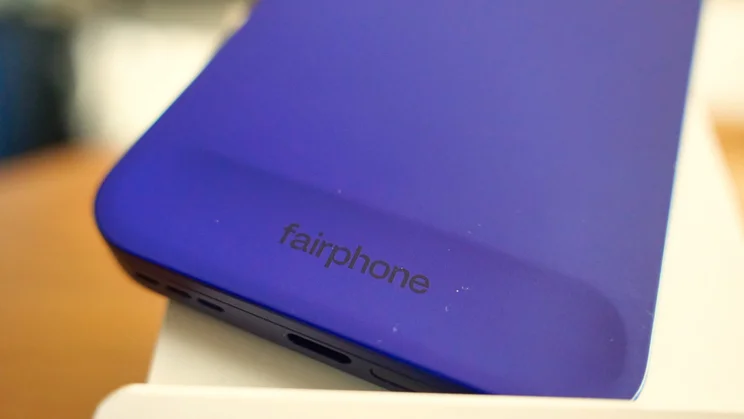
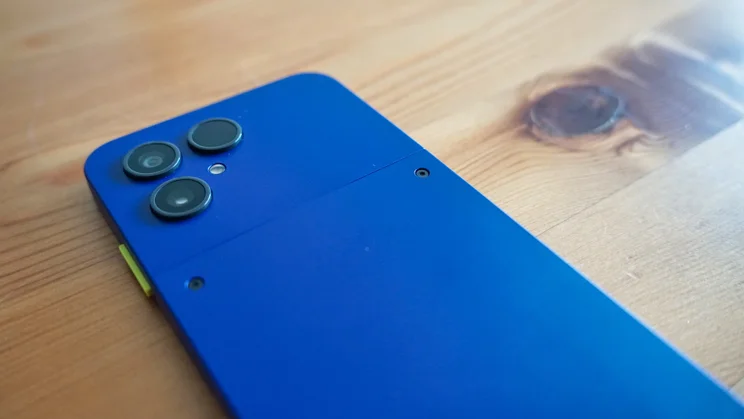
Visually, there’s barely a difference at all between the new Fairphone 6 Plus and last year’s Fairphone 6. Unless you count the striking new Cobalt Blue colour, they’re phones that look and feel the same. They have identical screens, cameras and batteries, with all the changes happening on the inside.
What changes, you ask? The Fairphone 6 Plus now has an upgraded processor and more RAM. Yes, you heard that right. Amid the current RAM shortage crisis, there aren’t many manufacturers able to find more of the stuff to go in their devices, so this is a welcome upgrade. These refinements should help make the Fairphone 6 Plus build on the sustainability of the 6 with internal specs that are made to stick around.
Fairphone 6 Plus: What you need to know
The Fairphone 6 Plus runs on the Snapdragon 7s Gen 4, a generational improvement over its predecessor’s Snapdragon 7s Gen 3 platform. You also get a nice increase to 12GB of RAM, over the 8GB you’d get with the Fairphone 6. It ships with bloat-free Android 16 out of the box, and there’s an exclusive Cobalt Blue style available alongside the Forest Green and Horizon Black colourways from last year.
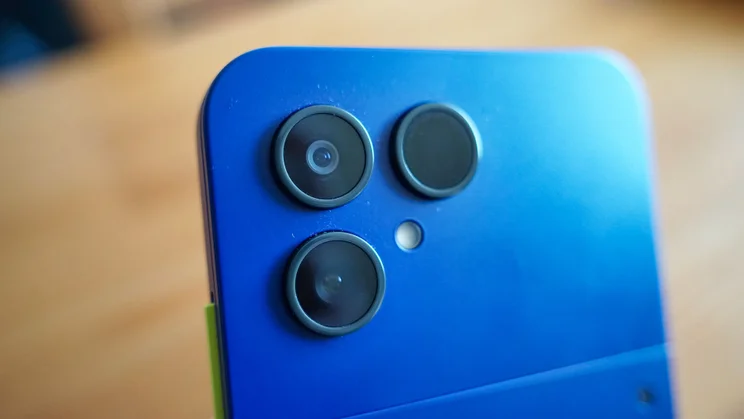
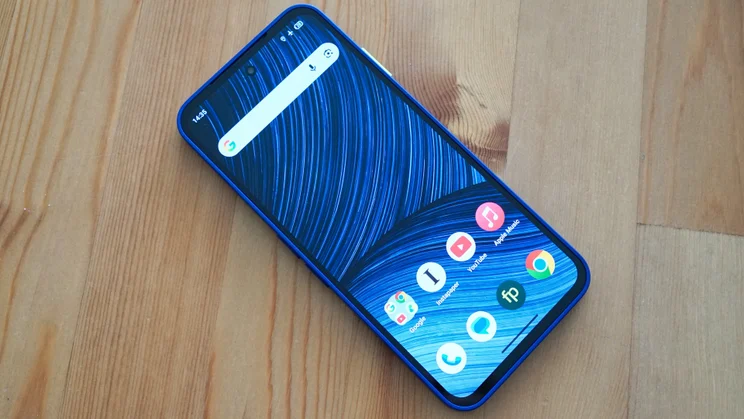
Beyond that, though, it’s the same phone. You get the same 6.31-inch display, same set of cameras (a 50-megapixel main, 13-megapixel ultrawide and 32MP front camera, with no telephoto), an IP55 dust and water protection rating, and expandable storage via a microSD card.
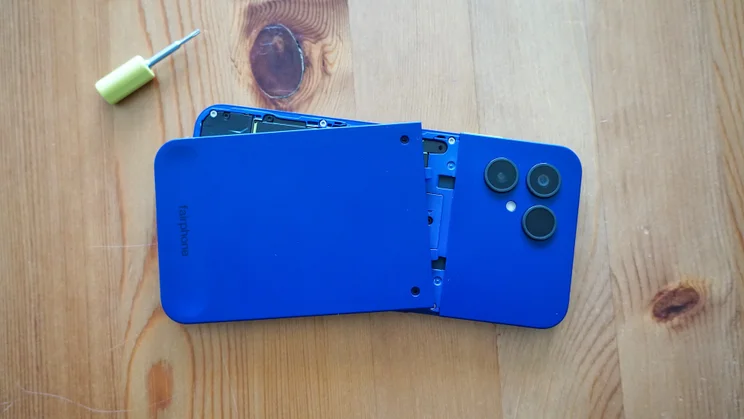
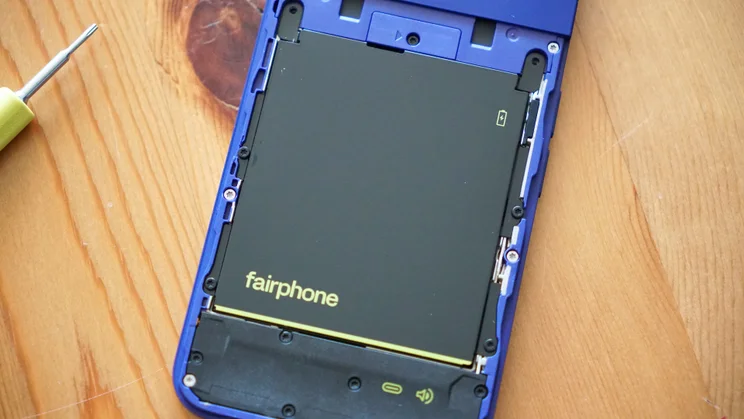
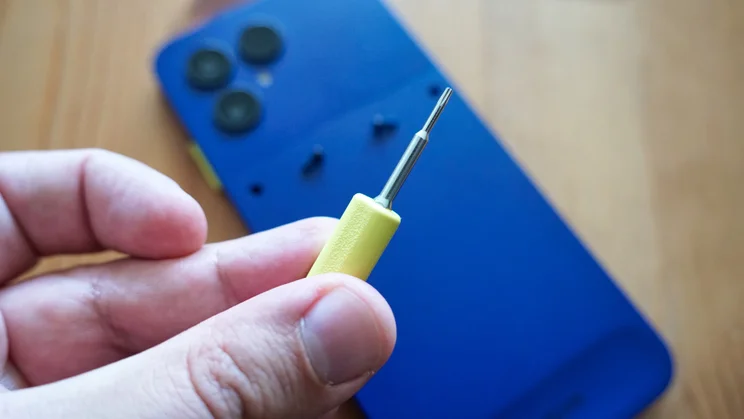
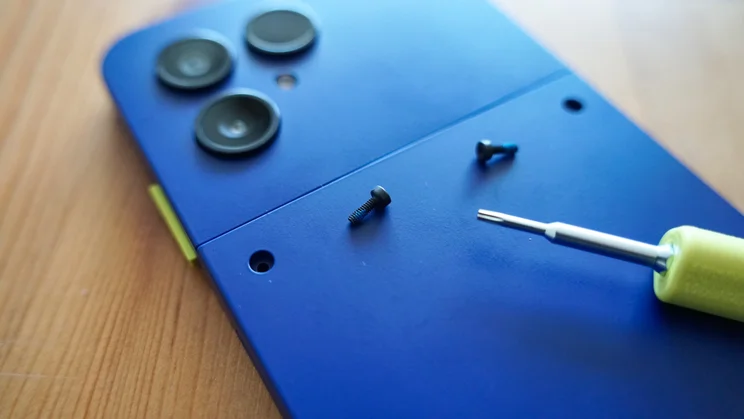
Like any Fairphone, it’s designed for repairs, with a removable rear cover, user-replaceable components (including the battery, of course) and a promise of eight years of software updates. Compared to the older Fairphone 5 (which is the last model I personally reviewed), the improvements are noticeable. It’s lighter and more compact, with a better screen and battery, plus a more modular design that makes more parts replaceable. It only comes with the essentials in the box, though, and the screwdriver is something you’ll need to buy or already have yourself.
Price and competition
The Fairphone 6 Plus costs £569 for the 12GB/256GB configuration, which is a bit of an increase over the £499 launch price of the Fairphone 6 for the same storage capacity. The Fairphone 6 remains on sale, but isn’t even £499 anymore; thanks to increasing costs across the whole industry, a Gen 6 model will now set you back £519, and that makes it much harder to recommend next to the slight improvements of the new one.
Even with the RAM crisis and increased smartphone costs, Fairphone sits in a competitive corner of the market. This price tier is full of premium mid-rangers designed to challenge flagships. The Google Pixel 10a (£359) is likely a better fit for avid photographers; Samsung has its Galaxy A57 5G (£449) for vibrant visuals, solid cameras and long battery life; and the Nothing Phone (4a) also costs just £449 for the same Snapdragon chip, RAM and storage as this Fairphone.
The rivals generally deliver more on the spec sheet, whether that’s brighter and bigger displays, stronger waterproofing, larger batteries, or more comprehensive cameras (Nothing even offers a telephoto zoom).
But Fairphone wins for repairability. Buy any of those phones, and you may end up spending loads to fix a cracked screen or degraded battery at a repair shop. The whole idea of Fairphone as a brand is that you’ll spend a little less to get an official screen module or battery and do the repair job yourself, should you need to.
Design and key features
Were it not for the minimal list of changes in the Google Pixel 10a (which Phones Editor Ben Johnston called the “mother of all minor upgrades”) earlier this year, I’d give the Fairphone 6 Plus the 2026 award for the least-justifiable yearly update. At least Fairphone hasn’t tried to call this a brand new model, and is instead clear enough that it’s a “plus” iteration of the current Fairphone 6.
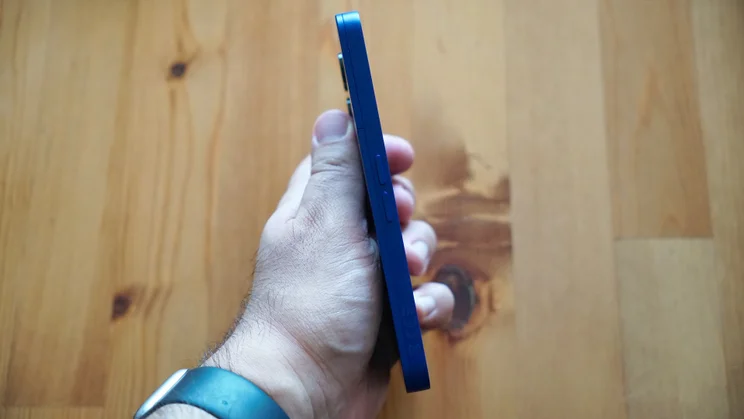
The design is entirely unchanged, save for the new option of the Cobalt Blue colour. Everything else is the same. I find it much easier to handle compared to other “big” phones thanks to its smaller 6.31-inch panel and 193g weight. To echo Jony Ive, it’s “unapologetically plastic”, and that’s what helps keep things light and portable.
Is it cheaper-feeling than some of its main rivals? A little bit, yes. But I think it still feels robust enough, and it comes with an IP55 dust and water resistance rating. I’d always take these ratings with a pinch of salt, no matter the phone. Many repairs involve water damage, even in IP68-rated phones where the seal can wear off, or saltwater gets in. My advice would be to treat splash resistance as a “nice to have”, but not an invitation to get the phone wet.
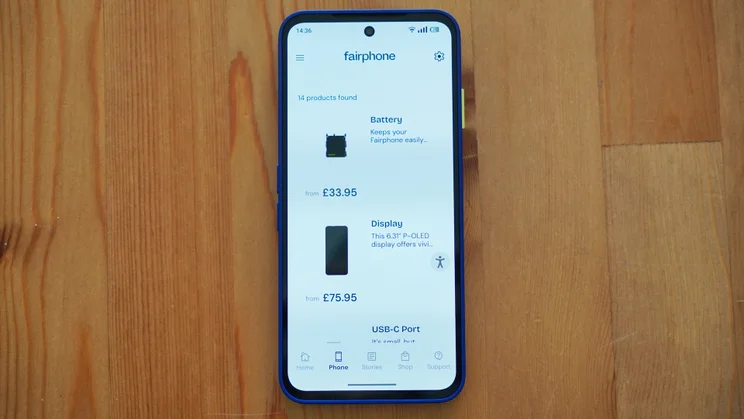
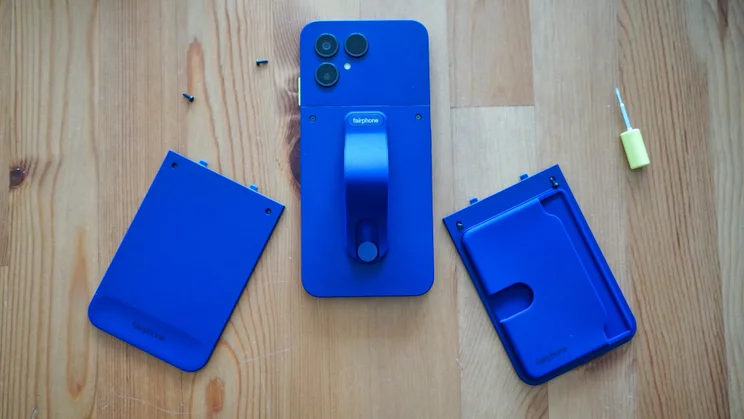
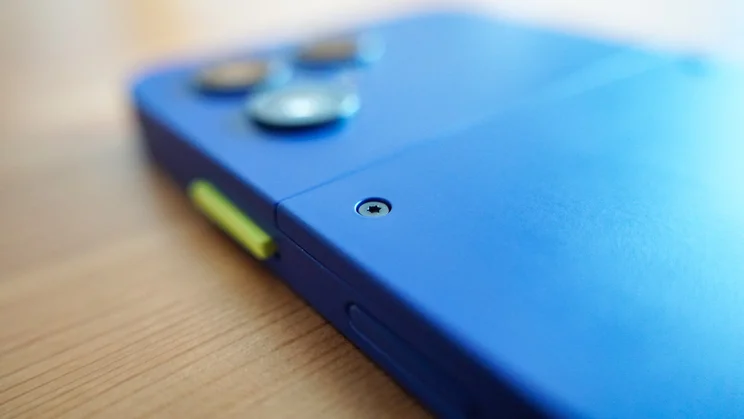
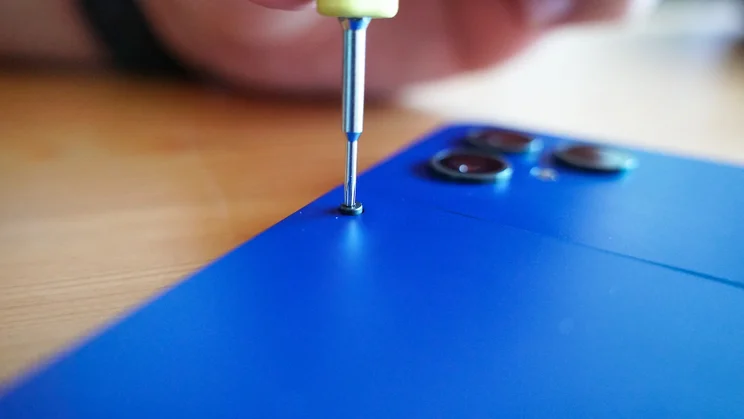
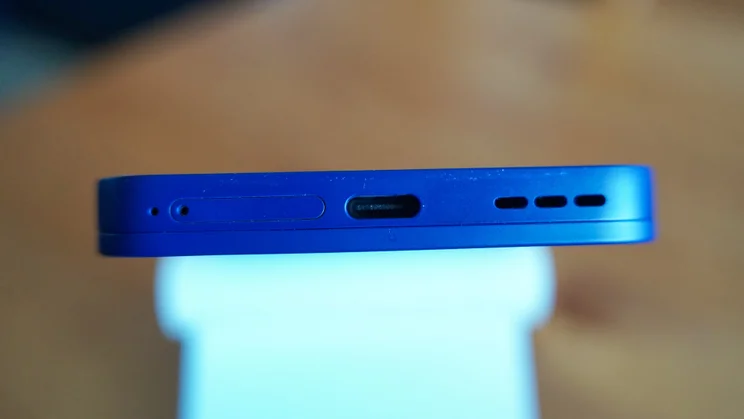
The Fairphone 6 Plus is a bit thicker than many smartphones, but that’s the cost of repairability. Screwdriver access points and the removable back cover are some of the most essential features of all Fairphone models, and just like the 6, this one has 12 replaceable spare parts that you need a Torx T5 screwdriver to get to. These include the display, all cameras, the earpiece, USB-C port, back covers, SIM tray and battery.
One neat thing about the back cover is that you can also swap it out for a variety of different accessories, including a card holder and finger loop. These are sold separately, but I tried out a couple of the extras for this review and think they are fun additions if they suit the way you use your phone.
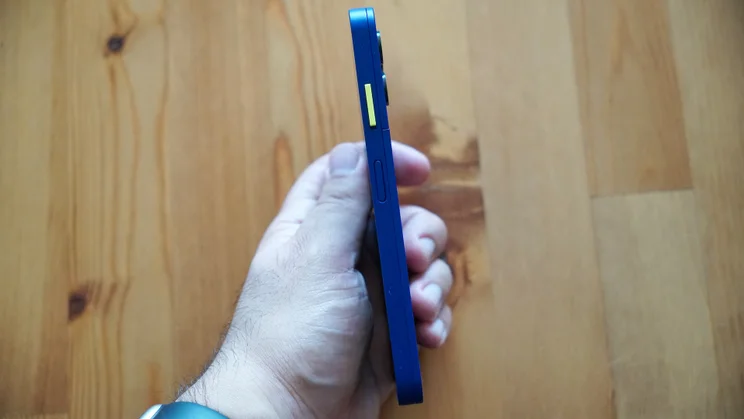
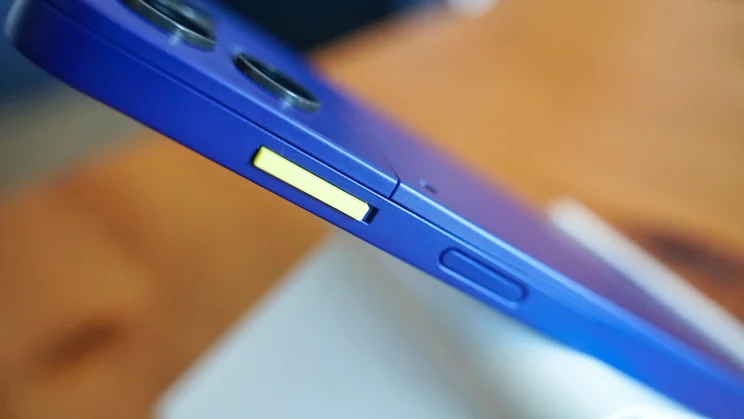
The display is protected from scratches by Gorilla Glass 7i and my review sample hasn’t developed any marks after three weeks of testing. On the right side, there’s a power-button fingerprint scanner, which is fast and reliable to use, and just above it sits a customisable switch.
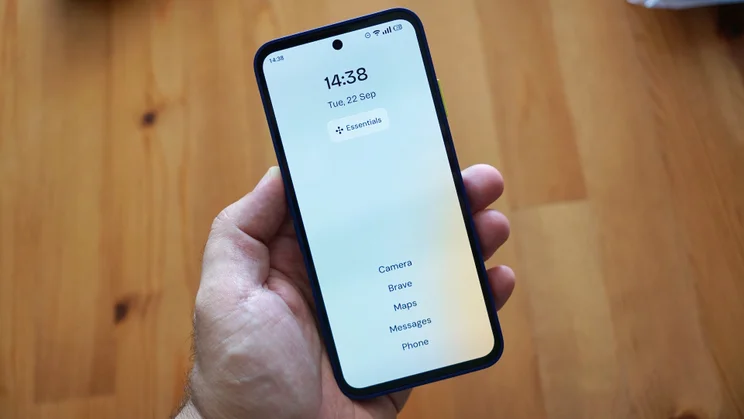
This is a quick way to jump into your “Moments” profiles, limiting you to five essential apps and stopping notifications. It’s a good implementation of a “focus” mode, and reminds me a bit of the Balance Phone I recently tested. It’s also a bit like the iPhone’s action button or the snap key on recent Oppo phones, because it’s customisable; you can set it to turn on things like Do Not Disturb, Flight mode or the torch, or make it do nothing if you won’t use it.
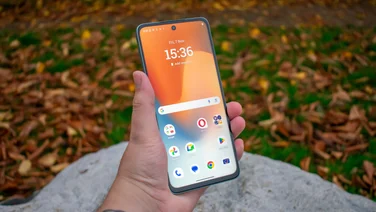
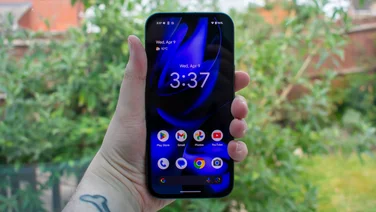
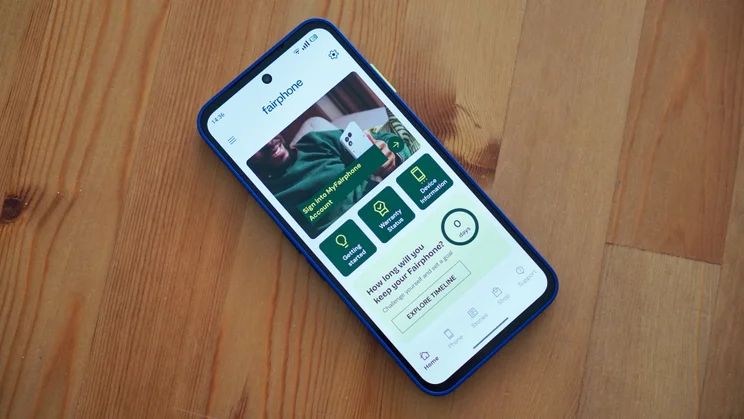
The Fairphone 6 Plus comes with Android 16, and it’s a very clean take on the OS with no notable bloatware save for a My Fairphone app (where you’ll find warranty info, spare parts ordering, tutorials and support). It’s a lot like using a Pixel phone from Google, and the lightweight interface feels zippy to use. I also have to applaud Fairphone for committing to eight years of software updates. That’s a stronger promise than just about any other Android rival – even Google only supports the Pixel 10a for seven years.
Display
The Fairphone 6 Plus has the same display as the 6, and it’s a nice update on the Fairphone 5’s panel. It’s a 6.3in OLED display, and it’s sharp at its 1,116 x 2,484 resolution at 432ppi. It can display refresh rates up to 120Hz and has HDR10 support, and it’s worth noting that it’s an LTPO panel, so it can drop the refresh rate dynamically to save battery.
I did get slightly different brightness results when testing this versus those delivered by the Fairphone 6, but nothing drastically altered. It hit a manual brightness peak of 626cd/m², and I saw adaptive brightness jump to 740.89cd/m² when shining a torch on the light sensor. This’ll be great for outdoor visibility and is a big improvement on the older Fairphone 5, if that’s the model you’re upgrading from.
You get Natural, Boosted and Adaptive colour profiles, and I recorded an average Delta E of 1.59 in the Natural mode, just slightly above my target of 1 or under. Gamut coverage of 97.9% and a volume of 98.8% sRGB are both excellent, though, and you’ll get lovely, accurate colours with this profile. If you need them punchier, pick either the Boosted or Adaptive settings.
Performance and battery life
When compared to the older Fairphone 6, the new Snapdragon 7s Gen 4 chipset and 12GB of RAM are appreciated upgrades, but don’t necessarily completely transform the performance. The Fairphone 6 Plus got a single-core score of 1282 in Geekbench 6, and a multi-core score of 3578; these are up roughly 10% and 4% over the predecessor, respectively.
These scores are respectable when compared to some other mid-rangers, but you’ll be able to find better performance in this price tier if that’s your focus. The Samsung Galaxy A57 and Google Pixel 10a are a cut above, with the Fairphone delivering a similar set of results that you’ll get from the Nothing Phone (4a). As noted above, all of these handsets are more affordable than this sustainable smartphone.
The Fairphone definitely feels more than fast enough and reliable when opening apps, scrolling through social media apps and hopping between apps. That’s where 12GB of RAM is a big help, along with the clean OS. Navigating and streaming all feel snappy on the handset, although I’d struggle to argue that its performance is impressive for the price.
The Fairphone 6 Plus will handle casual games but isn’t designed for serious mobile gamers. I’d advise gamers to look elsewhere because you’re likely to experience dropped frames and stutter in demanding 3D games. The 12GB of RAM should give you enough headroom to avoid crashes, but this is best suited to lighter use.
In the Geekbench 6 Vulkan GPU tests, the Fairphone 6 Plus managed a score of 5,065, which is the weakest of this selection. By comparison, the Galaxy A57 scored 7661, while the Pixel 10a scored over 10,000.
In my standardised looping video battery test, the Fairphone 6 Plus lasted for 23 hrs 42 mins before running out of juice. That’s a noticeable step forward over older Fairphone generations (and a big improvement on the Fairphone 5), but essentially the same as the Fairphone 6, which lasted for just three minutes longer in the same test. In general use, I’ve found this battery life good enough for just over a day of mixed use. But it won’t get you much beyond that, so you’ll probably be charging every day.
However, it still falls slightly behind top battery performers in this price bracket, several of which cost less.
Those longer-lasting rivals feature sealed chassis designs rather than user-replaceable batteries, though. On the software side, the Fairphone covers the essentials with features like an 80% charge ceiling and adaptive charging, though these are now pretty standard across competing handsets from Samsung and Google.
The Fairphone 6 Plus doesn’t support wireless charging at all, but it does have 30W wired charging, which is fast enough to get your handset back to 50% battery in about half an hour with a compatible adapter.
Cameras
The camera system of the Fairphone 6 Plus is exactly the same as the Fairphone 6. The 50-megapixel main sensor is fine if unexciting; it has a decent amount of detail in daylight, and balanced, natural colour without oversaturation. Look closer, though, and you can see some softness.
It’s a shooter that feels a bit basic and budget when compared to the quality mid-rangers you can get for similar money. I tried the night mode for low-light shots and thought it was reasonable on the main lens too. It’s good for consistent tones and doesn’t try to brighten everything, but you’ll find the Pixel and Galaxy rival options far better at stabilising and getting clearer shots with less noise.
There’s a slight quality drop-off when using the 13-megapixel ultra-wide, but the results are still usable, even in low-light conditions. And this lens is great for close-up macro shots. You can get better photos from several other smartphone cameras in this price tier, but these are at least consistent. Colour and exposure feel about the same when switching between the main snapper and ultra-wide, so all your travel photos will feel like they came from the same system.
The lack of a telephoto is the biggest issue for me at this price. These days, brands like Nothing are including a zoom even on affordable handsets, and this is something that would strengthen the Fairphone’s longevity advantage. As it is, the lack of reach means I can see some buyers finding they need to upgrade over time. If you push the digital zoom on this phone, you’ll get blurry shots that look noticeably less detailed than most rivals.
Selfies are good on the front-facing camera, and similarly have a natural approach without a big boost to colour vibrancy. Skin tones look good, and the portrait mode cutouts are fine. It’s nothing spectacular, but all quite usable. Performance is solid on the video front, too, where capture reaches up to 4K at 30fps, or 1080p at 60fps for smoother footage.
Fairphone 6 Plus: Verdict
The case for buying a Fairphone is always about repairability, but it’s worth knowing you’re getting specs that may not beat other mid-rangers – and at a higher price. The upgraded Fairphone 6 Plus mostly keeps pace with its new chip and extra RAM, while offering the same eight-year support commitment, clean software experience, solid cameras, decent battery life and a lightweight build. It’s a good fit if you’d rather fix your phone than upgrade it.
While the Pixel 10a, Galaxy A57, and Nothing Phone (4a) give you better cameras and higher water protection today, the Fairphone 6 Plus could end up being better value if you plan to keep one phone for over five years without paying high repair fees or replacing the entire device just for a worn-out battery.
Still, Fairphone’s selling point would be stronger with slightly improved specs and by adding a telephoto camera. These would make it a better pick for on-the-go workers or photography enthusiasts after a phone to last a long time.