To help us provide you with free impartial advice, we may earn a commission if you buy through links on our site. Learn more











- Secondary display makes for excellent selfies
- Strong performance
- High-quality telephoto camera
- Very expensive
- Privacy Display not as good as Samsung’s
- Ultra-wide camera feels like the odd one out
Here in the dying embers of 2026, rising component costs have led to a bit of a smartphone affordability crisis. Phones launched at the end of the year are noticeably more expensive even compared to those launched in the earlier months.
This has prompted manufacturers such as Xiaomi and Oppo to ditch or suspend work on their super-premium ‘Ultra’ lines, and to ask us to accept ‘Pro Max’ variants in their stead. The Xiaomi 18 Pro Max certainly has enough unique elements to help it stand apart from the Xiaomi 17 Ultra, which only launched globally at the very end of February.
But does it do enough to justify the fact that it’s more expensive than its ostensibly more premium predecessor? Let’s find out.
Xiaomi 18 Pro Max review: What you need to know
After skipping a global launch for the Xiaomi 17 Pro Max, the Xiaomi 18 Pro Max is the first chance most of us have had to experience the company’s new dual-screen concept. This takes the secondary screen of a foldable phone like the Samsung Galaxy Z Flip 7 and places it on the back of a normal ‘slab’ phone for enhanced selfies, face-down notifications, and other more novel use cases.
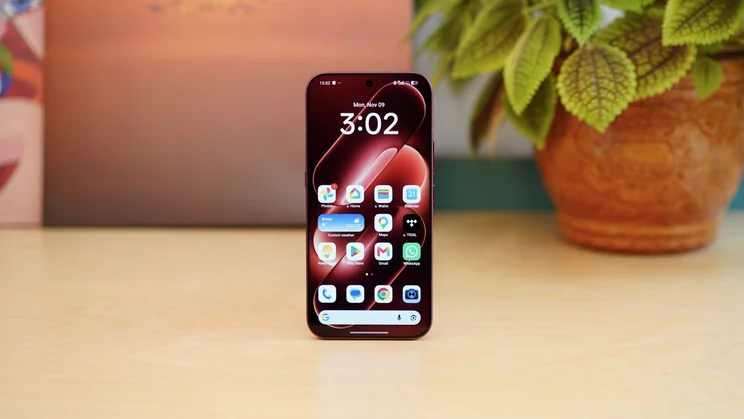
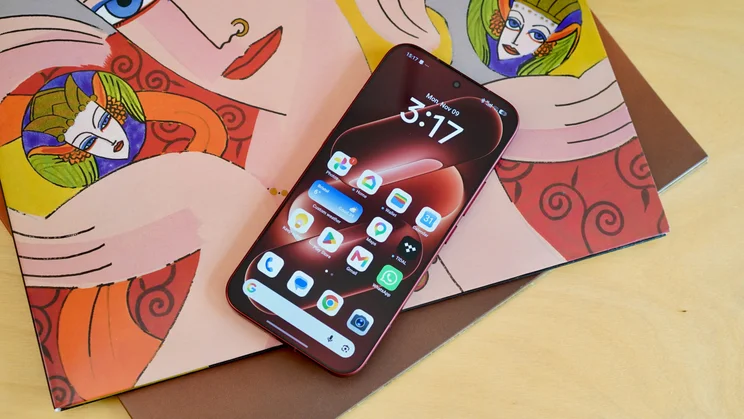
Otherwise, the Xiaomi 18 Pro Max is a fairly typical flagship phone, with a familiar iPhone-indebted design and a large 6.9in 2624 x 1208 main OLED display. The latter follows Samsung’s lead with a Privacy Display feature, which makes it harder for other people to see your screen from an angle.
It’s powered by Qualcomm’s latest and most powerful chip, the Snapdragon 8 Elite Extreme Gen 6, and is backed by 12GB of RAM and up to 512GB of internal storage.
There’s a large 7,050mAh battery powering all of these components along, backed by 100W wired and 50W wireless charging.
Xiaomi 18 Pro Max review: Price and competition
At the risk of rendering the term meaningless through overuse, the Xiaomi 18 Pro Max is expensive. Prices start from £1,399 for a model with 12GB of RAM and 256GB of internal storage, while a step up to 512GB costs a wince-inducing £1,599.
Even taking into consideration the aforementioned AI-driven component pricing crisis, this feels like a lot of money. For reference, that 512GB model costs £300 more than the equivalent Xiaomi 17 Ultra when it launched less than nine months ago.
More problematic here is the fact that Xiaomi’s latest flagship phone costs more than its contemporaries. The 512GB model is £100 more than the similarly pitched Oppo Find X10 Pro Max (which we also criticised for being expensive), £300 more than the Motorola Signature 27, and £400 more than the 512GB Google Pixel 11 Pro XL.
Even the equivalent iPhone 18 Pro Max model, which the Xiaomi 18 Pro Max is clearly targeting here, costs £100 less.
Xiaomi 18 Pro Max review: Design and key features
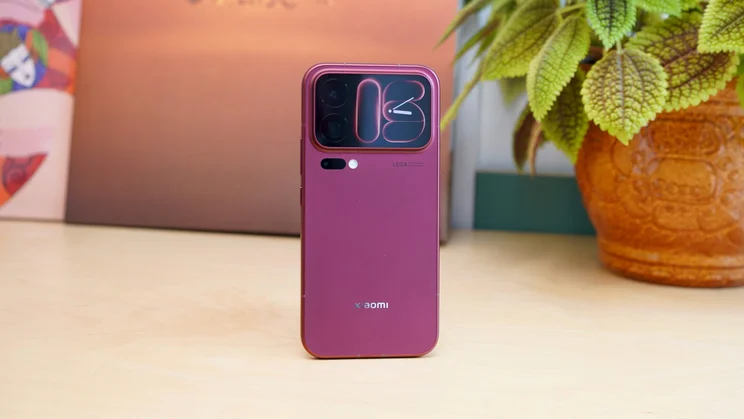
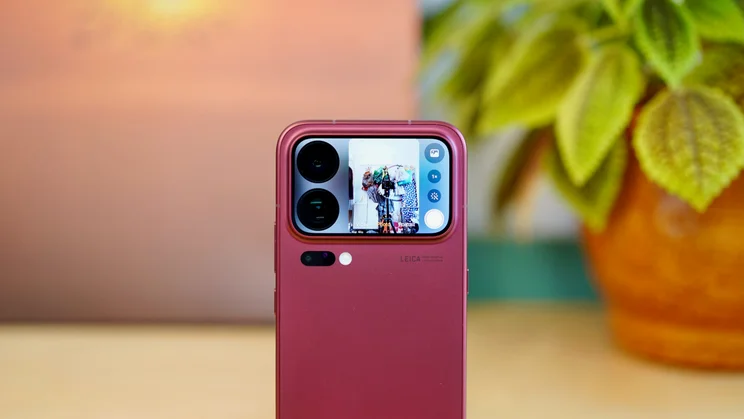
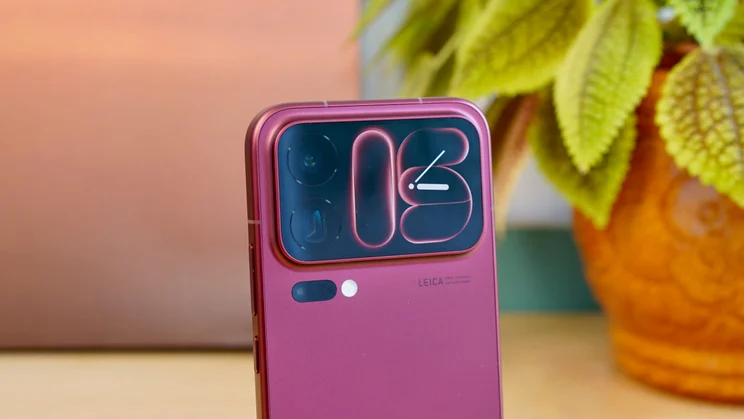
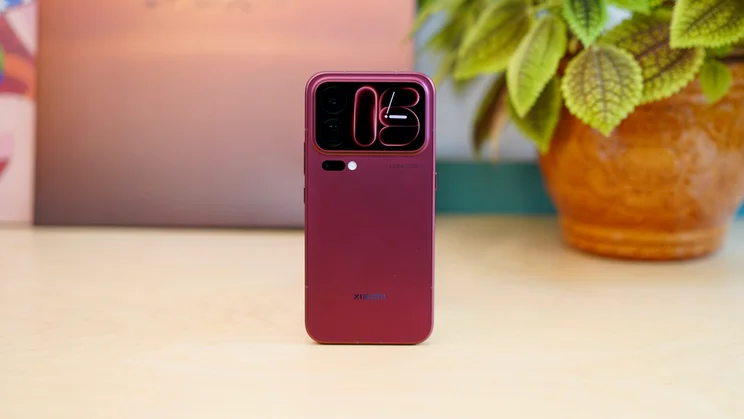
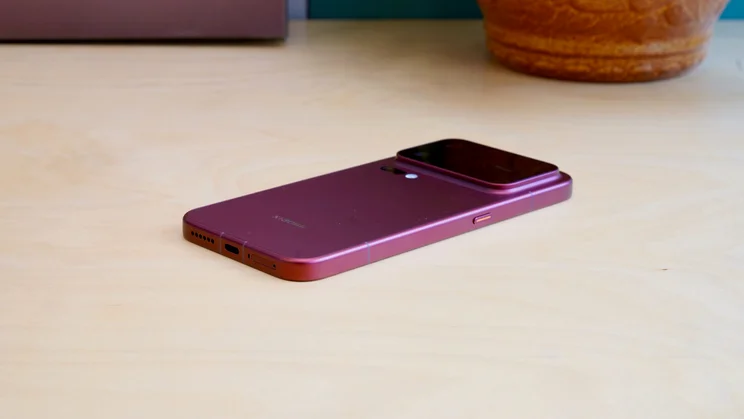
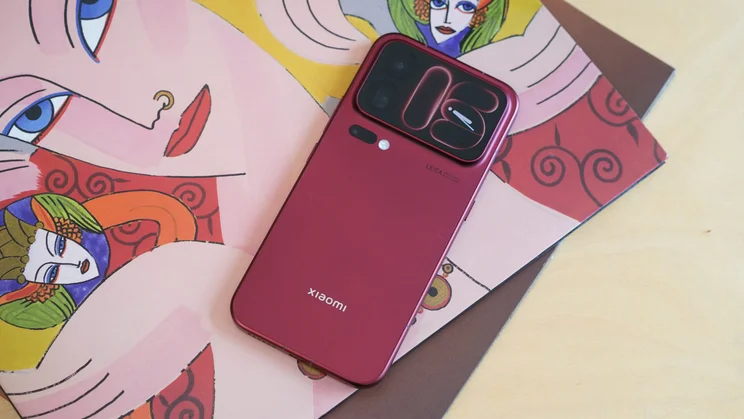
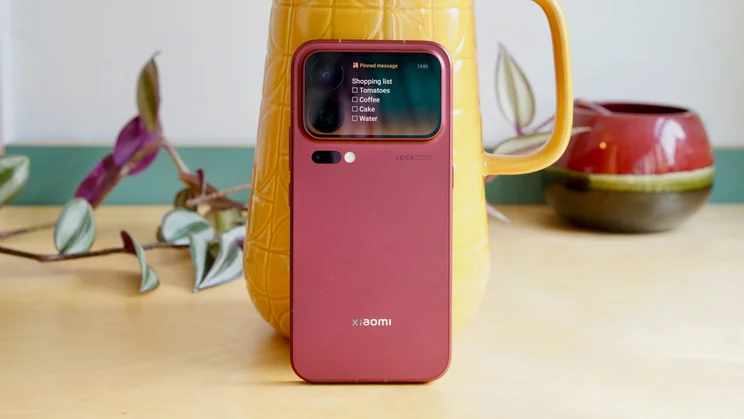
On the back of the phone, surrounding the two main offset cameras (the ultra-wide is shunted south of an expansive camera plateau) is a 2.9in LTPO OLED display. This can be used to perform a number of tasks, including providing notifications when the phone is face-down.
The most useful application I found for this second screen was the most obvious one: it serves as a useful preview panel for powered-up selfies. Just open the camera app, flip the phone over, and swipe in from the left to switch the viewfinder to this secondary screen. Hold up your palm to the screen and the camera will commence a three-second countdown timer. Easy peasy.
Besides shooting better selfies than any other non-foldable phone (and, let’s face it, probably any foldable phone too), I also appreciated the ability to pin shopping lists, QR codes, and other reminders to the rear screen for quick reference – though I would have liked the ability to interact with those lists too, ticking off the various items directly.
I found other potential use cases, such as face-to-face real time translations and Xiaomi’s GenAI apps, to be much less useful. The latter lets you use natural language prompts (or a bunch of preset examples) to create tiny apps for the secondary screen on the fly, but they tend to be extremely limited in scope, with no access to the internet, third party apps, or personal data. Do I really need an egg timer, a virtual Fortune Cookie, or a caffeine counter on the back of my phone?
Elsewhere the Xiaomi 18 Pro Max design is very much of the modern iPhone 18 Pro Max persuasion, with the same basic flat shape. My model even comes in a familiar shade of Velvet Red (very much like Apple’s Burgundy), with Cosmic Blue, Black, and White standing as the other options.
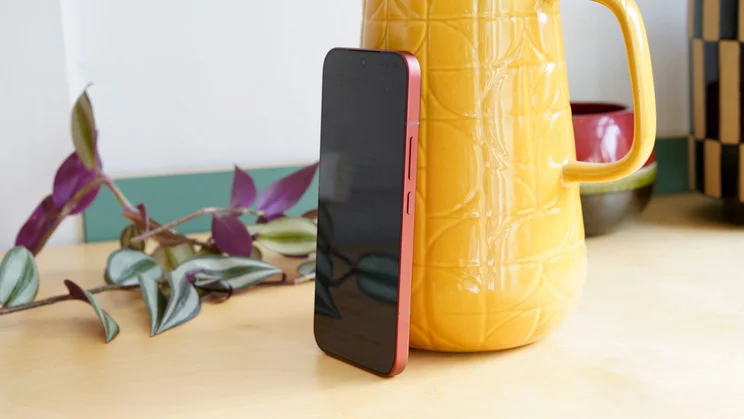
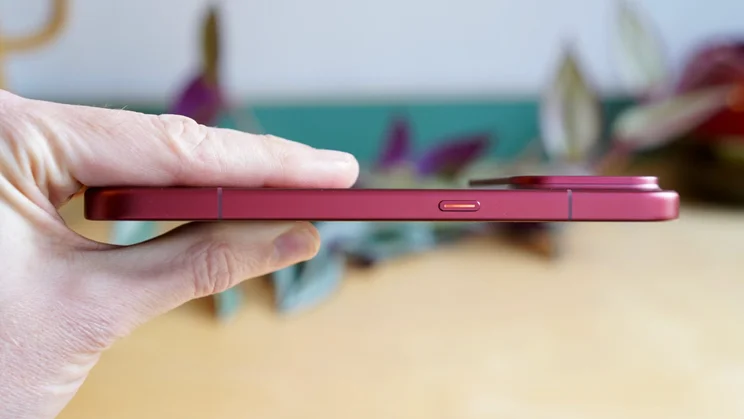
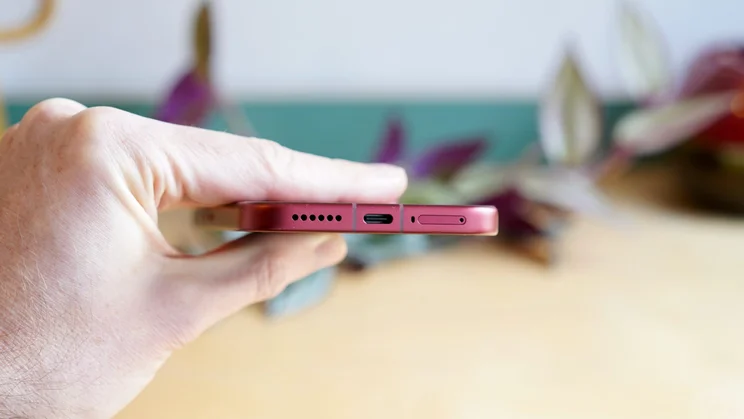
This is a big, heavy phone at 78 x 8.4 x 163mm (WDH) and 235g, but it feels suitably high grade, with minimal 0.99mm bezels that optimise screen space. IP68 is about par for a flagship, though phones like the Motorola Signature 27 go one better on the water-resistance front.
As solid as Xiaomi’s hardware is, your affection for the 18 Pro Max will likely be predicated to some degree on how you view its software. HyperOS 4.0 is the latest iteration of Xiaomi’s custom UI, and while it’s built on the latest Android 17, it carries all the old talking points of previous versions. It’s fast, fluid – and weirdly difficult to warm to.
It’s still too busy and encumbered with bloatware – Instagram, Facebook, Netflix, Amazon Shopping, AliExpress and TikTok among them – but it’s also just a little charmless and a tad too keen to stray away from the stock Android aesthetic and towards iOS.
Xiaomi 18 Pro Max review: Display
It’s not just the rear of the Xiaomi 18 Pro Max that boasts an mould-breaking display. The main 6.9in AMOLED has a trick up its sleeve too. This is only the second mainstream phone to adopt so-called Privacy Display technology following the Samsung Galaxy S26 Ultra earlier in the year. The idea is that the phone can selectively dim sensitive content (incoming message notifications, say) or even the whole screen so that it’s harder to see at an angle. It’s intended to prevent those shoulder-peeping situations that you’ll often encounter in public.
It’s far from a crushing loss for Xiaomi, but overall I think that Samsung’s original system is better executed. The actually blanking out process is noticeably less effective than Samsung’s, leaving private content more visible from an angle. As such, it renders the whole system less useful. On the plus side, Xiaomi’s system doesn’t impact the sharpness and brightness of the screen as much as Samsung’s, and it’s also more flexible at present. I appreciated the way that the app-by-app selection system works even in split-screen.
Otherwise, the Xiaomi 18 Pro Max display is a reasonably accomplished panel, with a 1,208 x 2,624 resolution and a 1 to 120Hz variable refresh rate. It doesn’t produce particularly outstanding figures in our colour accuracy and brightness tests, however.
In the preferable Original Colour Pro colour mode, I recorded an sRGB gamut coverage of 98.8% with a volume of 103.5% and an average Delta E colour variance score of 1.16. Generally we’re looking for 1 or under here, so while it’s far from a write-off, we’d expect better at the price. A maximum recorded brightness of 616cd/m2, with autobrightness mode off is solid rather than outstanding, too. Coming from the vibrant Motorola Signature 27 display, it’s just a tad underwhelming.
Xiaomi 18 Pro Max review: Performance and battery life
It’s a similar case with the Xiaomi 18 Pro Max’s performance level. There’s no 16GB option – thanks again, RAMageddon – but the Snapdragon 8 Elite Extreme Gen 6 chip is as fast as there is right now. This is one of the earliest phones to adopt Qualcomm’s latest, and only the third that I’ve tested.
If we’re getting down to the facts and figures, however, performance didn’t quite match those other phones. In our usual Geekbench 6 CPU test, the phone fell short of the Motorola Signature 27 despite having the same basic set-up, and even dropped a tad behind the Samsung Galaxy S26 Ultra with its older processor. This score also puts Xiaomi’s phone a fraction behind its closest contemporary, the Oppo Find X10 Pro Max.
Given the nature of that hardware, this seems likely to be an early glitch or optimisation issue on Xiaomi’s part. Indeed, the GPU results were broadly in line with the Oppo Find X10 Pro Max and well ahead of the others, so I’m not sounding any alarms just yet.
Battery life is also nice and strong, as you might expect given the phone’s 7,050mAh battery. In our looping video test, the Xiaomi 18 Pro Max scored 36 hours and 32 minutes – two hours longer than the Xiaomi 17 Ultra and about an hour longer than the Samsung Galaxy S26 Ultra, but falling just over an hour short of the Oppo Find X10 Pro Max. It’s a good result, at any rate, and should see the phone lasting through two full days of regular use for most people.
Charging support extends to 100W wired and 50W wireless, the former of which will get the Xiaomi from empty to full in less than an hour.
Xiaomi 18 Pro Max review: Cameras
Xiaomi hasn’t quite been able to match the Oppo Find X10 Pro Max’s attention-grabbing claim to offer the first triple 200-megapixel camera system, but it’s only the ultrawide that slips into 50-megapixel territory. Otherwise, its 200-megapixel main and 3x telephoto camera pairing seems to be a close match.
Image quality from both 200-megapixel shooters is of a high standard. The main camera may technically be a step down from that of the Xiaomi 17 Ultra, thanks to the use of a smaller 1/1.28in sensor, but it still produces shots with plenty of detail and colour, aided by optical image stabilisation (OIS) and phase detection autofocus (PDAF), as well as HDR-bolstering LOFIC technology. Night shots, too, are well rendered without overbrightening.
I like Xiaomi’s standard ‘Leica Vibrant’ colour mode, which despite its name renders reasonably natural colours and skin tones. If you still find these a little punchy there’s the more muted duo of Leica Authentic and Style Original to choose from. You can also opt to shoot in full 200-megapixel if you really want to blow your shots up and hone in on the details. Essential Moment adds three more AI-powered vintage looks to the equation – Modern vintage, Iconic CCD, and B&W film.
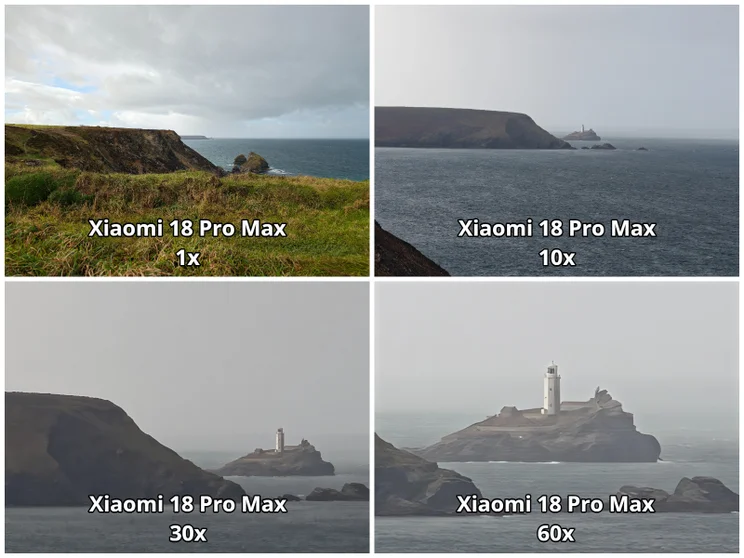
The telephoto camera is similarly impressive, aided by a large 1/1.56in sensor. It produces detailed shots in a tone that matches the main sensor, with strong results at its native 3.2x and 6.4x. Even 10x shots look good here, though I found 30x and beyond to be too noisy to be of much practical use.
The 50-megapixel ultra-wide is the weak point, unsurprisingly, but it’s not so much the relative shortfall in pixels as a noticeably more yellowy tone compared to the other two cameras. This is far from unusual, even in top notch phones, but it’s clearly not up to the level of the Oppo Find X10 Pro Max on this front. Samsung and Google generally tend to be better at balancing their various cameras out through diligent processing, too. I also question the value of its presence with a mere 102-degree field of view, which isn’t drastically wider than the main camera.
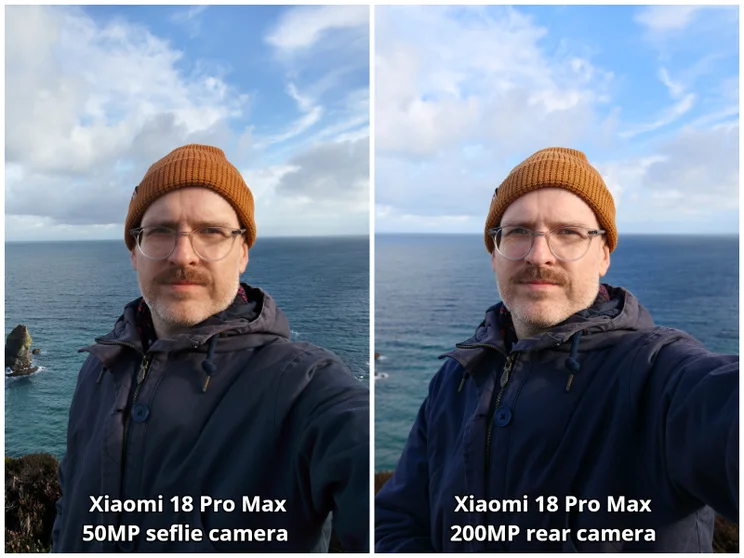
Xiaomi’s 50-megapixel selfie camera is actually a pretty capable performer, using its autofocus capabilities to lock onto subjects and produce decent sharpness and separation, not to mention solid skin tones. But with that handy secondary display able to bring the main cameras into play, you may find yourself hardly using it. The Xiaomi 18 Pro Max may well be the best phone for those who mainly take selfies, as well as talk-to-camera content creators.
Talking of video, there’s support for 4K/120fps and 8K/30fps. Footage looks sharp, steady and rich, though I did notice some excessive wind noise.
Xiaomi 18 Pro Max review: Verdict
Xiaomi is playing a dangerous game with the 18 Pro Max. It’s even more expensive than its premium contemporaries, and far dearer than the Xiaomi 17 Ultra, yet arguably falls short of the best on camera flexibility and screen quality.
The new secondary screen is something new to most of us, however, and it brings genuine benefits to selfie quality while adding a dash of heads-up convenience. Xiaomi’s Privacy Display implementation, while not as effective as Samsung’s, is another feature that helps the phone to stand out from the crowd. It’s a strong performer, too, with a good main and telephoto camera system and reliable stamina.
As it stands, the Xiaomi 18 Pro Max still feels a little too expensive to be up there in ‘easy recommendation’ territory. However, it’s got enough about it to be the ideal phone for a certain kind of person.