To help us provide you with free impartial advice, we may earn a commission if you buy through links on our site. Learn more












- Outstanding two-day-plus battery life
- Excellent display
- Punchy audio
- Way more expensive than before
- Performance is good, but unchanged
- Xiaomi’s software is cluttered
Xiaomi’s Poco sub-brand has always been performance-focused, but it’s been in the ‘Ultra’ phone game for less than two years. After the Poco F8 Ultra took a convincing pop at the flagship brigade, what can the Poco F9 Ultra do by way of a follow-up?
It’s a relatively minor update compared to the comprehensive overhaul that was last year’s model, and it can’t hope to avoid the component price pressure that’s blighting the entire industry right now. So what are we left with?
Inevitably, the Poco F9 Ultra is a phone that doesn’t capture the attention quite as vividly as its predecessor, but it’s not without its appeal.

Poco F9 Ultra: What you need to know
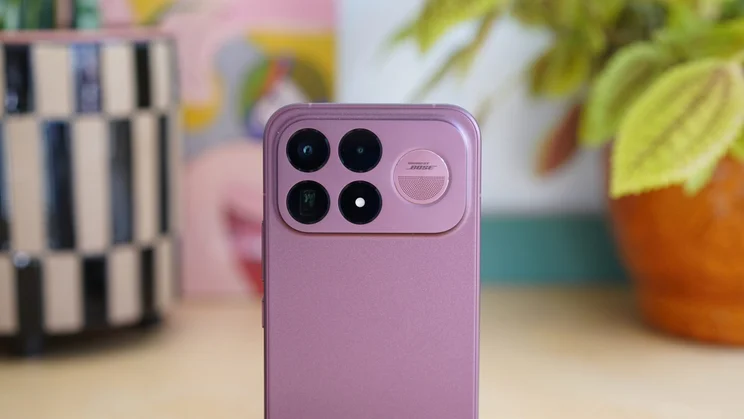
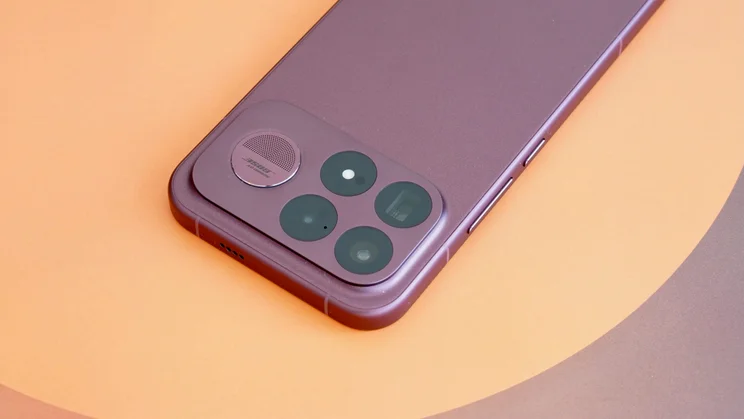
After the Poco F8 Ultra’s major revamp, the Poco F9 Ultra is more of a half-generational ‘S’ update. It’s got a similar design to the previous model – albeit with an additional rear notification light around its Bose-branded subwoofer grille – and it runs on exactly the same Snapdragon 8 Elite Gen 5 chip.
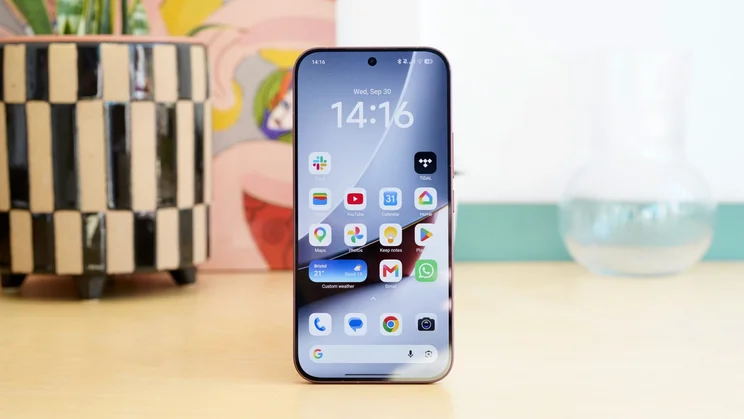
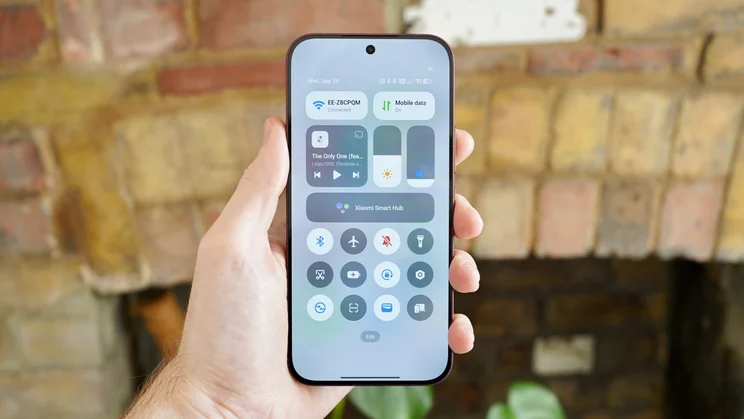
There’s another large and bright 6.9-inch 1200 x 2608 (1.5K) AMOLED display around front, though this time it features an elevated 185Hz maximum refresh rate and a higher 4500 nits peak brightness.
Besides those display tweaks, two fundamental areas have been upgraded here. The clearest improvement comes from a significantly larger 8,050mAh battery, accompanied by the same rapid 100W wired and 50W wireless charging.
Then there’s the new 200-megapixel main camera, though it’s important to read the small print here – the sensor itself is smaller than before. This is accompanied by what appears to be the same 50-megapixel ultra-wide and 5x telephoto cameras as before, as well as a 32-megapixel selfie cam.
Price and competition
Parking the typically generous Early Bird offer to one side for a second, pricing for the Poco F9 Ultra starts from £899 for 12GB of RAM and 256GB of storage. That’s a flat year-on-year hike of £150 over the equivalent Poco F8 Ultra model – which, lest we forget, was £100 more than the Poco F7 Ultra.
Phones are more expensive across the board in 2026, of course, and the Poco F9 Ultra is now positioned to undercut a more elite breed of phone. At first glance, it seems priced to compete directly with the Samsung Galaxy S26, the Google Pixel 11, and the Oppo Find X9.
When you zoom out further and take the challenging 2026 smartphone landscape into consideration, however, the F9 Ultra’s value proposition looks slightly better. Its size and many of its specs speak more to the Samsung Galaxy S26 Ultra and the Xiaomi 17 Ultra, both of which cost in excess of £1,200.
One thing I will point out is that, in a mind-boggling status switch, the Xiaomi 17T Pro from Poco’s parent company provides a cut-price alternative at ‘just’ £799. Strange times indeed.
When you get down to it, the Poco brand still retains its reputation for offering high performance on a budget. It’s just that, with the F9 Ultra, the brand seems to be taking on the very top tier of the market.
Design and key features
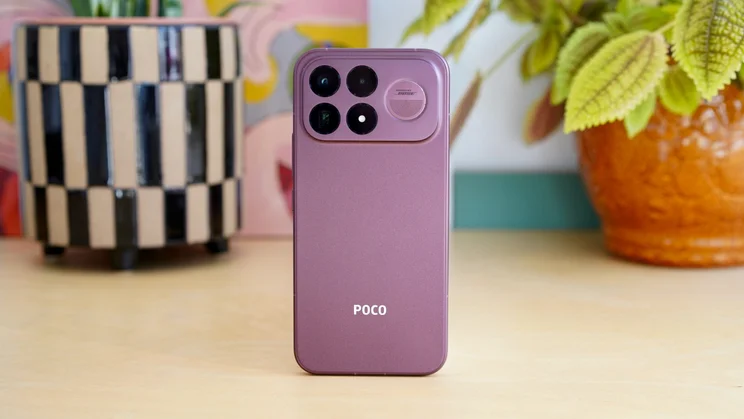
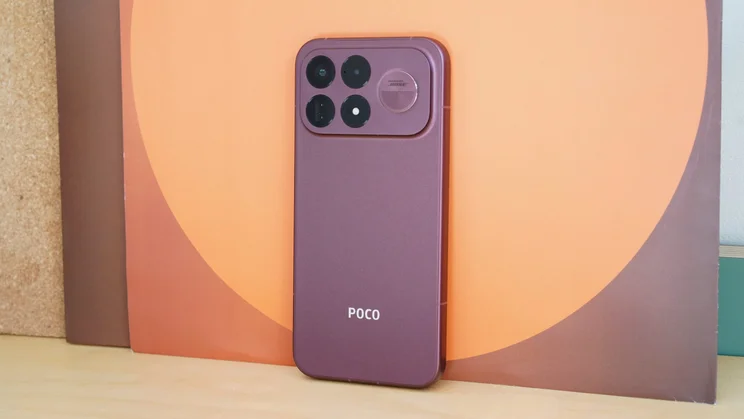
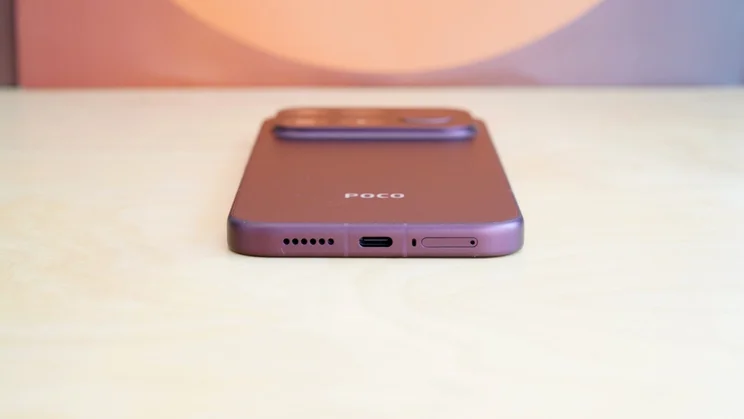
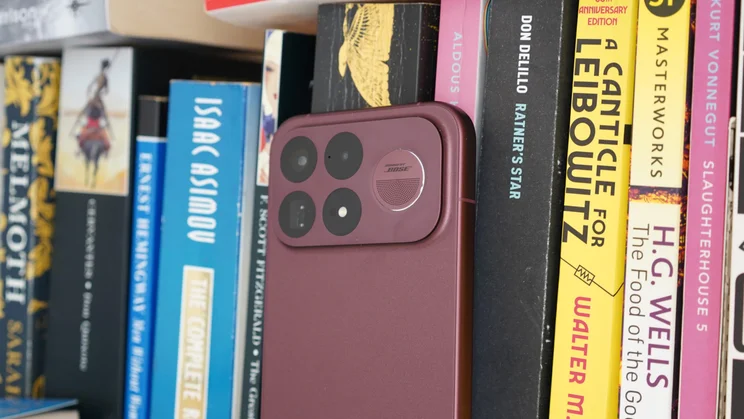
Xiaomi has largely stuck with the same design for this year’s Poco Ultra model – an iPhone 17 Pro-inflected slab of a phone with a width-spanning camera mesa containing a two-by-two sensor alignment and a beefy Bose-branded subwoofer.
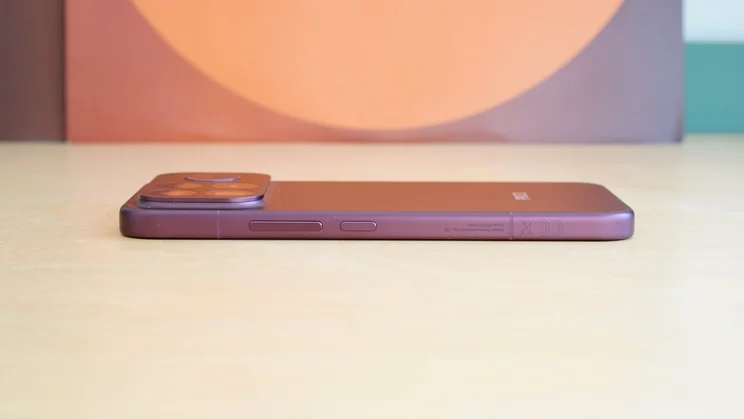
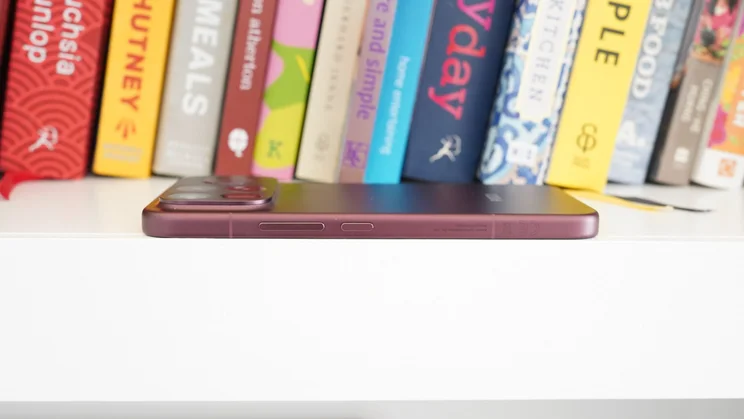
If anything, I’d argue that the Poco F9 Ultra represents a slight step back. It’s a heftier beast all around, particularly with its added thickness (8.7mm vs 7.9mm) and weight (235g vs 218g).
That’s also evident in the choice of finish, with the Poco F8 Ultra’s appealingly odd faux denim no longer an option. Instead, you get the choice of Dark Cherry (like my model) or Black in boring smooth plastic. A metal frame helps it to feel solid, at least, and there’s full IP68 certification.
The Bose sub-woofer once again lends welcome low end oomph to audio output but it’s now surrounded by a white LED. This doesn’t do much more than glow with incoming notifications, or to the rhythm of your music, but you could argue that makes it more fully featured than the HiLight system on the Google Pixel 11 Pro.
As for the software, HyperOS 3.0 is back again, sitting atop Android 16 (Xiaomi hasn’t quite got around to Android 17 yet). Once again, it’s perfectly fast and functional, but it lacks the cohesive visual identity and sheer good taste of Google’s default Android provision. Bloatware abounds, too, with Facebook, Instagram, Netflix, AliExpress, Amazon Music, TikTok and more all preinstalled.
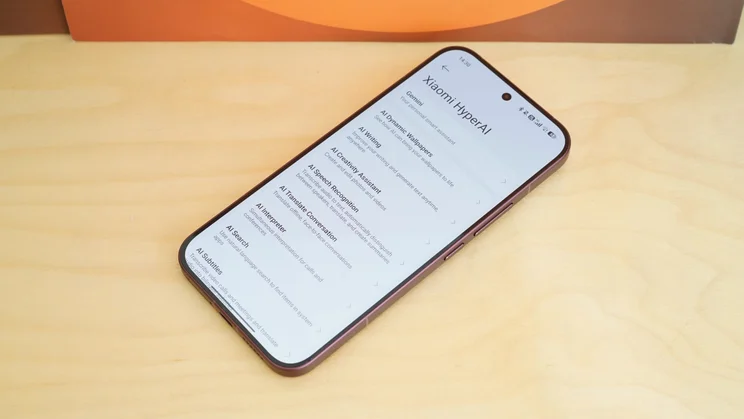
That’s in addition to Xiaomi’s own custom apps, which include a superfluous secondary web browser and another app store. The company’s AI offering covers all the bases, from writing assistance to audio transcription and translations, and it’s all as annoyingly tucked away as before.
Display
I was impressed with the Poco F8 Ultra’s eye-catching display, and the Poco F9 Ultra enhances it further. It’s another expansive 6.9-inch AMOLED with a 1200 x 2608 (or 1.5K) resolution, but it’s faster and brighter.
The refresh rate now extends all the way to 185Hz in selected games. This is largely something to put on a box, as the vast majority of games won’t be able to hit the kind of elevated frame rates that would justify such a provision.
Peak brightness has been boosted to 4500 nits (up from 3500), which has a knock-on effect at more practical levels. I measured a top brightness of 847cd/m2 with autobrightness turned off, which represents an impressive 39% boost.
Colour accuracy is strong too. Using the phone’s default colour scheme, I recorded an sRGB gamut coverage of 99.1% with a volume of 102.3%, and an average Delta E colour variance score of 0.99. That’s even better than the Poco F8 Ultra.
Performance and battery life
The Poco F8 Ultra really justified its ‘Ultra’ status by giving us flagship levels of performance. The Poco F9 Ultra technically follows suit, but it also fails to move things forward.
That’s because it runs on exactly the same Snapdragon 8 Elite Gen 5 chip as its predecessor. You could put this down to unfortunate timing, given that the new Snapdragon 8 Elite Gen 6 was launched a matter of weeks after the F9 Ultra hit the market. But it was Xiaomi’s choice to bring its launch forward by almost three months from the F8 Ultra last year.
Sure enough, performance is broadly comparable with the F8 Ultra, not to mention a whole host of early 2026 flagship phones like the Samsung Galaxy S26 Ultra and the Xiaomi 17 Ultra. That’s not bad company to be keeping, and with the aforementioned Snapdragon 8 Elite Gen 6 chip having only just launched, it remains one of the faster phones on the market – for now.
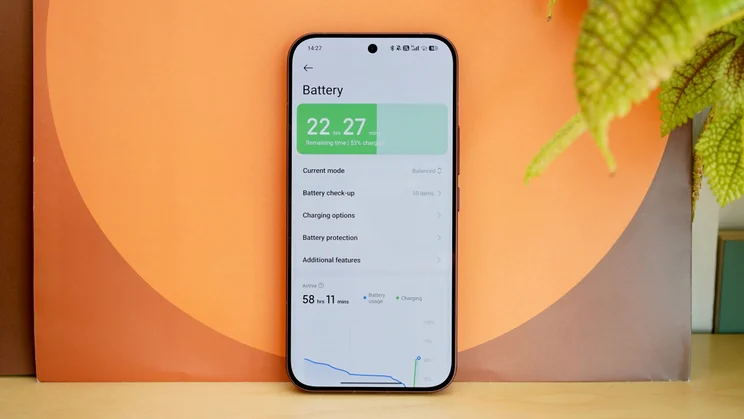
Xiaomi has taken far bigger strides with the Poco F9 Ultra’s battery provision. At 8500mAh, its capacity is 24% greater than that of its predecessor, resulting in spectacular stamina. I was able to get through two full days of use, with around 8 hours of total screen-on time, and I was still left with 33% in the tank on the third day. In our usual looping video test, meanwhile, the Poco F9 Ultra scored 42hrs 18mins. That’s some 13 hours longer than the F8 Ultra, and gets close to the mighty Oppo Find X9 Pro.
Charging is the same 100W wired and 50W wireless charging provision as before. Thanks to that larger battery, it’s not as swift to hit 100%, though it’ll still get you a 51% charge from empty in 30 minutes, and a full charge in about 1 hour and 10 minutes.
Cameras
Xiaomi has added a new 200-megapixel camera to the Poco F9 Ultra package. That promises a better resolution than the F8 Ultra and its 50-megapixel camera, of course. But this is also a smaller sensor, meaning it scoops up less light.
It’s tempting to read this as a sneaky downgrade dressed up as an upgrade, but it’s tricky to say for sure without using both phones side-by-side. What I can say is that shots taken with this new main camera look bright and detailed, with a vibrant yet relatively natural colour profile.
The extra pixels also help out with 2x crops, while 10x snaps also remain usable. Detail starts to fall off quite sharply from 30x onwards. Night shots, too, are pretty solid, with a decent clarity and a certain ‘unbrightened’ look (not excessively so, at least) that I appreciated.
Another thing that speaks to the quality of that main camera – and particularly the level of detail – is the drop off in quality when you switch to the 50-megapixel ultra-wide. That sounds like a back-handed compliment, but I really noticed it here, with landscape shots looking much hazier and less well defined, and with inferior contrast. There is at least a more pronounced difference in focal length between the wide and ultra-wide cameras this time around.

The 50-megapixel 5x telephoto camera does a much better job, producing detailed shots at a nice deep focal length. There’s a solid 32-megapixel camera around front, which produces reasonably natural skin tones and does a good job separating subject from background on portraits. There’s no autofocus, though, which becomes more noteworthy given the new price.
Video maxes out at 8K/30fps, though most people will prefer 4K/60fps, which looks pretty good. And no, we still don’t get 4K/120fps, despite the Snapdragon 8 Elite Gen 5 chip being capable of such things.
Poco F9 Ultra: Verdict
After taking a significant step forward with the Poco F8 Ultra, I was worried that Xiaomi had somewhat lost its direction with the follow-up. When it comes to design and performance, Xiaomi’s budget sub-brand seems to be treading water, while the camera is merely solid given the new higher price.
And that’s the biggest criticism here. A massively elevated price (in the UK at least) now carries the phone into close proximity to a whole bunch of very good (albeit smaller) flagships. Even Xiaomi itself offers a phone that somewhat undercuts the F9 Ultra.
Ultimately, however, it’s hard to argue with what’s being offered for 2026 money. This is another hugely capable media-focused phone with an excellent screen and unusually punchy audio. Battery life, meanwhile, is some of the best you’ll find in any phone, and charging remains relatively swift.
In a relatively challenging landscape for phones, the Poco F9 Ultra still manages to offer some measure of value for money – though that definition is starting to feel increasingly stretched.