To help us provide you with free impartial advice, we may earn a commission if you buy through links on our site. Learn more




- Bundled stylus
- Excellent battery life
- Speedy performance
- Not fully dustproof
- On the heavier side
- Fiddly stylus storage
It’s important to remember that the Razr Fold is Motorola’s first swing at a book-style foldable smartphone. Sure, it’s cut its teeth well and truly with compact clamshells like the Motorola Razr 70 Ultra, but in terms of this format, Motorola doesn’t have the trial-and-error advantage that Honor, Samsung and, to a lesser degree, Google bring to the table.
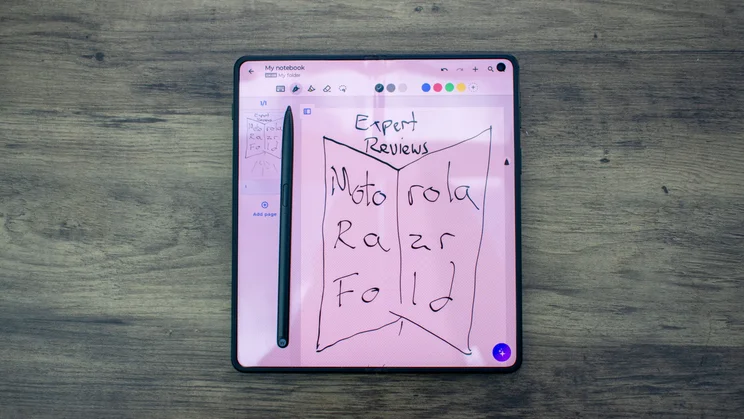
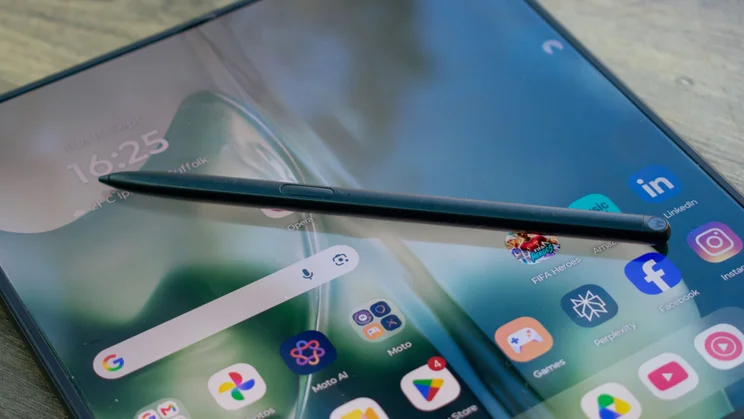
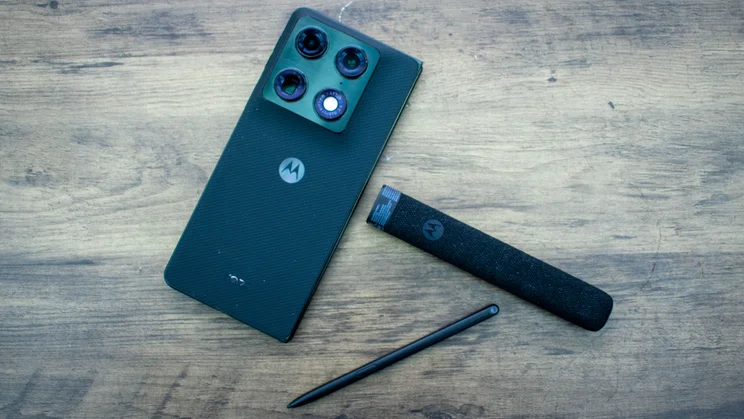
I make that distinction because, for a first-generation product, the Motorola Razr Fold is really rather good. It has top-quality cameras, a slick design, strong performance and, in a move that puts most rivals to shame, it both supports stylus use and bundles in the Moto Pen Ultra at no extra cost.
There are some wrinkles, however, that will likely be ironed out with another generation or two. It’s one of the heaviest foldables around right now and it’s not fully dustproof – a feat that Honor, Google and most recently Apple have all achieved. So while it’s a solid proof of concept, it might be worth waiting for the Razr Fold 2 before you put your money down.
What you need to know
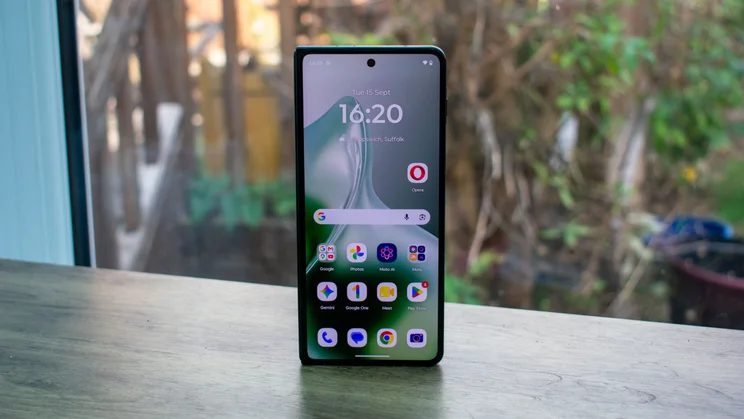
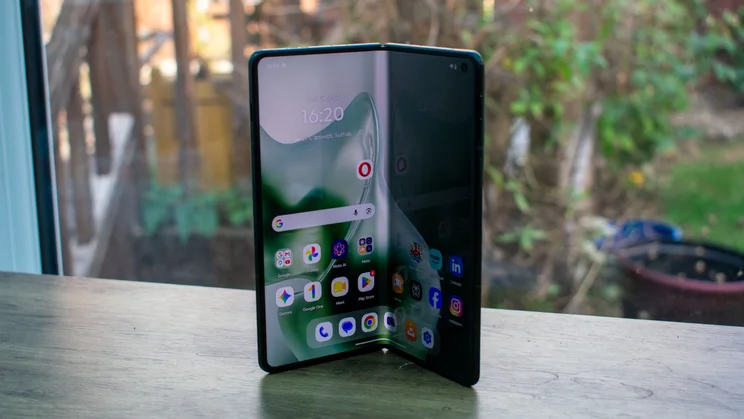
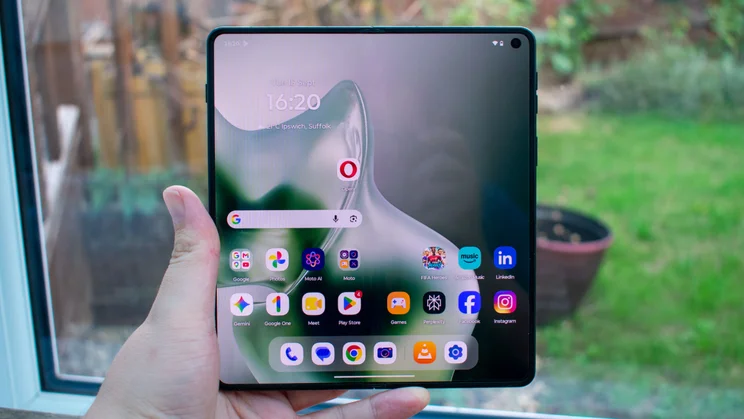
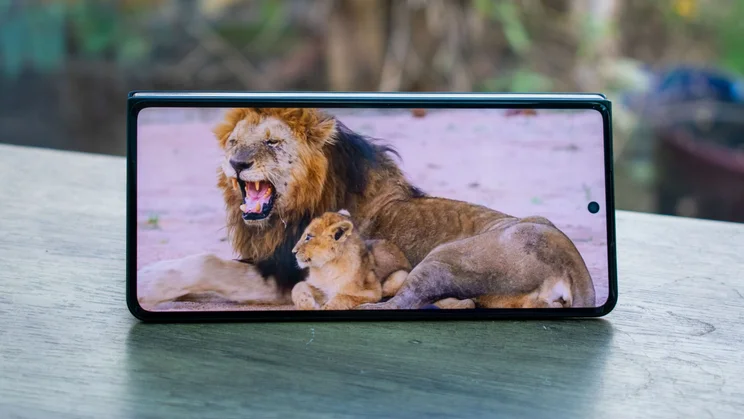
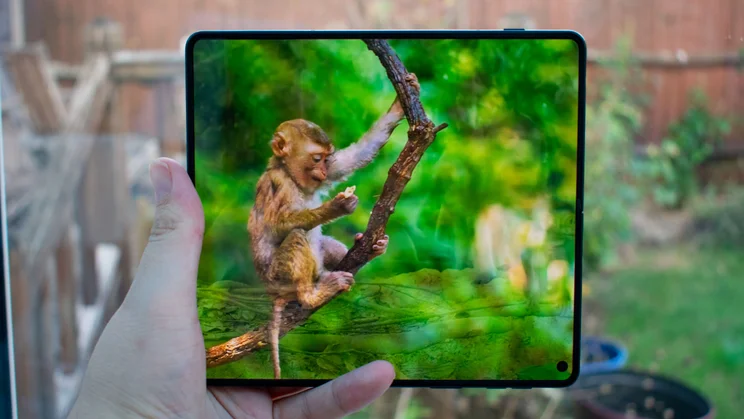
The Razr Fold has one of the largest foldable displays around, unfurling to reveal an 8.1in pOLED screen with a resolution of 2,484 x 2,232 and a dynamic refresh rate up to 120Hz. Sitting on the front is a 6.6in pOLED cover screen with a 1-165Hz dynamic refresh rate and a resolution of 2,520 x 1,080.
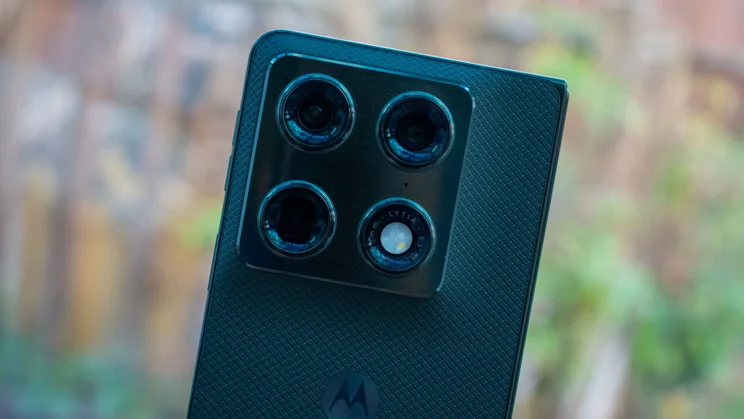
Each display has a selfie camera – 20MP on the cover screen and 32MP on the internal display – and over on the rear is a triple-camera setup, with a 50MP main lens, a 50-megapixel ultrawide and a 50MP 3x periscope telephoto.
Inside is a Snapdragon 8 Gen 5 chipset, clocked up to 3.8GHz and backed by 16GB of RAM and 512GB of storage. The battery is one of the largest of any foldable, with a total capacity of 6,000mAh. It supports wired charging up to 80W and wireless charging up to 50W.
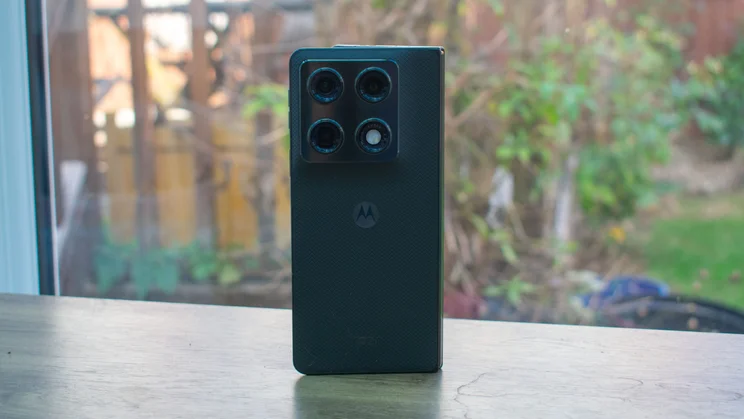
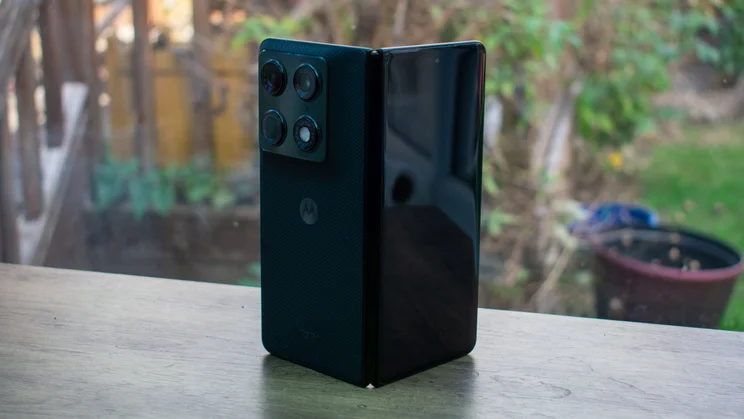
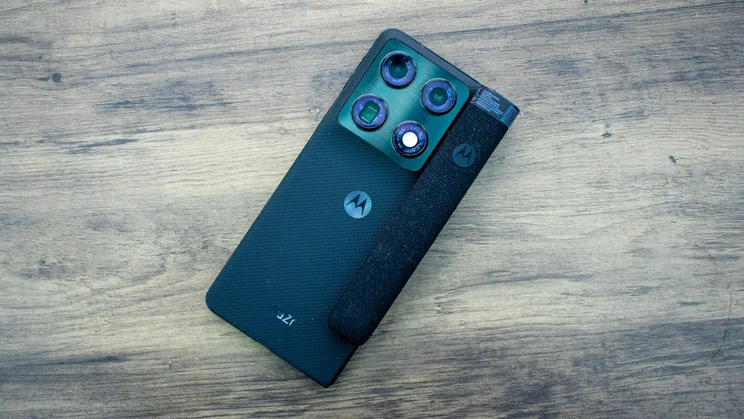
There are only two colour options available and both are classy enough, if a little drab. The model pictured here is the Pantone Blackened Blue shade; the other option is Pantone Lily White.
Price and competition
There’s only one configuration of the Razr Fold, with a hefty 16GB of RAM and 512GB of storage space. It originally launched at £1,799 but, at the time of writing, you can pick it up for £1,699.
That makes it one of the cheapest foldables around right now. Samsung’s new wide-format Galaxy Z Fold 8 starts at the same £1,699 but that only gets you 256GB of storage – the 512GB version is £1,869 and the 1TB is £2,209. The Galaxy Z Fold 8 Ultra is even more expensive, starting at £1,899 for the 256GB model.
The Google Pixel 11 Pro Fold starts at the same £1,799 that the Motorola Razr Fold launched at, but that only comes with 256GB of storage; for the equivalent 512GB, you’re looking at £1,919. And then there’s the just-announced iPhone Duo, which starts at £1,999 for 256GB of storage.
In other words, Motorola has something of a bargain on its hands here, and it would be the best-value foldable of the year if it wasn’t for Honor’s cutthroat pricing. The Magic V6 technically cost £1,999 at launch but it has never actually stayed at that price, with perpetual discounts keeping it as low as £1,399 (again with 512GB of storage).
Design and key features
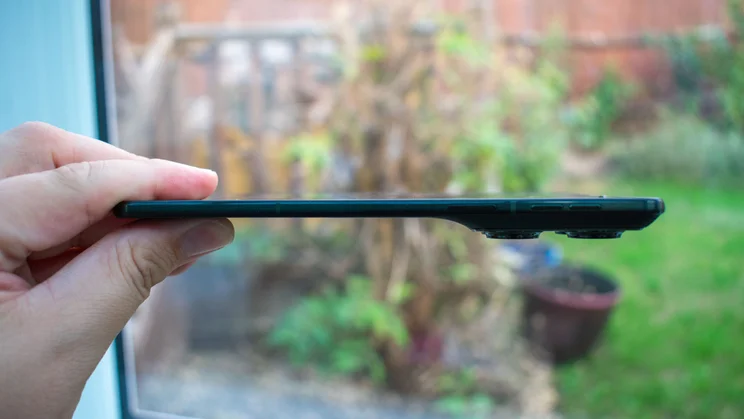
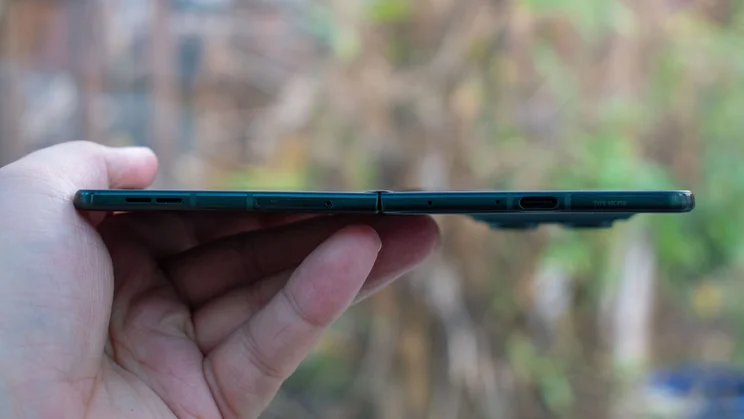
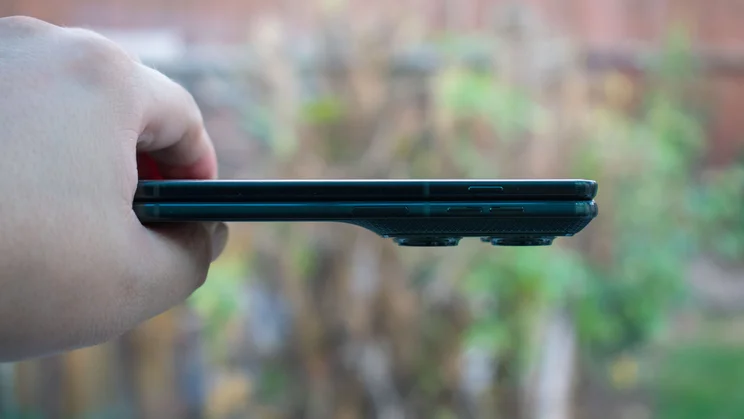
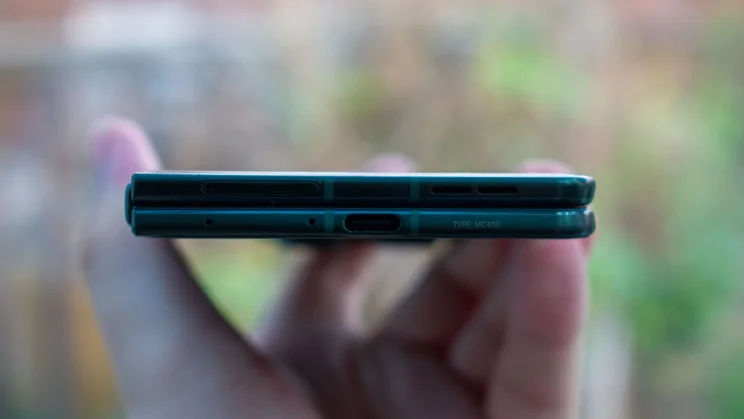
The Motorola Razr Fold isn’t quite on par with the likes of Honor or Samsung when it comes to foldable slenderness but it’s still reasonably slim. It measures 74 x 10 x 160mm (WDH) when folded and unfolds to a 145 x 160mm mini tablet that is 4.7mm thin.
It is, however, rather dense, with its 243g weight making it heavier than all other Android foldables released this year. It’s not the heaviest overall, at least, with Apple’s iPhone Duo weighing a hefty 254g.
There’s a layer of Gorilla Glass Ceramic 3 over the cover display for scratch protection, and the rear of my Blackened Blue review sample comes coated with a tactile, diamond-patterned material that feels a little analogous to carbon fibre. The Lily White model, meanwhile, gets a sleek silk-inspired finish.
The IP48/IP49 dust and water resistance rating is excellent, certifying the Razr Fold as protected against high-pressure jets and submersion in 1.5m of water for up to 30 minutes, but dust resistance is behind the curve. The “4” indicates the Razr Fold is only protected against particles over 1mm in diameter, whereas the Honor Magic V6, Google Pixel 11 Pro Fold and iPhone Duo all bear the fully dustproof IP68 rating.
The Motorola Razr Fold shipped with Android 16 and, in a much-needed move for the traditionally stingy Motorola, software support extends to a full seven years, matching the likes of Honor, Samsung and Google.
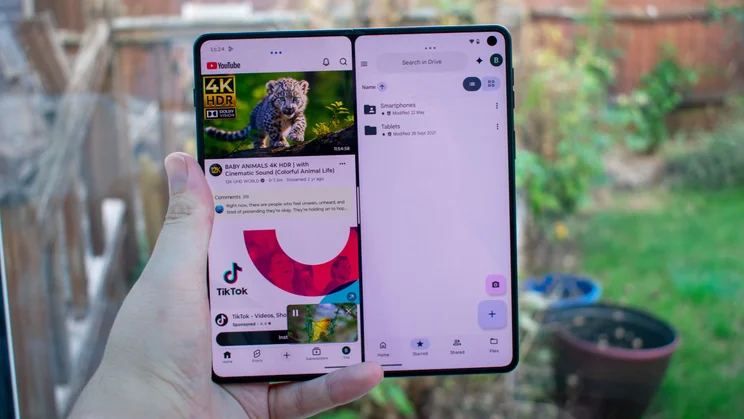
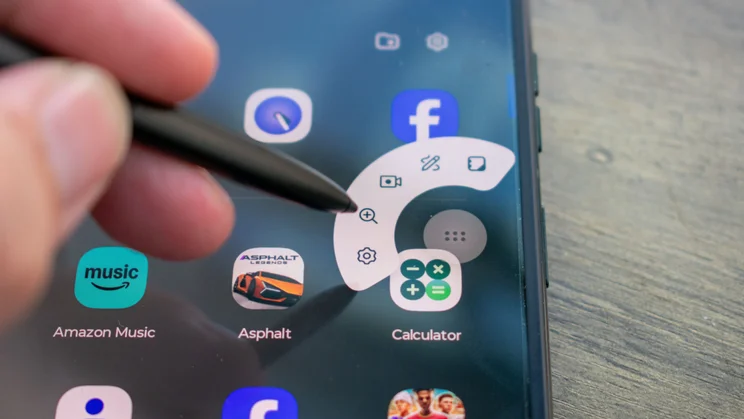
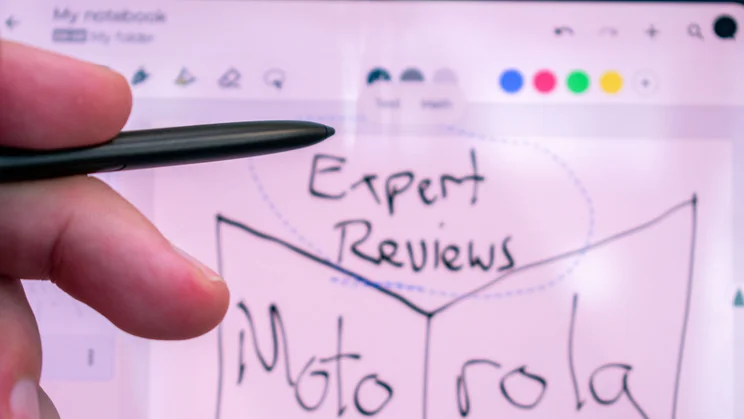
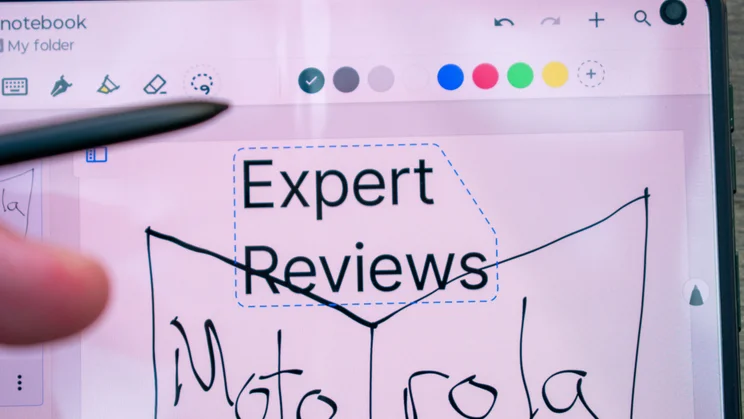
Software includes the usual multi-tasking features that make full use of the internal display, such as split-screen and a quick-launch bar, and the Moto Pen Ultra adds useful actions like annotation and handwriting to text conversion.
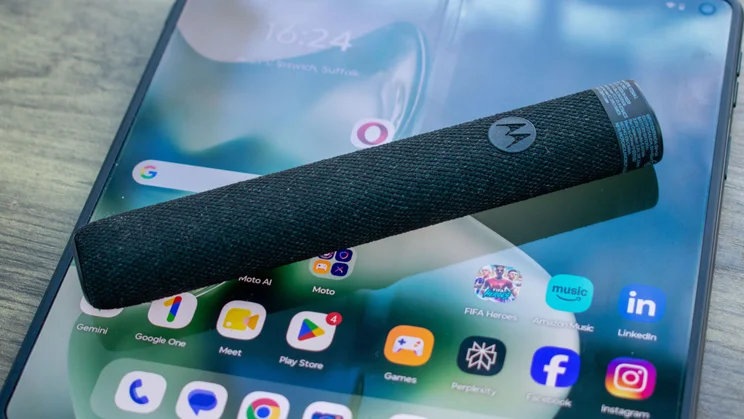
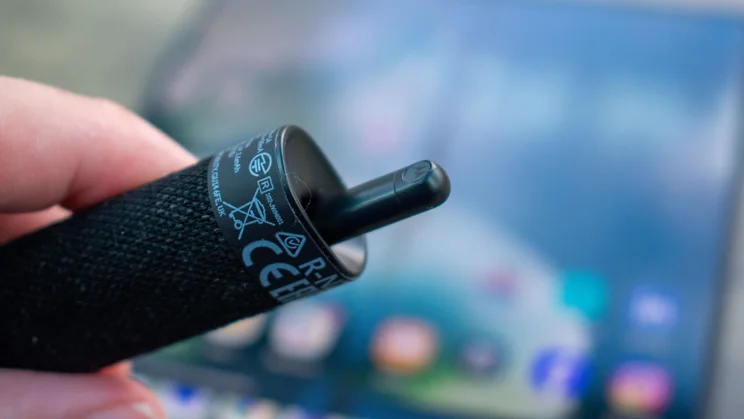
The stylus itself is rather small, but works well enough. My only complaint is there’s no way to attach it to the phone or stow it within it. You get a storage tube in the box that does double duty as a charger, but this is another thing to carry around and doesn’t feel as convenient as it could be. This is a minor complaint, however, and I still think it’s an overall positive that the Razr Fold supports stylus use.
Display
Both displays reached decent bright levels in my testing, with the cover hitting 1,017cd/m2 on adaptive brightness with a torch shining on the light sensor and pushing up to 1,375cd/m2 when displaying HDR content. The internal screen proved even stronger, reaching 1,399cd/m2 on adaptive mode – though it didn’t go any higher with HDR content. These brightness levels aren’t on par with the dazzling brilliance of Google’s Pixel screens but still bright enough to deal with direct sunlight.
Colour accuracy is solid, too. There are three colour profiles to choose from, and if you aren’t fussed about accuracy, you’ll get on just fine with the default Vivid profile, but the most true to the sRGB colour space is the Natural profile. Here, I recorded an sRGB gamut coverage of 98.2% on the cover screen and 97.9% on the internal display, and volumes of 101.3% and 100.4%, respectively.
The average Delta E colour variance scores came back at 1.22 on the cover and 1.09 on the internal display. I’m looking for results of 1 or under here so both are close enough that colours won’t look out of place.

Performance and battery life
With most rivals using top-end flagship chipsets, it was an interesting move for Motorola to fit the Razr Fold with the sub-flagship Snapdragon 8 Gen 5 chipset, as opposed to the 8 Elite Gen 5 that features in the Honor Magic V6, Samsung Galaxy Z Fold 8 and Z Fold 8 Ultra).
You definitely see the difference in performance with the Geekbench 6 single-core CPU test, where the Razr Fold falls around 31% behind the results of the Galaxy Z Fold 8; the Z Fold 8 Ultra and Honor Magic V6 secure similar leads.
Multi-core performance is much closer to the competition, however, with the Razr Fold landing between 9% and 12% behind the Snapdragon 8 Elite Gen 5 rivals. These scores are still good, however, and there were never any points during testing when I felt that the Razr Fold lacked oomph.
Similarly, the Razr Fold falls little behind the competition in the gaming stakes, with Vulkan GPU scores that are just a tad lower than most rivals, but it’s still plenty powerful for your gaming needs. I played Genshin: Impact on the default settings with no issues and textures remained nice and crisp.
You can technically get more powerful gaming performance from the Honor or Samsung competitors but, as with general performance, the difference is negligible and you’re unlikely to notice much of an improvement.
The Razr Fold makes no such concessions when it comes to battery capacity. In fact, for a while, its 6,000mAh battery was the largest on any foldable phone, though that was quickly eclipsed when the Honor Magic V6 debuted with its (extremely metal) 6,660mAh battery.
Regardless, the Motorola Razr Fold seriously impressed me with its stamina. I ran my standard looping video test on the main display and the Razr Fold lasted for a fantastic 28hrs 19mins – the longest of any foldable I’ve ever tested. It did brilliantly running the same test on the cover screen, too, lasting for 34hrs 32mins.
I was very happy with the charging speeds, too. Just 23mins on charge brought the battery from empty to 50%, with a full charge taking just under an hour.
Cameras
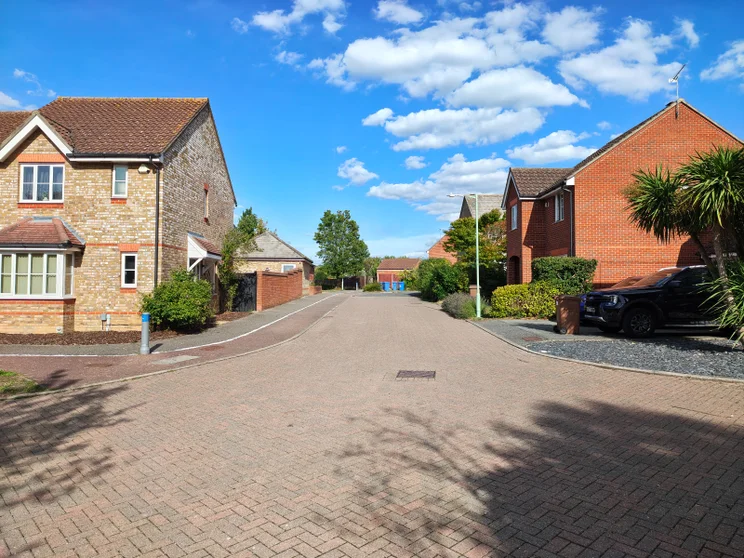
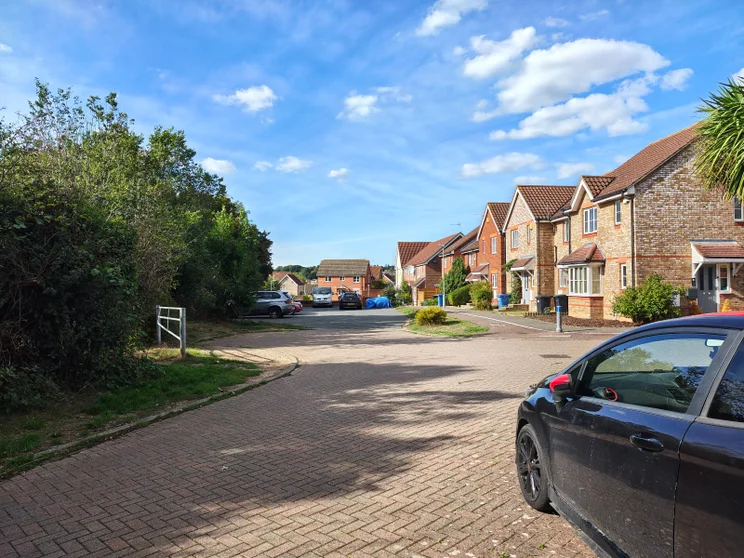
The 50-megapixel f/1.6 main camera snaps punchy, vibrant shots with plenty of detail and decent dynamic range. The colouring veers a little heavily into oversaturation for my tastes, but the results still look far from bad, especially if you enjoy your photography a little larger than life.
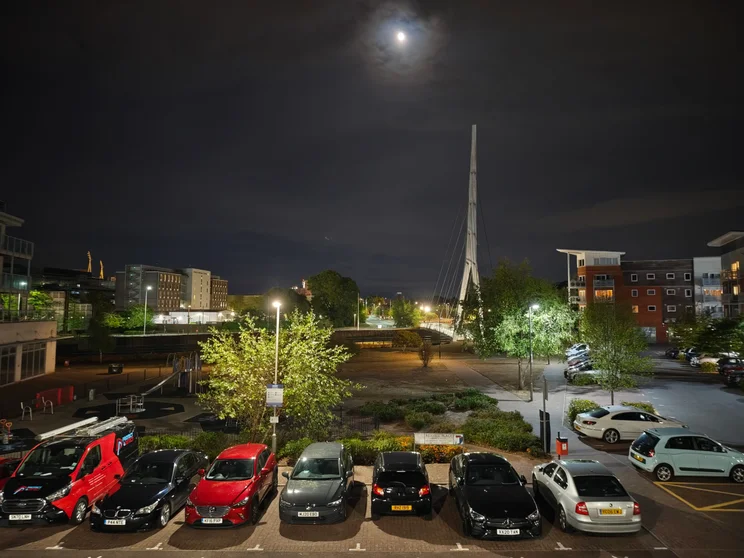
Low light and night photography feels a little more natural in its colouring, and the level of detail retained is very good, especially in the foreground. Big blocks of darkness like the sky remain pleasingly clear of visual noise and artificial light sources are well-handled, keeping distracting blooming out of the final image.
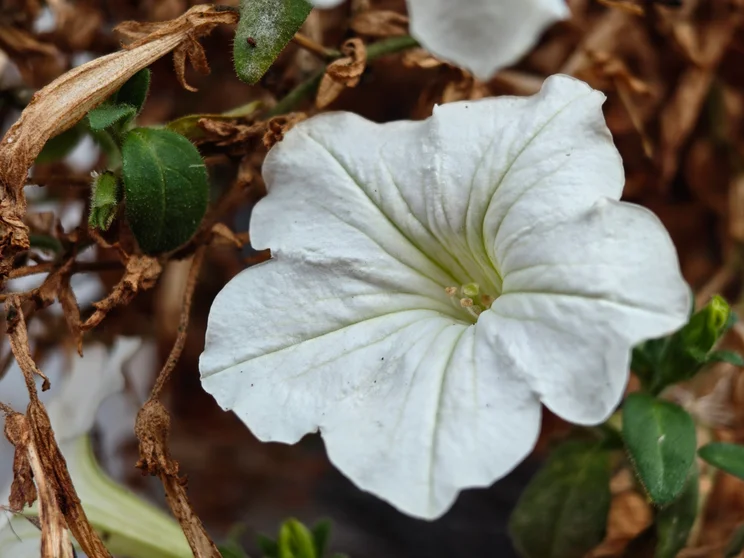
The 50-megapixel f/2.4 3x telephoto is a versatile camera that’s particularly good at capturing macro shots, with excellent detail and strong contrast producing sharp, punchy results.
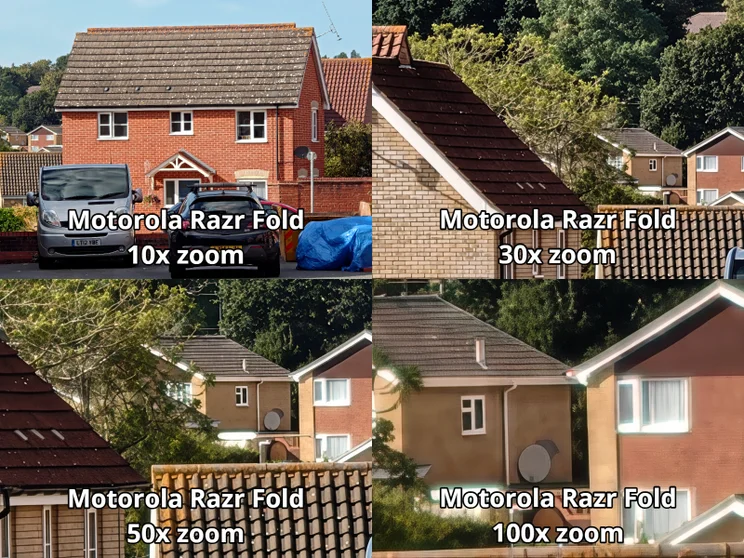
Zoom shots beyond that 3x optical magnification are well-handled, too. There’s a good amount of detail retained up to around the 50x mark and you can take things all the way up to 100x, although by that point, textures are massively smoothed out.
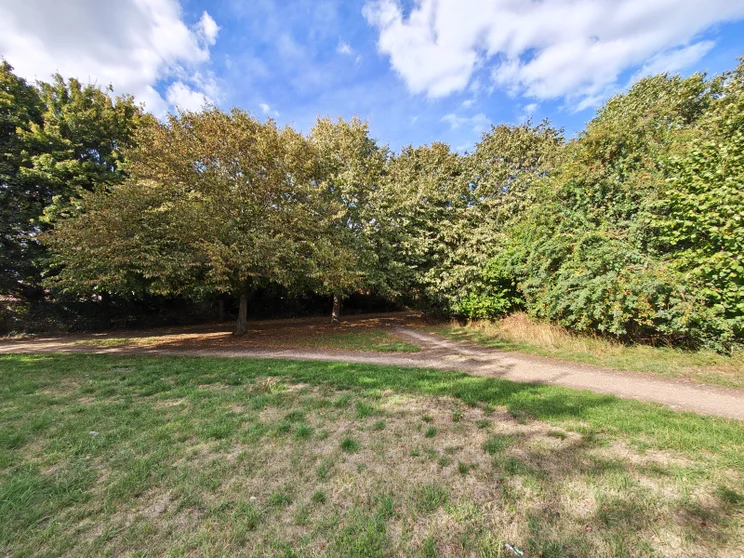
The 50-megapixel f/2.0 ultrawide completes the rear trinity, and it’s also a competent shooter. The 122-degree field of view is one of the widest you can get on a smartphone and the colour tone remains true to the main camera.
The phone also shoots 4K video at up to 120fps and 8K at 30fps, with support for Dolby Vision HDR. That’s all very good but stabilisation is only electronic, so you don’t get the same kind of rock-solid framing that you get from rivals with optical image stabilisation.
Verdict
The Motorola Razr Fold is impressively well-rounded for a debut device, thanks no doubt to Motorola’s extensive experience in the compact foldable market. The design is sleek, the cameras are excellent, performance is strong and battery life fantastic. Other foldables do it slightly better in some areas, but overall, the Razr Fold puts up an impressive fight.
The only two things that hold it back are issues that feel like they will be worked out in a sequel. Weight and dust resistance both lag behind the competition and when we’re talking about this kind of money, I can’t really recommend the Razr Fold when the lighter and more durable Honor Magic V6 is available for a few hundred pounds less. Maybe next year, Moto.