To help us provide you with free impartial advice, we may earn a commission if you buy through links on our site. Learn more




- Sleek, lightweight design
- Reliable cameras
- Seven years of software support
- Overpriced
- Rivals are faster
- Middling battery life
The Samsung Galaxy S26 FE is the latest in a long line of smartphones that struggle to find a place in Samsung’s lineup. While generally competent, the FE models tend to arrive later than other S-series models, when the more expensive phones have started to be discounted, undermining the FE’s main appeal.
The Galaxy S26 FE follows this formula to a T, arriving some six months after its siblings and offering a lesser experience for very similar money. Add strong competition from other brands in this price range, and the Galaxy S26 FE sinks like a stone.

Samsung Galaxy S26 FE: What you need to know
The “Fan Edition” FE version of Samsung’s S series is designed to make the flagship experience more accessible in price. And it does, just about.
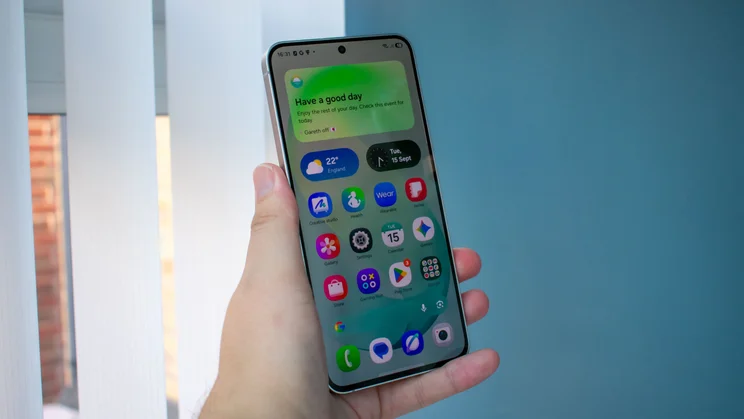
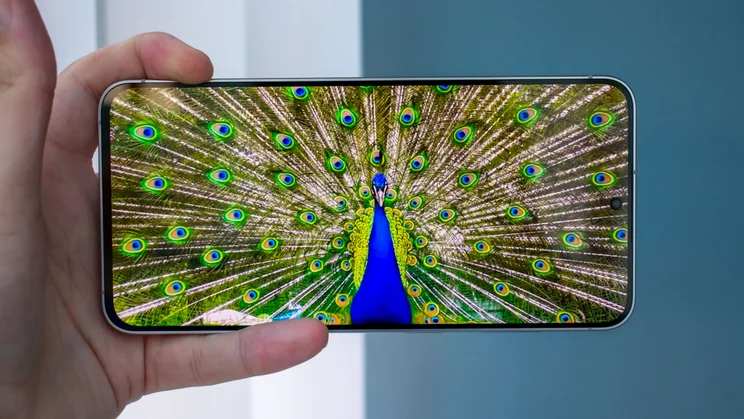
The build is very similar to the Galaxy S26 Plus, down to its 6.7in AMOLED display. The resolution is lower, however, at 2,340 x 1,080, and it’s not an LTPO screen, so the 120Hz refresh rate can’t dynamically adjust to 1Hz.
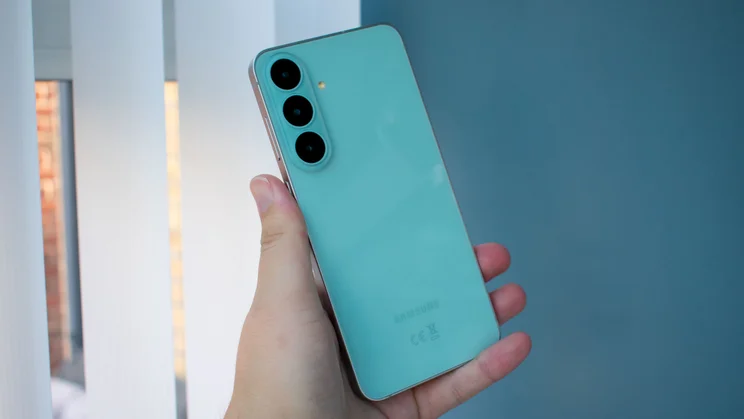
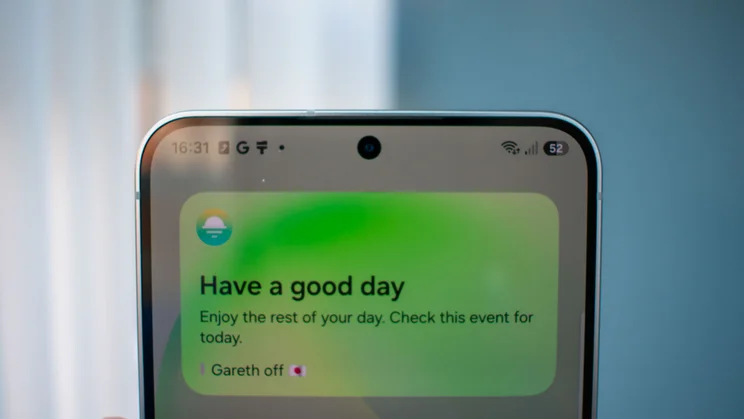
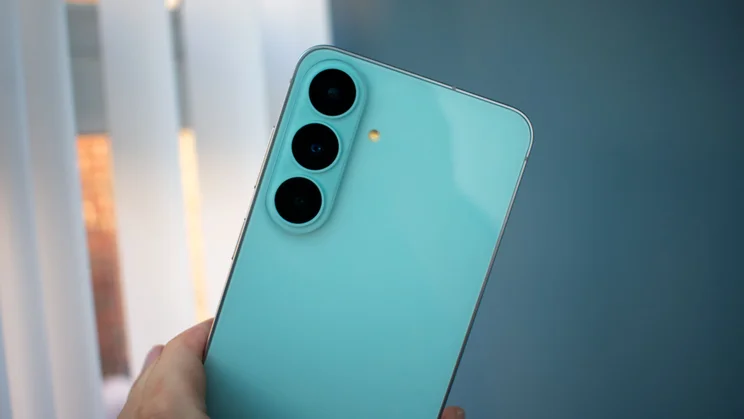
The top of the display houses the same 12-megapixel selfie camera as the Galaxy S26 and S26 Plus, and the rear 50-megapixel main camera and 12-megapixel ultrawide are identical. The only difference is the 3x telephoto lens, which has an 8-megapixel sensor, compared with 10 megapixels on the other two.
The processor is weaker than the S26 and S26 Plus. The FE forgoes the new 4.74GHz Exynos 2600 for the 3.3GHz Exynos 2500, featured in last year’s Galaxy Z Flip 7. You get less RAM, too, with just 8GB instead of 12GB, but you do get up to 512GB of storage.
Finally, the battery is a 4,900mAh cell, the same as the Galaxy S26 Plus, and supports the same 45W wired charging as its siblings. However, wireless charging is slightly weaker, capped at 15W Qi2; the rest of the family gets up to 20W Qi2.2 charging.
Price and competition
The Galaxy S26 FE starts at £699 for the 128GB model, the 256GB version costs £799, while the 512GB is £949. That’s more expensive than last year’s S25 FE, and puts the phone uncomfortably close to its now-discounted brethren.
The compact Galaxy S26 now starts at just £679 for the 256GB model, which has a smaller 6.3in display but is otherwise superior to the FE. If you want that bigger screen, the Galaxy S26 Plus is £1,099 at most retailers, but I’ve seen it under £850 in a couple of places. Give it a few weeks for the S26 FE’s dust to settle, and I’m confident you’ll be able to pick up a 256GB Plus for less than £100 more than the FE.
Outside of Samsung’s stable, this price range is dominated by a couple of strong upper mid-range offerings with 512GB of storage as standard: the Xiaomi 17T Pro is currently down to £649, and the Honor 600 Pro is the same price as the Galaxy S26 FE. Both started too expensive for what they offered but, like the Samsungs, they’ve since been discounted to a point where they’re much better value for money.
Rounding out the competition is the iPhone 17e, Apple’s best-value option. The 256GB model costs £699, and the 512GB version is £799.
Design and key features
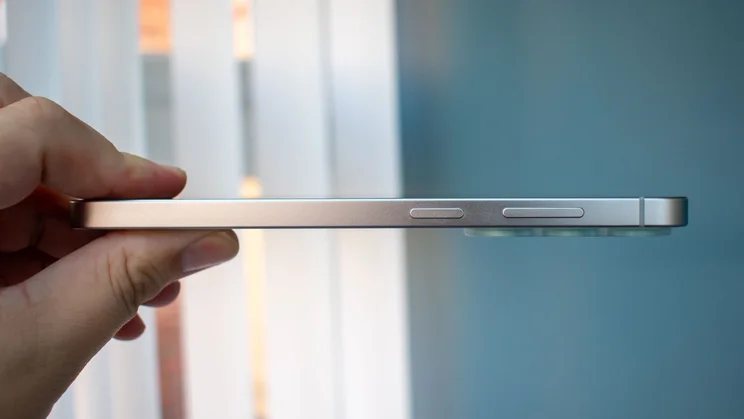
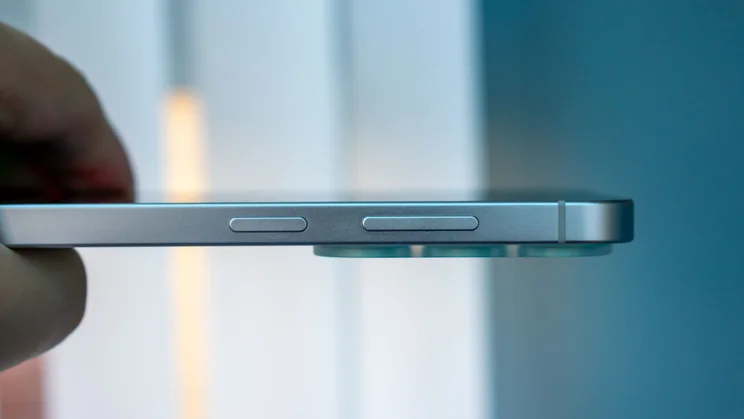
The Galaxy S26 FE keeps the slim, lightweight build that worked so well on the rest of the S26 family, measuring 77 x 7.4 x 162mm (WDH) and weighing 193g, just three grams more than the S26 Plus.
It maintains the flagship’s IP68 dust and water resistance rating and is sandwiched between layers of Gorilla Glass Victus Plus. This is only a minor downgrade from the Victus 2 glass used on the Galaxy S26 Plus.
Another downgrade is the colour selection: the Galaxy S26 and S26 Plus come in six colours, including two Samsung.com exclusives; the S26 FE comes in three. My review sample came in the understated green “Pistachio” flavour, but you can get a strong pop of colour with the “Blueberry” model or stick with a classic black “Graphite”.
The selfie camera offers up a reasonably nippy face unlock, and the under-display optical fingerprint sensor proved consistent in my testing. Connectivity is solid but again, a little weaker than the other S26 models, topping out at Bluetooth 5.4 and Wi-Fi 6E; its siblings get Bluetooth 6.0 and Wi-Fi 7 support.
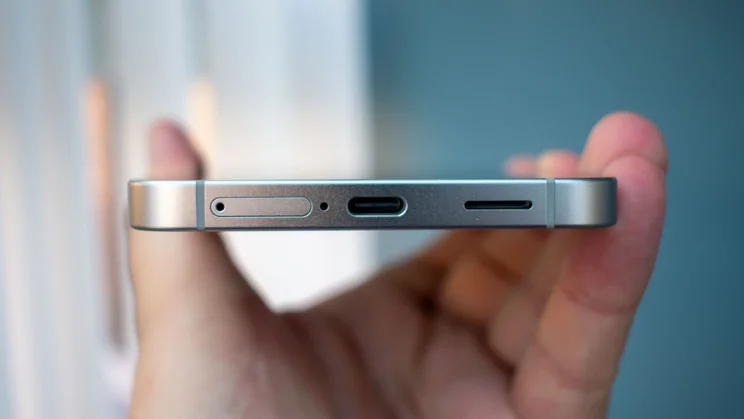
The USB-C port is downgraded from the previous generation. It drops from USB 3.2 to USB 2.0, meaning slower data transfer speeds and, more pertinently to a Galaxy phone, no wired DeX mode. You can still use the S26 FE in desktop mode wirelessly, but the latency introduced makes actions like swift scrolling and gaming a pain.
Otherwise, OneUI 9.0 is slick and accessible, built on Android 17 and will receive the same seven years of software support as the rest of the S26 gang. This is one area in which the Galaxy S26 FE really has an advantage over other brands in this price range; the Honor 600 Pro is pledged six years of both OS updates and security patches, which is close enough, but the Xiaomi 17T Pro only offers four years of OS updates alongside six years of security patches.
Display
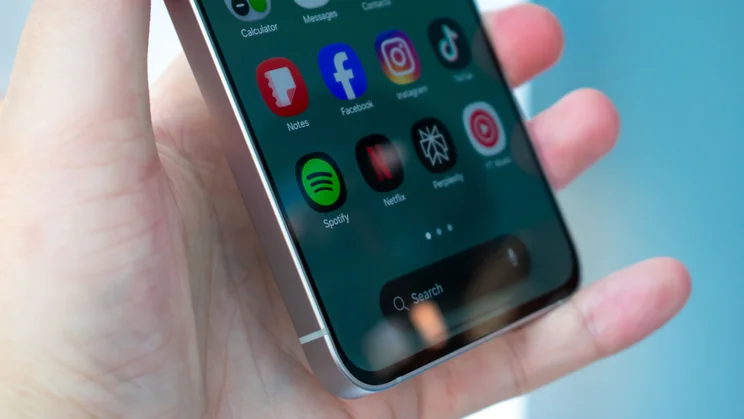
The display is solid, with the gorgeous contrast and rich, inky blacks of an AMOLED panel, but it has a couple of flaws. The chin bezel is thicker than the other three sides, which makes it look cheaper than it is, and the 2,340 x 1,080 resolution yields a pixel density of just 385 pixels per inch (PPI), which is quite a bit lower than rivals (around 450PPI). I never found text blurry or images lacking sharpness, but it’s still a shame at this price.
Brightness is good, at least; in manual mode, I recorded a peak of 440cd/m2, while switching to adaptive brightness and shining a torch on the light sensor pushed it up to 1,140cd/m2. It performed best with HDR content, topping out at an excellent 1,496cd/m2.
There are two colour profiles: the default Vivid setting is best for streaming and gaming, while Natural aims to reproduce the sRGB colour space authentically. On the latter, I recorded 96% gamut coverage and 97.5% volume, with an average Delta E score of 1.63 indicating reasonable but not perfect colour accuracy.
Performance and battery life
The Exynos 2500 is a ten-core chipset, so despite its 3.3GHz peak clock speed delivering disappointing single-core performance, multi-core results aren’t dramatically worse than the competition.
In my usual Geekbench 6 benchmarks, the Galaxy S26 FE predictably lagged in the single-core test, trailing the standard Galaxy S26, the Xiaomi 17T Pro and the Honor 600 Pro by around 35% apiece. The iPhone 17e gained an even larger lead, beating the S26 FE by a whopping 54%.
The Galaxy S26 and Xiaomi 17T Pro are still well ahead in the multi-core test, but the Galaxy S26 FE closes the distance to the iPhone, now just 14% behind, and actually pulls 5% ahead of the Honor 600 Pro.
Performance is serviceable overall, but not the most powerful you can get for this kind of money. That truth extends to the gaming side of things; I compared the Galaxy S26 FE to the Android competition in the Geekbench 6 Vulkan GPU test (Apple devices run a different test) and, while it was still the weakest of the group, the differences were mostly negligible, particularly compared with the Honor and Xiaomi.
I ran a few courses in Asphalt Legends without trouble, and even when the screen became clogged with multiple cars vying for first place, the framerate remained slick and textures didn’t lose any crispness. Hardcore mobile gamers may want to seek out a little extra horsepower, but for casual to moderate users, the Galaxy S26 FE will prove perfectly sufficient.
The same can’t be said, however, for the battery life. The 4,900mAh battery is the same capacity as the Galaxy S26 Plus, but stamina is quite a bit worse, running my looping video battery test for just 24hrs 15mins before tapping out.
That’s a tiny bit better than the iPhone 17e, and will see you through a day of moderate use, but you can simply get far better value for money than the Galaxy S26 FE offers.
Charging, at least, is nippy enough that if the battery does dip too low during your day, you won’t be tethered for too long before it’s ready to roll again. Twenty minutes on charge took the battery from empty to 50% in my testing, and it hit 100% after around 1hr 10mins.
Cameras
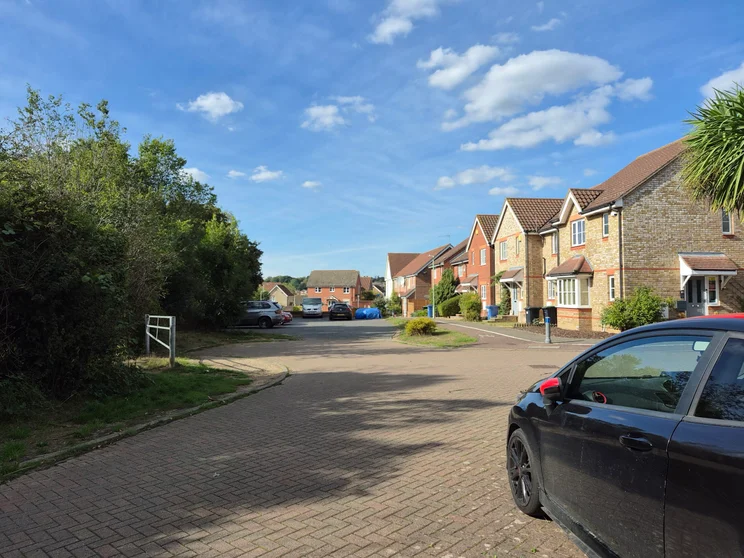
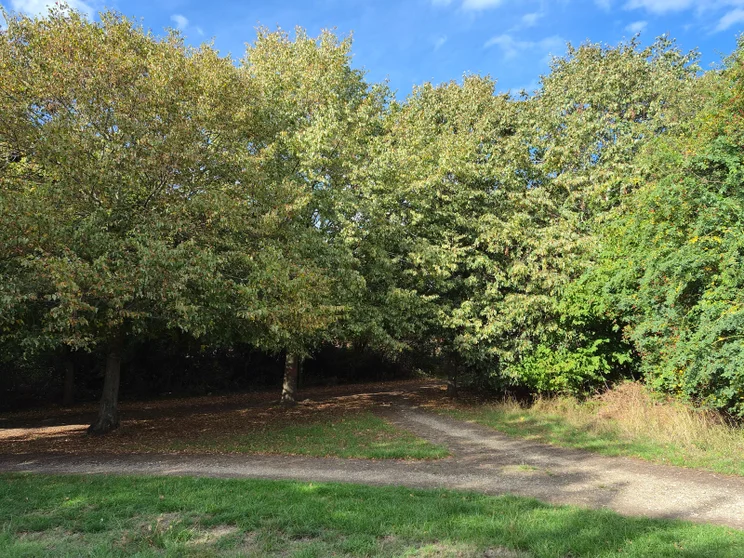
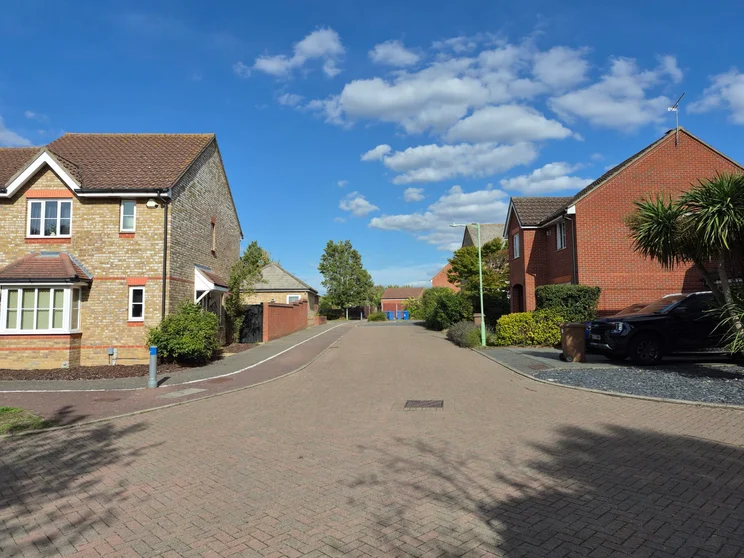
I was generally pleased with the performance of the 50-megapixel (f/1.8) main camera when I reviewed it on the Galaxy S26 and S26 Plus, and it does just as well here. Shots in good lighting are bright, punchy and rich with detail – and in a nice change of pace for Samsung phones, the colour science isn’t too overzealous, keeping images looking natural.
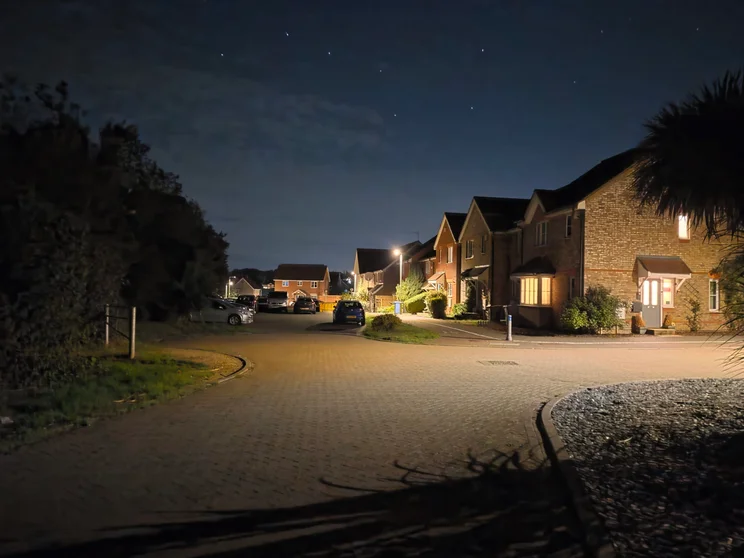
The f/1.8 aperture isn’t the widest around, so quality takes a little dip after dark, but it’s far from bad. Detail retention is solid, and the colouring remains nicely natural; it would be nice to see less visual noise in the sky, though.
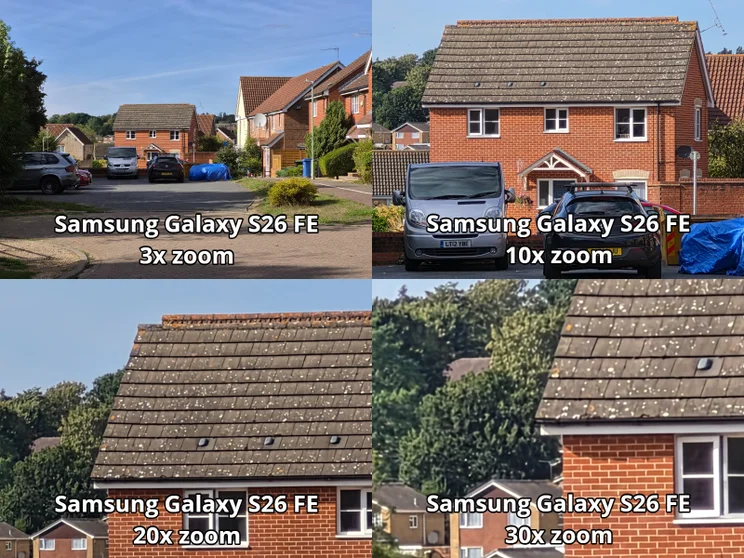
Considering that it uses a smaller 1/4.4in sensor with 8 megapixels, I wouldn’t say that the S26 FE’s 3x telephoto lens is dramatically worse than the one used on the Galaxy S26/Plus. Detail is solid enough for macro shots, and effective background separation delivers decent portrait shots.
Zoom goes up to 30x, which isn’t the best you can get for this kind of money – the Xiaomi 17T Pro and Honor 600 Pro both shoot up to 120x – but it’s decent enough. Shots up to 10x deliver the best quality, but if you want to extend to 20x and 30x, you’ll still see plenty of punchy colour and strong contrast, though detail gets increasingly soft.
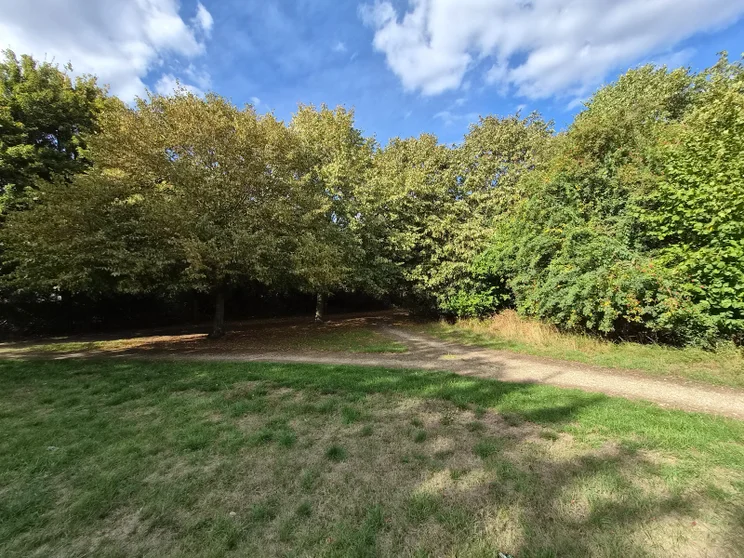
The 12-megapixel (f/2.2) ultrawide is the weakest link, but it’s still not a particularly bad shooter. The colour tone is consistent with the main lens, but detail leaves a lot to be desired, especially in the corners.
If I’m going to highlight one aspect as being the most appealing feature of the cameras, it’s that the Galaxy S26 FE has rather good video recording for its price. You can shoot 4K up to 60fps or 8K up to 30fps, which is excellent, though unfortunately, you don’t get the 10-bit HDR or LOG features that appear on the more expensive S-series models.
Samsung Galaxy S26 FE: Verdict
Running through the checklist of basic functionality, the Samsung Galaxy S26 FE doesn’t do all that much wrong. It’s well-built, looks the part, has solid cameras, a bright display, battery life is fine, and performance is fast enough for general use. Viewed in a vacuum, it’s perfectly competent.
The issue is that Samsung’s own lineup eclipses it, with the far better Galaxy S26 available for less money, and the large-screened Galaxy S26 Plus not costing much more. And that’s before we get into other brands – the Xiaomi 17T Pro is a particularly big threat here, with outstanding performance, better cameras and extensive battery life.
If you want the flagship Galaxy experience for less money, you’re best off waiting a couple of months for the S26 FE to drop to a more reasonable price point. Otherwise, if you’re happy spending this much on your next phone, the standard Galaxy S26 or the Xiaomi 17T Pro will prove far better value for your money.