To help us provide you with free impartial advice, we may earn a commission if you buy through links on our site. Learn more
- Fast and great battery life
- Variable aperture more useful than expected
- Siri actually works now
- More expensive than last year
- Big and heavy
It would have been the headliner in any other year, but in 2026 the Apple iPhone 18 Pro Max is almost a footnote behind Apple’s first folding handset, the iPhone Duo. That is not to say you should ignore it, however, because it remains a highly capable phone, and for Apple fans who remain sceptical about the utility (and reliability) of such handsets, it’s the pinnacle of what Apple is capable of producing right now.
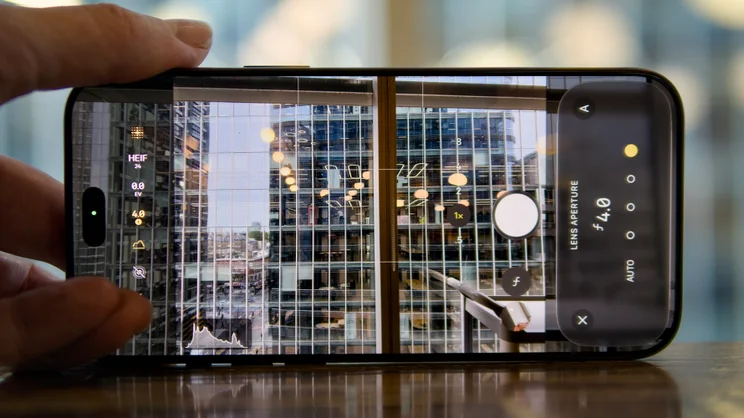
And far from letting the rest of the iPhone range stagnate, Apple has bestowed the iPhone 18 Pro Max with the introduction of variable aperture for the main camera, alongside the usual processor upgrade, a new colour and longer battery life.
You should never expect dramatic year-on-year improvements to Apple’s existing products, but this model is improved across the board. Unfortunately, the memory crisis continues, meaning that this model is £100 more expensive than last year’s equivalent.

What you need to know
The iPhone 18 Pro Max is no longer Apple’s most expensive smartphone, which is saying something when the cheapest variant will set you back a not inconsiderable £1,299, but that’s 2026 for you. The days of flagship phones costing under a grand are long gone now, and this is where phones like the iPhone 18 Pro Max live these days.
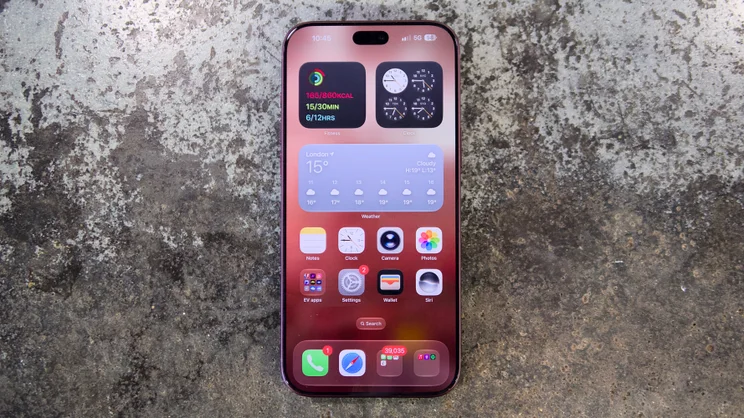
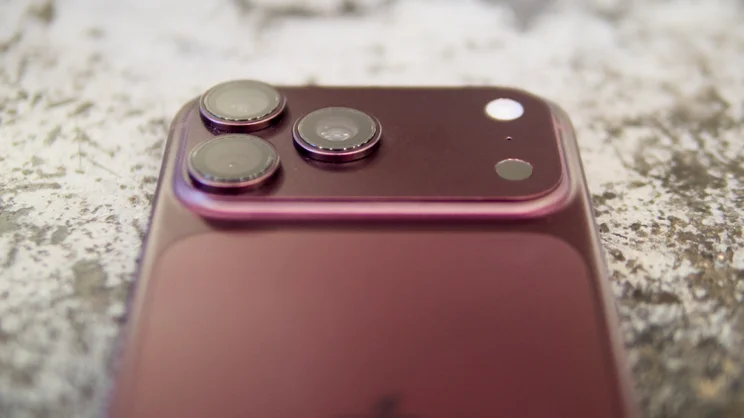
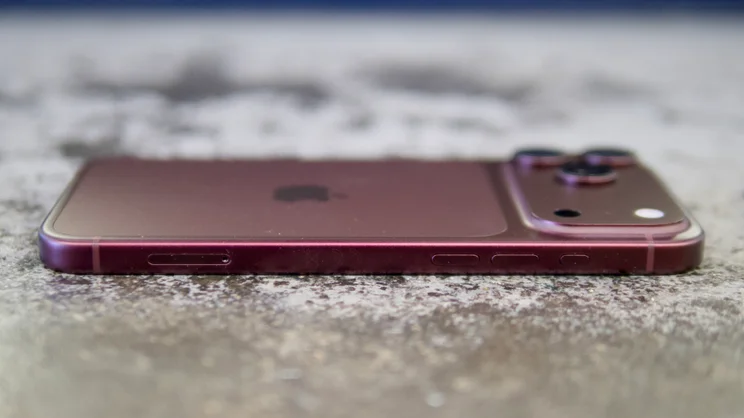
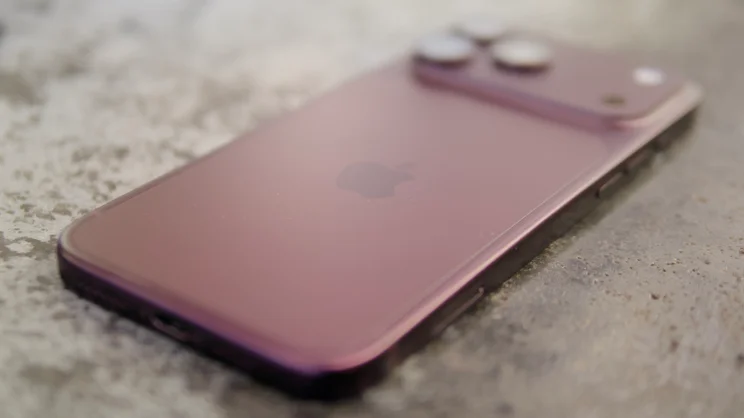
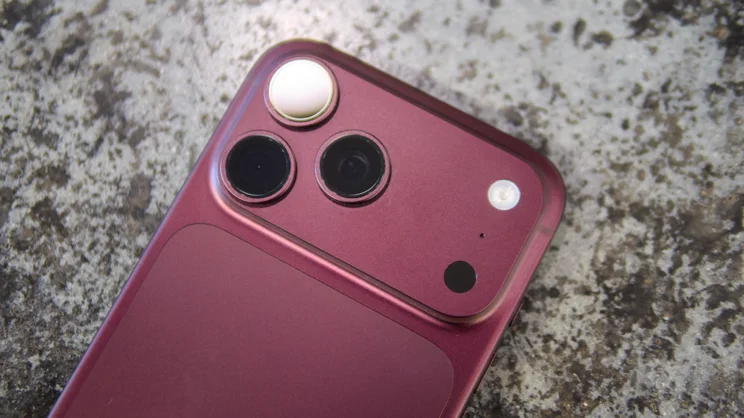
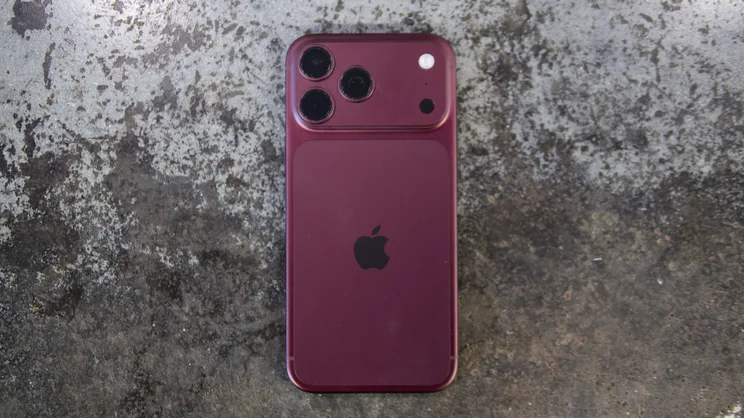
For your money, you’re getting a phone that looks very much like last year’s iPhone 17 Pro Max. This is a consolidation year for Apple on the design front, with the same large camera plateau, the same aluminium and glass body and the same hard, scratch-resistant hard anodising in place. The new Burgundy colourway won’t turn as many heads as the Cosmic Orange did last year, but I think I prefer it.
If that’s not your bag, then the 18 Pro Max is also available in Glacier (a kind of light blue), silver and black.
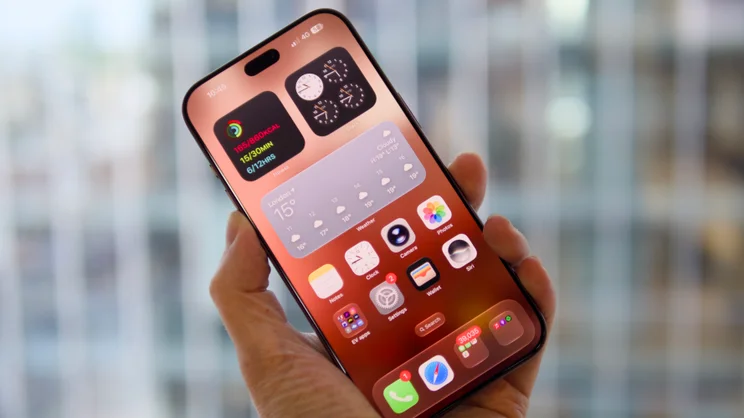
As before, the iPhone 18 Pro Max comes with a 6.9in 120Hz ProMotion OLED display with a resolution of 1,320 x 2,868, an 18MP Centre Stage selfie camera up front and a trio of 48MP cameras at the rear: the main wide camera with variable aperture from f/1.48 to f/4, an 13mm f/2.2 ultrawide with a 120-degree field of view, and a 4x f/2.8 optical telephoto camera.
Inside, you’re getting an upgraded A20 Pro processor, there’s a larger, more effective vapour chamber for cooling, and battery life has been boosted, too, courtesy of the new chip’s improved effociency. This has risen to 43 hours of local video playback for the UK model, from 37 hours last year, and there’s also with faster wired charging. The new iPhone 18 Pro Max will charge to 50% from empty in 15 according to Apple, although you’ll need to buy or already own a 60W capable charger.
Price and competition
As widely predicted, the price of the iPhoene 18 Pro Max has risen this year but not by as much as some had been predicting, up by £100 across the board
As before, the base model comes with 12GB of RAM and 256GB of storage. That price is up to £1,299. The 512GB model is £1,499, the 1TB is £1,899 while for the 2TB model you’ll be paying an eye-watering £2,499. I’d suggest at those sorts of prices, you might want to learn some storage management strategies.
Prices aside, though, the 18 Pro Max is very much Apple’s flagship bar phone, so your alternatives are going to be very much the usual suspects here.
The Samsung Galaxy S26 Ultra is very much cheaper at this moment, having been out in the wild for around seven months at the time of writing: at Amazon, you’ll currently be paying £766, for the 256GB model and don’t forget, that comes with more four rear cameras that have more telephoto reach than the iPhone 18 Pro Max and S-Pen stylus support.
You might consider the Google Pixel 11 Pro XL at £1,099 for the 256GB but aside from the cameras and the seven years of OS and security updates, that’s not much competition for the iPhone 18 Pro Max. It has underwhelming battery life and performance you’d have to go back to the iPhone 15 Pro Max to match.
Then there’s the Xiaomi 17 Ultra, which comes with a 200MP adjustable optical telephoto camera, and a 1in main on the camera sensor. That’s a serious hunk of smartphone, and costs £999 for the 512GB model at the time of writing: that’s £300 less than the 18 Pro Max equivalent and a £500 less than the 512GB model.
And finally we have the Oppo Find X9 Ultra, a beast of a smartphone with excellent battery life and a peerless 10x optical telephoto camera. You can pick one of those up for £1,249 at the time of writing from Currys for the 512GB model.
Design and new features
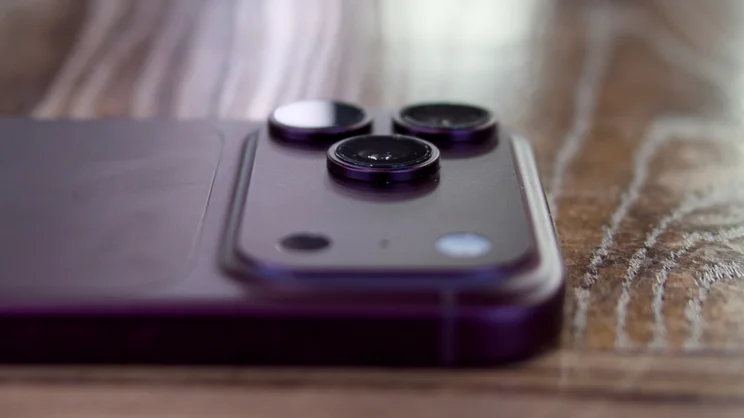
As mentioned above, there isn’t much to talk about when it comes to the design of this new iPhone so I won’t spend any time on it. Suffice it to say, though, Apple has not addressed concerns about the vulnerability of the sharp edges surrounding the camera plateau, so very much a case of buyer beware here.
If you don’t put this phone in a case immediately those edges, particularly the bottom one, are going to take the brunt of any scuff marks as they make contact with surfaces when you put the phone down. The iPhone 18 Pro Max is also a pretty chunky old thing and weighs 249g.
Those worries aside, however, the iPhone is certainly a handsome thing. The colour matching between the glass and the aluminium frame on my burgundy sample is near perfect and Apple’s materials are top spec.
The ceramic shield covering on both front and rear glass is incredibly good at preventing even micro scratches from blemishing your pride and joy – my iPhone 17 Pro’s screen still looks pristine despite a year of use without a screen protector. And it retains its IP68 dust and water resistance rating, meaning it’s immersible up to six metres for 30 minutes.
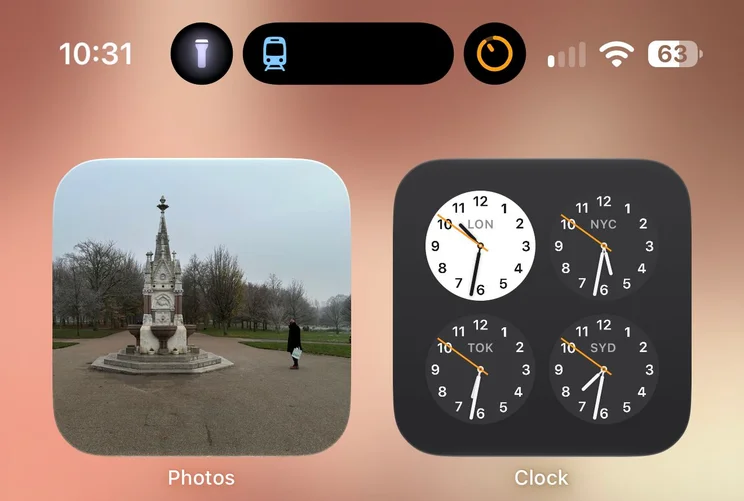
I’m not sure why Apple persists with its touch sensitive camera button. I barely ever use it and, when I do it’s usually by accident, but I do appreciate the new smaller cut out for the Face ID sensors at the top of the screen. It’s a little less intrusive and provides a little more space up to so the Dynamic Island surrounding this can now maintain up to three Live Activies instead of two.
In the screenshot below you’ll see flashlight, Apple Maps and timer live activities all at the top at the same time. As before, just tap to launch the app in question or long press to bring up contextual controls.
Siri AI
Probably the most important and consequential new feature, however, and one that has courted some controversy since it was first announced more than two years ago, is Siri AI, which finally lands on the iPhone 18 Pro, Pro Max and Duo this autumn.
It’s not exclusive to this generation – it’s also coming to iPhones as far back as the iPhone 15 Pro – and its worth and effectiveness are only going to prove themselves in time, but I have to say I’m already finding it more useful than the regular Siri – not that that would be hard of course.
Siri AI, which uses Google Gemini seem more effective at understanding what you’ve asked, can search through your calendar, photos, email and messages, has on-screen awareness, meaning you can ask questions about what’s on screen, and integrates with the camera app, allowing you to point your lens at things and find out information about them, get translations of menus and signs and more.
The new Siri is undoubtedly an improvement on what went before, but there are still areas of frustration. Siri AI still responds with a bland “sorry I don’t understand” too often for comfort when it should at least make an attempt at explaining why. In my opinion, that is just not good enough.
I’ve also been mildly disappointed by Siri’s lack of awareness of the phone it’s running on’s various features and infrastructure. Take the updated Shortcuts app, which has a neat new feature in iOS 27 allowing you to describe the Shortcut you want to create. It uses Apple Intelligence and works surprisingly well. Ironically, however, Siri can’t seem to run the shortcuts using the AI you’ve employed to create them.
Display
There’s nothing much new to report on the display front, other than it’s excellent. As with last year’s iPhone 17 Pro models, brightness peaks at up to 3,000 nits, and sharpness is as good as anyone needs: a resolution of 1,320 x 2,868 squeezed into a display measuring 6.8in across the diagonal results in a pixel density of 460ppi. At normal viewing distances, this is plenty sharp enough for most
Note that you’ll only see those levels of brightness in the brightest highlights of HDR movies in the glaring sun of the Mohabi desert at mid-day (in which case, what are you doing with your life?) but I was able to simulate such conditions and recorded brightness levels of 2,876cd/m2.
Colour accuracy was exceptional, too – in a web browser, I measured an average Delta E colour error of just 1 versus sRGB, and the screen just looks exceptional with all kinds of content. I loaded up the last episode of Silo season 3, which has some seriously dark scenes some TVs can really struggle with and the iPhone 18 Pro Max reproduced them perfectly, balancing the bright highlights of the internal lighting against the murky depths of the underground silo without losing out any details or any sense of colours looking out of place.
Apple has form for producing A-class displays and this is no different. It has, as far I can see, no significant weakness.
Performance and battery life
The same can’t be said for performance and battery life, both of which have been improved significantly on last year. The new six-core A20 Pro processor, once again, lifts overall performance levels a good chink and, since it is now built on TSMCs new 2nm manufacturing process, efficiency is better than ever.
In the Geekbench 6 CPU benchmarks below it’s 22% and 28% better than the iPhone 17 Pro Max in the single-core and multi-core parts of those benchmarks, and impressively 39% faster than it in the Vulkan GPU test. And these results set it way out in front of the current Android opposition. Do you need a phone with this much power? That’s debatable. But you can be absolutely sure that it will still feel faster than the majority of rivals even three or four years into the future.
My sample fell three hours short of the 43 hours quoted on Apple’s website, delivering 39hrs 59mins of local video playback, but I’d expect that as Apple leaves Wi-Fi connected during its battery tests and has a pair of Bluetooth headphones paired. It’s two hours longer than last year’s iPhone Pro Max, which is good to see, and with moderate use should give you nigh on two days of use.
Wired charging is faster than previous generations and I saw it reach a total of 44% after 15 minutes of being connected to a 70W Apple charger.
Cameras
Apple’s tentpole feature for this generation, however, is variable aperture. In the iPhone 18 Pro Max, this means you can adjust the size of the iris and so allow more or less light onto the sensor. Tap the controls in the camera app while looking into the main camera lens at the back and you can actually see this working, the blades of the iris smoothly opening and shutting, depending on the setting you select.
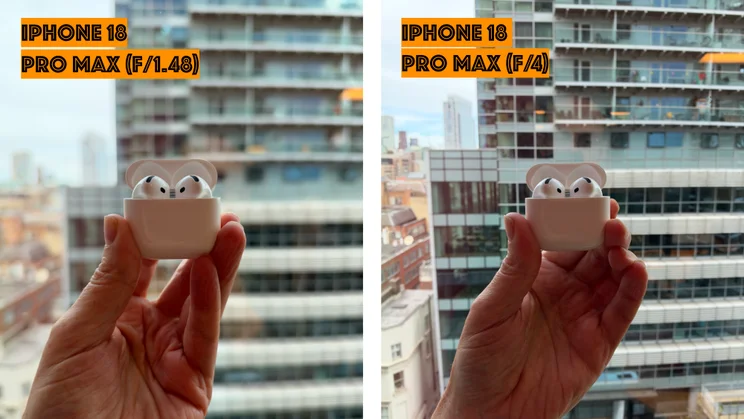
You can adjust the aperture in four steps: f/1.48 for the most light and background blur, f/1.8 (the default) for the best balance between light capture and sharpness, and then f/2.8 and f/4 for sharper shots in good light. You can also create some interesting effects using the narrower aperture, where bright points of light become starbursts and rushing water becomes a milky blur, assuming you can hold the phone steady enough for long enough.
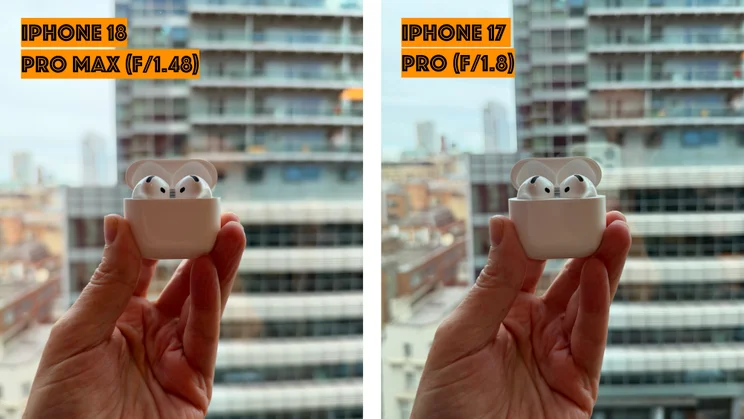
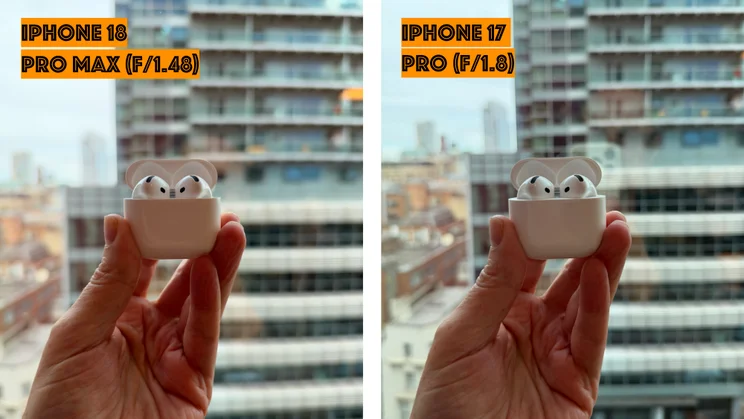
This is, undoubtedly a good thing and gives iPhone photographers a level of control that they haven’t had before. You can see just how much blur you can get from the f/1.48 setting compared with the f/4 setting below. The bokeh (the blur) is much more natural than the smooth blur you’d get shooting in Portrait mode, for instance, athough there is considerably less of it.
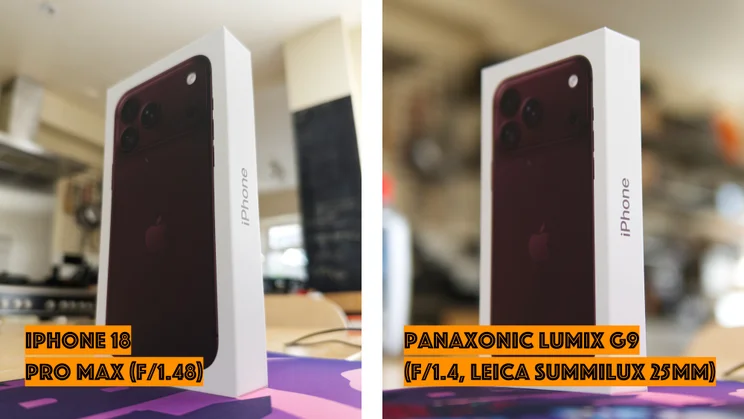
Just don’t go expecting proper camera levels of bokeh here. As an estimation the f/1.48 on the iPhone produces roughly the same amount of background blur as my Micro 4/3 Panasonic G9, equipped with a 14mm f/2.5 lens. It’s not much better than the f/1.8 aperture on the iPhone 17 Pro and it can’t compare with a proper camera. I popped my 50mm Leica Summilux f/1.4 lens on the G9 and, as you can see below, there is simply no comparison when it comes to subject isolation.
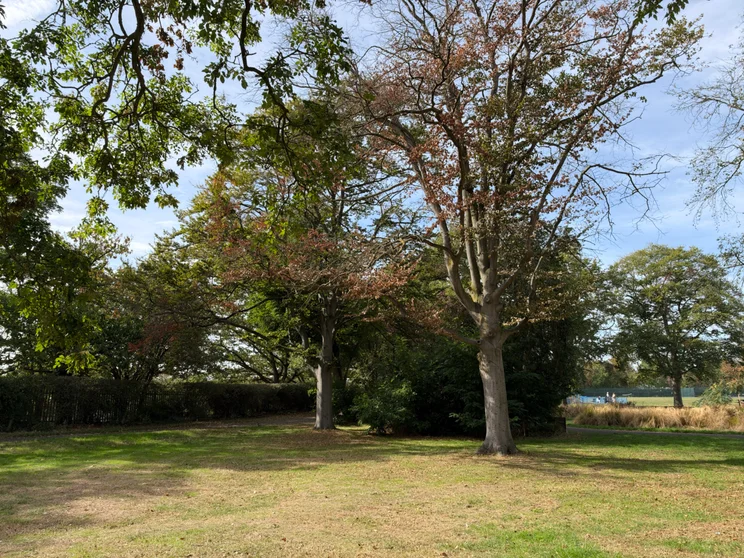
The main camera can, however, produce some great looking images. It captures sharp images in good and poor light, the 4x optical telephoto is fine, too. Igore the 8x “optical-quality” claim; it’s is merely a digital crop. The ultrawide angle camera is better than many rivals in terms of its sharpness across the frame, too.
And, of course, the 4K Dolby Vision video recording remains utterly stunning. You can shoot HDR video with this phone at 4K at up to 60fps, and ProRes video at 4K and 30fps in flat Log 2 colour. Professionals, meanwhile, can attach external storage via the USB-C port and record video directly.



Apple iPhone 18 Pro Max: Verdict
For conservative Apple fans who want the best of the best, and the biggest screen, the iPhone 18 Pro Max is the phone to own. It’s more expensive than it was last year, but that’s not really Apple’s fault, and in critical areas, it has been improved.
There’s better battery life, although it’s only slightly improved over last year. It’s faster and the camera gives you more control. Plus the new Siri AI is here to, you know, actually work when you want it to, although it’s still not perfect.
So no, it’s not the most exciting phone Apple has ever released but in a year when you might forgive it for taking its eye off the ball, a year in which Apple is taking a great leap into the beyond that is foldable phones, the iPhone 18 Pro Max is a super solid update.