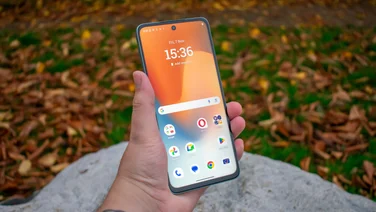
To help us provide you with free impartial advice, we may earn a commission if you buy through links on our site. Learn more
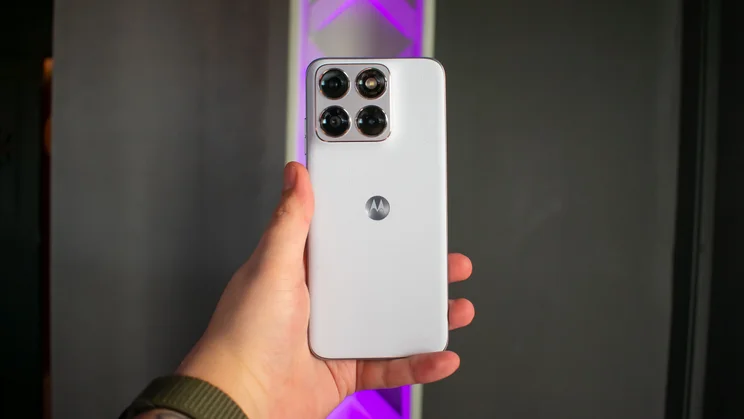
Motorola’s pre-MWC event may have been mostly focused on the long-awaited reveal of its first full-size foldable smartphone – the appropriately named Razr Fold – but my contrarian eyes were drawn to the less flashy, but nonetheless exciting, reveal of the Motorola Edge 70 Fusion.
This is the brand’s latest mid-range phone and, if my initial hands-on time is anything to go by, it could well be a serious force in the affordable phone space. Between the sleek design, sharp display and option to choose an enormous battery, the Edge 70 Fusion serves up an impressive list of specs for an incredibly tempting price.
Whether or not it ends up being one of the best-value phones to hit shelves in 2026 remains to be seen – watch this space for my full review – but based on the specs and first impressions, I’d say it has a pretty good shot.
Motorola Edge 70 Fusion hands-on: Specifications, price and release date
- 6.78in, 2,772 1,272, 144Hz AMOLED display
- 2.5GHz Qualcomm Snapdragon 7s Gen 3 chipset
- 8GB of RAM
- 256GB of storage
- 5,200mAh or 7,000mAh battery
- 68W wired charging
- IP68/IP69 dust and water resistance
- Dimensions (WDH): 76 x 7.2 x 163mm (5,200mAh); 76 x 8 x 163mm (7,000mAh)
- Weight: 177g (5,200mAh); 193g (7,000mAh)
- Colours: Silhouette, Orient Blue, Spring Green, Country Air
- UK price: £370 (5,200mAh); £380 (7,000mAh)
- UK release date: Out now; Check price at Motorola
Motorola Edge 70 Fusion hands-on: Design, key new features and first impressions
- 7,000mAh battery
- IP68/IP69 protection
- Sony LYTIA 710 image sensor
- Middling chipset
- Plastic frame
- Not the longest software support
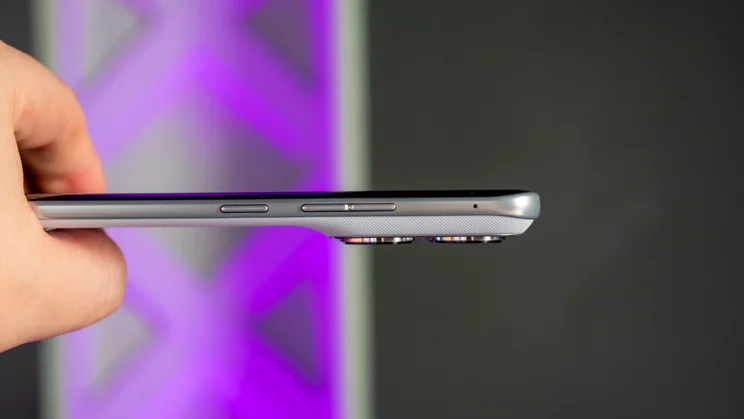
I confess, I’m a little bemused by the decision to offer two battery configurations – you can get a model with a 5,200mAh cell for £370 or one with a 7,000mAh battery for £380. The only other differences are the thickness – the former is 7.2mm while the latter is 8mm – and the weight: 177g and 193g, respectively. For the sake of a tenner, that extra battery capacity feels like a no-brainer to me.
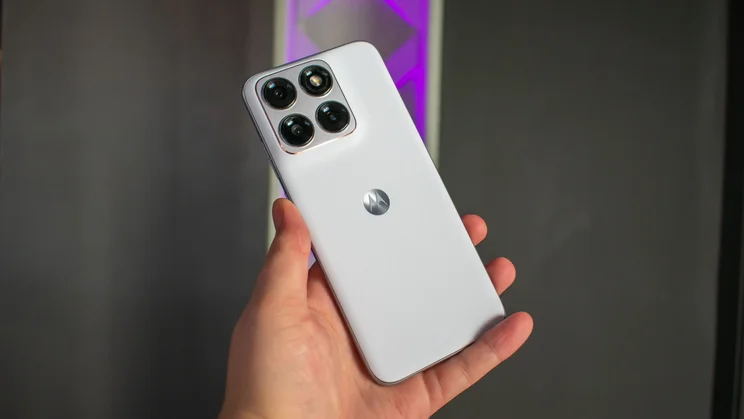
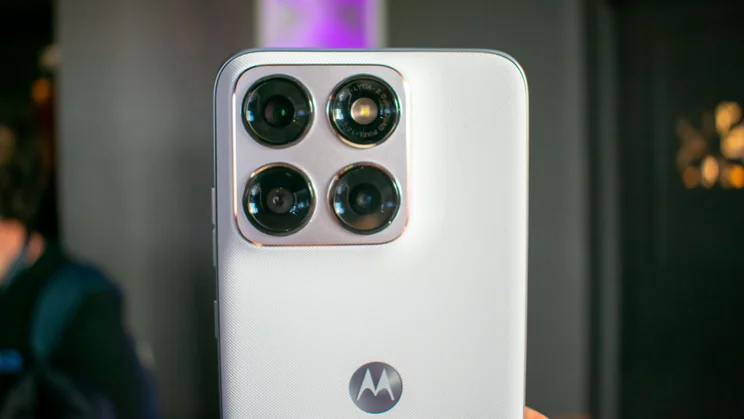
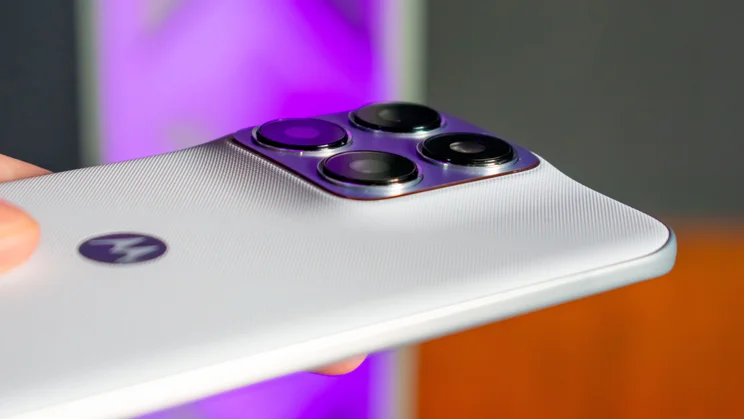
Both variations come in the Pantone-approved Silhouette colorway – Navy Blue with bronze accents around the camera housing – but the 5,200mAh model gets a few extra options: Orient Blue, Spring Green and Country Air (pictured here). Depending on the colour, the rear will be finished with either a nylon-inspired or linen-esque material and the frame is plastic regardless.
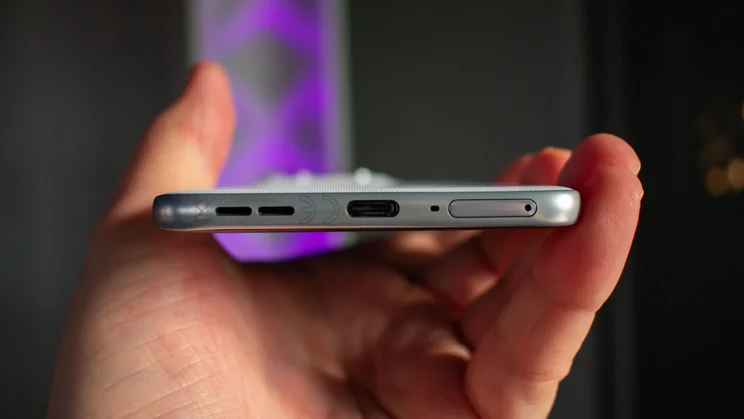
Otherwise, the two are identical. Joining your battery of choice inside the phone is a Snapdragon 7s Gen 3 chipset, backed up by either 8GB of RAM and 256GB of storage. There’s no wireless charging but you do get nippy 68W wired charging – a necessity if you go for the gargantuan 7,000mAh battery model.
In my hands-on time, I had the opportunity to play around with both versions and, while the 5,200mAh version certainly feels wonderfully slight and light, I didn’t find the 7,000mAh version to be monstrously chunky: compared to our current favourite mid-ranger, the Google Pixel 9a, it’s little heavier but close to a full millimetre thinner, so that about averages out.
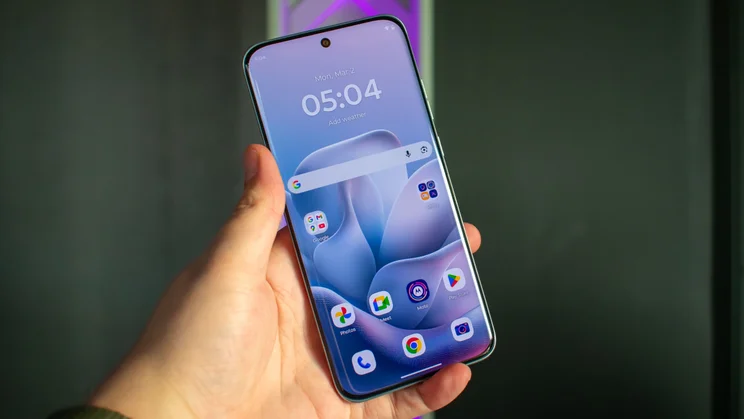
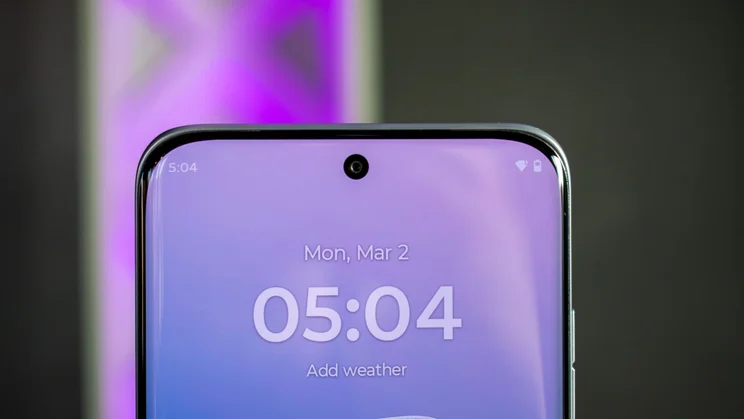
The display is a sharp 6.78in AMOLED panel that curves elegantly off to all four edges. There’s a 2,772 x 1,272 resolution, a fluid 144Hz refresh rate and a stated peak brightness of 5,200 nits. There’s a layer of Gorilla Glass 7i sitting over the top for scratch protection, and the phone as a whole is rated IP68/IP69 for dust and water resistance, so it’s dust tight and apparently protected against both submersion (1.5m for up to 30 minutes) and direct jets of water.
On the cameras front, the Edge 70 Fusion is apparently serving as the debut for the new Sony LYTIA 710 image sensor, promising strong results from its 50-megapixel (f/1.8) main camera, backed by optical image stabilisation. Joining that on the rear is a 13-megapixel (f/2.2) ultrawide that also offers macro photography, while over on the front is a 32-megapixel (f/2.2) selfie camera.
As for the software, the Edge 70 Fusion launched with Android 16, including Motorola’s own-brand helping of the expected AI productivity features. The brand is once again offering up three OS updates and four years of security patches, which is fine enough for this price – though push your budget a little further and you can get seven years of support from the Pixel 9a.
Motorola Edge 70 Fusion hands-on: Early verdict
I find myself double checking if there’s anything I’ve missed in this hands-on, but no – that’s the main points covered. This is a simple phone with a simple appeal – excellent battery capacity (and potentially stamina as a result) for a cut-throat price, with decent appeal in the display, design and main camera, too.
The Fusion line has long been one of my most recommended in this price range, and all evidence points to the Edge 70 Fusion keeping this streak going. I’ll have a full review in the very near future so check back in soon to see if this is the mid-range phone you should buy in 2026.