
To help us provide you with free impartial advice, we may earn a commission if you buy through links on our site. Learn more
- Slim and sturdy design
- Excellent performance
- …and battery life
- HyperOS 3 continues to frustrate
- Minor display downgrades
- Rivals are more affordable
The Xiaomi Pad 8 has quite the legacy to uphold. This time last year, I was lauding its predecessor as my favourite Android tablet alternative to the entry-level iPad. With equally impressive specs, a refined design and a beautiful display, the Pad 8 has the chops to step neatly into its forebear’s shoes.
Old struggles remain – I still don’t love the software and the display has a couple of minor flaws – but broadly, this is a very well-rounded tablet. More to the point. It’s wonderfully powerful, outperforming anything else in this price range. If that matters most to you, the Pad 8 is a no-brainer.
Xiaomi Pad 8: What do you get for the money?
There are two configurations of the Pad 8 coming to the UK, one with 128GB of storage and one with 256GB. Both are a little more expensive than their counterparts from last year – £369 and £399, respectively.
This price increase also nudges the Xiaomi Pad 8 a little further north of its main competitor – the 10th-generation iPad (2025). The starting price here is £329, which gets you 8GB of RAM and 128GB of storage.
Also worth considering is the Honor Pad 10. There’s only one model available; it has 256GB storage and costs £250, or £300 with a keyboard case. Performance isn’t as good as its rivals, but battery life is outstanding and, crucially, software support is unrivalled among Android tablets, with an excellent six years of OS updates and security patches pledged.
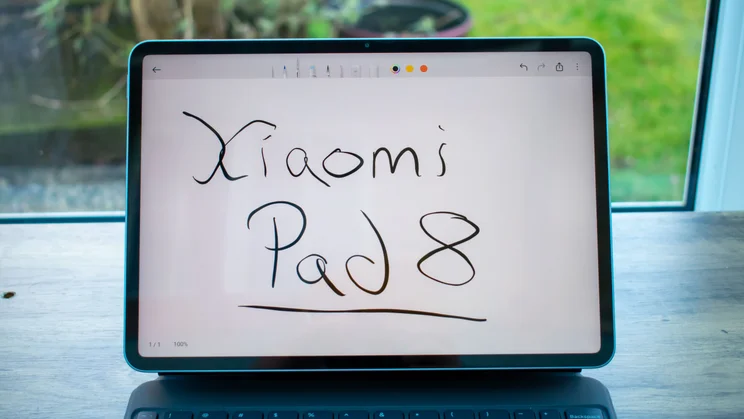
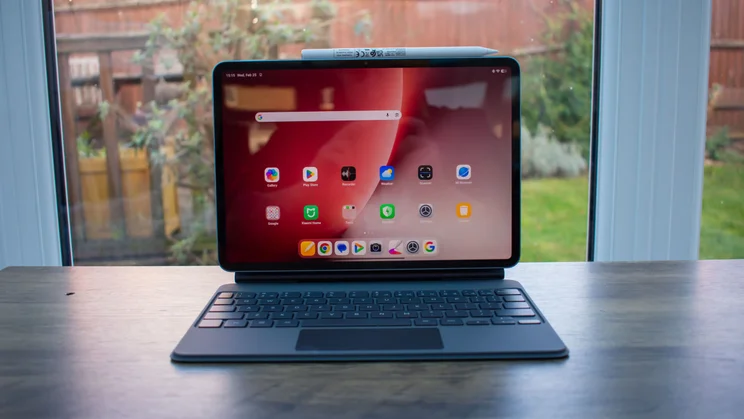
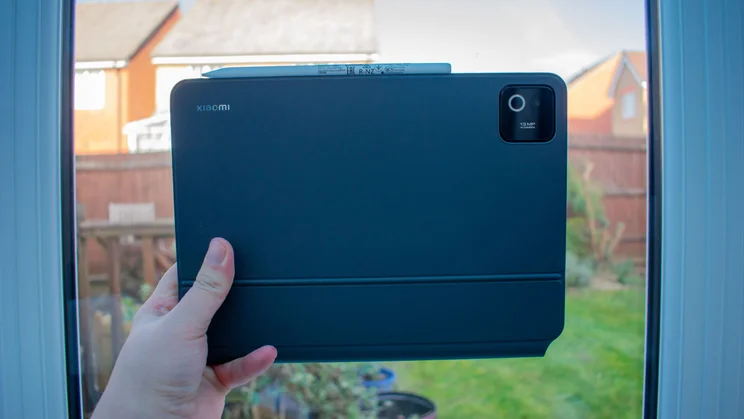
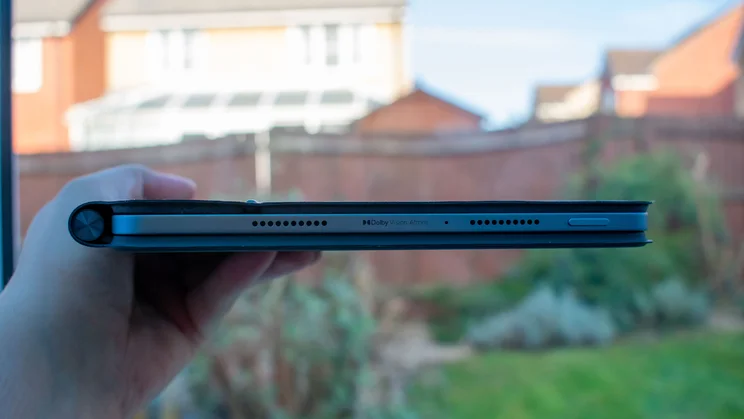
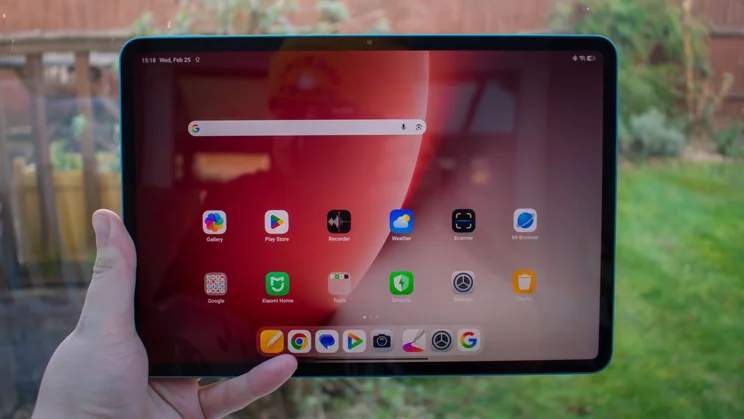
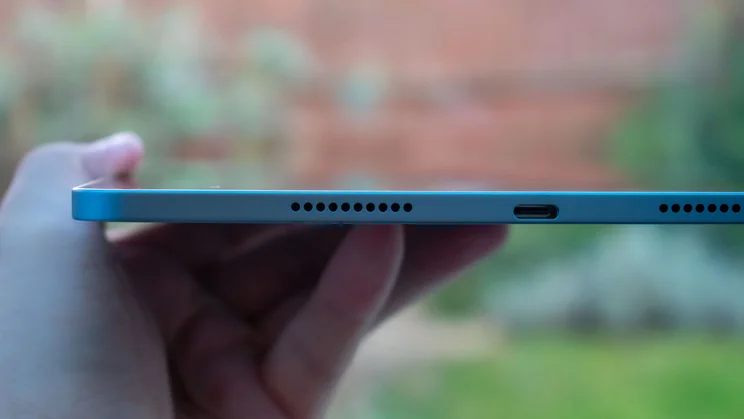
Back to the Xiaomi Pad 8, we’ve got an 11in tablet that measures 251 x 5.8 x 173mm (WDH) and weighs 485g. Just as we saw with last year’s Xiaomi Pad 7, the edges and rear are a unibody piece of aluminium (available in pine green, blue or the grey seen here) which looks suitably sleek and feels impressively sturdy.
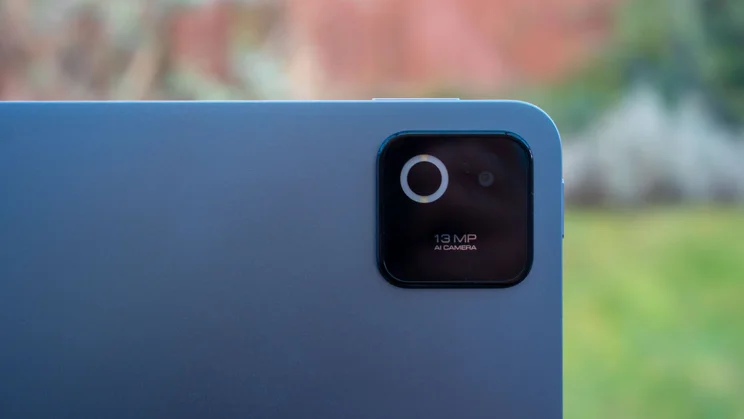
The IPS display has a resolution of 3,200 x 2,136 and a peak refresh rate of 144Hz, and there’s an 8-megapixel selfie camera set into one of the long bezels, with a 13-megapixel lens tucked in a square camera housing on the rear.
Keeping the lights on is the Snapdragon 8s Gen 4 chipset, clocked up to 3.21GHz and backed by 8GB or 12GB of RAM and 128GB or 256GB of storage – though we don’t yet know which configurations will be coming to the UK. The battery is a 9,200mAh cell – slightly larger than the 8,850mAh battery in the Pad 7 – that once again supports wired charging up to 45W.
What does it do well?
Perhaps the most notable feature of the Xiaomi Pad 7 was its stellar performance, and that’s a trend that continues here. The Snapdragon 8s Gen 4 chipset proved to be a good bit faster than its predecessor in the Geekbench 6 benchmarks, with a 26% improvement in the single-core test and 32% in the multi-core test.
These results are faster than anything else around this price, even surpassing the 10th-gen iPad (2025) – our current favourite tablet in this price range.
That additional power carries over nicely into the gaming side of things, too. The Xiaomi Pad 8 delivered roughly double the power of the Pad 7 in the Geekbench 6 Vulkan GPU test, in which higher numbers indicate more stable and efficient graphics processing.
This translated nicely into real-world scenarios, too; I ran a few laps in Asphalt Legends and found textures to be crisp and punchy while framerates remained fluid enough to avoid any lag or juddering, even during the most hectic racing moments.
Battery life also impressed in my testing, once again improving upon what was already a strength of the Pad 7. Where the latter ran our standard looping video test for 15hrs 11mins, the Pad 8’s extra battery capacity helped it hold fast a little longer, finally tapping out after 16hrs 49mins.
As you can see below, that’s an excellent result that not only outpaces last year’s model, but also bests the iPad by almost 5 hours – though the Herculean stamina of the Honor Pad 10 manages to hold on to its advantage.
All told, then, the Xiaomi Pad 8 is an impressively powerful tablet. That makes it well-suited to intensive, productivity-focused activities, so it’s a good thing that Xiaomi has ponied up a fresh selection of accessories to go along with the launch.
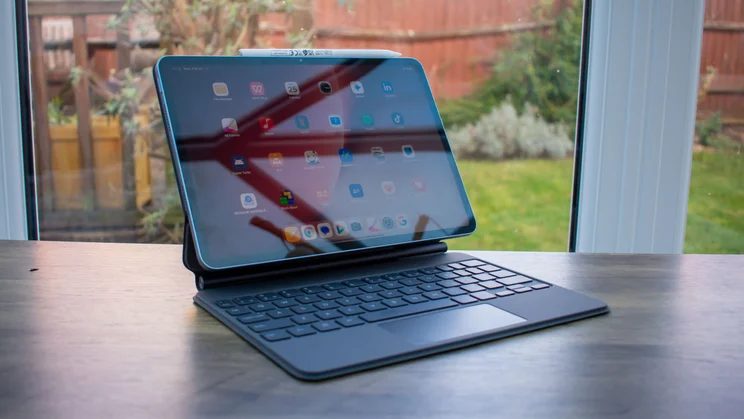
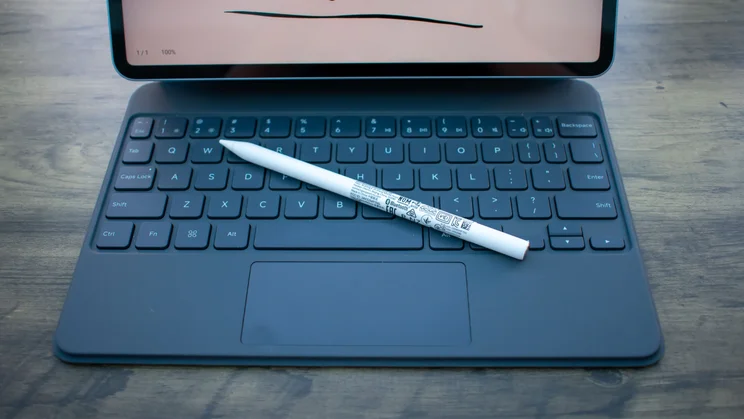
The Pro Focus Keyboard case is a brilliantly designed piece of kit, with backlit keys, a small track pad and strong magnets that allow the tablet to hover, rather than lean on the bottom half for support, similar to Apple’s Magic Keyboard. Key travel is solid, with a satisfying click at full depression, and the range of tilt for the screen was enough to accommodate me working across a desk, train seat and sofa with ease.
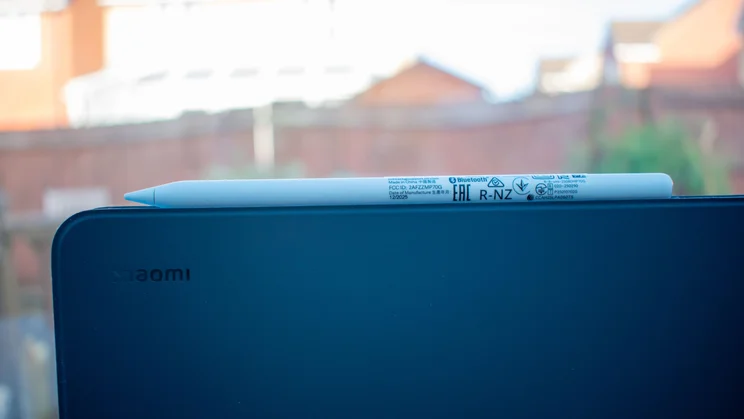
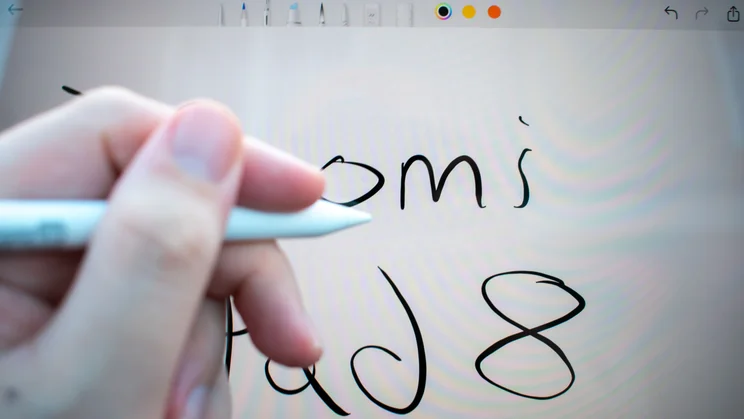
I also received the new Focus Pen Pro for testing and found Xiaomi’s claims of accurate tracking to be on the money – every swipe and twist of the pen was matched beat-for-beat onscreen. The only issue I had was that some of the touted features, like swapping brushes with a double tap, refused to work for me, but I’m happy to chalk that up to pre-launch software for the time being.
I was already very impressed with the Xiaomi Pad 7’s display, so it’s not that big of a deal to see it basically replicated here. While size, resolution and refresh rate are all the same, I did record a higher peak brightness with this screen; on manual brightness mode, it came back at 630cd/m2, while switching to adaptive and shining a torch on the light sensor pushed it up to 826cd/m2 – surpassing Xiaomi’s claim of an 800 nits peak.
Another difference is that Xiaomi has cleaned house on its convoluted selection of colour profiles. Where the Pad 7 had six to choose from, the Pad 8 tightens up the selection to two. And realistically, that’s all you need. You’ve got the Vivid setting for those who want to blow colours out for more vibrant streaming and gaming, and the Original Colour Pro profile, which shoots for authentic sRGB reproduction. The latter does so very well; the average Delta E colour variance score of 0.81 that I recorded on this setting was bang on our target of 1 or under, indicating excellent accuracy.
What could be improved?
I only had one issue with the display, and it’s relatively minor as far as real-world use goes. In my testing, the display showed black and contrast levels that were weaker than the previous generation, recording at 0.41cd/m2 and 1,196:1, respectively. Content still looks excellent on the screen, albeit closer to a dark grey than true black in some areas, and neither result is dire enough for most people to even notice the difference.
Otherwise, my biggest concern with the Pad 8 is the software. Xiaomi’s HyperOS 3 launcher irks me here as much as it does on phones like the Xiaomi 17, with a cluttered design and counterintuitive choices like the lack of a settings shortcut in the control centre. You can technically add a quick launch tile, but even this is muddled and frankly more effort than should be required to access settings in the same way you can on any other Android device.
And then there’s the software support to consider. As with the Pad 7, Xiaomi has pledged four years of OS updates and six of security patches, which is decent enough, but the Honor Pad 10 is getting six years of each, delivering a slightly more appealing roadmap. Plus, Apple doesn’t put exact figures on software support for its iPads, but it usually lands in the ballpark of five to six years, so once again, just a little better than Xiaomi.
Should you buy the Xiaomi Pad 8?
In comparing the Xiaomi Pad 8 to its predecessor, I noted that the cons listed at the top of this review are the same main problems I had with the Xiaomi Pad 7. So in that sense, this doesn’t really feel like much of an evolution. The display still has minor quibbles, and the software continues to frustrate me.
Instead, Xiaomi has focused on making improvements in areas in which the Pad 7 already excelled: good performance and battery life get even better, the sleek all-metal build gets a tad slimmer and lighter, and the display brightness is a little higher.It’s a refinement on an already solid foundation, and well worth considering if you’re after a relatively affordable tablet that doesn’t scrimp on power.


